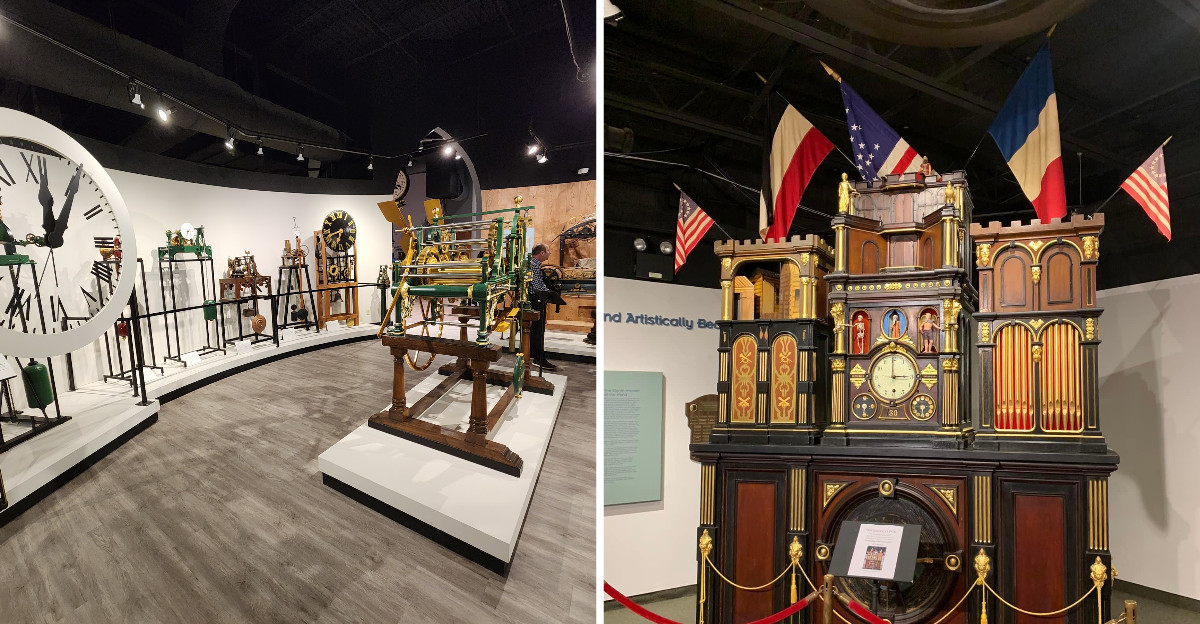
Soft ticking drifts out of the galleries like friendly whispers, a chorus of clocks marking time in a small Pennsylvania river town. The largest collection of clocks and watches in North America lives here, more than 13,000 timepieces under one roof.
Tiny pocket watches and towering grandfather clocks share the same space. The plan was to stay an hour, but time slipped away in a building full of clocks, which felt funny in the best way.
An 11-foot clock with 48 moving figures steals the show, soldiers parading past like a tiny army on duty. Wooden cases hold instruments that once measured every minute of someone’s day.
The quiet hum of gears turns history into something you can watch. Visitors lean in to study the tiny mechanisms, and the soft ticking never stops.
Art, engineering, and patience fill the rooms. A small river town holds a surprising treasure, and the clocks keep counting.
This is a place that rewards curiosity and lingers in memory.
A Small Town With a Giant Collection
My first surprise came in the parking lot, where everything looked calm and ordinary. Columbia sits along the Susquehanna River in Lancaster County, and it has that quiet, slow pace you find in older Pennsylvania towns.
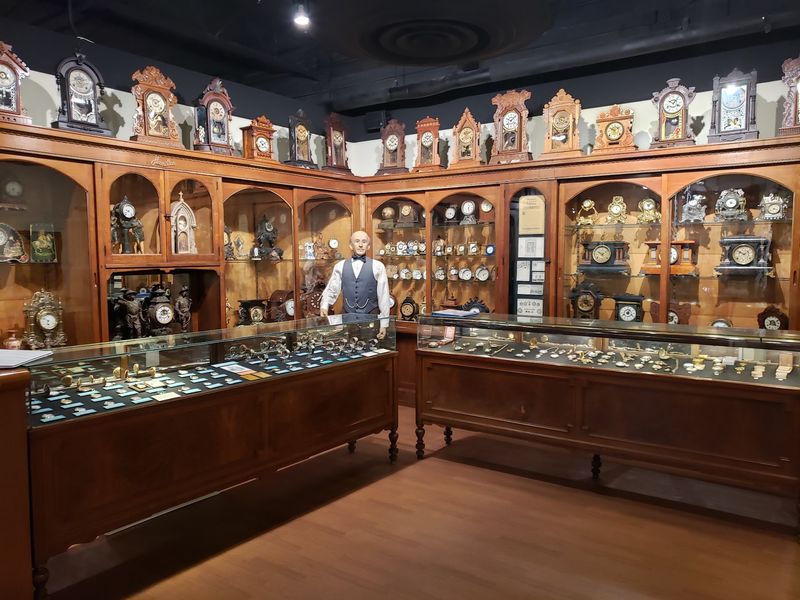
Inside, though, the scale changes fast. The museum holds more than 13,000 clocks, watches, and tools, which makes it the biggest collection of its kind in North America.
It is run by the National Association of Watch and Clock Collectors, a nonprofit group of people who truly love timekeeping.
You do not need to be an expert to enjoy it. The signs are clear and friendly, and they explain how each piece works without drowning you in fancy words.
I liked that I could read a little, look a lot, and still walk away feeling smarter.
A good tip is to plan for at least two hours. Many visitors find they could stay even longer, since every room seems to open into another one.
Bring comfy shoes, because you will want to circle back to favorites.
The building feels clean, bright, and well cared for. Even the quiet hallways seem to hum with soft ticking, which honestly became oddly relaxing after a while.
Meet the Engle Clock, the Eighth Wonder
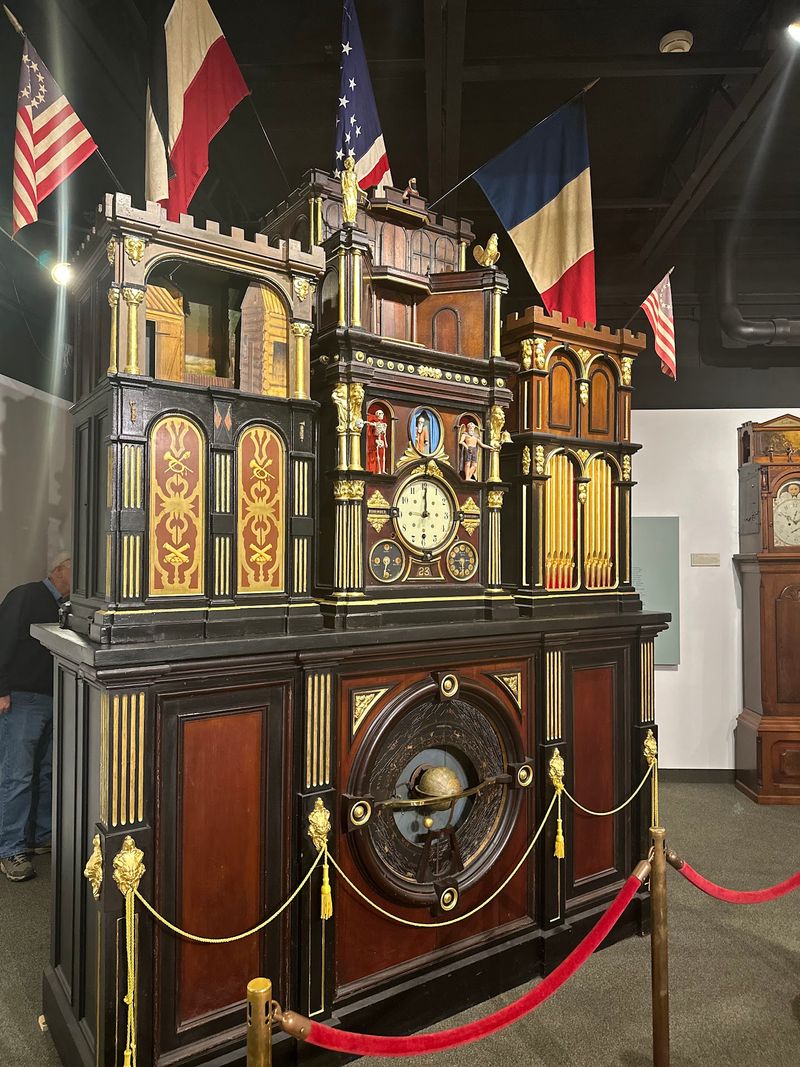
Eleven feet of carved wood, gears, and tiny moving people stopped me in my tracks. The Engle Clock has been called the Eighth Wonder of the World, and after seeing it run, I understood why folks used that nickname.
Stephen D. Engle, a watchmaker from Hazleton, Pennsylvania, finished it in the 1870s.
Back then, it traveled around as a touring show, and crowds paid to watch it perform. Imagine people lining up just to see a clock move, long before movies or video games existed.
The clock holds 48 moving figures. Some come from the Bible, some from mythology, and some from the American Revolutionary War.
You can spot Jesus, Satan, Father Time, Orpheus, and Molly Pitcher, the famous Revolutionary War heroine.
The marching soldiers are the part everyone talks about. When the show starts, little figures parade across the clock in a neat line, like a miniature army on patrol.
Kids lean in, and adults do too, even if they pretend not to.
My advice is simple. Check the schedule for the daily demonstration when you arrive, then plan your route around it.
Seeing the Engle Clock sitting still is nice, but seeing it come alive is the real treat.
A Hallway Full of Grandfather Clocks
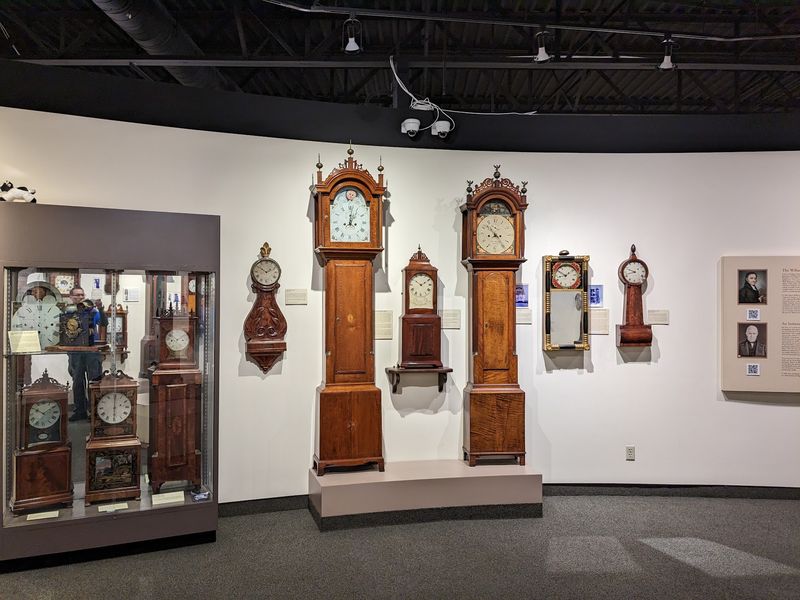
Grandfather clocks have a way of making a room feel like a library. Here, there are so many lined up that I felt like I was being watched by a row of tall, polite guards.
These tall case clocks, as experts call them, were once a big deal in American homes. A family might save for years to buy one, then pass it down for generations.
That is why so many look carefully cared for, with glossy wood and painted faces.
Look closely at the dials. Some show moons that slowly rise and set, while others have painted ships, flowers, or little country scenes.
Each one tells you something about who made it and who owned it.
The museum also shows how American clockmaking grew. Connecticut was a huge center for it, and names like Seth Thomas pop up often.
If you have ever seen an old clock in a relative’s house, you might spot a familiar style.
Here is a helpful trick. Pick one favorite clock in each room and read its sign fully.
Trying to read every label can wear you out, but choosing a few keeps the visit fun and helps the details really stick.
Music, Moons, and Tides Inside One Clock
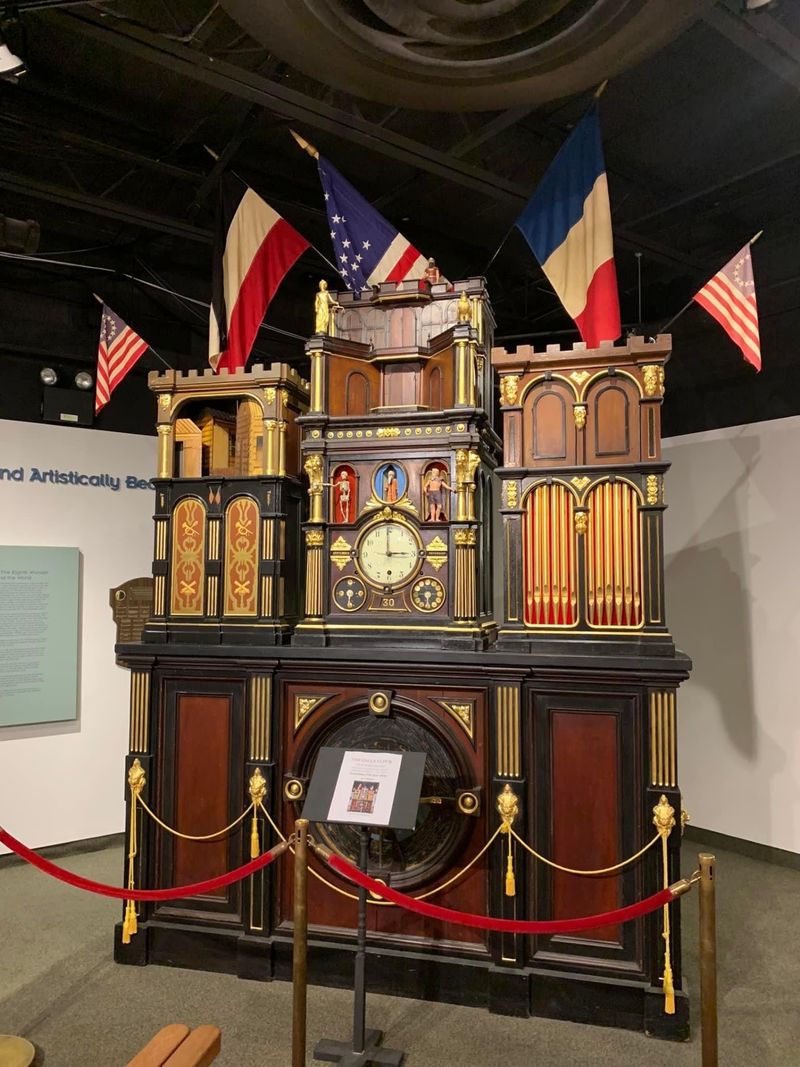
Telling time is the easy part for this clock. Once I looked closer at the Engle Clock, I realized it was doing about a dozen jobs at once, and doing them quietly.
Its dials track the position of the sun and the constellations. It also shows the zodiac, the day of the week, the month, the tides, and the phases of the moon.
That is a whole science lesson packed into one wooden tower.
Then there is the music. A built-in organ plays hymns and patriotic tunes while the figures move.
The sound is soft and old-fashioned, a little wheezy in the best way, and it fills the room with a kind of gentle charm.
Think about how hard that was to build without computers. Every motion came from gears, springs, and careful hands.
Engle had to plan how each wheel would push the next, like setting up a perfect row of dominoes.
Here is a fun idea for families. Before the demonstration, try to guess which dial shows what.
Afterward, check your answers on the signs nearby. It turns a quick look into a small puzzle, and you will remember far more of what you saw that day.
Pocket Watches Small Enough to Lose, Too Pretty to Forget
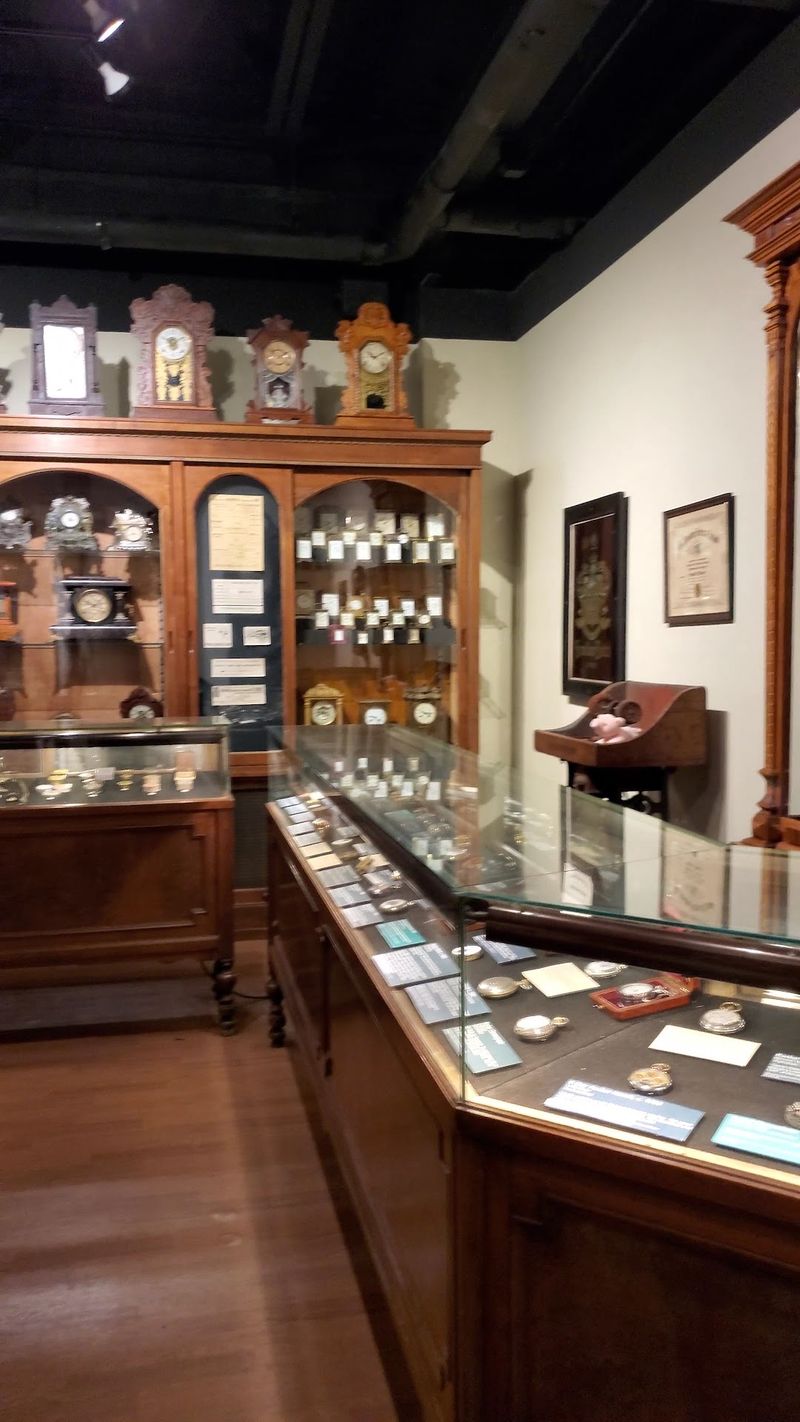
Some of the tiniest treasures in the building pulled me in the hardest. The watch galleries are packed with pocket watches so detailed that I kept pressing my nose closer to the glass, then politely backing away.
Many cases are open so you can peek at the gears inside. Watching those tiny wheels, you start to see why watchmaking was such a respected skill.
One small mistake could stop the whole thing.
The collection goes back centuries, with some pieces dating to the 1600s. There are engraved gold cases, enamel paintings, and watches shaped in surprising ways.
A few look more like jewelry than tools.
Movie fans should keep their eyes open too. The museum has displayed watches tied to the original James Bond films, which is a fun surprise in a room full of antiques.
It is a reminder that watches have always been about style, not just schedules.
Railroad watches are worth a stop as well. Trains needed exact timing to stay safe, so workers carried very accurate watches.
The signs explain how keeping time helped prevent crashes, which makes those plain-looking watches suddenly seem heroic.
Take your time in this section. The smallest objects often hide the biggest stories.
How Humans Learned to Count the Hours
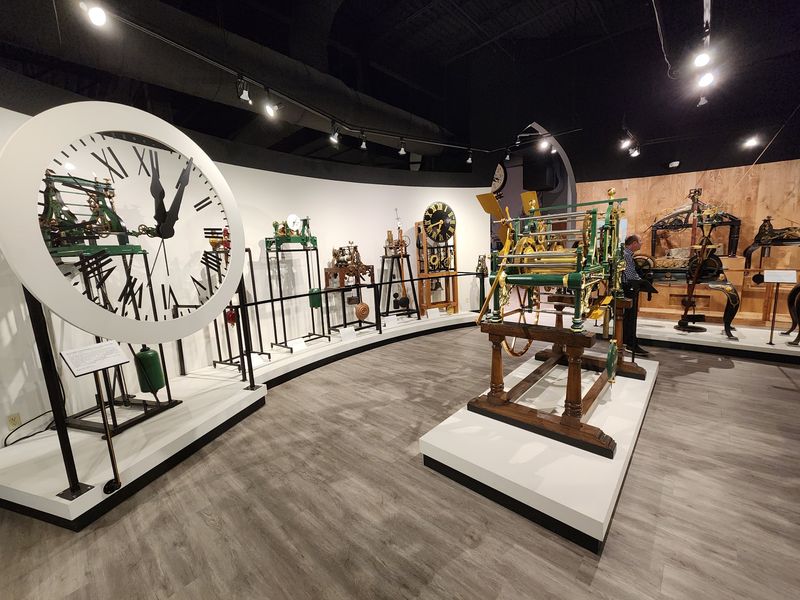
Long before phones buzzed with reminders, people watched shadows. That idea hit me in the history galleries, which walk you through how humans slowly figured out timekeeping.
The story starts with simple tools like sundials and water clocks. From there, it moves to early mechanical clocks, then to more accurate designs that changed science, travel, and daily life.
It feels like reading a giant picture book about human cleverness.
I liked how the museum connects clocks to bigger history. Time zones, for example, came about largely because railroads needed a shared schedule.
Before that, towns often set their own local time, which must have been very confusing for travelers.
The exhibits also explain how clocks work, with clear diagrams of pendulums, springs, and escapements. If you have ever wondered why a clock ticks, this is where the mystery finally clears up.
The explanations are short and easy to follow.
Students working on school projects could find this section super useful. Snap a few photos of the signs, if allowed, and you will have notes ready to go.
Even grown-ups will probably learn something they never covered in class, which is part of the fun here.
Scavenger Hunts, a Gift Shop, and Visiting Tips
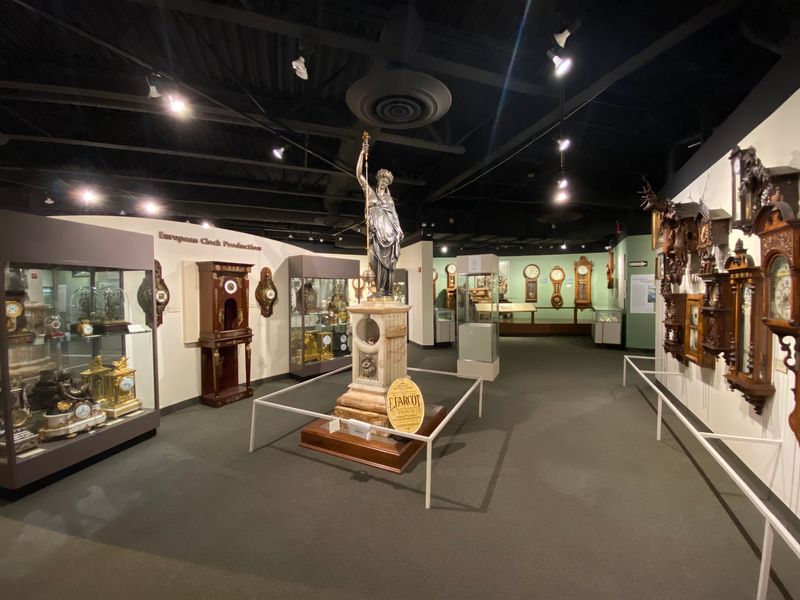
Kids get their own mission here, and I secretly wanted to join in. The museum offers a scavenger hunt where young visitors search for small plush animals tucked among the displays.
It is a clever way to keep younger travelers focused. Instead of rushing past cases, kids slow down and actually look.
Plenty of adults play along too, so do not feel shy about hunting.
Keep in mind that many displays are delicate, with lots of no-touch areas. Families with very young children may want to plan a shorter visit.
Older kids who like puzzles or gadgets usually have a great time.
Before leaving, stop by the gift shop and bookstore. You will find books on clocks, watches, and history, plus fun small gifts.
It is a nice spot to grab a souvenir that actually means something.
The museum is open Wednesday through Saturday from 10 am to 5 pm and Sunday from 10 am to 4 pm. It is closed Mondays and Tuesdays, so plan around that.
Parking is easy, and the staff are known for being warm and helpful.
Address: 514 Poplar Street, Columbia, PA 17512
