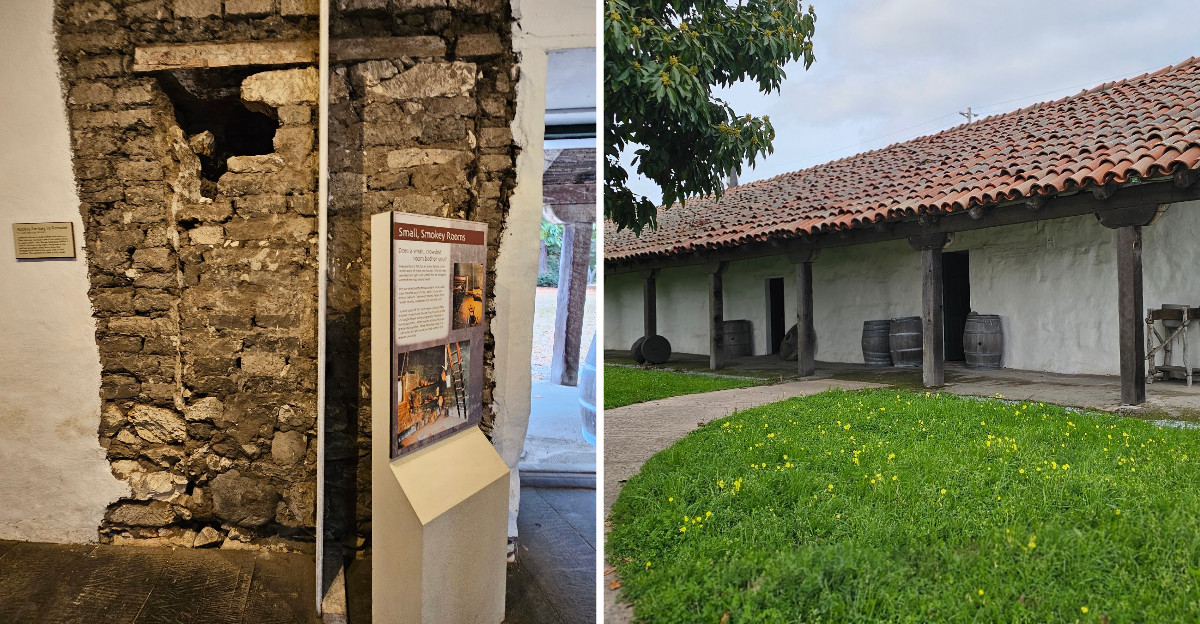
Huge avocado trees and thick adobe walls have been holding their ground in California since the 1820s, and climbing a short hill above a downtown area brought them into view. Twenty minutes of old walls and a plaque or two was the plan.
What got me instead was learning that a 200-foot-long structure once stood nearby, then disappeared so thoroughly that nobody wrote it down, nobody remembered it, and nobody knew it existed until shovels hit stone foundations in 1978. Hundreds of Ohlone and Yokuts people lived inside that vanished building, and their story sat underground for well over a century.
The park is small, quiet, and free to walk through, but the history packed into it is anything but small. Leaving brought the thought of how much of California is still buried a few feet below the grass.
The Foundations Nobody Expected to Find
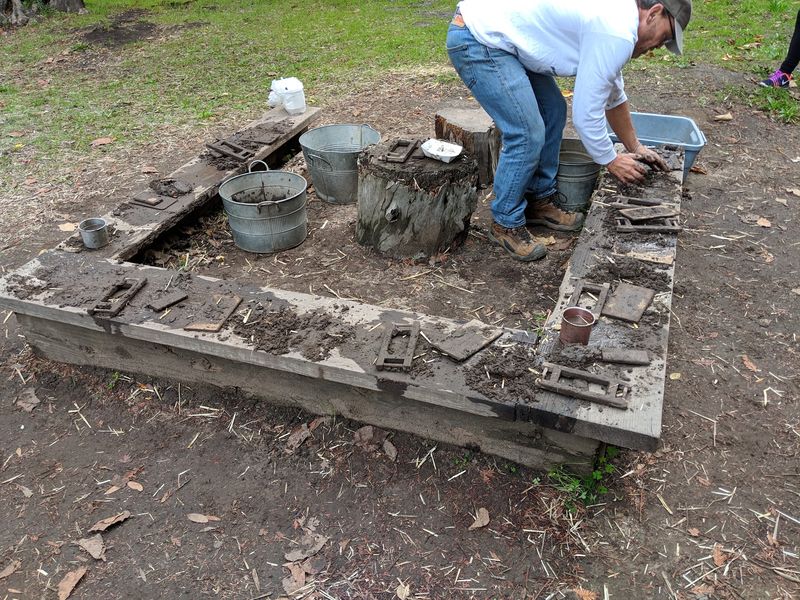
In 1978, stone foundations turned up on the eastern edge of Mission Hill, and that single find cracked open a chapter of Santa Cruz history nobody knew was missing. No diary mentioned it.
No mission ledger listed it.
Excavations ran from 1981 through 1984, and what came out of the ground was startling: the base of a building stretching roughly 200 feet, with more than 18 separate rooms laid out in a long row.
I find that genuinely hard to picture while standing on the hill today, because there is simply nothing above ground to hint at it. Grass, houses, sidewalks, ordinary life.
Researchers now call it the Lost Adobe, a name that fits a structure erased from both the landscape and the written record. Its foundations sit on private property, so you cannot walk the dig site, but the park tells the story well.
Knowing about it changes how you look at the ground here. Every dip in the soil starts to feel like it might be hiding something, and honestly, that curiosity made my visit far more interesting than a normal history stop.
Who Actually Lived Inside the Vanished Building
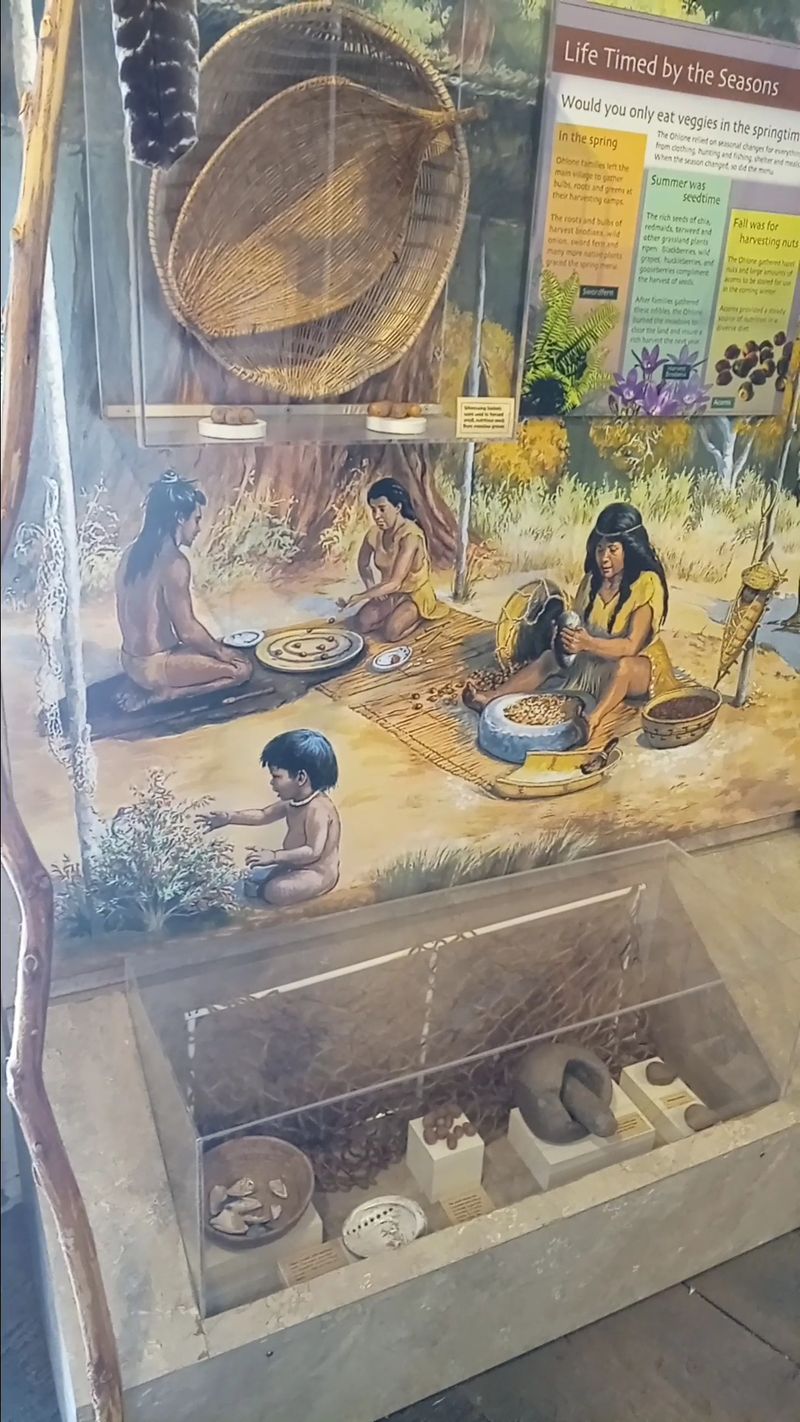
Hundreds of people called that long building home during the 1820s and 1830s, mostly Ohlone and Yokuts families brought into the mission system. Their days unfolded inside those rooms.
Artifacts pulled from the soil give a surprisingly personal picture of that life. Archaeologists recovered glass trade beads, fragments of Majolica ceramics, unusual phoenix buttons, and stone tools made from obsidian and chert.
That mix tells you something important. Traditional Indigenous toolmaking continued right alongside imported European goods, which means people were adapting, trading, and holding onto their own skills at the same time.
Roof tiles and adobe wall bricks showed up too, confirming how the place was built and what it was for. Housing, not storage.
A community, not a warehouse.
What sticks with me is the silence in the paper record. A building that size, holding that many lives, and not one clear written account of it survived.
Archaeology filled a gap that history books left wide open, and the exhibits at the park do a good job of making those small objects feel like they belonged to real families rather than museum labels.
Meeting the Neary-Rodriguez Adobe, the One That Survived
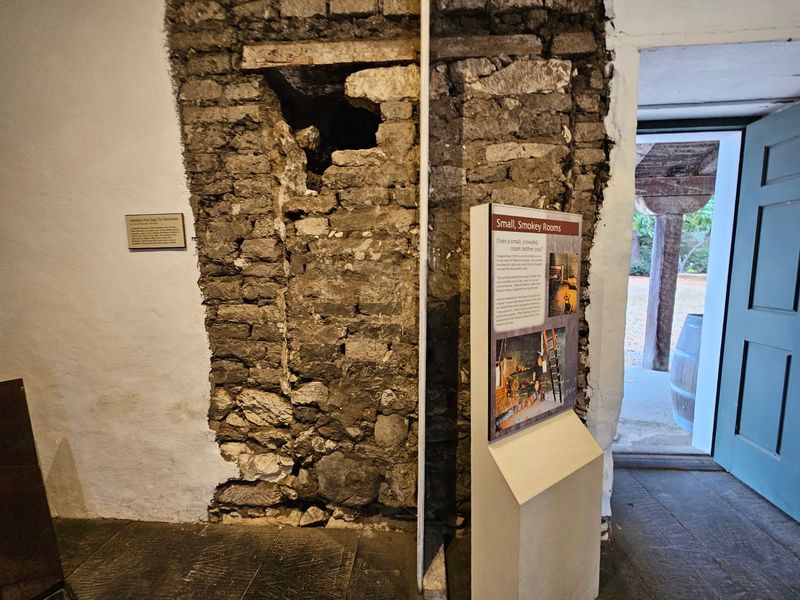
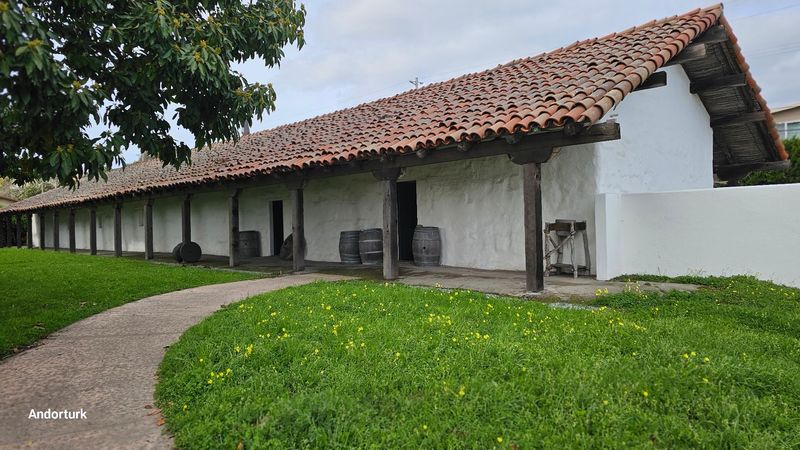
Here is the part you can actually touch. The Neary-Rodriguez Adobe, built between 1822 and 1824, is the only original structure left standing from Mission Santa Cruz.
It housed Native American families, just like the Lost Adobe did, which makes it the closest thing we have to walking through that vanished building’s twin. The walls are thick enough that the temperature drops the moment you step inside.
About five rooms of the original structure remain, and the whole place is modest in scale. Some visitors expect a grand cathedral and leave surprised.
I liked it precisely because it is small. Nothing is overwhelming, nothing feels staged, and you can take your time in each room without a crowd pressing behind you.
It holds the title of oldest surviving building in Santa Cruz County, and it is considered the best preserved example of mission-era Indigenous housing anywhere in California. That is a serious distinction for a building most people drive past without noticing.
Give yourself an hour. Read the panels, look at the floor, notice how low the doorways sit compared to modern ones.
Rooms, Murals, and the Voices Exhibit Inside
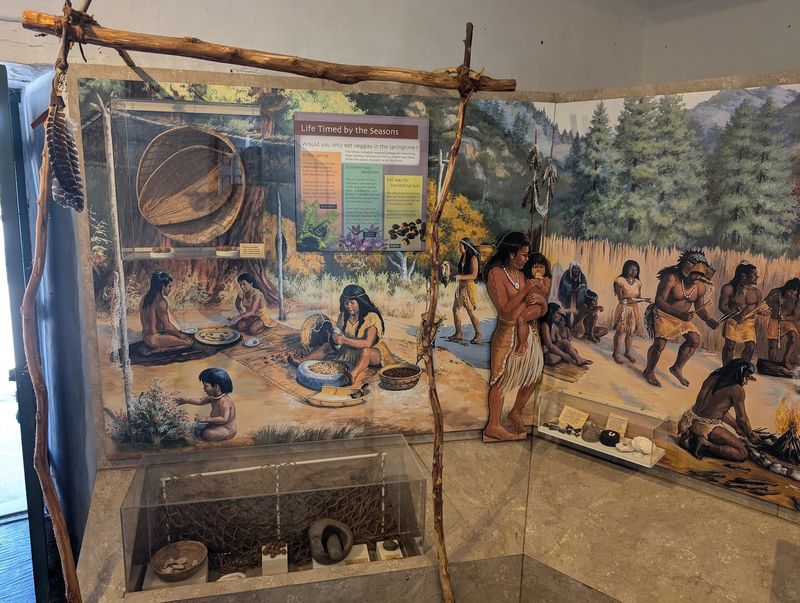
Step through the doors and the rooms open up as restored interpretations of mission life, told largely from Ohlone and Yokuts perspectives rather than only the friars’. That choice makes a difference.
Period furnishings, tools, clothing, and religious items fill the spaces, and there are mosaic murals along interior walls that photograph beautifully if you like wide shots.
The standout for me was the multimedia piece called People Who Lived Here. Audio narration, artwork, and personal accounts were developed together with contemporary Native community members.
One room holds a model of the original mission complex, which helped me finally understand how the pieces fit together on the hill. Seeing the layout in miniature made the 200-foot Lost Adobe feel less abstract.
Staff here tend to be genuinely knowledgeable, and several visitors mention learning more from a short conversation than from all the signage combined. If a ranger is around, ask questions.
Families do well here too. Kids working on the classic California mission school project will find plenty of material, and pamphlets at the entrance are clear and well organized.
The Garden, the Patio, and That Enormous Avocado Tree
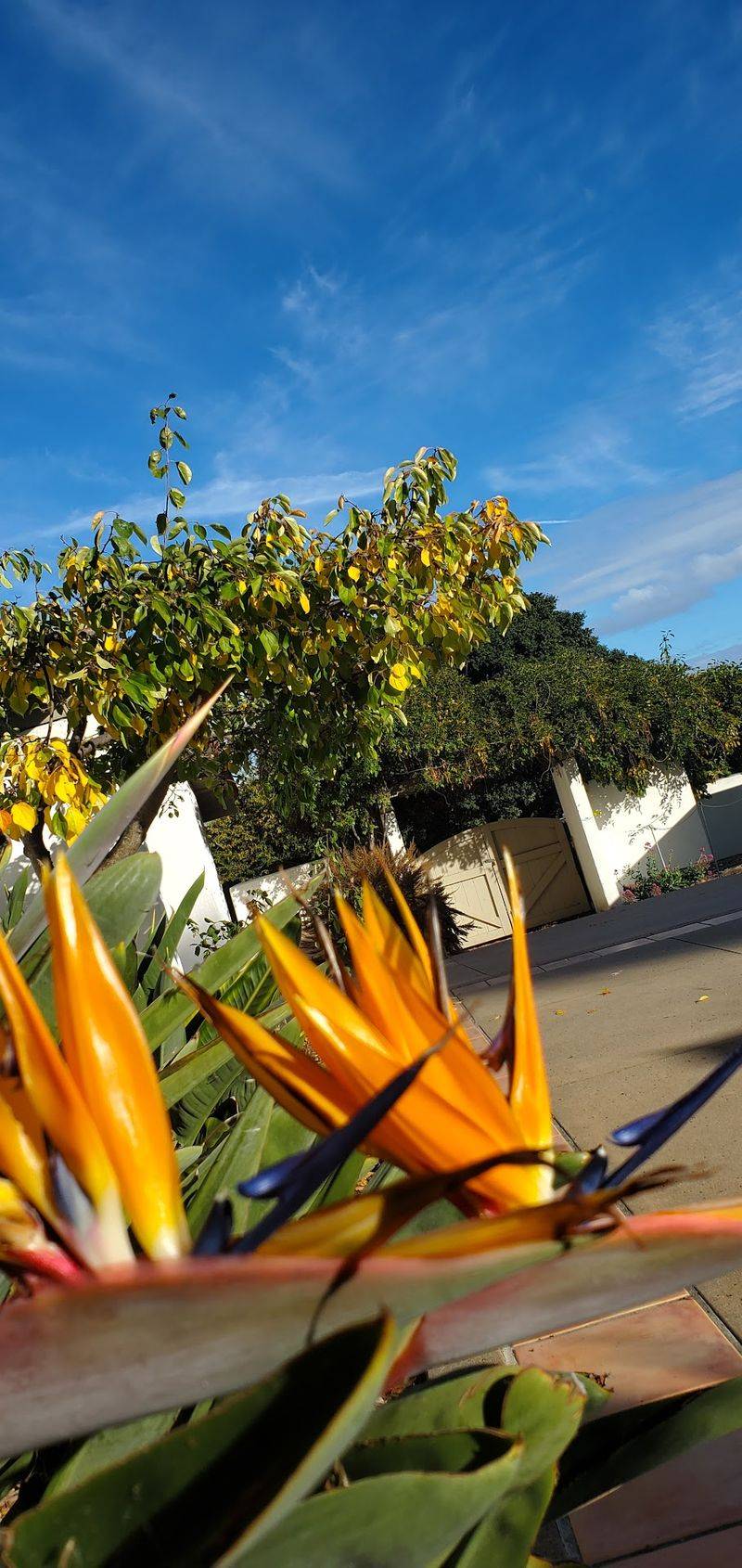
Behind the adobe there is a patio and garden area that I honestly did not expect, and it turned out to be my favorite spot on the property. Benches, shade, and a view sloping down over the city.
A massive avocado tree anchors the middle of the grounds. People mention it constantly, and once you see the trunk you understand why.
Mission gardens here once grew watermelons, squash, walnuts, olives, and peaches, which tells you how much food production happened on this hill. Reading that while sitting among the plantings connects the dots nicely.
There is a picnic area too, decently sized and quiet. Pack lunch from downtown, walk up, and eat with a city view instead of fighting for a table near the boardwalk.
The whole neighborhood carries a calm mood that surprised me given how busy Santa Cruz gets. Even in the afternoon, the loudest sound was wind in the trees.
If you need a break from beach crowds, this patch of green does the job well, and it costs nothing to sit here as long as you like.
Sorting Out the Replica Church Confusion
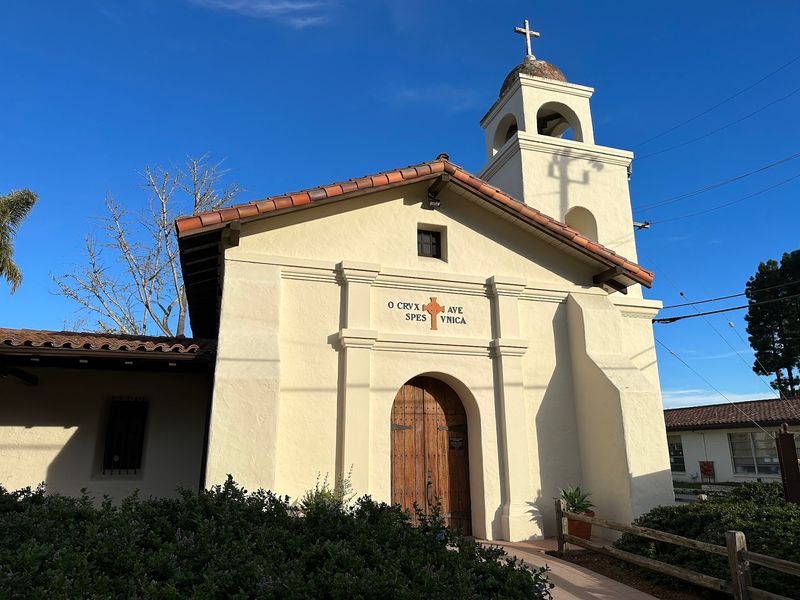
Plenty of visitors arrive convinced the pretty little church nearby is the original mission. It is not, and knowing that ahead of time saves some confusion.
Mission Santa Cruz was founded in 1791 as the twelfth in California’s chain of 21 missions. The first site near the San Lorenzo River flooded, so it moved up to the bluff in 1793.
The original adobe church measured 112 feet long and 29 feet wide. An earthquake in 1857 brought it down, and much of the material was hauled away for other projects.
What stands today is a half-scale replica built in the 1930s, now Holy Cross Church, which holds artifacts from the original and serves as a parish chapel. It is worth seeing, just for different reasons.
The State Historic Park is a separate thing entirely, focused on the Neary-Rodriguez Adobe. Two sites, two stories, a short walk apart.
I actually think visiting both back to back is the smart move. One shows you what people rebuilt from memory, the other shows you what genuinely survived.
Seeing them together also makes the losses easier to understand. The replica gives the vanished church a shape again, while the surviving adobe preserves something far more tangible.
Within a few minutes, you move between reconstruction and original history without needing to imagine either completely.
Planning Your Visit and Leaving With Something to Think About
Practical stuff first, because the hours here catch people off guard. The park is closed Tuesdays and Wednesdays and runs 10 AM to 4 PM the rest of the week.
Admission is free, with donations accepted, and the tour is self-guided. Set aside about an hour, maybe ninety minutes if you linger in the garden or chat with staff.
Parking on the surrounding streets is manageable, and downtown Santa Cruz sits close enough for an easy walk afterward. Pairing the two makes a solid half day.
What stayed with me had nothing to do with logistics. It was the idea that a building 200 feet long, full of families, could vanish so completely that its rediscovery came down to a chance find in 1978.
History here is not finished. Soil keeps records that paper never did, and researchers are still reading them.
Come for the oldest adobe in the county, stay for the strange, humbling thought that the ground under your shoes may still be holding onto something nobody has found yet.
Address: 144 School St, Santa Cruz, CA 95060
