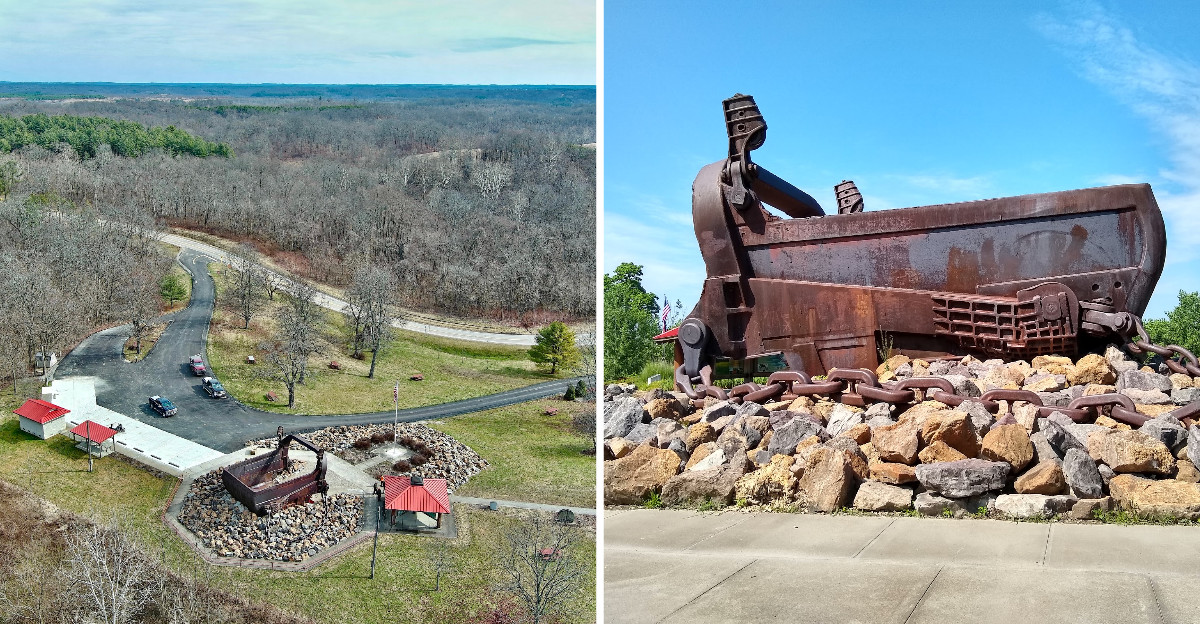
Steel buckets so big that two school buses could park inside are not something you see every day, and spotting one along an Ohio road is enough to make anyone pull over. This bucket once hung from the largest dragline excavator ever built, a machine that dug coal in the hills for 22 years.
Today it is the only piece of that giant left, sitting in a quiet park built to honor the miners who worked the land. Stepping inside, the steel walls rise high overhead, and the scale makes you feel very small in the best possible way.
The bucket has been standing here for years, rusting slowly, holding the memory of an industry that shaped this region. History, road trips, and really big things all come together in this corner of Ohio.
The stop stays with you long after the drive away. Miners once operated machines that moved mountains, and this bucket is the proof.
Meeting the Bucket Face to Face
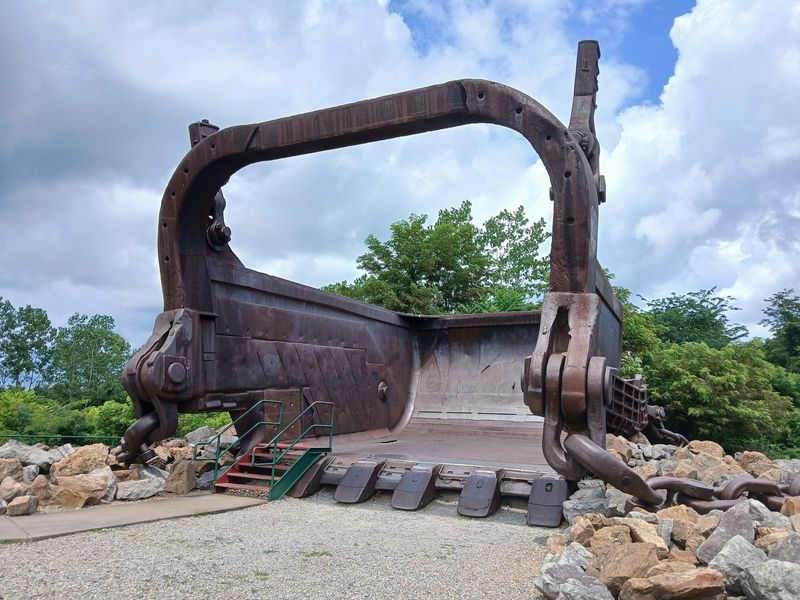
My car door was barely shut before I started laughing at the size of the thing. Photos had warned me, yet nothing prepared me for how the steel walls tower over the parking lot.
Empty, this bucket weighs 460,000 pounds. When Big Muskie was digging, it could scoop up another 640,000 pounds of rock and dirt in a single bite, which made a full load weigh around 550 tons.
Its capacity was 220 cubic yards, roughly the space of a 12-car garage. People often say two Greyhound buses could fit inside side by side, and after pacing it out myself, I believe it.
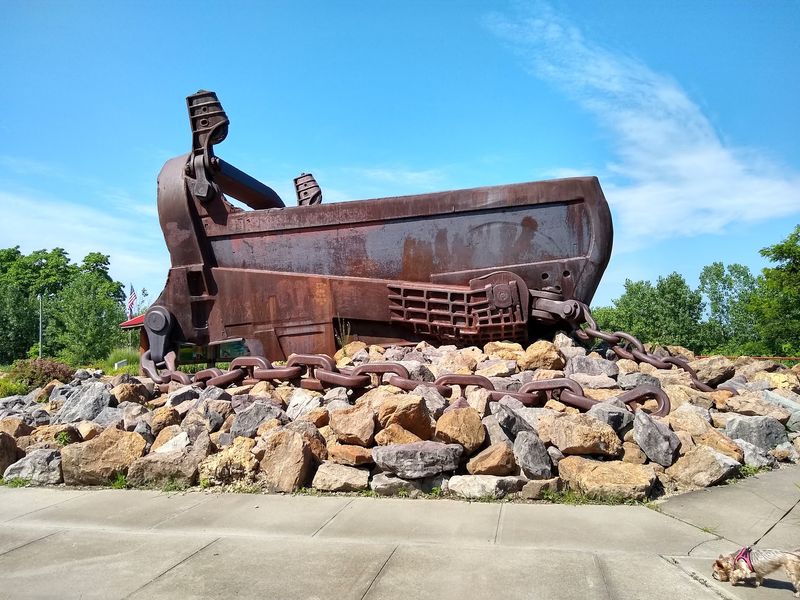
The giant chain links resting nearby caught my eye next. Each one is heavy enough that kids try to lift them and give up with a grin, which is half the fun.
Look closely at the front edge too, where the teeth once sat. Every tooth was about 3 feet long and weighed 1,000 pounds, so imagine a set of chompers that weighs more than a small car.
Give yourself a few minutes to circle the whole bucket before reading any signs. Seeing it from every angle helps your brain slowly accept that something this huge was actually swung through the air.
Climbing Inside a Steel Giant
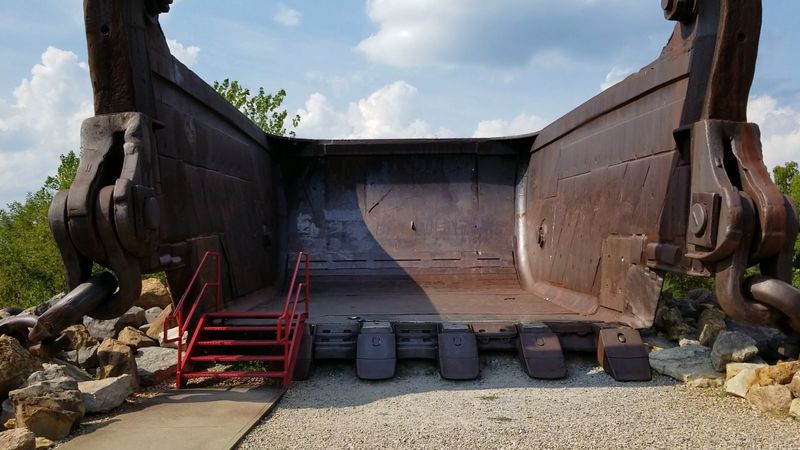
Few roadside stops let you actually walk into the exhibit. Here, you can stroll right inside the bucket, and I did it twice because once did not feel like enough.
Inside, the steel floor stretches out like a small gym. The walls block some of the wind, so sounds bounce around in a soft, hollow way that makes everyone start talking a little quieter.
I noticed families turning it into an instant playground. Kids ran from corner to corner, while parents stood in the middle with their phones up, trying to fit the whole space into one shot.
Here is a helpful tip from my visit. Wear shoes with good grip, since the metal can feel slick after rain or morning dew.
Sadly, some visitors have carved into or spray painted the steel over the years. Please keep your hands to yourself and leave nothing behind but footprints, because this is the only piece of Big Muskie left anywhere.
Before stepping back out, stop and look up at the rim. Picture tons of rock sliding over that edge every minute, all day and all night, and suddenly the quiet feels even more special.
The Machine That Walked
Here is a fun fact that blew my mind: Big Muskie did not roll on wheels or tracks. It walked on four giant shoes, each about 20 by 65 feet, pushed along by hydraulic power.
Built by Bucyrus-Erie, the 4250-W model was the only one of its kind ever made. The Central Ohio Coal Company, part of American Electric Power, ran it from 1969 to 1991.
The numbers sound made up. It stood around 22 stories tall, had a boom over 300 feet long, and weighed somewhere between 13,500 and 15,000 tons.
Width was another shocker, since the machine measured about 151 feet across. That is about as wide as an eight-lane highway, which made me wonder how anyone steered it.
Power came from electricity running at 13,800 volts through 28 motors. Together they made 48,500 horsepower and used enough electricity for a town of 27,000 people.
Building it was a huge job, too. Parts arrived on more than 300 railcars and 250 trucks, and crews spent two years and over 200,000 work hours putting it together right on site.
Knowing all this, the bucket felt less like a lone object and more like a doorway into a lost giant.
Reading the Story on the Signs
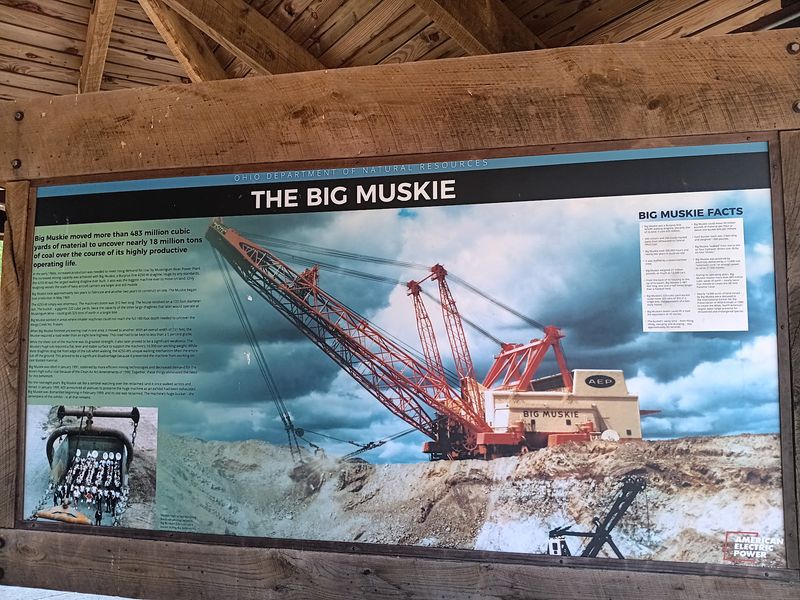
I am usually a quick sign skimmer, yet these boards kept me reading for a long while. They explain the history of the Central Ohio Coal Company in clear, simple language.
One stat stuck with me more than any other. Over its 22 years, Big Muskie moved more than 483 million cubic yards of earth, about twice what was dug to build the Panama Canal.
It worked 24 hours a day and 364 days a year. At full speed it could shift around 39 million pounds of earth and rock every hour.
The signs also explain why the machine stopped. Demand for high-sulfur coal dropped, new clean air rules arrived, operating costs climbed, and many people pushed back against strip mining.
People did try to save it as a museum piece. Moving and rebuilding something so huge simply cost too much, so in 1999 it was cut up for scrap, and only the bucket was kept.
My advice is to read the signs before taking photos. Once you know the full story, every picture you snap carries a lot more meaning, and you will spot details you would have missed otherwise.
Names on the Wall of Honor
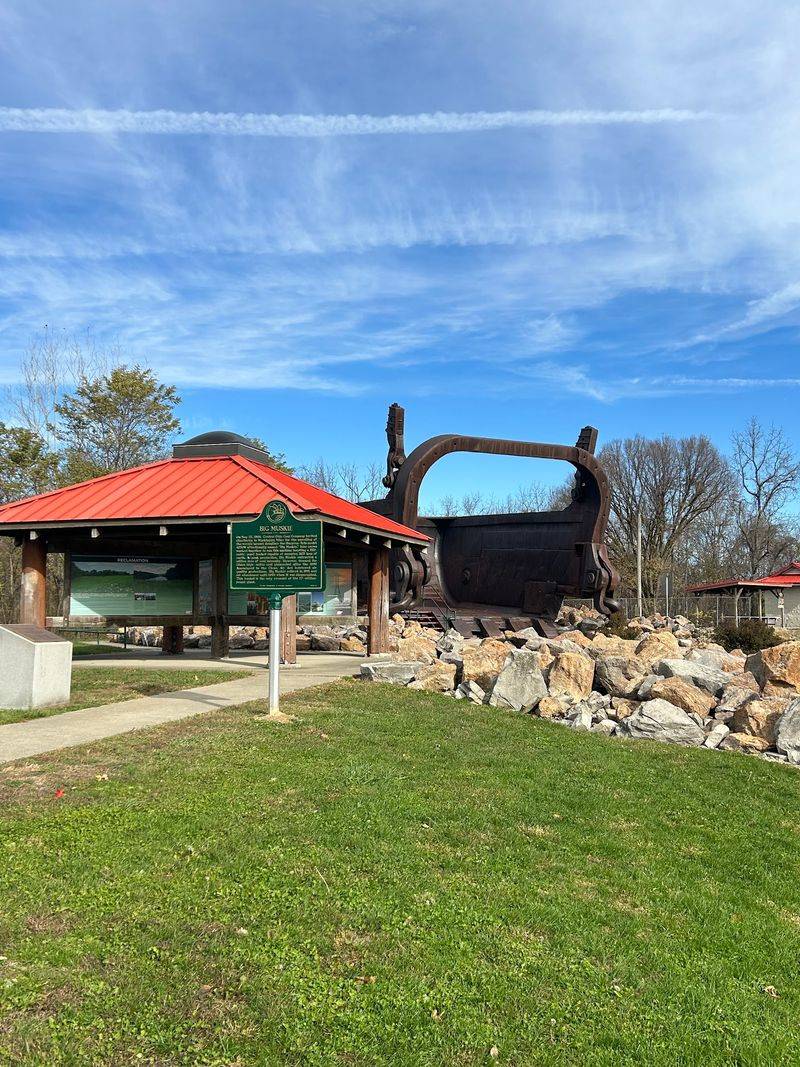
A hush settled over me when I reached the Wall of Honor. After all the big numbers and giant steel, this part of the park is about people.
Listed here are names of past and present employees of the Central Ohio Coal Company. The park itself was created to honor the region’s mining families, especially miners who lost their lives on the job.
Reading the names slowly made the history feel personal. Somebody ran that machine through snowy nights, somebody fixed its motors, and somebody drove home tired to a family waiting for them.
There is a lovely detail many visitors miss. The wooden structures in the park are built from red oak trees that miners themselves planted on reclaimed land about 50 years ago.
That means the shelter over your head grew from the very ground those workers helped heal. I ran my hand along the timber and felt that connection in a quiet, real way.
Take a moment here even if you are in a hurry. Families sometimes come looking for a grandparent’s name, so speaking softly and giving others space is a kind way to show respect.
Picnics, Views, and Rolling Green Land
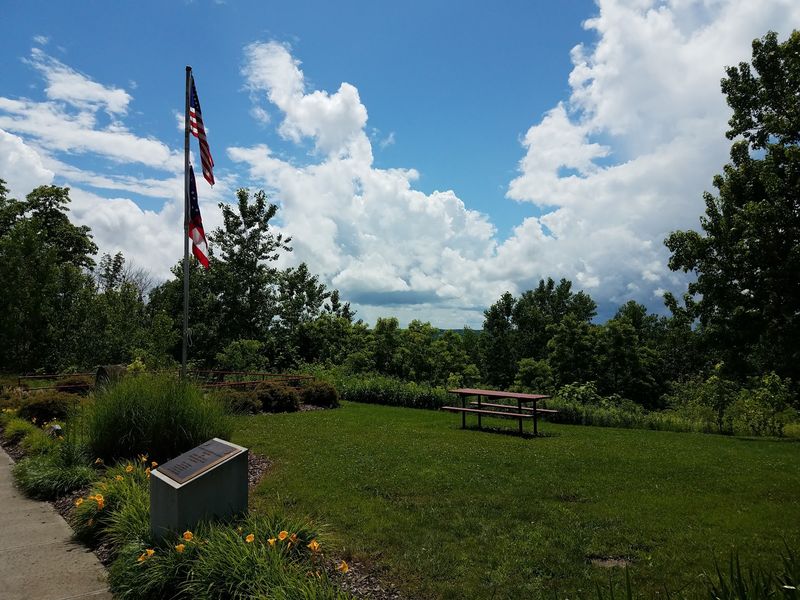
Lunch with a view of an old coal mine might not sound dreamy, but trust me on this one. The overlook here shows soft green hills and woods stretching out in every direction.
Honestly, I kept forgetting this land was once dug up by the biggest dragline on Earth. Years of reclamation turned scarred ground back into fields, forests, and quiet places for wildlife.
Nearby, The Wilds, a large wildlife park, sits on about 10,000 acres of land reclaimed after Big Muskie’s mining. Visiting the bucket first gives you great background before heading over for animal watching.
The picnic area has tables and a covered shelter, which is handy on drizzly days. Restrooms on site are the simple latrine style, so packing hand sanitizer is a smart move.
Bring a few extras for comfort. Bug spray helps in warmer months since flies can show up in big numbers, and a light jacket is nice when the wind sweeps across the hilltop.
I lingered at the overlook longer than planned, munching snacks and watching cloud shadows slide over the hills. It was a calm finish after all that heavy history.
Twisty Roads and Smart Visit Tips
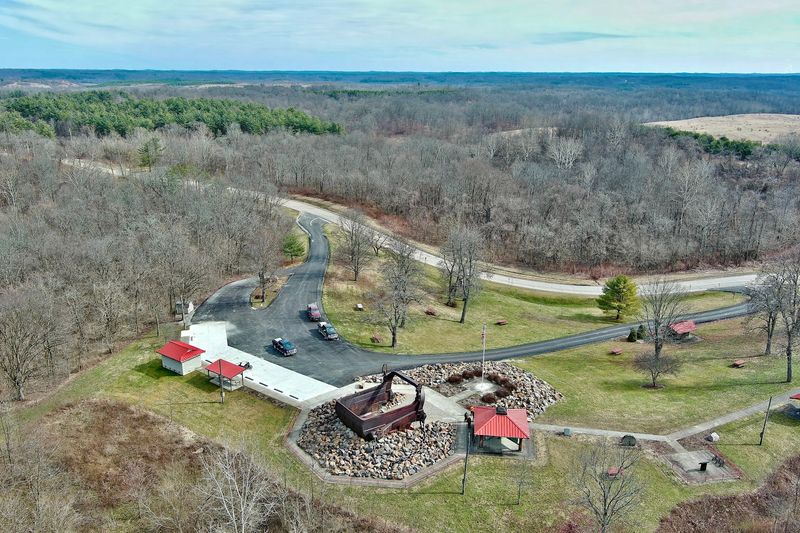
Getting there turned out to be half the adventure. State Route 78 twists, dips, and climbs through the hills like a slow roller coaster, and motorcyclists clearly love it.
Drive carefully, since some curves come up fast. Wildlife lives all around here too, so keep an eye out for deer or even a bobcat near Jesse Owens State Park.
The park sits about 16 miles west of Caldwell, deep in quiet country. Cell signal can get spotty, so I recommend downloading your map before you leave town.
Parking is right next to the bucket, which makes it easy for every age and ability level. There is room for campers and larger rigs as well.
Visiting is free, which made me even happier. A handy camera stand lets you set your phone on a timer and grab a group photo with the bucket behind everyone.
New improvements, including a visitor center, have been in the works, so some areas may be under construction. Checking the Ohio Department of Natural Resources website before your trip will help you plan.
Address: 4477 OH-78, McConnelsville, OH 43756
