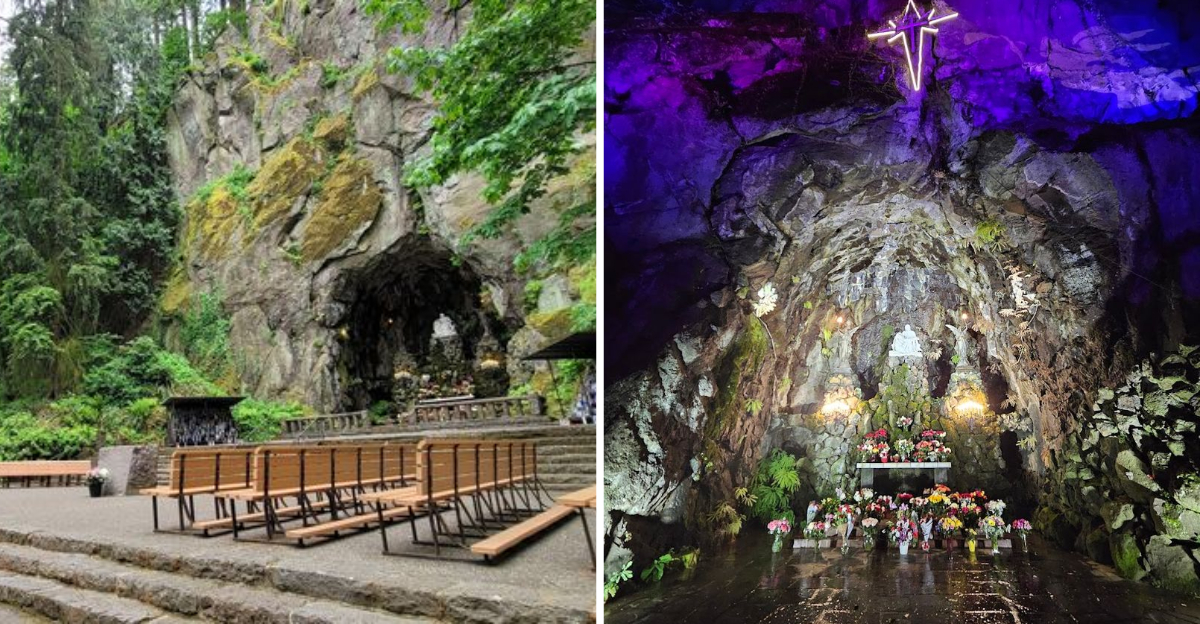
A sixty five foot tall concrete cross sits on top of an Oregon hill, visible from miles away. The sanctuary below holds a cave carved directly into basalt rock, complete with a marble replica of a famous sculpture.
In nineteen thirty four, this place hosted the first International Marian Congress held in the United States, a major event that drew attention from Catholic communities far beyond the state.
A nun once claimed she saw the Virgin Mary here, and the site has drawn visitors ever since. I turned off the busy road and suddenly found myself surrounded by towering trees and complete quiet.
Sixty two acres of gardens, paths, and sculptures spread across the base and top of a hundred and ten foot cliff.
Portland has a peaceful secret hiding in plain sight.
The Grotto Cave and the Pieta Sculpture
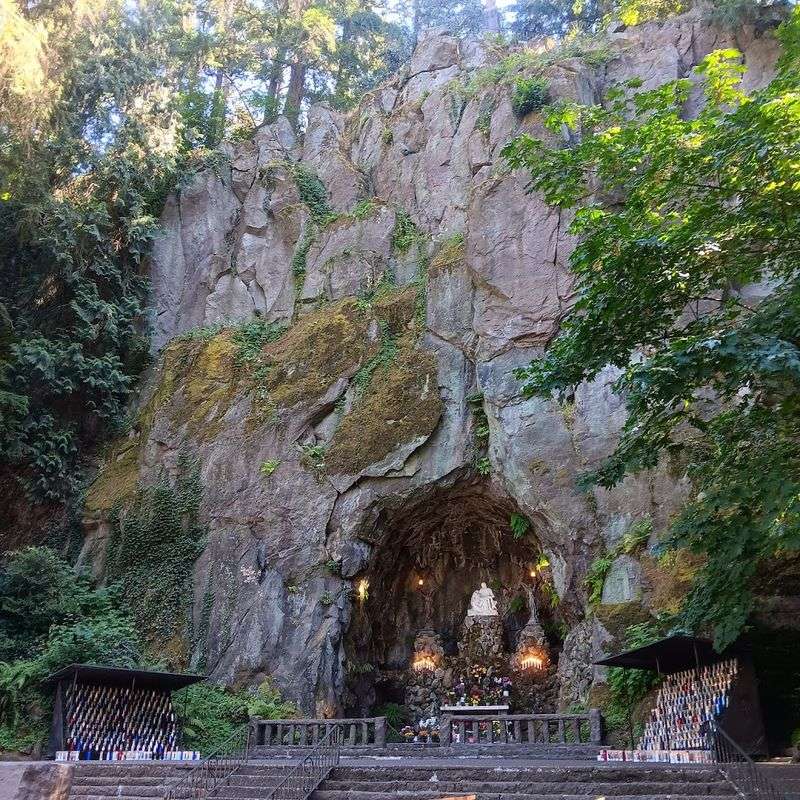
There is something quietly powerful about seeing a marble sculpture nestled inside a cave carved directly into a cliff face. The grotto cave at this sanctuary is roughly 50 feet high, cut into ancient basalt rock, and inside it holds a marble replica of Michelangelo’s famous Pieta, the image of Mary cradling Jesus after the crucifixion.
The detail in the sculpture is striking, and the natural stone walls around it give the whole scene a raw, unpolished feeling that a traditional church interior simply cannot replicate. Visitors of all backgrounds tend to go quiet when they approach it.
You do not need to be Catholic, or even religious, to feel the weight of the moment.
Founder Servite Father Ambrose Mayer established this sanctuary in 1924, and the cave grotto was central to his vision from the very beginning. The basalt cliff it is carved from is part of Rocky Butte, a volcanic feature that gives the site its dramatic natural backdrop.
Many visitors say this spot alone, free to access from the ground level, is worth the trip to Portland. It genuinely is.
The 1934 International Marian Congress at The Grotto
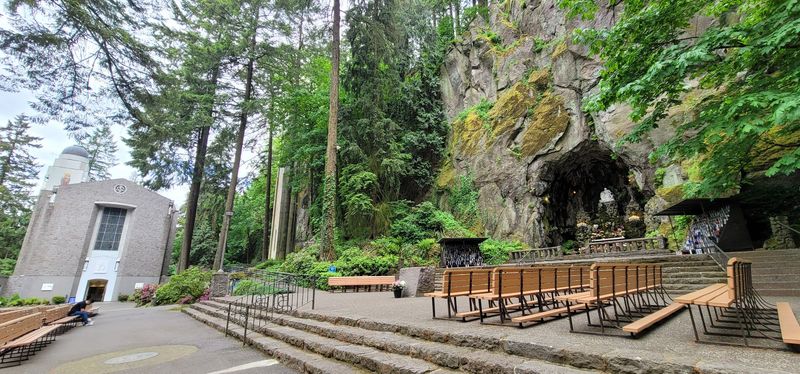
Few people realize that a hillside sanctuary in Portland once hosted one of the most significant Catholic events ever held on American soil. In 1934, The Grotto was chosen as the site for the first International Marian Congress held in the United States, a gathering entirely devoted to honoring the Virgin Mary.
To prepare for the event, the Chapel of St. Anne was constructed that same year to house the Blessed Sacrament during the congress. It was a major undertaking for a sanctuary that was only about a decade old at the time.
The fact that Portland was selected for such a globally significant religious event says a lot about the reputation The Grotto had already built.
That congress drew attention from Catholic communities far beyond Oregon, cementing the sanctuary’s place in American religious history. Today, the grounds still carry that sense of historical significance, even if most casual visitors walk past without knowing what happened here nearly a century ago.
Stopping to read the historical markers around the property gives the whole visit a much richer context. History has a way of making a beautiful place feel even more meaningful.
The Cross on the Hill and Its Visibility Across Portland
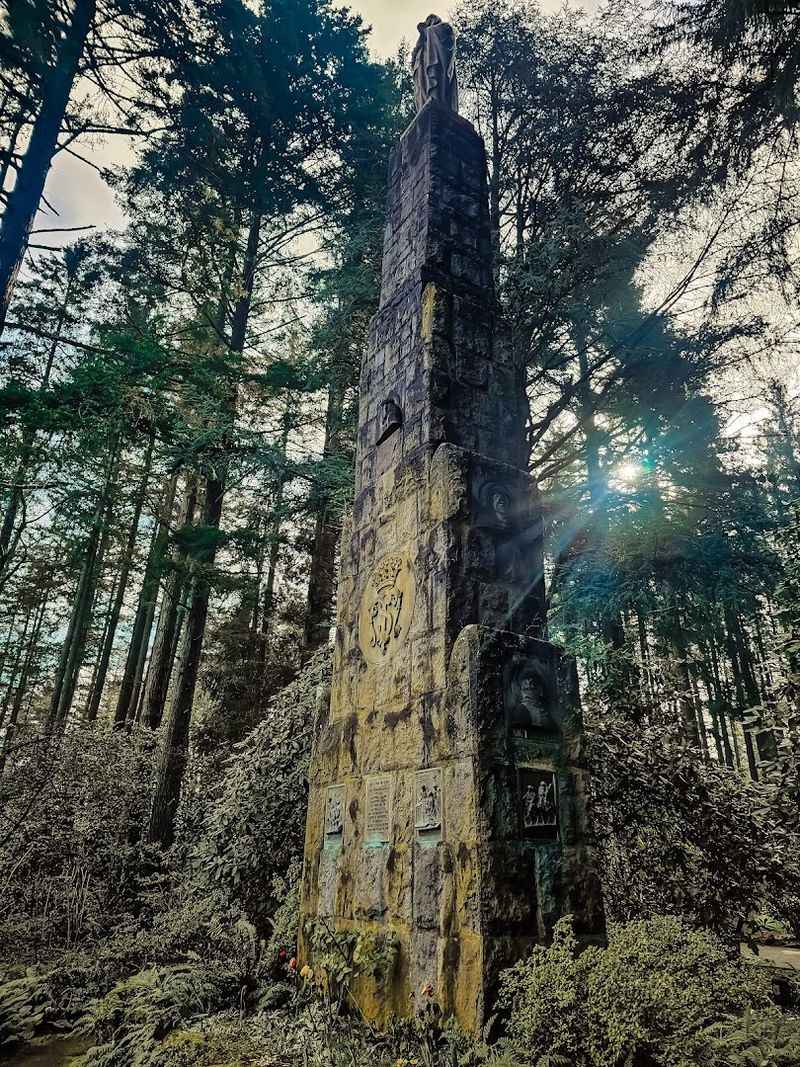
One of the first things people notice about The Grotto from a distance is the cross that sits atop the hill above the sanctuary. It is visible from multiple miles away, and the cliff-side Meditation Chapel features a lighted cross that can even be spotted from Interstate 205 on a clear night.
Getting up to that upper level requires a short elevator ride, and the view from the top is genuinely worth every penny of the ticket. The upper garden level sits above the 110-foot basalt cliff, and from there you can look out over a landscape of trees, flowers, sculptures, and in the distance, the broader Portland skyline.
It feels completely separate from the city below.
The Chapel of Mary, built in 1955, anchors the upper level with its 110-foot bell tower topped by a gold dome and cross. That tower is a landmark in its own right.
Visitors who skip the elevator often say afterward that it was their one regret. The upper gardens offer a completely different atmosphere from the ground level, quieter, more open, and surprisingly contemplative even on a busy weekend afternoon.
The Upper Gardens and Botanical Beauty Above the Cliff
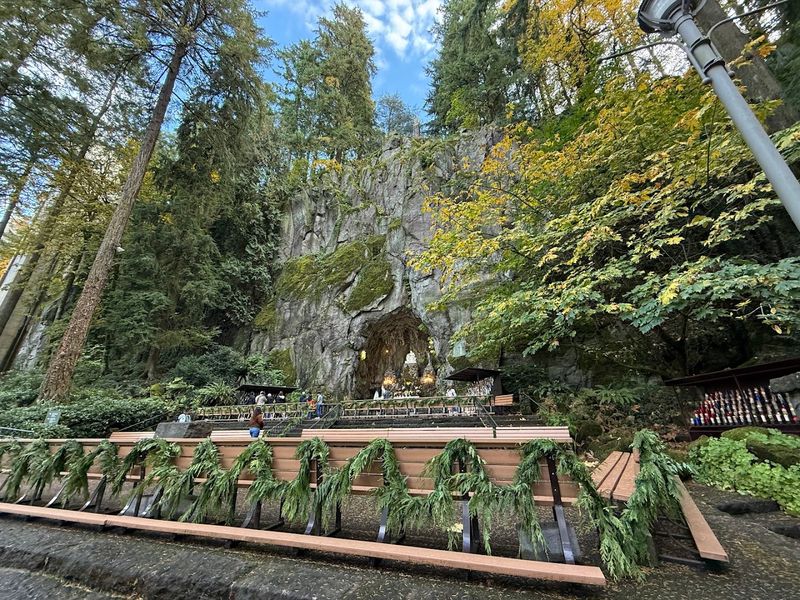
Reaching the upper level of The Grotto by elevator opens up a world that feels nothing like the forested ground below. The upper gardens spread across the top of the basalt cliff, filled with carefully maintained flower beds, winding paved paths, and religious sculptures placed thoughtfully among the plantings.
Seasons matter a lot up here. Spring brings bursts of color from blooming flowers, while summer fills the paths with lush green growth.
Even in winter, the structure of the garden and the quiet presence of the sculptures give the space a meditative quality that many visitors find unexpectedly moving.
Several visitors have mentioned that coming during the day in warmer months offers a completely different experience from the popular Christmas Festival of Lights. The daytime gardens are peaceful and uncrowded, with benches placed at intervals so you can simply sit and take things in.
Paths are smooth and easy to navigate. The combination of natural beauty and carefully placed religious art creates an atmosphere that feels both curated and organic at the same time.
If you only take the elevator once, make it a clear morning when the light filters through the trees and everything glows just a little.
The Festival of Lights at Christmas Time
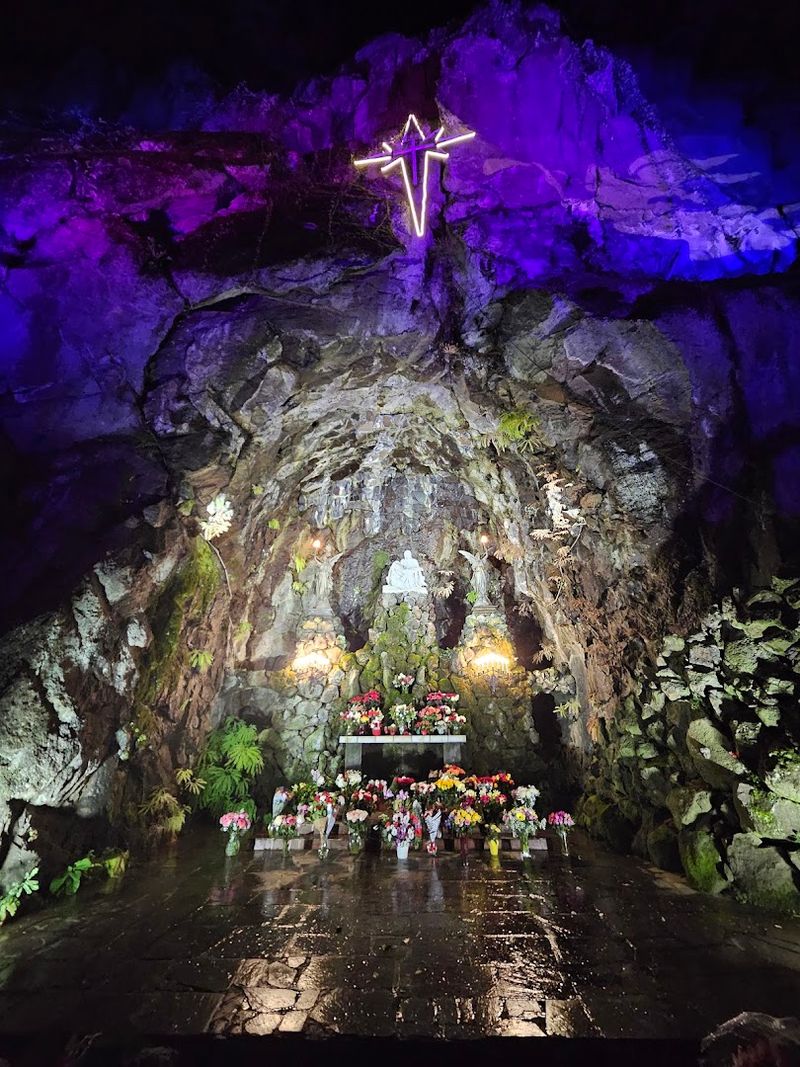
Come December, The Grotto transforms into something that people drive hours to see. The annual Festival of Lights fills the entire sanctuary with thousands of lights strung through the towering trees, illuminating sculptures, pathways, and the chapel in a warm, golden glow that feels genuinely otherworldly after dark.
Choir performances from local schools and community groups echo through the grounds throughout the season. The sound of singing drifting between the trees while lights flicker overhead is the kind of memory that sticks with you long after the drive home.
Hot cocoa is available for purchase, and it has become something of a beloved tradition for returning visitors.
Booking ahead is strongly recommended because parking fills up fast and crowds are substantial, especially on weekends close to Christmas. Several reviewers noted arriving to a completely full lot and having to park along the road outside.
Going on a weekday evening, or arriving early, makes the experience noticeably more relaxed. The church itself is lit up inside and out, and the overall atmosphere is festive without feeling overwhelming.
For families with children, it is one of those rare holiday outings that genuinely delivers on its promise every single year.
The Meditation Chapel and the Quiet Spaces for Reflection
Not every visitor comes to The Grotto for the gardens or the history. A significant number arrive simply needing a quiet place to sit and think.
The sanctuary offers several spaces designed exactly for that purpose, and the Meditation Chapel is one of the most memorable among them.
Its glass exterior faces the cliff, and the lighted cross visible from the outside becomes a focal point inside as well. The chapel is small and intimate, which makes it feel personal rather than grand.
You can sit there for as long as you need, and no one will rush you out or ask questions about your background or beliefs.
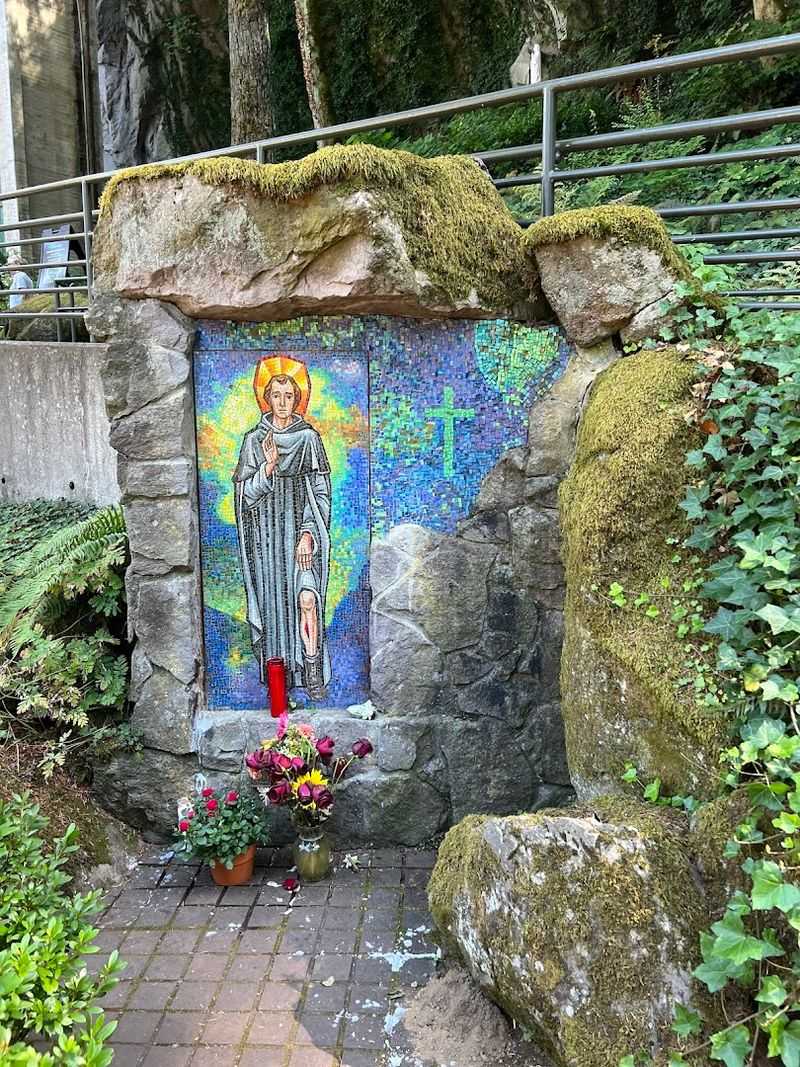
The Stations of the Cross are also laid out across the grounds, offering a walking meditation path for those who want movement alongside reflection. Benches are placed generously throughout the property, shaded by old-growth trees that make the air feel noticeably cooler and fresher than the streets just outside the gates.
The visitor center near the entrance has a small museum section where you can learn about the site’s history, and there is a petition box where people leave handwritten notes. It is a small detail, but it adds a layer of human warmth to the whole experience.
Visiting The Grotto: Practical Tips and What to Expect
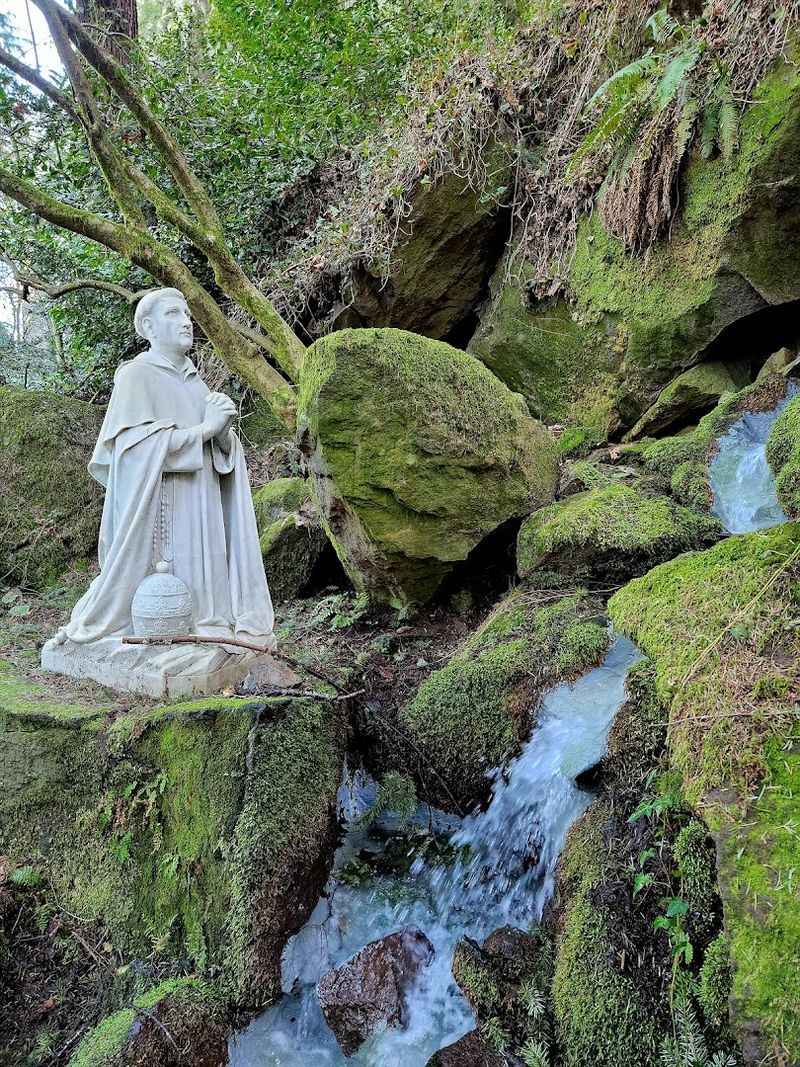
First-time visitors are often surprised by how accessible The Grotto actually is. The ground level, which includes the cave grotto, the Pieta sculpture, the small chapel, and several outdoor sculptures, is free to visit.
The upper gardens and elevator access require a ticket, but the ground level alone offers a genuinely rich experience.
Parking is the one consistent challenge. The lot on site is small, and on busy days, especially weekends and holiday events, it fills up quickly.
Arriving early, ideally before 10 AM on weekdays, makes a noticeable difference. Some visitors park along the road outside and walk in, which is a perfectly reasonable option given how close the street parking tends to be.
The sanctuary is open most days from 9 AM to 8 PM, which gives you plenty of time to explore without rushing. The gift shop near the visitor center carries religious items, medallions, holy water, and seasonal decor, and it doubles as a fundraising support for the church.
The grounds welcome visitors of all faiths and backgrounds. Staff at the visitor center are consistently described as warm and helpful.
The Grotto is located at 8840 NE Skidmore St, Portland, OR 97220, and it is genuinely one of those places that rewards a second visit.
Address: 8840 NE Skidmore St, Portland, Oregon
