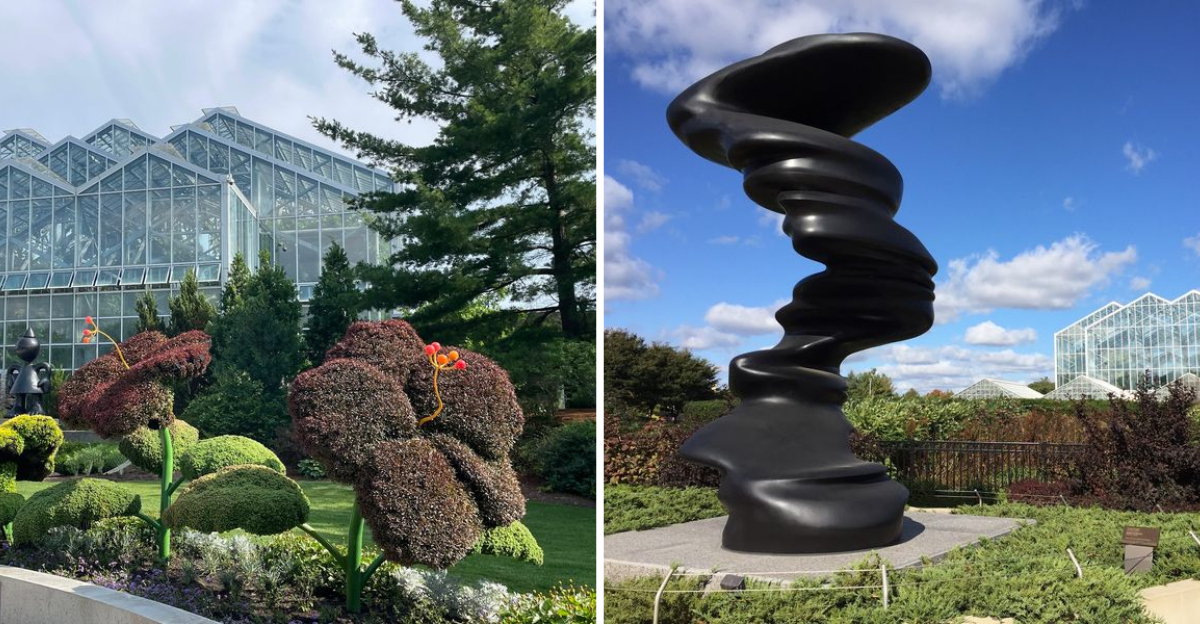
I showed up expecting a quiet hour among flower beds and left five hours later with sore feet and a camera roll I could not stop scrolling through. That is how a Michigan garden and sculpture park rearranged my whole day in the best way.
It spreads across hundreds of acres and somehow holds a five-story tropical conservatory, an eight-acre Japanese garden, a replica farm, and a massive bronze horse without any of it feeling crowded.
What surprised me most was how the art and the plants seem to be having a conversation, one leaning into the other instead of competing.
I kept turning corners and finding something completely different from what I had just seen. The tropical conservatory had humidity so thick it fogged my camera lens.
The Japanese garden was so quiet I could hear the koi shifting beneath the lily pads. And that horse, a twenty-four-foot bronze creature, looked like it might take a step if I blinked too long.
Locals treat it like a second backyard, and after one visit I understood exactly why. If you are anywhere near the state, this is the kind of place that makes you forget about the clock entirely.
The American Horse Standing Tall Over the Grounds
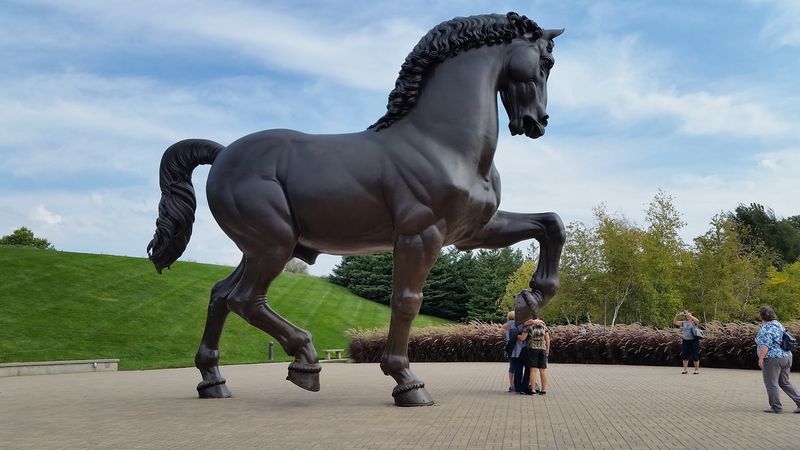
My neck actually got tired from looking up. The American Horse rises 24 feet from its base and weighs more than 15 tons, which numbers alone do not really prepare you for.
Sculptor Nina Akamu created it based on a design Leonardo da Vinci sketched in the 15th century but never finished casting. Da Vinci’s original clay model was destroyed before the bronze was ever poured, so this piece finishes a job that sat unfinished for roughly 500 years.
The setting helps enormously. The horse sits in its own open courtyard with clipped greenery around the edges, which keeps your eye from wandering and makes the scale hit harder.
I noticed kids running circles around the base while adults stood back and squinted at the muscles in the legs. Both reactions felt right.
Practical tip from experience: walk all the way around it before you take photos. The profile view shows off the arched neck, but standing near the front hooves and shooting upward gives you that dizzy, towering effect that people remember.
Grandparents in the reviews mention their grandkids calling it simply the big horse, and honestly that nickname sticks. It has become the unofficial landmark of the whole park.
Mornings are calmer here if you want a clean shot. By midday there is usually a small cluster of people taking turns posing, which is part of the fun too.
Give yourself ten minutes minimum. Rushing past it would be a genuine waste.
Five Stories of Tropical Green Inside the Lena Meijer Conservatory
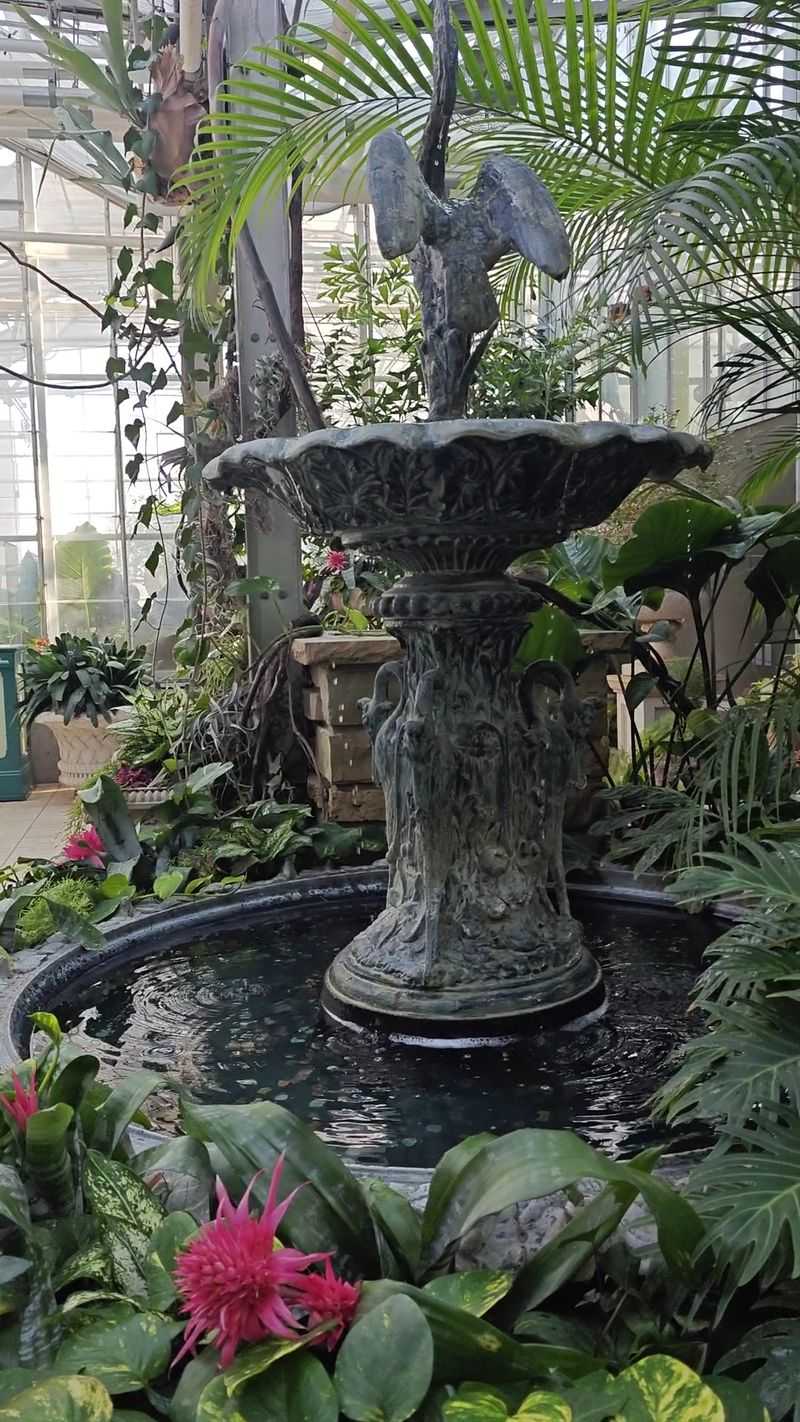
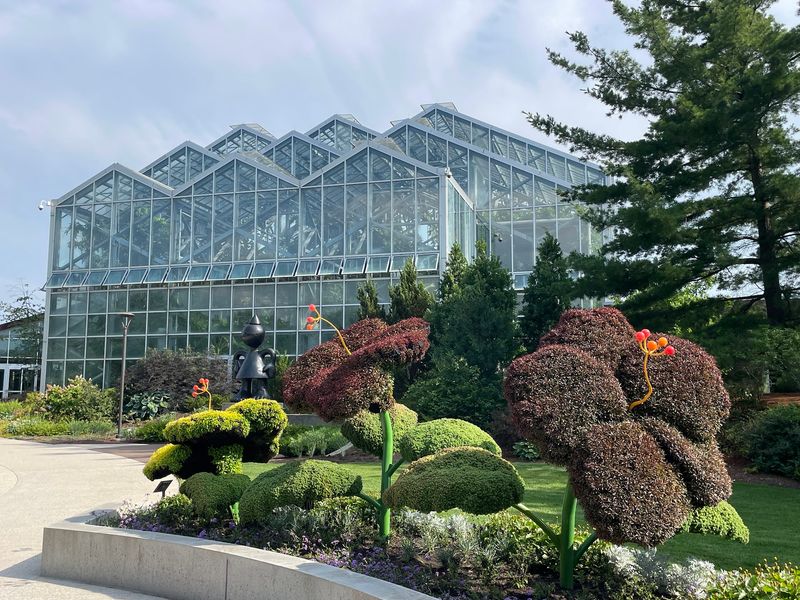
Stepping through the doors in February felt like being handed a plane ticket. The Lena Meijer Tropical Conservatory runs five stories tall across 15,000 square feet, making it the largest tropical conservatory in Michigan.
Inside there are more than 500 tropical plant species pulled from five continents. Fig trees from India stretch toward the glass ceiling, Asiatic bamboo rustles overhead, and banana plants unfurl leaves wide enough to hide behind.
A rock waterfall runs through the middle, and live tropical birds move around the upper branches, so there is always some sound happening.
The orchid collection numbers around 3,500 pieces, with exotic varieties from Central and South America tucked into corners you have to slow down to notice. I missed half of them on my first pass and doubled back.
Spring is the headline season here. From March into April the conservatory hosts the largest temporary tropical butterfly exhibition in America, with thousands of butterflies flying loose around visitors.
People in reviews describe butterflies landing right on their shoulders, and the warm humidity feels especially good when Michigan is still gray outside.
Come holiday time, the whole space converts for the Christmas and Holiday Traditions exhibition, which is a completely different mood.
One honest heads up: the humidity fogs camera lenses and glasses within seconds. Wipe down, wait a minute, then shoot.
Wear layers you can peel off. You will want them once you head back outside.
Quiet Corners of the Richard and Helen DeVos Japanese Garden
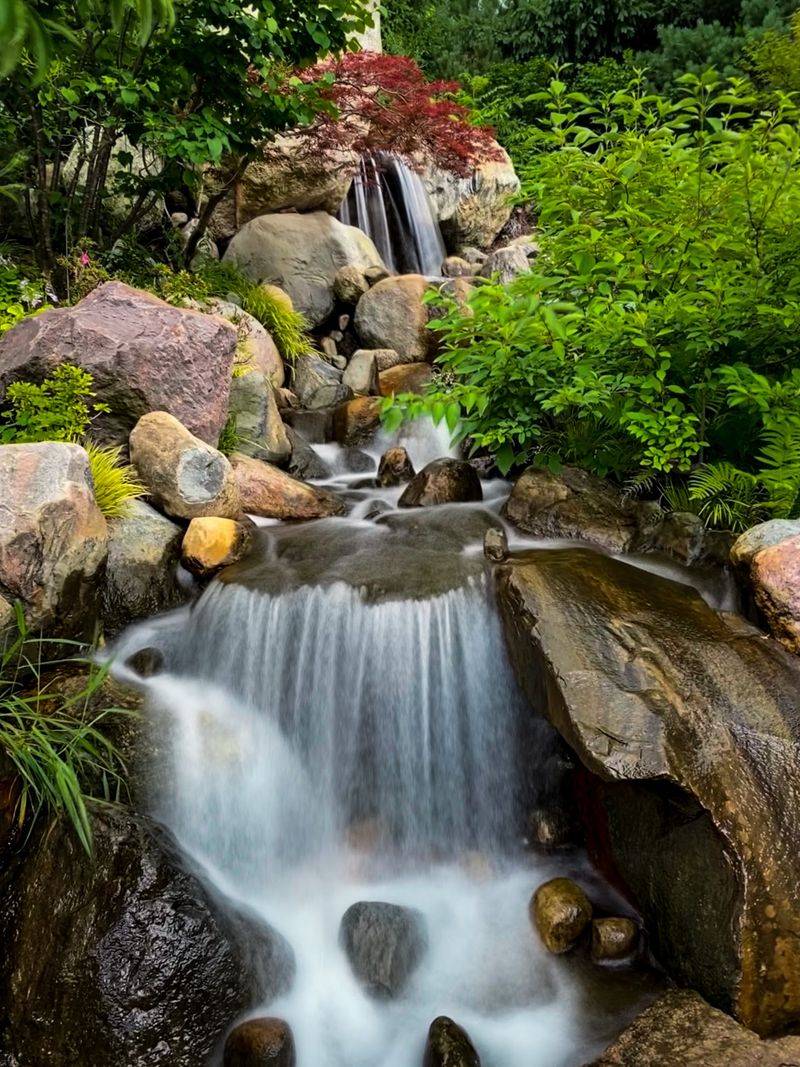
This is where I lost track of time completely. The eight-acre Richard and Helen DeVos Japanese Garden opened in June 2015 and was designed by Hoichi Kurisu, and it is easily the most mentioned area among visitors.
Water does a lot of the work. Waterfalls tumble over carefully placed boulders, elevation changes hide what is coming next, and the sound follows you along the paths.
There is an authentic teahouse that was originally built in Japan, then taken apart, shipped over, and reassembled on site using traditional methods. It still functions.
A ten-foot granite sculpture by Anish Kapoor sits within the garden, which sounds like it should clash with the setting but somehow settles into it instead.
Kurisu designed the space around tranquility and contemplation rather than spectacle, and you feel that difference. Voices drop.
People sit on benches without checking their phones.
I visited during light rain, and several reviewers mention the same thing: drizzle on the leaves and stone makes this section better, not worse. Fewer people, softer light, more sound.
Autumn brings maple color that photographers clearly plan trips around. Spring has its own quieter charm with fresh moss and new growth.
Plan at least 45 minutes here, longer if you tend to linger. Multiple visitors have said the Japanese garden alone justifies the trip.
Walk it slowly, in one direction, without backtracking. The route was designed to reveal things in a sequence.
Thirty Acres Where Big-Name Art Meets Open Meadow
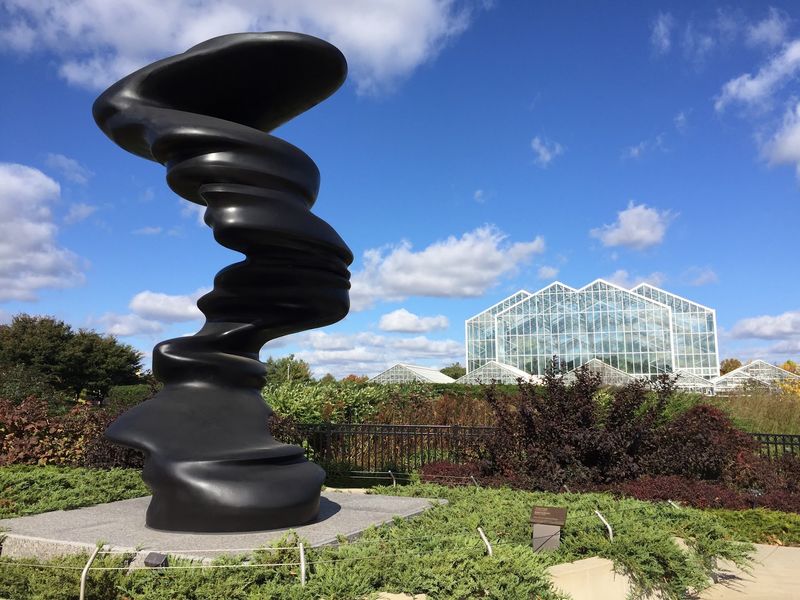
USA Today readers have voted this the number one sculpture park in the United States multiple years running, including 2023, 2024, and 2025. After wandering it, the ranking makes sense.
The outdoor sculpture park covers 30 acres of the campus and holds more than 50 major works. The full permanent collection across the park runs well over 200 pieces.
Names you would expect in a major museum show up out here in the grass: Auguste Rodin, Henry Moore, Barbara Hepworth, Louise Bourgeois, Mark di Suvero, Richard Serra, Roxy Paine, Alexander Calder, and Ai Weiwei with his Iron Tree.
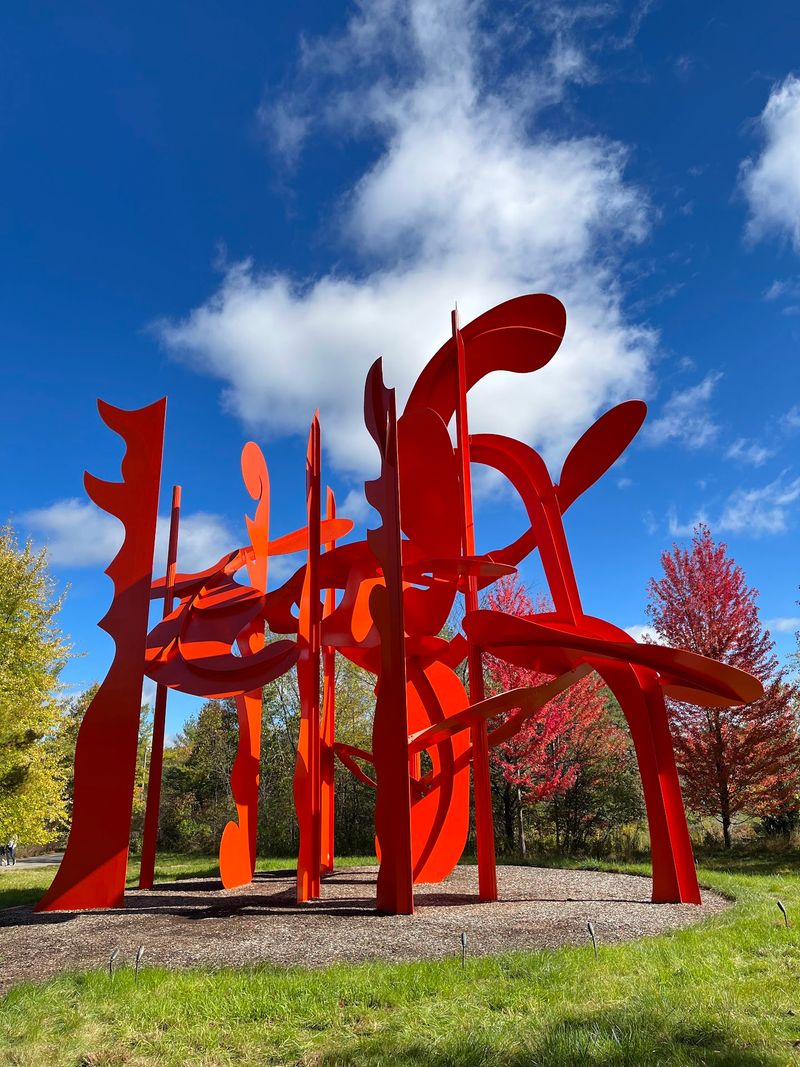
My personal favorite is Plantoir by Claes Oldenburg and Coosje van Bruggen, a nearly 24-foot bright red garden trowel jammed into the ground like a giant just stepped away from planting.
Nick Cave’s Amalgam (Origin) stands 26 feet in bronze and stops people mid-stride.
What makes it work is placement. Nothing is lined up in rows.
Sculptures sit in meadows, along paths, at the edge of lawns, so you discover them instead of being handed a checklist.
One reviewer joked about occasionally wondering whether something was art or just a very confident tree, which captures the mood pretty well.
The Stuart and Barbara Padnos Rooftop Sculpture Garden opened in 2019 atop the Covenant Learning Center and is LEED-certified, giving you an elevated angle on the grounds.
Comfortable shoes are non-negotiable out here.
Where Families Get Happily Sidetracked: The Children’s Garden and Farm
Wet shoes are basically a souvenir here. The Lena Meijer Children’s Garden ranks among the largest interactive children’s gardens in the country, and the water boat section soaks small legs within minutes.
Everything is built for hands and feet rather than looking. Kids climb, splash, poke at interactive exhibits, and generally treat the space like a playground that happens to be full of plants.
Parents in reviews mention that this area alone can eat an hour, and there is an ice cream parlor nearby that makes leaving considerably easier to negotiate.
A short walk away sits the Michigan Farm Garden, a replica of a 1930s-era farm with an orchard, a sugar shack, a produce stand, a windmill, and yes, a replica outhouse that children find hilarious.
Some of the produce grown there actually turns up on plates at the James and Shirley Balk Cafe, which is a nice loop to explain to kids over lunch.
Fun detail worth knowing: the whole main campus is barrier-free and accessible indoors and out. Fred and Lena Meijer insisted on that before any law required it, which means strollers and wheelchairs roll through without drama.
Bring a change of clothes if your kids are under eight. Seriously.
Grandparents seem to love this stretch as much as the kids do, judging by how often family memberships come up in conversation.
Pack snacks, take breaks, and let the schedule fall apart a little.
Trails, Trams, and the Amphitheater That Fills With Music
Sound check caught me on the way out, and suddenly the whole place had a soundtrack. The Frederik Meijer Gardens Amphitheater seats 1,900 on tiered lawn terraces and has a reputation for excellent acoustics.
The Fifth Third Bank Summer Concert Series brings a mix of local, regional, national, and international musicians through each season. Performers over the years have included Bonnie Raitt, the Steve Miller Band, B.B.
King, Lyle Lovett, and Willie Nelson.
Away from the stage, the Wege Nature Trail loops through a wooded section with bird watching spots, and the Frey Boardwalk crosses natural wetlands past a tadpole pond.
Those two stretches are the quietest parts of the campus. I saw maybe four other people on the boardwalk on a busy Saturday.
Conifers are woven throughout all 158 acres, and the collection is recognized as an official American Conifer Society Reference Garden, one of the most complete in the Midwest.
If the heat is heavy or your legs are done, the narrated tram tour is the smart move. Guides share background you would otherwise miss, and you can hop off at areas you want to explore further.
Free parking, restrooms scattered widely, and a gift shop, library, and education center round out the practical side.
Most visitors report spending three to four hours and still missing things. Weekday mornings and early fall feel calmest.
Address: 1000 East Beltline Ave NE, Grand Rapids, Michigan
