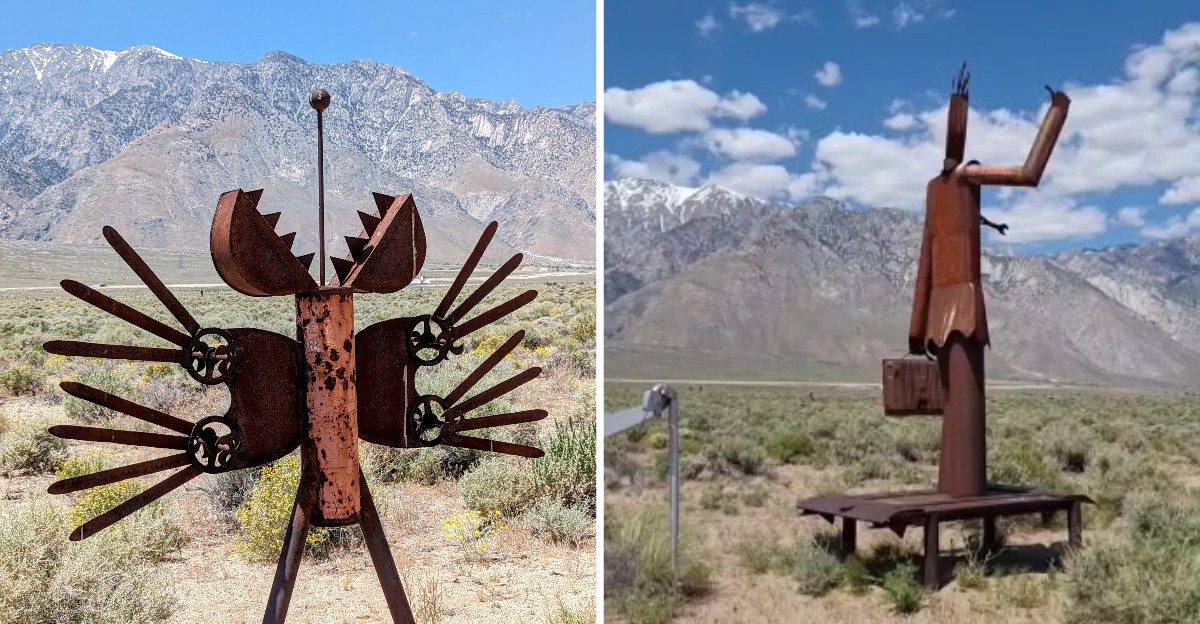
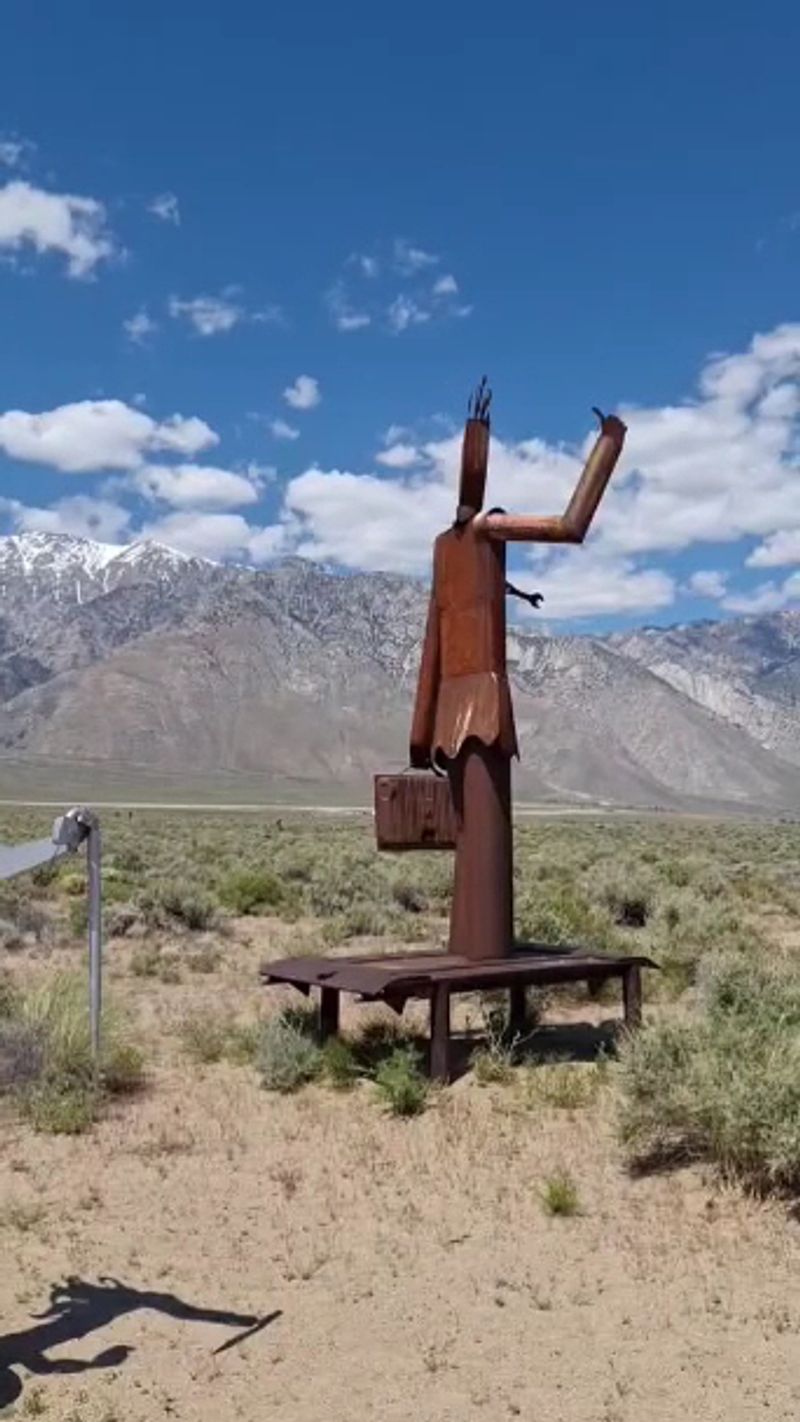
A sculpture out in the high desert asks travelers for spare change, and it might hand some back. That piece is called Give and Take, and it stands among some of the strangest art on any road trip.
The sculptures poke at religion, society, and our messy bond with nature. Some feel thoughtful and quiet.
Others are openly sarcastic, which makes the whole place feel like a wisecracking friend with a welding torch.
The catch is that the garden can be hard to find now. Highway traffic got pulled away from the old roadside path, and for-sale signs have shown up on the property.
In California, roadside art like this adds an unexpected twist to long desert drives. With highway traffic now passing elsewhere and questions surrounding the property’s future, the collection feels like a reminder of how easily unusual roadside landmarks can be overlooked.
One Artist Built A Desert Gallery With Something To Say
Most roadside attractions want you to buy a snack or snap a selfie. Olancha Sculpture Garden would rather you think a little.
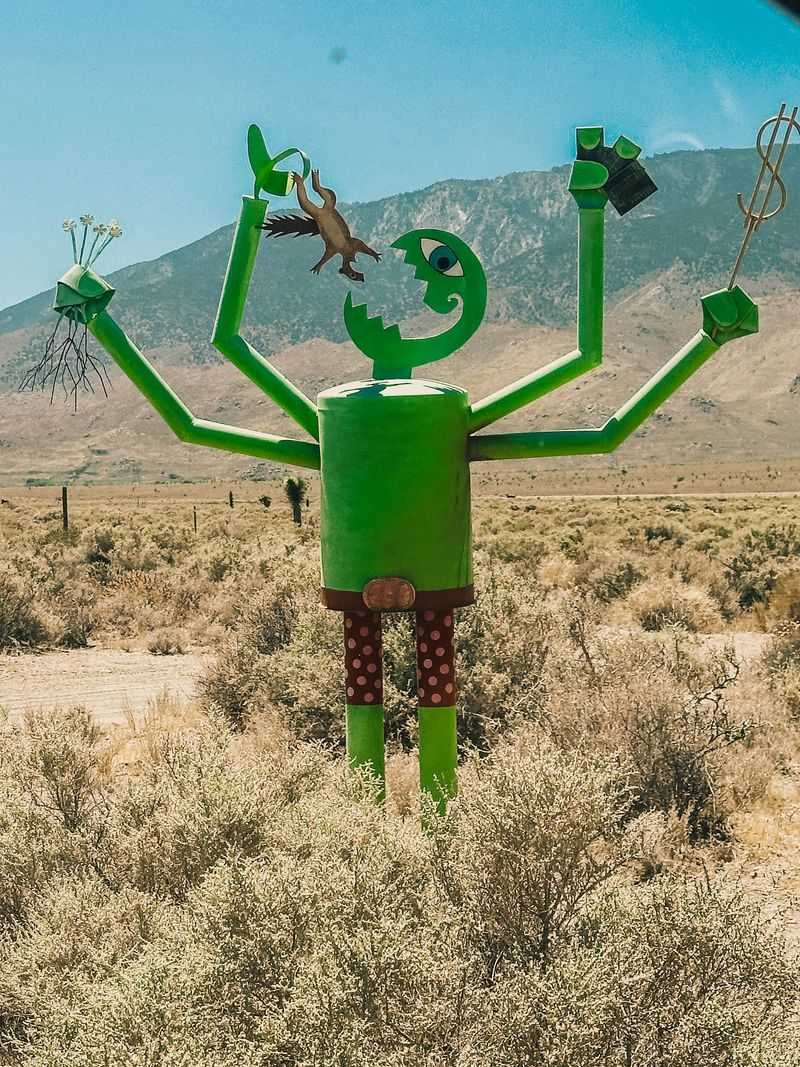
The garden is the work of artist Jael Hoffman, and it sits in Olancha, California. It’s a small outdoor collection of sculptures set right in the open desert.
Don’t expect gift shops, ticket booths, or a velvet rope. The art simply stands in the dirt and waits for curious people to wander over.
Many pieces carry a strong social message. Some question religious ideas, while others ask how people fit into the natural world.
A few sculptures lean hard into sarcasm. That mix of serious and cheeky gives the garden a personality you won’t find in a polished museum.
The collection isn’t huge, so you won’t need hours to see everything. Still, each piece rewards a slow look and a second walk around.
Try reading the art like a puzzle. Ask yourself what the artist might be poking fun at, and why it ended up out here.
That small effort turns a quick leg stretch into a real conversation. Kids especially love guessing what the odd shapes are supposed to mean.
Honestly, it’s rare to find art this bold this far from a city. That alone makes the stop feel special.
Give a Little, Take a Little at This Unusual Sculpture
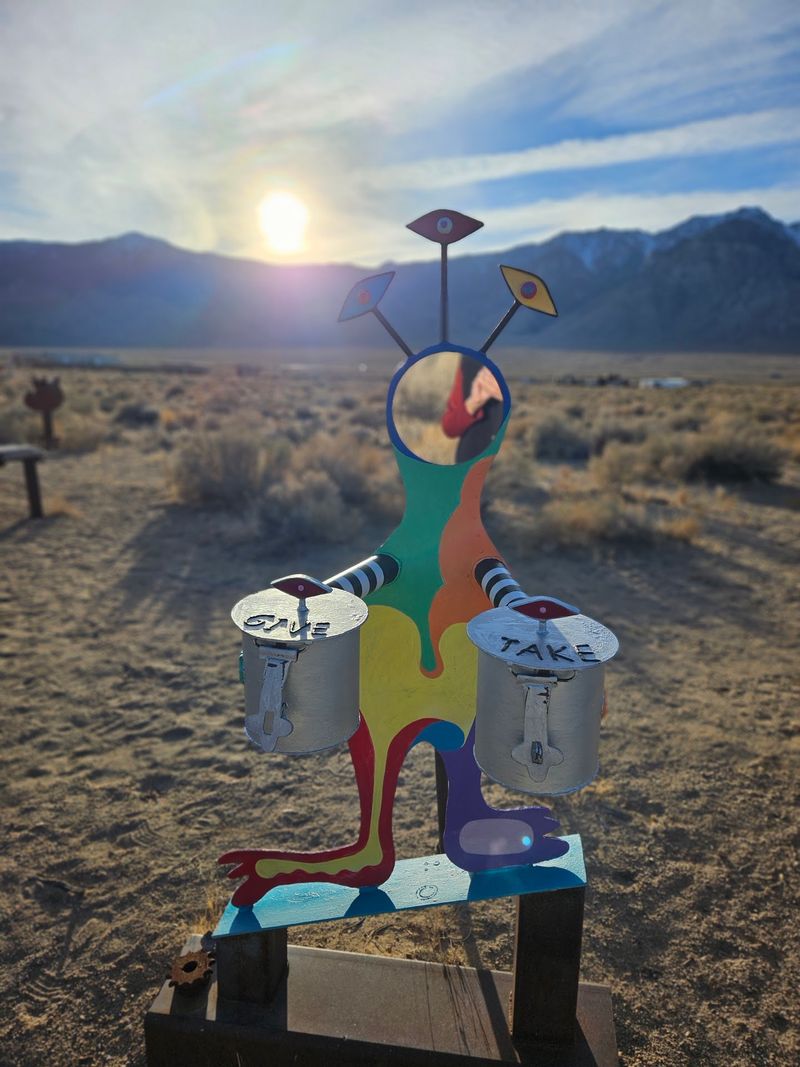
Spare change finally has a purpose. One of the best-known pieces here is the Give and Take sculpture, and it runs on pocket coins.
The installation invites visitors to leave a small gift and take another in return. Hoffmann has described it as an exchange of handmade objects and thoughtful surprises, turning a simple roadside stop into an exercise in generosity.
It’s a playful test of trust in the middle of nowhere. Nobody stands guard, so the whole thing works only because people choose to be fair.
That makes it a great moment for families. Kids can decide whether to give, take, or both, and then talk about why.
Before your trip, toss a handful of coins into a cup holder. Most of us carry cards now, so this small step is easy to forget.
Quarters, dimes, even pennies all work for joining in. The amount doesn’t matter much, since the point is the gesture.
I like how one piece of art can spark a lesson without a single lecture. It feels generous and a bit cheeky at the same time.
Keep the spirit going by leaving the sculpture as you found it. A little honesty keeps this odd desert tradition alive for the next traveler.
Who knew a few coins could feel this meaningful?
The Highway Moved And The Garden Got Lonelier
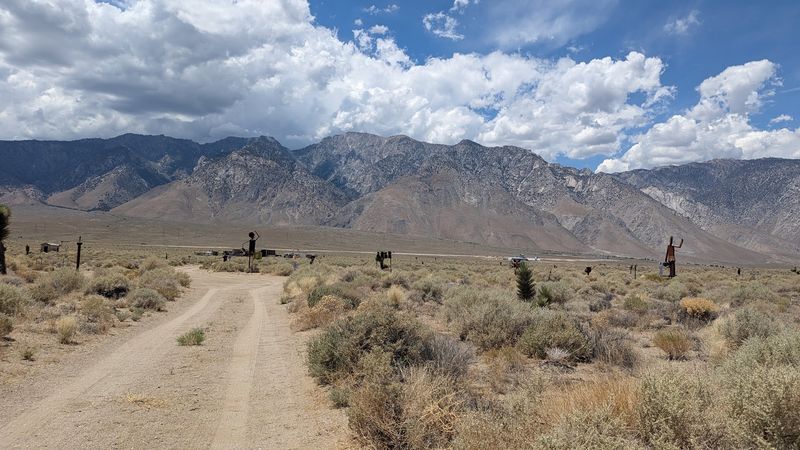
For years, US Highway 395 rolled right through Olancha. Travelers heading to Mammoth or Yosemite passed close to the garden without even trying.
Then a highway bypass changed the picture. Traffic now flows on a newer route, and the old roadside path sees far fewer cars.
That shift matters for a place like this. Roadside art depends on curious drivers spotting something weird and hitting the brakes.
Today, the garden sits far enough off the main highway that you can’t easily see it while cruising by. Blink, and it’s gone.
Small towns along bypassed roads often feel the change quickly. Fewer passing cars can mean fewer visitors for every quirky stop.
With the newer highway bypassing the old roadside route, travelers now need to seek out the garden deliberately rather than spotting its sculptures from passing traffic.
So plan a little before you go. Load the location on your phone while you still have a signal in the Owens Valley.
A short detour off the newer route is all it takes. You’ll trade a few minutes of driving for a stop most travelers now miss completely.
Sometimes the best part of a road trip lives on the road the highway left behind.
Getting There Takes A Little Detective Work
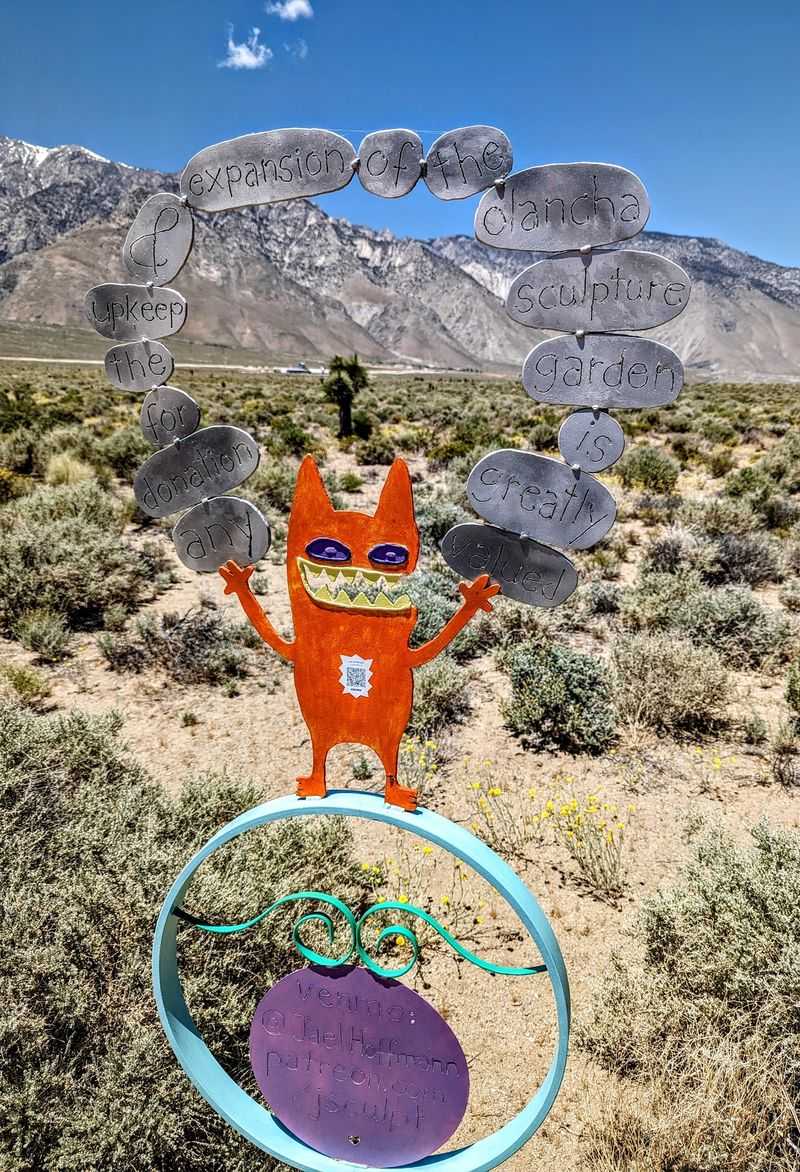
Finding art in the desert shouldn’t feel like a scavenger hunt, yet here we are. The good news is that the effort is part of the fun.
The garden’s plus code address is 7272+2W, Olancha, CA 93549. Plug that into your map app, and it will guide you close.
Olancha sits in southern Inyo County along the Highway 395 corridor. It’s roughly between Lone Pine to the north and the Mojave Desert to the south.
Since the garden isn’t visible from the main highway, follow your map rather than your eyes. Slow down as you get close.
Parking is informal, so pull off carefully and safely. Big rigs and RVs may have a harder time finding room.
If you drive something large, scout the spot before committing. A smaller vehicle makes the stop much easier.
The site is listed as open 24 hours. Still, daylight is your friend for seeing details and staying safe on desert roads.
Cell coverage can be spotty in parts of the valley. Download your map ahead of time so you’re not stuck guessing.
A little preparation turns a confusing detour into a smooth, satisfying side quest.
Mountains Make A Ridiculous Backdrop For Your Photos
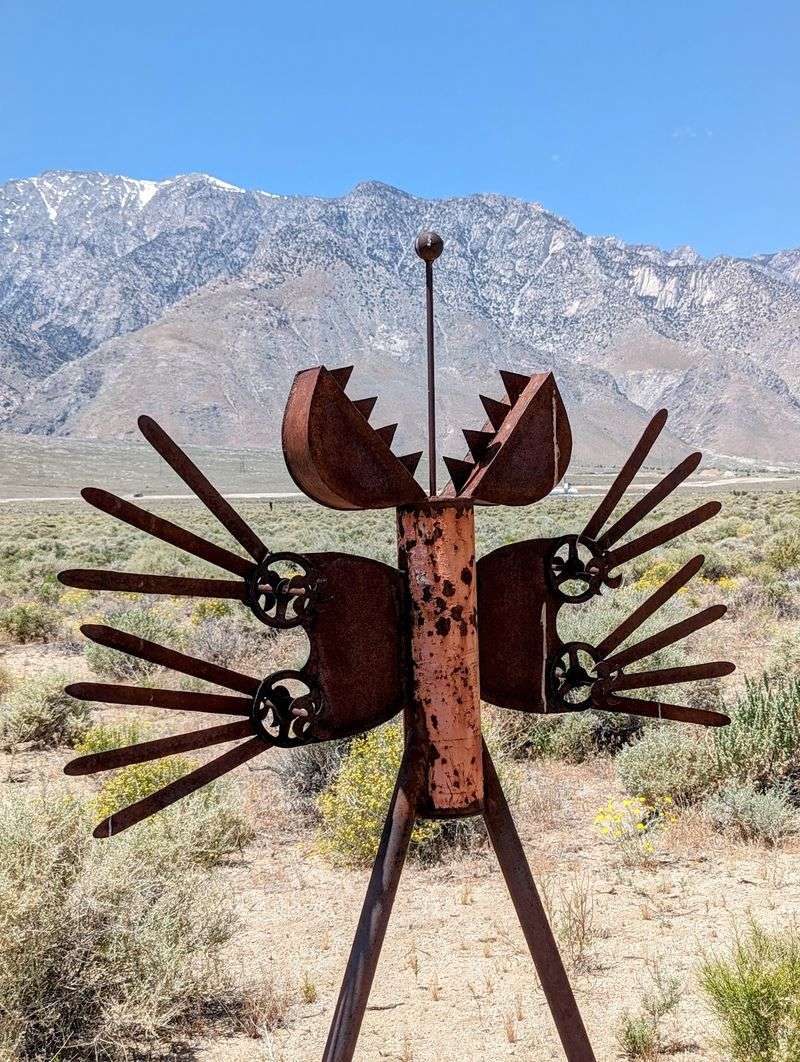
Talk about a scene-stealing background. The Sierra Nevada rises behind the sculptures like a giant stage curtain made of granite.
That contrast is the real magic here. Odd handmade art sits in flat desert while massive peaks tower in the distance.
Photographers will have a field day. Wide shots show the art dwarfed by the mountains, while close-ups reveal the clever details.
Morning and late afternoon light usually flatter the desert best. Midday sun can feel harsh and wash out colors.
Shadows stretch long when the sun sits low. They can turn a simple sculpture into a dramatic silhouette against the sky.
Try framing a piece so a peak lines up behind it. That little trick makes your photo look carefully planned, even if it wasn’t.
Remember that the garden is private property. Stick to respectful photography and never climb on the art for a better angle.
The Eastern Sierra is famous for its scenery, and this stop proves it. Even a quick snapshot here captures something unmistakably California.
Bring a fully charged phone or camera. You may end up taking far more pictures than you expected for such a small place.
Pack Smart Because The Desert Gives You Nothing Extra
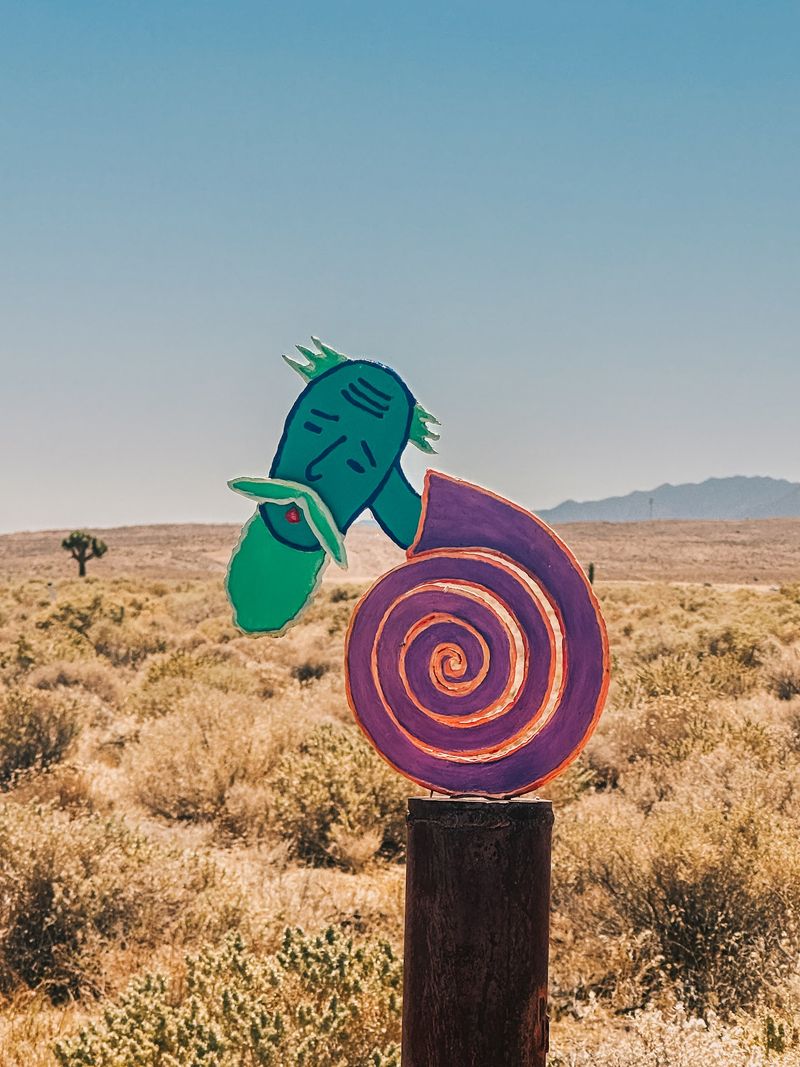
No restrooms, no water fountains, no snack bar. What you see is exactly what you get, which is art and open sky.
That makes planning important. Use a restroom in a nearby town before you arrive, since the garden has no facilities at all.
Bring plenty of water, even for a short stop. Desert air dries you out faster than you might notice.
A hat and sunscreen help a lot, especially in summer. Shade is hard to come by out here.
Wear closed-toe shoes for walking on dirt and gravel. Sandals and desert ground don’t always get along.
Some campers travel with portable toilet setups. If you do, follow the leave-no-trace rule and pack everything out.
Respect matters because this is private land shared with the public. Keeping it clean helps the owners continue welcoming visitors.
Toss in a few snacks, too. Services can be spread out along this part of Highway 395.
A quick checklist before leaving keeps the stop easy and fun. Nobody wants a great art break cut short by thirst or sunburn.
Think of it as a tiny adventure. A little preparation makes all the difference.
Kids And Treasure Hunters Get Their Own Kind Of Fun
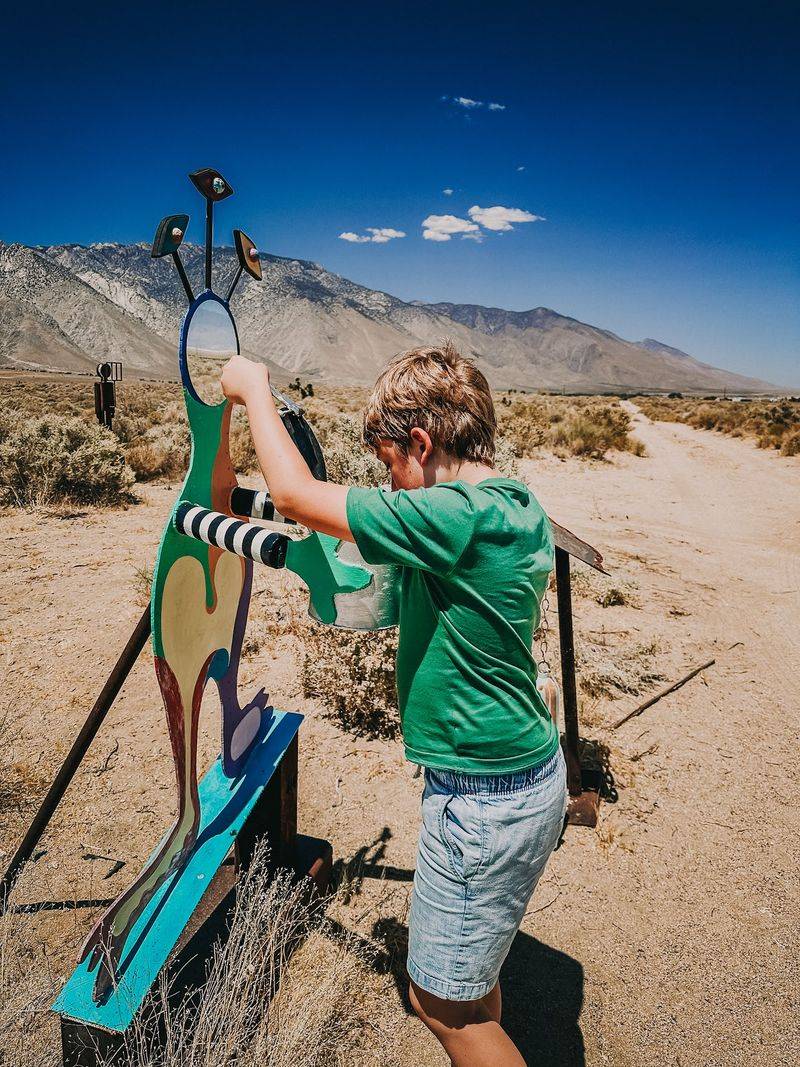
Geocachers, take note. A visitor recently mentioned finding a geocache here, so your treasure-hunting app may light up.
That adds an extra layer of fun for families. Kids get to search for a hidden prize while also checking out the art.
The open space gives young travelers room to roam. After hours in a car seat, that freedom feels like a gift.
Still, keep an eye on little ones. The ground is uneven, and the sculptures should be admired, not climbed.
Turn the visit into a game. Ask kids to pick their favorite piece and explain what they think it means.
Their answers might surprise you. Art with a message often sparks bigger questions than you’d expect from a quick stop.
The Give and Take sculpture also makes a great family moment. Hand your child a coin and let them decide what to do.
Because the garden is small, attention spans won’t run out. It’s the perfect length for a road trip break.
A stop like this helps a long drive feel less like a chore. Everybody stretches, laughs, and climbs back in the car a little happier.
Turn The Detour Into A Full Owens Valley Day
One quirky stop deserves good company. Olancha sits in a stretch of California packed with dramatic scenery and road trip classics.
Owens Lake lies just north of town. Much of it dried up after water was diverted to Los Angeles, and today it’s an important spot for migrating birds.
Head farther north, and you’ll reach Lone Pine. It’s the gateway to the Alabama Hills and views of Mount Whitney, the tallest peak in the lower 48 states.
The Alabama Hills are famous for their rounded rocks and movie history. Countless Western films were shot among those boulders.
Pairing these spots with Olancha Sculpture Garden makes a satisfying day. You get handmade art, natural wonders, and a dose of Hollywood history.
Start with the sculptures while the morning light is soft. Then drift north as the day warms up.
Fuel up whenever you can along Highway 395. Distances between towns can feel longer than they look on a map.
The Eastern Sierra rewards travelers who slow down. Every pullout seems to hide another view worth remembering.
And with its future uncertain, the garden might be the stop you’ll be gladdest you didn’t skip.
