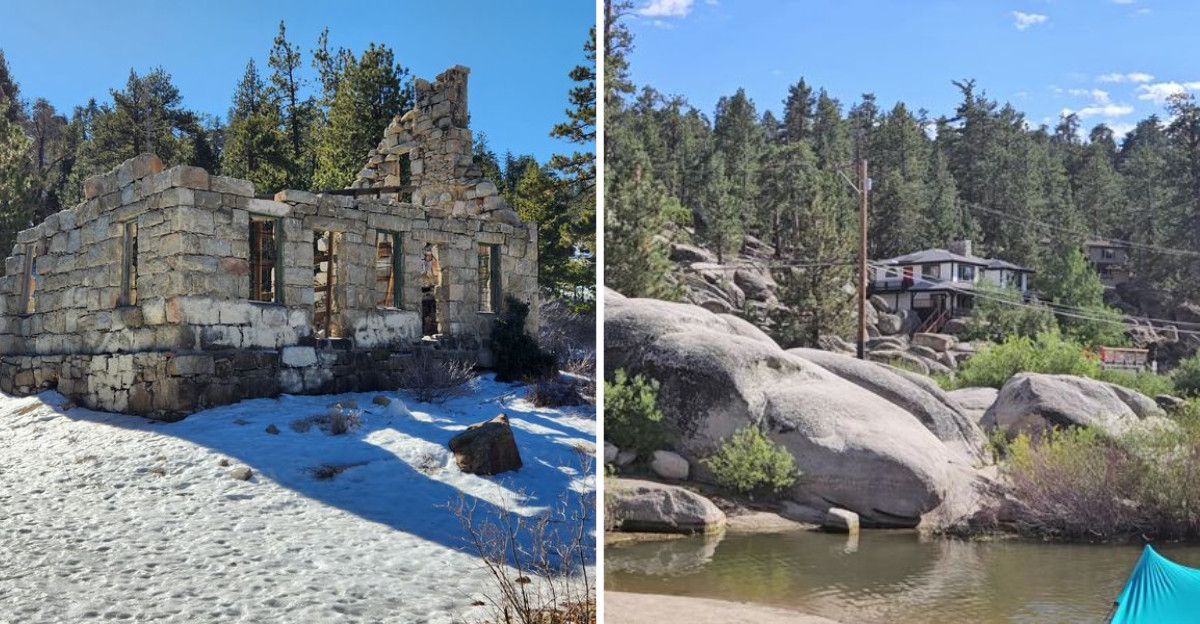
House-sized chunks of granite scattered across a mountain valley caught my attention on the winding drive up to a high California lake, and the idea that early settlers looked at one of those boulders and thought it would make a fine jail made me grin the whole way up the mountain.
Gold seekers, cattle ranchers, and dam builders left behind stone walls and foundations that still hold their shape, and I spent a long weekend poking around the shoreline, the old dam, and the piles of granite that give the area its character.
The boulder that once held prisoners sits quietly among the trees, weathered and unmarked, and the whole place feels like an open-air history book with pages scattered across the landscape.
What surprised me most was how casual it all is, with old stone walls and foundations sitting quietly beside pine trees and picnic tables, no signs roping off the past or telling you how to feel about it.
History here is rough around the edges and out in the open, and this corner of the state rewards anyone who takes the time to wander.
The Legend of the Boulder Lockup
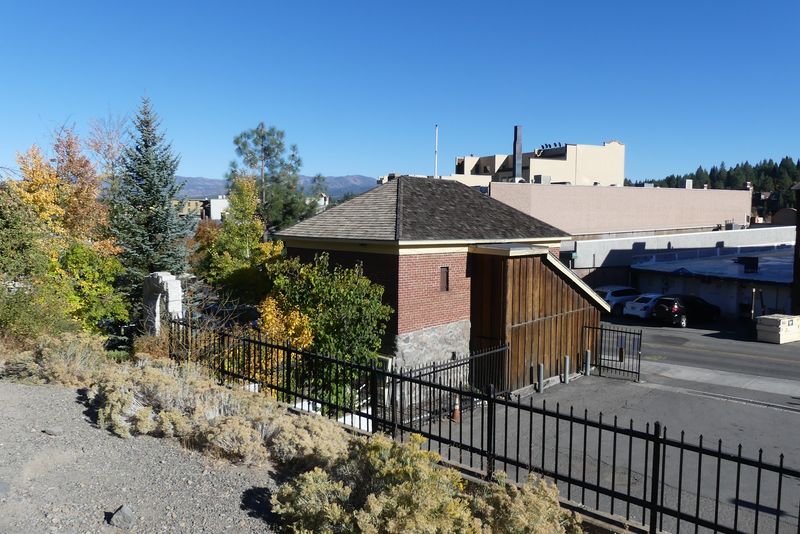
Every mountain town seems to have one story that gets passed around at the general store, and in Big Bear it involves a jail wedged into solid granite. Old timers describe a boulder with a hollow space behind it, sealed with a heavy door, used to hold troublemakers back when the nearest courthouse was a long horseback ride away.
Historians have never fully pinned the site down, which honestly makes the hunt more fun. I asked around at a couple of shops and got three different answers, each delivered with total confidence.
What is certain is that Big Bear’s gold rush years in the 1860s brought plenty of rough characters up the mountain. Holbrook and Belleville, the mining camps of that era, needed some way to handle disputes, and building with the rock already lying around was simply practical.
Granite here is everywhere, split into rounded blocks by centuries of freezing and thawing. Using a boulder as three walls of a cell saved enormous labor.
Whether the story is fully accurate or partly polished by retelling, it captures how resourceful these settlers were with whatever the mountain handed them.
Boulder Bay Park and Its Granite Islets
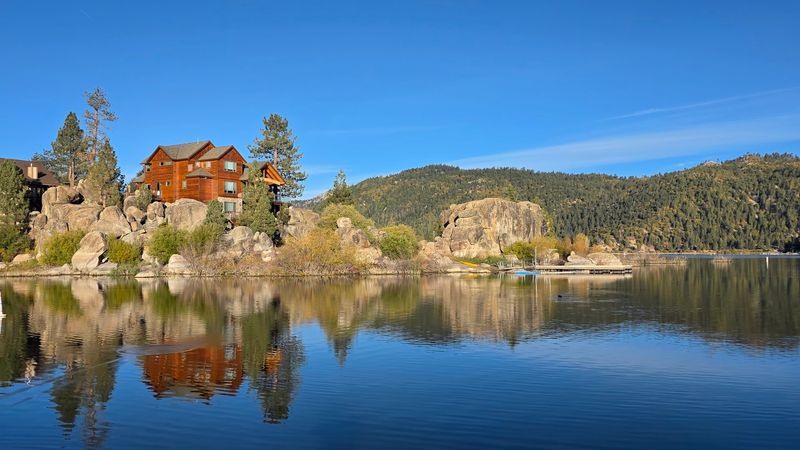
Pulling into Boulder Bay Park on a cool morning, I understood instantly where the neighborhood got its name. Enormous rounded rocks poke straight out of the water like the backs of sleeping animals, some big enough to sit on, others forming tiny stone islands offshore.
The park opened to the public in 2010 and is small enough to walk in fifteen minutes, though I lingered close to an hour. Flat paths loop past benches, grassy patches, and shoreline viewpoints that frame the lake against the ridgeline.
Photographers love it here for good reason. Early light turns the granite gold, and the water usually sits glassy before the afternoon breeze picks up.
Families spread out picnic blankets while kids scramble on the lower rocks, which are rough enough to grip well. Sturdy shoes help, since the surfaces get slick when damp.
Parking sits right off the highway, so it works well as a quick stop between other adventures. For anyone curious about the boulder jail legend, this park shows exactly why stone construction made sense up here.
Address: 39220 Big Bear Boulevard, Big Bear Lake, CA
Ruins of the Dam Keeper’s Stone House
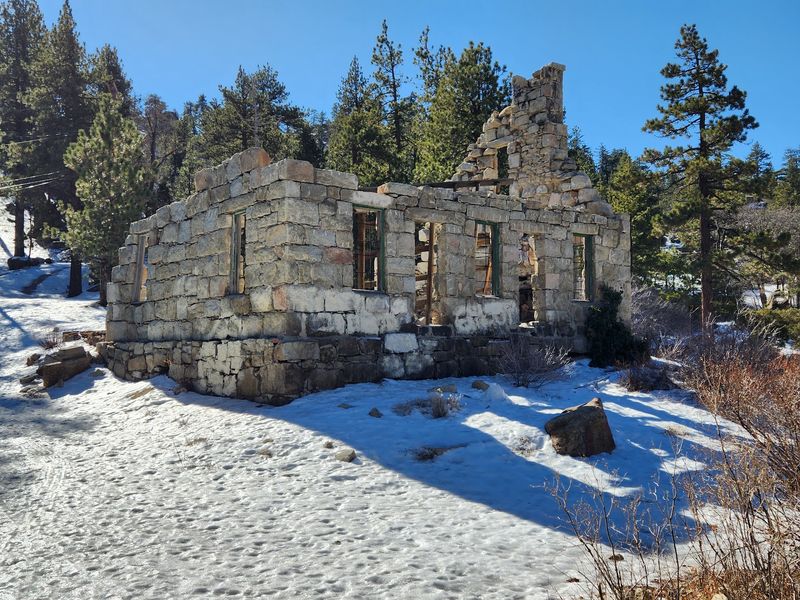
Perched on a small rise just past the dam at the lake’s south end sits the closest thing Big Bear has to a genuine stone fortress. Built in October 1890 from hand-cut granite blocks, the dam keeper’s house came from the same quarry that supplied stone for the original dam.
The walls still stand, roofless and weathered, with square window openings framing slices of forest. Nearly a century of dam keepers and their families lived here, including Bill Knickerbocker and his household between 1909 and 1918.
Signs warn visitors to stay outside the structure, and that warning deserves respect since loose stone and unstable openings are real hazards. Viewing from a short distance still gives you plenty.
I found the craftsmanship remarkable. Each block was shaped by hand, then fitted tight enough that the walls have outlasted the roof, the doors, and everyone who ever lived inside.
Standing back and looking at that squat granite shell, the boulder jail story suddenly feels far more believable. Working with mountain stone was clearly second nature to people building here in the 1890s.
Gold Rush Days at Holbrook and Belleville
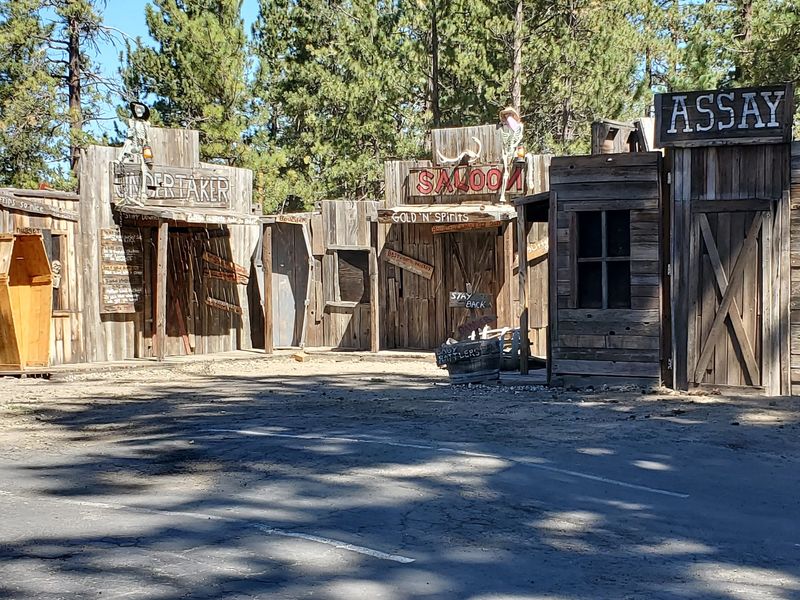
Gold turned this quiet valley upside down in 1860 when Bill Holcomb found a promising strike just north of the lake. Within months, thousands of hopeful miners crowded into camps called Belleville and Union Flat.
Belleville grew fast enough to nearly become the county seat, losing by a slim margin. Today almost nothing remains except a few markers, a restored cabin, and the enormous silence of Holcomb Valley.
Law enforcement in those camps was improvised at best. A single constable might cover miles of rough terrain, and holding somebody until a judge arrived meant finding a place they could not simply walk away from.
That practical need is exactly where the boulder jail story fits. Whether the specific rock still stands or not, camps like these absolutely needed somewhere secure.
Driving the dirt road through Holcomb Valley requires a high-clearance vehicle and a bit of patience, but the payoff is real. Meadows open between the pines, and interpretive signs mark old mine sites.
Nothing brings the era closer than standing where a whole town used to buzz.
Reading the Landscape Around Big Bear Dam
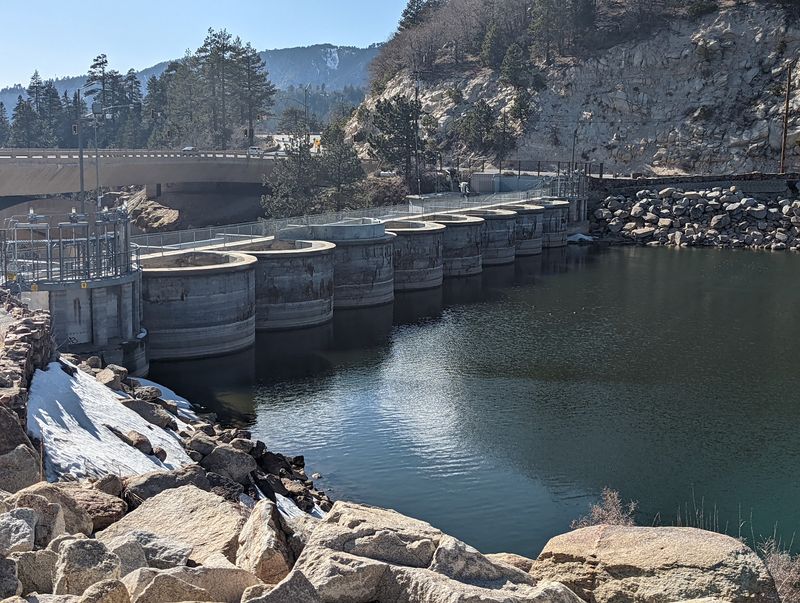
The dam holding back Big Bear Lake is a piece of engineering history that most visitors zip past without a second look. The original single-arch structure went up in 1884, built from local granite to feed irrigation water down to the citrus groves of Redlands.
A larger multiple-arch dam replaced it in 1911, and the earlier one still sits submerged beneath the newer work. Two dams, stacked in time.
Parking near the west end lets you walk a short stretch and study the stonework up close. Lichen patterns on the older blocks give away their age immediately.
I liked how the lake changes character here, narrowing between rocky banks before dropping away into Bear Valley below. Wind funnels through the gap and the water slaps against the rocks.
The dam keeper’s ruins sit within easy walking distance, so pairing the two makes for an efficient hour. Bring water and a hat, since shade is patchy along the road.
Seeing all this granite put to serious work made the boulder jail idea feel less like folklore and more like standard mountain practice.
Hunting for the Boulder Yourself
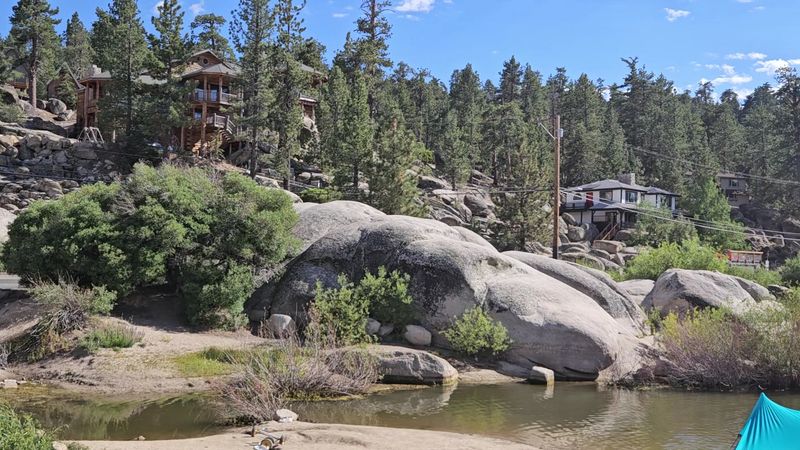
Half the fun of a half-legendary landmark is the searching. I spent an afternoon wandering rock clusters near the lake’s western shore, peering into gaps and photographing anything that looked suspiciously door-shaped.
No luck, though I did find a great lunch spot on a flat slab with a lake view. Some searches pay off sideways.
A few practical notes for anyone trying. Much of the land around Big Bear falls under San Bernardino National Forest, which requires an Adventure Pass for parking in many areas, and plenty of the shoreline is private property that should be respected.
Stick to marked trails and public parks. The granite here is grippy but the drops between boulders are real, and a twisted ankle in a rock field is no small thing.
Cell service comes and goes, so download maps before you head out. Afternoon storms roll in fast during summer.
Even if the exact jail never turns up, you will come away with a much better feel for how this landscape shaped the people who settled it.
Where Local History Gets Told Properly
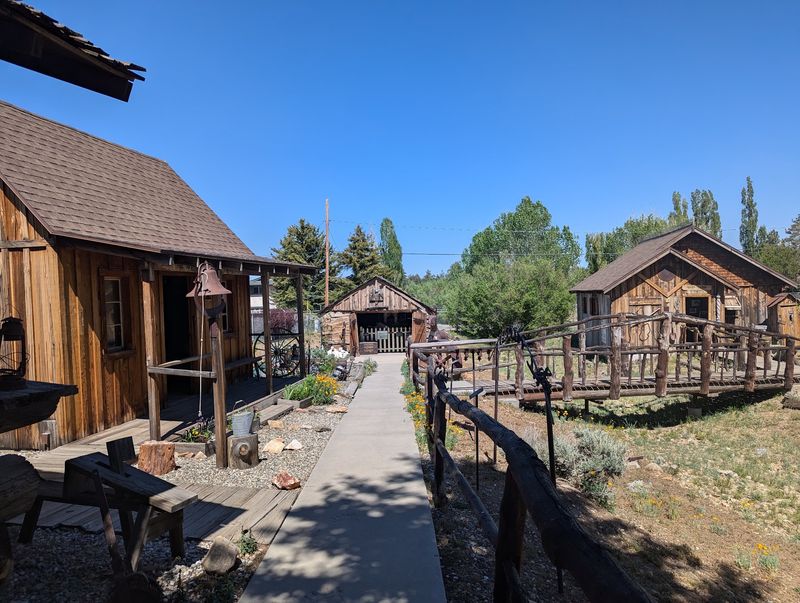
Curiosity eventually sent me looking for actual records instead of parking lot rumors. The Big Bear Valley Historical Museum in Big Bear City turned out to be the right stop, packed with mining tools, pioneer household items, and photographs of the valley before the resorts arrived.
Volunteers run the place and know the stories better than any website. Ask a specific question and you will usually get a specific answer.
Outdoor exhibits include relocated cabins and equipment that give a real sense of scale for how people lived up here. Kids tend to gravitate toward the ore cart and the old sleds.
Opening hours shift with the seasons, so checking before you drive over saves disappointment. It closes entirely during deep winter months.
I left with a much clearer picture of the timeline, from gold camps to cattle ranches to the dam that created the lake as we know it. The boulder jail question stayed open, but the context made it far more interesting.
Address: 800 Greenway Drive, Big Bear City, California
Making a Weekend of the Stone Trail
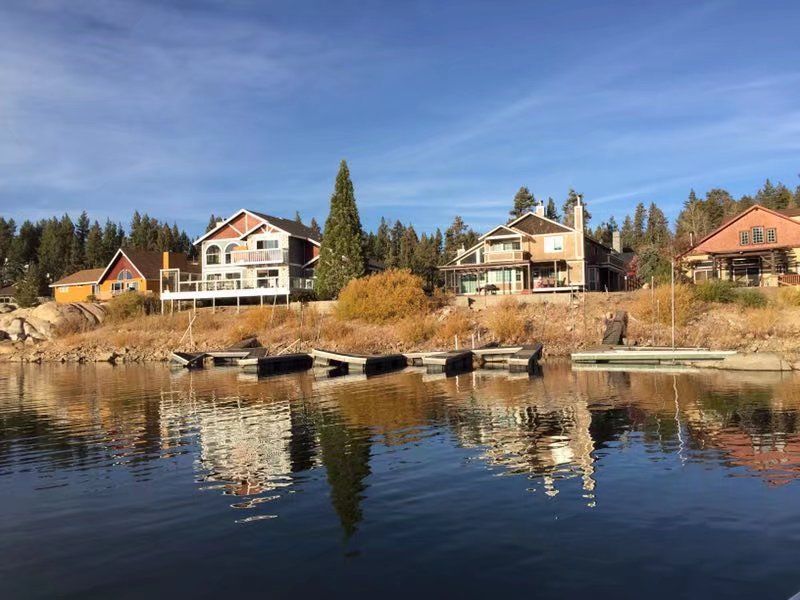
Two days is about right for chasing granite around Big Bear without feeling rushed. My rough plan started with California’s Boulder Bay Park early, when the light is best and parking is easy, then moved along the south shore toward the dam.
Afternoon works well for the museum or a drive up toward Holcomb Valley if you have the right vehicle. Evening belongs to the village.
The Village along Pine Knot Avenue keeps things simple with bakeries, coffee shops, and small stores selling handmade goods. Sidewalks are wide and the pace is unhurried.
Altitude catches people off guard, so drink more water than usual and take the first day gently. Temperatures swing hard between afternoon and night, even in summer.
Snow closes some forest roads from late fall through spring, and chains may be required on the highway. Checking road conditions before leaving is just smart planning.
What stuck with me most was not any single site but the way stone shows up everywhere here, in walls, shorelines, and stories. That is a souvenir you cannot buy.
