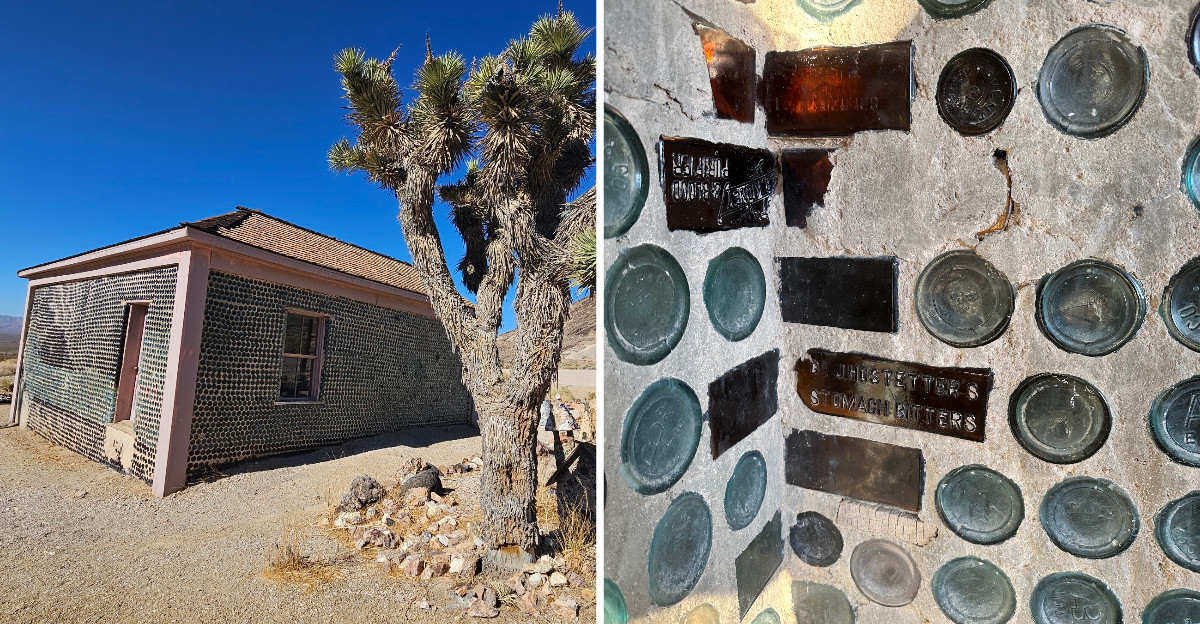
California does abandoned places particularly well, but this desert stop has one survivor that looks almost too playful for a ghost town. Ruined walls and empty foundations stretch across the landscape, then sunlight catches thousands of pieces of glass and suddenly the scenery changes completely.
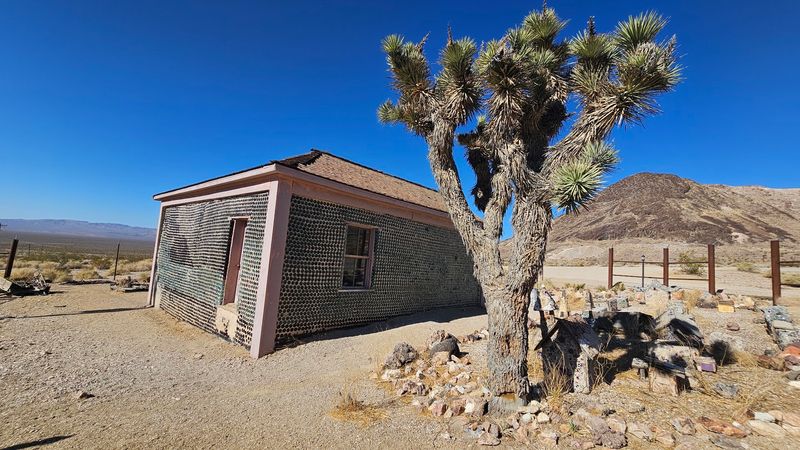
I expected another weathered mining relic. Instead, I found myself staring at a small house whose walls sparkle in shades of green, amber, and blue.
The strangest part is that those bottles were not chosen to make an artistic statement. They were practical building material during a gold rush when lumber was scarce and discarded bottles definitely were not.
More than a century later, much of the community that once surrounded the house has vanished while those unlikely walls remain standing. Its history only gets stranger, involving boomtown ambition, a raffle, Hollywood, and generations of preservation.
Among all the ruins I have wandered past, few have made survival look quite this colorful.
Closer to California Than You Might Think
My first surprise came before I even saw a single bottle. Rhyolite actually sits in Nye County, Nevada, only a short drive from the California border and the eastern edge of Death Valley National Park.
Many travelers pass through it on their way to or from the park, which is probably why so many people link it with California.
The drive in is wide open and quiet. Low hills roll by in shades of tan and rust, and the nearby town of Beatty is the closest spot to grab snacks and fill up the tank before heading over.
Rhyolite itself was once a booming gold rush town in the early 1900s. At its peak, it had banks, shops, a train depot, and thousands of hopeful miners chasing fortune in the hills.
When the gold ran thin, people packed up and left, and the desert slowly took back the streets.
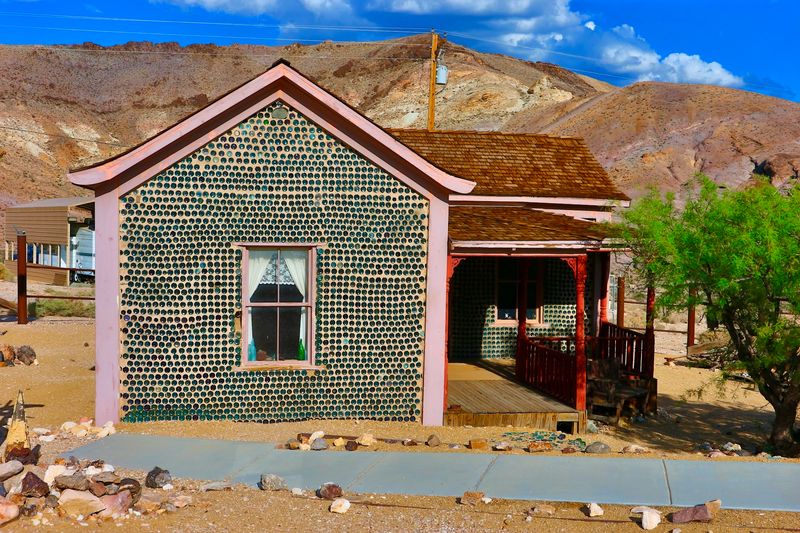
I love that the Bottle House is part of that bigger picture. You roll past the shell of an old bank and crumbling walls, and then this small, shining house appears like it never got the memo that everyone moved away.
That contrast is a big part of the fun.
No Trees, No Problem
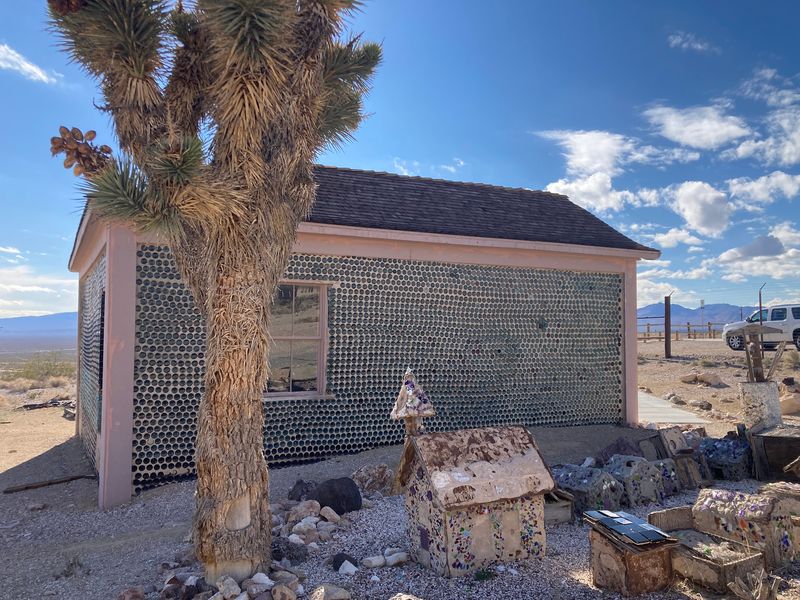
Picture trying to build a home in a place where the only local tree is a spiky Joshua tree. That was the real puzzle facing settlers in Rhyolite during the gold rush, when good lumber was scarce and tough to haul across the desert.
Joshua trees look sturdy, but their twisty trunks just do not mill into useful building boards. So people got creative with whatever they had lying around, and in a busy mining town, glass bottles were everywhere.
Tom Kelly, the man behind the Bottle House, reportedly said it was easier to build with bottles than to mill lumber from Joshua trees. Honestly, after seeing the landscape, I believe him.
The hills are rocky, dry, and nearly bare.
The bottles came from all kinds of everyday products. Kelly used medicine bottles, sarsaparilla bottles, mineral water bottles, and even Worcestershire sauce bottles, among many others.
Each one had already done its job once, and now it had a second life as a building block.
I find that kind of thinking pretty inspiring. Long before recycling bins lined our streets, a miner looked at a pile of empties and saw walls, windows, and a roof over his head.
One Bottle at a Time
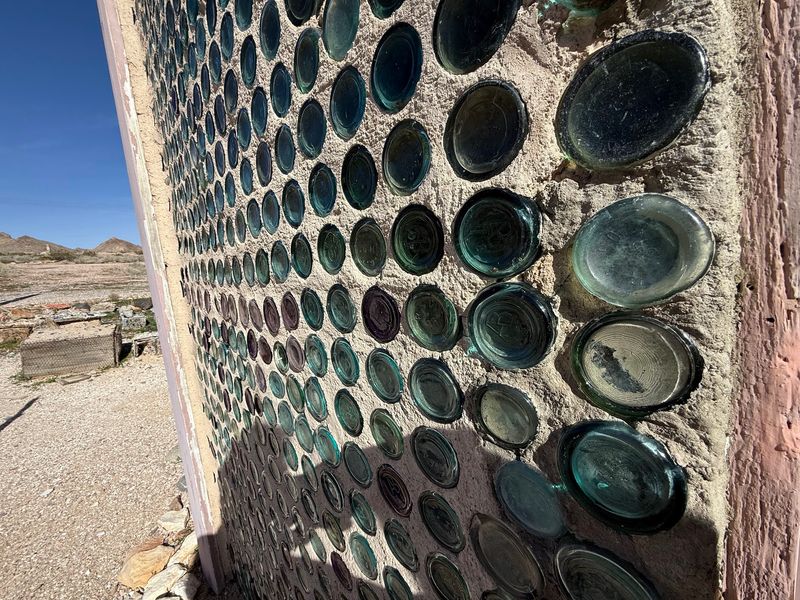
Here is a number that stopped me in my tracks: somewhere between 50,000 and 51,000 bottles. That is how many Tom Kelly pressed into the walls of his home back in 1906, and the job took him about a year and a half to finish.
His method was simple but clever. He laid the bottles on their sides with the bottoms facing out, then bound them together with adobe mud, almost like bricks and mortar.
The finished house was an L-shaped building with three rooms. It had a covered front porch and pretty gingerbread trim along the edges, which gave it a cozy, storybook look against the harsh desert.
When I looked closely at the walls, I noticed the rounded glass bottoms form neat rows, each one a slightly different shade. Some glow honey brown, while others look faintly green or almost clear in the sunlight.
Thick glass and dense mud also helped with comfort. Walls like these can stay cooler during hot desert days and hold warmth when nights turn chilly, which made a lot of sense out here.
It is easy to imagine Kelly working through the seasons, bottle after bottle, while the town buzzed around him. His patience is written into every row.
Won in a Raffle
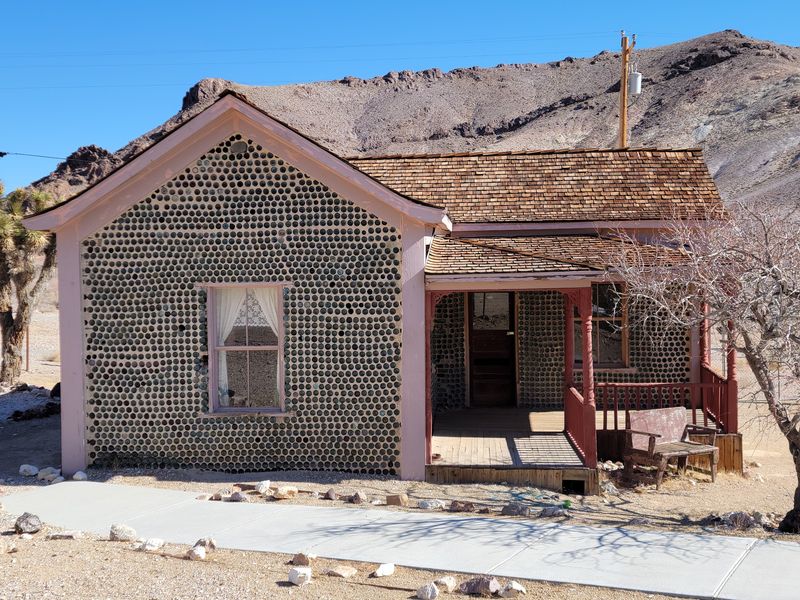
Would you build a whole house and then give it away? Tom Kelly did something close to that.
Once the Bottle House was finished, he decided not to keep it and raffled it off instead.
The lucky winners were the Bennett family. They moved in and called the bottle walls home from 1906 until 1914, which means they watched Rhyolite rise and then begin to fade.
Think about what that must have been like. In 1906 and 1907 the town was busy and hopeful, full of new buildings and fresh arrivals.
By the time the Bennetts left, many neighbors had already moved on as the mines slowed down.
I found myself wondering about the small, ordinary moments inside those walls. Morning sunlight probably glimmered through the glass at the edges, and the thick mud walls likely kept the rooms calmer than the dusty streets outside.
The raffle story is one of my favorite parts of this place. It shows that Rhyolite had a playful, community side, not just hard work in the mines.
Folks bought chances for a shot at owning the most unusual house in town, and one family truly got lucky.
Hollywood Came Knocking
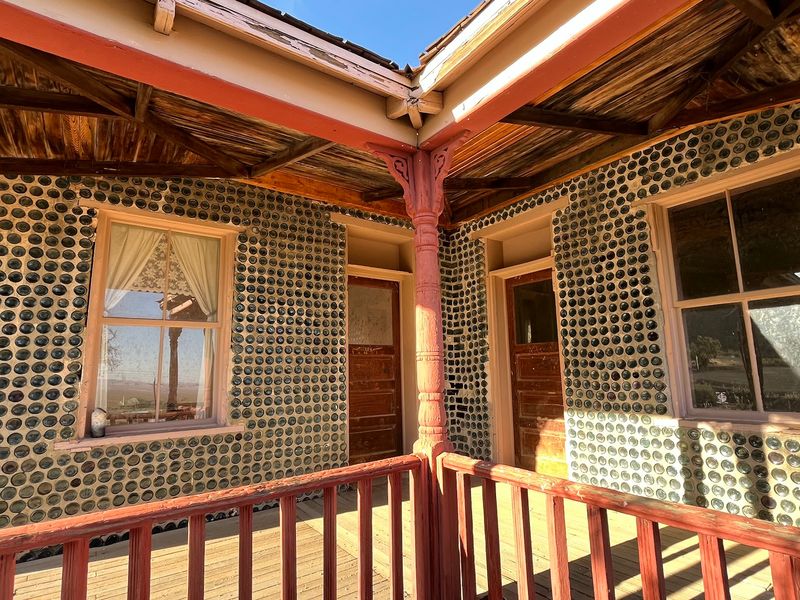
Movie crews have a knack for finding strange and beautiful places, and the Bottle House did not escape their notice. In 1925, Paramount Pictures restored the house and gave it a fresh roof so it could appear in the 1926 film The Air Mail.
By then, Rhyolite had become mostly empty. Having a film studio show up and fix the place must have felt like a jolt of new life for a building that could easily have crumbled.
After the filming wrapped, the house found another role. For a while it worked as a museum and curio shop, where visitors could stop, learn a bit of local history, and pick up small keepsakes from the desert.
I love that the house kept reinventing itself. It went from a miner’s project to a family home, then to a movie set, and then to a roadside stop for curious travelers.
That movie connection also helped keep people interested in Rhyolite long after the gold was gone. When a place shows up on the big screen, folks want to see it in person, and that attention likely helped the Bottle House survive.
Not bad for a house made of empties.
The Caretakers Who Kept It Standing
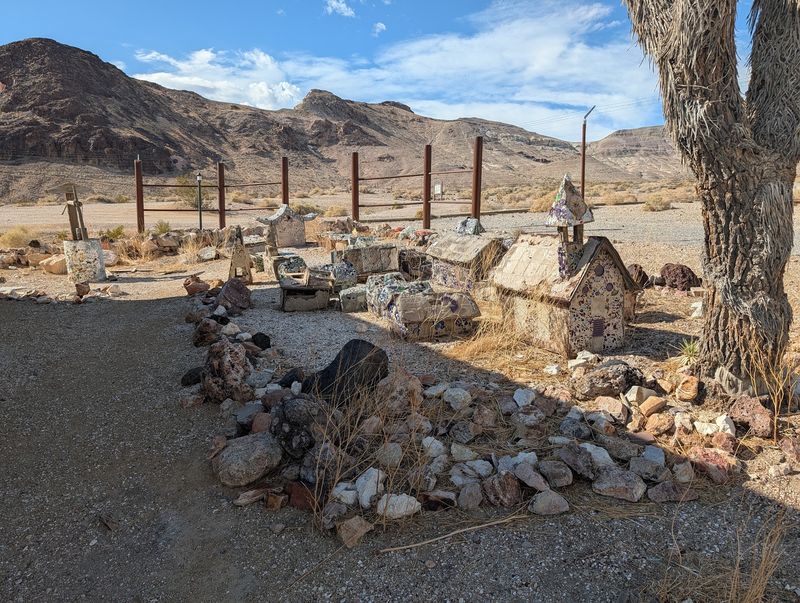
Old buildings rarely survive on luck alone, and this one had some dedicated people looking after it. Lewis Murphey served as caretaker from 1936 to 1954, giving tours to visitors who wandered out to see the famous glass house.
Then came Tommy Thompson and his family, which included eight children. They lived in the house from 1954 to 1969, and I can only imagine the noise and laughter bouncing off those bottle walls.
Thompson added miniature buildings to the property, and you can still spot little structures around the yard today. They give the grounds a whimsical, almost toy-town feel that kids especially seem to enjoy.
Not every repair went as planned, though. Thompson tried patching the house with concrete, but the concrete soaked up the desert heat and caused many bottles to crack.
It is a good reminder that fixing old things takes special care. Materials that seem strong can behave very differently under a blazing sun, and the original adobe mud was actually better suited to the job.
Even so, every person who lived here or looked after the house helped it last. Their years of attention are a big reason we can still stroll the sidewalk and admire it today.
Glass That Catches the Light
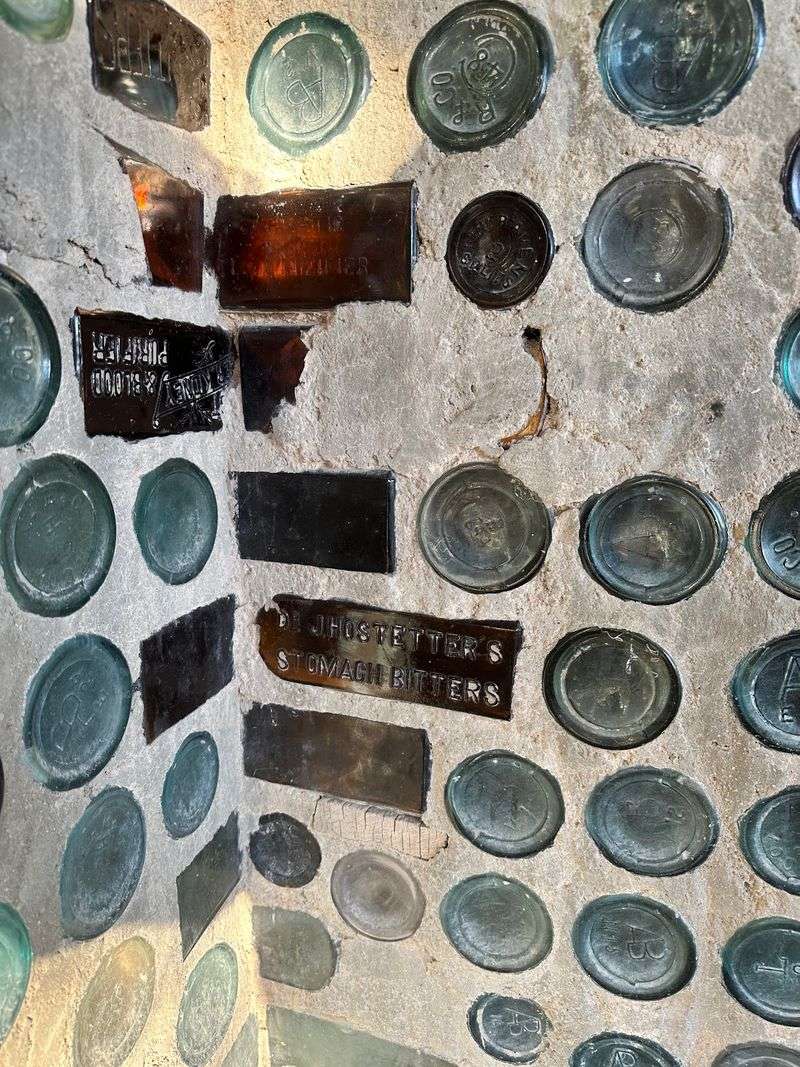
Late afternoon is when I think the house looks its best. The low sun hits the bottle bottoms and turns the walls into a patchwork of amber, olive, and soft aqua.
A protective fence surrounds the house, so you will be viewing it from the sidewalk and the grounds rather than wandering through the rooms. That actually makes sense, since glass this old deserves a little distance.
Peeking through the windows gives you a real sense of how thick those walls are. It is almost surprising how solid the whole thing feels once you see the depth of the bottles and mud.
Take a slow lap and look for changes in the pattern. Some patches use one color of glass more than others, which hints at which bottles were easiest to find while that section was being built.
The house got another round of care in 2005, when it was repaired and given a new roof for its 100th birthday. Today it is known as the oldest and largest bottle house in the United States, which is a pretty big title for such a small home.
Bring a camera, but also give yourself a quiet minute just to look. The shimmer is worth it.
Making the Most of Your Visit
Planning ahead makes a desert trip so much smoother, and I learned that the sunny way. The Rhyolite Ghost Town, including the Bottle House, is managed by the Bureau of Land Management in Nevada and is open to the public from sunrise to sunset every day.
No tickets are needed, so you can simply park, stroll, and explore at your own pace. Private tours of the house are sometimes available, so check ahead if you would love a closer look.
Pack plenty of water, sunscreen, and a hat. Shade is hard to find, and summer heat out here can get intense quickly, so spring and fall tend to be more comfortable for wandering.
Save time for the rest of Rhyolite, too. You can see the ruins of the old bank, the train depot, and other remains of the boomtown, and wild burros sometimes roam nearby.
The Goldwell Open Air Museum sits right next door, with ghostly outdoor sculptures that make a fun, eerie pairing with the glass house. Beatty is just a few miles away if you need food or a place to rest.
Stay on marked paths and leave everything as you found it so the town lasts for future visitors.
Address: Amargosa Street, Rhyolite, NV
