A swing set sitting in shallow water on a salt-crusted shore was not what I expected to find at the end of a California desert drive. The first time I rounded that dirt berm, the scene stopped me cold, a small grid of streets tucked behind a ridge, with trailers half-buried and houses peeling in the dry air.
Decades ago this was a busy vacation spot with boats and fishing lines and weekend crowds, and then the water turned too salty and the crowds stopped coming.
What stayed behind are streets, broken homes, and oddly enough, an entire outdoor art scene that grew up in the gaps.
The artist installations are everywhere, some playful, some haunting, each one claiming a patch of the strange landscape. The air carries a faint mineral smell, golf carts hum past instead of cars, and the light at sunset turns the whole place gold.
I left with more questions than photos, and I mean that as a compliment.
How an Accident Created California’s Biggest Lake
Here is the strange part about the Salton Sea: nobody planned it. In 1905, engineers working on irrigation canals lost control of the Colorado River, and water poured into a low desert basin for roughly two years before the break was finally sealed.
What was left behind became California’s largest inland body of water, sitting below sea level in a bowl with no natural outlet. That last detail matters more than anything else in this whole story.
Water flows in from farms and streams, but the only way out is evaporation, which leaves salt and chemicals behind year after year.
Standing near the water, it helped me to picture the basin as a giant bathtub with no drain, only a very hot sun overhead. That single fact explains the boom, the collapse and the empty streets I walked later that afternoon.
If you plan a visit, come with that history in mind, because the landscape reads completely differently once you know it was an accident. I would suggest arriving in the cooler months, since summer temperatures here regularly climb past comfortable and shade is genuinely hard to find along the shoreline.
When the Shore Was Called the Salton Riviera
Hard to believe now, but this stretch of desert once pulled in around half a million visitors a year, numbers that rivaled Yosemite. Marinas filled with boats, water skiers cut across the surface, and small vacation homes went up street by street.
The area picked up the nickname Salton Riviera during the 1950s and 1960s, and big names of the era, including Frank Sinatra, Bing Crosby and the Beach Boys, were drawn to its shores.
Fishing was the real draw for regular families, though. People came for corvina and later tilapia, then stayed for the easy, sunburned weekends.
I found the leftovers of that era everywhere, from concrete boat ramps that now end in dry ground to the outlines of old streets still marked on the map. A rusted pier skeleton near the water gave me the clearest sense of what was lost.
Bring a printed or downloaded map, because cell service can get spotty out here and the old street grid is easier to follow than you would think. Tracing those quiet blocks on foot turned into my favorite part of the whole trip.
Salt, Storms and the Slow Goodbye
The unraveling started in the 1970s, and it came from two directions at once. Farm runoff carrying salts and chemicals kept flowing in with nowhere to go, pushing salinity higher until fish populations began to crash.
Then the weather piled on. Rare tropical storms, including Hurricane Kathleen in 1976 and another the following year, flooded parts of Bombay Beach and swamped a trailer park near the shore.
Between rising salt levels, dying fish, water quality worries and repeat flooding, businesses closed and property owners simply stopped coming back.
What struck me most was how sudden some departures clearly were. Furniture, appliances and everyday belongings were left in place, and decades of sun and wind have been slowly taking them apart ever since.
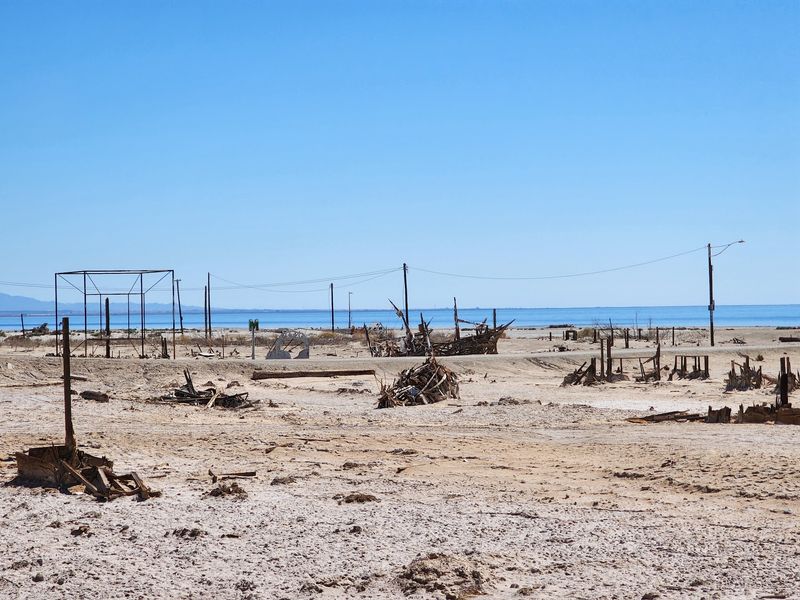
Beyond the protective berm on the west side of town, I found trailers half swallowed by dried mud, their frames bleached and crusted white. Wear closed shoes if you head out there, because the ground is uneven, sharp metal hides in the crust, and soft mud can appear where you least expect it.
Photographers will want early morning light for those textures.
Streets That Still Have Names but Few Houses
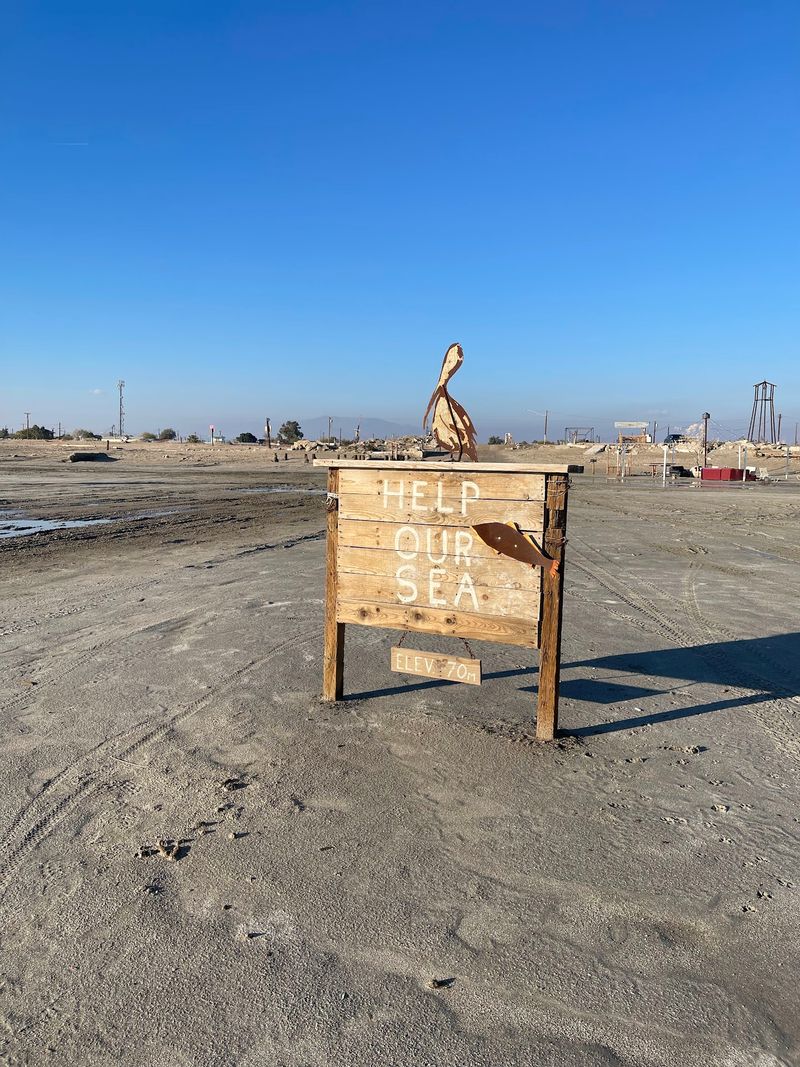
Wandering the town grid felt like reading a book with pages torn out. Street signs still stand, driveways still lead somewhere, but every third or fourth lot holds only rubble, a concrete slab or a windowless shell covered in bright spray paint.
Quiet is the loudest thing here. My footsteps on the sandy pavement sounded almost rude.
Occupied homes sit right next to ruins, which is the detail most photos never show. Someone’s tidy porch with potted plants might share a fence line with a collapsed roof.
Golf carts do most of the driving around town, partly because the nearest gas station sits roughly 20 miles away in Niland. That single practical fact tells you a lot about daily life out here.
The 2020 census counted 231 residents, many of them older and deeply attached to the place. So a little courtesy goes a long way.
I stuck to public streets, avoided pointing my camera at anyone’s windows, and never stepped inside a structure. Floors sag, nails stick up, and honestly the outsides are far more interesting anyway.
An Unlikely Art Colony Took Root in the Ruins
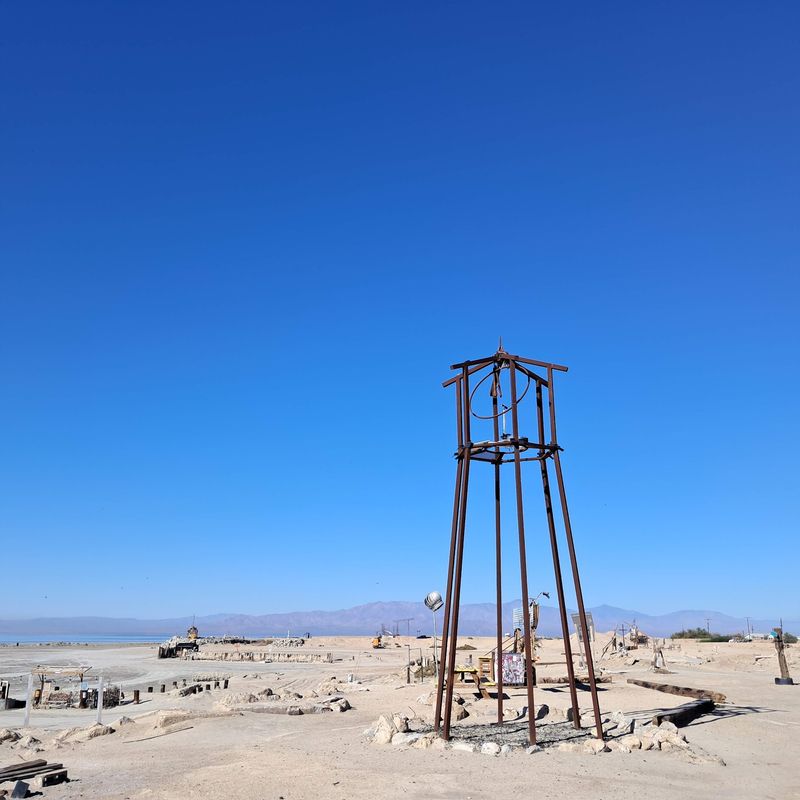
Somewhere between the second and third empty block, I realized the town was not empty at all. Artists, writers and free spirits have been moving in, turning derelict lots and blank walls into an open-air gallery that keeps changing shape.
Sculptures rise out of the sand. Murals cover plywood and cinder block.
The Bombay Beach Biennale, started in 2016 by Tao Ruspoli, Stefan Ashkenazy and Lily Johnson White, gathers artists, academics and filmmakers to make new work, give talks and stage happenings around town. There are no tickets and no entry fees.
Even outside the festival, plenty of installations stay put year-round, which is what makes a random weekday visit worthwhile.
My favorite find was the collection of old television sets, painted in loud colors and stacked in a vacant lot, many of them donated by people who live here. There is something funny and sad about a pile of screens facing nothing.
Go slowly and look down side streets, because the best pieces are rarely the ones nearest the road. New work appears constantly, so no two visits match.
The Drive-In, the Opera House and a Swing Set in the Water
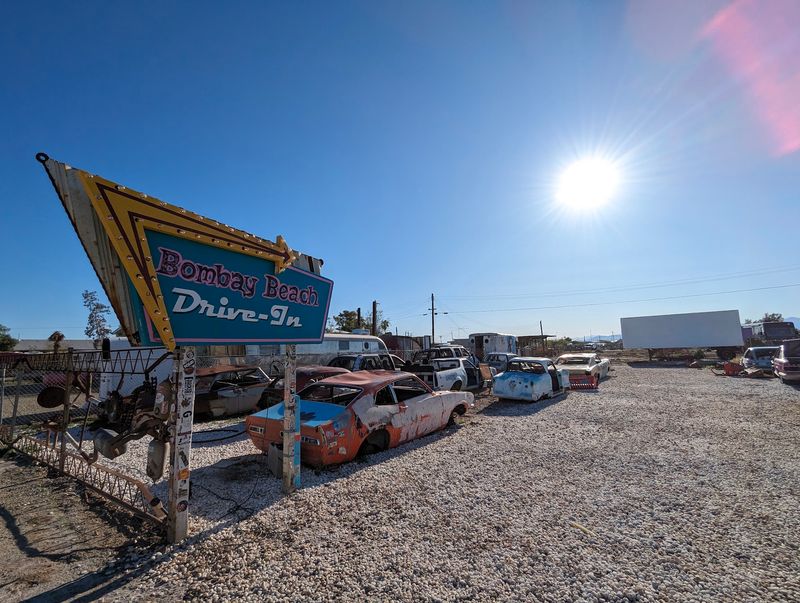
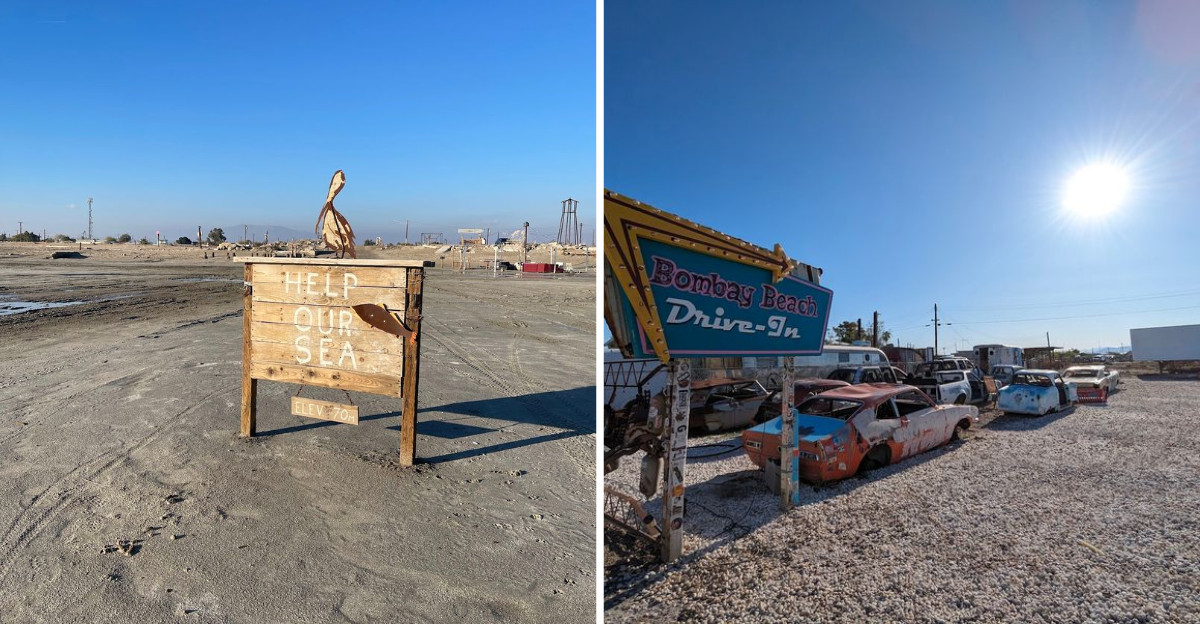
A few pieces stopped me cold. The Bombay Beach Drive-In lines up rusted, abandoned cars facing a white semi-trailer that doubles as a movie screen, and it occasionally hosts real screenings under the desert sky.
Nearby sits the Bombay Beach Opera House, a refurbished abandoned home that now works as a performance space. Small town, big ambitions.
Down on the shoreline I found the piece I had seen in photos, a lone swing set standing in shallow salty water, titled The Water’s Fine, It’s Just Salty. Seeing it in person, with the mountains hazy across the water, hit differently than any picture.
Not far off, a metal sign by Michael Daniel Birnberg reads The Only Other Thing is Nothing, which is either very funny or very heavy depending on your mood.
Other standouts include the Banana Plane, a fantastical airplane sculpture, and the Flying Fish.
Sunset is the moment to be on the berm, when the light turns everything copper. Bring water, a hat, and patience for sand in your shoes.
Life Here Runs on Its Own Clock
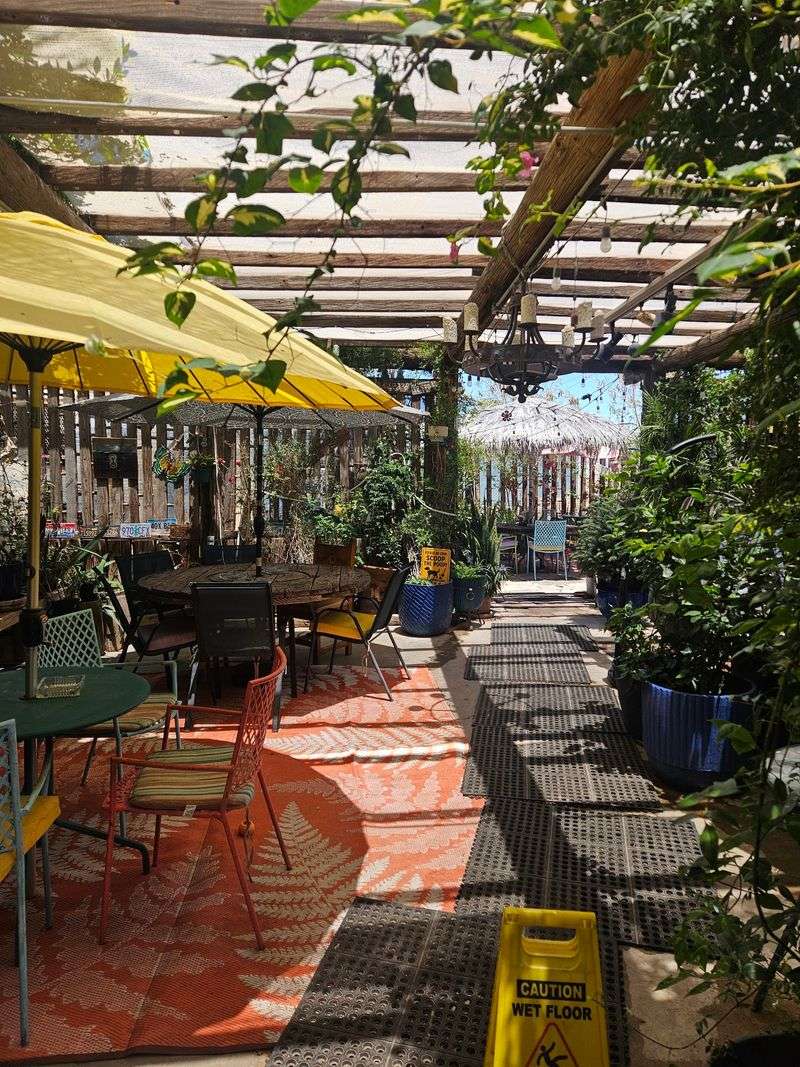
Ask anyone what time it is in Bombay Beach and the honest answer is probably whenever. The pace here has nothing to do with schedules, and that took me about ten minutes to adjust to and enjoy.
The Ski Inn serves as the town’s only eating spot, a longtime local gathering place that also catches curious visitors passing through. Two small stores, one a convenience store, cover the basics.
Everything else means a drive. The closest hospital sits over 45 minutes away in Brawley, and that gas station in Niland remains the nearest fill-up.
Because of all that, I packed like I was heading somewhere remote, which I was. Extra water, snacks, a full tank, sunscreen and a charged phone made the day far more relaxed.
What impressed me was the steadiness of the people who stay. Some have roots here going back generations, others arrived recently for the space and the quiet, and both groups seem genuinely fond of the odd little town they share.
Be a good guest, spend a bit locally, and leave the place tidier than you found it.
A Shrinking Sea and What Comes Next
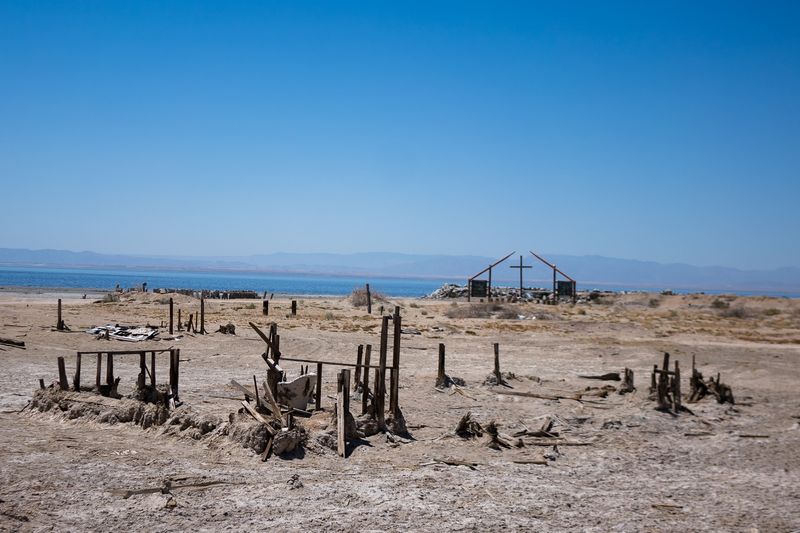
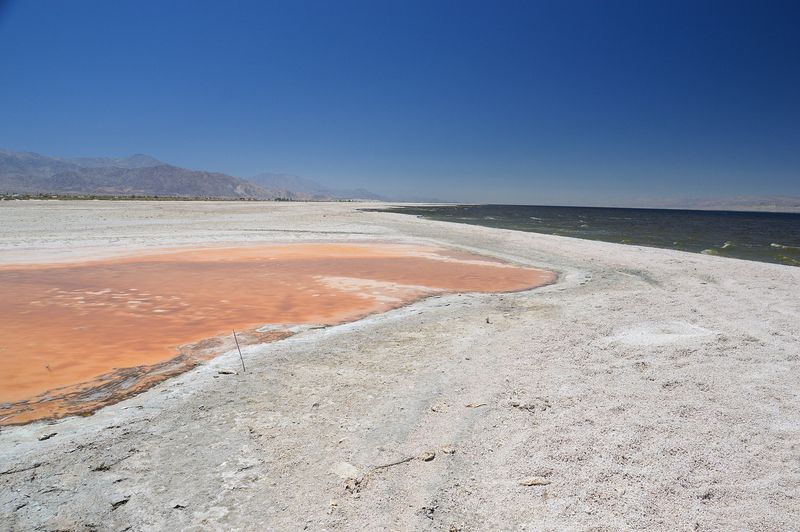
Every year the waterline pulls back a little farther, and you can read that retreat in the ground itself. Evaporation, water transfers to San Diego, drought and a warming climate have all shrunk the Salton Sea, exposing wide stretches of dry lakebed called playa.
That exposed playa is not harmless. Desert winds lift fine dust carrying pesticides and heavy metals, and nearby communities deal with higher rates of asthma and respiratory trouble as a result.
The water is now saltier than the Pacific Ocean, which triggers large fish die-offs, mostly tilapia. Decaying matter also produces the hydrogen sulfide smell that gives the area its reputation.
Bird populations that rely on this stop along the Pacific Flyway have suffered too, which feels especially sad given how many species once gathered here.
Restoration work continues through the Salton Sea Management Program and other habitat projects, and scientists keep pressing for faster action.
Check air quality before you go and skip windy days if you are sensitive. Understanding all this made my visit feel less like sightseeing and more like paying attention.
Address: 9576 Avenue G, Niland, CA 92257
