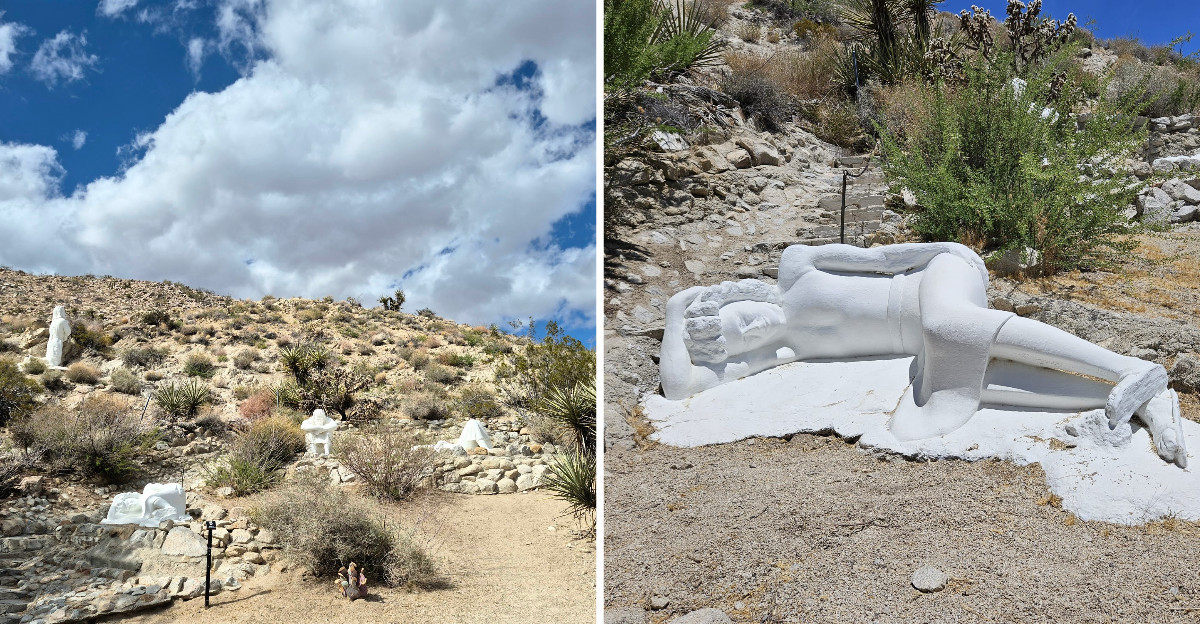
Almost driving right past the turnoff would have been a mistake, and hitting the brakes was the best decision of the day. Up a bumpy little road in the California desert, a crowd of bright white figures waited on a rocky hillside, glowing against a sky so blue it looked painted.
The first thought was simple: who made all of these, and why here? The answer is a story about one sculptor, one generous preacher, and about ten years of hard, dusty work.
More than 40 concrete figures still stand where he left them, surrounded by Joshua trees, cactus, and wide desert views. Walking among them on a slow morning, the silence felt heavier than expected, and the figures seemed to watch every step.
The sculptor poured his faith and his hands into this hillside, and the result is a place that feels both strange and sacred. Hours disappeared without notice.
Leaving was difficult. The quiet hillside has stayed in the head ever since.
The Statue Nobody Else Wanted
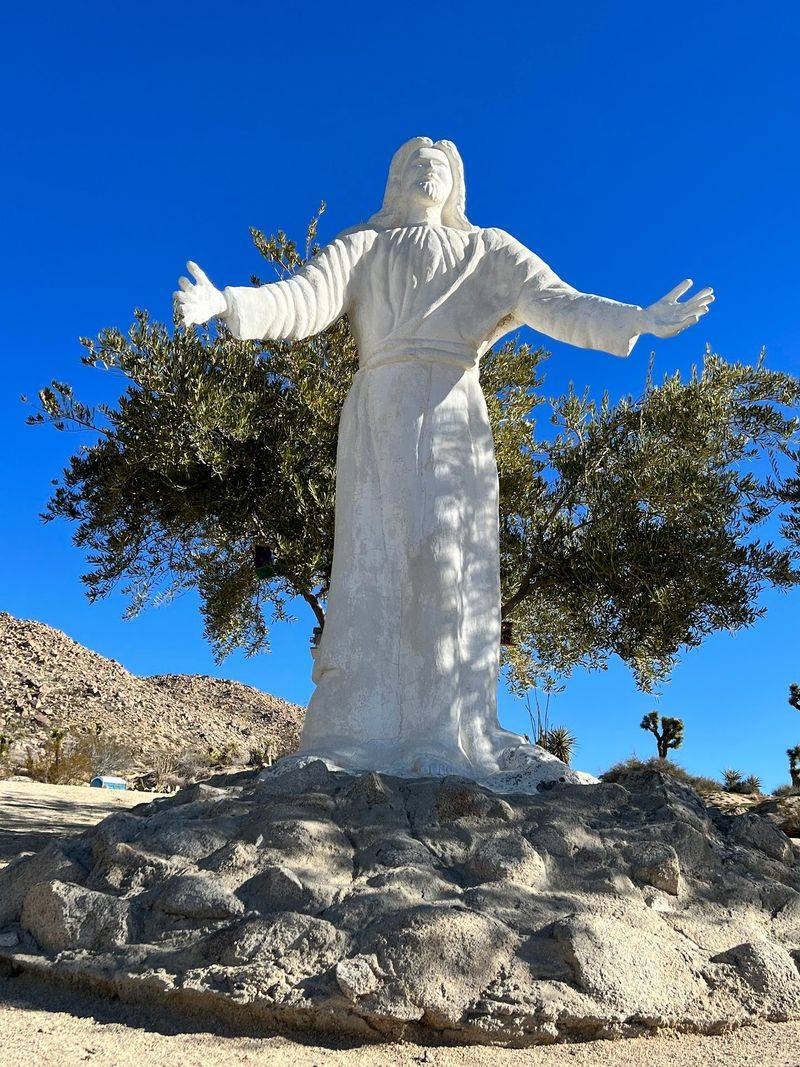
My favorite part of any place is its origin story, and this one has a twist I did not expect. Back in the 1940s, a sculptor-poet and engineer named Frank Antone Martin from Inglewood started building a huge statue of the resurrected Christ.
He hoped his art could inspire peace during the scary early days of the atomic bomb.
The statue stood 10 feet tall and weighed about 5 tons, and Martin dreamed of placing it on the rim of the Grand Canyon. Officials said no because of separation of church and state rules.
Suddenly, he had a giant statue and nowhere to put it.
Reverend Eddie Garver, known locally as the Desert Parson, stepped in with an offer. In 1950 he had acquired five acres of land from the US Government, hoping to create a faith-themed park as a symbol for world peace.
He invited Martin to bring the statue to his hillside in Yucca Valley.
Martin called it the unwanted Christ, which I find both funny and a little touching. The statue was dedicated on Easter Sunday in 1951, and it still watches over the valley today.
When you visit, find it first, because everything else here grew from that single rejected piece.
Ten Years of Concrete, Steel, and Stubbornness
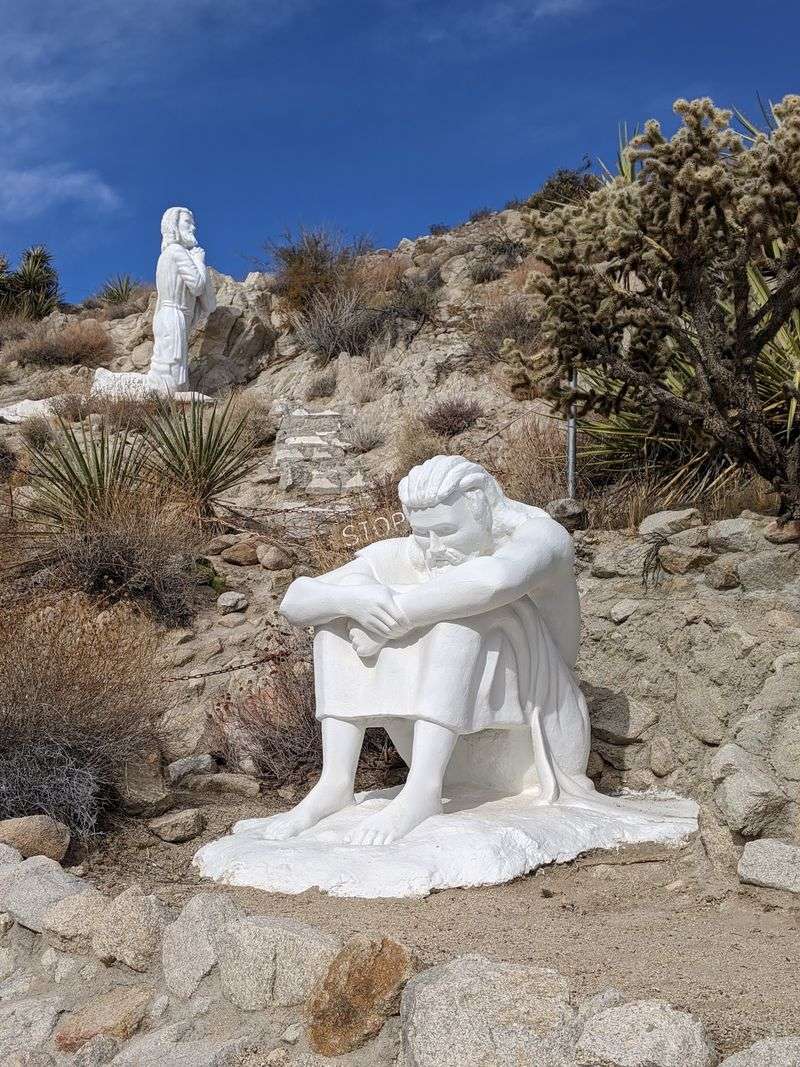
Run your eyes over any figure here and you start to feel the effort behind it. Martin worked on this hillside from 1951 until his passing in December 1961, when he was 74 years old.
That is roughly a decade of mixing, shaping, and hauling heavy material under a harsh desert sun.
He built every piece from steel-reinforced concrete. Then he coated the surfaces with a mix of plaster and white paint, which explains that bright, almost snowy look.
Reportedly, he believed these tough materials would help his art survive atomic fallout, a very real fear during the Cold War years.
I stood near one of the apostles for a while, just thinking about how he pulled this off without modern shortcuts. The folds in the robes, the expressions on the faces, and the sheer size all show a builder who knew both art and engineering.
Some visitors find the style simple, while others call it very professional, and honestly both views make sense up close.
My tip is to slow down and look at the small details. Hands, beards, and fabric lines reveal the most about his skill.
Bring sunglasses too, since that white finish can be dazzling at midday.
The Last Supper Wall That Stops You Cold
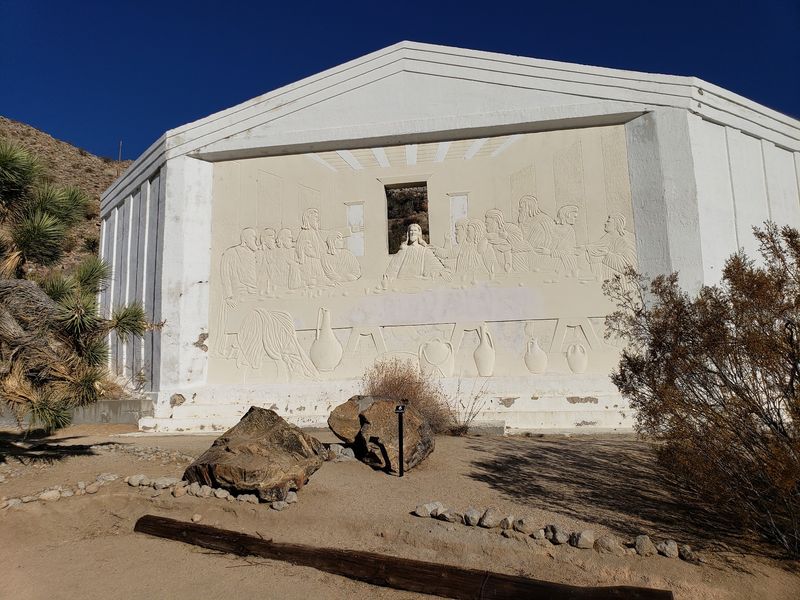
Nothing prepared me for the size of it. The Last Supper here is a three-story bas-relief that weighs around 125 tons, and it rises from the hillside like the wall of a lost temple.
I actually laughed a little when I saw it, just from surprise.
A bas-relief is a carving that pops out from a flat background instead of standing free. Here, Jesus and the apostles sit along a long table, carved in that same chalky white finish as the rest of the park.
Each face seems to react differently, so it is worth stepping close and then backing away again.
Clouds make this spot extra dramatic. When gray skies roll in behind the wall, the white figures almost seem to glow against them.
On clear days the contrast with the blue sky is sharp and clean, perfect for photos.
Give yourself a few minutes here. Try looking at it from the side, where you can see how deep the figures stand out from the wall.
It is easily the heaviest and boldest piece in the park, and for many visitors, including me, it becomes the moment they remember most.
Stories Scattered Among the Cactus
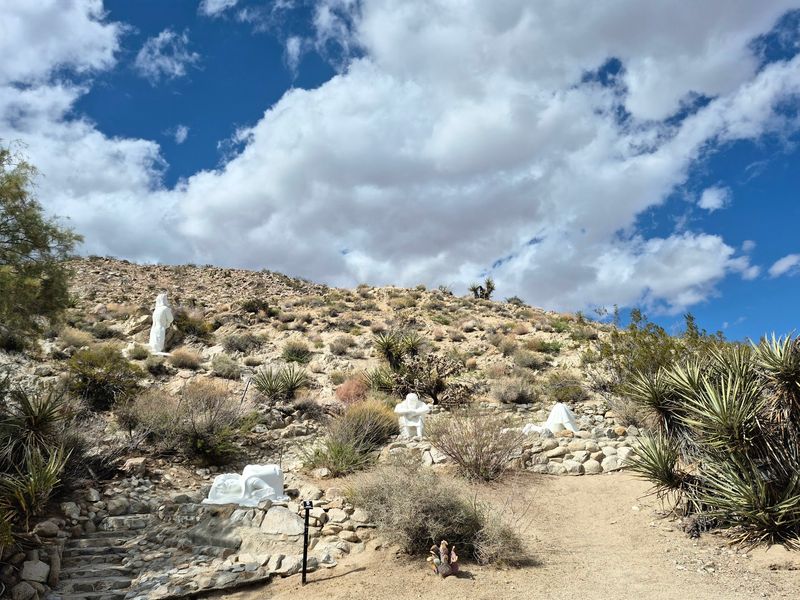
Wandering here reminded me of flipping through a picture book, except the pages are spread across a rocky slope. The park holds more than 40 sculptures and images showing scenes from the life and teachings of Christ.
Each cluster tells its own small story.
You will find the Twelve Apostles, Martha and Mary, angels, and a Sermon on the Mount scene, among others. The figures are larger than life, so even tall visitors end up looking up at them.
Cactus, desert shrubs, and Joshua trees fill the spaces in between, which makes every scene feel planted right into the land.
At the start of the trail sits a kiosk with information and pamphlets that label each piece and its matching Bible story. Grab one before you head down the hill.
Without it, you might guess at a few scenes, and with it, the whole place clicks together.
You do not need to be religious to enjoy this. Plenty of visitors come simply for the art, the history, and the strange beauty of white statues in a brown desert.
I liked treating it like a scavenger hunt, checking off each figure as I found it.
Scars From Earthquakes and Weather
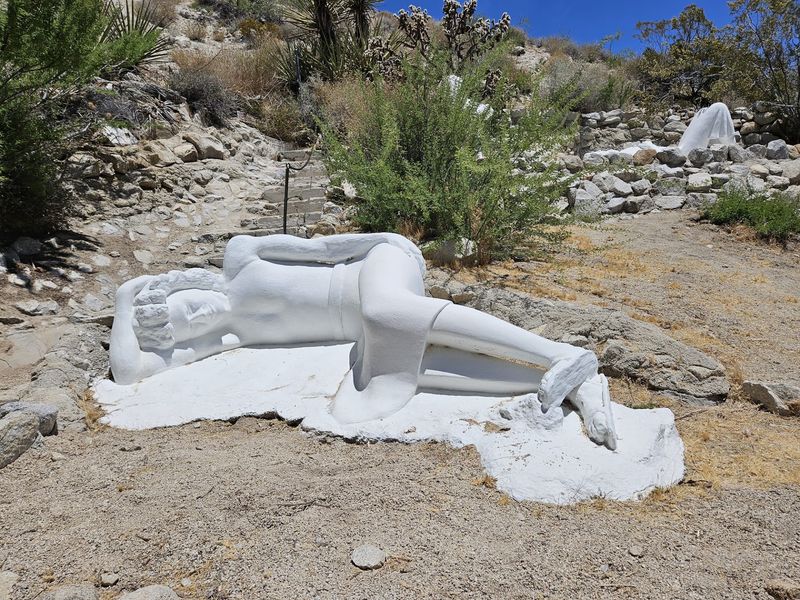
Desert life is rough on everything, and these statues have taken their share of hits. In 1992 the Landers earthquake shook the area hard, and the park suffered real damage.
Blistering sun, cold nights, wind, and vandalism have all added wear over the decades too.
Here is the good news, though. The park is run by California’s Desert Christ Park Foundation, a volunteer group that depends only on donations and grants.
Through serious restoration work, the park was reported to be nearly fully restored by late 2019.
Knowing that changed how I saw the figures. A patched arm or smoothed crack stopped looking like a flaw and started looking like care.
Someone showed up, fixed it, and kept this odd little treasure alive for strangers like me.
If you enjoy your visit, think about leaving a donation, since that money directly helps keep the statues standing. Please also stay respectful, keep hands gentle, and never climb on the figures.
Concrete may look tough, but decades in the desert make it more fragile than it seems. Being a careful guest is the easiest way to help the next traveler enjoy the same view.
Golden Hour on the Hill
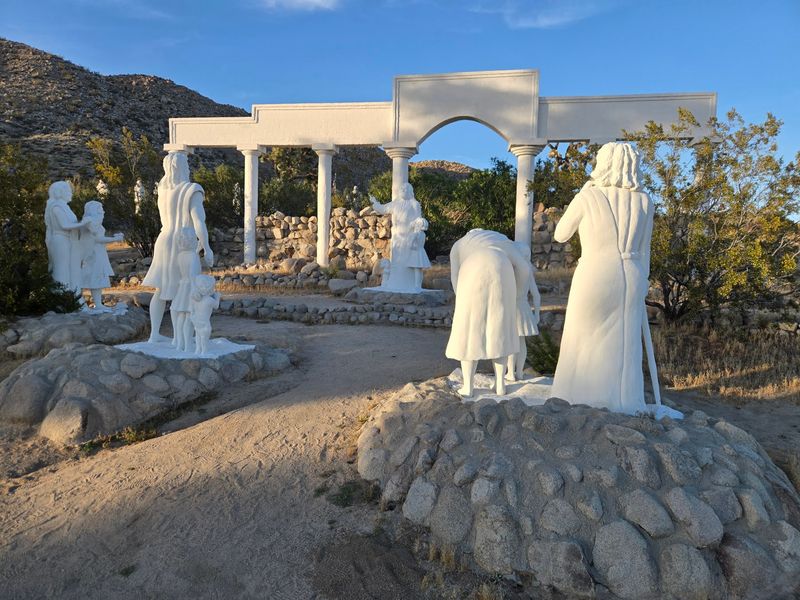
Timing matters here more than you might think. I showed up in the morning, and the soft light made the white statues look warm instead of blinding.
Sunrise and sunset are the best times for photos, and the crowds are usually tiny.
From the hillside, you get wide views over Yucca Valley and the distant horizon. As the sun drops, shadows stretch across the rocks and the figures turn gold, then pink.
It is peaceful in a way that made me lower my voice without meaning to.
The park is open year-round during daylight hours, with listed hours from 7 a.m. to 6 p.m. every day. Admission is free, which still surprises me for a place this memorable.
Check the time before you go so you do not arrive right at closing.
Weather can shift fast in the high desert. Wind can bite on cool days, and summer afternoons get very hot, so plan your visit around comfortable temperatures when you can.
A light jacket in winter and a hat in summer will make your stroll much nicer. Give yourself time to just sit and watch the light change, because that quiet stretch is part of the magic.
Handy Tips Before You Wander
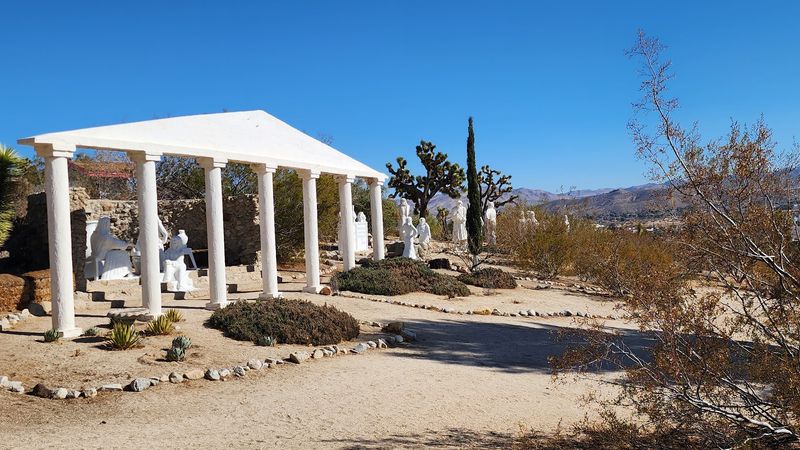
A little planning goes a long way on this hillside. The parking lot sits right next to the park, but the road in is unpaved and bumpy.
Low cars and bigger vans may need to take it slowly.
Once parked, you can see most of the grounds in under an hour, though I stretched my visit longer because I kept stopping to stare. Paths are easy but uneven in spots, so wear comfortable shoes with good grip.
There is some shade, yet not much, so bring plenty of water.
At the top, near parking, shaded picnic tables make a lovely lunch stop. There is also a small book drop if you want to leave a used book for someone else.
A portable restroom is available, but do not expect full facilities.
Look up now and then, because many trees hold charming birdhouses. There is also a small chapel on site worth peeking at.
Dogs often visit with their owners, so a leash and cleanup bags are smart to pack. Whether you come for faith, art, or a leg stretch on the way to Joshua Tree, this hillside rewards a slow pace.
Address: 56200 Sunnyslope Drive, Yucca Valley, California 92284
