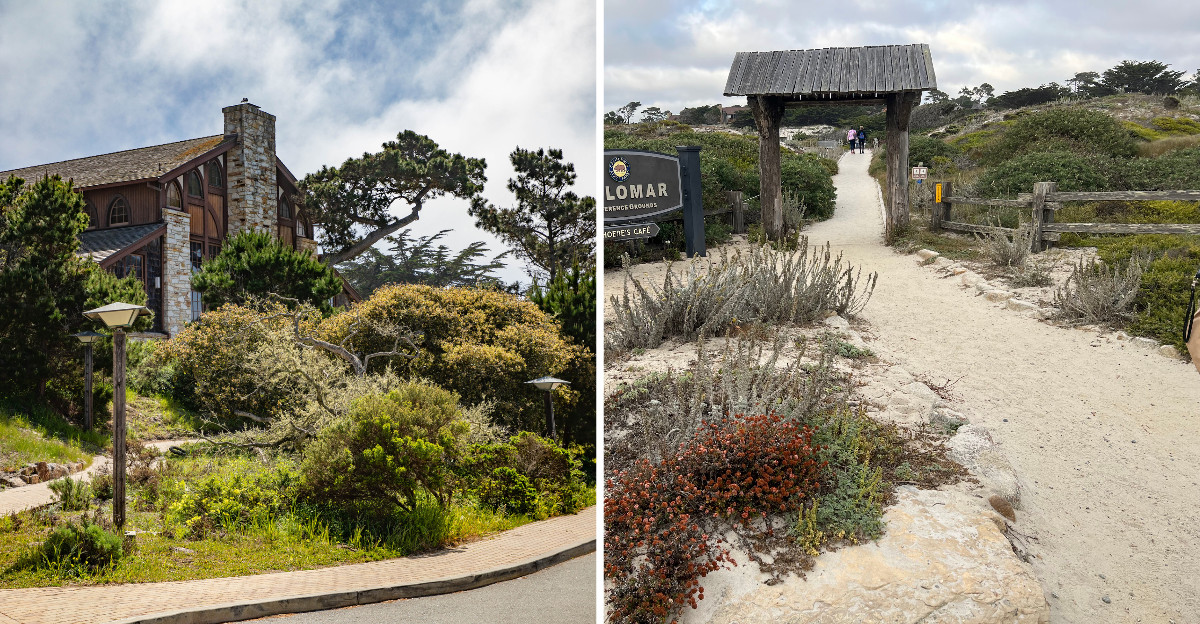
Fog rolling through pines thick enough to make old wooden buildings appear one at a time is the kind of coastal morning that lingers. Driving slowly along a seaside avenue, windows down, salt air and sun-warmed cypress mixing into something that stays in the memory on busy weekdays.
What was not known yet was that those quiet, shingled lodges were designed by the same architect who later built a famous hilltop mansion for a newspaper tycoon. She started here in 1913, years before that commission ever arrived.
The buildings are modest, low to the ground, and covered in shingles that have weathered a century of ocean air. Paths wind between them, and the sound of waves stays constant in the background.
This is not a grand monument. It is a cozy secret between the forest and the sea, and it deserves a spot on any California road trip.
A Head Start on Greatness, Morgan Before Hearst
Most people I talk to know Julia Morgan for one thing, and it sits on a hill above San Simeon. Fewer realize that she was sketching plans for a camp on the Monterey Peninsula back in early 1913.
Hearst Castle didn’t enter her life until 1919, so Asilomar came first by a good six years.
Her résumé was already impressive by then. She was the first woman admitted to the architecture program at the École des Beaux-Arts in Paris, and she became California’s first licensed female architect.
That training shows up everywhere here, just in a softer, quieter form than the marble pools down south.
Between 1913 and 1929, Morgan designed 16 buildings on the grounds. Eleven of them are still standing today, which is a pretty amazing survival rate for wooden structures sitting in salty, foggy ocean air for over a century.
Some sources count even more of her work, including garages and utility buildings, if you add up every small project.
My tip is to treat Asilomar like a warm-up act before you visit Hearst Castle. Seeing her early ideas first makes the castle feel like the next chapter in a story you already know.
You start spotting her love of natural light, clever rooflines, and cozy rooms that invite people to gather and linger.
The Social Hall and Its Welcoming Hearth
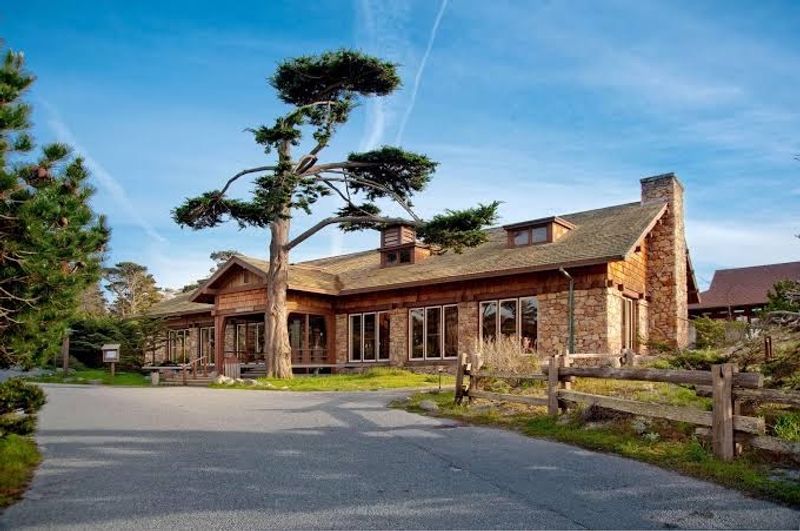
A crackling fire greeted me on a gray morning, and I ended up staying next to it far longer than planned. The Phoebe Apperson Hearst Social Hall, finished in 1913, is often the first building guests see.
It still works as the main lobby and gathering spot, just as it did for the earliest campers.
Fireplaces were a big deal in Morgan’s plans at Asilomar. She often made the hearth the heart of the room, pulling people together on chilly coastal evenings.
In a place where summer fog can roll in by afternoon, that was both smart and kind.
Look up once you settle in. Exposed wooden beams stretch across the ceiling, and tall windows let in soft light even on cloudy days.
The whole space feels roomy without feeling cold, which is harder to pull off than it sounds.
The hall is named for Phoebe Apperson Hearst, a major supporter of the YWCA and the mother of William Randolph Hearst. Her connection to Morgan is one reason the young architect landed this project in the first place.
You could say the road to Hearst Castle quietly started right here.
Bring a book or a journal and claim a chair near the fire in the early morning. Few things beat watching the pines sway outside while the room slowly wakes up around you.
Wood, Stone, and the Art of Blending In
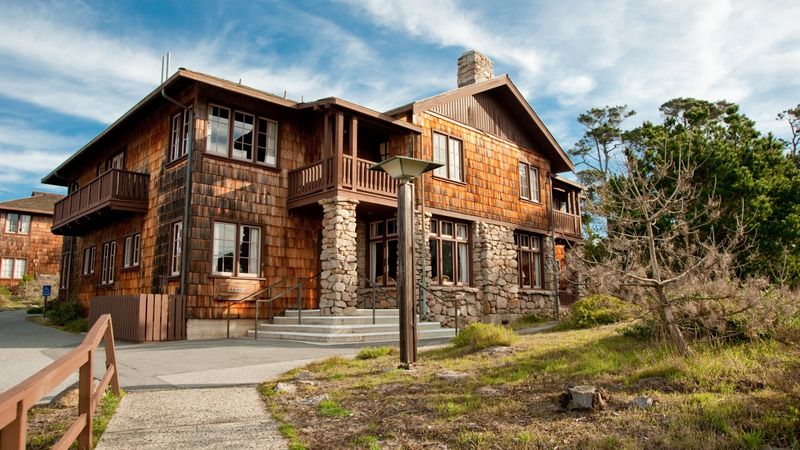
Run your hand along a wall at Asilomar and you’ll feel the story of the place. Morgan chose local wood and stone so her buildings would look like they grew out of the forest instead of landing on top of it.
From a distance, some of them almost disappear into the trees.
Her style here belongs to the Arts and Crafts movement. That approach cared about honest materials, skilled handwork, and a close bond with nature.
Instead of fancy decoration, the beauty comes from rough stone chimneys, dark wood, and simple, sturdy shapes.
Open spaces and lots of natural light were also part of the plan. Big windows frame views of Monterey pines and the dunes beyond, so the outdoors never feels far away.
Even indoors, I kept catching myself glancing outside to check on the fog.
Here’s a fun way to explore: pick one building and study it like a detective for ten minutes. Notice how the rooflines echo the slope of the land, or how stone bases seem to anchor the walls to the ground.
Kids especially enjoy hunting for knots in the wood and odd-shaped rocks in the chimneys.
Photographers, take note. Late afternoon light turns the weathered wood a warm honey color that looks lovely against the blue-gray sky and deep green pines.
A Refuge Built for Young Women
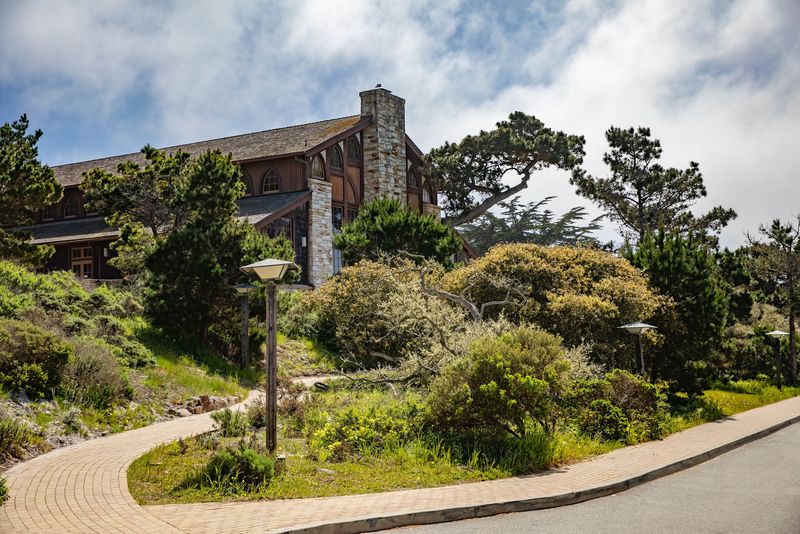
Back in 1913, a summer getaway run by and for young women was a fresh idea. Asilomar opened that year as a camp and conference center for the Young Women’s Christian Association, better known as the YWCA.
It was the group’s first permanent facility anywhere on the West Coast.
Picture young women arriving from cities and towns across California, trading crowded streets for pine needles and sea breezes. They came to learn, share ideas, hike, and simply breathe a little easier for a while.
The buildings Morgan designed gave them room to do all of that together.
The name itself paints the picture. Asilomar blends two Spanish words and is often translated as refuge by the sea.
I can’t think of a better label for a spot where the loudest sound at night is the surf.
Having a woman architect shape a retreat for women adds a layer that I find really meaningful. Morgan understood what the space needed to feel safe, welcoming, and inspiring.
In 1987, the site became a National Historic Landmark, partly because of its role in the history of women’s recreation and the growth of the YWCA.
When you visit, take a moment to imagine those first summers. The trees were smaller and the paths were sandier, but the feeling of escape was probably much the same as today.
Merrill Hall and the Buildings That Still Stand
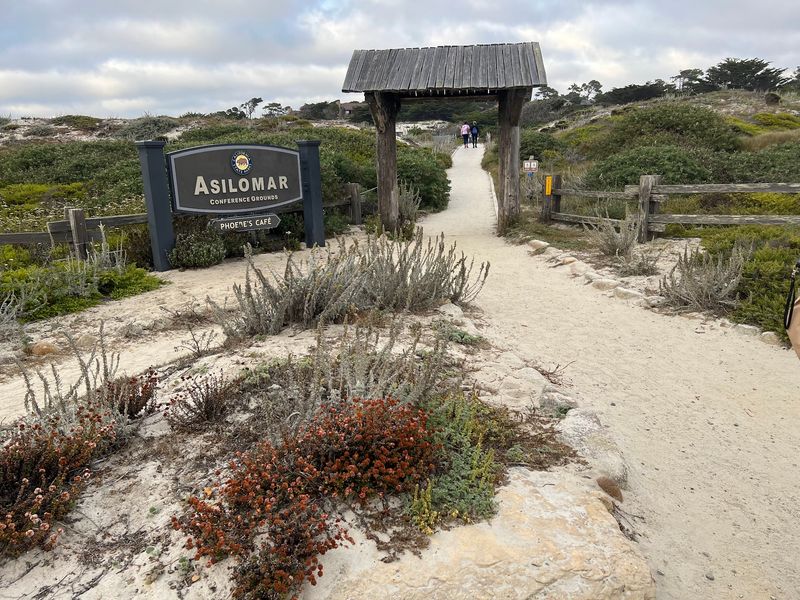
Honestly, I lost track of time just wandering from one Morgan building to the next. With 11 of her original structures still standing, the grounds work like an open-air gallery of her early career.
Each one has its own personality, even though they clearly belong to the same family.
Merrill Hall is the showstopper for many visitors. Completed in 1928, near the end of her work here, it is a large meeting hall with a soaring timber ceiling and a big stone presence.
It still hosts gatherings today, which means it’s doing the exact job it was built for nearly a century ago.
Crocker Dining Hall is another highlight, and it’s where guests have shared meals for generations. Long tables, high ceilings, and plenty of windows make even a simple breakfast feel a bit special.
You get a real sense of how Morgan designed for community, not just for looks.
Smaller lodges and cottages dot the paths between the larger halls. Some have charming names, and part of the fun is finding them without a map.
If you prefer a plan, though, check with the front desk about historic walking tours offered by the park.
Wear comfy shoes, since the paths wind through sand and pine needles. Take your time too, because the details reward slow looks.
Dune Trails and Rocky Coves Next Door
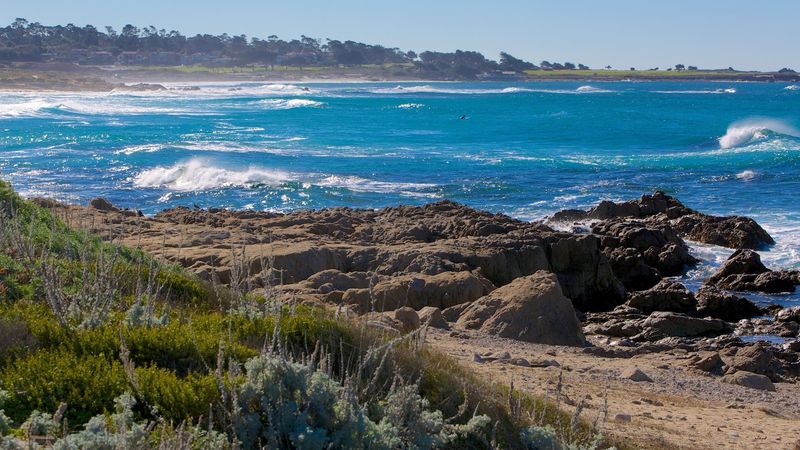
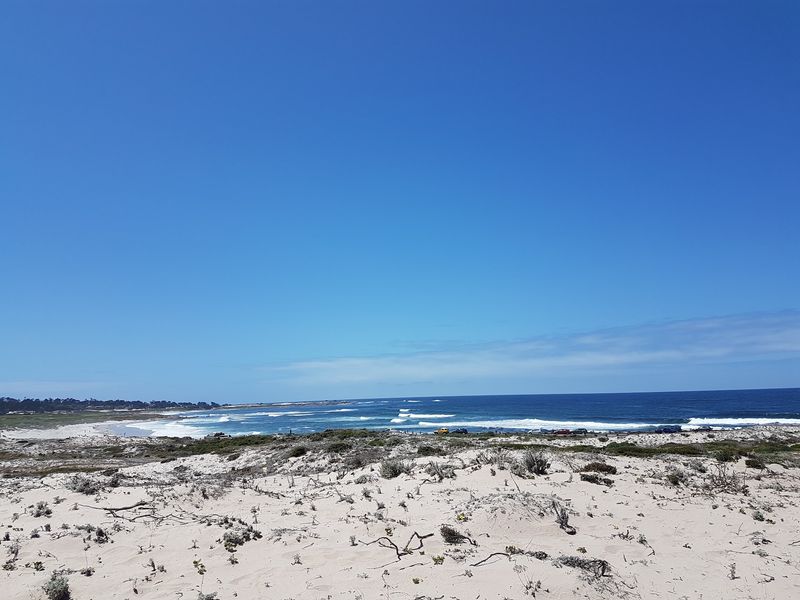
Just across the road from the lodges, the land tilts toward the Pacific and everything changes. Asilomar State Beach stretches along the shore with rocky coves, pockets of white sand, and waves that crash with real energy.
I stood there for a long while, completely forgetting I’d come for architecture.
The whole site covers 107 acres of ecologically rich state park land. A boardwalk trail winds through restored sand dunes, where low plants hold the sand in place and tiny wildflowers pop up in season.
Staying on the path matters here, since the dunes are fragile and still healing from years of foot traffic.
Tide pools are a highlight when the water pulls back. You might spot sea anemones, crabs, and snails tucked into the rocks.
Watch your footing, because wet stone gets slippery fast, and never turn your back on the ocean.
Swimming isn’t really the main event on this stretch, thanks to cold water and strong currents. Instead, locals and visitors come to walk, watch the sunset, and look for seabirds skimming the surf.
On clear evenings, the sky turns pink and orange behind the rocks, and nobody seems in a hurry to leave.
Layers are your friend here. Even in summer, the breeze can be chilly, so pack a warm jacket and maybe a thermos of hot cocoa.
Staying Overnight in a National Historic Landmark
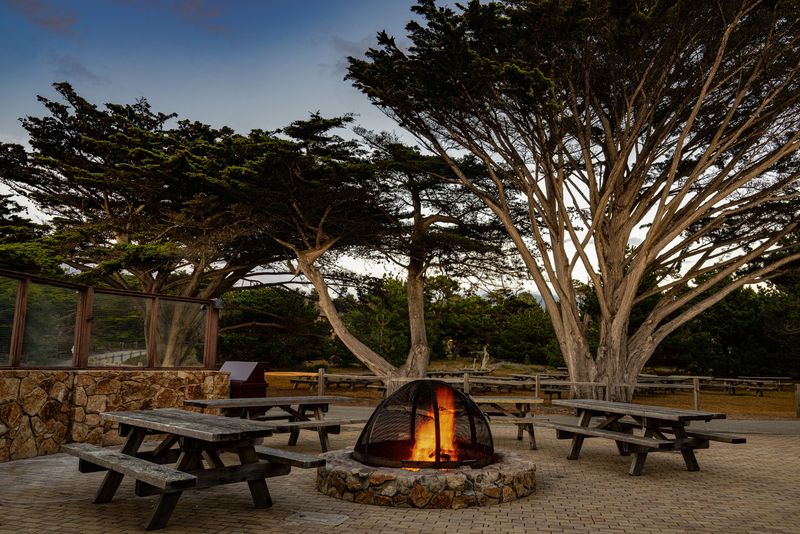
Falling asleep to the hush of distant waves inside a historic landmark is a strange and lovely feeling. Asilomar is operated by California State Parks, and while it still runs as a conference center, individual travelers are welcome to book rooms too.
You don’t need to be part of a group to enjoy the magic.
Rooms range from historic Morgan-era lodges to newer buildings added later. If the history is what draws you, ask about staying in one of the older structures when you reserve.
They offer a simple, rustic charm, so think cozy rather than fancy.
Mornings are my favorite time on the grounds. Deer sometimes wander between the buildings, and the fog hangs low in the pines before the sun burns it off.
Grab a warm drink, find a bench, and let the day start slowly.
The location also makes Asilomar a handy base for exploring. Downtown Pacific Grove, the famous 17-Mile Drive, and Monterey are all a short drive away.
Still, I’d suggest leaving at least one afternoon with no plans at all.
Visitors who aren’t staying overnight can still stroll the grounds and peek into public spaces like the Social Hall. Be respectful of meetings in progress and keep voices low near guest rooms.
Address: 800 Asilomar Ave, Pacific Grove, CA 93950
