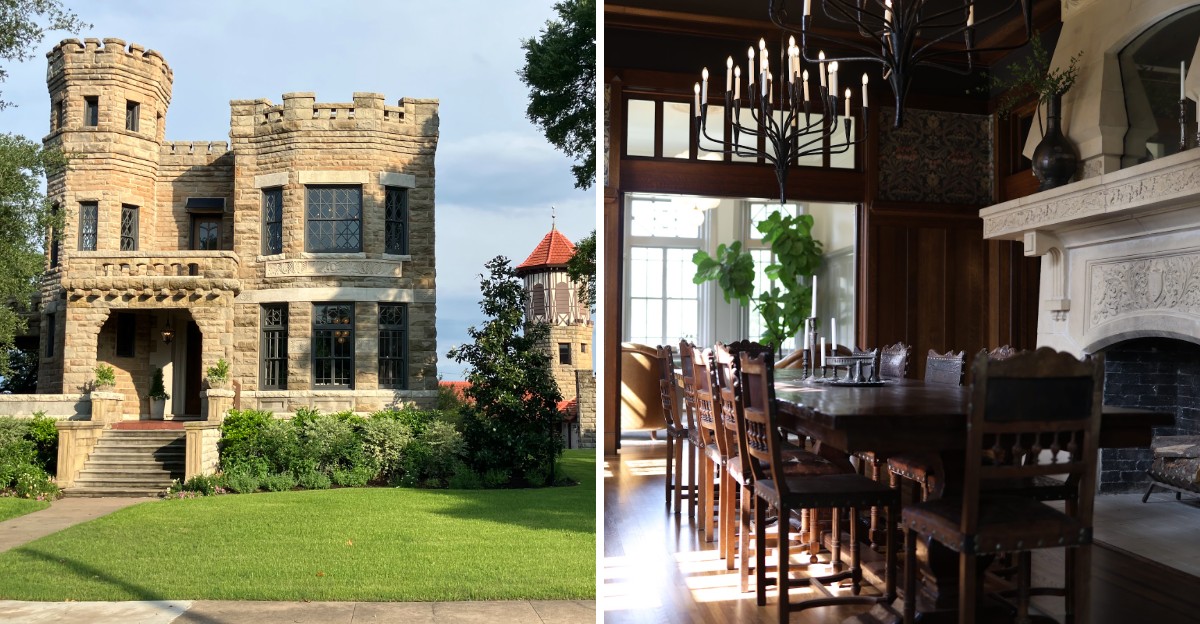
A castle in Texas. It sounds like a fairy tale.
But this one is real, and it has been standing for over a century. The architecture is European through and through, with towers, stone walls, and details that look like they were plucked straight from the countryside of France or Germany.
You half expect a drawbridge. Instead, you get a piece of Texas history that is as beautiful as it is unexpected.
The grounds are peaceful, the building is impressive, and the story behind it is just as interesting. It is the kind of place that makes you stop and stare.
A hidden treasure that feels like it belongs somewhere else entirely. Worth a visit for the architecture alone.
And worth a second visit just to take it all in again. Texas has its share of surprises.
This is one of the best.
The Stone Contractor Who Bit Off More Than He Could Chew
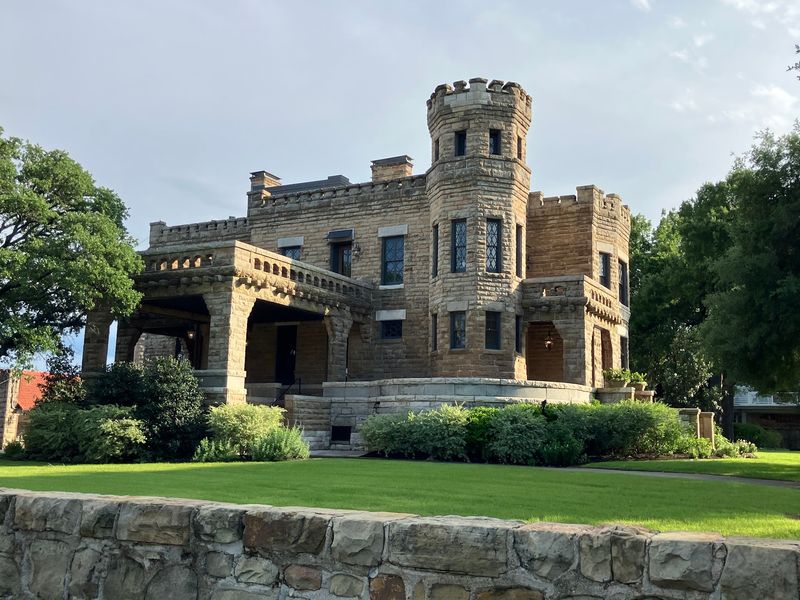
Every great building has an origin story, and this one starts with ambition outrunning the bank account. Back in 1890, a local stone contractor named John Tennant decided to build himself a grand home on what were then the far edges of Waco.
He got the land through a clever trade with banker J. W.
Mann, agreeing to carve a stone obelisk marking the Mann family plot at Oakwood Cemetery. Land for craftsmanship.
Not a bad deal.
Tennant used leftover stone from the Provident Building to lay the foundation and basement, which is the kind of resourcefulness you have to admire. The trouble came later, when the money simply ran out before the vision did.
By 1906 he sold the half-finished house to cotton broker Ripley Hanrick, with an agreement that Tennant would keep working on the stonework. Financial troubles followed anyway, and by 1908 the whole project sat abandoned.
Picture it for a second. A skeleton of pale stone standing alone at the edge of town, weeds growing where the floors should have been.
That stalled beginning matters because it explains why the castle feels layered rather than planned. Different hands, different decades, different dreams all stacked on the same foundation.
Guides on the tour tend to linger on this chapter, and it lands well. Knowing the house was almost a permanent ruin makes the finished version feel like a rescue story rather than a real estate listing.
How A Rhine River Castle Ended Up In Central Texas
Abandoned buildings rarely get a second act this good. A few years after construction stopped, investors working on the nearby elite Huaco Club brought in architect Roy E.
Lane, and he took one look at the forgotten stone shell and saw possibility.
Lane was no small name in Waco. His portfolio includes the Hippodrome building and collaborative work on the ALICO tower, both local landmarks in their own right.
He convinced Civil War veteran Captain Alfred Abeel to buy the property in 1913, then got hired to finish what Tennant started. The result went far beyond a simple completion job.
Lane transformed the unfinished frame into a three-story castle with a basement, eight fireplaces, servants’ quarters, and a proper tower. The inspiration came from a small German castle along the Rhine River, which explains why the silhouette feels so out of place in the best possible way.
There is something wonderfully stubborn about the decision. Texas in 1913 was not exactly overflowing with medieval European architecture, and yet here came a design straight out of the Rhineland.
The proportions are what sell it. Steep rooflines, thick stone walls, a tower that anchors the whole composition instead of just decorating it.
Photographers love the exterior for this reason. Shoot it from the right angle with the trees framing the edges, and it genuinely could pass for a country estate somewhere in central Germany.
Imported Marble, French Stone, And A Door That Weighs 400 Pounds
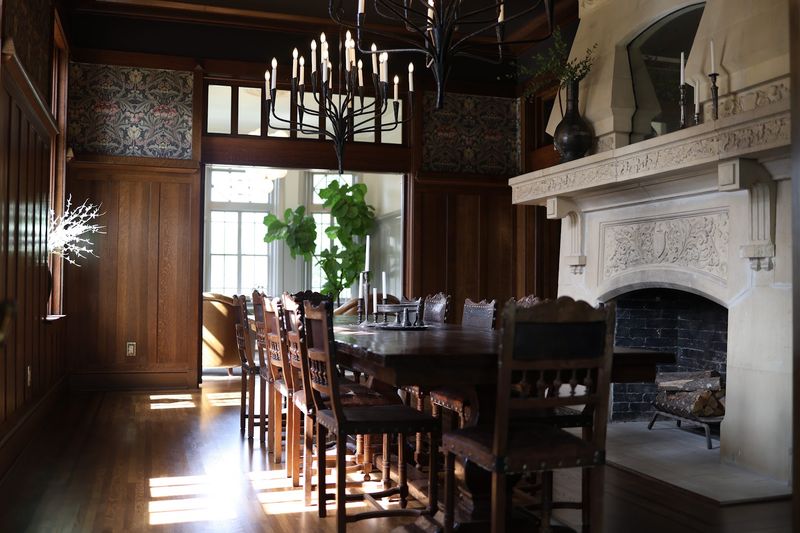
Here is where the castle really flexes. The exterior is mostly white sandstone with smaller amounts of limestone, but the inside reads like a shipping manifest from three different continents.
Caen stone came from France. Carrara marble arrived from Italy.
Honduran mahogany paneling lines several rooms, each floor and space getting its own material personality.
The front entrance deserves its own paragraph. A ten-foot-tall oak door, eight inches thick, weighing roughly four hundred pounds, and yet balanced so precisely that a child could reportedly swing it open.
That detail always gets a reaction on tours, and honestly it should. Four hundred pounds of oak moving on hinges that smooth is engineering as much as it is craftsmanship.
What makes these materials interesting is the context. Hauling Italian marble and French stone into Central Texas in the early twentieth century was not a casual purchase, it was a statement about what the house was meant to represent.
Walk from room to room and the change in surfaces becomes obvious. Cool stone gives way to warm wood, polished marble meets carved detail, and the whole thing avoids feeling monotonous.
Diamond-paned windows scatter light across the floors in patterns that shift throughout the day. Small thing, big effect.
For anyone who appreciates old-world building techniques, the interior offers more to study than most historic homes in the region. Bring your eyes and a little patience.
Pharmacists, A Church, And A Tropical Fantasy Bedroom
Castles collect characters, and this one collected plenty. In 1941 Irene Pipkin, of the family behind Pipkin Drugstores, bought the home and moved in with her daughter and son-in-law.
When Irene passed, the castle went to her daughter Pauline Pipkin Garrett, recognized as Waco’s first female pharmacist. She and her husband Barney lived there for many years.
Pauline’s will sent the property to the Austin Avenue Methodist Church, and that became the castle’s only stretch of public use. The church hosted youth events inside those stone walls, which is a fun mental image, though the upkeep costs quickly became overwhelming.
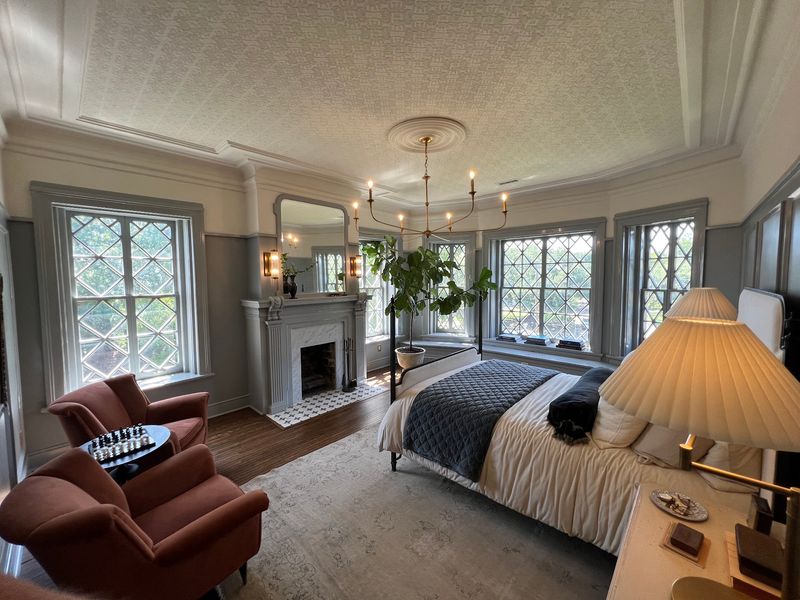
In 1969 the church sold the property to Jack Schwan for fifty thousand dollars. The Schwan family poured effort into repairs and renovations, including redecorating the second floor with a tropical fantasy theme.
Yes, a tropical fantasy theme. Inside a German-inspired castle.
The 1970s were something.
The Schwans also secured a historical marker for the home in 1977, which was a genuinely important move for its long-term survival.
Selling it proved harder than expected. The asking price scared off buyers until a steep reduction finally moved it in 1991.
After that came a revolving door of owners, and the building slipped into disrepair more than once. Big houses demand big commitment, and not everyone had it.
The messy middle chapters are part of what makes the current condition feel earned.
The Three Year Rescue That Put It Back On The Map
By 2014 the castle was in rough shape, the kind of rough that makes preservationists nervous. A group including Oxford scholar Dirk Obbink, contractor Tom Lupfer Jr., and architect Sterling Thompson began renovation work, giving the building a fighting chance.
The chapter that changed everything came in 2019. Chip and Joanna Gaines of Magnolia Market purchased the property, ending a long-running fascination with the place.
Chip had reportedly bid on the castle several times over the years without success. Persistence eventually paid off.
What followed was a meticulous three-year restoration documented in their series, Fixer Upper: The Castle. The stated goal was straightforward: honor the history while making the house genuinely livable again.
That balance is harder than it sounds. Strip too much and you lose the soul, preserve too rigidly and nobody can actually use the space.
Work wrapped in the summer of 2022, and the transformation is dramatic without feeling like a costume. Original character stayed put while the failing parts got rebuilt properly.
Restoration at this scale involves a thousand small judgment calls, from which boards to save to how to match century-old stonework. The evidence of those decisions shows up everywhere once you know to look.
There is something satisfying about a building that came this close to being lost and then got pulled back. Waco gained a landmark instead of a memory.
Seven Working Fireplaces And A Kitchen That Moved Upstairs
Numbers help set the scene. The restored castle covers 6,176 square feet with four bedrooms, three and a half bathrooms, and seven working fireplaces.
Seven. In Texas.
Decorative, mostly, but functional all the same.
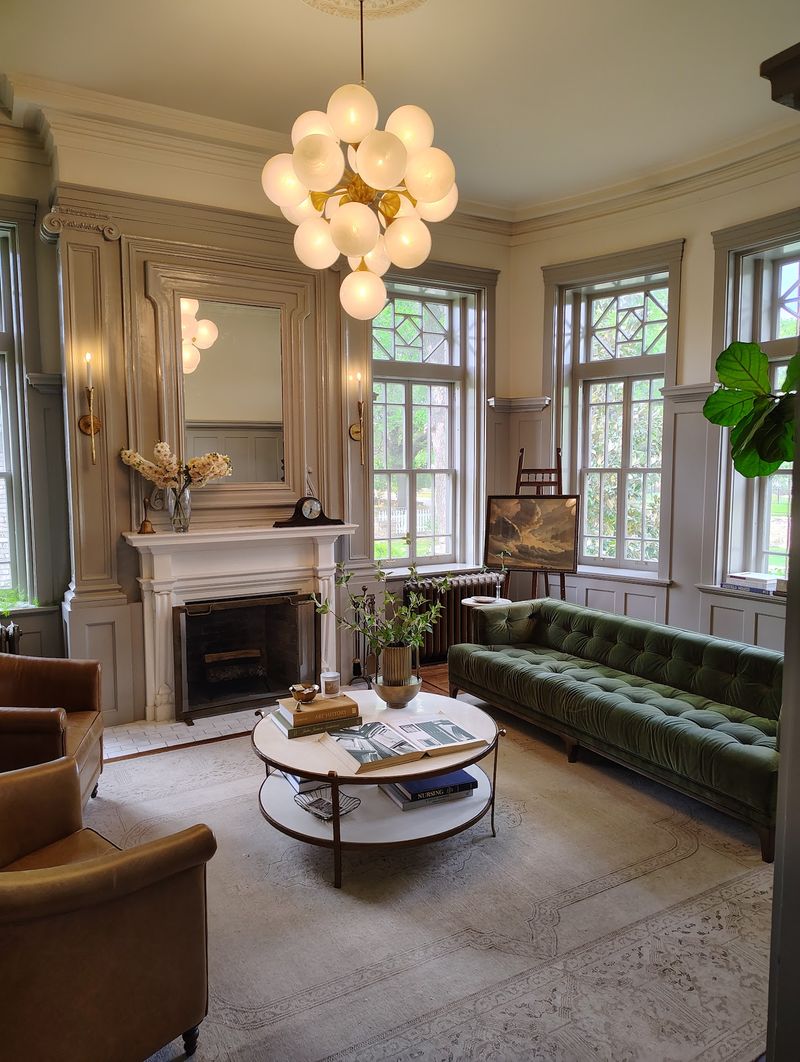
The restoration saved and refinished original details wherever possible, including Honduran mahogany panels, Caen stone, Carrara marble, and those diamond-paned windows. The formal dining room and living room show the old-meets-new approach clearly.
One of the smartest changes involved the kitchen. Originally hidden into the basement, as was common when staff did the cooking, it now sits on the first floor where actual humans want to gather.
The built-in china cabinet was salvaged and restored rather than replaced, a small choice that says a lot about the overall philosophy.
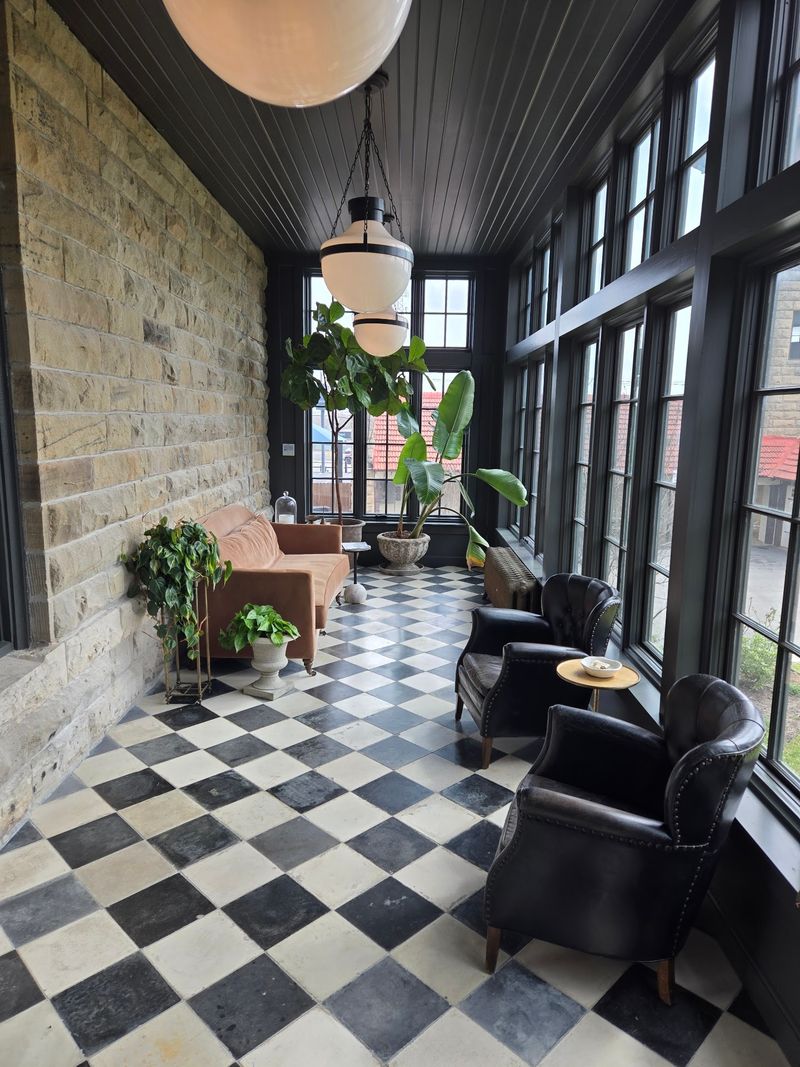
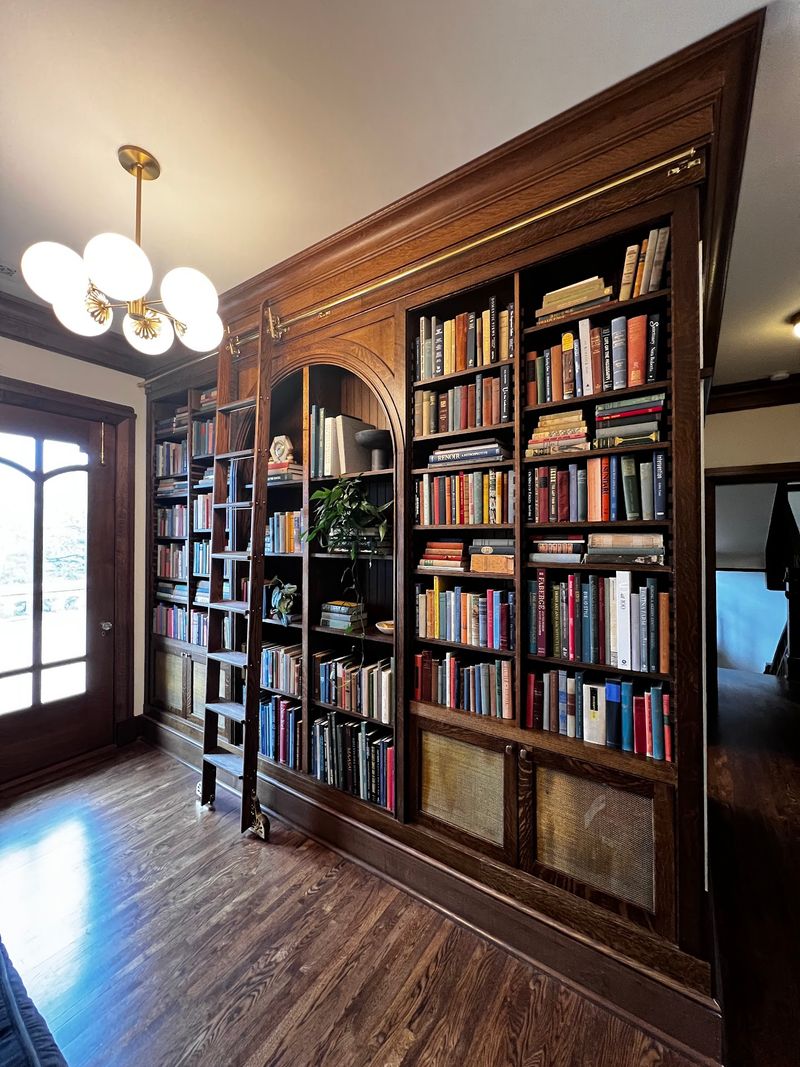
Other spaces got reimagined entirely. A moody card room, a formal library, and a conservatory that catches light beautifully all add different moods as you move through the floors.
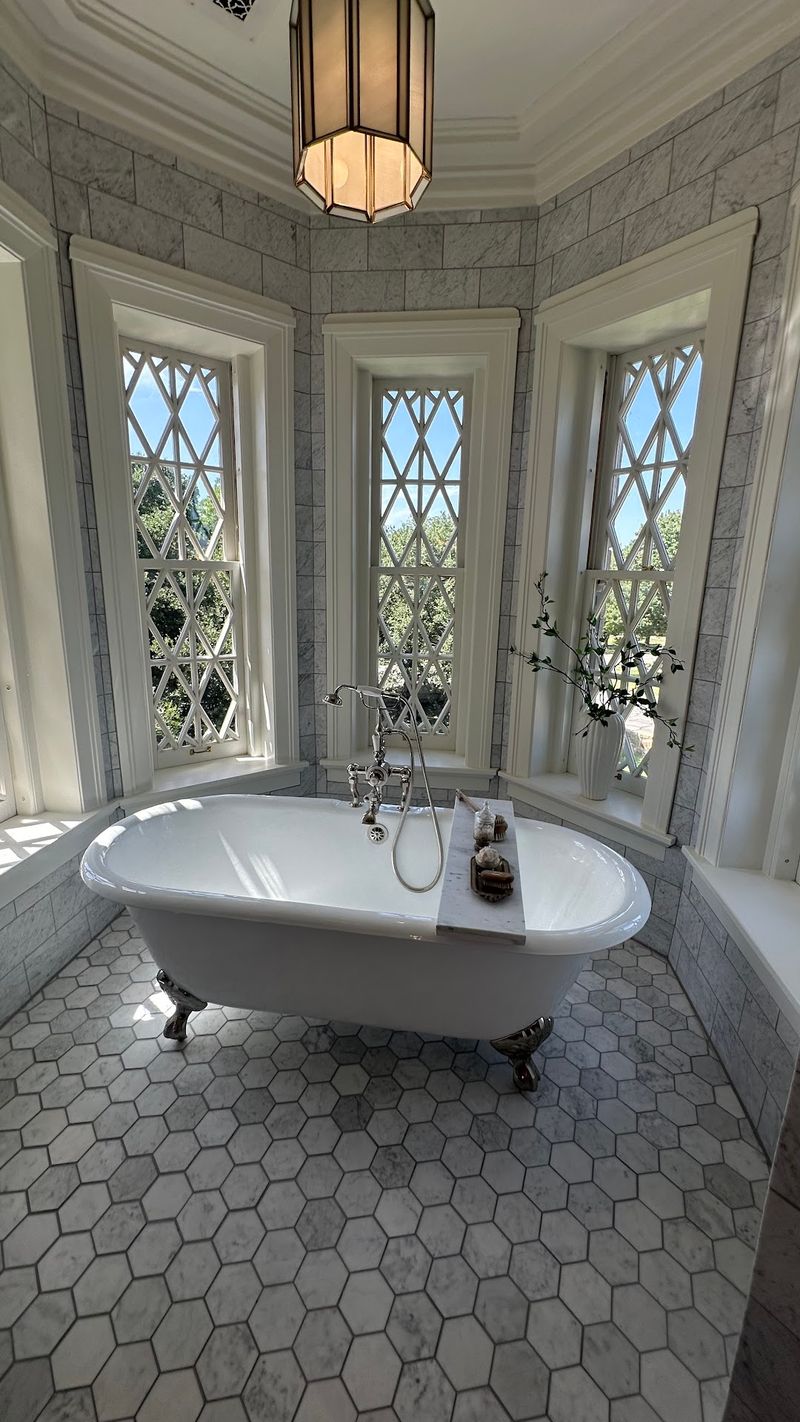
The primary bath features an enclosed tub and shower, modern in function while staying respectful of the surrounding architecture.
What strikes most visitors is how the house avoids feeling like a museum. Rooms have purpose, furniture looks sittable, and the scale stays warm instead of intimidating.
Tours move room by room, and the pacing gives you time to notice the millwork. That is where the real craftsmanship hides.
Booking A Tour And What The Visit Actually Feels Like
Reading about a castle is fine. Getting inside one is considerably better.
Guided tours run through the house, and the guides do a lot of the heavy lifting in terms of enjoyment. Visitors consistently mention how knowledgeable and genuinely entertaining the storytelling is, blending architectural history with renovation details.
Group sizes stay manageable, and quieter time slots sometimes turn into something close to a private walkthrough. Questions get answered thoroughly rather than rushed.
Photography opportunities exist both inside and out, which is not always the case with historic homes. Morning light hits the front facade nicely if that matters to your camera roll.
A portion of tour proceeds goes toward local youth organizations and community charities, something the guides mention and visitors appreciate. Supporting the neighborhood while touring its most unusual building feels appropriate.
Plan for a relaxed pace. The route covers multiple floors, so comfortable shoes beat cute ones here.
Fans of the television series will catch plenty of familiar rooms, but the tour works just as well for people who have never watched an episode. History carries it either way.
Booking ahead is the move, since spots fill up during busy travel seasons in Waco. Walk-ups are not a reliable strategy.
Even people dragged along by enthusiastic partners tend to leave impressed. That is usually a good sign.
A Neighborhood Named After Its Most Famous Resident
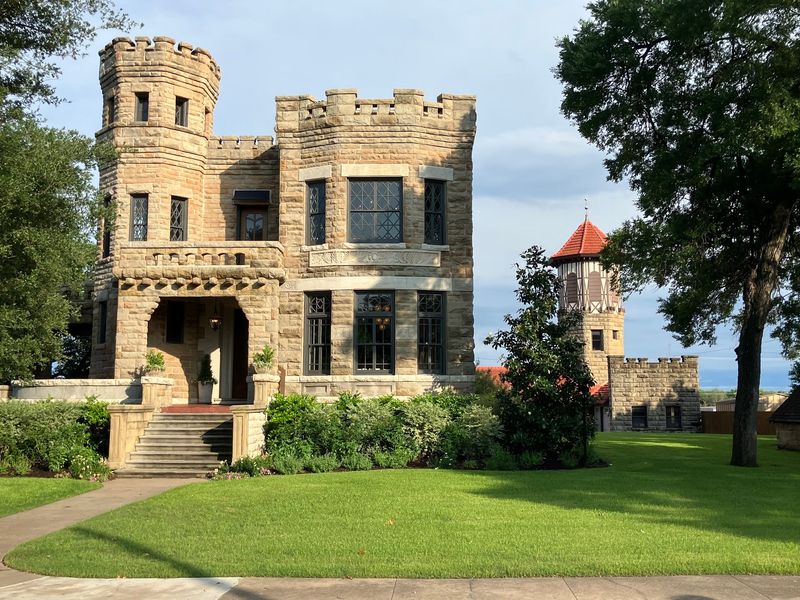
Few homes are impressive enough to name a whole neighborhood after. Sitting at 3300 Austin Ave, Waco, TX 76710, the castle anchors the Castle Heights district, an area that borrowed its identity directly from the building.
The Gothic Revival styling stands out against the surrounding homes, but it never feels like an intruder. Decades of coexistence have a way of smoothing things over.
The Texas Historical Commission recognized the property with a historical marker, cementing its place in the state’s architectural record.
Beyond the stone and the tower, the house works as a reminder of the cotton industry that once drove prosperity through this part of Texas. Wealth built it, wealth abandoned it, and eventually wealth brought it back.
Pairing a visit with the rest of Waco makes for a solid day. The downtown Magnolia area, local dining spots, and the walkable stretches nearby all sit within easy reach.
Driving past at dusk is worth doing even without a ticket. The stone shifts color as the light fades, and the tower cuts a sharp shape against the sky.
What lingers is the contrast. Palm-warm Texas air, wide streets, pickup trucks rolling by, and then this quiet slice of European grandeur holding its ground.
Odd combinations often make the best travel memories. Cottonland Castle is proof of that.
