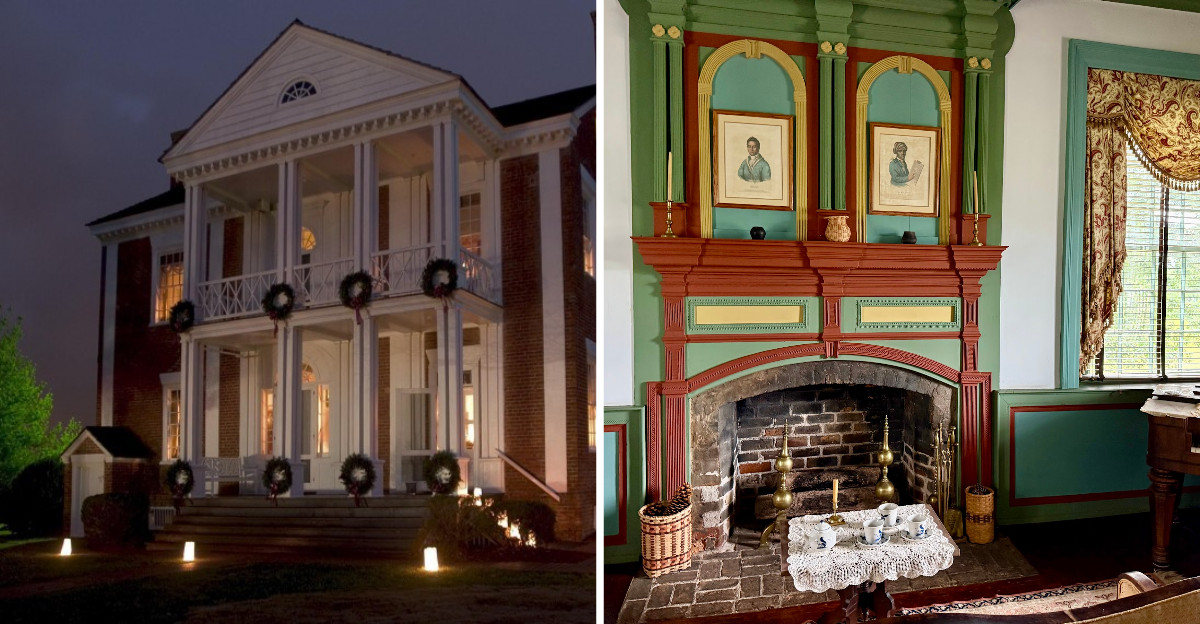
Red bricks glowing warm against green grass are not what a quick history stop usually delivers. This Georgia mansion sits quietly in the hills, its walls baked from red clay dug right on the old plantation where it was built.
A wealthy Cherokee businessman and leader raised it around 1804, and people soon called it the Showplace of the Cherokee Nation. The rooms are restored now, with hand-carved mantels, wide plank floors, and windows that catch the afternoon light.
What hooked me, though, was the ending nobody wants to hear. His family lost this beautiful home just before the Trail of Tears, and the weight of that loss sits in every corner.
Walking through the house, the beauty and the tragedy share the same space. It is a place that asks you to admire the craftsmanship and grieve the story at the same time.
Leaving with a head full of questions and a heavy heart is the only possible outcome.
The First Brick Home in the Cherokee Nation
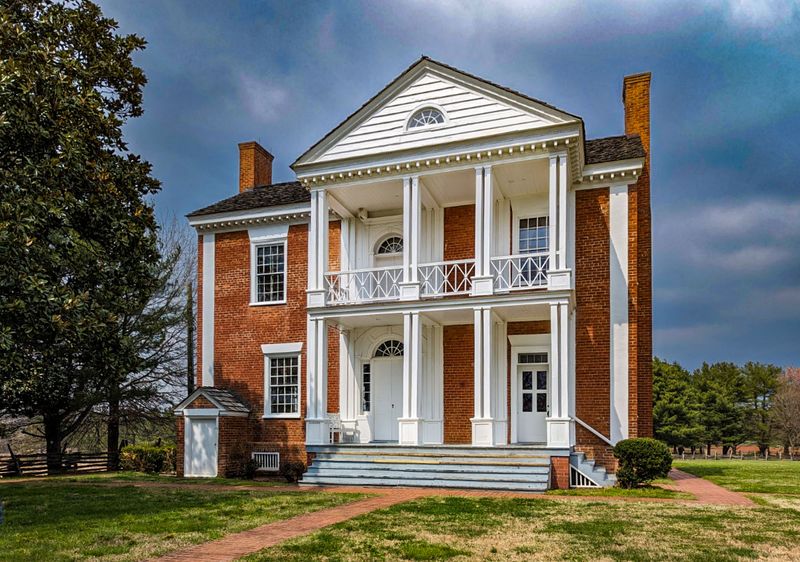
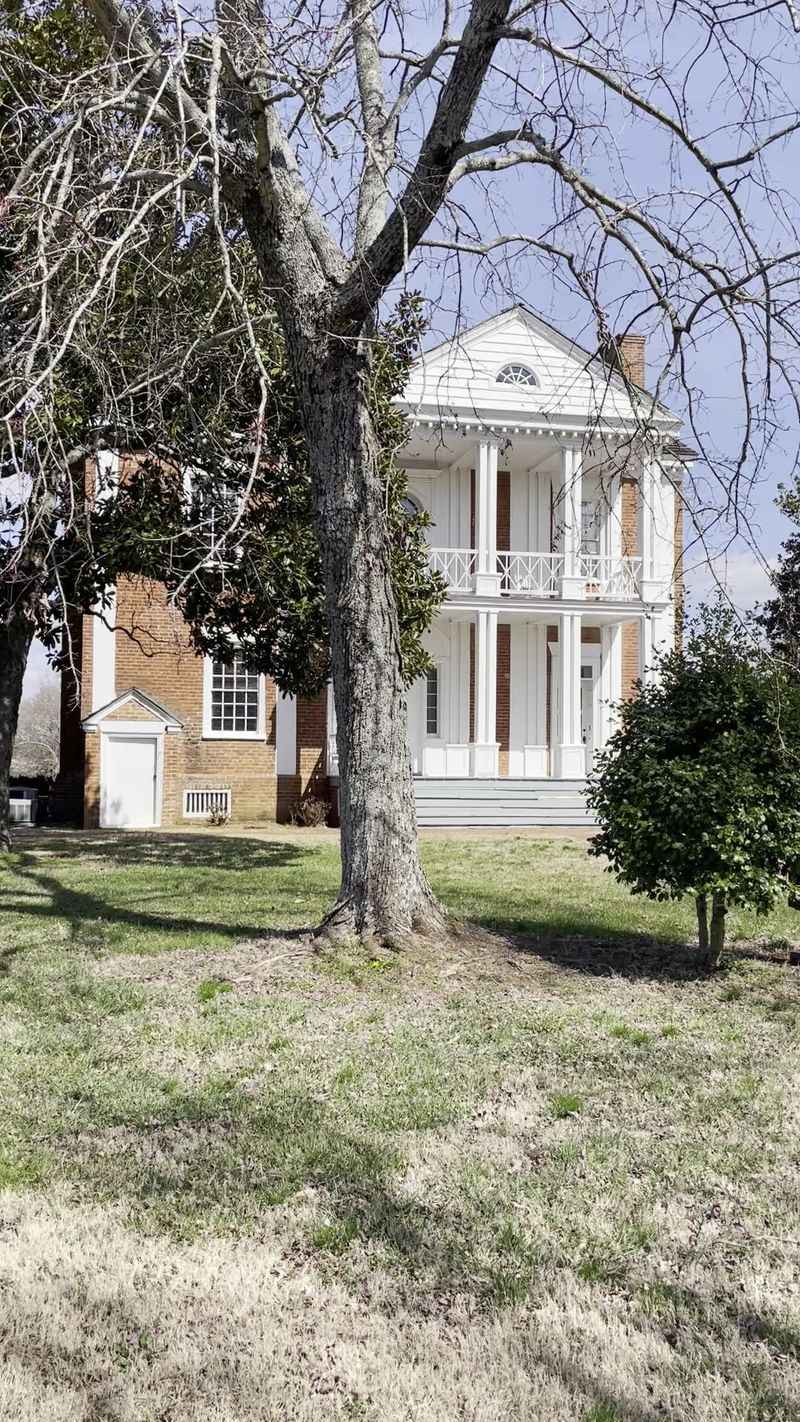
My first thought, honestly, was that the house looked too elegant for its age. Built around 1804, it was the first brick home anywhere in the Cherokee Nation, which made it a big deal in its time.
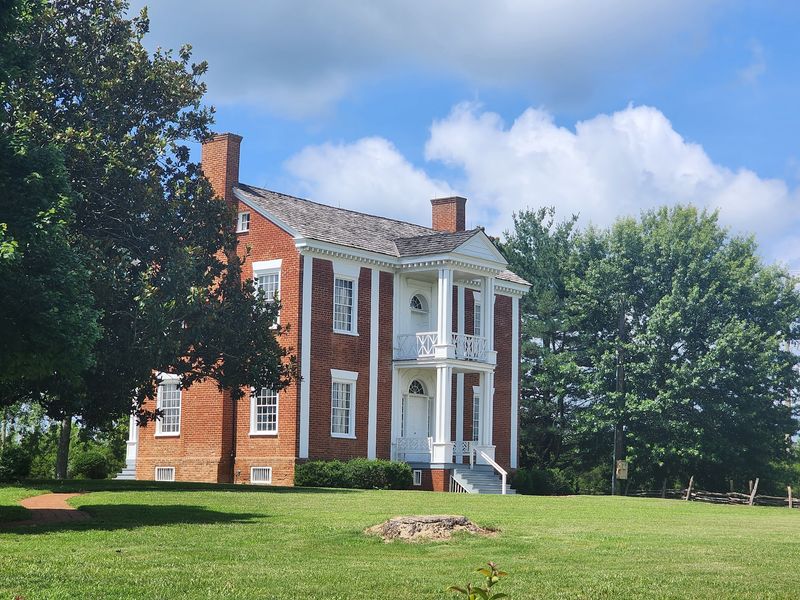
The walls are made from local red clay found right on the Spring Place Plantation land. Workers shaped and fired those bricks nearby, so the house truly grew out of its own soil.
Even the handmade nails and hinges came from James Vann’s own blacksmith shop.
The style mixes Federal and early Georgian designs, with neat rows of windows and a balanced front that looks calm and proud. It rises two and a half stories, which felt tall to me even today.
People back then gave it a fitting nickname, the Showplace of the Cherokee Nation. Visitors traveling through the area would have spotted it from far off and known someone important lived there.
James Vann was a sharp trader and one of the richest men in the region, and his home showed it.
Here is a tip from my visit. Take a slow lap around the outside before your tour starts, since the brickwork looks different depending on the light.
Morning sun made the walls glow almost orange, and I kept snapping pictures like a tourist with no memory card limit.
A Staircase That Seems to Float
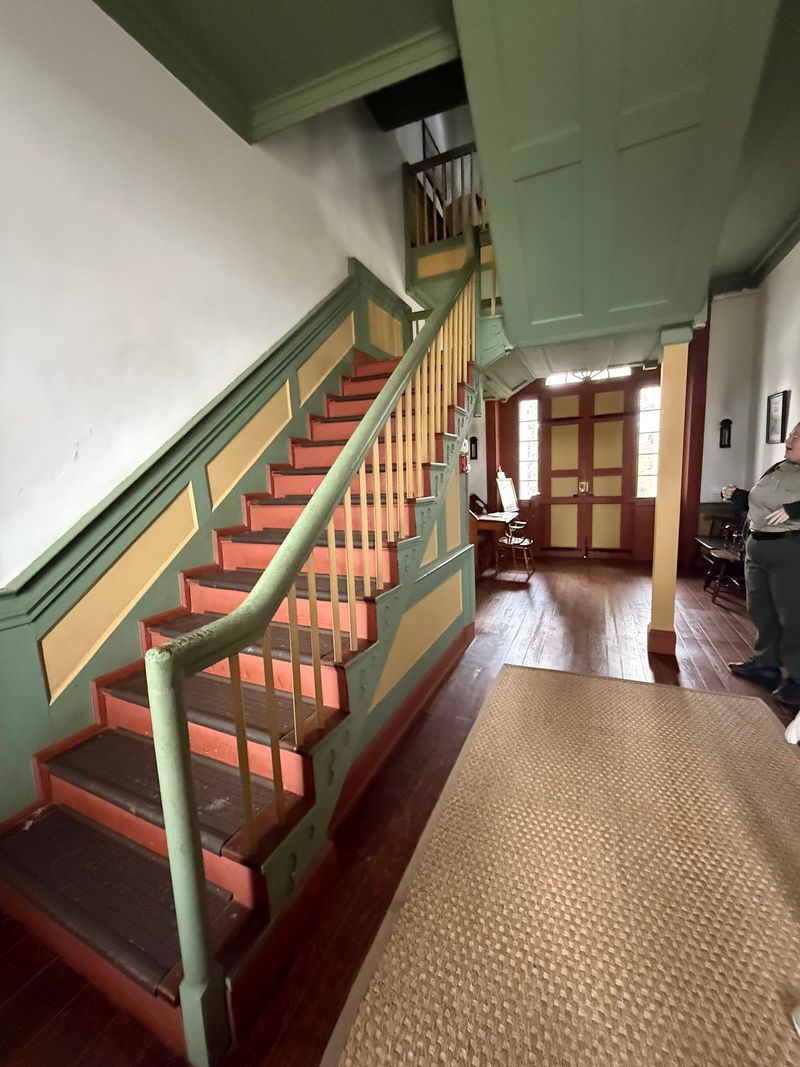
Ask anyone who has toured the Vann House what they remember most, and a lot of them will point to the stairs. The famous floating staircase climbs up without obvious support underneath, and it left me staring for a good minute.
Builders call this a cantilevered design, meaning each step is anchored into the wall and seems to hang in the air. Back in the early 1800s, pulling this off took serious skill and careful planning.
No power tools, no shortcuts, just patient hands and smart math.
I caught myself wondering how many times the Vann children ran up and down those steps. Kids are kids in any century, so I’d bet there was some sliding and stomping going on.
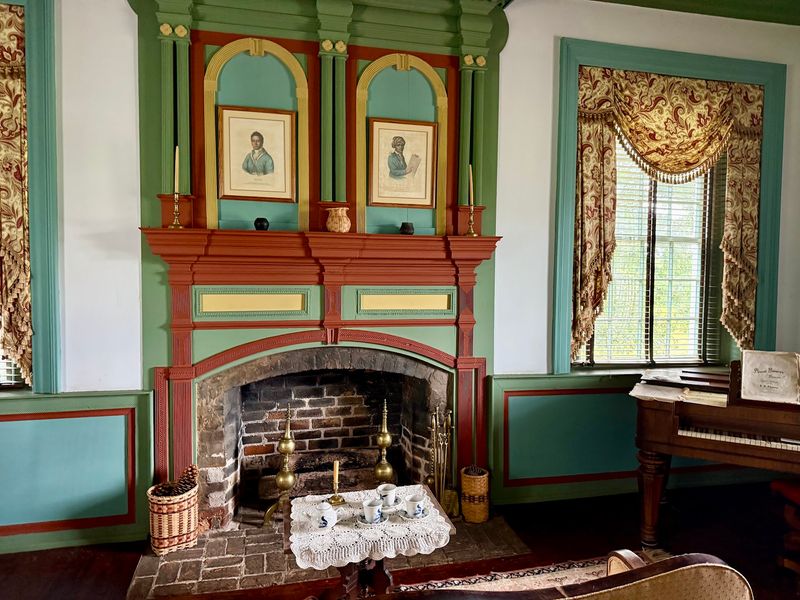
The woodwork around the house deserves attention too. Hand carvings decorate the mantels and trim, and many of the colors inside were restored to match what experts believe the home once had.
Bright, bold paint shows up in places you might not expect from an old house.
Tours happen only with a guide, starting at the top of each hour. That setup actually works well, because guides point out tiny details you would walk right past.
Mine gave us time to soak in each room before moving on, which made the staircase moment feel special instead of rushed.
Doors With a Hidden Message
Here’s a fun detail I almost missed. Some of the doors in the house are called Christian doors, and once you know the trick, you can’t unsee it.
The raised panels on these doors form shapes that look like a cross on the top and an open Bible along the bottom. It’s a design style that was popular in homes of the era, and it quietly connects to a bigger story at Spring Place.
James Vann invited Moravian missionaries to the area in the early 1800s. They started a mission and a school so young Cherokees could learn to read and write.
The missionaries even helped with building parts of his home.
That friendship was complicated, as most history is. Vann had a big personality and a famous temper, yet he still backed the school because he believed education mattered for the next generation.
I found that mix of rough edges and forward thinking pretty fascinating.
When you’re inside, look closely at door panels as you pass between rooms. Kids especially enjoy spotting the shapes, kind of like a treasure hunt built into the walls.
I’d suggest asking your guide about the Moravians too, since their records are one reason historians know so much about daily life on this plantation today.
A Plantation Bigger Than a Small Town
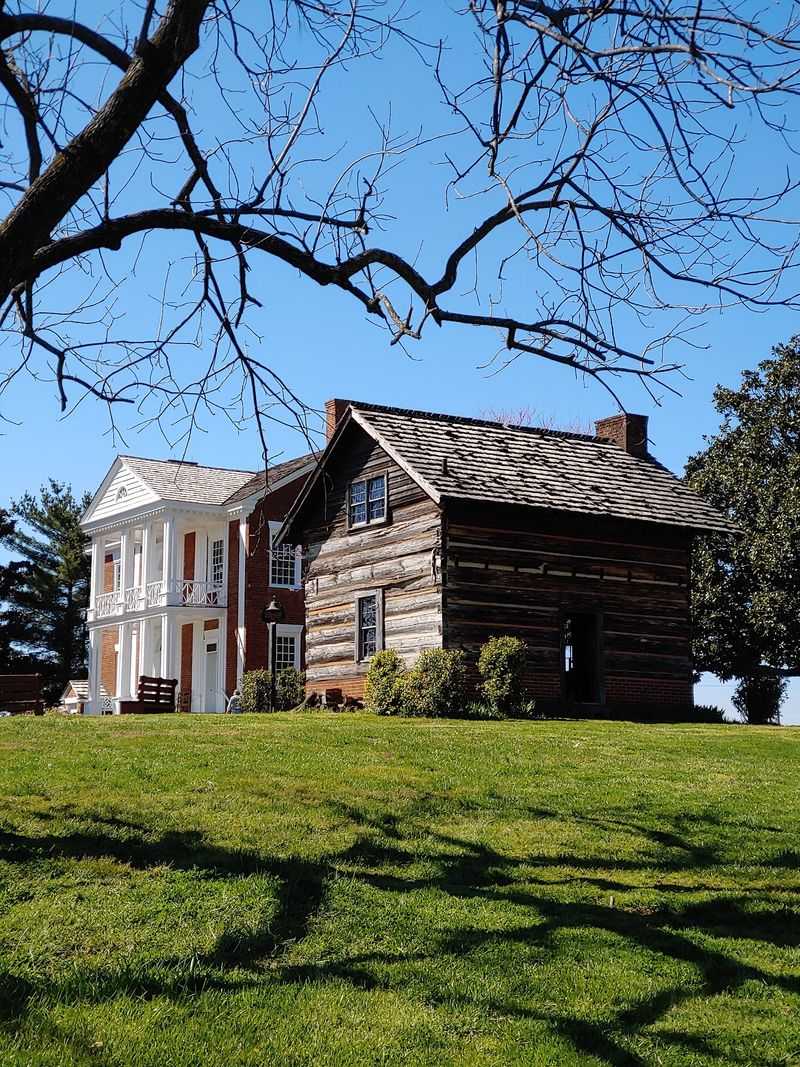
Numbers usually bore me, but these ones made my jaw drop. The Vann plantation stretched somewhere between 800 and 1,000 acres around the main house.
Records describe 42 cabins for enslaved people, 6 barns, 5 smokehouses, and a trading post. There were also huge orchards with more than 1,000 peach trees and 147 apple trees.
Picture that many trees blooming in spring, and you start to understand the size of this place.
The hard truth is that the wealth came from the labor of more than 100 enslaved people who worked this land. The site does not hide that fact, and I appreciated how the signs and exhibits tell it plainly.
Their story is part of the house, just as much as the Vann family’s story is.
Today the grounds feature reconstructed log buildings, a garden, and plenty of interpretive signs along a walking path. You can wander at your own pace after the house tour ends.
The garden looked so healthy during my visit that I wanted to go home and try again with my sad tomato plants.
My advice is to wear comfy shoes and give yourself extra time out here. There are picnic tables too, so packing a lunch turns a quick stop into a relaxed afternoon.
From James to Rich Joe
Stories in this house take a sharp turn in 1809. That year, James Vann passed tragically, and the house went to his son Joseph.
Joseph Vann became so successful that people nicknamed him Rich Joe. He grew the family business even further, adding land, trade, and influence across the region.
By the 1830s, he was among the wealthiest men in the whole Cherokee Nation.
What struck me was how normal the rooms felt despite all that money. Period furniture, maps on the walls, and everyday objects help you picture breakfast being served or letters being written by the window.
I kept imagining the family chatting in the parlor on a cold evening.
Guides share plenty about both father and son, and they welcome questions. One visitor on my tour asked a string of oddly specific questions, and our guide handled each one with ease and a smile.
That kind of knowledge makes the history feel alive instead of dusty.
If you have kids with you, ask them to guess which objects the family used daily. It’s a simple game that keeps young minds curious through the whole tour.
Adults might enjoy it too, since a few items puzzled me until the guide explained them, and I felt oddly proud when I guessed one right.
How the Vann Family Lost Everything
I got quiet during this part of the tour, and so did everyone else. Even all that wealth couldn’t protect the Vann family from what was coming.
In the 1830s, Georgia passed a law saying white men could not work for Cherokees without a special permit. Joseph Vann hired a white overseer, and that gave the Georgia Guard, led by Colonel William Bishop, an excuse to seize his property around 1834 or 1835.
At the same time, a man named Spencer Riley claimed the house after supposedly winning it in the 1832 Land Lottery. So two different groups were fighting over a home that already belonged to someone.
It sounds unfair because it was unfair.
In March 1835, Joseph and his family were forced out of their home. They moved west to what is now Oklahoma, part of the larger removal of the Cherokee people known as the Trail of Tears.
Thousands of Cherokees suffered on that journey in the years that followed.
Standing in those rooms after hearing this made the whole visit hit differently. Here is my honest suggestion for families: talk about this part together afterward.
Kids often ask big questions about fairness, and this story gives a real, local example of how laws can be used to hurt people.
Saved, Restored, and Ready for Visitors
After the Vann family left, the house had a rough century. It changed owners seventeen times and slowly fell apart.
Luckily, the Georgia Historical Commission bought it in 1952 and began a careful restoration. Crews worked to bring back its original look, and today it’s a state historic site honoring Cherokee culture and history.
The results are stunning.
Planning your trip is easy once you know the schedule. The site opens Thursday through Saturday from 9 a.m. to 5 p.m., and Sunday from 1 to 5 p.m., though hours can shift in winter.
House tours start at the top of each hour, with the last one at 4 p.m., so arriving a bit early is smart.
Start with the short film and small museum in the visitor center, since it sets up the story nicely. After the tour, stroll the grounds or take the short nature trail.
Some buildings, including the main house, are not wheelchair accessible, so plan with that in mind.
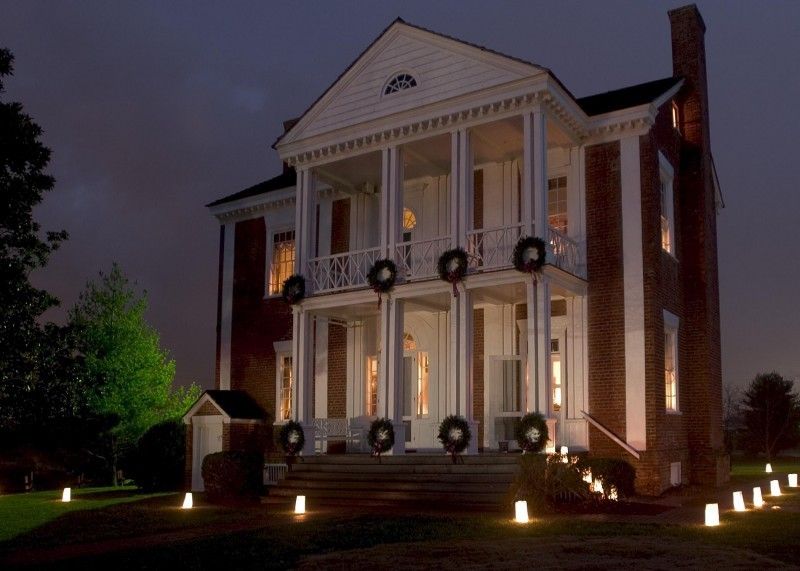
If you can, catch the Christmas candlelight event, when the rooms glow softly and the house looks like a holiday card. I’d happily go back just for that.
Address: 82 Highway 225 N, Chatsworth, GA 30705
