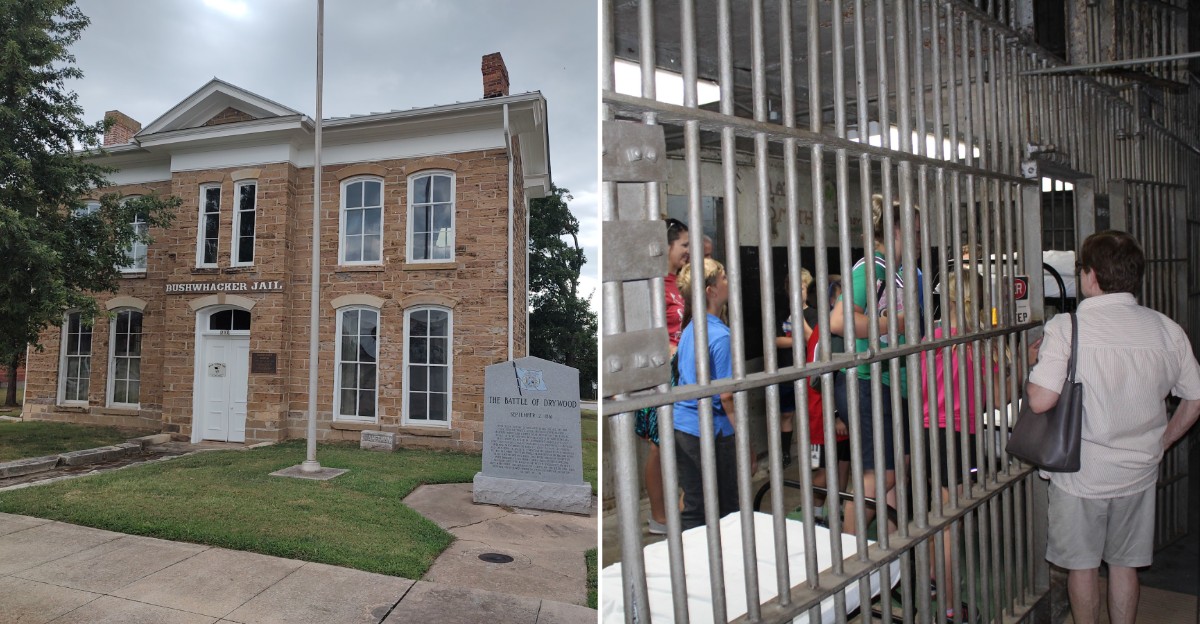
Prisoners here supposedly preferred a double sentence in the state penitentiary over one stretch inside these sandstone walls. That’s quite a reputation for a county jail.
It even earned the nickname cell of medieval malevolence.
One light bulb lit the whole cellblock. One pot-bellied stove tried to heat it.
I can’t imagine a Missouri January in there, and I’m not sure I want to.
The building also survived a fire that swept through the entire town during the Civil War. Only two public buildings made it through.
This was one of them.
Today, you can walk through the cells, peek at old graffiti, and tour the jailer’s family home attached right next door.
A Jail That Kept The Lock Turning For A Full Century
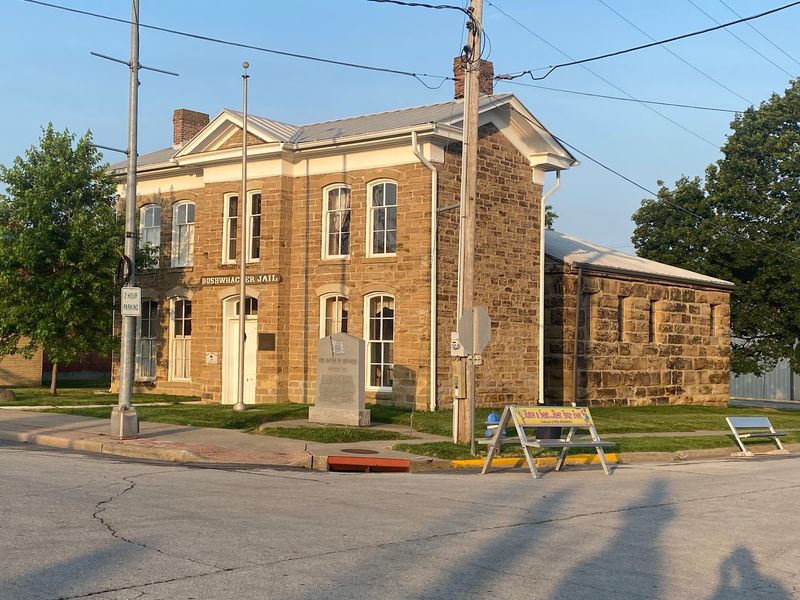
One hundred years is a long shift for any building. The Bushwhacker Jail opened as the Vernon County Jail in 1860 and stayed in service until December 1960.
That makes it the oldest surviving building in Nevada, Missouri. It held prisoners through the Civil War, the horse-and-buggy years, and right up to the age of television.
After the last inmates left, the building got a second career. It was restored for museum use in 1965.
Later, the Bushwhacker Museum expanded into its own separate building nearby.
So in 1998, the old jail received a fresh restoration. It was set up to look like a 19th-century jail and jailer’s home again.
That’s when it officially took the name Bushwhacker Jail.
The National Register of Historic Places listed it back in 1977. You’ll find it there under a longer title, the Vernon County Jail, Sheriff’s House and Office.
That name is a mouthful, but it tells you exactly what the place held.
Think about how few buildings work the same job for a century. Most get torn down, remodeled, or forgotten.
This one simply kept its doors locked and its walls standing, which feels fitting for a jail.
Fire Swept The Town, But These Walls Refused To Budge
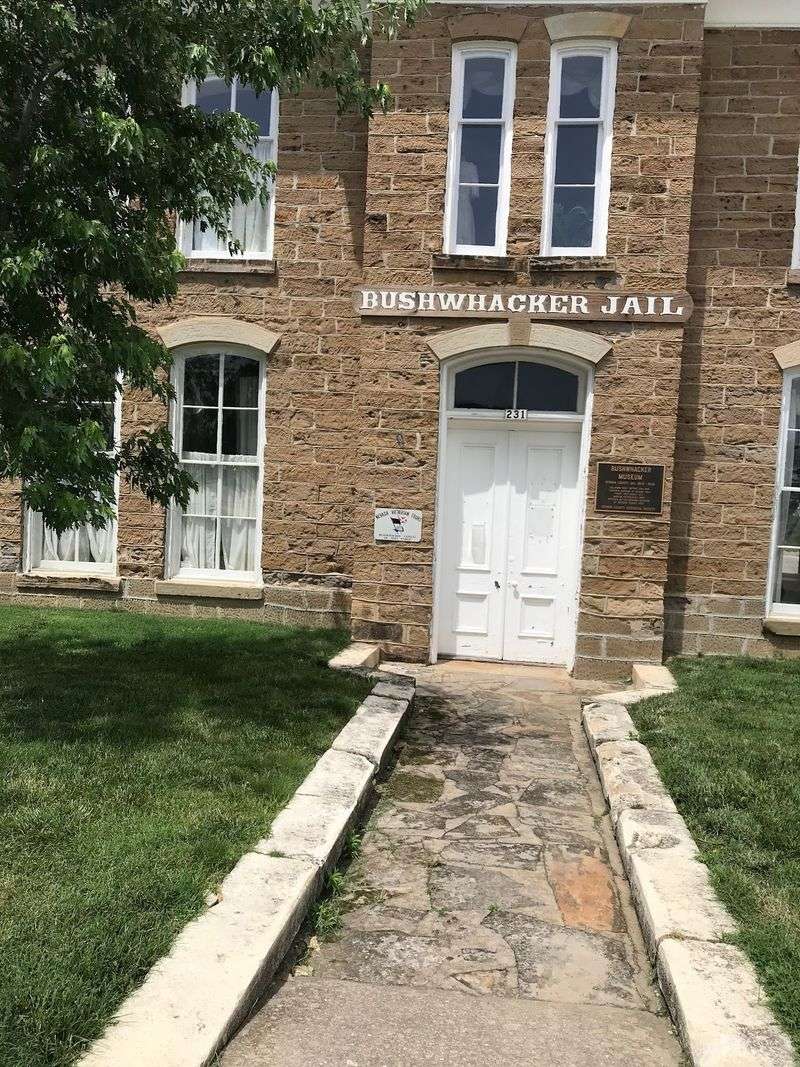
In 1863, Federal Militia set fire to Nevada during the Civil War. Almost everything public in town went up in flames.
Only two public buildings survived. The old county jail was one of them, and it still stands today.
Why burn a whole town? Federal troops had nicknamed Nevada The Bushwhacker Capital.
Bushwhackers were irregular fighters who caused serious trouble along the Missouri and Kansas border.
That nickname is where the jail’s modern name comes from. It’s a bold label to slap on a building, but history earned it honestly.
The Missouri and Kansas Border War was messy, personal, and long. Neighbors turned on neighbors, and small towns paid a steep price.
Standing beside a structure that made it through gives you a real sense of that chaos.
Here’s a helpful tip before you go. Read a little about the Border War ahead of time.
Even a quick overview makes the stories inside much richer.
You’ll understand why the guides talk about this era with such energy. The building is basically a survivor that can’t talk, so the museum does the talking for it.
Pretty good deal for everyone involved.
Sandstone, Symmetry, And A Surprisingly Tidy Federal Look
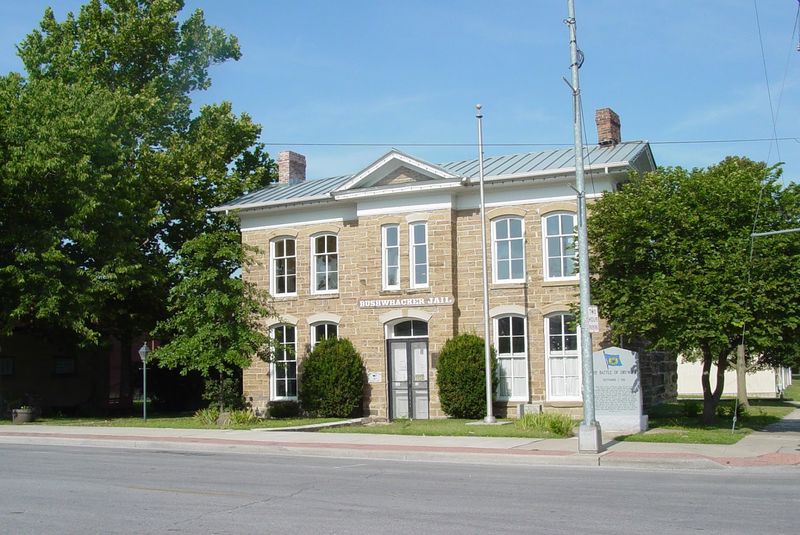
Native sandstone gives this building its sturdy, earthy look. The style is Federal, which means clean lines and a neat, balanced feel.
For a place with such a rough reputation, it looks rather polite from the street. Honestly, it could pass for a respectable family home.
That’s partly because it was one. The complex has three connected parts, each with its own job.
First comes a two-story residence where the jailer’s family lived. Next is a two-story office with four rooms.
Finally, there’s a one-story rectangular jail section where prisoners stayed.
The museum dates the jail to 1860, while its National Register nomination describes the present building as a replacement constructed around 1871. Either way, you’re looking at well over 150 years of Missouri craftsmanship.
Take a slow walk around the outside before heading in. Notice how the home and office sit right up against the cell area.
Nothing about the layout hides what this place was for.
Bring a camera, too. The sandstone shows its age in a handsome way, and the mix of house and lockup makes for interesting photos.
Few buildings blend family life and law enforcement so plainly.
Inside The Cellblock, Comfort Was Never Invited
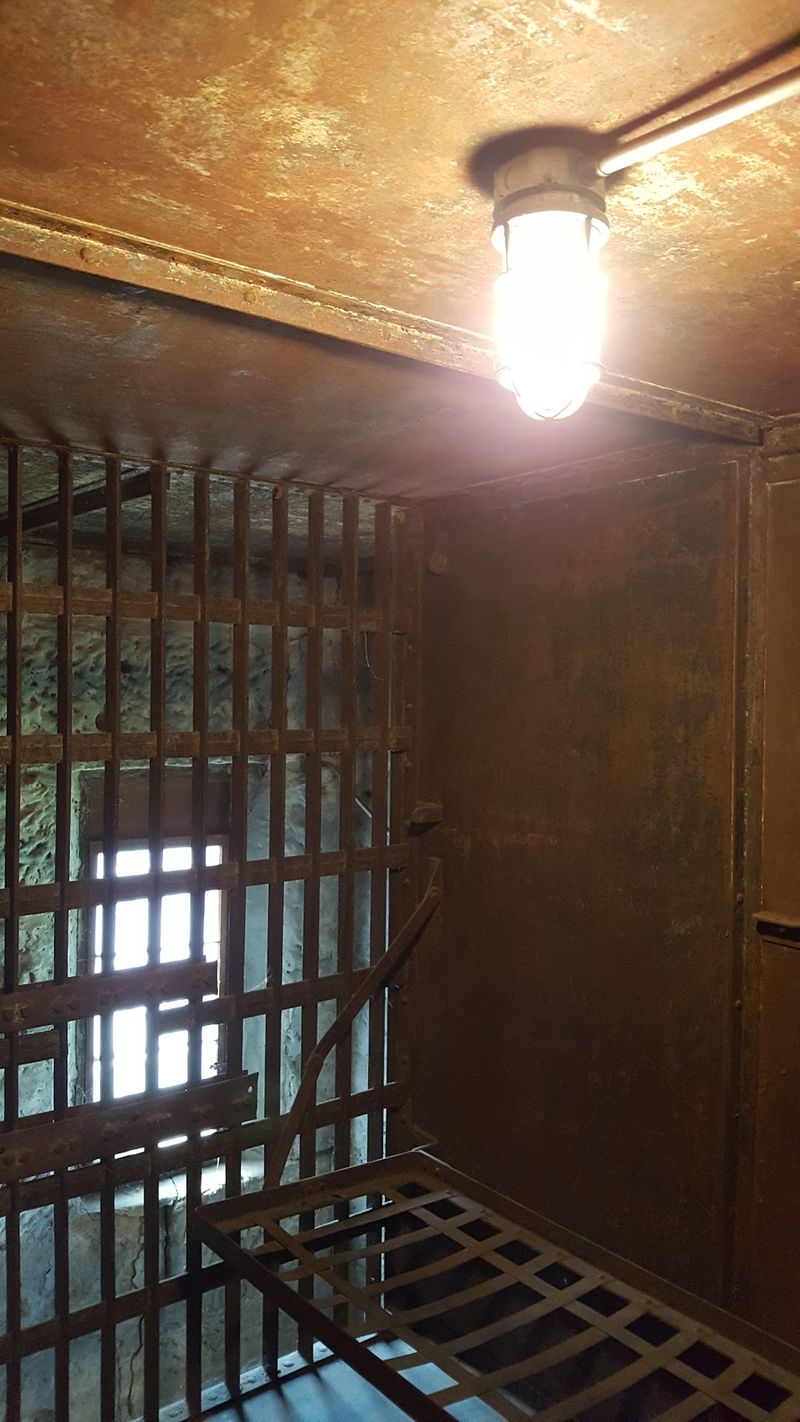
A single light bulb. That was the entire lighting plan for the cellblock.
Heat came from one central pot-bellied stove. You can guess how well that worked on a windy winter night.
The jail was built to punish, not to help anyone change. Rehabilitation wasn’t really the goal back then.
The sparse conditions make that crystal clear.
Those harsh conditions gave the place its famous nickname, cell of medieval malevolence. Stories say prisoners would rather serve double time in a state penitentiary than one term here.
That’s a tough review for any lodging.
Today you can step into the original cellblock yourself. The cells are dark and grim, just as they should be for an honest look at history.
It’s a powerful reminder of how much ideas about justice have shifted.
Families with younger kids might want to talk about it first. Some children love the spooky feel, while others need a little warning.
Either way, it sparks great questions on the ride home.
Spend a minute standing quietly in there. Let your eyes adjust to the gloom.
You’ll understand the nickname much faster than any sign could explain it.
Old Scribbles In The Drunk Tank Still Have Something To Say
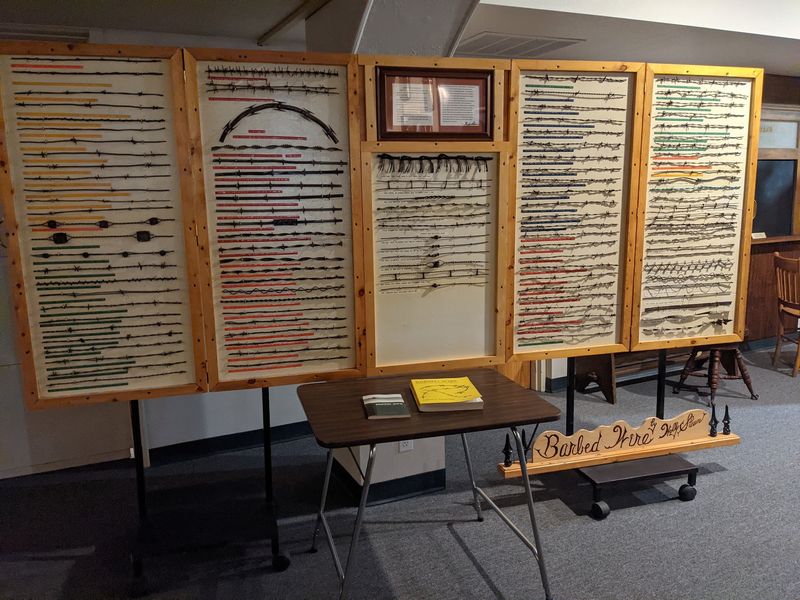
Bored prisoners leave marks. Inside the old drunk tank, you can still see graffiti on the walls.
These scribbles are tiny time capsules. Somebody stuck in here decided the wall needed their opinion.
Graffiti like this offers something textbooks rarely do. It shows real people, not just dates and names.
You get a glimpse of how inmates passed the slow hours.
Look closely and take your time. Some marks are faint, so a patient eye pays off.
If a guide is nearby, ask about any writing that catches your interest.
Of course, please don’t add your own. The walls already have plenty of contributors, and the museum works hard to protect them.
Your initials can go in the guestbook instead.
I believe this is one of the most human parts of the whole building. The stone and bars tell you about the system.
The graffiti tells you about the people inside it.
Kids especially tend to latch onto details like this. It turns a history lesson into a mystery hunt.
Who wrote that, and what were they thinking? Good luck not wondering about it afterward.
Somebody Had To Live Here, And Their Kitchen Was Next To The Cells
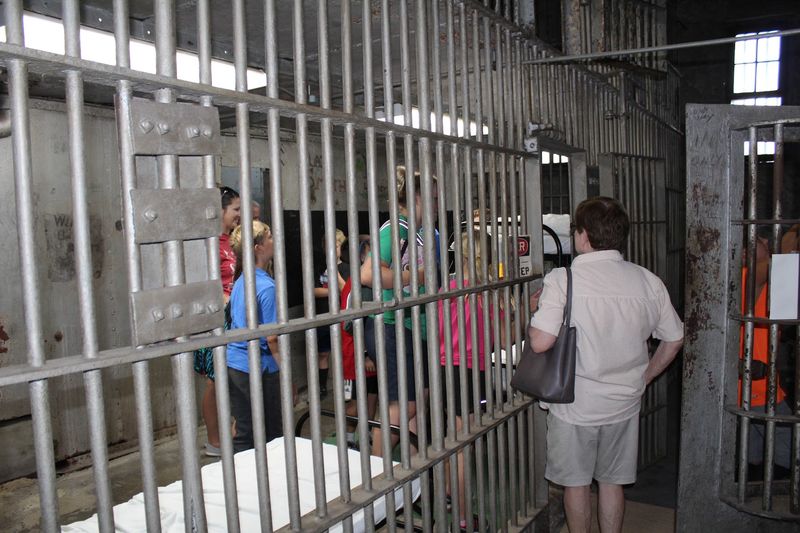
The jailer didn’t commute. His family lived right in the two-story residence attached to the jail.
That arrangement was common for county jails in the 1800s. Still, it’s wild to think about dinner happening a few walls away from prisoners.
The family quarters have been preserved, and you can tour them. They were restored in 1998 to reflect a 19th-century jailer’s home.
It’s a big contrast after the cold cellblock.
Walking from the home into the jail section shows you two sides of one job. On one side, ordinary family life.
On the other, locks and bars and that lonely light bulb.
I can’t imagine the jailer’s kids explaining their address to friends. Then again, they probably had the best stories at school.
The office portion adds another layer. It’s a two-story, four-room space tied to the sheriff’s work.
Together with the home, it shows how law and daily life were tightly woven back then.
Pay attention to the flow between rooms. Notice how close everything sits.
It helps you picture a working household that also kept watch over the county’s troublemakers every single day.
The Front Lawn Holds More History Than Most Parks
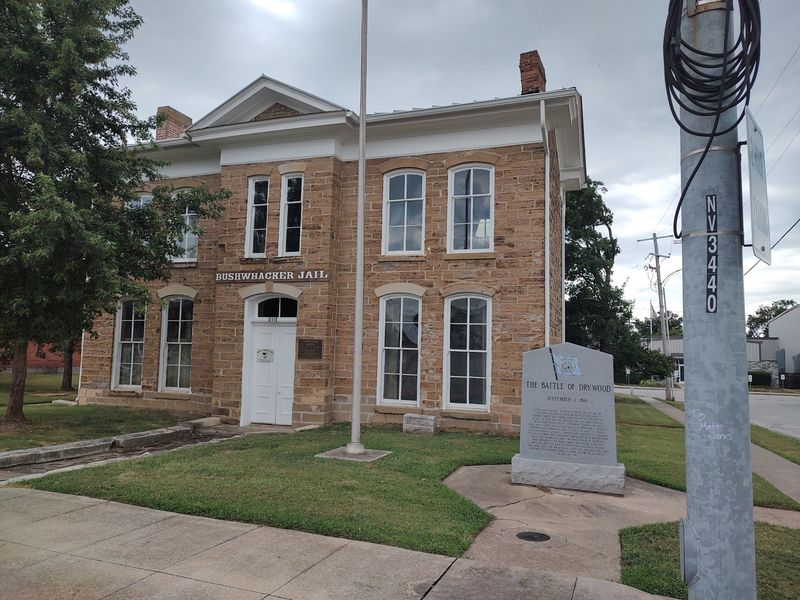
Out front, a monument marks the Battle of Drywood. That clash took place on September 2, 1861.
It’s an early Civil War fight in this corner of Missouri. Having a marker right on the jail lawn ties the building to the wider story of the border region.
The yard beside the jail carries its own heavy history. It was the site of Nevada’s last public hanging.
That fact tends to quiet a group pretty quickly.
Spend a few minutes outside before or after your tour. Read the monument, then look back at the stone walls.
The grounds help connect the indoor exhibits to real events.
The jail sits at 231 North Main Street in Nevada. That’s about a block from the courthouse square, so it’s easy to fit into a stroll around downtown.
Parking and walking should feel simple in a town this size. Wear comfy shoes anyway.
You’ll likely want to wander between the jail, the square, and the main museum nearby.
Some say the place has a haunted past. Whether you believe that or not, the lawn’s history gives it plenty of atmosphere on its own.
One Ticket Opens Two Doors A Block Apart
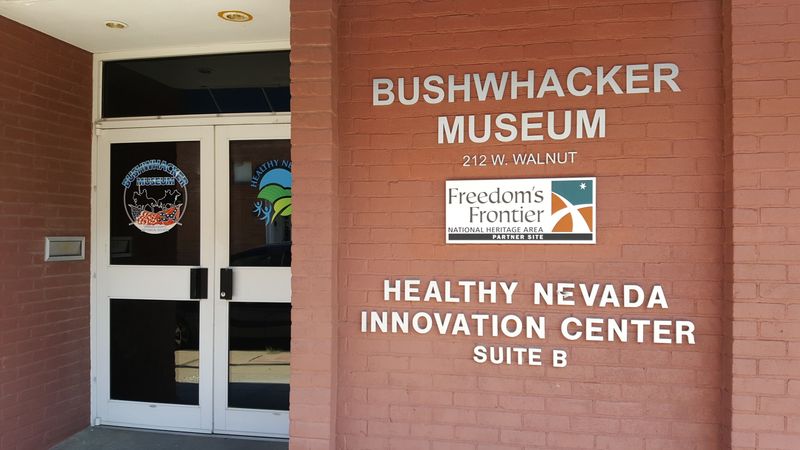
Good news for bargain lovers. A single admission covers both the Bushwhacker Jail and the main Bushwhacker Museum.
The museum sits at 212 West Walnut, about a block away. Together they form the Bushwhacker Museum and Jail complex.
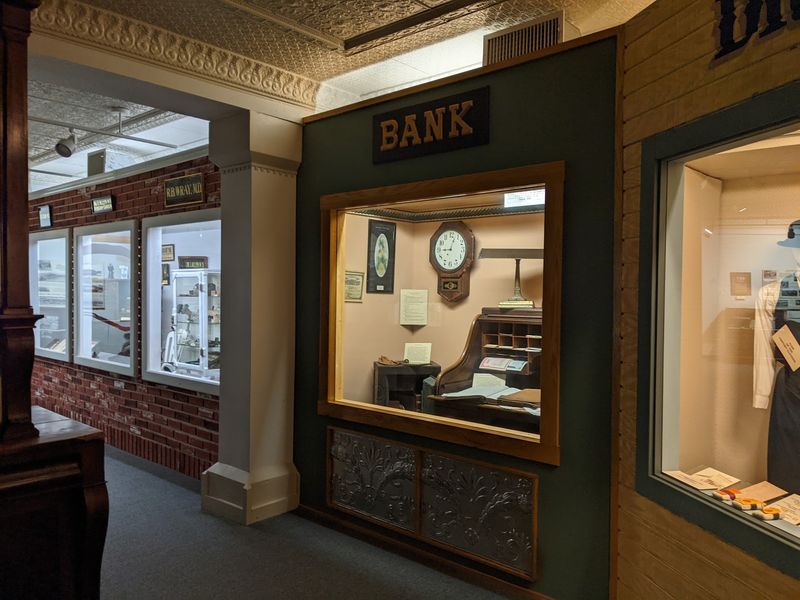
The main museum widens the story beyond the cellblock. It covers more than 150 years of Vernon County history.
Topics include the Osage Indians, the Civil War, military history, and local community life.
Exhibits range from prehistoric tools to Civil War artifacts. You’ll also find antique carriages and quilts.
There’s even an interactive child-sized classroom for younger visitors.
That classroom is a smart touch for families. Kids can get hands-on after seeing the serious side of the jail.
It balances the visit nicely.
A gift shop offers local and regional history books plus souvenirs. If the Border War hooked you, grab a book for the road.
My advice is to plan time for both buildings. The jail gives you the drama, while the museum fills in the background.
Seeing just one is like reading half a mystery novel and skipping the ending.
Plan Around The Season So The Door Is Actually Open
Timing matters with this one. The Bushwhacker Jail opens to regular visitors from May 1 through October 31.
During that season, hours run Wednesday through Friday from 10 a.m. to 4 p.m. Saturdays run shorter, from 10 a.m. to 1 p.m.
From November 1 to April 30, visits work by appointment only. So a winter trip isn’t impossible.
You’ll just need to call ahead and set it up.
Saturday visitors should arrive early. A three-hour window goes fast when you’re trying to see both the jail and the museum.
Keep in mind this is a historic site, not the working county jail. The modern Vernon County Jail sits elsewhere in town.
Don’t mix them up, unless you enjoy very awkward conversations.
Accessibility is partial, which makes sense for a stone building this old. Visitors using wheelchairs may want to ask about specific areas beforehand.
Nevada, Missouri makes an easy stop for road trippers and history fans alike. Pair your visit with a walk around the courthouse square.
A century-old jail, a Civil War survivor, and a full museum make for a pretty memorable afternoon.
