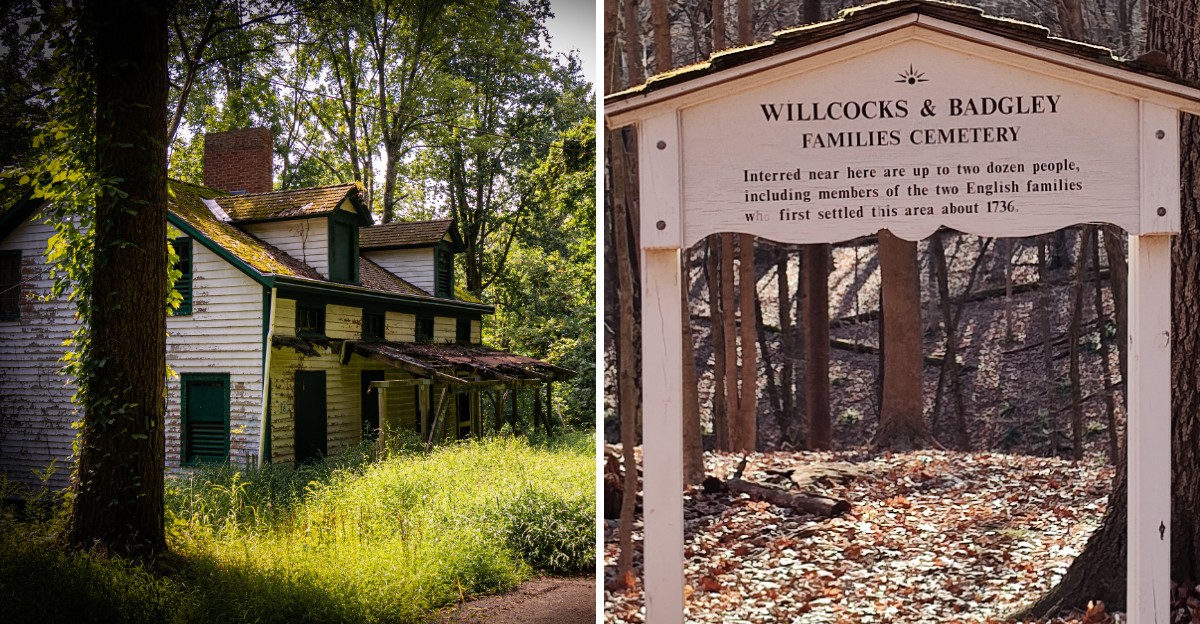
Some places hum with life, and others hold their breath.
I found the second kind on a quiet road in New Jersey, where the trees leaned over the pavement and the noise of highways simply vanished behind me.
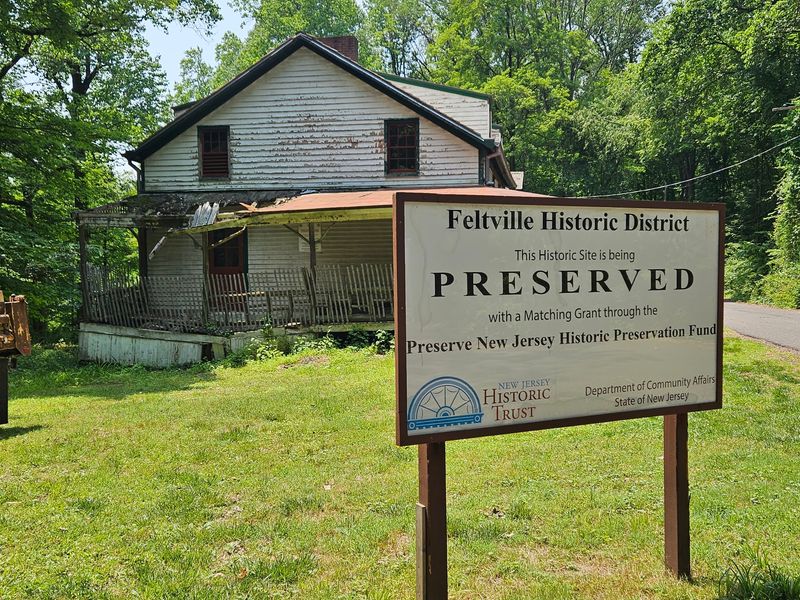
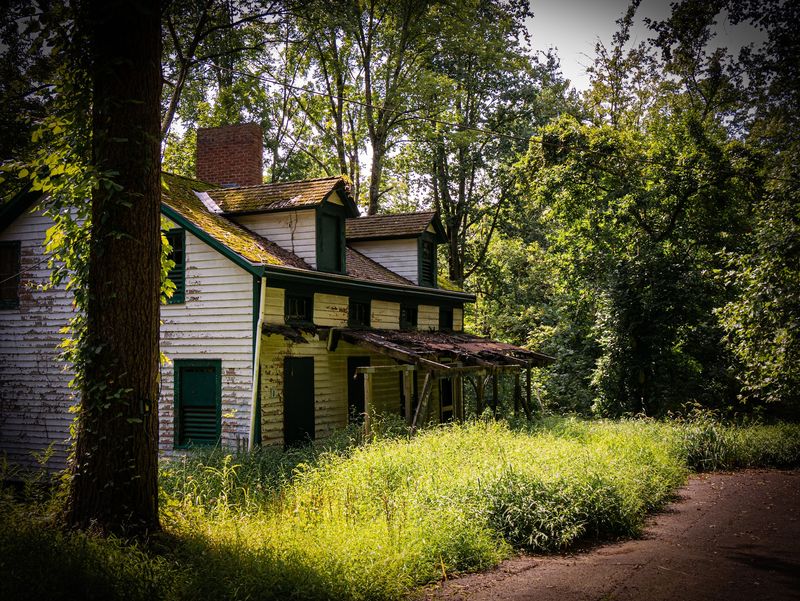
At the bottom of a long slope sat a cluster of old wooden houses, porches sagging just slightly, windows dark, signs out front telling stories nobody talks about anymore.
There was a mill here once, then a summer resort, then almost nothing at all.
The man who built the whole thing walked away and, according to folklore, left behind a parting line that sounds more like a curse than a goodbye.
I spent an afternoon wandering between those buildings, and I still think about them.
An Industrial Dream Carved Out of the Woods
Hundreds of acres of forested hillside bought by a New York City businessman in 1845. That was the beginning of what stands here today.
The founder was a successful printer and stationer, and he had a very particular idea in mind. He wanted a self-sustaining industrial community built around a printing factory, powered by the water of Blue Brook running through the valley.
So he built one.
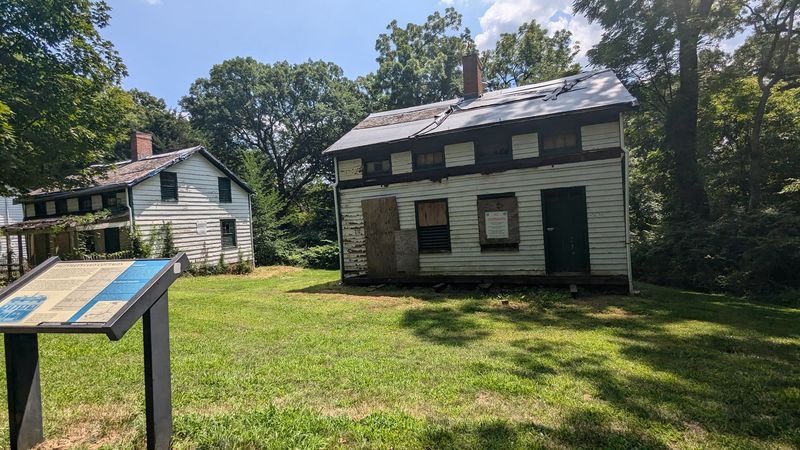
Around the mill went homes for workers and their families, laid out in simple Greek Revival style, tidy and optimistic looking. The village got a name too, Feltville, after the man himself.
Walking the paved main path now, the layout still makes sense. The land slopes down toward the water, the houses line up along the road, and you can read the logic of the place without anyone explaining it.
What strikes me most is the ambition. Carving an entire working town out of near-frontier woodland took real nerve, and the bones of that effort are still standing here in New Jersey.
When Nearly Two Hundred People Called This Valley Home
By 1850, this quiet hollow was anything but quiet. Census records put the population at roughly 175 to 178 people living and working within the village boundaries.
Daily life ran on a tight schedule set by the founder, who earned the nickname King David for his firm, fatherly grip on the community. Residents were expected at weekly religious services, and children learned their lessons in a one-room schoolhouse.
The mill turned out something genuinely unusual, colorful marbleized paper used for the inside covers of books. It was specialized work, and it kept the place employed.
There was even a post office here, which tells you the village mattered enough to appear on maps and mail routes.
Reading the interpretive signs, I kept trying to imagine the sound of it all. Kids running the slope, the mill working below, everyone knowing everyone’s business.
The silence today makes that picture feel almost impossible, which is exactly what makes it stick with you.
The Parting Words That Gave the Place Its Legend
Fifteen years in, the whole experiment ended. In 1860, at age sixty-seven, the founder sold Feltville and went back to New York City.
Historical records do not spell out exactly why. Economic pressures during the 1850s and 1860s likely played a part, along with the illness and death of his brother and business partner.
Folklore, though, remembers it differently. The line attributed to him has followed this valley ever since, a blunt declaration that King David is dead and the village will go to hell.
Whether he actually said it, nobody can prove. What is documented is what came next, a run of failed ventures including attempts at cigar and silk manufacturing, none of which stuck.
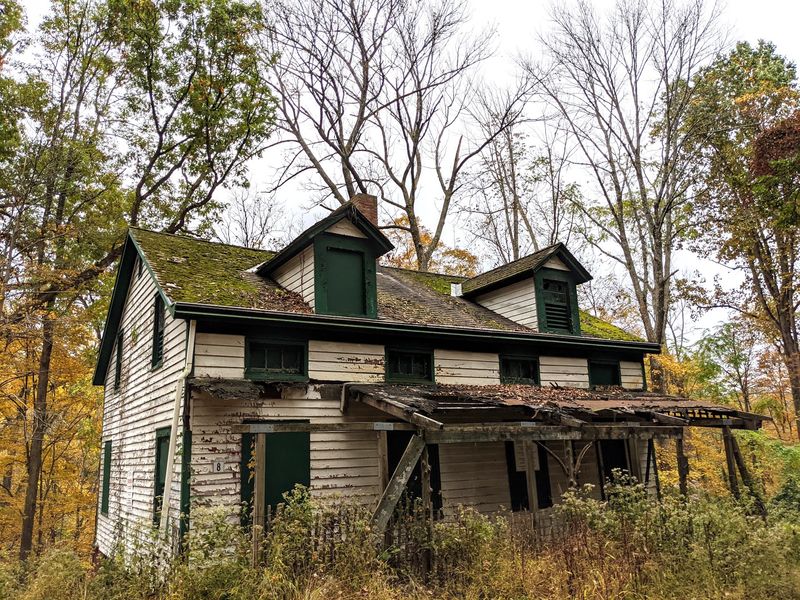
Emptied out and passed around, the community picked up the name it still carries today, the deserted village.
Standing among the buildings, that supposed curse feels less like superstition and more like a grim weather forecast that happened to come true.
Glenside Park and the Summer Resort Reinvention
Here is the twist most people do not expect from an abandoned mill town. It came back to life as a vacation spot.
In 1882, a prominent local landholder picked up the property at public auction for a fraction of what it had once been worth. His plan was clever, turn the empty worker housing into a mountain retreat and call it Glenside Park.
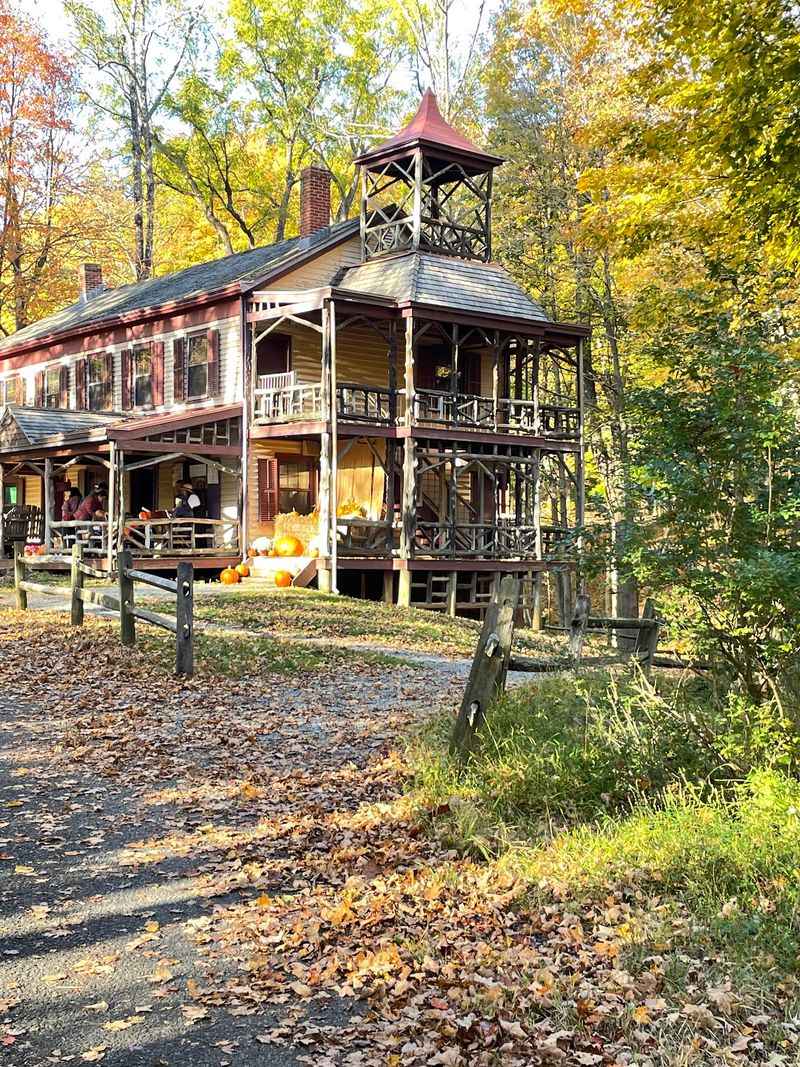
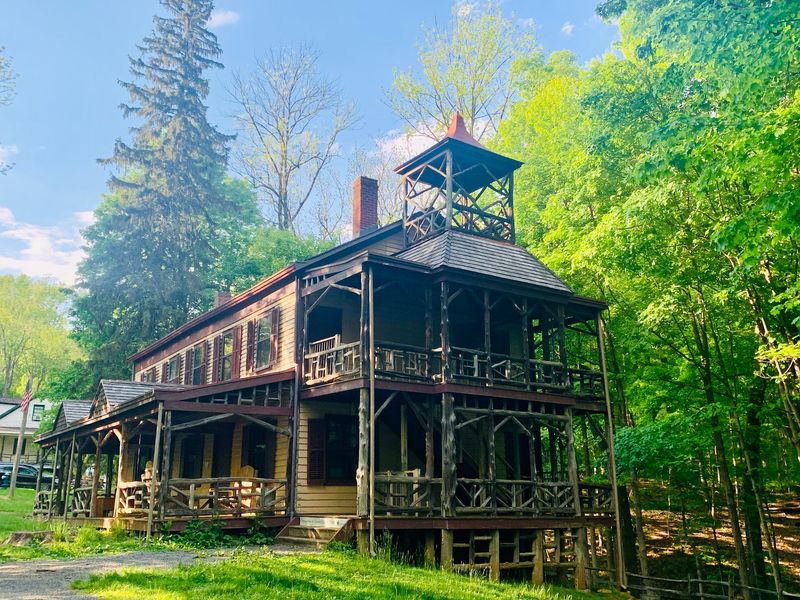
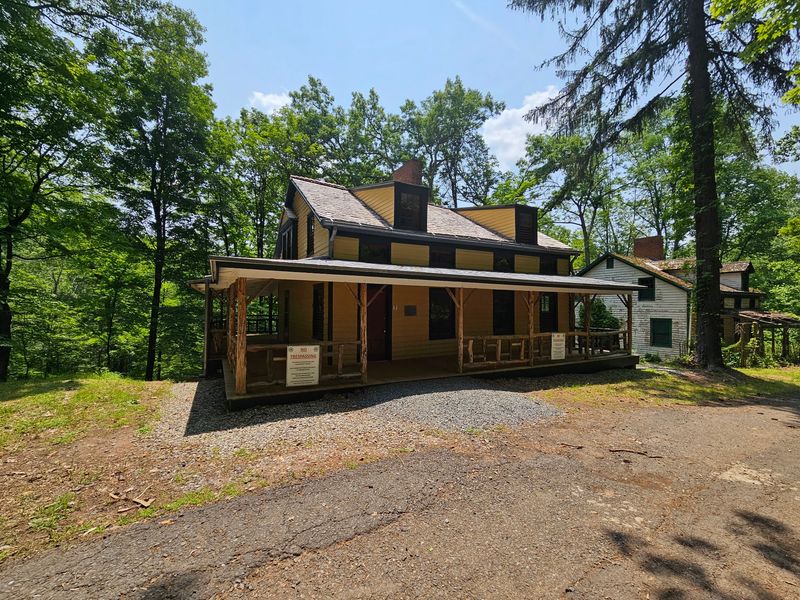
The old dwellings were renovated into resort cottages, and some received rustic Adirondack-style porches that softened their plain factory-town lines. City dwellers arrived looking for cool air and open space.
Guests filled their days with golf, tennis, fishing, and horseback riding through the surrounding woods.
You can still spot the resort era in the architecture if you look at the porch details rather than the walls. Two completely different dreams, stacked on the same foundations.
I love that about this place. It refused to stay finished.
How the Automobile Quietly Emptied the Valley Again
Resorts live and die by convenience, and Glenside Park learned that the hard way. Its popularity started slipping around 1916.
The reason was sitting in driveways all over the region. Cars gave families the freedom to drive much farther for a weekend, and the Jersey Shore suddenly looked a lot more appealing than a wooded hollow an hour inland.
Guests stopped coming. The resort closed, and for the second time in its history the village stood mostly empty.
Nature moved in the way it always does, patient and thorough, softening yards into undergrowth and reclaiming edges of the old lanes.
What I find oddly comforting is how ordinary the cause was. No disaster, no dramatic collapse, just changing habits.
Places rise, thrive, then fade, and this valley has done that cycle twice. The second time left behind the atmosphere visitors come looking for now, which is a strange kind of accidental gift.
Folded Into the Watchung Reservation
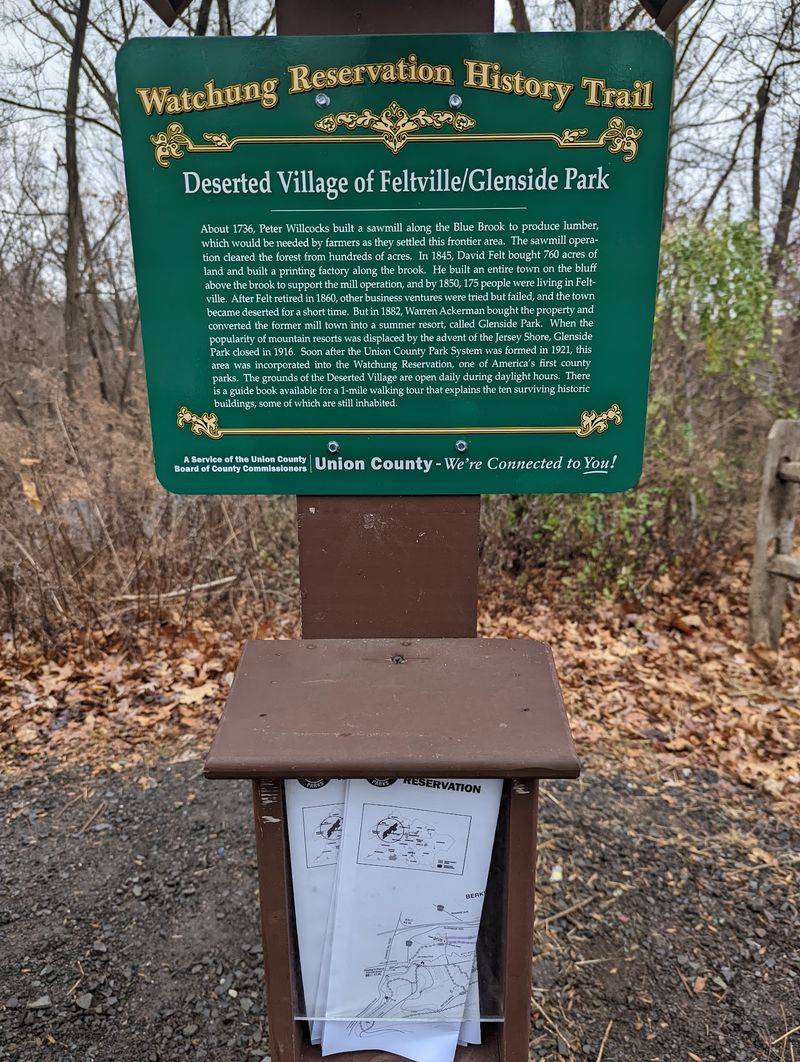
Rescue came from an unlikely direction, a park commission. During the 1920s, the Union County Park Commission acquired the property and folded it into the newly created Watchung Reservation.
That single decision probably saved everything you can see today. Instead of being sold off, subdivided, or torn down, the village became part of one of the earliest county park systems in the country.
Life continued here in modest ways. Through the Great Depression, several of the houses were rented out to families, so the porches had people on them again during genuinely hard years.
Protection also meant the stories could be told rather than forgotten, which is a quieter kind of preservation but just as important.
Today the reservation wraps the whole site in forest, with miles of trails spilling out from the village. Trail markers are clear, side paths are well established, and the woods stay noticeably cooler than the parking lot on a hot day.
Ten Buildings Still Standing, Two Eras Still Visible
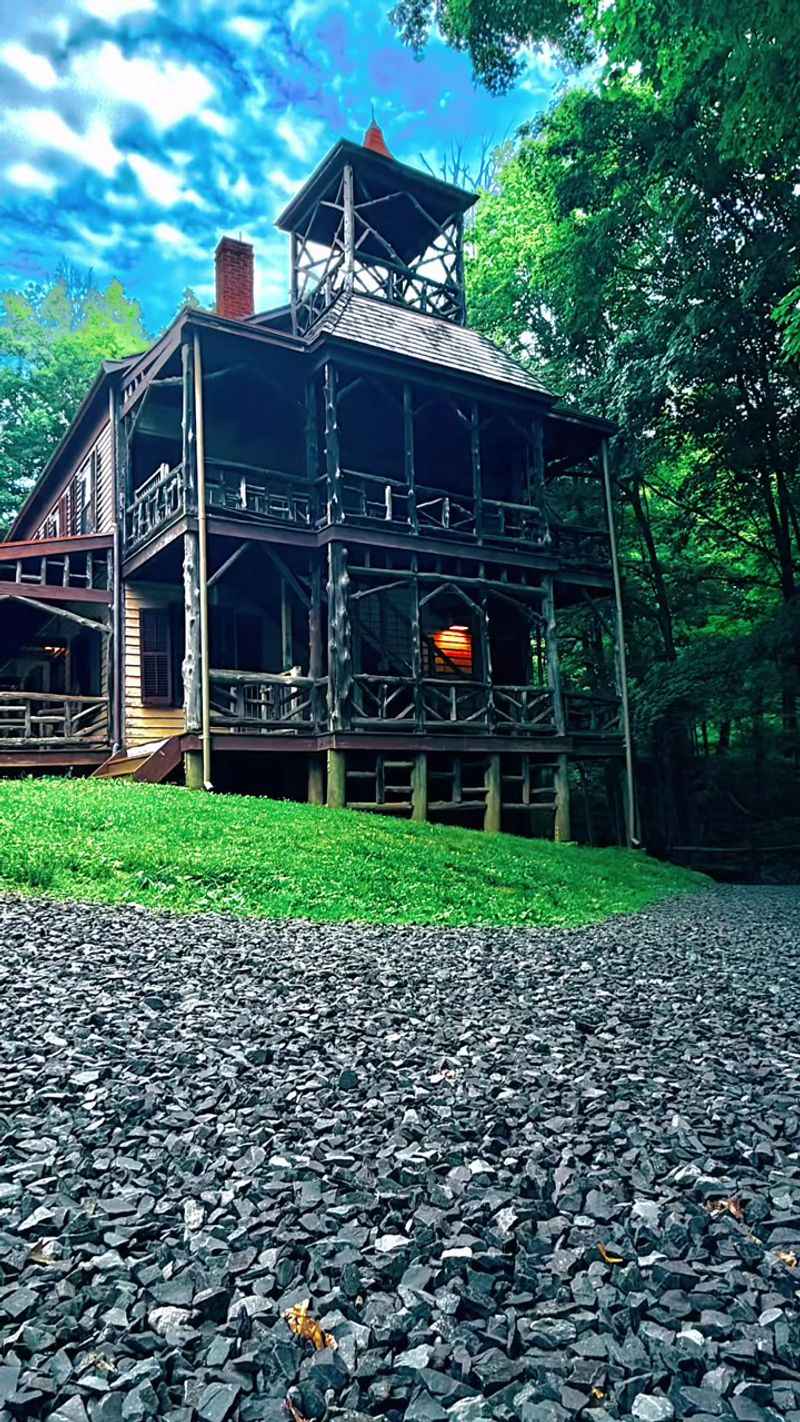
Roughly ten original buildings remain, and they are the whole reason to come. Officially known as the Feltville Historic District, the site was added to both the New Jersey and National Registers of Historic Places in 1980.
Among the survivors are several houses, a combined church and general store, and Masker’s Barn, which once served as a carriage house during the resort years.
What makes them interesting is the layering. Mill town simplicity underneath, resort-era touches added later, all sitting in the same row.
The church and store building has been restored and now works as a visitor center, with information about the village’s overlapping chapters.
Most structures are closed off, and no trespassing signs are posted, though you can walk onto some of the porches. Preservation work has been underway, which explains why these wooden buildings look far better than a century of emptiness should allow.
Bring a camera. The textures alone are worth it.
A Small Burial Ground With Deep Roots
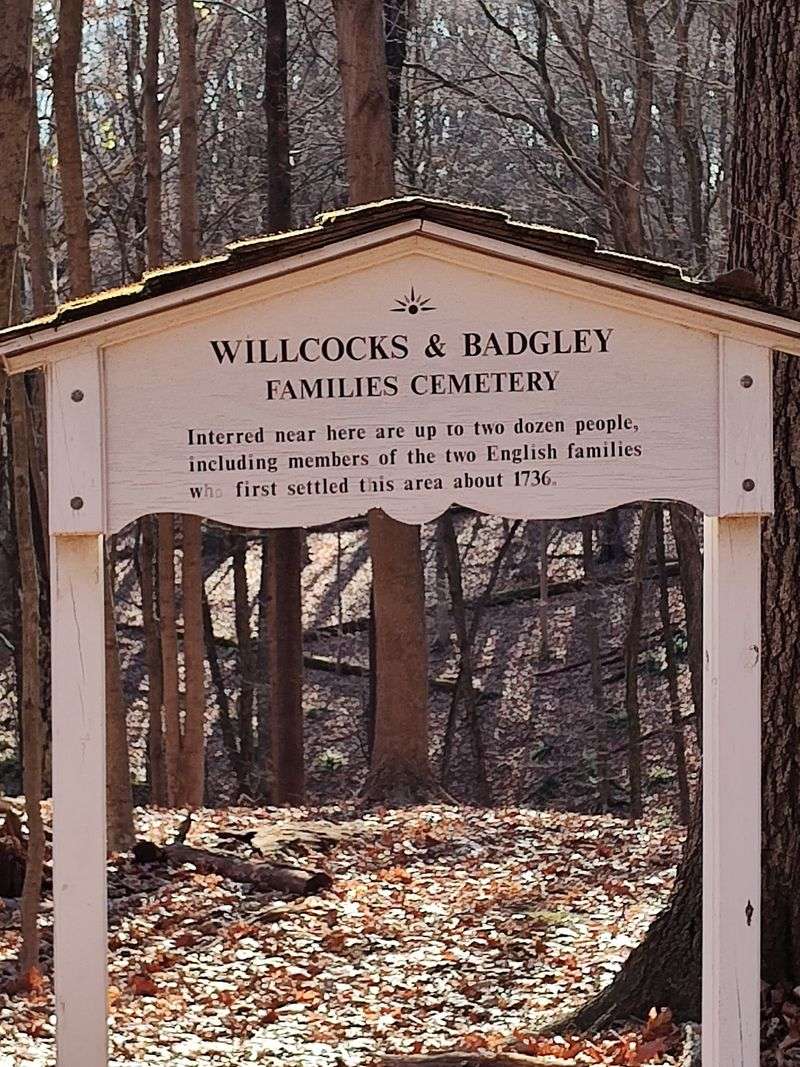
Up a stepped climb from the main road sits the oldest part of the story. A small cemetery holds the remains of roughly twenty-four people, and most of them predate the mill village entirely.
Members of the Willcocks family rest here, the first European settlers in this valley, who established a sawmill in the area around 1736.
One name stands out on the plaques. John Willcocks, son of Peter Willcocks, served in the New Jersey militia and was mortally wounded during the Revolutionary War.
Many original headstones disappeared over the centuries, so commemorative plaques now mark who was buried here.
The walk up is a real hike rather than a stroll, with steps and a decent incline, so shoes matter. A helpful tip passed along by other visitors is to watch for the tall tree stump and make a right, since the turnoff is easy to miss.
It is a hushed spot. Worth the climb for that alone.
Ghost Stories, Rumors, and Local Folklore
Old places collect stories, and this one has gathered plenty. Alongside the documented history, the site carries a well-known reputation for the unexplained.
Tales of ghostly figures and odd happenings have circulated in the region for decades. The most repeated one involves three sisters who supposedly vanished while camping in the surrounding woods in 1912, with only their bonnets recovered.
Historical records do not back that up, and honestly, the vagueness is part of why it survives.
Folklore fans often read up on regional legends before visiting, which adds a certain edge to walking between silent houses in fading light.
Personally, I found the daytime version plenty atmospheric. Empty porches, dark windows, and forest pressing in from every side do most of the work without any help from ghosts.
Treat the legends as seasoning rather than the meal. The verified history here is strange enough on its own, and the supposed curse gives it a perfectly good ending.
Planning a Visit Without Rushing It
Practical stuff first, because it makes a difference here. Free parking sits up top near a trail map, and the main route down into the village is paved, with a noticeable hill waiting on the way back.
Interpretive signs stand in front of the buildings, explaining what you are looking at as you go, and an audio tour brings the Feltville chapter to life with route directions included.
Restrooms and a nature center with information about the reservation add comfort to the trip.
An hour or two covers the village comfortably. Add the trails and you can easily fill a whole day, since more than six miles of paths thread through the woods.
Weekends fill the lot fast, so early arrival helps. Leashed dogs are welcome, there is fishing at the lake behind the village, and picnic-friendly quiet is easy to find.
The Deserted Village, also known as Feltville or Glenside Park, is located at 9 Cataract Hollow Rd, Berkeley Heights, NJ 07922.
