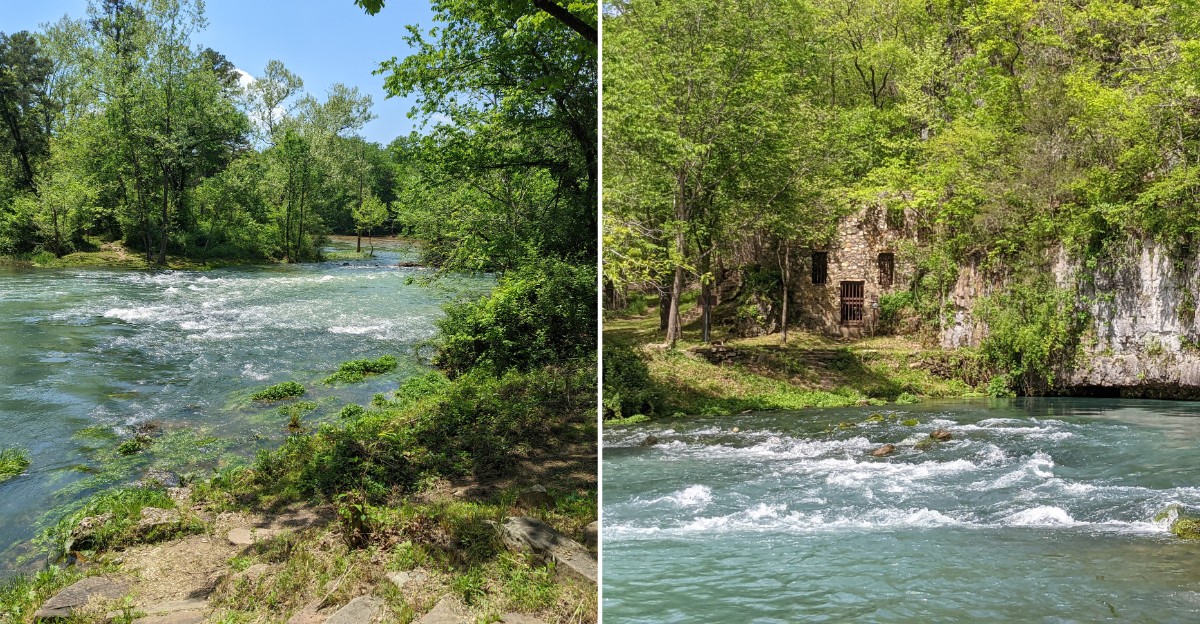
A doctor once built a hospital right on top of a cave mouth. He hoped the cool cave air would help people breathe easier.
I wasn’t expecting a story this strange from a quiet bend in an Ozark river. The doctor paid just $800 for the spring back in 1913.
Then he dammed the water so more cave air would drift into his building.
I have to admit, the plan sounds both brilliant and a little wild. The stone walls are still standing today in the Missouri woods.
A bright blue spring pours out beside them, cold and clear.
I can see why people make the bumpy drive to see it. The ruins look like something from an old adventure book.
An Illinois Doctor Spent $800 On A Spring And Big Hopes
Back in 1913, an Illinois physician named Dr. C.H. Diehl made a purchase that still gets people talking.
He bought Welch Spring and the surrounding land for $800 in 1913.
He bought it from James and Arnold Welch. Their father had a name you won’t forget: Current River Welch.
Yes, a man was named after the river flowing past his family’s land. That’s real Ozark commitment.
The spring’s name traces to Thomas Welch, an early landowner in the mid-1800s. Some sources credit his son instead, so the family shares the honor.
The Welch family ran a gristmill on the property for about 50 years after the Civil War. So this spot was a working place long before any doctor arrived.
Dr. Diehl saw something different in the spring, though. He saw healing.
He believed the water itself had healthful qualities. He also believed the air drifting out of the nearby cave could help sick people breathe.
That belief shaped everything he built next. It’s a good reminder that one person’s idea can leave a mark on a landscape for over a century.
Today, the National Park Service cares for the site. The story starts with one curious doctor and a pretty modest check.
The Cave Air Was Supposed To Be The Medicine
Cool, pollen-free air drifting out of a cave was the whole idea. Dr. Diehl thought it could help people with asthma, emphysema, and tuberculosis.
Tuberculosis was often called consumption in those days. It was a serious lung illness, and many people searched for any kind of relief.
So the doctor built his hospital directly over the cave’s mouth. That way, patients could soak up the air without hiking anywhere.
The building is commonly called Welch Hospital, although an NPS historical study found no evidence that it was called a hospital during Diehl’s lifetime or operated as one. Think fresh air and rest, not operating rooms.
Here’s the clever part. The spring flowed out of the cave, so he dammed it to seal off the entrance.
That dam pushed more of the cave air up into the building. It was basically natural air conditioning with a medical mission.
You have to admire the creativity. He didn’t have fancy machines, so he used the land itself.
Modern medicine has moved far past cave air, of course. Still, the plan shows how people a century ago tried hard to heal with what nature offered.
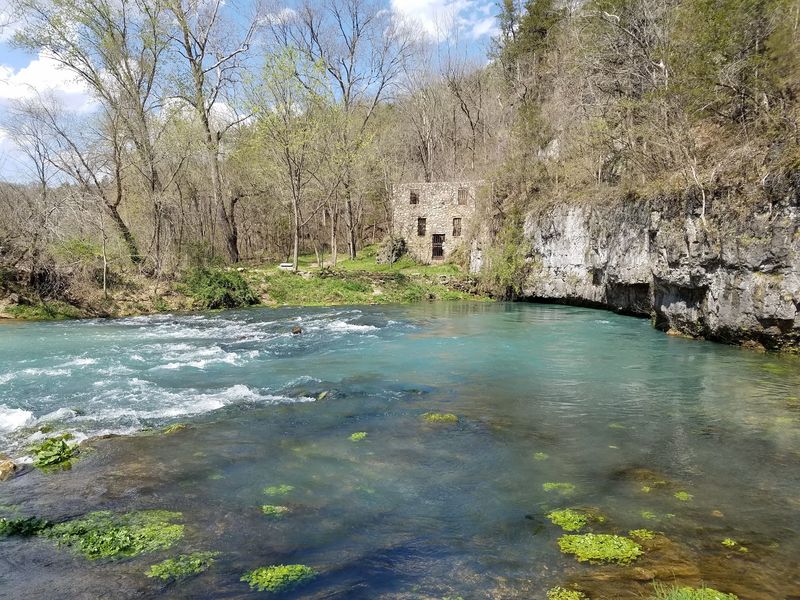
When you see the stone walls hugging the cliff, the idea suddenly makes sense. The building sits exactly where the air comes out.
Cabins, A Generator, And A Resort That Never Took Off
Dr. Diehl didn’t stop at one building. He also dreamed of a campground resort with cabins and an electric generator.
The plan was smart on paper. Tourists would help pay the bills while the hospital helped patients.
An electric generator in the remote Ozarks was a big deal back then. Plenty of rural homes still lit their evenings with lamps.
Sadly, the resort never really thrived. The location was simply too far out of the way.
Roads in the Ozarks were rough, unpaved, and hard to travel. Getting sick patients across them would have been a challenge.
Healthy tourists weren’t eager to bump along those roads either. A great idea can struggle when nobody can easily reach it.
Dr. Diehl passed away in 1940. His family didn’t keep up the property, and it slowly fell into disrepair.
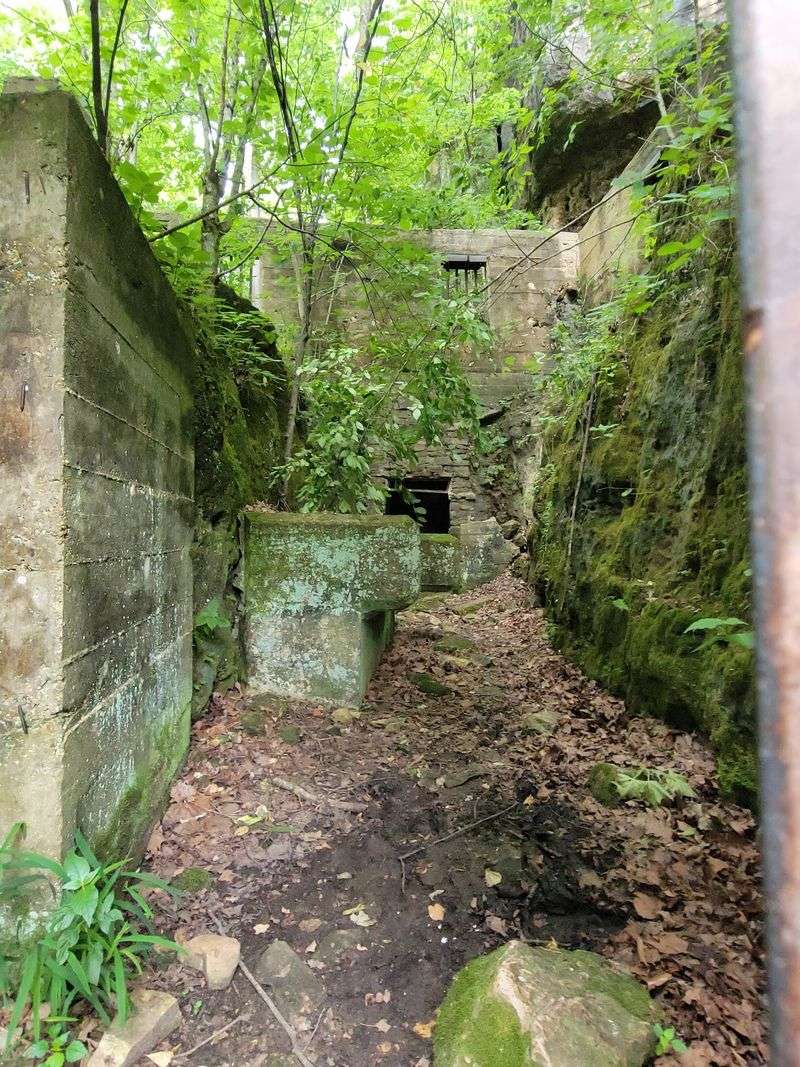
The forest began reclaiming what he built. Roofs and wood gave way, but the stone stayed stubborn.
That’s why the ruins feel so striking now. You’re looking at the bones of a bold plan that time couldn’t fully erase.
It’s a little bittersweet. It’s also a big reason this place feels so memorable.
That Blue Spring Pours Out Millions Of Gallons Every Day
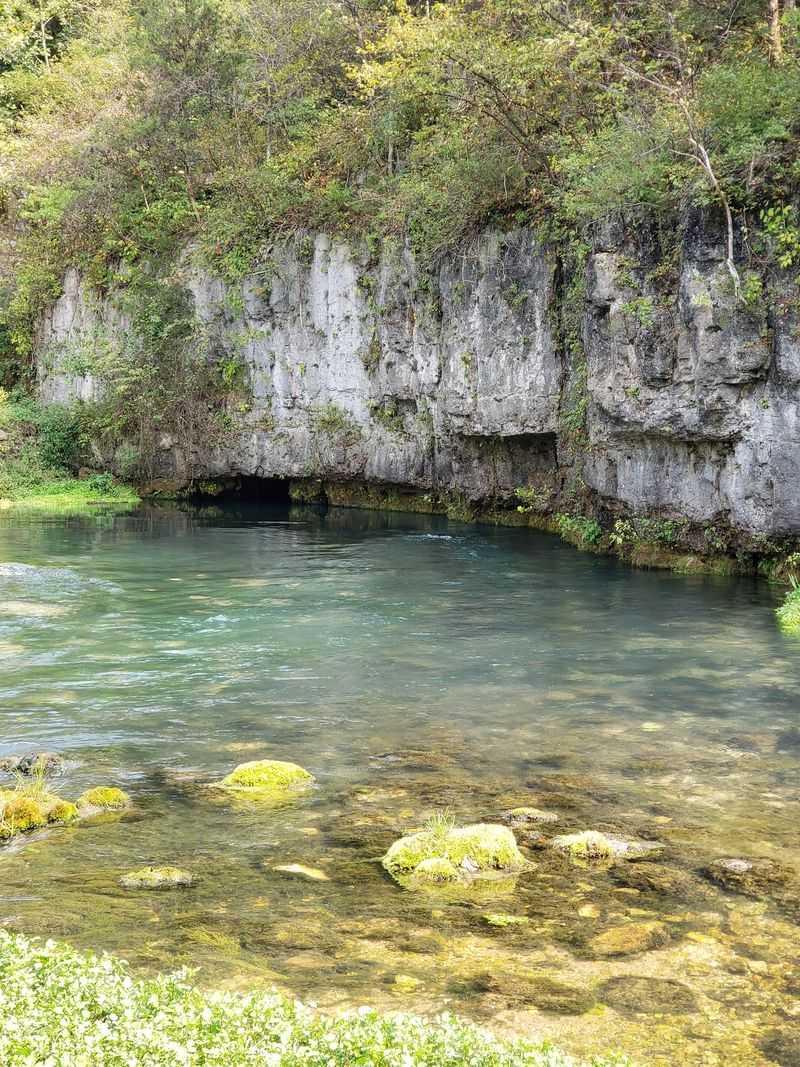
Somewhere between 75 and 105 million gallons of water flow from Welch Spring daily. That’s a lot of water from one spot at the base of a cliff.
It ranks as either the fifth or sixth largest spring in Missouri. Either way, it’s a serious heavyweight.
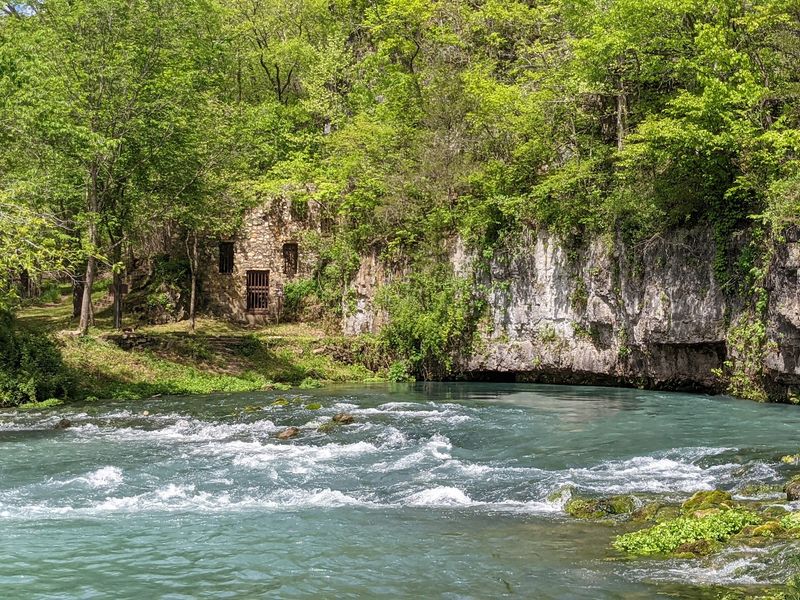
The spring’s mouth shows off shades of blue and gray. It sits at the base of a dolomite cliff, right next to the old hospital walls.
The water is clear and cold. It rushes out to join the Current River a short distance away.
Bring your camera, because the colors really pop against the stone and trees. The ruins make the scene feel like a painting with a backstory.
One firm rule matters here. Wading, swimming, and fishing are not allowed in the springs and spring branches.
The rule protects a delicate ecosystem. So enjoy the view from the bank and keep your toes dry.
Honestly, the spring doesn’t need your help to impress anyone. It’s been putting on this show far longer than the hospital has stood.
Stand still for a moment and just watch it flow.
An Easy Riverside Trail Leads You Right To The View
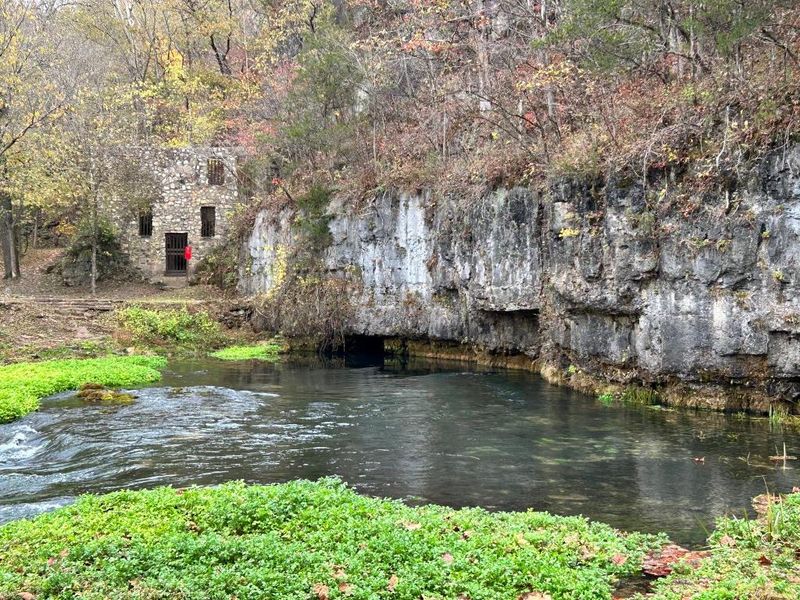
Good news for casual walkers. The trail to Welch Spring is short and easy.
It runs about 0.6 to 0.8 miles round trip, depending on the source. The path follows the river through the woods.
The trail ends at a viewing spot across the spring from the ruins. You’ll see the stone hospital framed by water and cliff.
Here’s the catch. The spring sits between you and the building.
Reaching the ruins from this side means crossing water or scrambling over a rugged bluff. That bluff path is unofficial and may lack safety features.
So be honest with yourself about your comfort level. The view from across the spring is still lovely.
Wear sturdy shoes that can handle gravel and roots. Bug spray is also a smart pick for a wooded, watery area.
Kids and grandparents can usually manage the walk itself. Just keep everyone away from the risky climbing.
Spring and fall offer a pleasant time to wander, though any season works. Early spring, before the leaves fill in, can open up the views.
Short walk, big payoff. That’s a pretty great deal.
Bats Now Run The Old Hospital
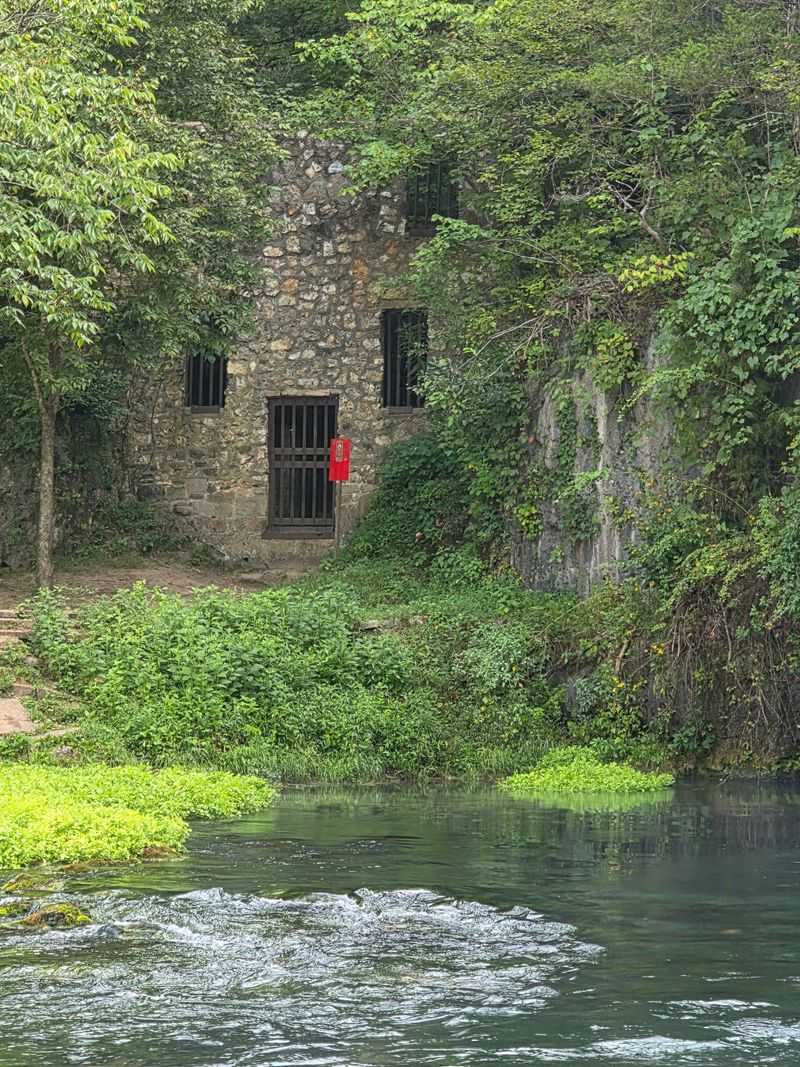
The newest residents of the hospital don’t need cave air for their lungs. They just love the cave.
Bats live in the cave behind the ruins. To protect them, the spring and cave are closed to the public.
That means no poking around inside the dark parts. You can admire the stone walls and the setting from outside.
Bats are amazing neighbors to have. They gobble up insects and help keep forests healthy.
Caves are fragile places too. Even small disturbances can harm the animals and the water.
So the closure isn’t meant to spoil anyone’s fun. It keeps a special ecosystem working the way it should.
The National Park Service manages Welch Spring and Hospital Ruins today. Following their rules helps this place stay beautiful for the next visitor.
Pack out every bit of trash, even small wrappers. Leave rocks and plants exactly where you found them.
Think of yourself as a guest at a very old, very quiet house. The bats were here first, at least lately.
Honestly, it’s kind of perfect. A building meant for healing now helps wildlife thrive.
Finding It Takes A Little Ozark Grit
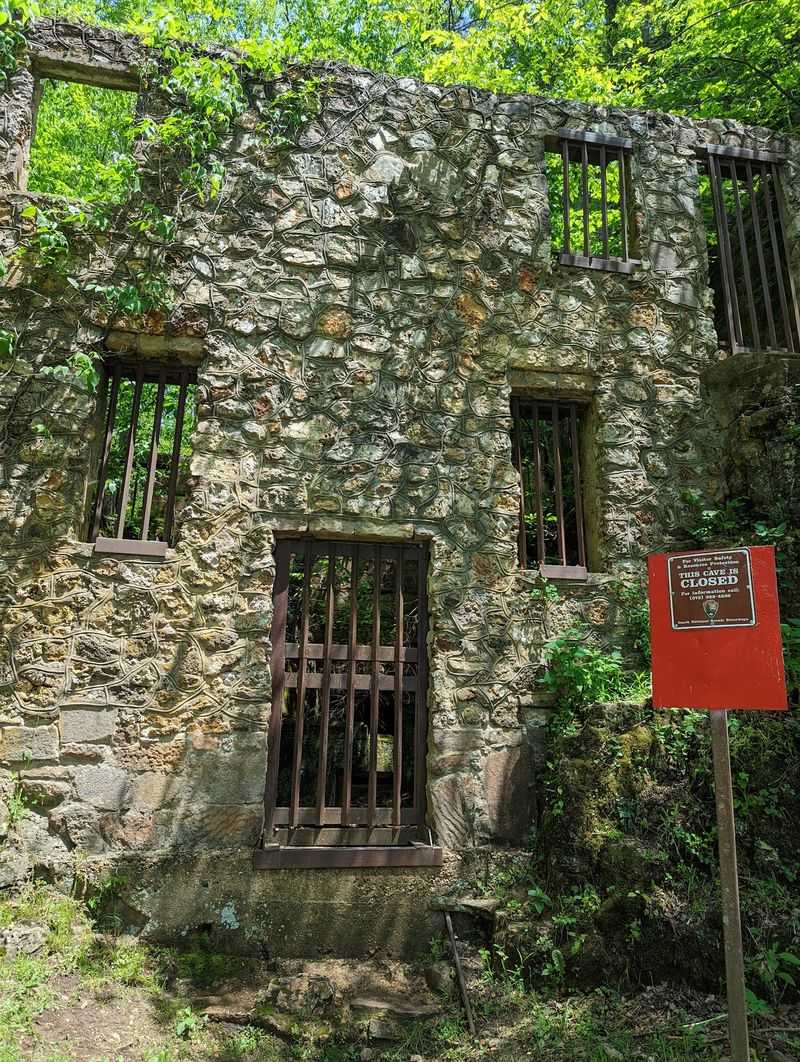
No street address leads you here. That’s part of the adventure.
The usual route sits off County Road 651, off Highway K, north of Akers, MO. Expect gravel roads once you leave the pavement.
Those roads can be rocky and steep in spots. Take it slow, especially in a small car.
Mapping apps don’t always point to the right place. Double-check your route before you lose cell signal.
Downloading an offline map is a smart move. So is telling someone where you’re headed.
The site sits within the Ozark National Scenic Riverways in southern Missouri. The park’s information pages can help you plan.
Bring water and snacks, since services are limited out here. A full gas tank brings peace of mind too.
After big rains, conditions can change on roads and near the water. Check the weather before you set out.
Dr. Diehl’s resort struggled partly because getting here was so hard. Funny how the roads still keep a bit of that old challenge.
The good news is the effort feels worth it. Few things beat reaching a spot that makes you work a little first.
Your Ticket Into A Huge Protected River Park
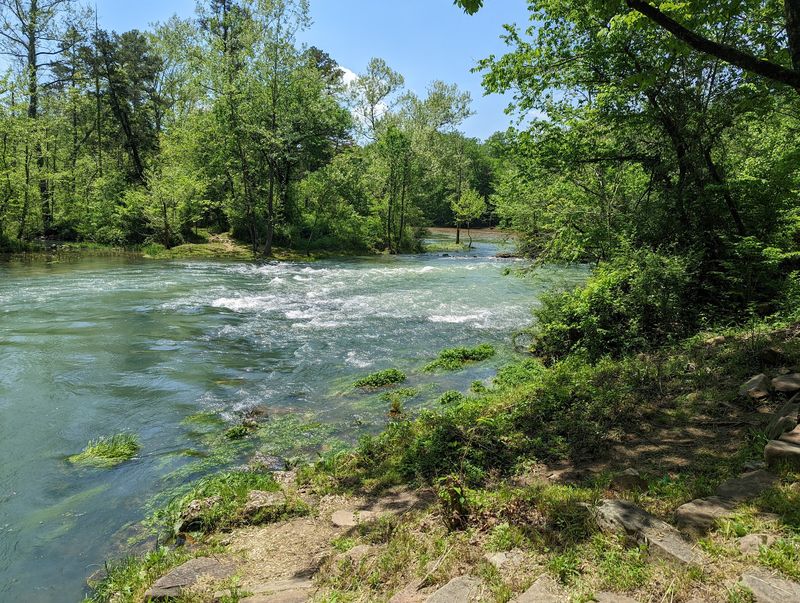
In the 1960s, this land joined the Ozark National Scenic Riverways. One source points to 1967 as the year.
That move saved the ruins and spring from fading into private obscurity. Now everyone can enjoy them.
The Ozark National Scenic Riverways protects the Current and Jacks Fork rivers. It was the first national park area built to protect a river system.
So Welch Spring and Hospital Ruins is just one stop in a much bigger playground. Clear rivers, springs, and forest trails stretch across this part of Missouri.
Akers Ferry sits close by on the Current River. It makes a natural starting point for floats in the area.
Pairing the ruins with a river day just makes sense. You get history in the morning and paddling in the afternoon.
Bring patience for slow roads and quick weather changes. The Ozarks reward people who aren’t in a hurry.
When you finally stand near those stone walls, think about the doctor’s dream. He wanted people to feel better here.
In a way, he got his wish. The fresh air, cold water, and quiet woods still do a pretty good job.
