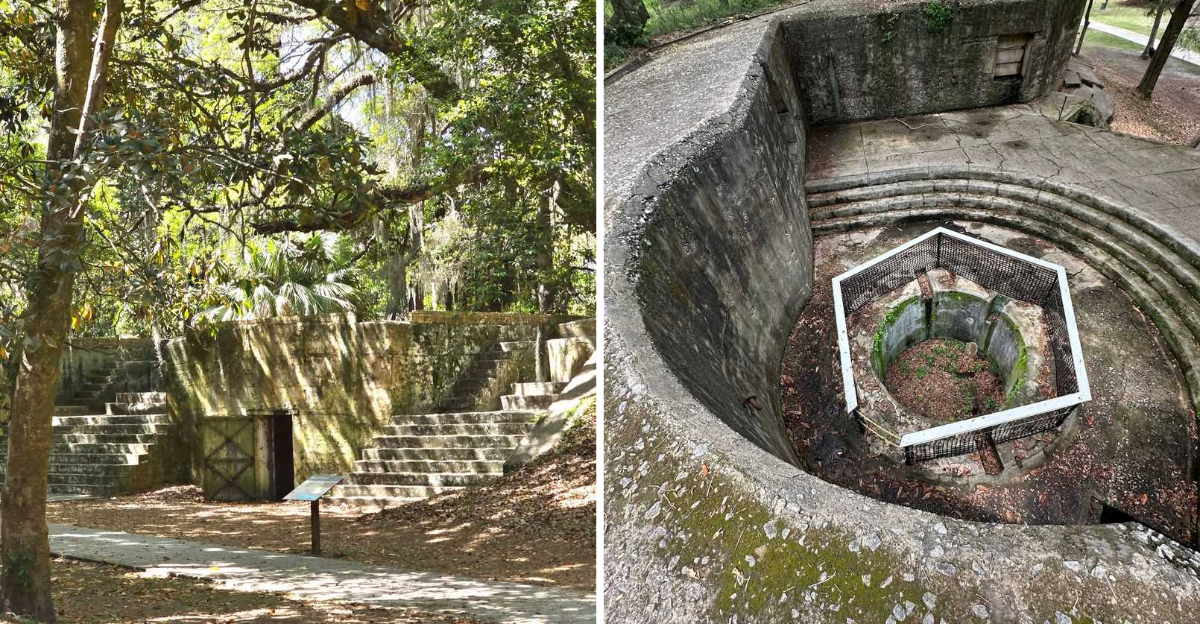
Slabs of concrete the size of houses sat sunk into the sand like something the tide left behind. That is what I found at the end of a two-lane road in South Carolina, where the pavement seemed to run out of ideas, passing farm fields and moss-heavy oaks before opening onto an 18-acre preserve.
What surprised me most was the silence, because this place was built to be loud, armed with cannons meant to guard the naval station across the water. The war ended before the guns were even ready, so the fort waited, and waited, and never fired a single shot in anger.
Now it sits with picnic tables, a small history center, and a beach where shells pile up along the shoreline. The concrete batteries still stand, thick enough to absorb the impact of heavy shells, and the observation tower rises from the sand like a forgotten sentinel.
I stayed far longer than I planned, walking the perimeter and reading the interpretive signs, trying to imagine the soldiers who once paced these same paths.
A place built for battle that never came, now a quiet stretch of coast with a story that lingers in the air.
Concrete Giants of the Endicott Era
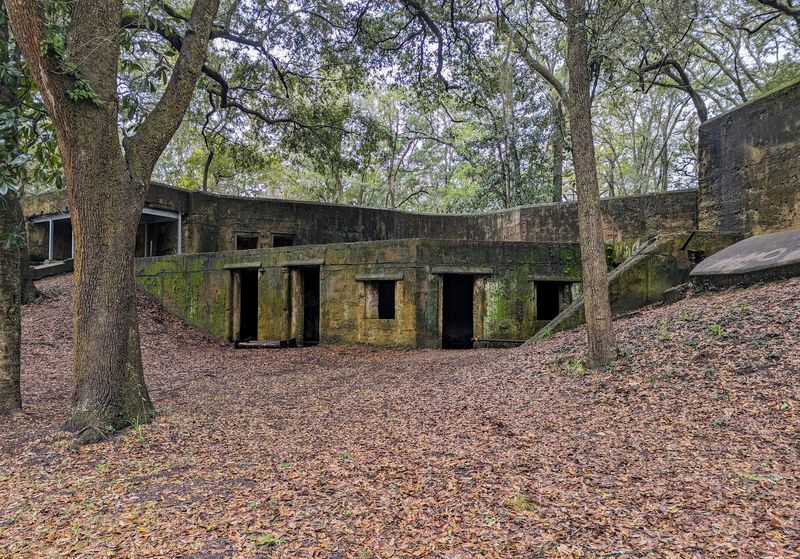
My first thought when the batteries came into view was that they looked less like a fort and more like an abandoned power plant swallowed by a South Carolina forest. Battery Jesup and Battery Fornance are the two main survivors here, built between 1899 and 1900 out of reinforced concrete and packed earth.
They were part of the Endicott system, a nationwide push to modernize American coastal defenses against fast steam-powered battleships. Fort Fremont carries the name of Major General John C.
Fremont, an explorer, Civil War general, and the first Republican presidential nominee back in 1856.
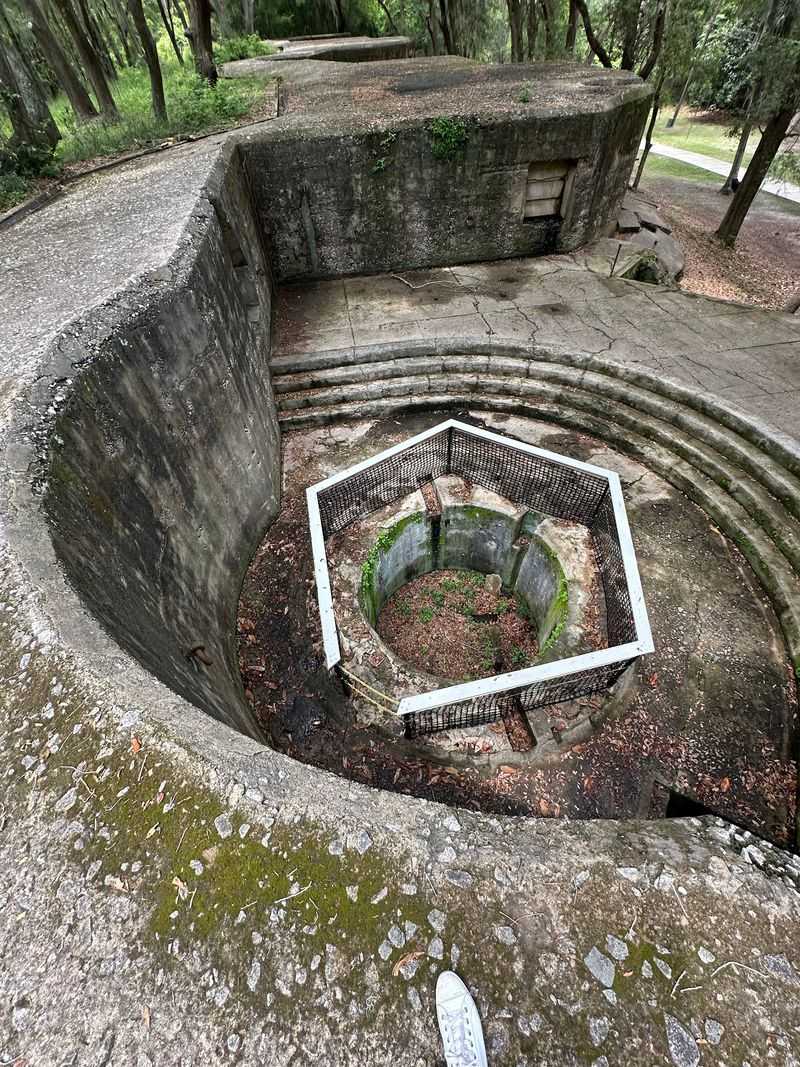
Battery Jesup held three 10-inch rifled cannons set on disappearing carriages, which is the detail that stuck with me most. The recoil of a shot would swing the gun back down behind the parapet, hiding it from enemy eyes while the crew reloaded.
Battery Fornance was smaller and quicker, with two 4.72-inch rapid-fire guns on elevating platforms meant to protect underwater minefields. Only two Spanish-American War coastal fortifications in the country survive largely intact, and this is one of them.
Run your hand along that concrete and you feel how seriously someone once took this quiet stretch of shoreline.
Traces of the Soldiers Who Waited Here
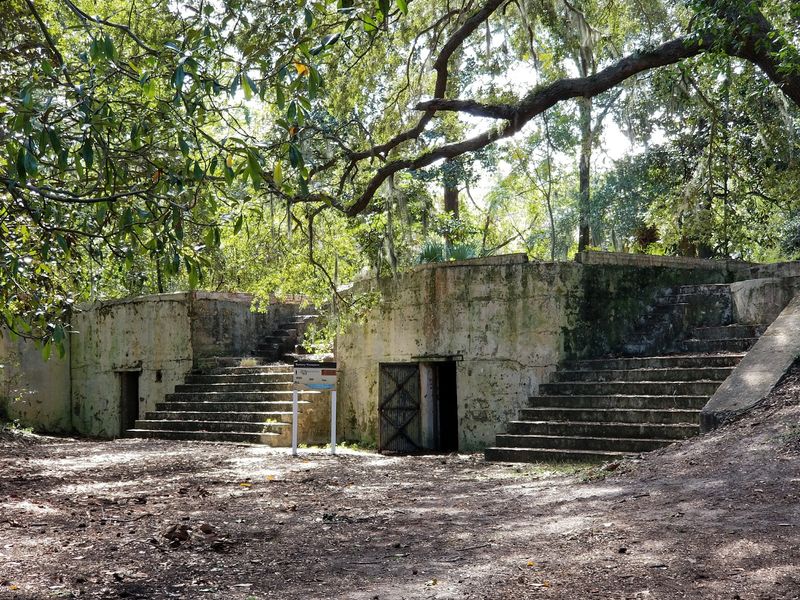
Around 110 men and officers were once stationed at this post, and I kept trying to picture them as I wandered the empty spaces between the batteries. Soldiers of the 116th Coast Artillery drilled here, maintained the guns, and lived out slow days on a fairly remote island.
At its largest, the military reservation stretched across nearly 170 acres with barracks, a mess hall, officer quarters, and administrative buildings. Almost none of those wooden structures survive today, though records and photographs document them well.
The old hospital building is an exception. Built of concrete after an earlier wooden version came down, it still stands a short distance from the preserve and is now a private home, so admire it from the road only.
Troops were posted here from 1898 through 1911, and the fort was officially deactivated in 1921. That is a short military life, barely two decades of readiness.
What I found oddly moving is how ordinary it all must have felt, with target practice and equipment upkeep filling the calendar. Surrounding farmland grew tomatoes and blueberries, which made the whole arrangement feel a bit surreal.
A garrison built for battle mostly practiced patience.
Inside the History Center and Its Remarkable Diorama
Opened in 2021, the Fort Fremont History Center changed my whole understanding of the ruins outside. The building itself echoes the design of the fort’s original 65-man barracks, so it fits the setting without pretending to be old.
The centerpiece is a diorama roughly 16 feet long, recreating the full fort complex along with the Port Royal Naval Station across the water. Every building appears in miniature, and the modeling goes down to individual window panes.
Nearby sits a cutaway model of Battery Jesup and a replica of the 10-inch disappearing gun, which finally made that recoil mechanism click in my head. Seeing it move in model form beats reading three paragraphs about it.
Historic photographs line the walls, showing the fort and the men who served during its active years. There is also an exhibit on a mine planter, the vessel used to lay and service underwater minefields in the sound.
Do check the hours before you drive out, since the center keeps a limited schedule while the grounds stay open daily. A short video plays inside, and honestly, watch it first.
Context turns concrete lumps into a story.
Trails, Tunnels, and Spanish Moss
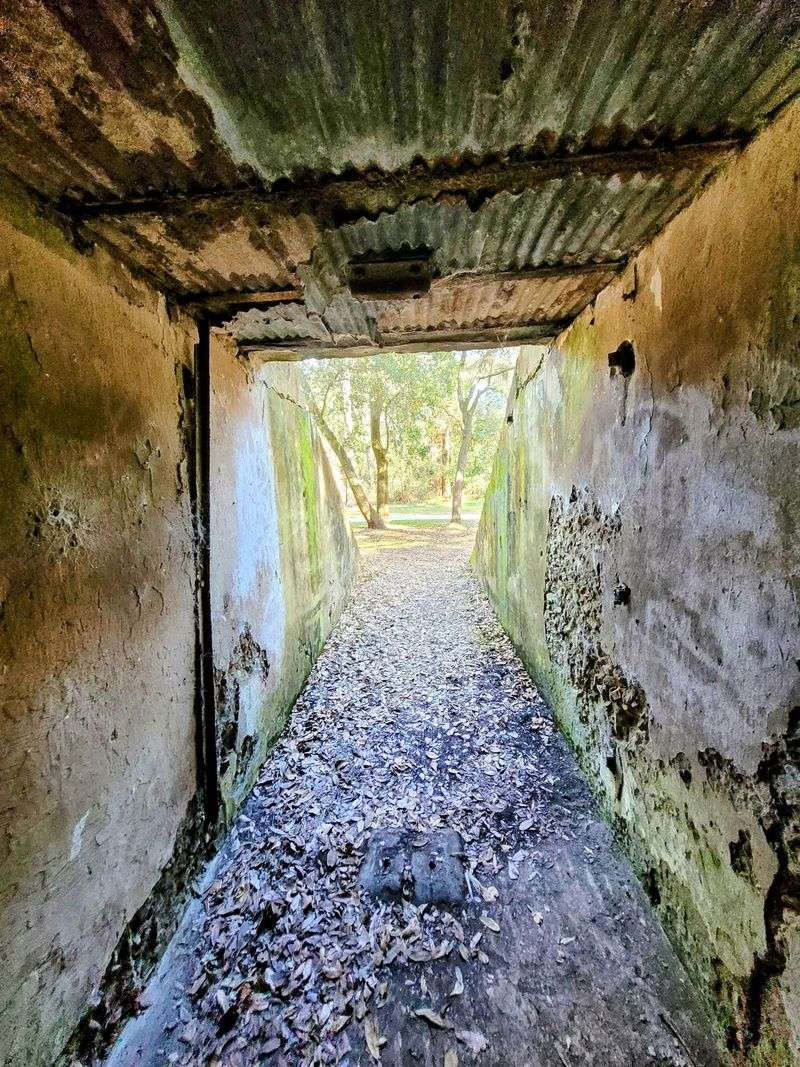
Paved paths were the pleasant surprise of my visit, curving between the batteries and making the site usable for wheelchairs and strollers alike. The preserve covers 18 acres, small enough to see fully in an hour, generous enough to linger in.
You can climb onto sections of the ramparts and duck through short passageways, which kids seem to love. Fair warning though: there are no railings up top, and drops of eight feet or more onto concrete are real, so keep little ones close.
Fallen leaves make the concrete slick after rain, and I was grateful for shoes with actual tread.
Interpretive signs along the way explain the defense system, the armament, and how the site slipped into disuse. If you would rather explore quietly, there is a Fort Fremont tour app that walks you through everything on your phone.
Century-old live oaks arch over the ruins with Spanish moss hanging down in long grey curtains. Mixed hardwood forest fills the gaps, and the light comes through in patches.
Some interior rooms carry old graffiti, a reminder of the years the site sat unwatched, but it never spoiled the mood for me.
Where the Sound Opens Wide
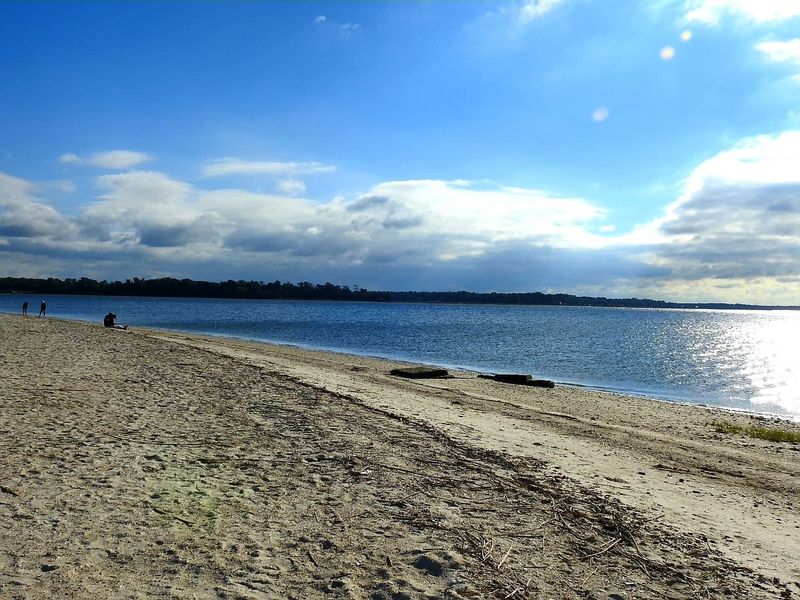
Port Royal Sound is the whole reason this fort exists, and one look at that water explains everything. It is one of the largest natural deep harbors on the Atlantic coast, and it opens out in front of you like a wide blue field.
Across the Beaufort River sat the Port Royal Naval Station on Parris Island, home to a coaling station and the only dry dock in the South able to service modern battleships. Guarding that asset was the fort’s single job.
Ships have been moving through here since Spanish and French explorers arrived in the 1500s, which gives the view a strange depth.
Just beside the fort grounds you will find Lands End Beach, a quiet strip of pale sand reached by a small climb over a low wall. Shell hunting is the main event, and I filled a pocket without trying.
People fish from the shoreline, and a few had set up chairs facing the water with no plans to move.
Sunset here is worth timing your visit around. The drive out during golden hour, past fields and moss-draped oaks, is nearly as good as the destination.
Rescued From the Vines
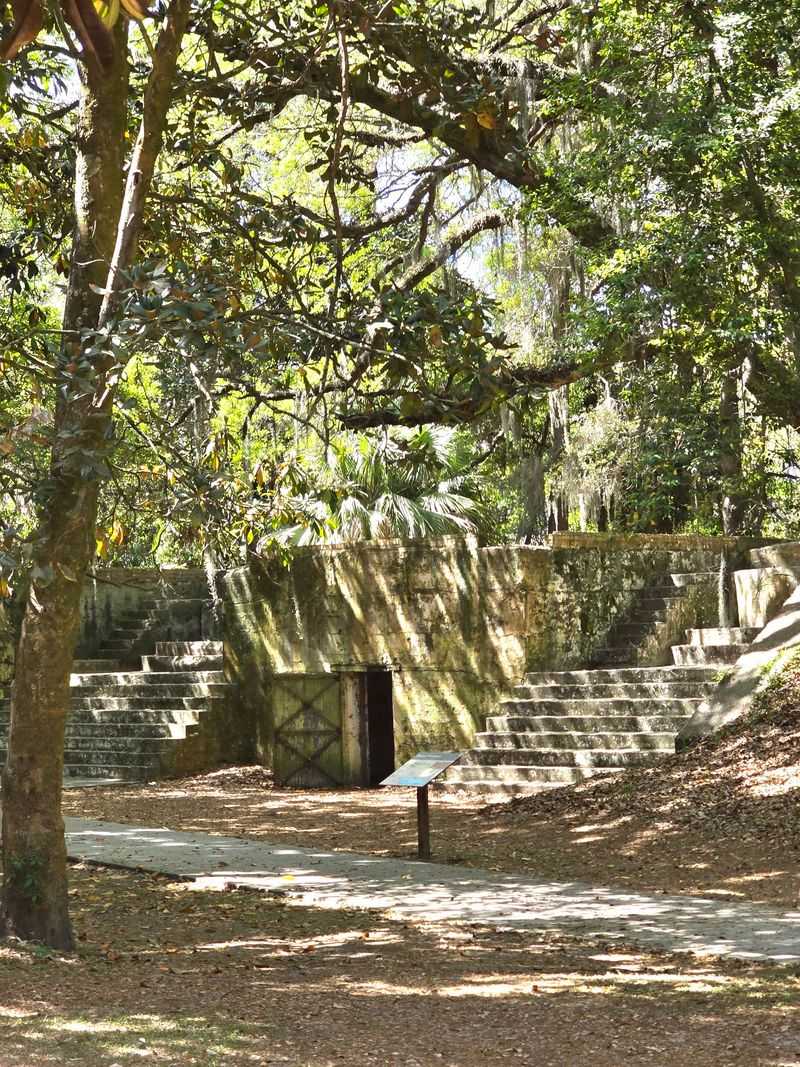
Hard to believe now, but this place nearly disappeared. After deactivation in 1921, the fort went to public auction in 1930 and passed into private hands, and the maritime forest simply moved in.
Vines and undergrowth swallowed the batteries for decades. Erosion chewed at the edges, vandals left their marks inside the magazines, and most people drove past without knowing what stood in the trees.
Beaufort County stepped in through its Rural and Critical Lands Preservation Program, buying 14 acres of the site across purchases in 2004 and 2010. That protection turned a crumbling relic into a public historic site and park.
The nonprofit Friends of Fort Fremont deserve a lot of credit for the rest. They offer free docent-led tours on Saturdays, and the volunteers I met clearly enjoy sharing what they have pieced together.
Admission costs nothing, which still feels remarkable for a site this well cared for. Restrooms and a water fountain are available at the history center building throughout the week.
There are covered picnic tables and a gazebo too, so you can bring lunch and stay a while.
The fort is listed on the National Register of Historic Places.
A Fortress That Never Got Its War
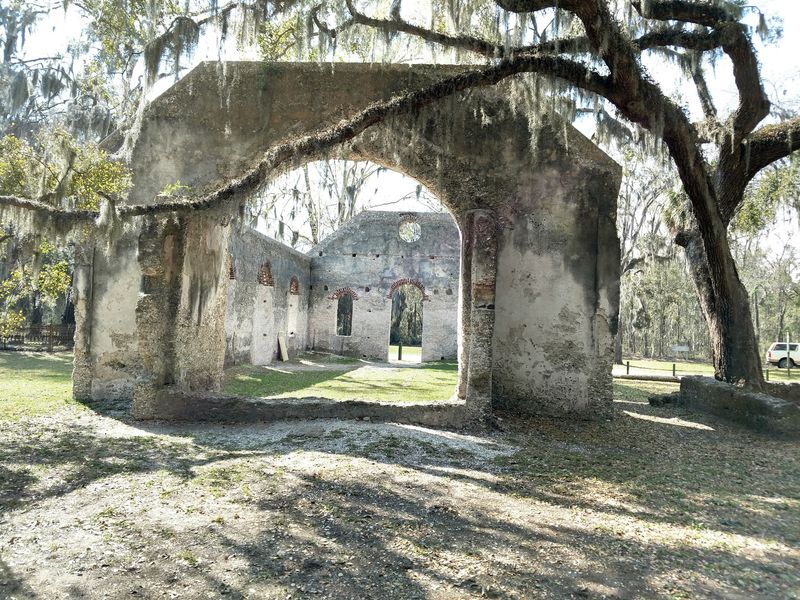
Driving away, the irony settled in properly. Congress authorized Fort Fremont in April 1898, just after the Spanish-American War began, and the conflict was over by that fall before construction even finished.
Not one shot was fired here in combat. No enemy fleet ever appeared in Port Royal Sound, and the guns spent their working lives pointed at empty water.
You could call that a waste, but I think deterrence is a kind of success that nobody throws parades for. The fort’s real story is about readiness and how fast military technology changed at the turn of the twentieth century.
By 1921 the design was already obsolete, overtaken by longer-range naval artillery and new strategies.
What remains is unusually peaceful for a military site. Oaks lean over the ramparts, shells wash up on the beach nearby, and families spread out lunch where soldiers once drilled.
Come early or stay late, bring solid shoes, and give yourself an hour more than you think you need. Then let the quiet do its work.
The old guard continues, watching over memory instead of enemies.
Address: 1124 Lands End Rd, St Helena Island, South Carolina 29920
