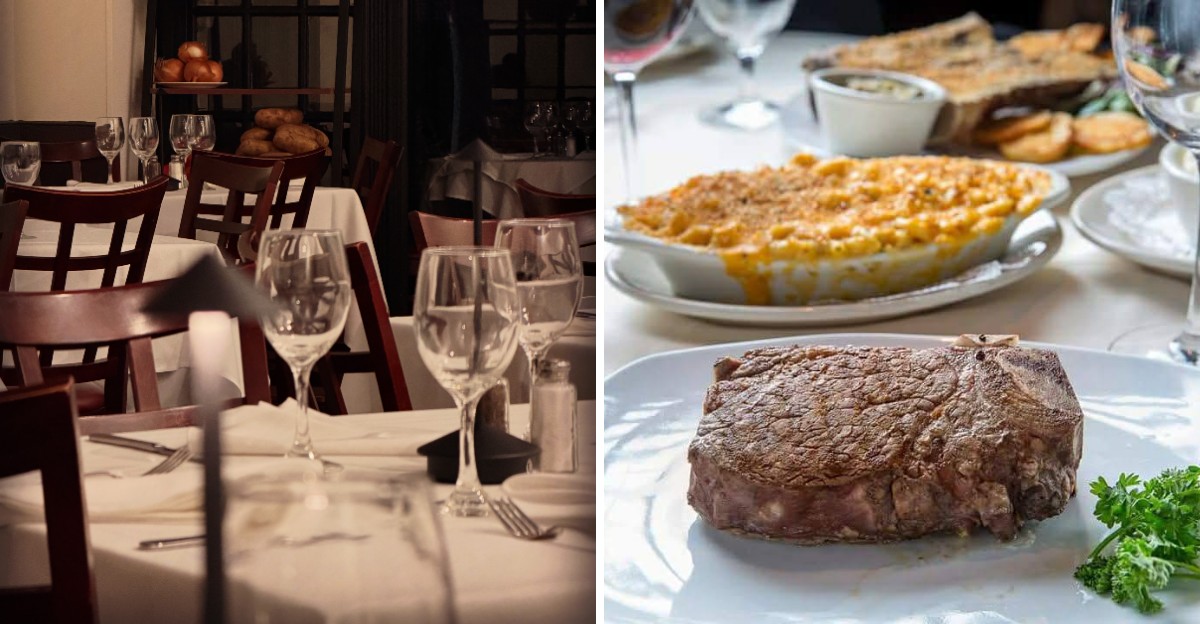
Decades at a legendary Brooklyn steakhouse teach a person a few things about beef.
The owner behind this New Jersey dining room spent years working both the broiler and the dining room at Peter Luger before bringing that experience across the river.
Here, USDA Prime beef from the Midwest and Nebraska is dry-aged in-house for at least 28 days, putting the steak itself squarely at the center of the experience.
Porterhouse is an obvious temptation, while family-style salads and sides keep that classic steakhouse rhythm going around the table.
There’s no need for flashy reinvention when the fundamentals are this serious.
Good beef, careful aging, a hot broiler, and someone who has spent decades learning what happens next.
Steak night knows exactly what it came here to do.
A Peter Luger Veteran Behind the Broiler
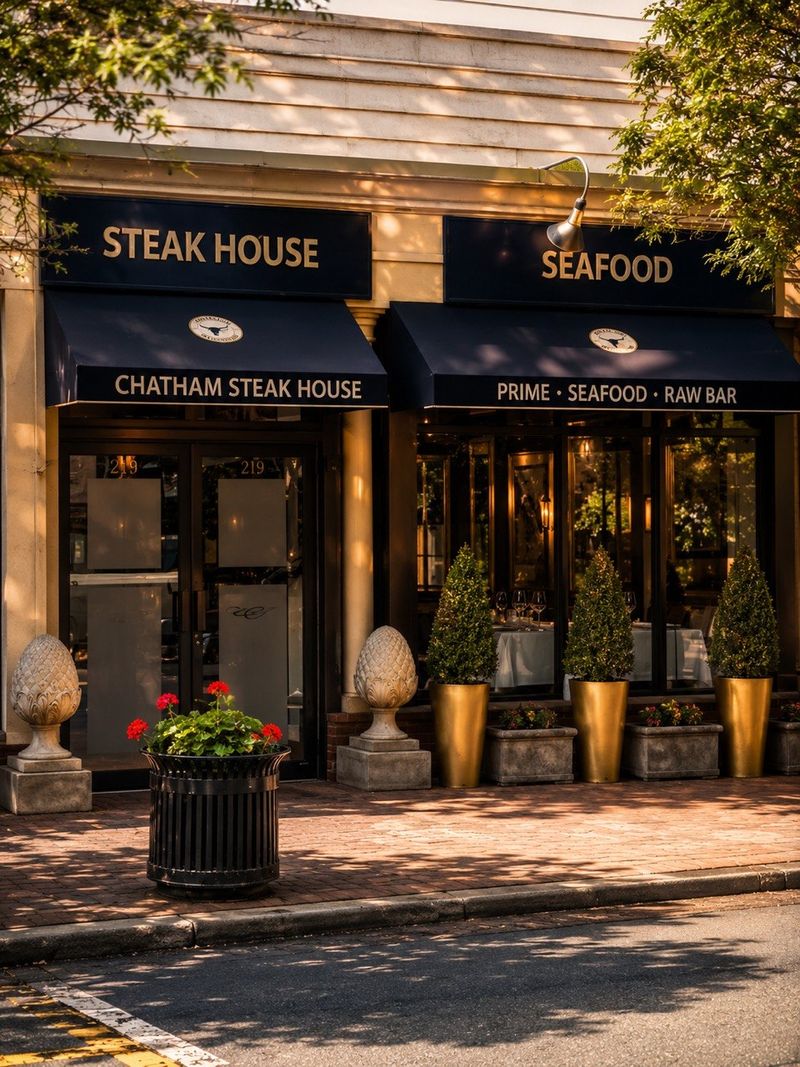
Decades of experience at Peter Luger Steakhouse in Brooklyn is not something you pick up on a weekend. The person running Chatham Steakhouse spent all those years there, working both the broiler and the dining room.
That double role matters more than you might guess. Knowing the broiler means understanding how fierce heat builds a crust while the inside stays juicy.
Knowing the dining room means understanding how guests should feel from the moment they sit down until the last bite.
Those lessons came along to this Main Street spot. The same operating ideas learned in Brooklyn now guide how things run here, from how steaks are handled to how tables are cared for.
Honestly, I find that kind of quiet expertise more exciting than any trendy menu twist.
Here is a fun bit of food history. Peter Luger has been around since the late 1800s and helped shape what Americans picture when they think of a classic steakhouse.
Getting a taste of that tradition without crossing a river into the city? That is a pretty sweet deal for anyone living nearby.
Beef That Waits Twenty-Eight Days
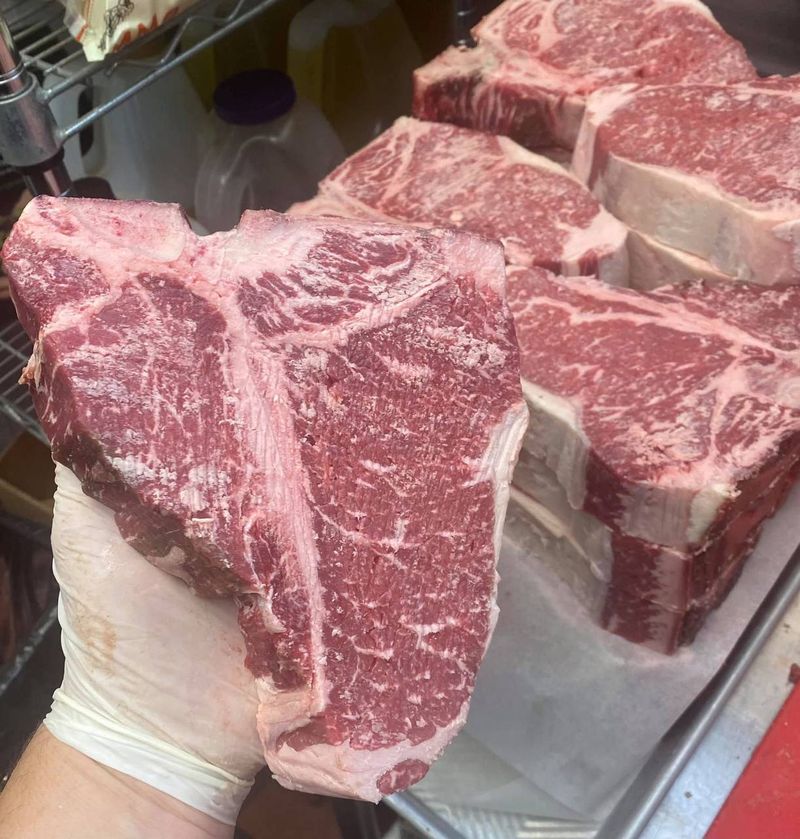
Patience is the secret ingredient nobody can buy. At this steakhouse, the beef is dry-aged in-house for at least 28 days before it lands on a plate.
So what actually happens during those weeks? Large cuts of beef sit in a carefully controlled space where temperature, humidity, and airflow are all kept just right.
Moisture slowly evaporates, which concentrates the flavor. Meanwhile, natural enzymes in the meat get to work breaking down tough muscle fibers, and that makes the steak more tender.
The result tastes deeper and richer than a fresh-cut steak. Some people describe dry-aged beef as nutty, almost like a savory version of toasted bread.
I love that a simple piece of meat can change so much just by waiting.
Doing this in-house is a big commitment. It takes space, careful watching, and a lot of trust in the process.
Plenty of restaurants skip it entirely and buy steaks ready to cook. Here, the aging happens under the same roof where you eat, which says a lot about how seriously the kitchen treats its beef.
Prime Beef From the Heartland
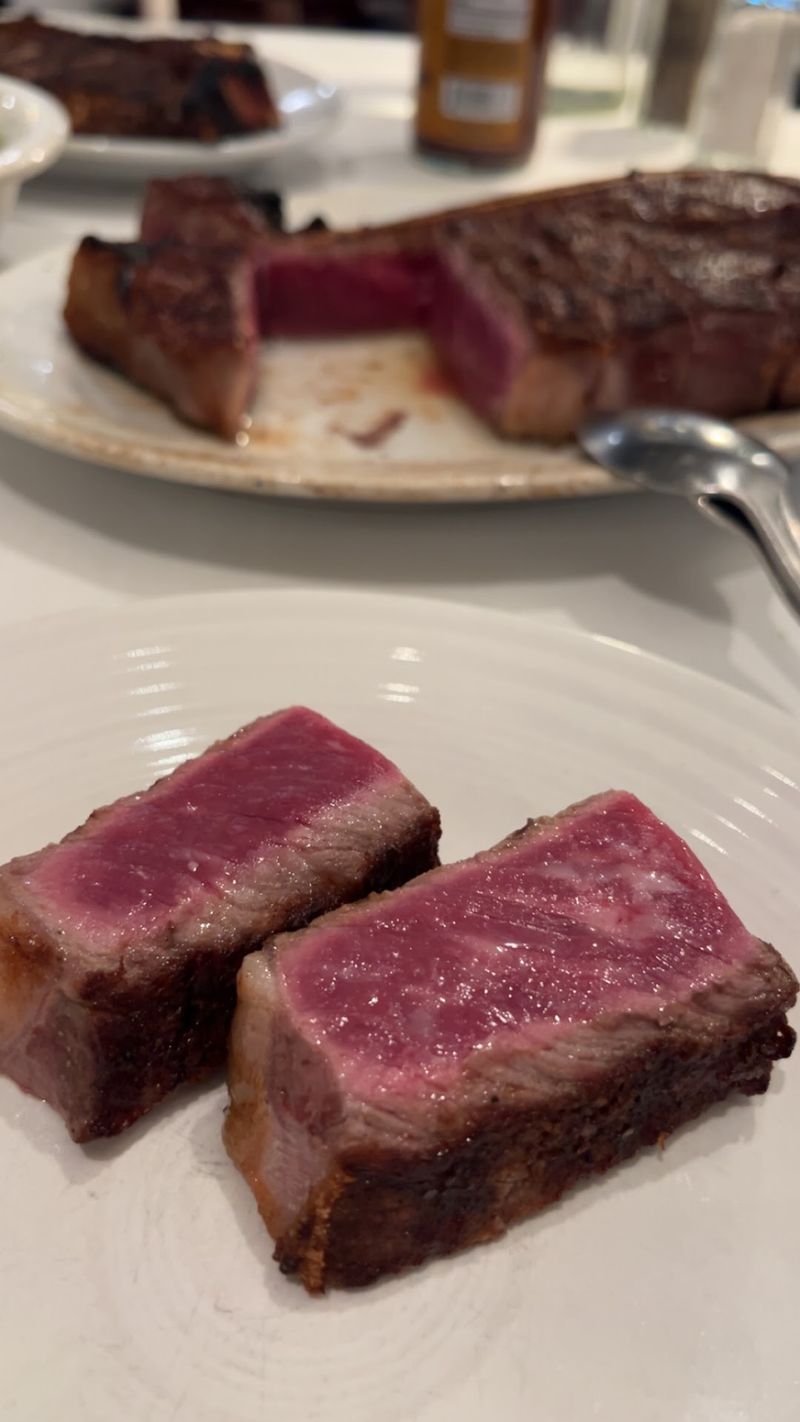
Great steak starts long before the kitchen. The beef here is USDA Prime, sourced from the Midwest and Nebraska, two places famous for raising quality cattle.
Quick lesson time. USDA Prime is the highest grade the government gives to beef, and only a small slice of all beef in the country earns it.
The grade mostly comes down to marbling, those thin white streaks of fat running through the meat.
Why should you care about fat streaks? Because marbling melts as the steak cooks, basting the meat from the inside out.
That means more flavor and a softer bite. Pair that with almost a month of dry-aging, and you get a steak with real depth.
Nebraska, by the way, is often nicknamed the Beef State. Cattle there and across the Midwest are known for being well fed and well raised, which helps explain why so many top steakhouses look to that region.
It makes me smile that a cut raised on the open plains ends up sizzling in a cozy dining room in Chatham.
The Butcher Block Is Where Decisions Get Hard
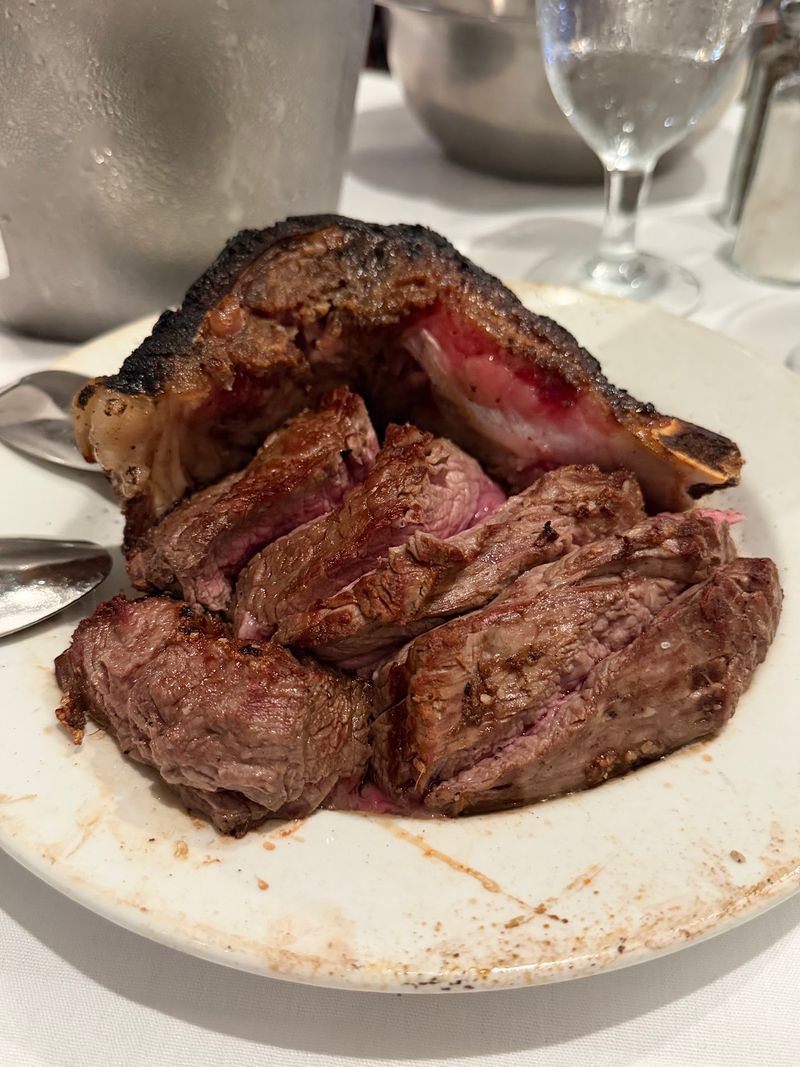
Choosing just one steak here is a real test of willpower. The Butcher Block section of the menu lines up some heavy hitters, and each one has its own personality.
Want something tender and lean? The Center Cut Filet is a smooth, buttery choice.
For a little drama, the Bone-In Chateaubriand brings that elegant filet texture with the extra flavor that cooking on the bone gives.
Fans of bold, juicy beef should look at the Cowboy Rib Eye. Rib eyes carry plenty of marbling, so they tend to be rich and full of flavor.
The Bone-In NY Strip sits somewhere in the middle, with a firmer chew and a strong beefy taste that many steak lovers swear by.
Then there is the Tomahawk for two. It is basically a rib eye with a long bone left attached, and it looks like something out of a cartoon.
Funny enough, I think half the fun is watching the table react when it arrives. My advice?
Ask your server which cut matches how you like your steak cooked.
Porterhouse Made for a Crowd
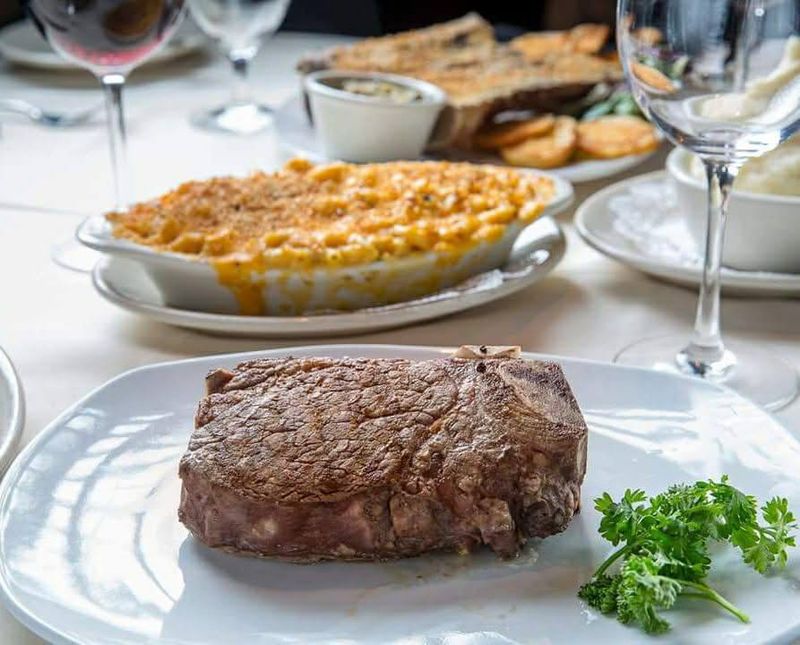
Nothing says classic steakhouse quite like a porterhouse. Here it comes sized for two, three, or four people, which makes it perfect for family dinners and birthday nights.
A porterhouse is actually two steaks in one. On one side of the T-shaped bone sits the strip, firm and full of flavor.
On the other side sits a generous piece of tenderloin, soft and mild. Everyone at the table can pick their favorite part, so nobody has to fight over the menu.
This cut has deep roots in old New York steakhouse culture. Serving it sliced and shared is a tradition that fits right in with the Peter Luger style the kitchen learned from.
Sharing a big steak also just feels friendly. Plates get passed, people trade bites, and conversation flows a little easier.
A tip worth remembering is to agree on how you want it cooked before ordering. Since it is one big piece of meat, the whole table shares the same doneness.
Medium rare is a popular middle ground for dry-aged beef, but go with what your group enjoys.
Raw Bar Treats and Ocean Favorites
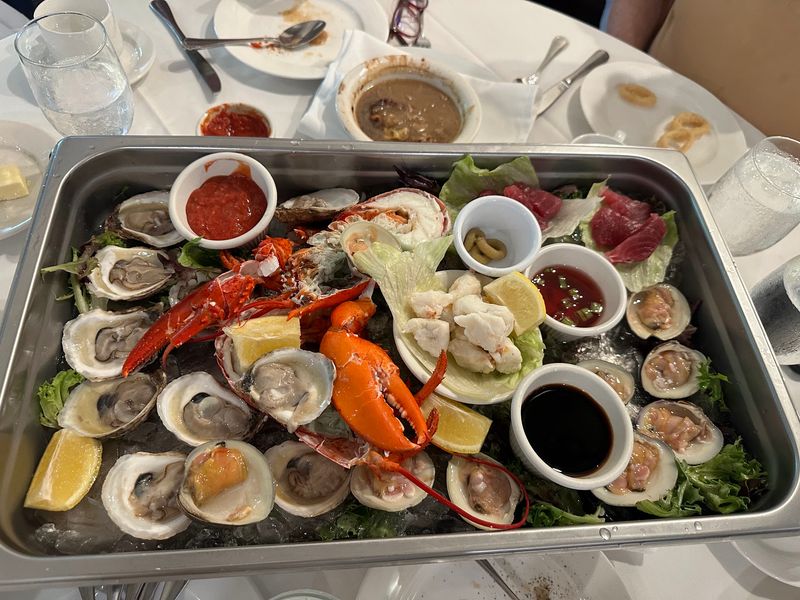
Steak gets the headlines, yet the seafood side of the menu deserves its own spotlight. A towering Seafood Tower piled with chilled treats is the kind of starter that makes a whole table go quiet.
Prefer to pick and choose? Fresh Oysters on the Half Shell and Jumbo Shrimp Cocktail are classic, cool, and clean tasting.
The Maryland Jumbo Lump Crab Cake brings sweet crab with very little filler, while Clams Oreganato offer a warm, herby bite.
Bone Marrow is another fun one to try. It is rich and spreadable, almost like savory butter, and it pairs nicely with a slice of bread.
For a main course without beef, there are plenty of choices. Maine Lobster, Branzino Mediterranean Sea Bass, Seared Ahi Tuna, Grilled Salmon, and Jumbo Shrimp Scampi all show up on the menu.
That variety is great news for groups where not everyone loves red meat. I think a smart move is mixing one seafood starter with a steak, giving you the best of land and sea in one meal.
Salad and a Side Come Along for the Ride
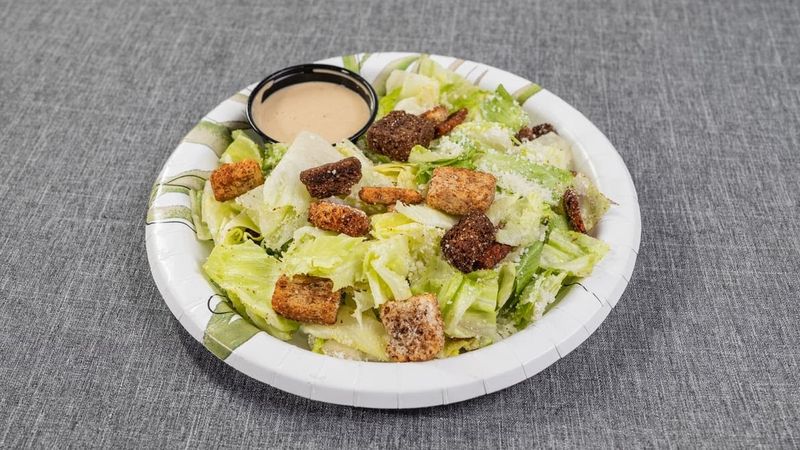
Here is a detail that surprises a lot of first-timers. Every main course comes with a family-style garden salad and one side for the table.
That might sound small, but it changes the whole feel of dinner. Instead of ordering a bunch of extras one by one, the meal starts with a shared bowl of greens in the middle of the table.
People reach across, scoop some onto their plates, and settle into the evening together.
Family-style eating has a long history in American steakhouses. It keeps things relaxed and turns a nice dinner into something that feels a bit like Sunday supper at a relative’s house.
Honestly, I think more restaurants should do it this way.
A practical tip is to talk with your group about which side to pick before your server arrives. Since one side comes per table, it helps to choose something everyone will enjoy.
If your crew cannot agree, adding another side is always an option. Just keep in mind that portions are built for sharing, so you probably will not need a mountain of extras.
A Cozy Spot on a Charming Main Street
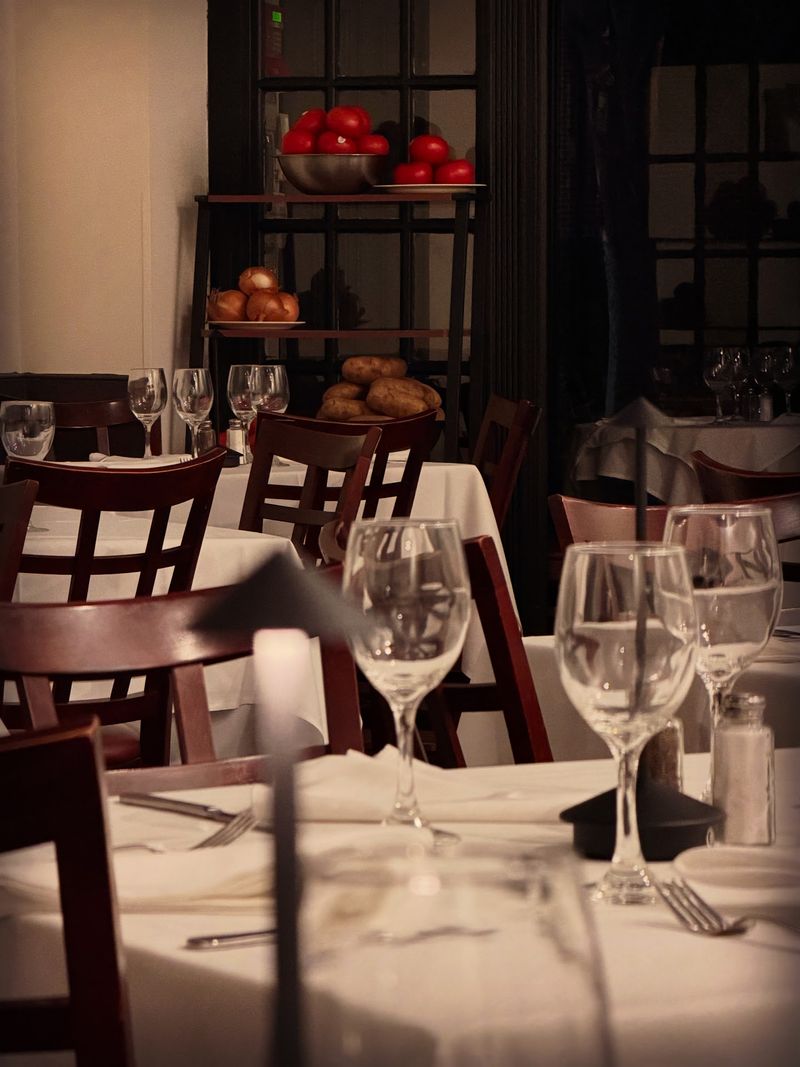
Small downtowns have a special kind of evening glow. Main Street in Chatham is lined with shops and restaurants, and the steakhouse fits right into that friendly, walkable stretch.
Chatham is a borough in Morris County, about an hour or less from New York City by train. It has a classic suburban feel with tree-lined streets and a downtown that invites a slow stroll.
Getting a serious, city-style steak dinner right here feels like a nice local perk.
Inside, the focus stays on the food and the people at your table. The approach is simple and honest, without a lot of fuss getting in the way.
That makes it easy to settle in for a long, unhurried meal.
A little tip for a fuller evening is to arrive early and take a walk around downtown before dinner. Window shopping works up an appetite.
After the meal, a short stroll helps all that steak settle. I really like how the setting turns dinner into more of an outing rather than just a stop for food.
Timing Your Visit Just Right
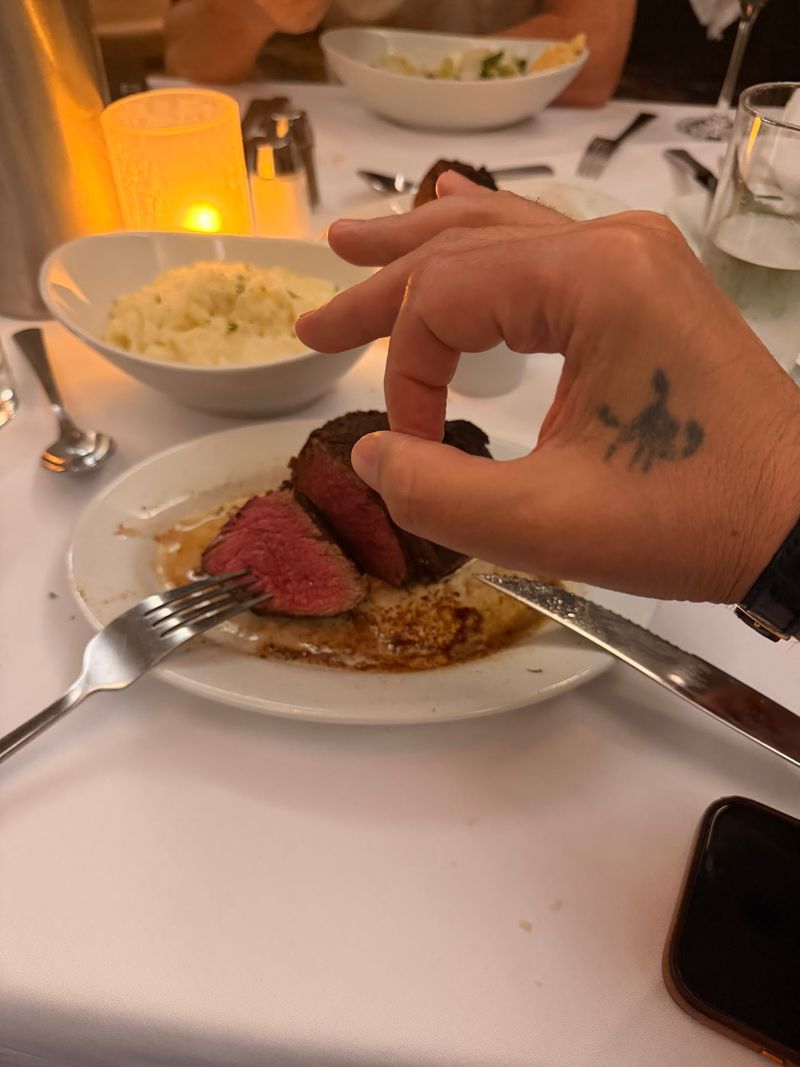
Good planning makes a great steak dinner even better. Chatham Steakhouse opens Tuesday through Saturday from 5 PM to 10 PM, and on Sunday from 3 PM to 9 PM.
Mondays are closed, so keep that in mind before making the drive. Sunday’s earlier start is perfect for an afternoon family meal, especially if you have little ones who get sleepy early.
Weekend nights tend to be the busiest time at most local restaurants, so reserving ahead is a smart idea.
Hungry groups should think about the porterhouse for three or four. It saves you from ordering several separate steaks and keeps the meal feeling shared.
Smaller parties might enjoy splitting a seafood starter and two different cuts from the Butcher Block, then trading bites.
Leftovers are almost guaranteed with portions this hearty. A steak sandwich the next day is never a bad idea.
I would happily plan a whole evening in New Jersey around this table. You can find the restaurant, Chatham Steakhouse, at 219 Main St, Chatham, NJ 07928.
