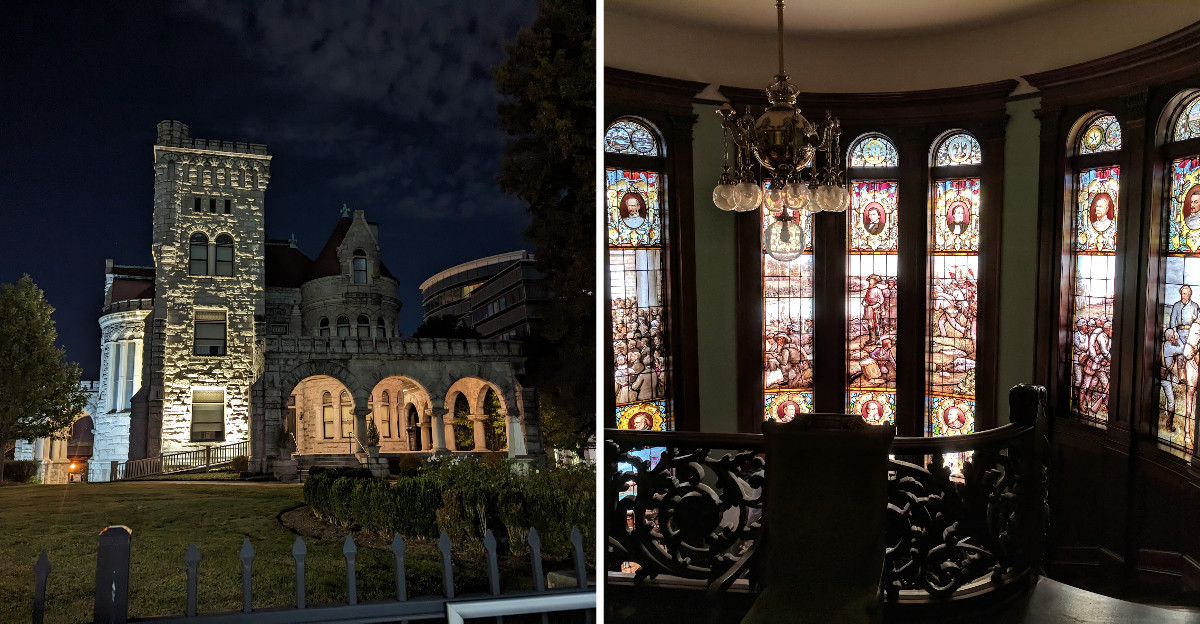
Granite towers that look like they belong in Germany sit between glass office buildings in Georgia. A furniture millionaire built the home for himself and his wife more than a century ago.
The name he gave it means the Dream, and it fits. Inside, a carved mahogany staircase curls upward beneath a wall of stained glass so colorful it turns the hallway into a kaleidoscope on sunny afternoons.
A quick look was the plan, but the visit stretched much longer, reading the glass panels and running a hand along cool stone walls. The mansion holds its original woodwork and its stories, and the tower still watches over the street like a castle that refuses to blend in.
Old houses, odd history, and a break from busy sidewalks all meet in this quiet corner of the state. A stop here rewards curiosity and a willingness to look up.
The Granite Castle That Refused to Leave Peachtree
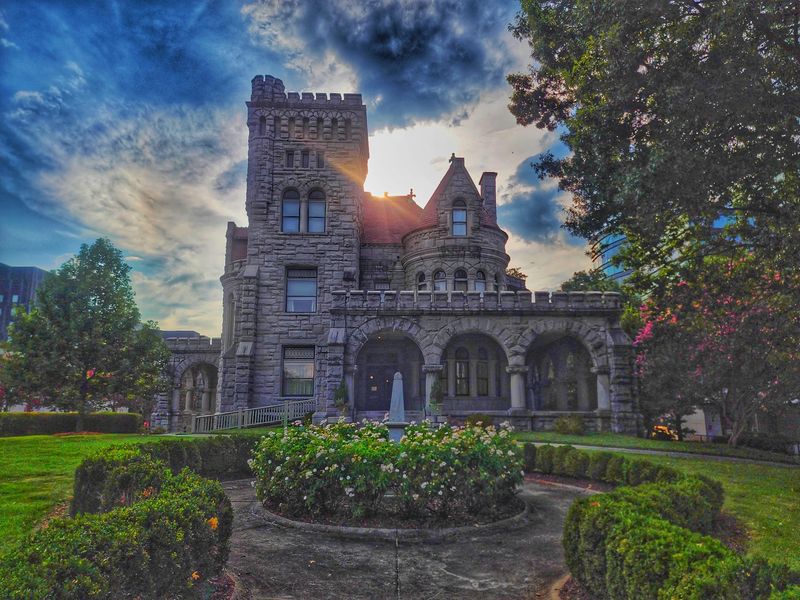
Peachtree Street is lined with towers of glass and steel, so a rough gray castle sitting on a green lawn feels wonderfully out of place. Rhodes Hall was built between 1902 and 1904 from Stone Mountain granite, the same speckled rock you see all over Georgia.
Amos Giles Rhodes made his fortune with Rhodes Furniture, and by the early 1900s he was one of the wealthiest men in Atlanta. When he traveled through Europe, the castles along the Rhine River stuck with him.
He hired architect Willis F. Denny II to bring that idea home, and the result is Romanesque Revival architecture with heavy arches, thick stone, and a turret that looks built for a lookout.
What surprised me most was the scale. From photos I expected something enormous, but it reads more like a sturdy, compact fortress, which somehow makes it friendlier.
Walk the perimeter before going inside. The stonework changes texture depending on where the sun hits, and the carved details around the doors and windows reward a slow lap.
Locals have called it the castle on Peachtree for generations, and once you see it wedged between office blocks, the nickname makes complete sense. It is a survivor, and that alone makes it worth the stop.
Carved Mahogany Steps That Steal the Show
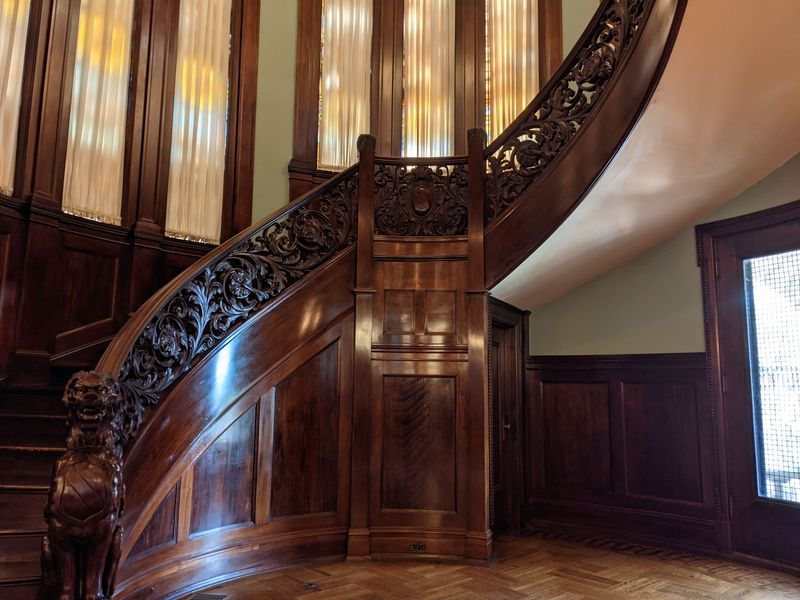
My first reaction inside was to look up, and that is exactly what the house wants you to do. The central staircase is carved mahogany, dark and glossy, curving upward in a way that makes the entry hall feel twice as tall as it really is.
Craftsmen shaped every baluster and panel by hand, and the wood still has that deep reddish glow that only comes with age and careful polishing.
Here is the part that surprised me. The staircase did not always stay put.
For a stretch of time it was removed and stored at the State Archives facility, along with the famous glass, before both were reinstalled in 1990.
Knowing that, climbing the steps feels a little like walking on something that was rescued.
Take your time on the landing. That is where the light from above pools across the wood, and the grain practically glows.
Photographers, be warned. Capturing the full sweep of the staircase in one shot is tricky, so try a low angle from the base of the steps.
It is the kind of feature that makes you understand why people once built houses to impress visitors before a single word was spoken.
Stained Glass Telling a Complicated Chapter of History
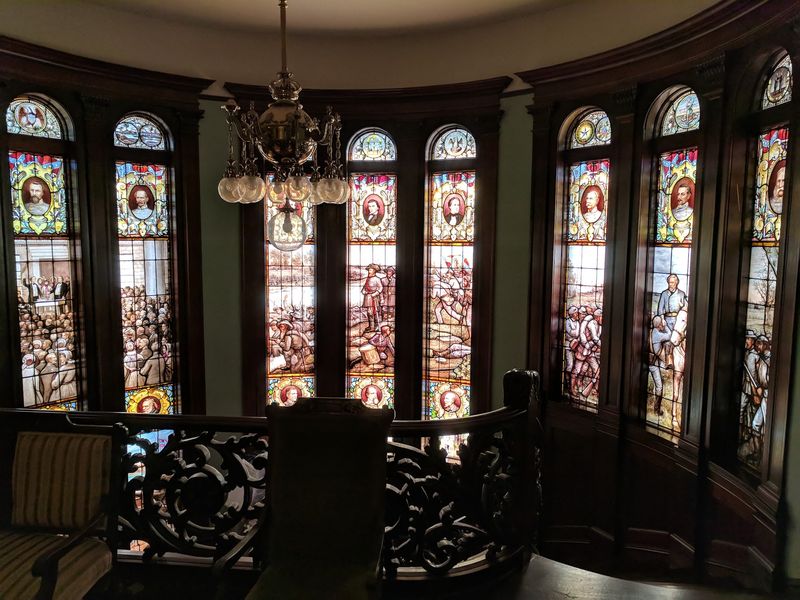
Sunlight through the stairwell windows turns the hall into something close to a chapel, and then you actually read the panels. The stained and painted glass was created by the Von Gerichten Art Glass Company, and the series is titled The Rise and Fall of the Confederacy.
Portraits of Confederate figures appear among the panels, which makes the display a piece of art and a piece of difficult American history at the same time.
I stood there longer than I expected, partly because the colors are genuinely beautiful and partly because the subject matter asks you to think.
The craftsmanship is remarkable. Painted glass adds shading and detail that plain colored glass cannot, so faces and fabrics have real depth.
Like the staircase, these windows spent years at the State Archives facility before returning to the house in 1990, which is why they survived at all.
Visit on a bright morning or early afternoon if you can. Light is the whole point of stained glass, and flat gray weather dulls the effect considerably.
Guides at the house can walk you through what each panel shows, and the context makes a big difference in how you see it.
Le Reve, The House With a Name That Means the Dream
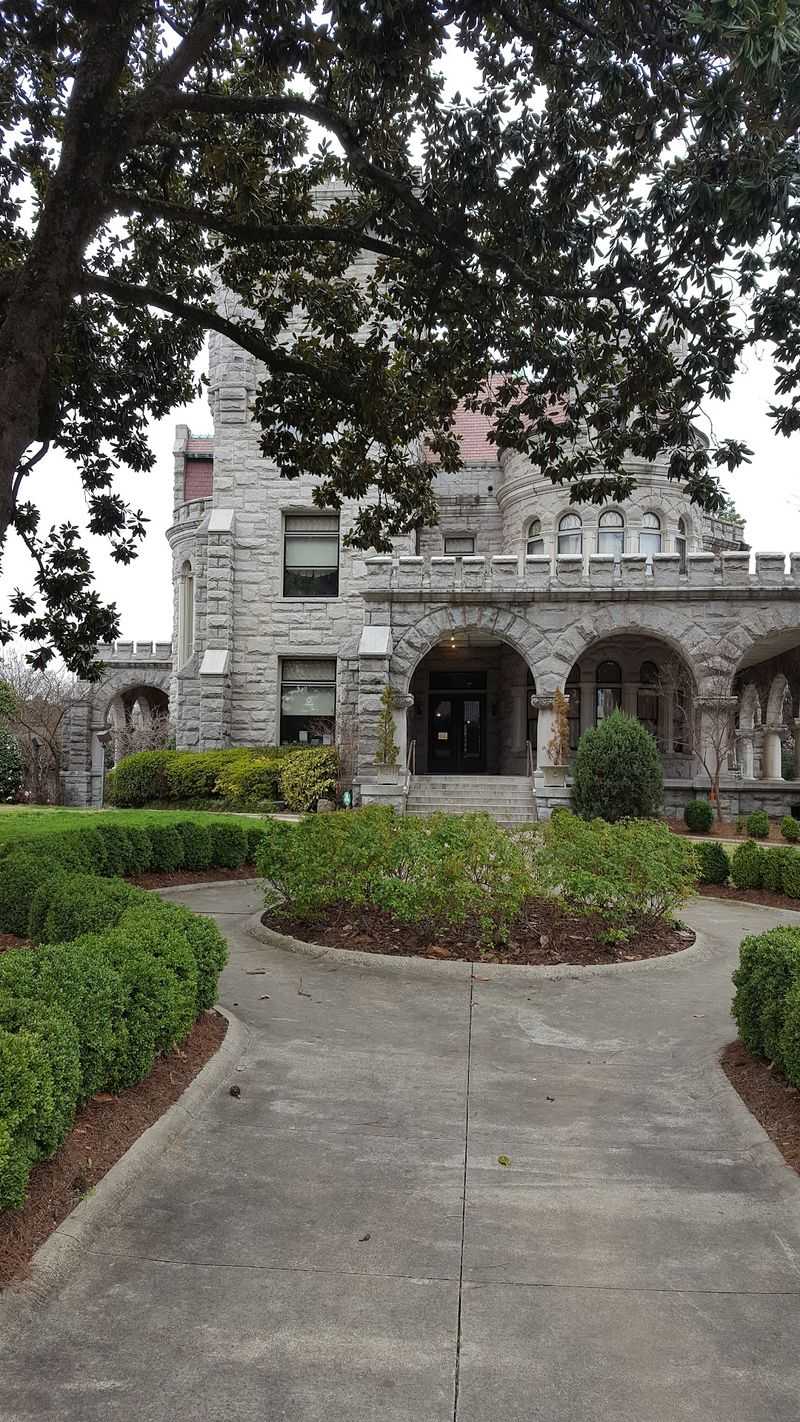
Naming your house feels like something from a novel, but Amos and Amanda Rhodes did exactly that. They called it Le Reve, French for the Dream, and the name says a lot about what this place meant to them.
It was not just a display of money. It was a family home, built for living in, with rooms shaped around daily routines and long evenings.
When the Rhodes family settled here, this stretch of Peachtree was a residential road lined with big houses and shade trees, nothing like the busy corridor it is today.
Picturing that older version of the street while standing on the lawn is a strange and lovely mental exercise.
Nearly all the grand homes that once lined this part of Peachtree are gone, replaced by offices and apartments over the decades.
Rhodes Hall hung on, which is why it carries so much weight as a reminder of what Atlanta used to look like.
I like that the name stuck around too. Calling a stone castle the Dream is a little sentimental, a little grand, and completely human, which makes the whole building feel less like a monument and more like somebody’s actual house.
Late Victorian Rooms Packed With Detail
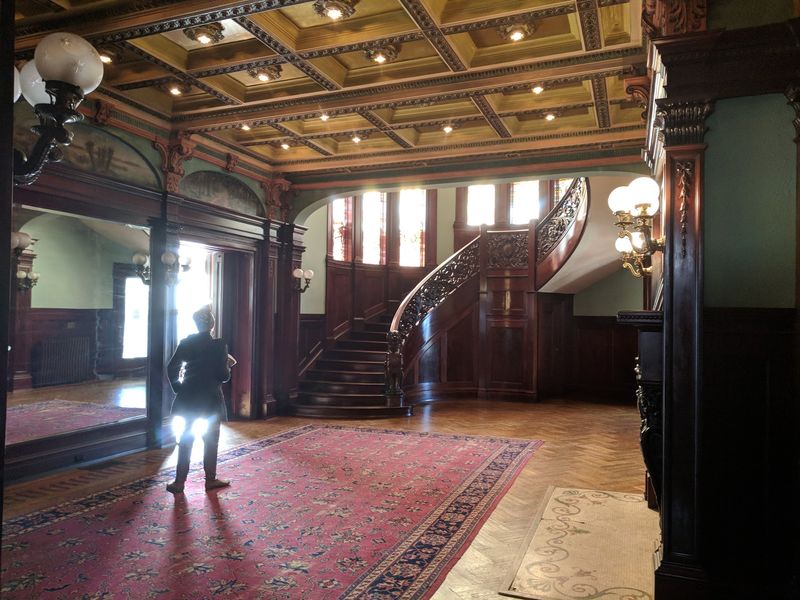
Ceilings are where I kept getting distracted. The interiors at Rhodes Hall are late Victorian in the best sense, meaning nearly every surface got attention from someone with a chisel, a brush, or a very steady hand.
Decorative plasterwork, carved mantels, patterned finishes, and tall windows all compete for your eye, and somehow it works instead of feeling cluttered.
Each room has its own personality. Some feel formal and stiff in an old portrait sort of way, while others are surprisingly cozy and easy to imagine using.
Wood trim runs everywhere, and different woods show up in different spaces, which was a quiet way of showing wealth back then.
Practical tip from experience. Look down as well as up, because the floors have their own patterns and inlays that most visitors walk right over.
If you enjoy architecture, bring a notebook or use your phone to jot down details you want to look up later.
Guided tours help enormously here. Someone pointing out a hidden detail in a doorway or explaining why a room was arranged a certain way turns a pretty house into a story you actually remember.
Headquarters for the Georgia Trust for Historic Preservation
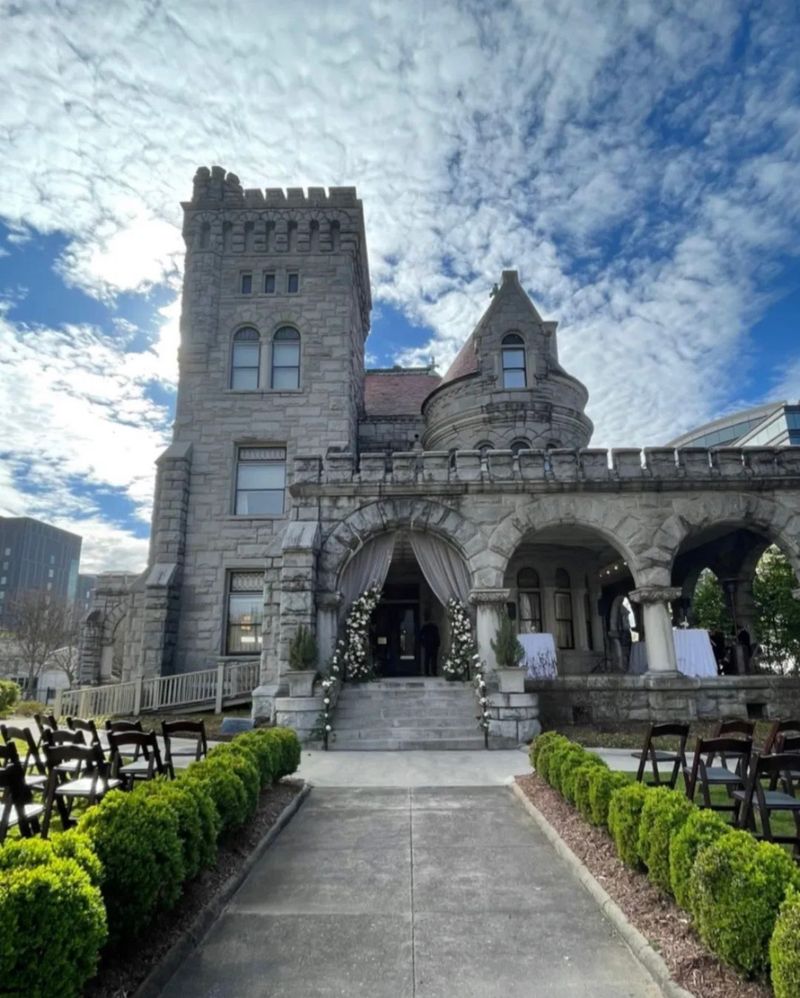
Plenty of grand old houses end up demolished or hollowed out, so it is satisfying that this one has a working job. Rhodes Hall serves as the headquarters for The Georgia Trust for Historic Preservation, an organization dedicated to saving buildings exactly like this one across the state.
There is a nice logic to that. The people who fight to protect Georgia’s historic architecture work inside one of its best examples.
Because the building is occupied and cared for daily, it stays in good shape rather than slowly falling apart behind a fence.
You can feel that when you walk through. Nothing feels abandoned or dusty.
The house also operates as a house museum, so visitors get access to the main spaces and the history behind them.
Check hours before you go, since an active headquarters means the schedule can shift around events and programs.
I always appreciate historic sites that function as more than photo backdrops. Knowing that decisions about protecting other Georgia landmarks are made under this roof gave my visit an extra layer, like the castle is still doing useful work more than a hundred years after the last stone went in.
Planning Your Visit to Midtown’s Stone Landmark
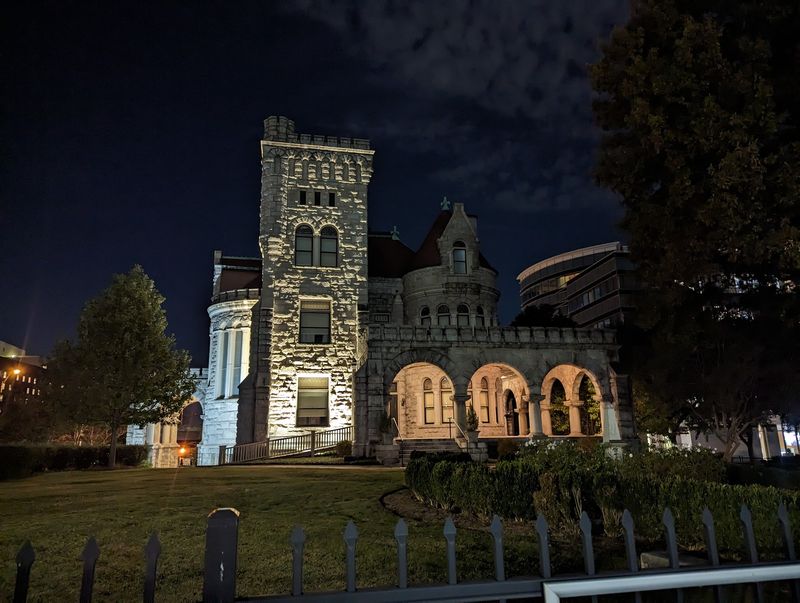
Getting here is easier than it looks on a map, which is good news since Peachtree traffic has a reputation. Rhodes Hall sits in Midtown Atlanta, surrounded by offices, restaurants, and the general buzz of a city neighborhood that never fully slows down.
Nearby attractions make it easy to build a half day around the visit, since the Midtown arts district and green space are both within reach.
Give yourself about an hour inside, more if you like reading every placard and asking questions.
Wear comfortable shoes because of the staircase, and go on a clear day so the glass performs the way it was designed to.
Photography rules can vary, so ask when you arrive rather than assuming.
Tour availability changes, so confirming hours ahead of time is the single best tip I can offer.
What stayed with me after leaving was the contrast. A furniture seller’s European fantasy, built from Georgia granite, still standing while the city rebuilt itself around it again and again.
That kind of stubborn survival is rare, and it makes an hour on Peachtree feel like time well spent.
Address: 1516 Peachtree Street NW, Atlanta, Georgia
