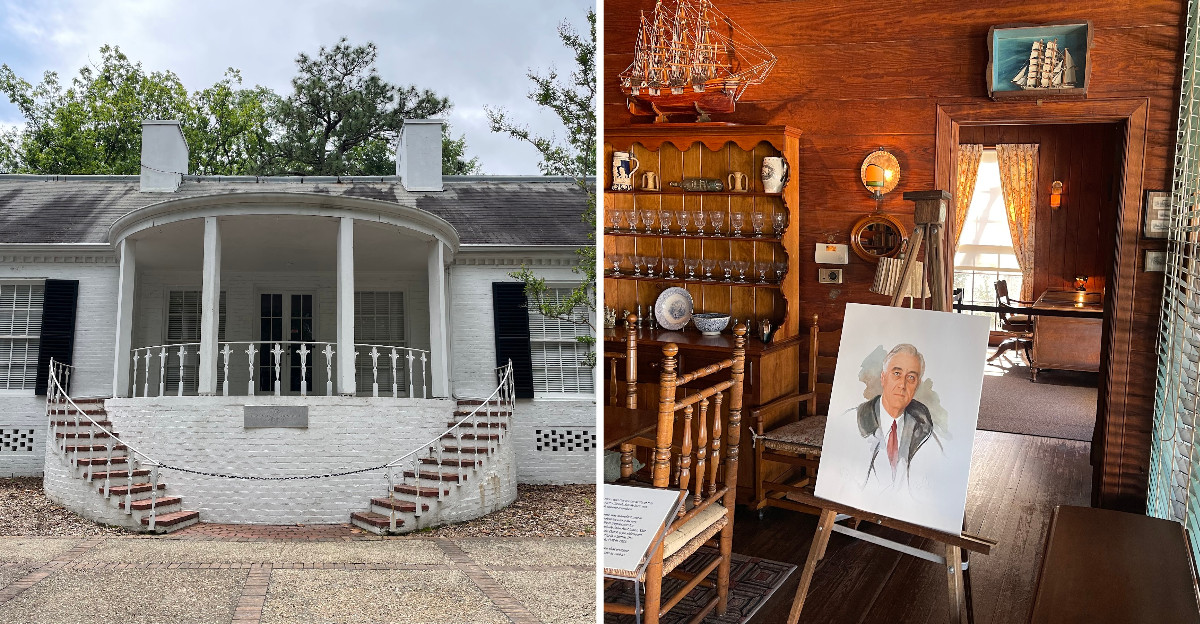
Georgia pine and six small rooms are all this cottage offers, yet it holds the chair where a president collapsed and a portrait an artist never finished. The drive through the pine hills of west Georgia brought windows down and coffee going cold in the cup holder.
What waited at the end was not what was expected. A hush settles over the place, the kind that makes you lower your voice without being asked.
Rangers tell the stories like family history rather than textbook facts, pointing out small details that make the man behind the office feel real. The house is modest, the rooms are simple, and the effect is lasting.
Walking back to the car later, the reason a president kept returning to this exact patch of woods became clear. Places like this hold history, and this one holds a life.
Warm Springs and the Water That Changed Everything
Long before the cottage existed, the water brought him here. Roosevelt arrived in Warm Springs in 1924, three years after polio took the use of his legs, and he came as a private man searching for relief rather than votes.
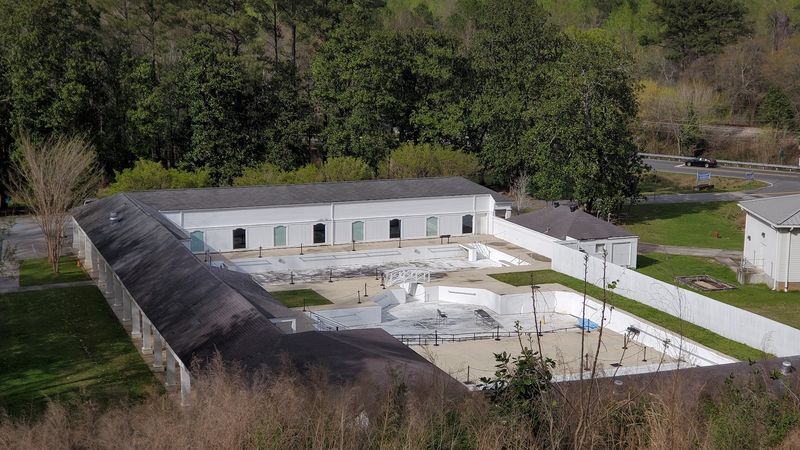
The springs bubble up at roughly 88 degrees, warm enough to relax stiff muscles and buoyant enough to hold a body upright. I stood near the historic pool area and tried to picture him floating there, free of braces and wheelchairs for a little while.
No cure came from those waters, but real improvement did, and so did something harder to measure. He found people who treated him like a neighbor instead of a Roosevelt, and he found hills that looked nothing like Hyde Park.
By 1927 he had bought the resort along with roughly 1,700 acres of surrounding farmland, a serious commitment for a man who could have vacationed anywhere.
What I appreciated learning is how ordinary the setting felt. Cotton fields, red clay, small houses, and long dirt roads shaped his understanding of rural poverty in a way that Washington briefings never could.
If you visit, start your thinking here, because the springs explain the entire site. Everything else that happened in Warm Springs grew out of a man looking for a place where his body hurt less.
Six Rooms of Georgia Pine, and Not One Ounce of Showing Off
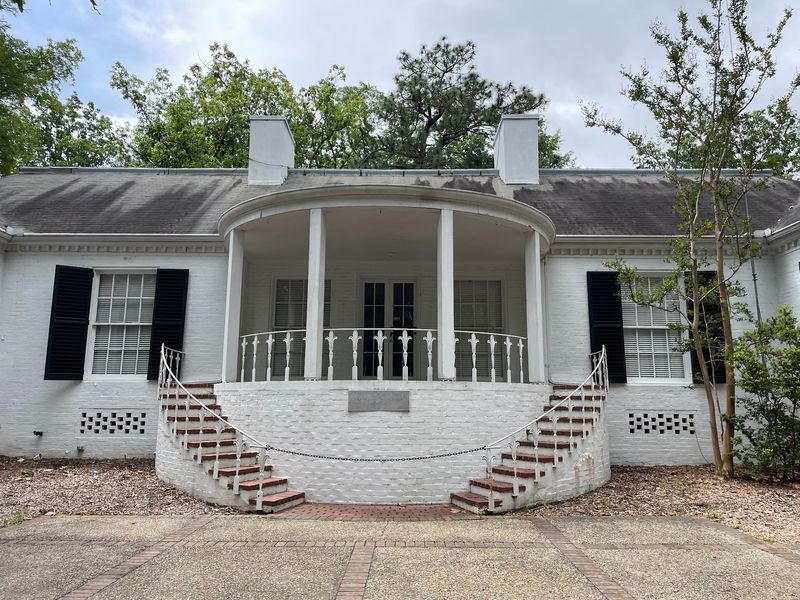
My first reaction to the house was honest surprise at how small it is. A six-room Colonial Revival cottage built from Georgia pine, finished in 1932 while Roosevelt was still governor of New York and just before he took office as president.
There is no marble, no sweeping staircase, no sense that anyone was trying to impress a visiting dignitary. Exposed wood walls and hand-hewn rafters give the rooms a cabin warmth that photographs never quite capture.
Three bedrooms sit along one side: one for Franklin, one for Eleanor, and a third for his personal secretary. Eleanor’s room doubled as guest space when grandchildren came to stay.
The rest is an entrance hall, a living room, and a kitchen that looks like it belonged to a comfortable farm family rather than a head of state.
Much of the furniture is original, still arranged the way it was in April 1945, which is what gives the place its time-capsule feeling.
I kept noticing small human things, like the worn arms of chairs and the books left on shelves. Those details do more storytelling than any plaque could.
For anyone who has toured grand presidential estates, the modesty here lands differently. The cottage was never meant to be seen.
It was meant to be lived in.
The Living Room Where a President Actually Worked
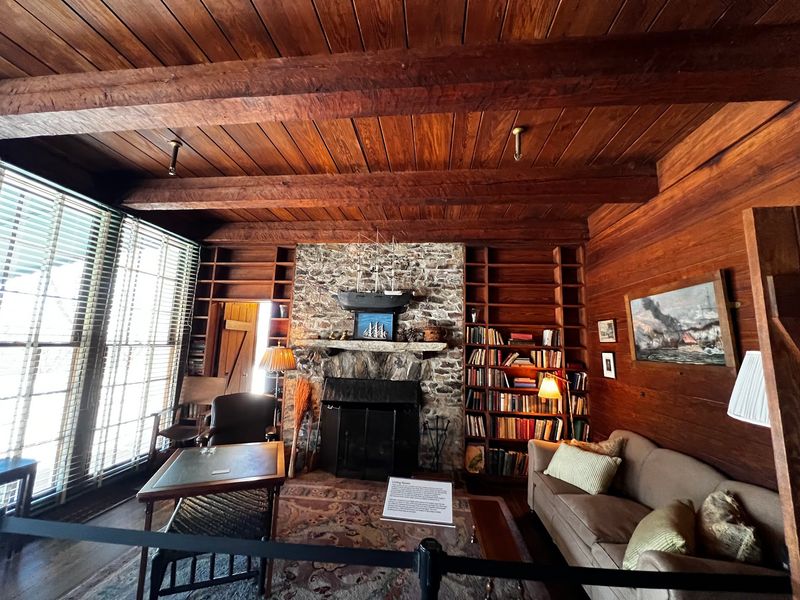
Sailing ships everywhere. That was the first thing I registered in the living room, from framed paintings of the sea to replica wooden vessels tucked between books on the shelves.
A stone fireplace anchors the space, and the bookcases are packed rather than staged. It reads like the room of a man with genuine hobbies, not a decorator’s idea of presidential taste.
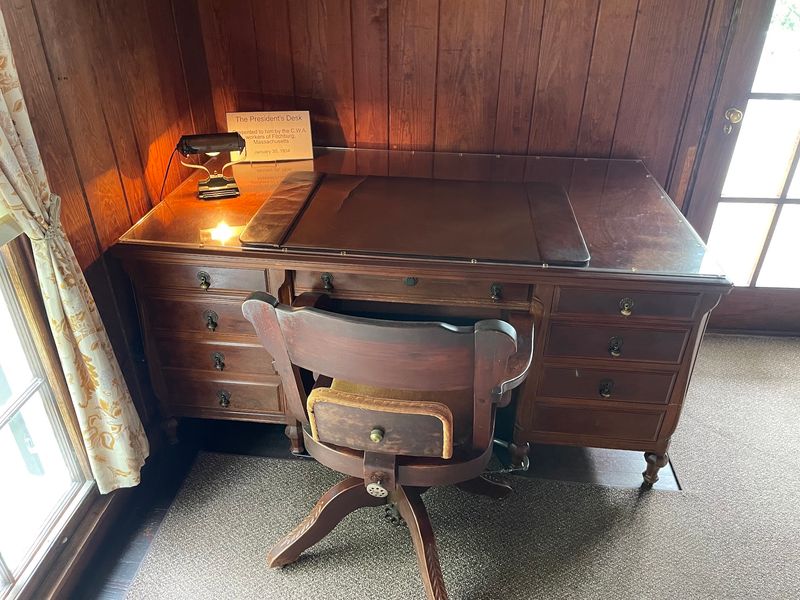
Here is the detail that stuck with me most: there is no formal desk. Roosevelt handled much of his presidential business from an armchair with a small table pulled close, an arrangement that let him rest his legs while he worked.
Documents, correspondence, and decisions that shaped the country moved through that unremarkable corner of a wooden cottage.
Standing a few feet away, I found myself thinking about how much of leadership happens in ordinary chairs rather than ceremonial offices.
The rangers point out these adaptations clearly, and they do it without turning his disability into either tragedy or spectacle. It comes across as practical problem-solving, which is exactly what it was.
Take your time in this room if you can. The ship models, the fireplace, and that quiet chair together say more about Roosevelt’s private personality than any speech recording ever will.
How Neighbors in Georgia Helped Shape the New Deal
Something clicked for me in the museum when I read about rural electrification. Roosevelt spent real time in Warm Springs talking with farmers, storekeepers, and families who lived without electric lights or running water.
He noticed his electric bill at the cottage was far higher than what he paid in New York, and that observation stayed with him. Rural Georgia was paying more for less, and he had the receipts.
Those conversations fed directly into the Rural Electrification Administration, a program built to bring affordable power to the countryside. He signed the REA bill into law at the Little White House, which makes this cottage a working piece of policy history rather than just a vacation home.
Museum exhibits lay out the connection plainly, with photographs and artifacts showing how quickly life changed once wires reached farmhouses.
I liked that the story is told through everyday objects instead of abstract statistics. A lamp, a radio, a pump, small things that reshaped whole communities.
Whatever your politics, the lesson here is worth carrying home. Ideas that changed millions of lives came from a president who kept asking questions of the people living closest to the problem.
Give the exhibit hall at least an hour. There is more depth than the building’s size suggests.
The Unfinished Portrait, Still Exactly as the Artist Left It
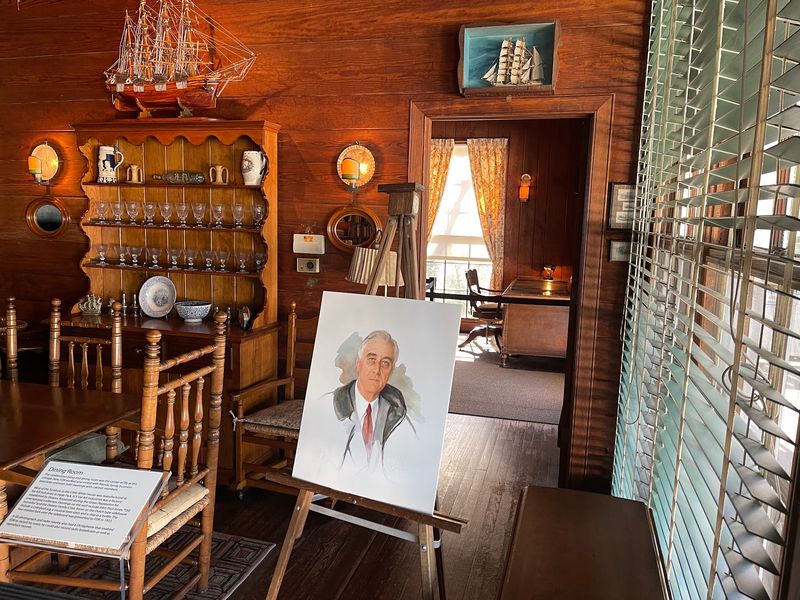
Nothing prepared me for how small and quiet that painting is. On April 12, 1945, Roosevelt sat for artist Elizabeth Shoumatoff inside this cottage while she worked on a watercolor portrait.
Around noon he said he had a terrific headache and collapsed. He had suffered a cerebral hemorrhage and passed away later that day, and the portrait was never completed.
The canvas hangs today in the condition she left it, with his face largely formed and the rest fading into bare paper. Looking at it, the unfinished edges feel less like a gap and more like a sentence cut off mid-word.
Shoumatoff later painted a second, nearly identical version from memory, and both are displayed at the site. Seeing them near each other creates an odd double image of the same last morning.
What makes the display so powerful is the restraint around it. There is no dramatic lighting or swelling music, just the painting and the facts.
Many visitors also stop at the chair connected to that day, which sits inside the house among its original furnishings.
I stood there longer than I planned. The portrait quietly mirrors his own work, ended before the war he guided the country through finally closed.
Inside the Museum, A Ford With Hand Controls and a Voice on the Radio
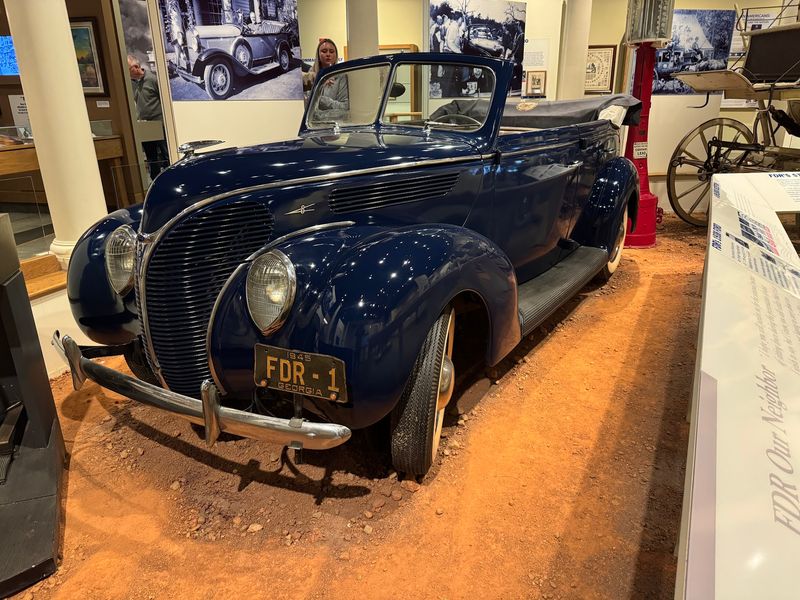
The 1938 Ford convertible stopped me in my tracks. Fitted with hand controls so Roosevelt could drive himself around the countryside, it is one of those objects that explains a person faster than a biography.
Nearby you will find a wheelchair and leg braces, displayed matter-of-factly. Seeing the actual hardware reframes everything you thought you knew about the man in the newsreels.
A vintage 1930s radio plays his Fireside Chats, and hearing that steady voice fill a museum gallery is stranger and better than reading transcripts. Families across the country once gathered around sets just like it.
Other exhibits walk through the Great Depression, the New Deal, and the war years, mixing photographs with artifacts and clear storytelling. A stagecoach display and a theater round out the space.
The short film, narrated by Walter Cronkite, runs about twelve minutes and is genuinely worth sitting down for. Footage shows Roosevelt swimming in the pools and joking with local residents.
Rangers and staff here are the site’s secret ingredient. Ask one question and you will get three stories you would never have found on a sign.
Plan on two to three hours total. Visitors regularly say they arrived expecting a quick stop and stayed all afternoon.
Walking the Grounds, the Guest House, and the Walk of Stones
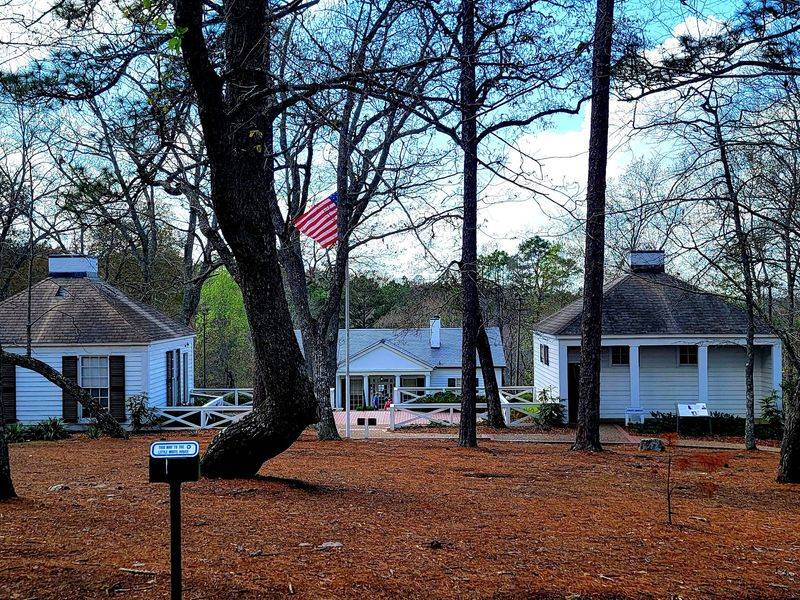
Save some energy for outside. Beyond the cottage and museum, gently graded paths wind through the pines, and the walking is easy with no stairs to climb.
The Walk of Flags and Stones is my favorite part of the grounds. Each state contributed a stone in Roosevelt’s memory, and reading them one by one turns into a slow, quietly moving lap.
You can also step into the guest house and servants’ quarters, which fill out the picture of daily life at the retreat. Picnic tables sit on site if you want to stretch a visit into a proper afternoon.
Conditions do change, so check ahead. The main house and the pools have gone through renovation and electrical work at times, and during closures staff have offered narrated photo presentations that some visitors found even more informative than a self-guided walk.
Mobility help is available too, including a scooter for guests who need it.
When you are done, historic downtown Warm Springs sits just minutes away with small shops and places to grab lunch.
Hours run 9 AM to 4:45 PM daily, and I would arrive in the morning for the calmest light and the quietest paths.
Address: 401 Little White House Road, Warm Springs, Georgia
