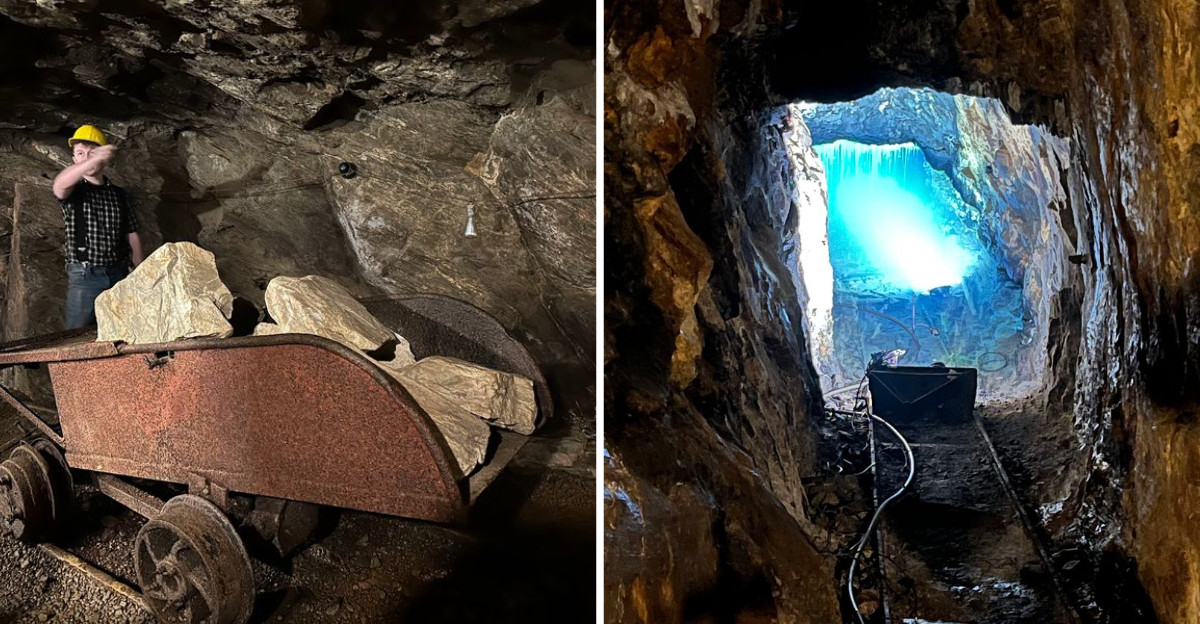
Cool air and dripping water surrounded me the moment the tunnel door closed behind our group on a hillside in Georgia, and I did not expect to be swallowed whole by a mountain that held the remains of the state’s first gold rush.
Men blasted through solid rock in search of gold buried deep in quartz, decades before California got famous for it, and the original cart rails still run underfoot while the drill still coughs to life when a guide flips it on.
What surprised me most was how real it all felt, the damp walls holding the shape of the work that was done there, the darkness thick enough to make you lean in closer to the guide’s flashlight.
I walked through tunnels that had been carved by hand and by dynamite, and by the time I came back up into the sunlight with a pan of sand and a stubborn hope of finding a flake, I was completely hooked.
History you can touch is worth the drive into the mountains, and this Georgia spot delivers that feeling from the moment the door closes behind you.
The Tunnel Door That Changes Everything
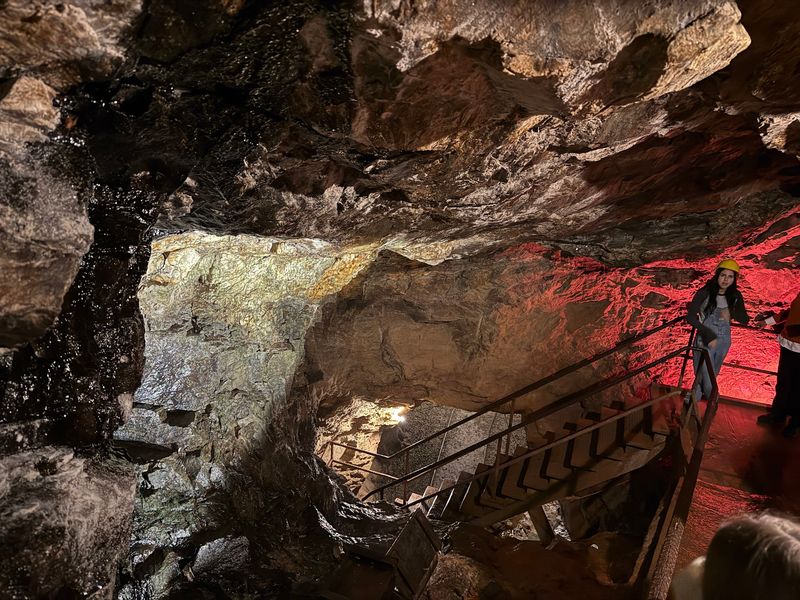
The shift happens fast. One second you are outside in Georgia humidity, and the next you are heading down a set of stairs into rock that holds a steady 60 degrees all year.
I felt the temperature drop before I saw much of anything. Water beads on the walls, and the ground stays damp no matter the season, which is exactly why closed-toed shoes are required rather than just suggested.
The tunnels are narrower in places and surprisingly roomy in others. I went in a little worried about feeling boxed in, and honestly it never got claustrophobic, just dim and quiet in a way that makes your voice sound different.
A light jacket is smart even in July. Several folks in my group had bare arms and spent the whole 40 minutes with their hands tucked under their elbows.
What sticks with me is the sound. Dripping water, footsteps on stone, and a guide’s voice bouncing off walls that men carved by hand and blast more than a century ago.
That first stretch sets the mood for everything that follows.
Guides Who Actually Love This Stuff
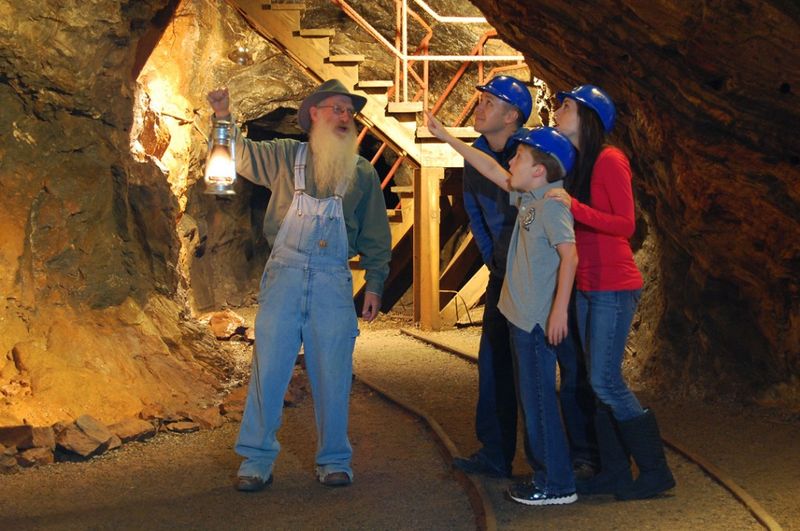
Some tours feel like a script being read aloud. Not this one.
Our guide asked questions, took questions, and clearly enjoyed the moments when a kid asked something completely out of left field. Visitors mention guides by name constantly in reviews, which tells you something about how personal the experience feels.
The storytelling leans into what mining life was really like at the turn of the century. Long hours, poor light, water everywhere, and dangerous work that included young boys hauling and blasting in tight spaces.
Hearing that underground, in the exact tunnels where it happened, lands differently than reading it in a book. My group got quiet at a few points, which almost never happens with a mixed crowd of adults and restless kids.
There is humor mixed in, too. Guides know when a group needs a laugh after a heavy detail, and they read the room well.
Ask questions. Seriously, ask a lot of them.
The guides seem happiest when someone is curious enough to slow the tour down for a minute.
Original Rails, Wires, and a Drill That Still Roars
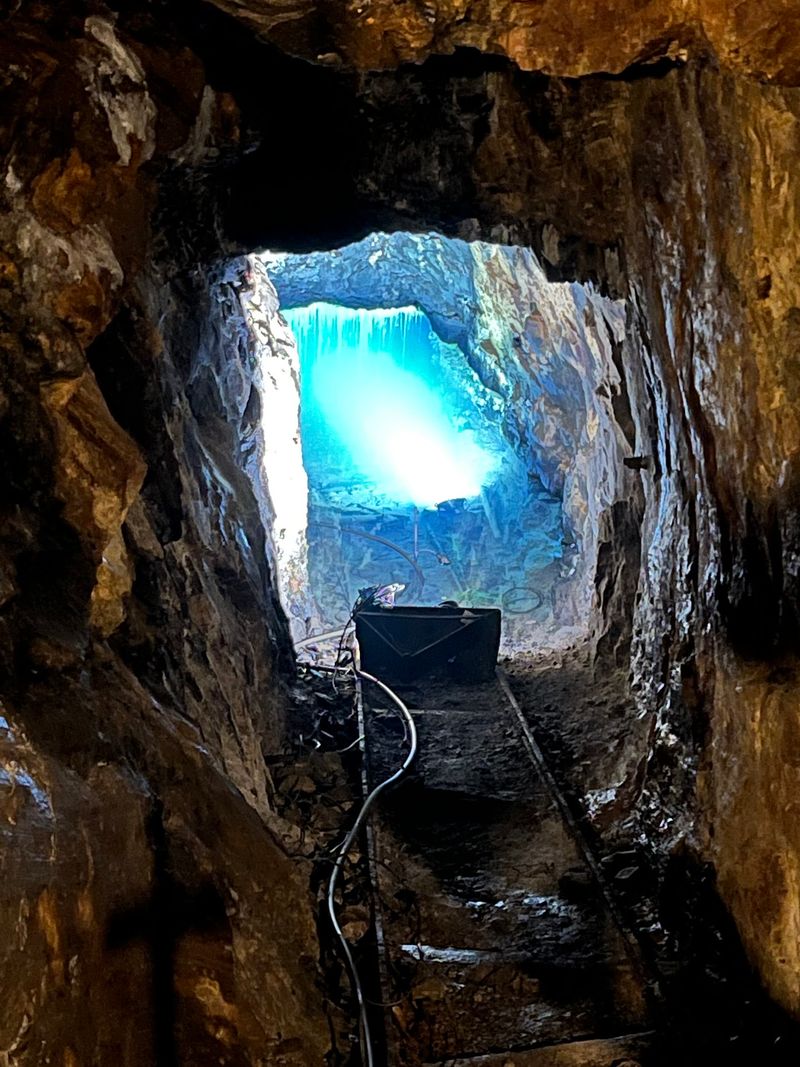
Rusted rails still run along the tunnel floor. You walk beside them, step over them, and it hits you that ore carts once rattled along that exact line loaded with quartz.
Old electrical lines are strung overhead as well, which is a strange thing to see underground in a mine built in 1898. Consolidated was ambitious for its time and used technology that was cutting edge back then.
The pneumatic drill is the showstopper. Guides fire it up during the tour, and the noise fills the tunnel so completely that you understand instantly why hearing loss was part of the job.
I braced for it and still jumped. Kids around me either loved it or clapped their hands over their ears, sometimes both.
Small details caught my attention too, like drill marks in the rock and the way tunnels branch off into darkness. Some sections cannot be reached anymore because the lower levels sit under water.
Knowing the mine continues far below your feet, flooded and untouched, makes the part you can walk through feel like the tip of something much bigger.
The Glory Hole and Its Monster Quartz Vein
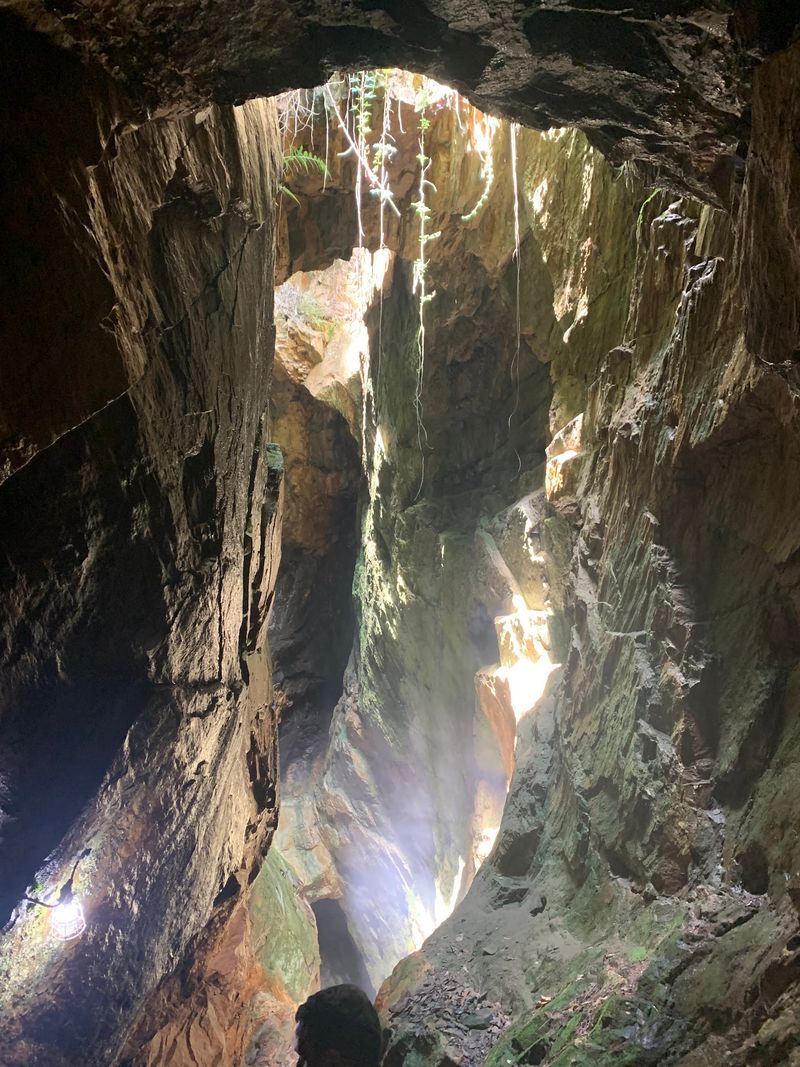
Most gold-bearing quartz veins in this region measure two or three inches thick. The one at Consolidated known as the Glory Hole was reported at 22 feet.
That number sounds made up until you are standing under it. The scale explains why investors poured money into this hillside and believed they had found something extraordinary.
Guides point out how gold hides in quartz and how pyrite, the mineral nicknamed fool’s gold, tricked plenty of hopeful prospectors. Learning to spot the difference is one of the more useful things you pick up down there.
I kept running my eyes along the walls afterward, convinced I could spot a glint. Mostly I found wet rock, which is probably how most miners spent their days too.
The geology talk never gets dry, partly because it is tied to real consequences. Bigger veins meant deeper digging, more equipment, more workers, and eventually more expense than the gold could cover.
Seeing the Glory Hole helps the whole business story click into place. Ambition, geology, and money all met right here in the rock.
How a Deer Hunter Started a Gold Rush
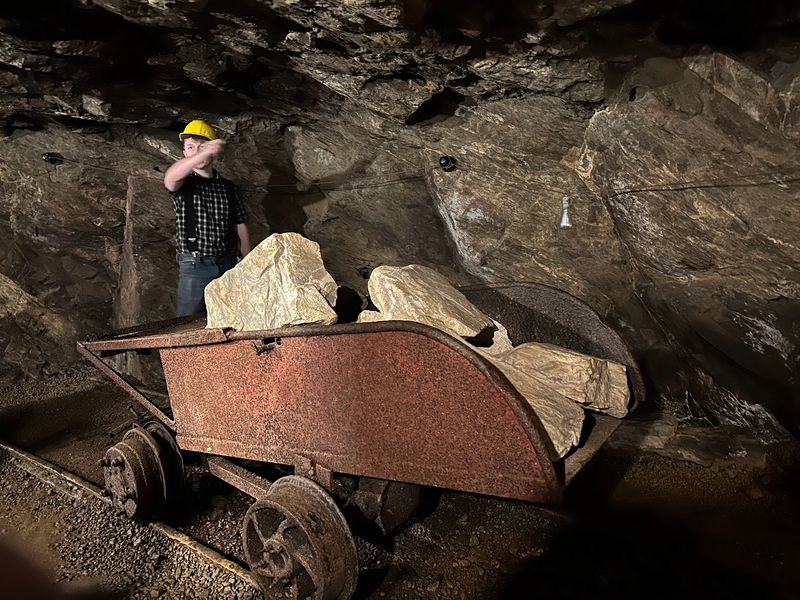
Benjamin Parks was hunting deer in 1828 when he tripped over a rock that glittered. That stumble, roughly two and a half miles south of present-day Dahlonega, set off America’s first major gold rush.
Within about a year, around 15,000 prospectors flooded into these mountains. The Cherokee called it the Great Intrusion, and the name fits.
The rush pushed hard against Cherokee land and fed into the Indian Removal Act of 1830 and the forced removal of 1838 remembered as the Trail of Tears. Georgia handed out seized land, including designated gold lots, through lotteries in 1832.
Guides do not skip that part, and I appreciated that they told it plainly. It is uncomfortable history, but it is the real foundation under every glittering story in town.
Dahlonega itself was formally established in 1833, and its name comes from the Cherokee word Dalonige, meaning yellow or gold. Locals pronounce it Duh-LON-uh-guh.
Understanding all of this before you go makes the tour richer. You stop seeing a fun attraction and start seeing a place where a lot of American history collided.
Panning for Gold and Actually Finding Some
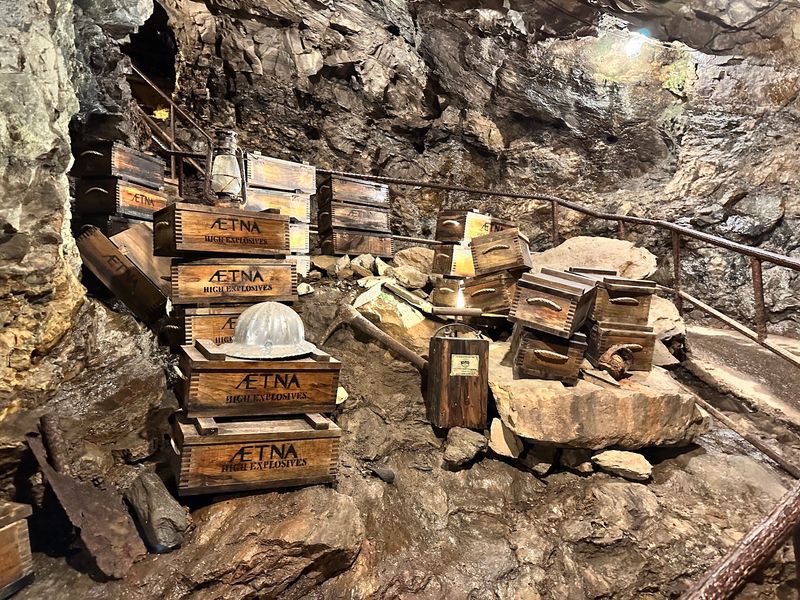
The pan comes with your tour, and I will admit I assumed it was a token gesture. Then I found a flake.
Staff show you the technique first, which matters more than you would think. Swirl too hard and everything you want washes over the edge, swirl too gently and you are just stirring sand.
Water splashes, wrists get tired, and then someone in your group shouts because a tiny gold speck catches the light. That moment is genuinely fun no matter your age.
Kids get completely absorbed. Adults pretend to be casual about it for roughly four minutes before leaning in just as hard.
What makes it click is timing. You have just walked through tunnels where men risked everything for this metal, and now you are chasing specks of it yourself with a pan and some patience.
Bring a hand towel or expect damp sleeves. Nobody warned me and I spent the drive back with wet cuffs.
Small vials are available so your flakes make it home instead of disappearing into a car seat forever.
Gem Grubbing at the Flume Line
Buy a bucket of rough dirt, dump it into a screen, and let the running water in the flume box wash the mud away. Whatever stays behind is yours.
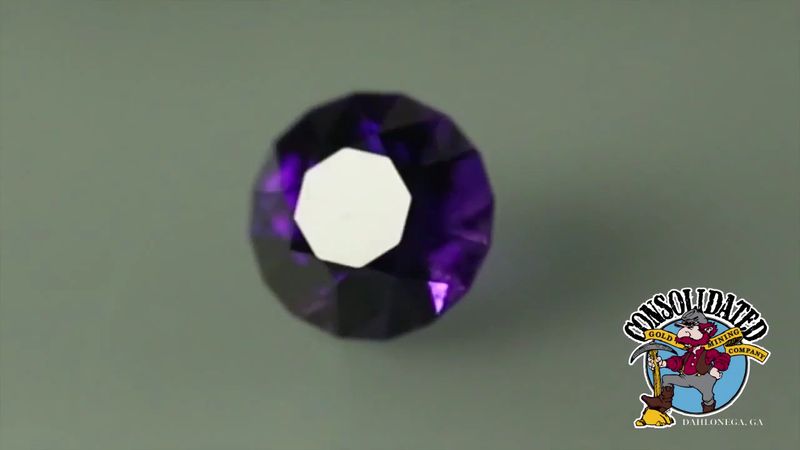
Rubies, sapphires, emeralds, topaz, amethyst, garnet, jasper, pyrite, calcite, and geodes all turn up here. Staff hover nearby to help identify what you pulled out, which is half the fun since most rough stones look like plain rocks until someone points them out.
My favorite part was watching a kid down the line lose his mind over a chunk of quartz. Enthusiasm at a flume box is contagious.
The on-site gem studio can cut and polish your finds into rings, pendants, or earrings. Plenty of visitors turn a muddy stone into a keepsake they wear for years.
It takes time for custom pieces, so ask about timelines if you are hoping for a gift by a certain date. They ship finished work if you cannot wait around.
Gem mining runs separate from the tour, and I would build extra time into your visit for it.
Planning Your Visit Without the Stress
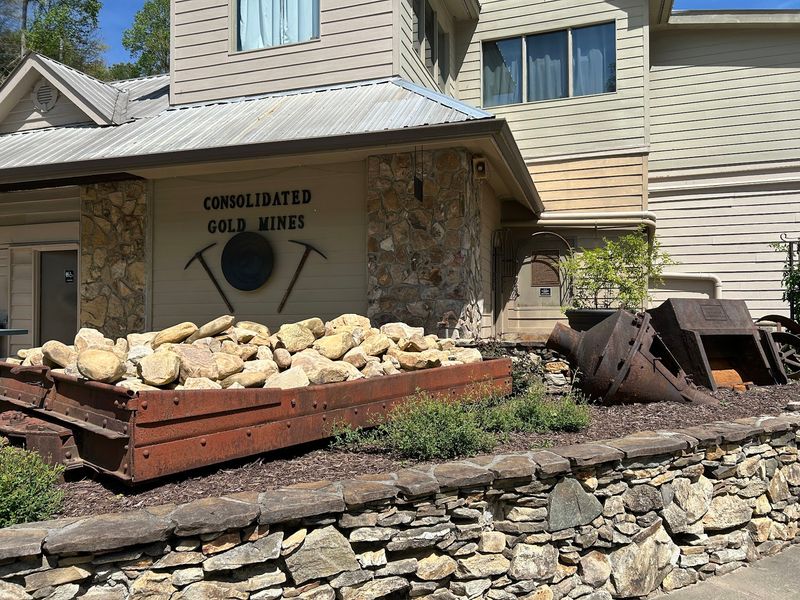
Getting here is easy. The mine sits about a mile from historic downtown Dahlonega, with a dedicated lot right by the entrance, so no circling for parking.
Doors open at 10 AM seven days a week, rain or shine, and tours leave roughly every 20 to 35 minutes. Reservations are not needed for groups under 25 people.
Go early if you can. Mornings run calmer, and a smaller group means more time to ask questions without feeling rushed.
The underground route includes three flights of stairs and two ramps, so strollers, wheelchairs, and walkers cannot go down. Pets stay out too, though service animals under ADA rules are welcome.
Closed-toed shoes are a hard requirement because the ground stays wet. Add a light jacket and you are set.
Give yourself a couple of hours if you want the tour plus panning plus gem grubbing. Rushing it would be a shame.
The gift shop is loaded with crystals and souvenirs, and downtown Dahlonega is a short hop away for lunch afterward.
Address: 185 Consolidated Gold Mine Rd, Dahlonega, GA 30533
