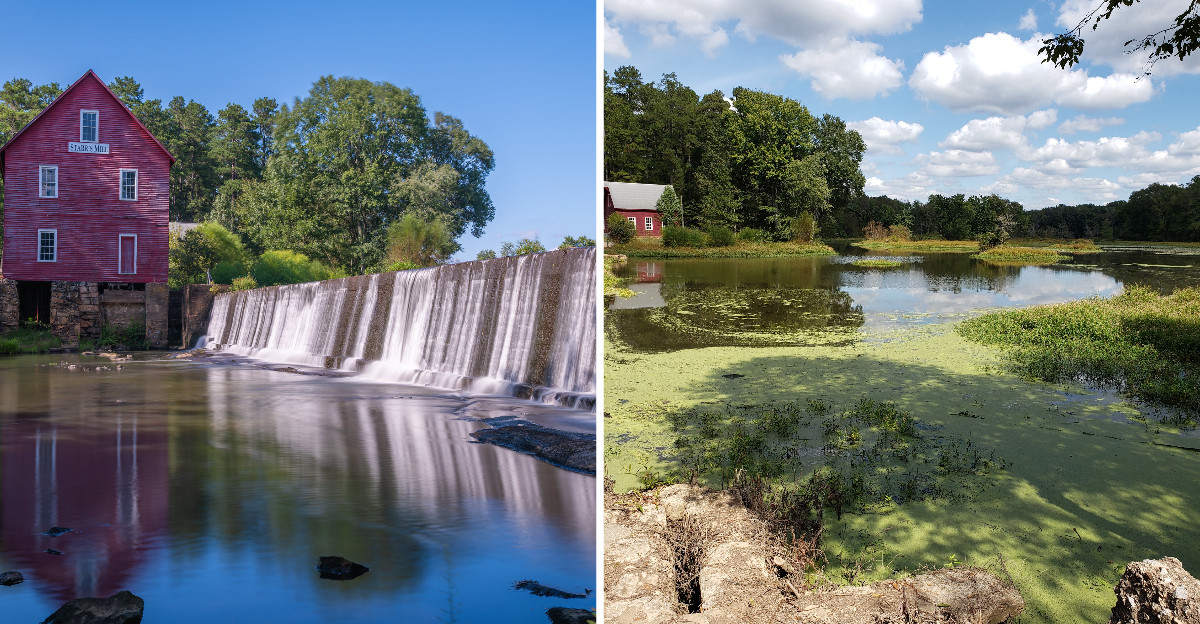
The rush of a creek spilling over a dam drowned out the parking lot behind me, and a bright red building sat on the far bank, its reflection wobbling in the water like a painting that could not hold still. This mill is actually the third one built on this exact spot in Georgia, because the first two burned down.
The one standing today went up in 1907 and has been there ever since. Families spread out picnic lunches, a man cast a fishing line, and somebody posed for photos near the falls.
Hours disappeared while watching the water and the light shift across the old red walls. Staying much longer than planned was the only possible outcome.
The place holds a quiet that makes you want to linger.
Two Fires and a Stubborn Third Try
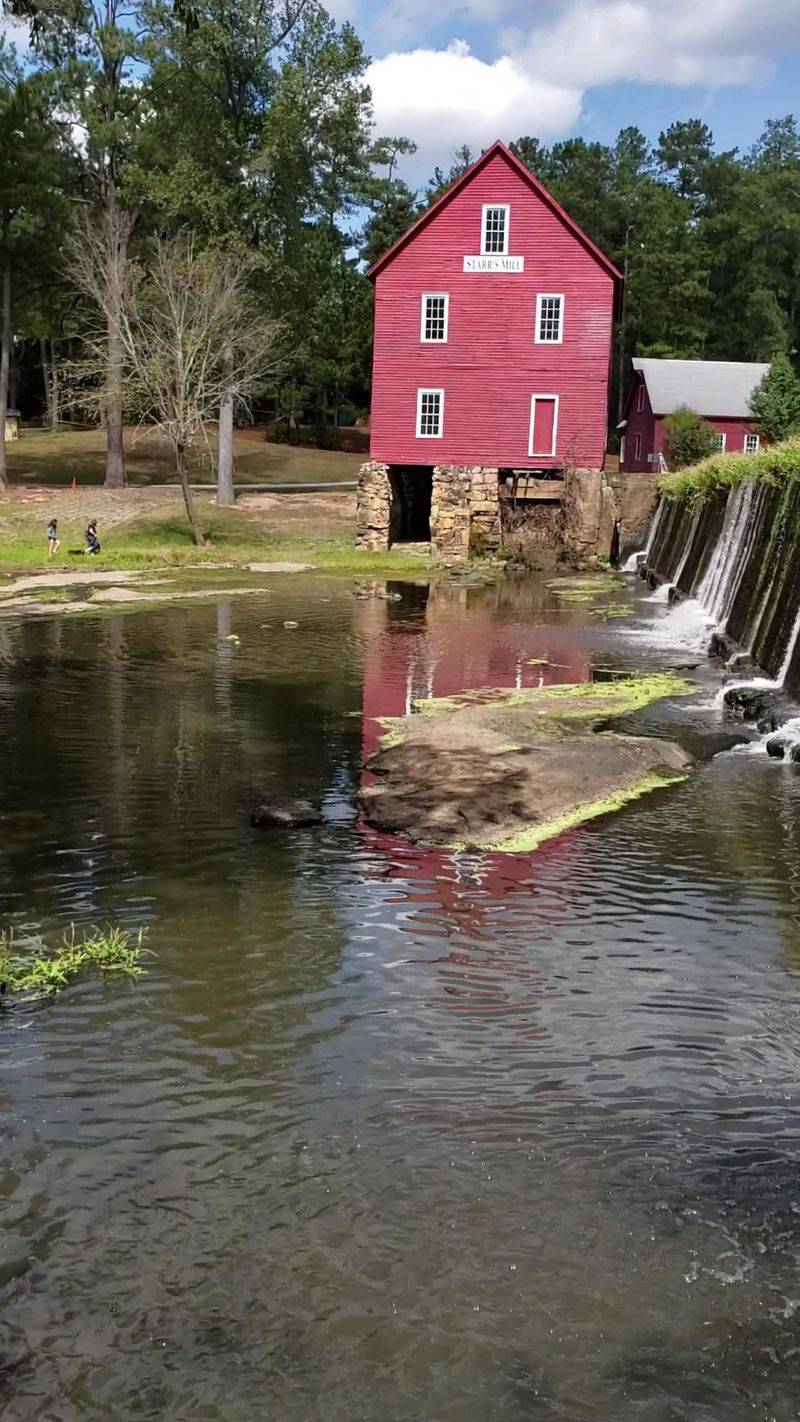
History buffs, this part is for you. Long before the red building became a photo favorite, a man named Hananiah Gilcoat ran a mill on this creek sometime before 1825.
The early mills here were built from logs, and log buildings near grinding machinery had a way of catching fire. Sadly, the first two structures on the site were lost to flames.
One burned around 1880, and Daniel Lowry stepped in to rebuild it.
Then another fire struck. Instead of giving up, William T.
Glower built a brand new mill in 1907, and that is the building you see today. I find that pretty inspiring, honestly, because it shows how much this spot mattered to the people who lived nearby.
Hilliard Starr owned the property from 1866 to 1879, and his name stuck like glue. Even after he moved on, folks kept calling it Starr’s Mill, and they still do.
When you visit, take a slow look at the wood siding and the sturdy frame. Try to picture wagons rolling up with loads of corn.
Knowing the mill survived all those setbacks makes standing on the bank feel a little more meaningful, like you are visiting an old friend who refused to quit.
Electricity, Cotton, and Cornmeal
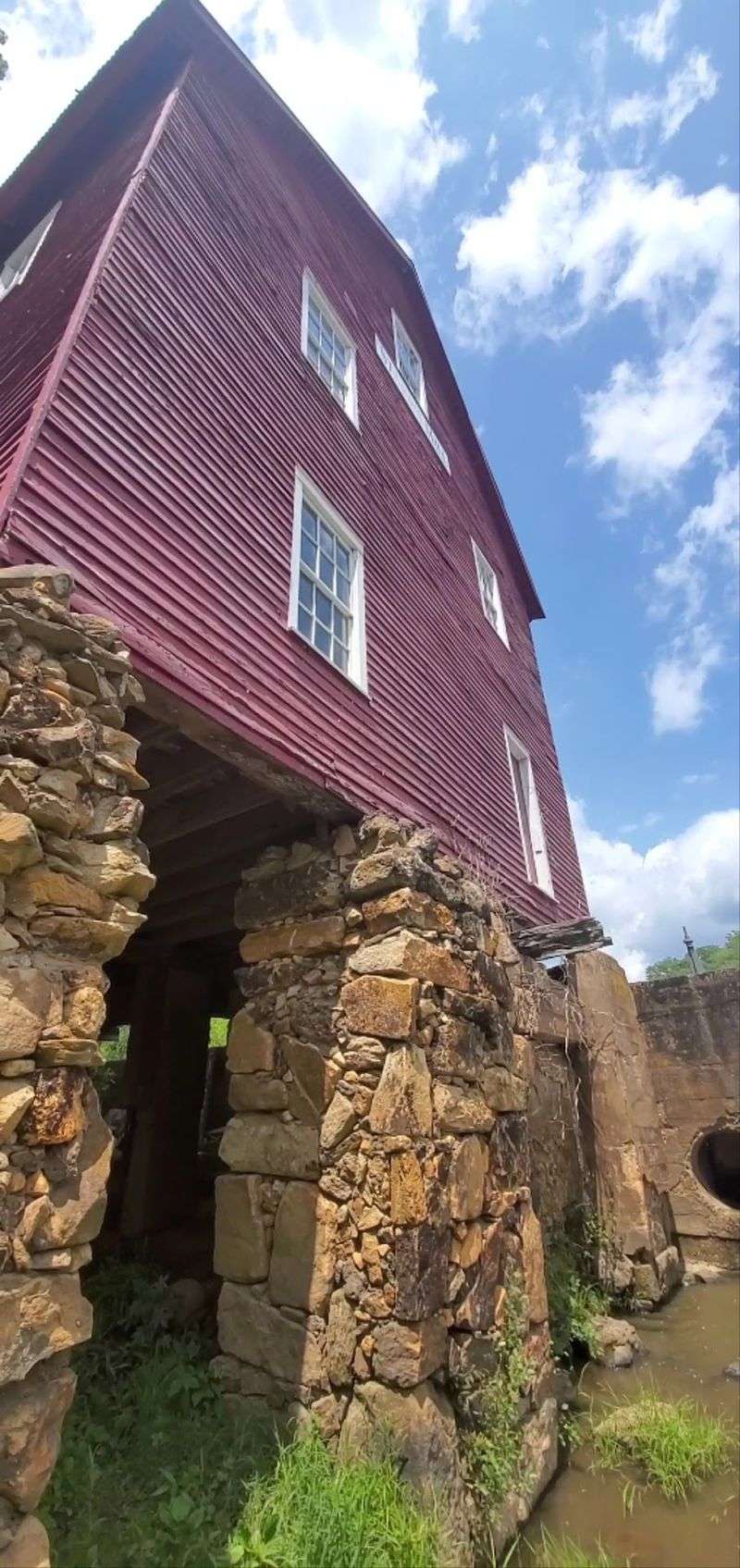
A small building doing big jobs always impresses me. Starr’s Mill was not just a place for grinding corn, even though that was its main task.
The site also had a cotton gin, which pulled seeds out of freshly picked cotton. In a farming area like Fayette County, that saved people a huge amount of hard work.
On top of that, the mill had a dynamo, a machine that made electricity.
That dynamo sent power to the nearby town of Senoia. Think about that for a second.
Creek water spinning a turbine helped light up homes and shops in a whole town, all without a single power plant.
The mill kept working until 1959, which means it served the community for more than fifty years in its current form. Some older locals probably still remember when it was busy.
You cannot go inside the building today, so the machinery stays hidden. Still, knowing what happened behind those red walls adds depth to your visit.
I liked sitting at a picnic table and imagining the noise of gears and belts. It is a quiet place now, but it once hummed with the everyday work that kept this community fed and powered.
The Red Waterwheel Has a Secret
Here is a fun surprise I did not expect. That cheerful red waterwheel everyone photographs was not actually what powered the mill.
Starr’s Mill ran on a water-powered turbine, which sat lower and worked out of sight. The turbine spun as creek water rushed through it, and that energy ground corn into meal.
It also ran a sawmill, which cut logs into lumber for local builders.
So why the wheel? Today it works mostly as a decoration, and I have to admit it does its job beautifully.
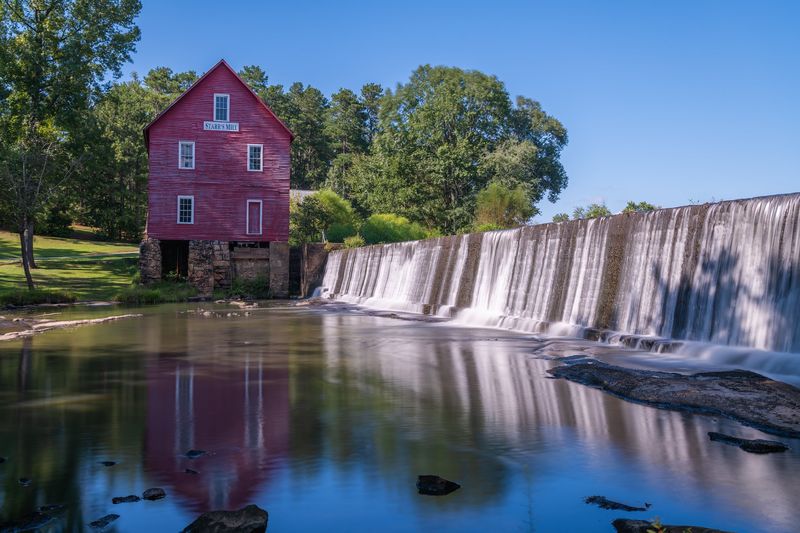
The red paint pops against the green trees and the white splash of the falls. Without it, the scene would still be lovely, but it would lose some of its storybook charm.
My tip is to share this little fact with whoever you bring along. Kids especially love learning that things are not always what they seem.
You could even turn it into a quick guessing game before telling them the answer.
For the best photo of the wheel, try shooting from across the water. The angle catches both the wheel and the mill, plus a nice reflection when the creek is calm and glassy.
Falls That Steal the Whole Show
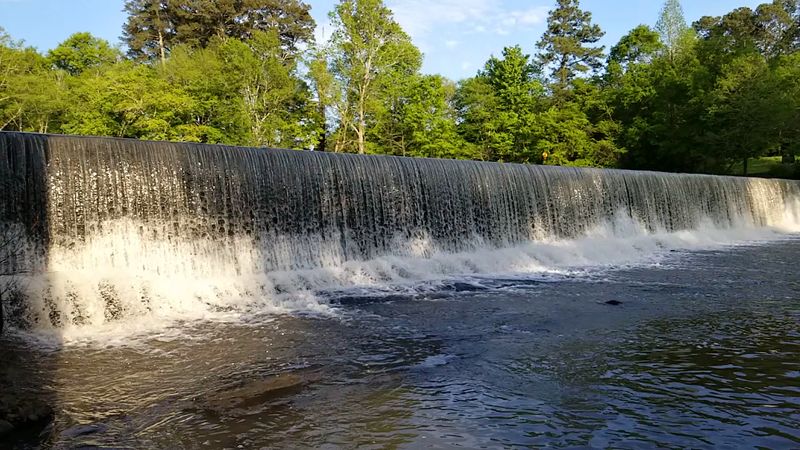
Honestly, the sound hooked me before the view did. Water pours over the dam in a wide, foamy curtain, and the steady roar makes everything else fade away.
The falls are the most talked about feature at the park, and I understand why. After a good rain, the water rushes hard and loud.
During drier weeks, it slows to a softer spill that is perfect for quiet thinking.
Bring a camera and, if you have one, a tripod. Photographers love using slow shutter speeds here to turn the water silky and smooth.
Even a phone can grab a great shot if you hold it steady against a railing or tree.
Plan to spend some time just sitting. I found a spot on the bank and watched leaves float toward the edge, then tumble over.
It was oddly relaxing, like watching a campfire.
One smart reminder is to keep your distance from the water. Swimming is not allowed, and the rocks near the falls can be slippery.
Water snakes also live in the creek, and while most are harmless, it is best to give them space. Enjoy the falls with your eyes and ears, and your visit will stay safe and happy.
Picnic Tables, Fishing Lines, and Lazy Afternoons
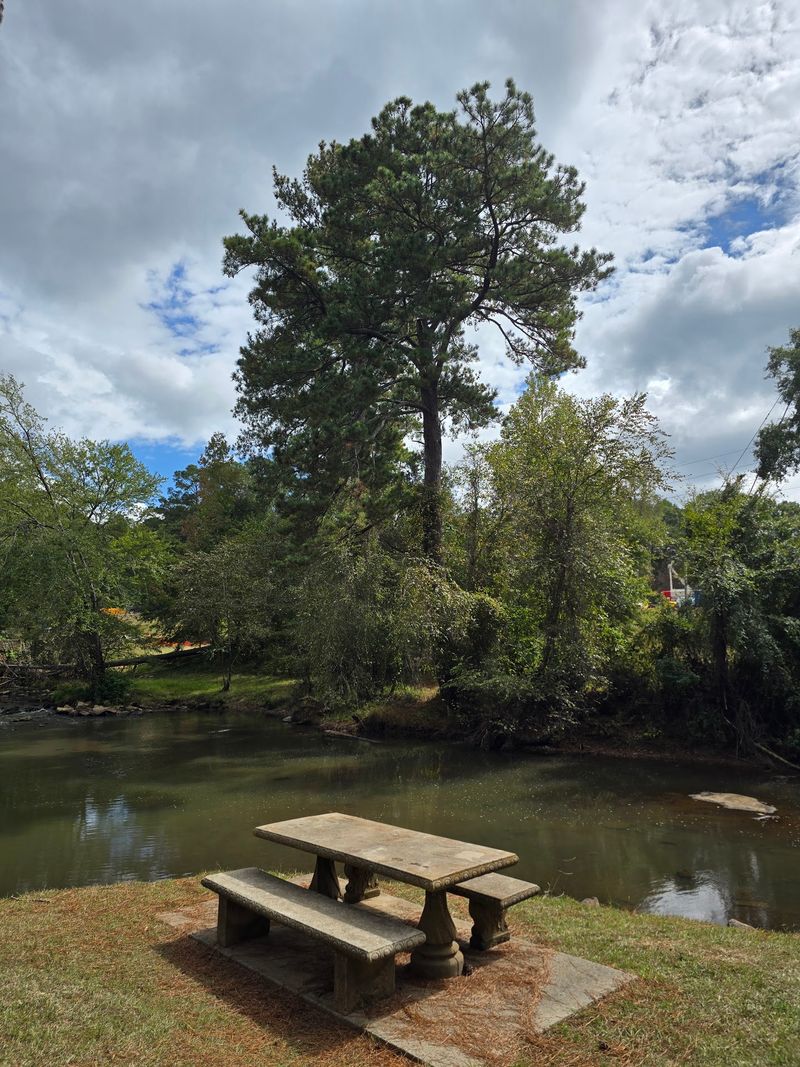
My favorite part of the day was lunch, no contest. Roughly ten picnic tables sit around the grounds, some in bright sun and others tucked under shady trees.
Pack a simple meal and claim a table early if you visit on a weekend. Sandwiches taste better with a waterfall playing in the background, and I will stand by that opinion forever.
Just remember to carry out everything you bring, since the county works hard to keep the park clean.
Fishing is another big draw here. You will often spot people casting lines into the calm water above and below the dam.
If you plan to fish, bring a valid Georgia fishing license, because checks do happen.
The park is open daily from 7 AM to 5 PM. That schedule makes it easy to plan a morning fishing trip or a relaxed afternoon picnic.
Some visitors even bring a canoe to paddle the quiet water.
Restroom options are limited to a portable toilet, so plan ahead. Bug spray is also a smart idea, especially in warmer months.
Spiders like the trees here as much as people do. With a little prep, you can easily stretch a short stop into a full, lazy afternoon.
A Hollywood Moment on Whitewater Creek
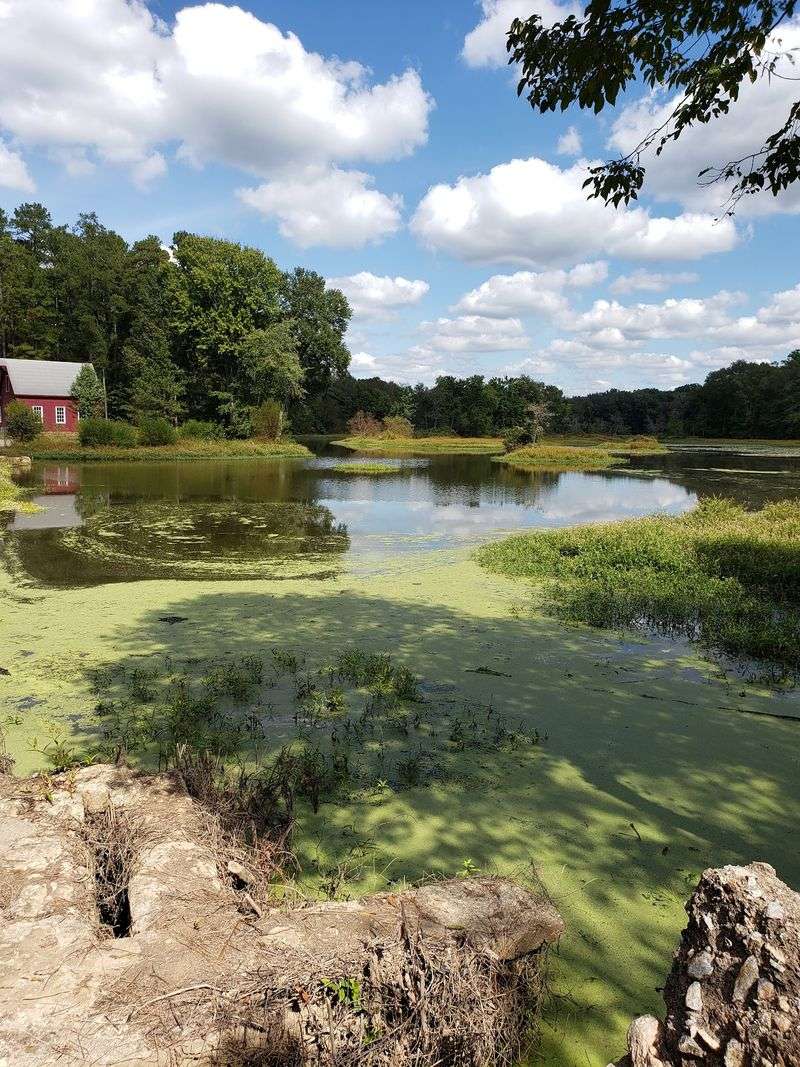
Movie fans might get a funny feeling of déjà vu here. Starr’s Mill appeared in the film Sweet Home Alabama, and plenty of people recognize it right away.
While filming, the crew did restoration work and repainted parts of the building. That means the movie actually helped keep the old mill looking sharp.
I love that a Hollywood visit left something good behind for locals and travelers to enjoy.
You do not need to have seen the film to appreciate the scene, though. The red siding, the rushing falls, and the leafy banks already look like a movie set on their own.
It is easy to see why a film crew picked this spot.
If you have watched the movie, try matching the angles you remember. It is a fun little challenge, and it gets you exploring different corners of the park.
You might find a view you would have missed otherwise.
Photographers flock here for weddings, family portraits, and senior pictures, too. On busy days, be patient and polite if someone is posing near the falls.
Everyone gets their turn, and part of the charm is watching this historic place still starring in so many happy memories today.
Finding Your Way and Timing Your Visit
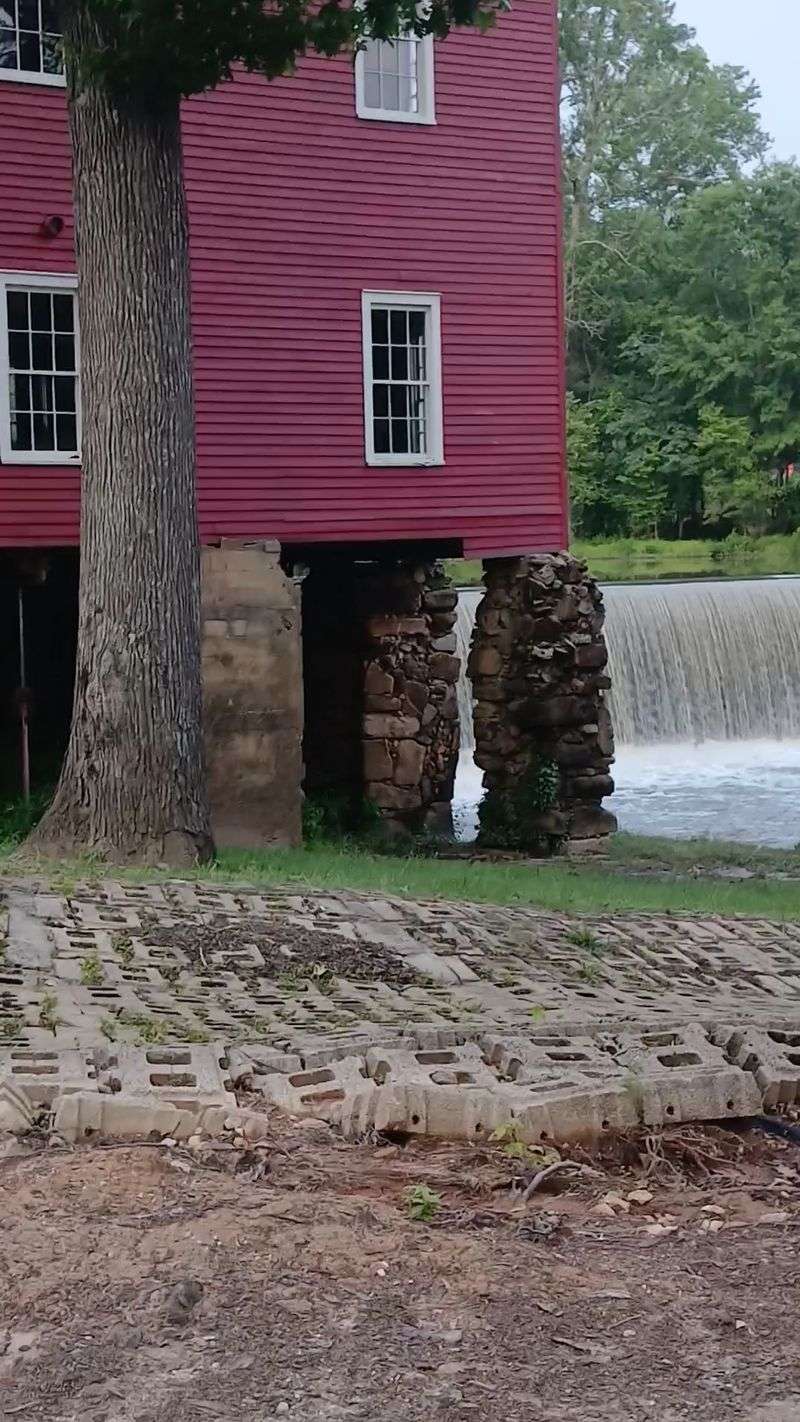
Getting there took me one wrong turn, so learn from my mistake. The small access road is easy to miss and can look like a private driveway.
The park sits near where Georgia State Route 85 meets Route 74, between Fayetteville and Senoia. Follow your GPS closely and watch for the vintage Gulf service station signs, since the mill appears nearby.
Parking and day use are free, which makes this an easy add-on to any drive through the area.
Since 1991, Fayette County has owned and cared for the property after the county water system bought it. You can tell the grounds get regular attention, and that makes the visit more pleasant.
Fall is a wonderful season to come. Changing leaves frame the red mill in gold and orange, and the cooler air feels great for strolling.
Spring brings fresh green growth and fuller falls after rain.
Early mornings tend to be the calmest time, with soft light on the water and fewer people around. I would suggest giving yourself at least an hour.
That leaves time to eat, snap photos, and simply sit still for a bit.
Address: 115 Waterfall Way, Fayetteville, Georgia 30215
