Bottle caps glitter in the sidewalks, a tower of hubcaps catches the sun, and Bible verses cover nearly every painted surface. This garden in Georgia looks like a dream someone forgot to stop having.
The man behind it was a Baptist preacher who said a tiny face on his paint-smeared fingertip told him to make sacred art. He took that message seriously and created more than 46,000 pieces before he passed in 2001.
In a quiet corner of the state, four acres hold painted signs, sculptures, and buildings covered in scripture. Walking the grounds takes hours, and the surface is barely scratched.
The preacher believed his work was a message from God, and he spent decades turning everyday objects into something sacred. The result feels both handmade and holy.
Hours disappear among the bottle caps and hubcaps. The visit lingers long after leaving.
Eight moments from this place stuck long after the drive away.
The Fingertip That Changed Everything
Some stories sound too wild to be true, yet this one sits at the heart of every brick and bottle cap in the garden. Back in 1976, Howard Finster was fixing a bicycle and smearing white paint with his finger to patch it.
On the round tip of that finger, he said he saw a human face. A deep warmth came over him, and a voice told him to paint sacred art.
He was around sixty years old at the time and had never trained as an artist.
I loved learning that he first believed God wanted 5,000 paintings from him. That goal turned out to be way too small.
By the end of his life, his count passed 46,000 pieces, with some sources putting it close to 47,000.
Visions were nothing new for Finster, though. He reported his first one at only three years old, growing up in Valley Head, Alabama, where he was born in 1916.
The welcome center shows a short video about his life, and I recommend watching it before heading outside. Knowing the fingertip story first made every painted angel and scribbled verse I passed afterward feel like part of one long, joyful conversation.
A Preacher With a Toolbox
Long before galleries wanted his paintings, Finster was a working man who could fix almost anything. His schooling ended in sixth grade, and he went to work to help support his family.
Over the years, he picked up jobs as a carpenter, a plumber, and a repairman for bicycles and televisions. On Sundays, he preached as a Baptist minister around northwest Georgia.
That mix of handy skills and big faith explains a lot about what I saw in the garden.
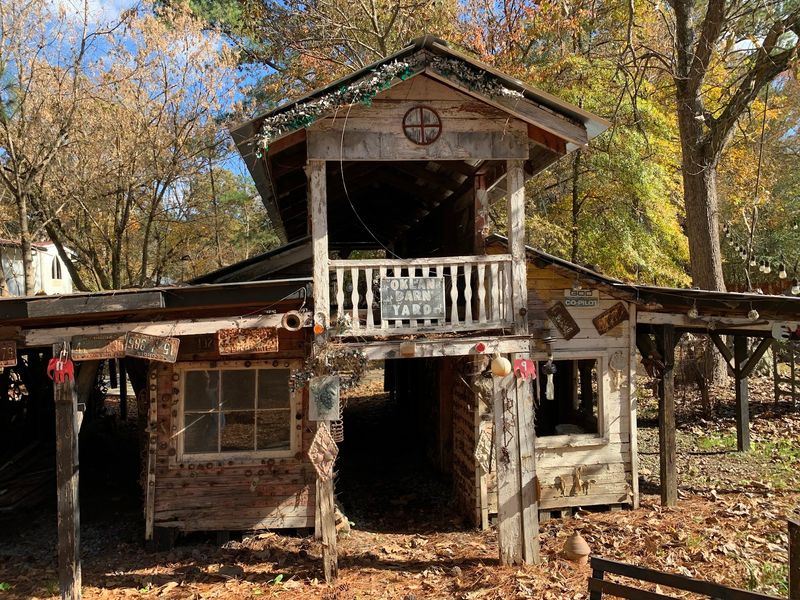
Every structure here shows a builder’s touch. Walls lean in clever ways, scraps fit together like puzzle pieces, and old machine parts find second lives as decoration.
You can almost picture him squinting at a broken fan and seeing a sermon inside it.
In 1965 he stepped away from preaching at the pulpit so he could focus fully on his art environment. Honestly, he never really stopped preaching, he just moved the message onto plywood and concrete.
Take a peek at his old workshop areas if they are open during your visit. Rows of sorted metal pieces hang neatly from nails, and it gave me a sense of how carefully this self-taught man planned his next creation.
From Trion to a Swampy Four Acres
Paradise Garden actually started in another town. In the late 1940s, Finster built his first garden park museum in Trion, Georgia, meant to show off the inventions of mankind.
By 1961 he had simply run out of room. So he moved to Pennville, right near Summerville, and bought four acres of land.
There he started what he called the Plant Farm Museum, a place to show all the wonderful things of God’s creation, like a homemade Garden of Eden.
The name most people know came later. A 1975 article in Esquire magazine called it Paradise Garden, and the label stuck for good.
I think it fits perfectly, because the place feels both heavenly and a little bit wild.
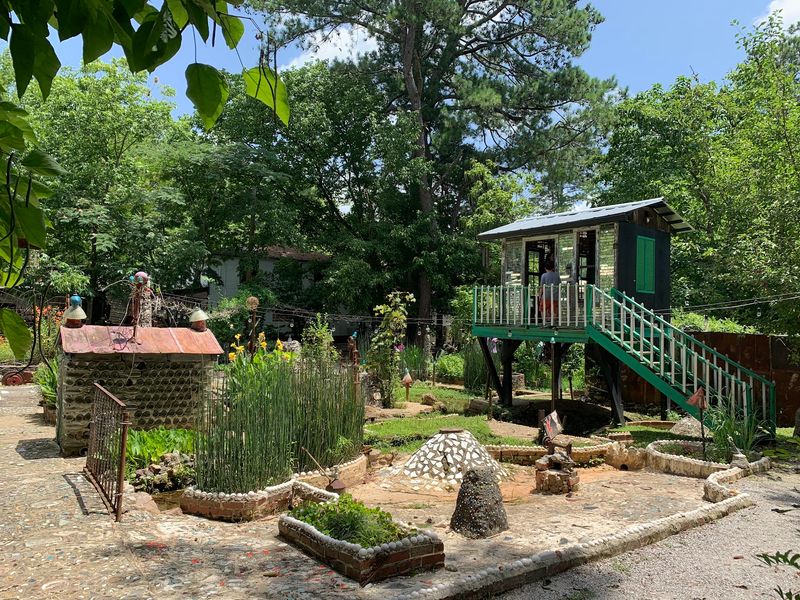
As I wandered, I noticed how the garden is not laid out in neat rows. Paths twist, small bridges cross low spots, and new surprises keep popping up behind trees and sheds.
My best tip is to slow down and resist rushing to the biggest building. Some of my favorite finds were tiny details tucked along the edges, like faces pressed into concrete or a mirror shard flashing back at me.
The Five-Story World’s Folk Art Church
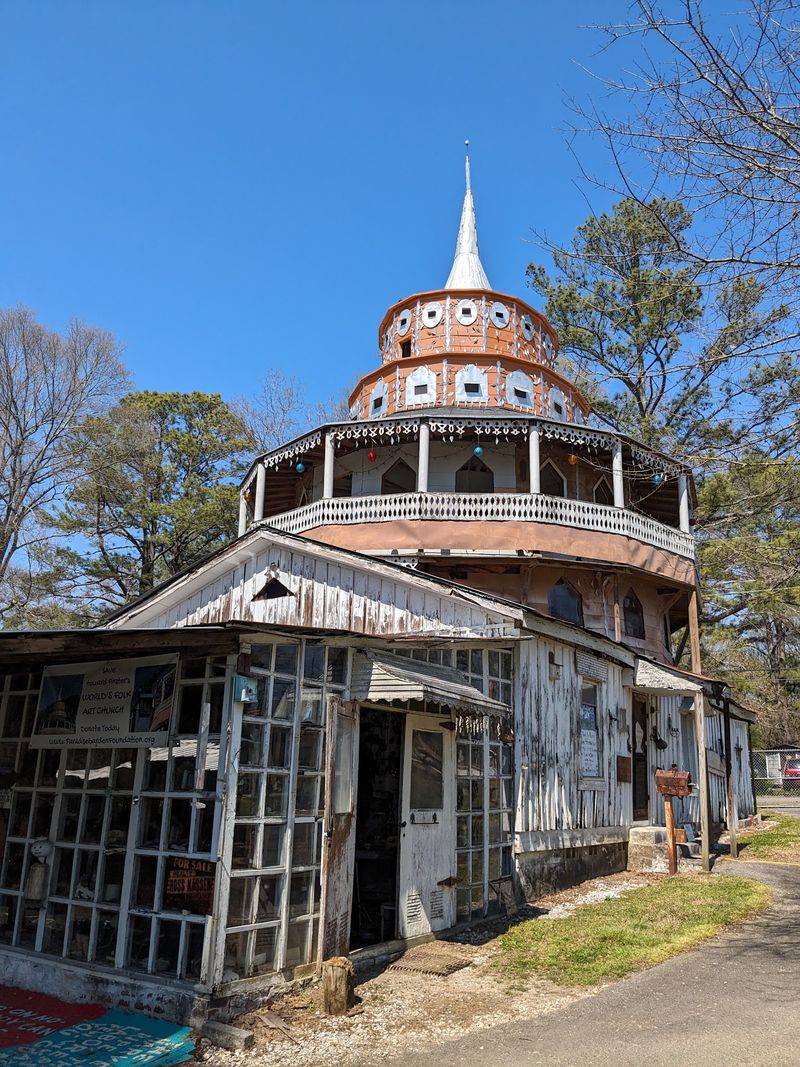
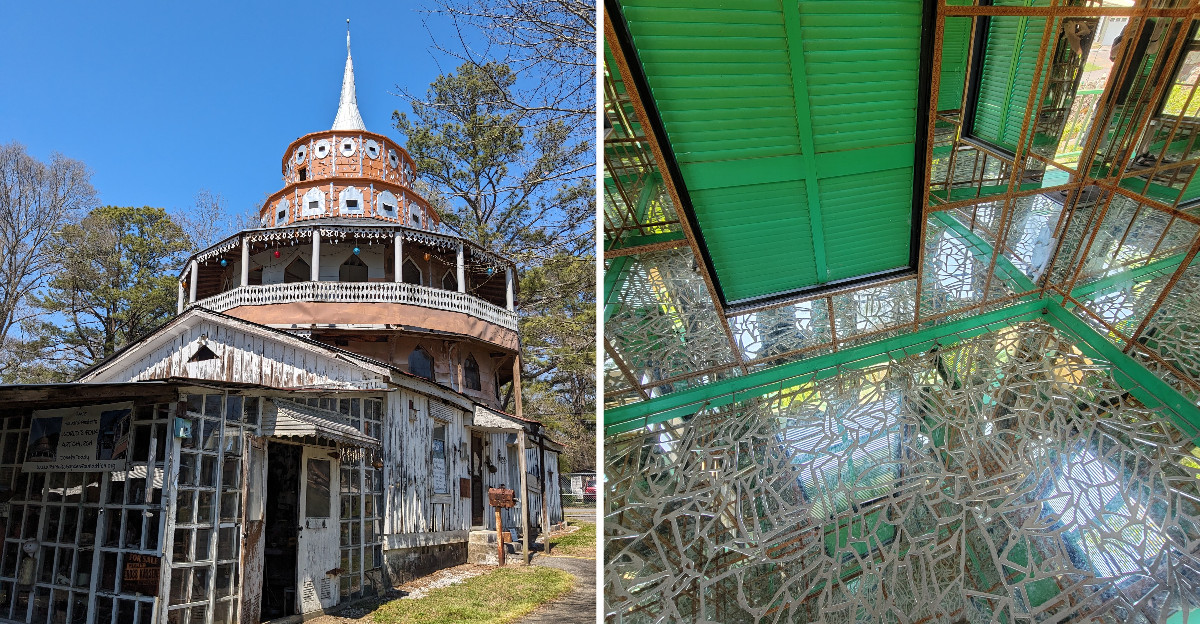
Nothing prepared me for the first glimpse of that tower rising above the treetops like a stacked wedding cake. The World’s Folk Art Church, also called the Folk Art Chapel, climbs five stories high and anchors the whole garden.
Finster built it as a testament to his vision, layering round tiers on top of each other until it towered over the neighborhood. From a distance it looks almost playful.
Up close, you start spotting the craftsmanship in every curve and window.
The chapel has gone through serious restoration work in recent years, so access can change. During some visits, people can only admire it from outside, while special events have opened the renovated interior.
If seeing inside matters to you, plan around Finster Fest, the yearly festival held at the garden. Folk artists show their work, music fills the air, and lines form for the chapel.
A quick word of advice from experience is to bring water and a hat if you go in summer. Georgia heat does not care how excited you are, and standing in line under full sun can wear down even the most devoted folk art fan.
Towers of Hubcaps and Bicycles
Ever wondered where old bicycles go to retire? At Paradise Garden, they climb toward the sky.
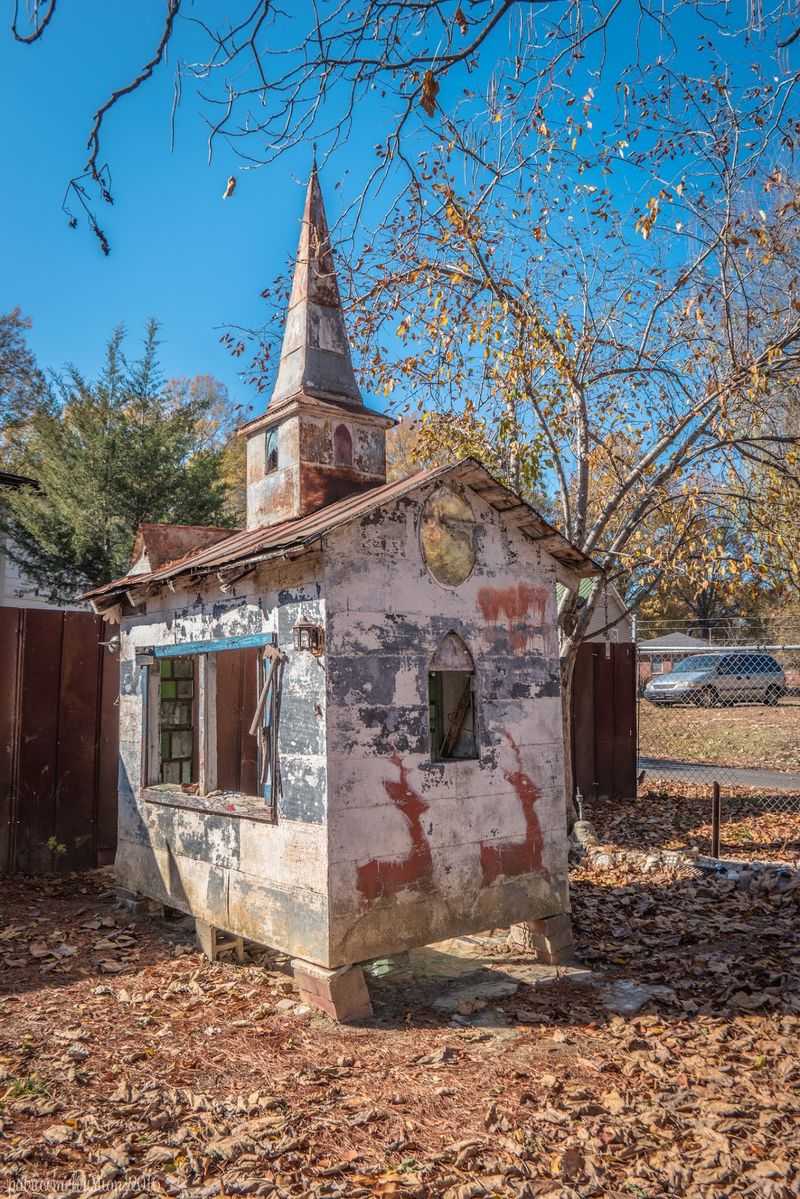
The Bicycle Tower stacks frames, wheels, and handlebars into a tangled, rusty column that somehow looks graceful. Nearby, the Hubcap Tower shines with round metal discs that throw sunlight around like disco balls.
I kept circling both, finding new bits each time.
Finster was recycling decades before it became trendy. He turned junk that most folks would haul to the dump into art with a message.
Bottles, tools, mirrors, and broken gadgets all earned a spot somewhere on these grounds.
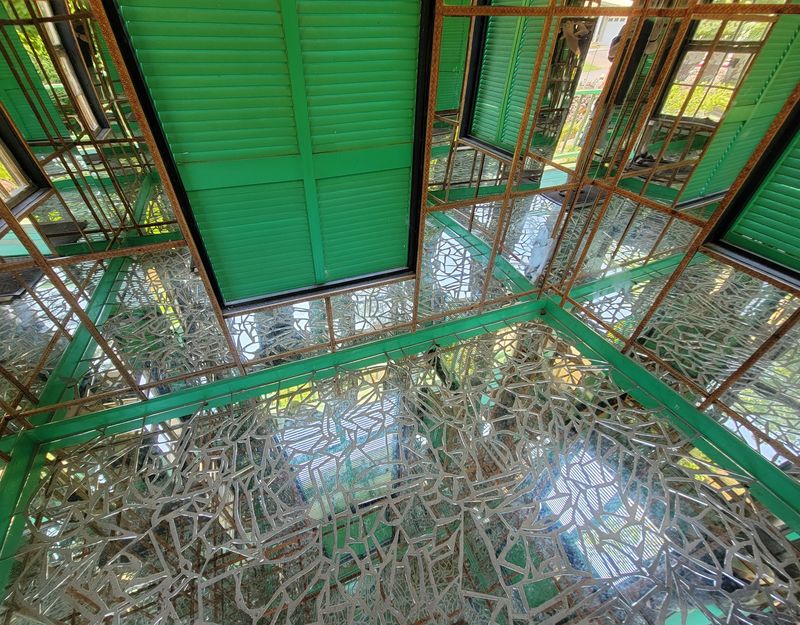
Other quirky builds add to the fun. Look for the Mirror House, the Bible House, and the Machine Gun Nest as you wander.
Each one has its own personality, from shimmering to strange to surprisingly thoughtful.
Families with kids should ask about the photo scavenger hunt if it is offered. Hunting for specific objects turns the visit into a game and keeps younger eyes sharp.
Photographers, aim for softer morning or late afternoon light. Metal glare at noon can wash out shots, but gentler sun makes those hubcaps glow beautifully.
Sermons Underfoot in Mosaic Sidewalks
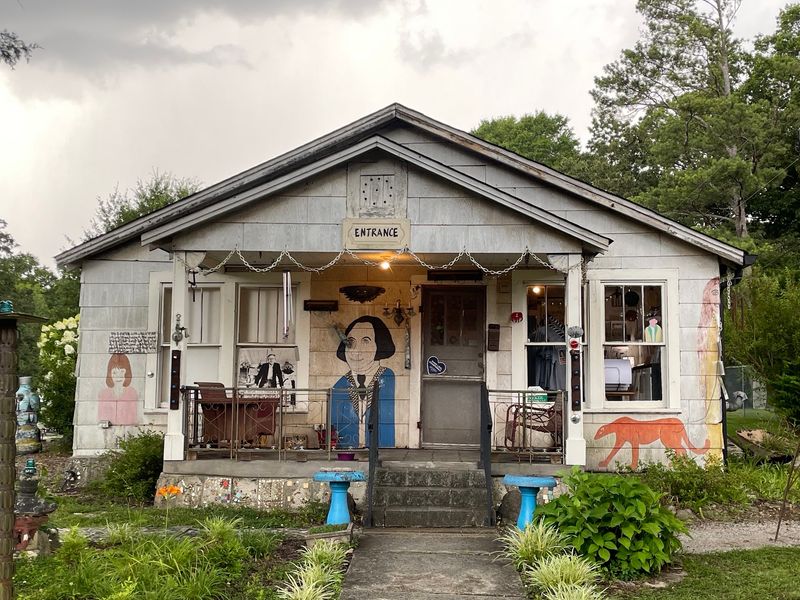
My neck got a break the moment I realized half the art was beneath my shoes. Hundreds of feet of mosaic sidewalks wind through the garden, packed with glass, tile, trinkets, and odd little treasures.
Every few steps, something new peeked out of the concrete. I spotted bits of jewelry, shards of pottery, and objects I honestly could not name.
It turned an ordinary walk into a slow treasure hunt.
Concrete grotto walls add even more texture. Finster pressed art reliefs into them, creating faces, shapes, and messages that change with the shadows as the day moves along.
Here is where comfortable shoes really pay off. Some paths are uneven, and you will want to stop often without thinking about sore feet.
Notice how weather has shaped these pieces, too. Rain and sun have softened colors and worn edges over the years, giving everything a lived-in look that no polished museum could copy.
Staff and volunteers have worked hard on restoring and protecting the paths through grants and donations. Staying on marked walkways and touching only where allowed helps keep these handmade sidewalks around for future visitors to enjoy.
Elvis, Angels, and UFOs Covered in Scripture
Picture Elvis Presley sharing a painting with angels, a flying saucer, and a dozen handwritten Bible verses. That combo is classic Finster.
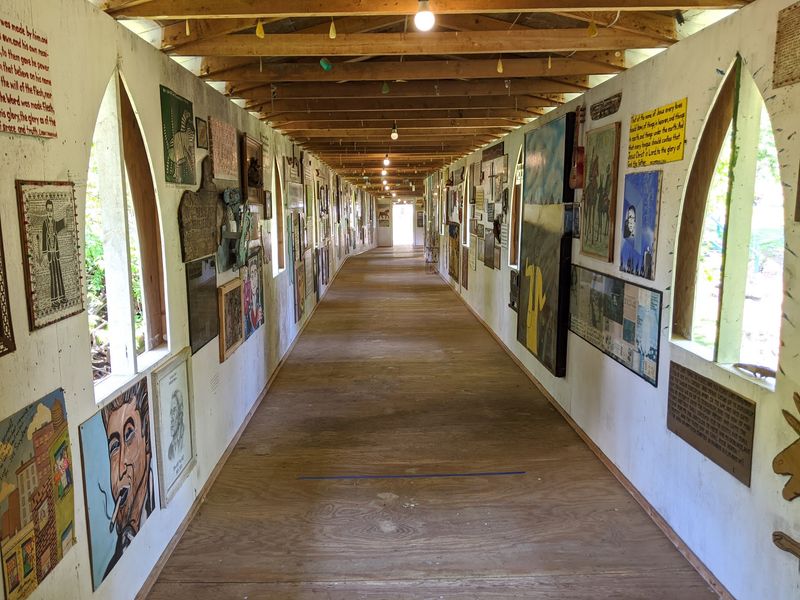
His style is easy to spot once you know it. Colors pop, details pile up, and the pictures look flat, without the usual depth artists try to create.
Words crowd into every empty corner, turning each piece into a little visual sermon.
His subject list was wonderfully all over the place. He painted Marilyn Monroe, George Washington, and Ronald Reagan, plus aliens, war scenes, politics, and plenty of heaven.
I found myself laughing one minute and thinking hard the next.
People have called him the grandfather of Southern Folk Art and even the Andy Warhol of the South. After seeing his pop culture portraits, that second nickname made total sense to me.
Take time to actually read the writing on the pieces. It is easy to treat the text like decoration, but the messages reveal his humor, worries, and hopes.
For extra context, the High Museum of Art in Atlanta holds some of his work. Seeing both places shows how far his art traveled from this small Georgia yard.
Album Covers, Rock Stars, and a Global Legacy
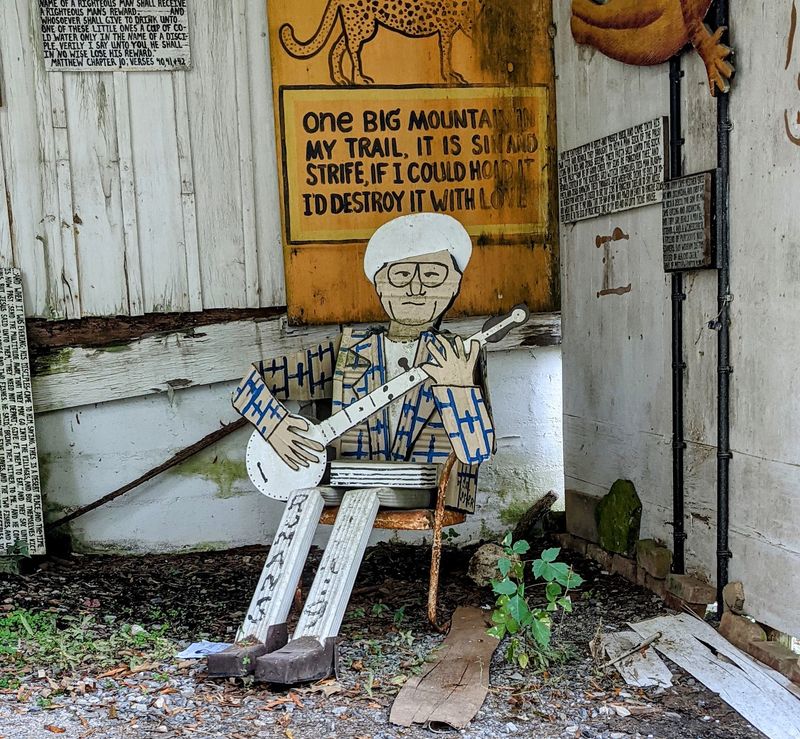
Music fans, this part might surprise you. Finster painted album art for Talking Heads and R.E.M., which brought his work to record shelves all over the world.
R.E.M. even filmed a music video right here in the garden. Artist Keith Haring also found inspiration in Finster’s work and visited the grounds himself.
Not bad for a self-taught preacher from rural Georgia.
Today Paradise Garden sits on the National Register of Historic Places. It is often ranked among the top art environments anywhere, drawing visitors from dozens of countries.
Before leaving, I wandered over to the Meditation Chapel for a quiet moment. After so much color and clutter, sitting still felt like the perfect ending.
The Paradise Garden Foundation runs the site and opens it Tuesday through Sunday from 11 AM to 5 PM, with Mondays closed. Friendly staff greet guests at the welcome center, and pets are welcome too, so bring your travel buddy.
Keep an eye out for the resident orange cats lounging around.
Plan at least two hours if you can, since an hour goes by fast here.
Address: 200 North Lewis Street, Summerville, GA 30747
