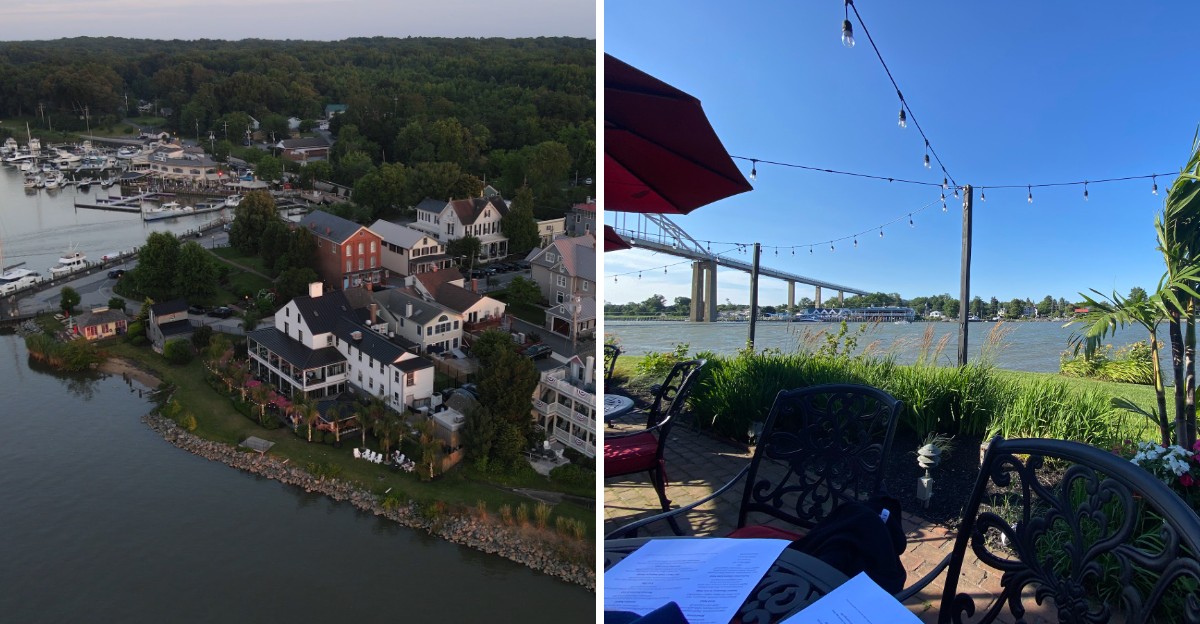
Some dinner views are static. A skyline, a garden, a parking lot.
Others move. This historic Maryland restaurant sits beside the C&D Canal, where passing boats become part of the meal.
You can watch barges and pleasure craft glide by while you eat, a steady rhythm that makes the experience feel unhurried. The building carries its own history, with character that newer restaurants cannot fake.
The menu leans into classic fare, prepared well and served without fuss. Locals have been coming here for years, drawn by the combination of setting and consistency.
It is the kind of place where you linger over dessert just to watch one more boat pass. A reminder that a good view does not have to stand still.
The kind of dinner that feels like a small escape.
The Oldest Building in Town Still Serving Guests
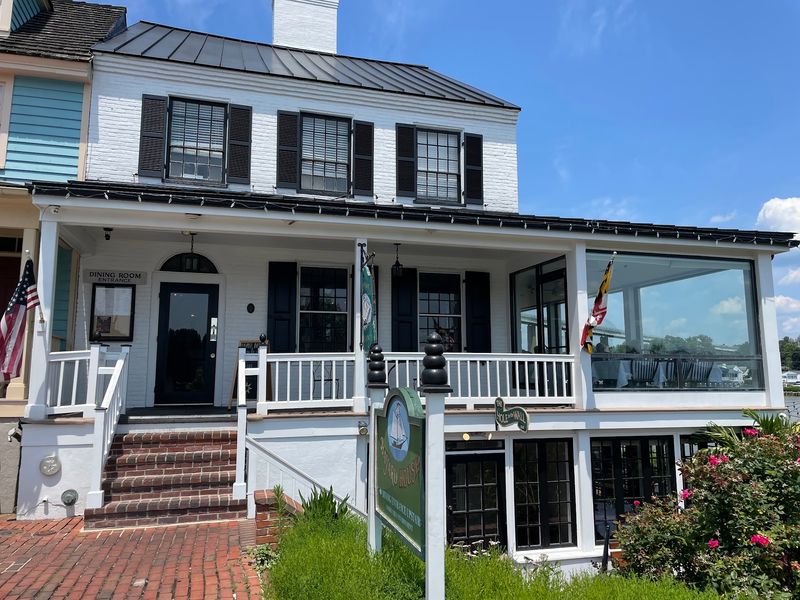
Old buildings usually get turned into museums. Not this one.
The structure at the heart of The Bayard House dates back to the 1780s, when it went up as a manor house, which makes it the oldest building in all of Chesapeake City.
Back then the town was called Bohemia Village and there was no canal cutting through it at all. Just fields, water, and a handful of families.
In 1809, Charles and Sarah Beaston bought the property, and by 1829 they had turned it into a tavern and inn. Locals called it Chick’s Tavern.
Travelers stopped in for food and a bed while the region’s trade routes were still finding their shape. The timing was no accident, since the canal opened that very same year and suddenly a lot more people were passing through.
Names kept changing as the decades rolled on. Around 1911 it operated as The Harriot Hotel, adjusting to whatever the town needed at the moment.
What stayed constant was the hospitality. Somebody was always cooking, pouring coffee, and pointing guests toward a table near the water.
Standing outside now, the proportions still read as colonial: low ceilings in spots, thick walls, and that slightly uneven charm you cannot fake with new construction. Anyone who appreciates architecture should take a slow lap around the exterior before heading in.
Two and a half centuries of continuous welcome is a genuinely rare thing in American dining.
Ships Passing Close Enough to Count the Rivets

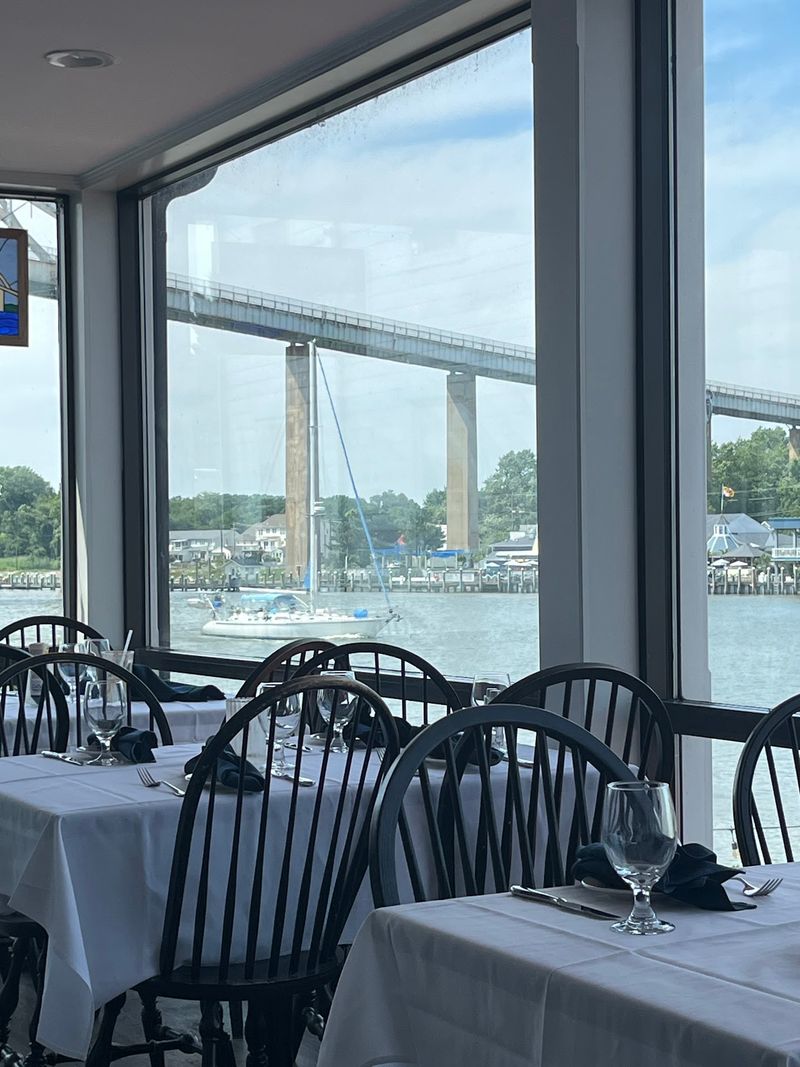
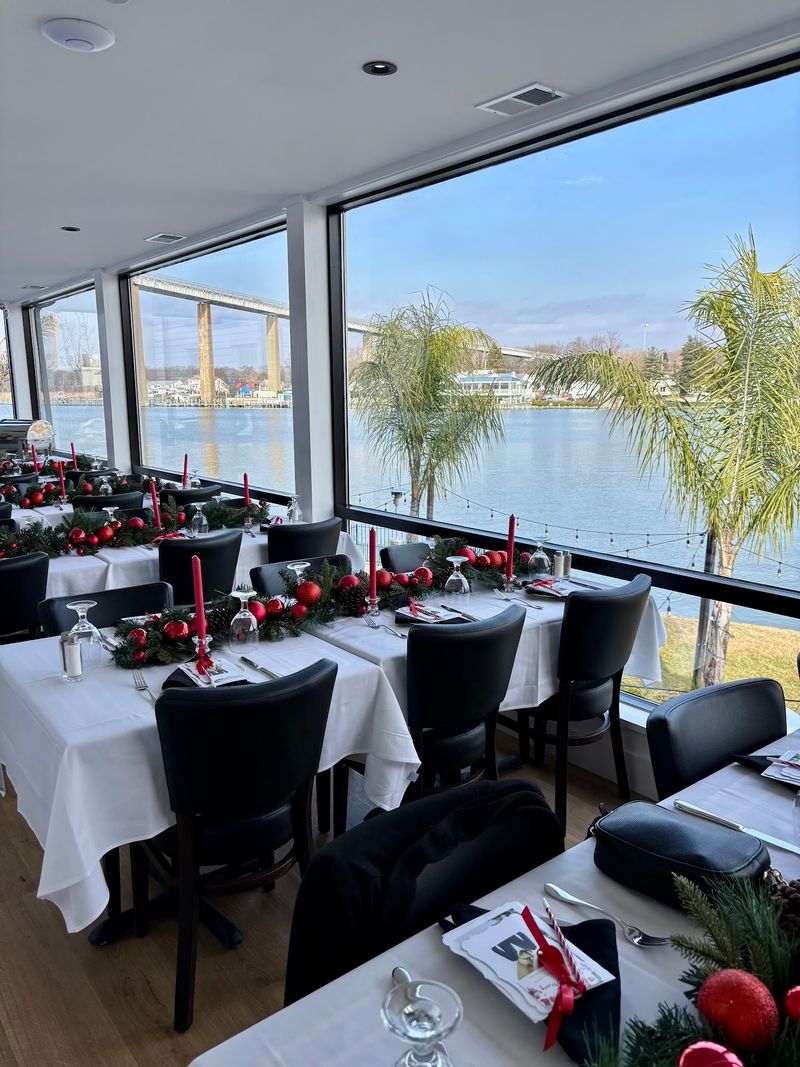
Here is the part nobody forgets. The glass-walled dining rooms face the canal directly, and when a deep-draft freighter comes through, it looks close enough to touch.
Conversations pause. Forks go down.
Phones come out.
More than 25,000 vessels move through the C&D Canal every year, which makes it the busiest canal in the United States and the third busiest on the planet. That traffic includes tugs hauling long tows, tankers, freighters, cruise ships, and the occasional tall ship with rigging that belongs in a painting.
Mixed in are recreational boaters, kayakers, and sailboats motoring through with sails furled.
Strong currents run through the channel, so the big ships often move faster than expected. One minute the window is empty, the next it is entirely steel.
The canal itself measures about 450 feet wide and runs roughly 35 to 40 feet deep, which is why such large ships can squeeze through a passage this narrow.
A practical tip: ask for a window seat when booking, or head for the upstairs level where the sightlines open up. The indoor patio has floor-length windows and air conditioning, so summer heat never interferes with the view.
Timing is luck, honestly. Some meals deliver three ships, others deliver none.
Either way, the bridge arching overhead and the water shifting colors toward sunset make for a pretty good consolation prize.
Crab Cakes That Locals Actually Drive For
Ask around Cecil County about crab cakes and this kitchen comes up fast. That is the Maryland standard, and it is harder to pull off than it sounds.
Executive Chef Michael Barbas leads a kitchen focused on Eastern Shore seafood and regional classics, blending old-school preparations with newer ideas.
The award-winning Maryland crab soup sits right beside the crab cakes in the hall of fame, thick and properly seasoned rather than watered down.
Crab bisque gets mentioned almost as often by guests who prefer something creamier.
Beyond the headliners, the menu wanders in fun directions. Bang Bang Shrimp and blackened mahi tacos bring a lighter, brighter side to the table, while stuffed Anaheim peppers add a bit of heat.
Bigger appetites gravitate toward filet mignon or a rockfish and crab combination.
Appetizers earn real affection too, particularly the drunken clams served in a broth people wish came with more bread, plus Brussels sprouts that have converted a few skeptics. Dessert leans regional with Smith Island cake, alongside key lime and apple pies.
Portions match a fine dining format rather than a diner one, so plan accordingly.
Casual clothes are perfectly fine, despite the elegant setting. Nobody needs a jacket to enjoy crab soup with a freighter rolling past the glass.
How a 1659 Idea Became a 14-Mile Shortcut
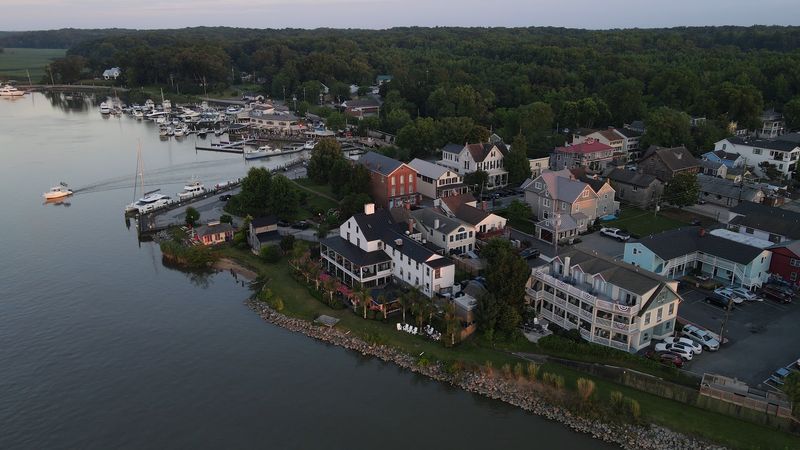
Long before anyone broke ground, a surveyor named Augustine Herman looked at the map in 1659 and saw the obvious. Connect the Chesapeake Bay to the Delaware River and ships could skip an enormous detour around the entire Delmarva Peninsula.
The idea sat around for well over a century.
Construction finally began in 1824. Roughly 2,600 workers spent five years digging the 14-mile channel by hand and machine, and traffic started flowing on October 17, 1829.
That opening date lines up neatly with the year the manor house became a tavern, which explains a lot about why the building thrived.
Early on the canal used a lock system to manage water levels, with steam engines and a huge water wheel pumping water where it was needed. Then in 1927 crews dredged it down to sea level, retiring the locks entirely.
Transit got faster and far simpler overnight.
The payoff today is significant. Ships traveling between the Philadelphia area and Baltimore save around 300 nautical miles by cutting through, which is why the channel stays so busy year-round.
The U.S. Army Corps of Engineers maintains the whole waterway.
Knowing all of that changes how the view lands. Each vessel sliding past the window is using a shortcut that took 170 years to go from sketch to reality.
Not a bad thing to think about between courses.
A 1983 Restoration That Chased Every Detail
Restorations can go badly. Someone rips out the character, slaps on drywall, and calls it progress.
That did not happen here.
In 1983, Allaire DuPont led a careful revival of the building, treating the original details as the point rather than the obstacle. Story goes that original locks were found up in the attic, and replicas were commissioned from them so the hardware would stay true to period.
That level of fussiness is exactly what saves an old house.
The colonial feel survived intact: paneling, trim, fireplaces, and the sort of room proportions that modern buildings never quite replicate. It was during this stretch that the place officially took the name The Bayard House.
Renovations have continued in more recent years, keeping the interior comfortable without stripping the age out of it.
Stewardship passed to the Marin family in January 2019, when Jennifer Marin along with George and Susan Marin purchased the restaurant. Doors reopened just four days after the sale, and the existing staff stayed on, including several who had already worked there for more than a decade.
Continuity like that shows up in the small things, like servers who actually know the menu inside out.
The family later added the neighboring Old Wharf Cottage Bed and Breakfast and an ice cream shop nearby.
Together they form a tidy little cluster of hospitality right along the canal’s edge.
Worth a wander after dessert.
The Hole in the Wall Bar and the Story It Keeps
Not every corner of an old building holds a cheerful story. Inside the restaurant there is a space called The Hole in the Wall Bar, and the name comes from something difficult.
During segregation, Black patrons were not permitted to be served inside the main establishment. They were served instead through a small opening in the back wall.
That opening is where the name originates.
Rather than quietly cover it over, the restaurant has chosen to preserve and acknowledge the history. A historical marker was placed in 2009 so the story stays visible to anyone who walks by.
Visitors can read it, think about it, and understand a piece of what happened on this exact ground.
Keeping that marker up matters. Plenty of buildings across the country simply erased evidence of segregation during renovations, leaving nothing for later generations to learn from.
Here the room continues on as a working bar while the marker does the remembering.
It reframes the whole visit a little. A building this old has witnessed genuine change, some of it hard-won, and pretending otherwise would flatten the history into something decorative.
Guests who care about local history should take a few minutes with the marker before or after eating.
Address for the visit is 11 Bohemia Avenue, Chesapeake City, MD 21915, right at the water’s edge.
The building has held many roles, and honesty about all of them is part of what makes it feel real.
Terrace Seating, Live Music, and Warm-Weather Afternoons
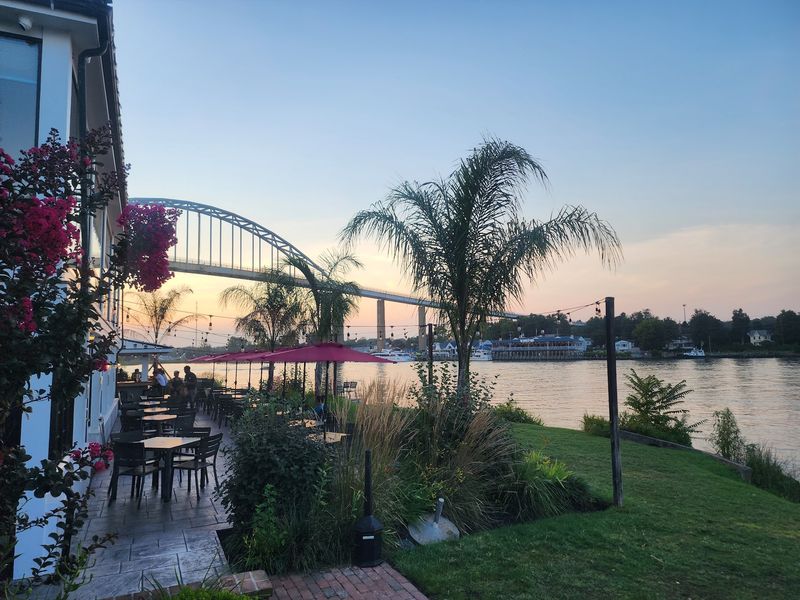
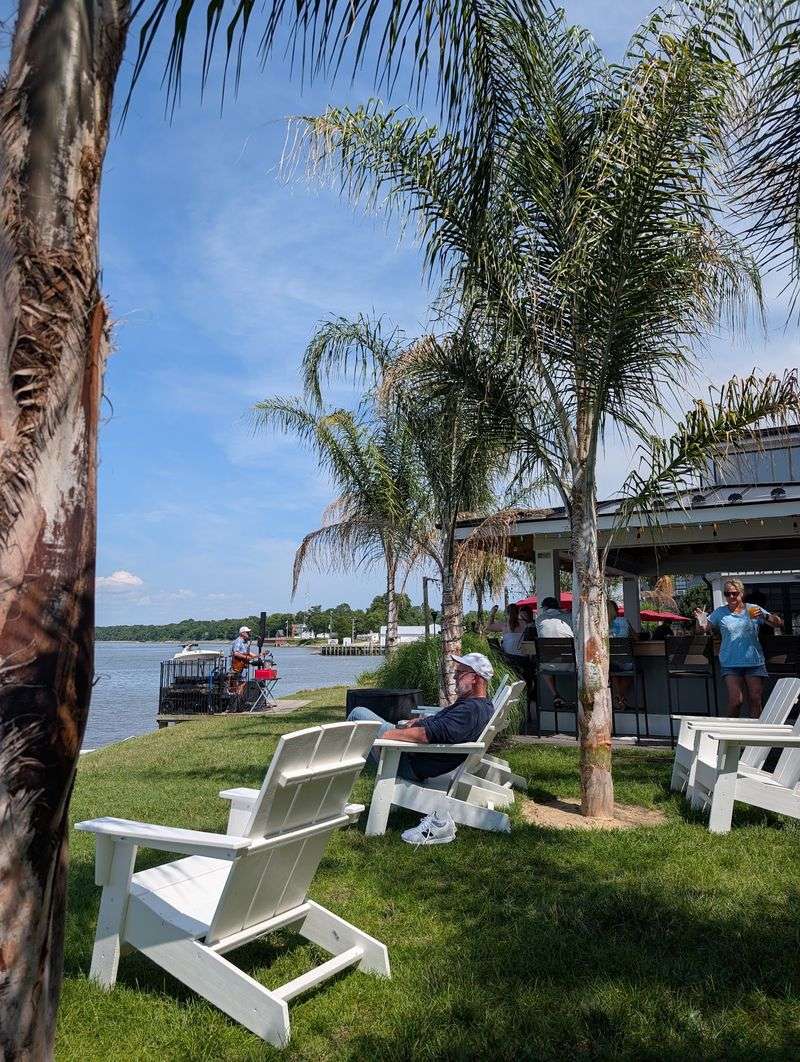
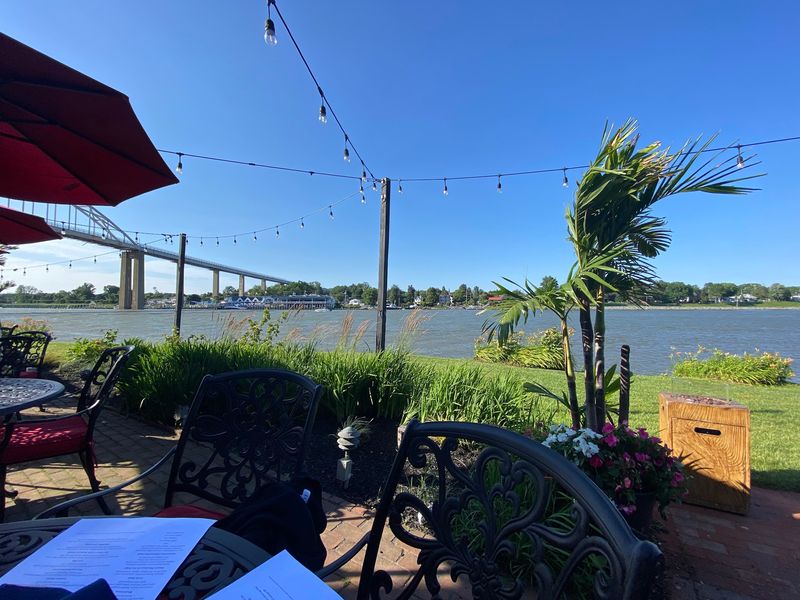
Warm months unlock the best version of this place. The outdoor terrace and open-air bar area sit directly along the canal, giving Cecil County one of its most scenic spots to eat outside.
Live music turns up regularly, usually a single musician or a band depending on the day.
Dogs are welcome outdoors, which makes it an easy stop for anyone road-tripping with a pup in the back seat. Shade and breeze off the water keep things pleasant even in July.
Sunset over the canal, with the bridge silhouetted, is the reason people linger over dessert.
Hours run generously. Doors open at 11:30 AM most days with service running to 9 PM, and Friday and Saturday stretching to 10 PM.
Weekend mornings bring waterfront breakfast and brunch service starting early, which is a quieter and lovely way to experience the same view.
Event days like St. Patrick’s Day get busy and lively, so anyone hoping for a relaxed meal should aim for a regular weekday instead. Reservations help considerably, especially for larger groups or anyone with a seating preference.
Mention outdoor or upstairs seating when booking so the request is on record.
One honest heads-up: parking around the restaurant is tight. The lot is small and street spaces fill quickly during peak hours.
Budget a few extra minutes to circle the block, then forget about it once the water comes into view.
Rounding Out the Day in Chesapeake City
One meal barely scratches the surface of this town. Chesapeake City started life as Bohemia Village and took its current name in 1839, and the historic district is listed on the National Register of Historic Places.
Restored 19th-century homes line the streets, many now housing inns, galleries, and small shops.
Everything sits within easy walking distance, which is half the appeal. Guests at the restaurant often stroll the surrounding blocks before or after eating, since the buildings nearby date to roughly the 1830s and remain in excellent shape.
It makes for a genuinely pleasant loop.
The C&D Canal Museum occupies the original 1829 pump house and is the obvious next stop. Inside are the enormous water wheel and steam engines that once filled the canal locks, plus displays explaining how the whole waterway was built and run.
Seeing that machinery gives real weight to the ships passing outside.
Pell Gardens provides a small waterfront park with a gazebo, perfect for sitting and boat-watching without ordering anything. For anyone who wants to move, the Ben Cardin Recreational Trail follows the canal bank for about 17 miles and continues into Delaware.
Walkers and cyclists get close-up views of marine traffic the whole way.
Chesapeake City Water Tours runs cruises for a look at the canal from the water itself, flipping the perspective entirely.
History, machinery, shoreline, and a very good crab cake. That is a full day in a very small town.
