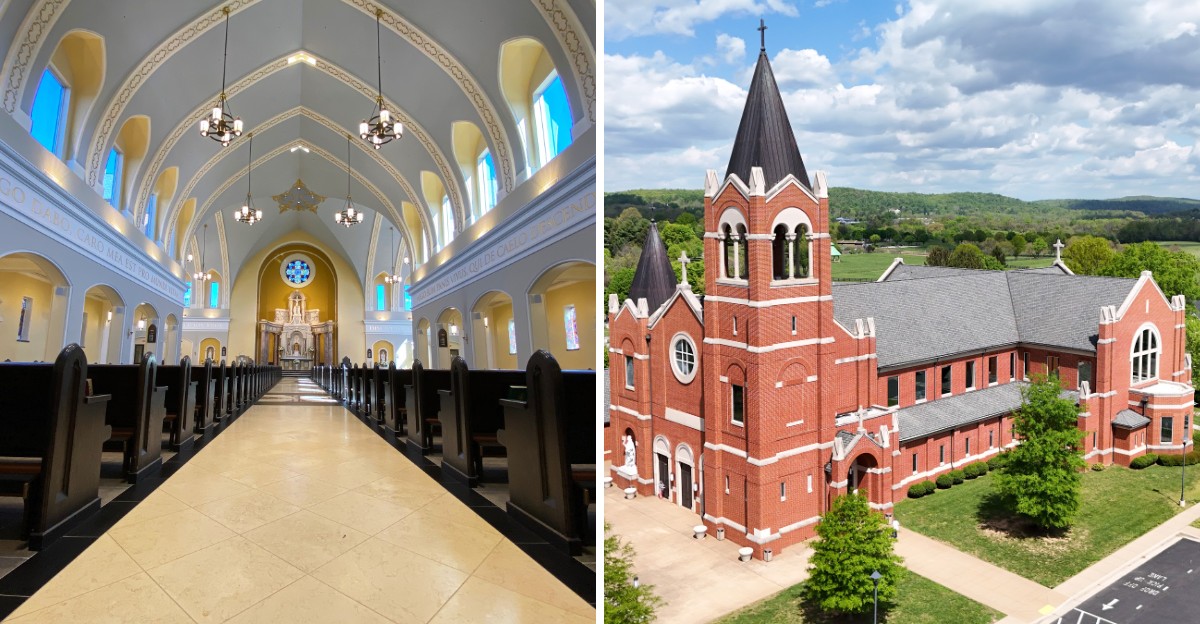
A 35-foot marble altar transported from another state and given a new home inside a church? That’s an extraordinary piece of architectural recycling, especially when the structure is far too elaborate to be considered ordinary decoration.
The Virginia church incorporated the salvaged altar into its rebuilt worship space, preserving craftsmanship that might otherwise have been lost. Its impressive scale and intricate stonework make it a striking feature of the interior, connecting the building with a different chapter of religious history.
I find the idea of reusing historic architectural elements fascinating. Something created for one congregation can continue serving another community generations later, carrying its original craftsmanship into a completely different setting.
The altar also gives visitors a reason to appreciate the building’s artistic details. Beyond its religious significance, the project tells an interesting story about preservation and thoughtful reuse.
A Marble Giant Made A Very Long Road Trip
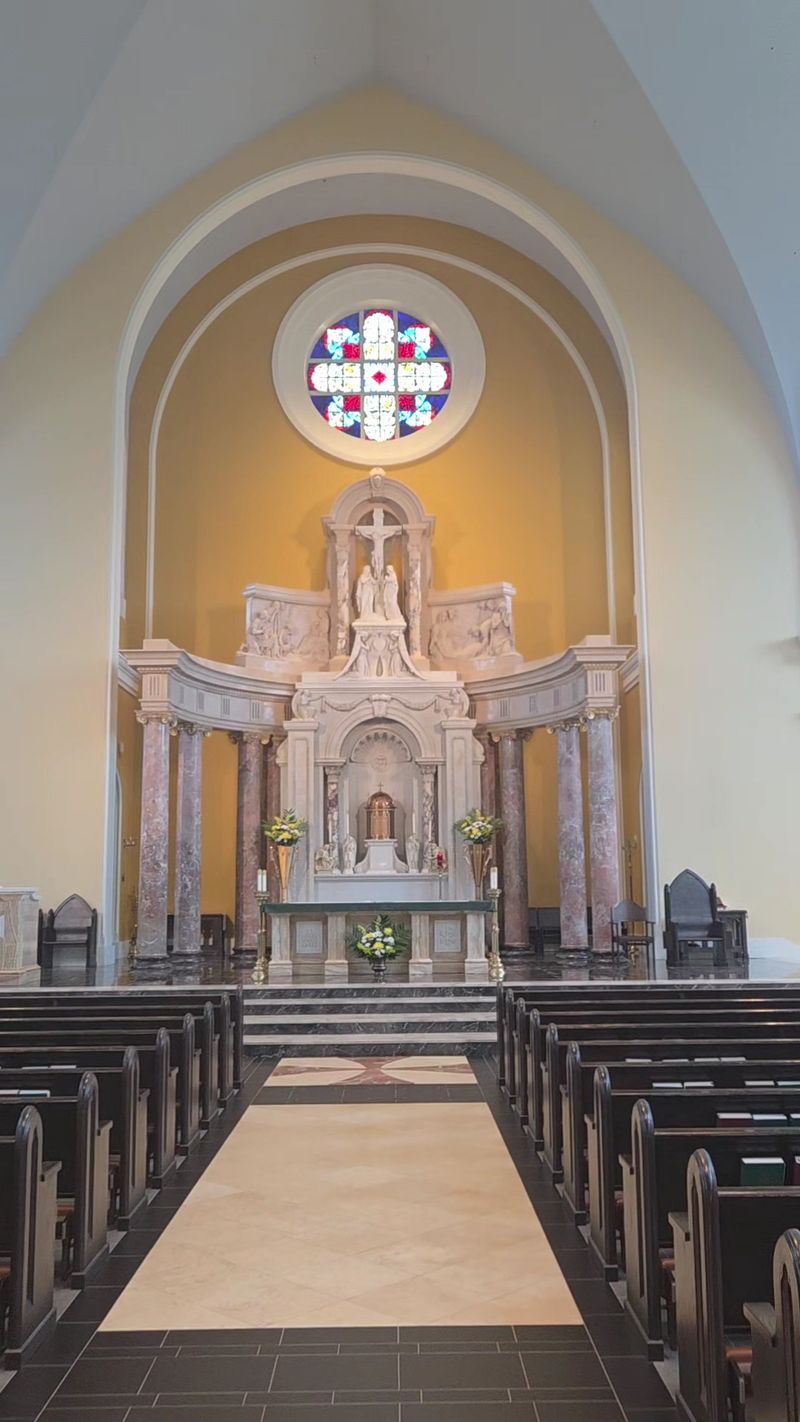
Few altars can say they changed states. The towering rear altar at Saint John the Apostle Catholic Church in Leesburg began its life inside a church in Newark, New Jersey.
When that marble needed a new home, the parish stepped up. The result is a 35-foot centerpiece that now rises behind the sanctuary in Virginia.
Moving it wasn’t as simple as loading a truck. A company called Rugo Stone handled the job of taking the original altar apart in New Jersey.
Crews spent four straight weeks on the work. They put in 14-hour days, seven days a week, to get it done right.
That schedule sounds exhausting, and it probably was. Still, each carved piece had to come down safely, because marble doesn’t forgive careless hands.
Once the pieces reached Leesburg, the next challenge began. A specialized overhead crane system lifted the heavy components so workers could guide them into position.
I love that this altar carries a whole other city’s history inside it. Generations of people in Newark once prayed in front of it.
Now a new community gathers before the same stone. That kind of continuity is rare, and it gives the newer building an instant link to the past.
Ten Weeks Of Patient Puzzle Work Paid Off Big
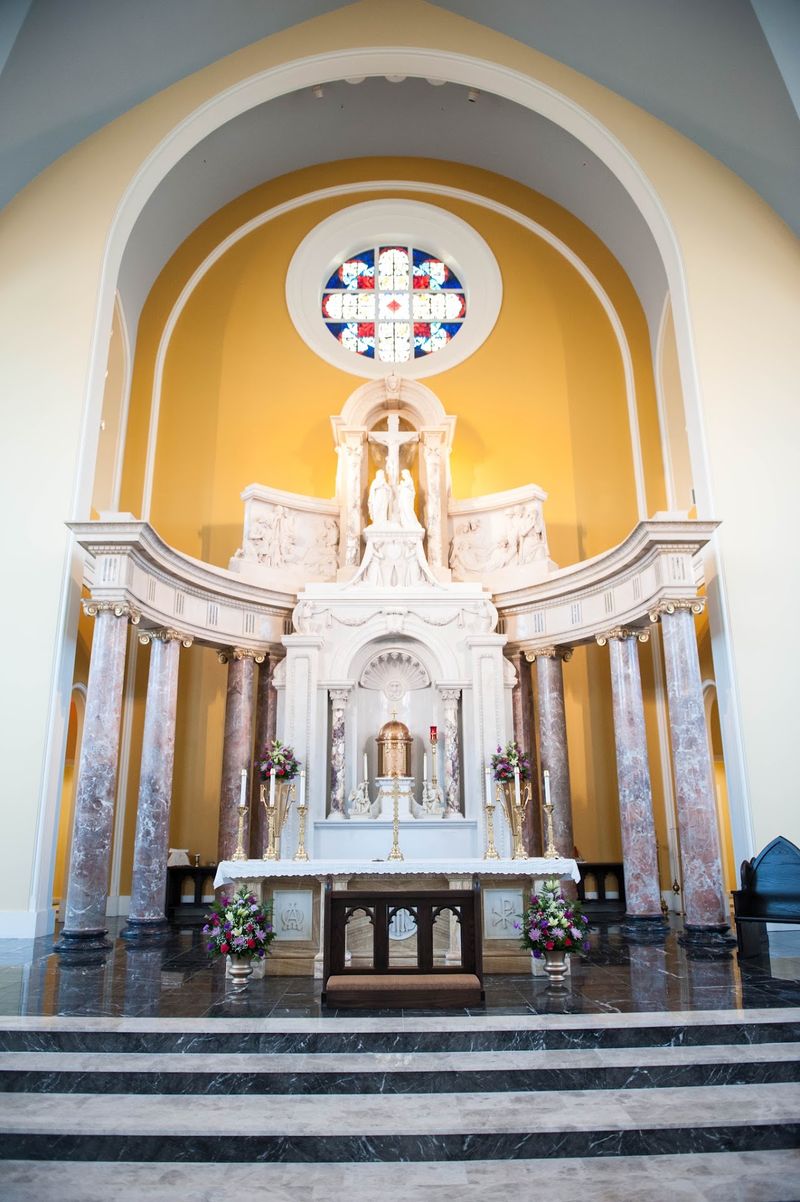
Think of the biggest jigsaw puzzle you ever finished. Now make every piece solid marble and some of them taller than a person.
That was the task facing the marble masons and riggers in Leesburg. They reassembled the full 35-foot rear altar over a ten-week period.
Patience was clearly part of the job description. Every carved section had to line up with the next one, or the whole design would look off.
The crew didn’t stop at simply stacking pieces. The project also included restoring damaged parts and fabricating replacement pieces where needed.
That detail matters more than it sounds. Old stone can crack or chip during a move, so new pieces had to blend with the original carving.
The effort earned real recognition. The work received the 2012 MIA Pinnacle Award of Excellence, an honor from the stone industry.
Awards like that don’t go to rushed or sloppy work. They go to projects where craftsmanship shines in every joint and edge.
When you look at the finished altar, try to notice how seamless it appears. Knowing it once arrived in pieces makes the smooth result even more impressive, and a little mind-boggling too.
Five Shrines, A Pulpit, And Three Fonts Joined The Party
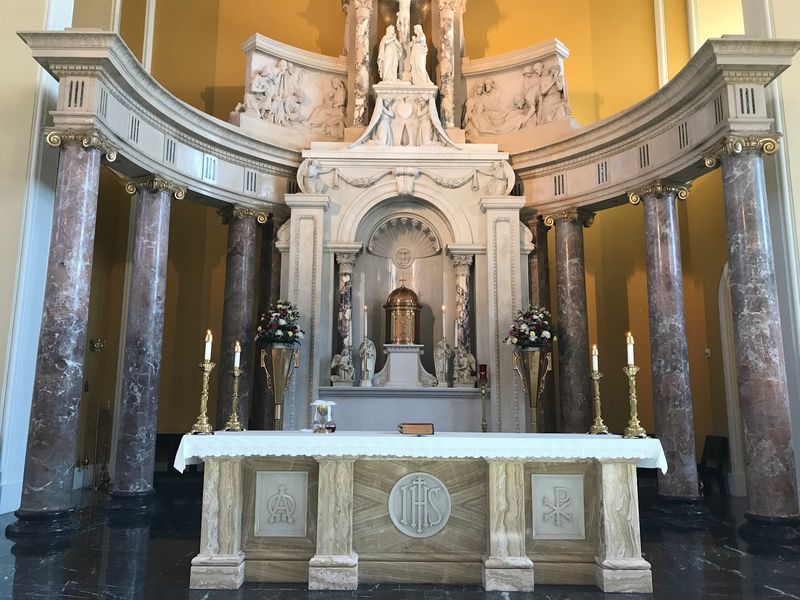
The big altar gets the headlines, but it brought plenty of company. The stone project at the church covered far more than one centerpiece.
Crews also installed five side shrines around the worship space. Each one gives the eye another place to rest beyond the main sanctuary.
Then there’s the main altar of sacrifice, the table at the heart of the Mass. It stands in front of the soaring rear altar, and it was part of the same installation.
A pulpit joined the lineup as well. That’s where readings and preaching happen, so it plays a central role every weekend.
Three baptismal fonts were rebuilt for the new church too. I find it moving that so many marble pieces were given a second life instead of being lost.
Taken together, these features make the interior feel unified. The stone pieces echo one another, so nothing looks like an afterthought.
If you visit, give yourself time to walk around the edges of the room. The side shrines reward a slower pace.
Rushing straight to a pew means missing half the craftsmanship. A quiet loop around the space shows how much careful work filled this building.
Gothic Meets Romanesque In A Surprisingly Roomy Design
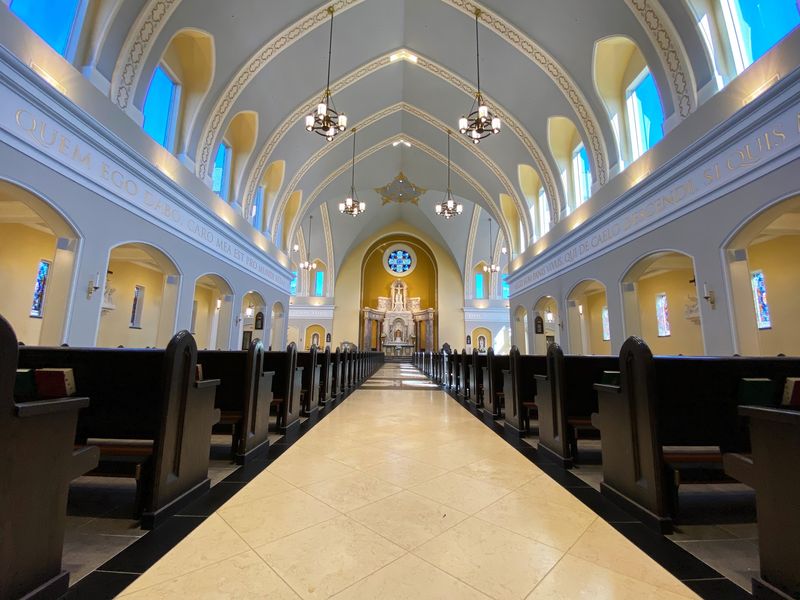
Architects love a good label, and this one has a fun mix. The church was designed in an American Vernacular style with Gothic and Romanesque inspirations.
In plain terms, it borrows from old European church traditions. Then it blends them with a practical, homegrown American approach.
Gothic style usually brings to mind pointed arches and height. Romanesque leans toward sturdy forms and rounded arches, so the combination feels both lofty and grounded.
Size is another highlight. The worship area can seat 1,100 people, which is a huge jump for a parish that once fit in a tiny chapel.
That capacity reflects real growth in this part of Virginia. The parish needed space, and the design delivered plenty of it.
The building also has stained glass windows worth noticing. They include newer saints such as St. Kateri and St. Bakhita.
I like that detail a lot. It shows the church honoring recent holy figures, not only famous names from centuries ago.
Look for those windows when light pours through them. Matching faces to saints turns a visit into a small, rewarding scavenger hunt for curious minds of any age.
Groundbreaking To Dedication Took Under Two Years
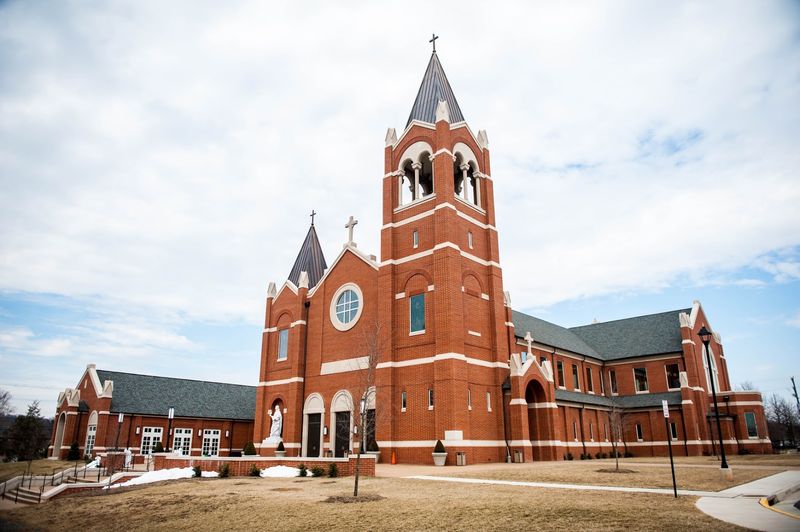
October 2, 2010, was the day shovels finally hit the dirt. That groundbreaking marked the start of construction on the new Saint John the Apostle Catholic Church.
Less than two years later, the building was ready. The parish dedicated the new church on August 3, 2012.
That timeline sounds quick, but it hides a longer story. Years of planning and fundraising came before any construction crew showed up.
Growing parishes often face a tricky problem. They have more people than seats, yet building something new takes serious time and money.
For about twenty years, Masses here were held in the Parish Center. That arrangement lasted from 1992 until the new church opened in 2012.
Picture attending weekly services in a multipurpose space for two decades. Moving into a dedicated church with a soaring marble altar must have felt like a giant upgrade.
I believe dedication day carried extra meaning because of that wait. The community had shown up, given, and waited a long time.
So when you see the finished space, remember the patience behind it. Grand buildings rarely appear overnight, and this one certainly didn’t skip the hard part.
The Little Church Across The Street Started Everything
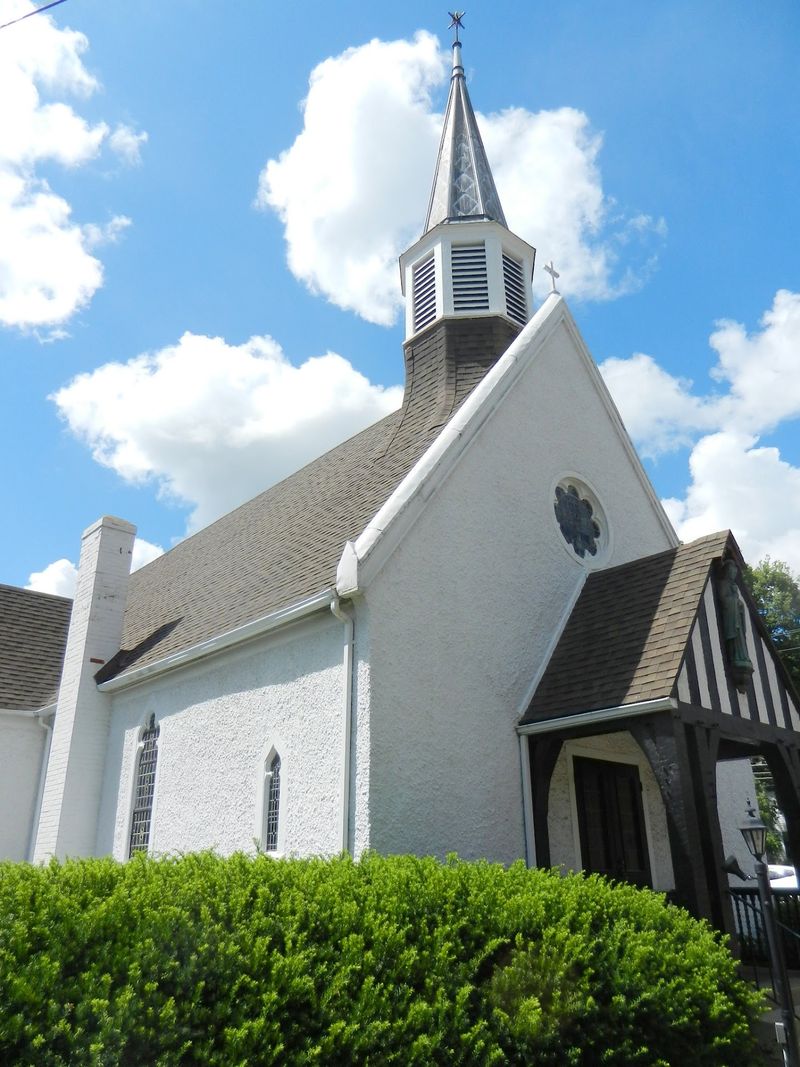
Long before the marble arrived, there was the Little Church. It began in 1878 as the Immaculate Conception Chapel.
That original building was a small rectangular structure. It held roughly 80 to 100 people, which feels cozy compared to today’s 1,100 seats.
The chapel still stands across the street from the new church. You’ll find it at 231 North King St, Leesburg, VA 20176.
In 1927, the chapel was significantly enlarged. That same year, it took the name Saint John the Apostle and became an independent parish.
The biggest makeover came between 1936 and 1939. Extensive renovations transformed the building into a historically accurate reproduction of a medieval French chapel.
Yes, a medieval French chapel in downtown Leesburg. That’s not something you expect to see on a regular stroll through a Virginia town.
I love that the parish kept this building rather than replacing it. Having the old and new churches facing each other tells the whole story at a glance.
Couples seem especially fond of the old chapel for weddings. With its storybook look and long history, it’s easy to understand why someone would choose it.
A Rectory Older Than The Civil War Still Has Residents
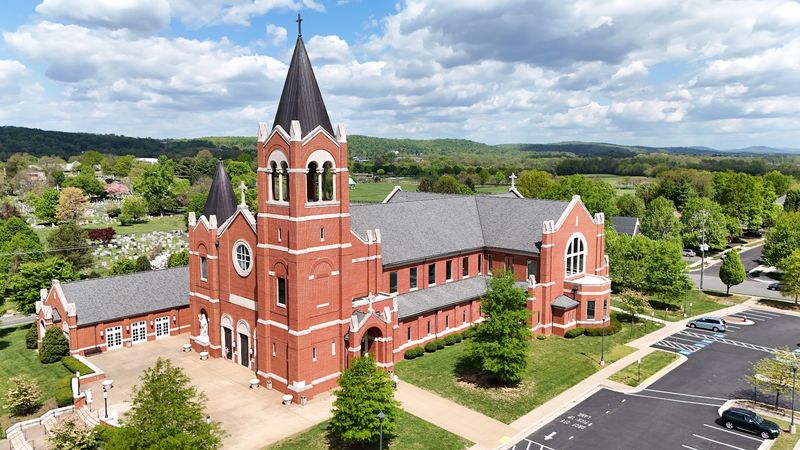
Here’s a fun one for history buffs. The parish rectory is an antebellum house built in 1850.
That makes it older than the chapel itself. The house was already standing for almost three decades before the Little Church first opened.
It isn’t a museum piece, either. The parish priests actually live there today.
Living in a home from 1850 must come with some character. Old floors and walls have stories, even if nobody writes them down.
The rectory is one of several historic buildings on the parish campus. Together, they give the grounds a layered feel that spans more than 170 years.
That mix is part of what makes this place stand out. You get a modern church, a reworked French-style chapel, and a pre-Civil War home all close together.
Please remember the rectory is a private residence. Admire it from the outside, and give the priests the same privacy you’d want at home.
Even from the sidewalk, though, it adds something special. Seeing a house from 1850 next to a church dedicated in 2012 is a quick lesson in how communities grow without erasing their roots.
Masses In Two Languages Keep The Pews Busy
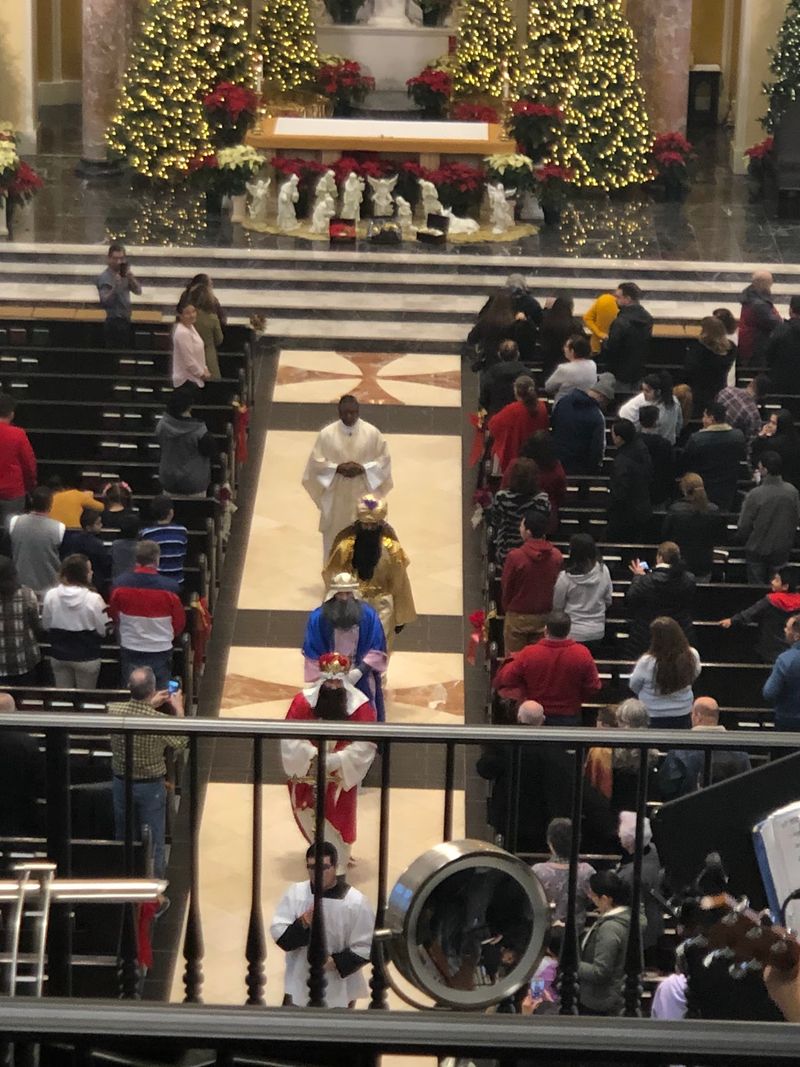
A gorgeous building only matters if people actually use it. Thankfully, this parish stays very active throughout the week.
St. John the Apostle offers multiple Masses each week. Services are held in both English and Spanish, serving a diverse community.
That bilingual schedule says a lot about Leesburg today. The town has grown, and the parish has grown right along with it.
Beyond Mass, the church runs various ministries and sacramental programs. Families can find religious education, and there’s an active youth ministry too.
The parish also hosts community events throughout the year. Church picnics are one example of the social side of parish life here.
All of this makes the place feel lived in, not just admired. A marble altar is impressive, but people gathering around it give it purpose.
Planning a visit? Check the current Mass schedule before you go, since times can shift with seasons and holidays.
Arriving a little early is a smart move as well. You’ll have time to look at the altar, the shrines, and the stained glass before things begin, without feeling rushed or turning around in your seat mid-service.
Plan A Leesburg Stop Around Both Churches
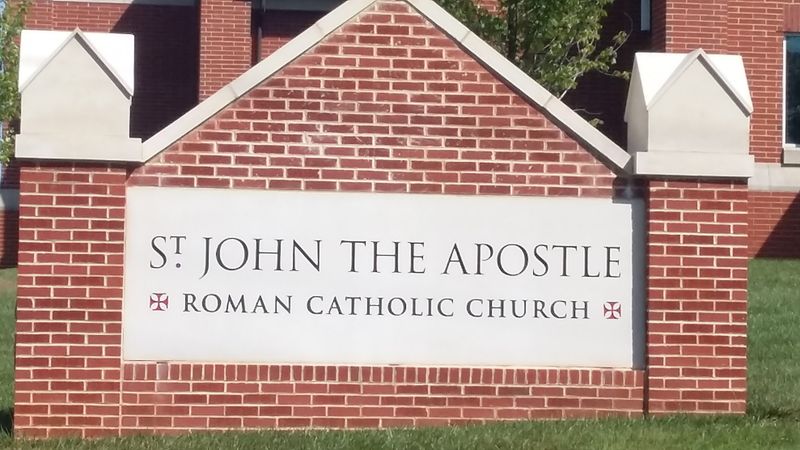
Two churches, one short walk, and nearly 150 years of history between them. That’s a pretty great payoff for a single stop in northern Virginia.
The new Saint John the Apostle Catholic Church sits at 101 Oakcrest Manor Dr NE, Leesburg, VA 20176. The historic Little Church stands just across the street.
That closeness makes visiting easy. You can see the marble altar and the French-style chapel in one trip.
The newer church has a large parking lot, which helps on busy days. Still, weekend Masses draw crowds, so a weekday visit may feel calmer for sightseeing.
Be respectful if services are happening. This is an active house of worship first, and a tourist stop second.
Dress comfortably but modestly, and silence your phone. Small courtesies go a long way inside a sacred space.
Leesburg itself has a charming historic downtown to explore nearby. Pairing it with your church visit turns a quick stop into a full afternoon.
I can’t think of a better way to see how one town’s faith community grew over time. Start small at the chapel, then finish in front of that 35-foot marble giant from New Jersey.
