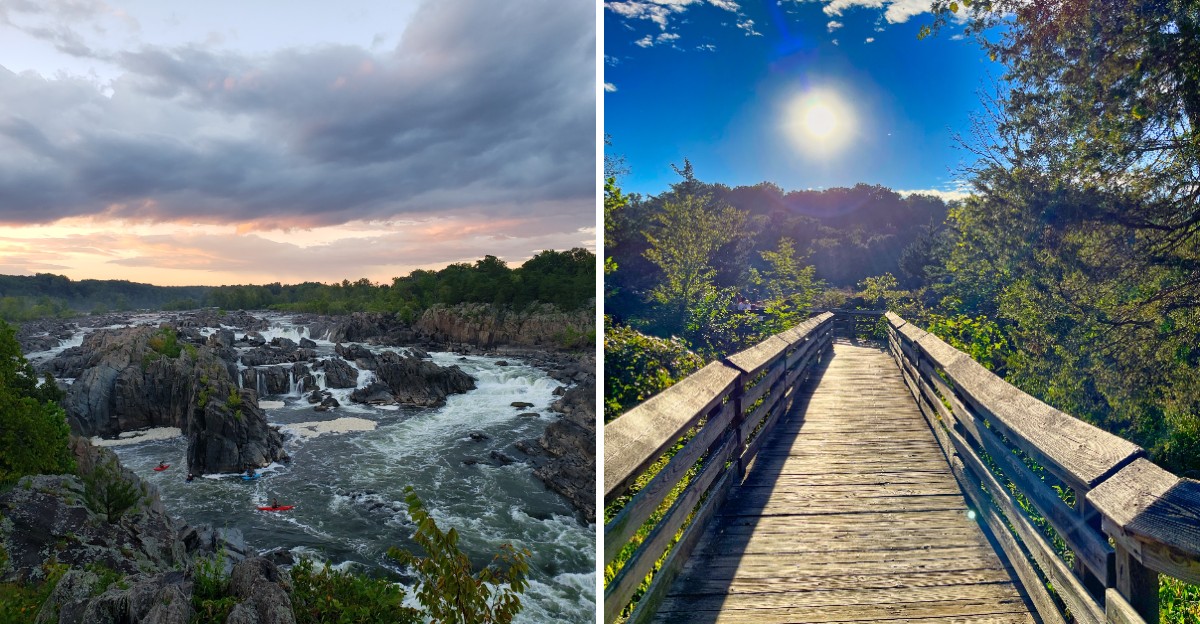
A wooden boardwalk ends with a front-row view of whitewater crashing more than 60 feet over rocky ledges. That dramatic sight comes after a surprisingly short walk across a river island in Maryland.
And you don’t need to scramble over boulders to reach it.
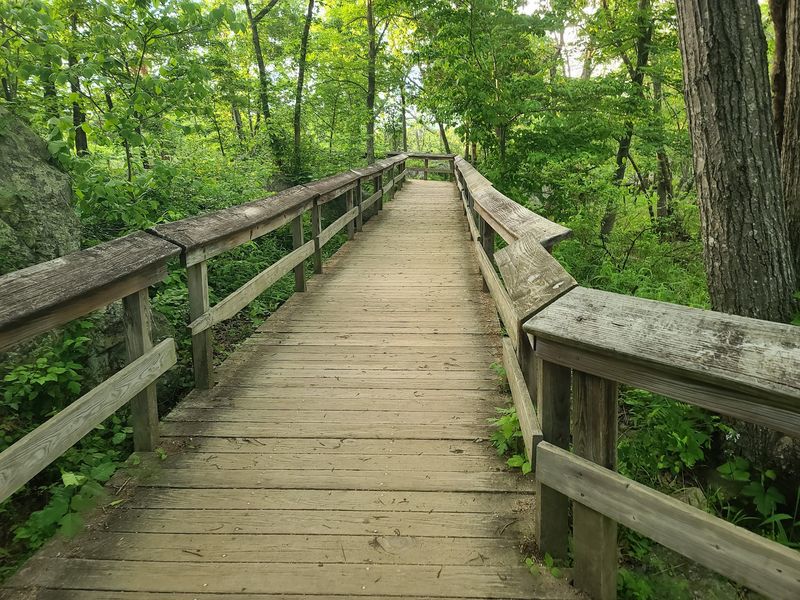
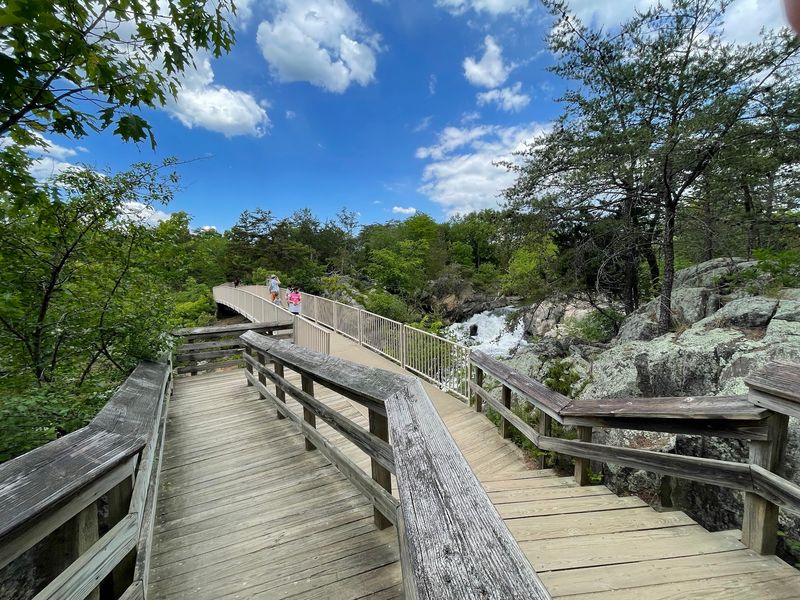
A series of bridges and wooden walkways crosses a floodplain shaped by powerful river currents. The boardwalk itself runs just a quarter mile to the overlook, passing a rare habitat where floods carry seeds and rearrange debris.
The rocky channels beneath the bridges can look completely different as water levels change.
I find it remarkable that a trail this easy brings you so close to such a powerful scene. The walk stays gentle, but the river certainly doesn’t.
It’s the kind of contrast that makes a short outing linger in your mind much longer than expected.
A Quarter-Mile Walk Leads to a Very Loud Reward
Short trails rarely deliver this much drama. Olmsted Island Overlook sits at the end of a quarter-mile path made of boardwalks and bridges in Potomac, Maryland.
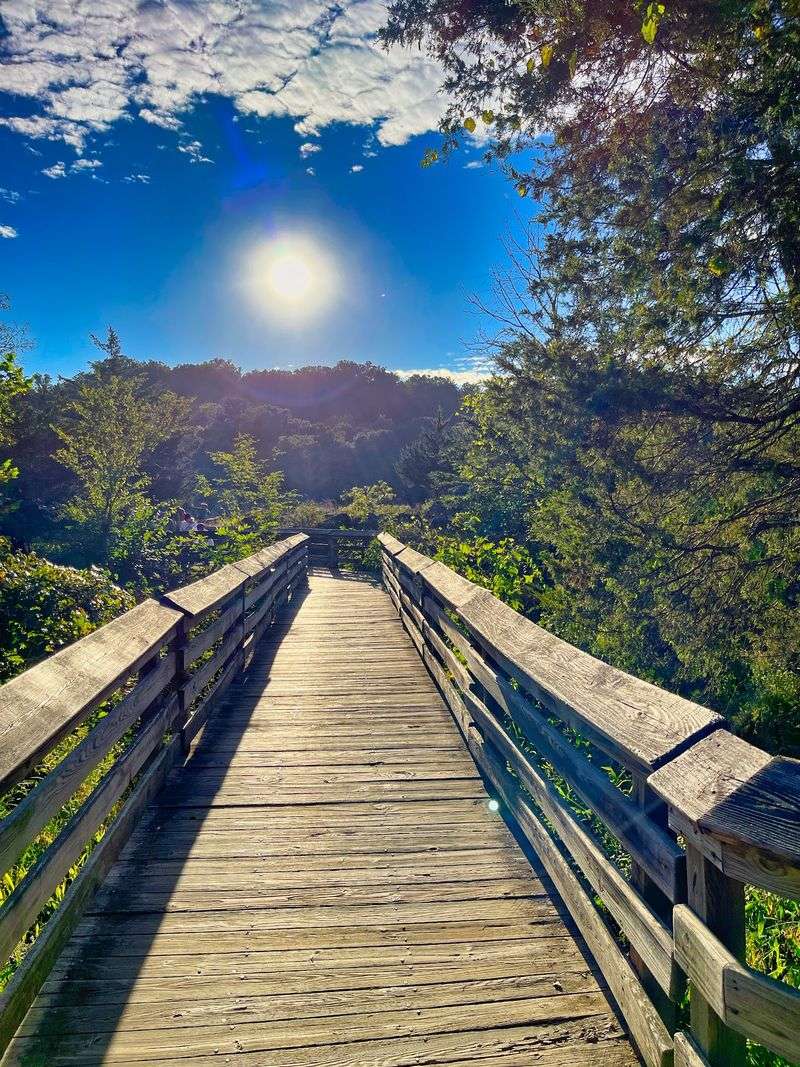
The route is easy, flat, and built for steady footing. You won’t need hiking boots, trekking poles, or a granola bar emergency stash.
The walk crosses a terraced floodplain before reaching Olmsted Island. That small island sits right in the middle of the Potomac River.
Along the way, you’ll cross rushing side channels on sturdy bridges. Water churns below you while the boardwalk keeps your shoes perfectly dry.
Then the platform appears, and the Great Falls show up all at once. It feels a bit like the trail saved its best joke for the punchline.
The overlook is part of the Chesapeake and Ohio Canal National Historical Park. That connection means you get history, nature, and whitewater in one small outing.
Plan for a relaxed pace rather than a speedy round trip. The walk is short, but you’ll probably stop every few steps to stare at the water.
Bring curiosity and a fully charged camera. The view at the end tends to make people forget how short the walk actually was.
The Falls Put on a Whitewater Show You Won’t Forget
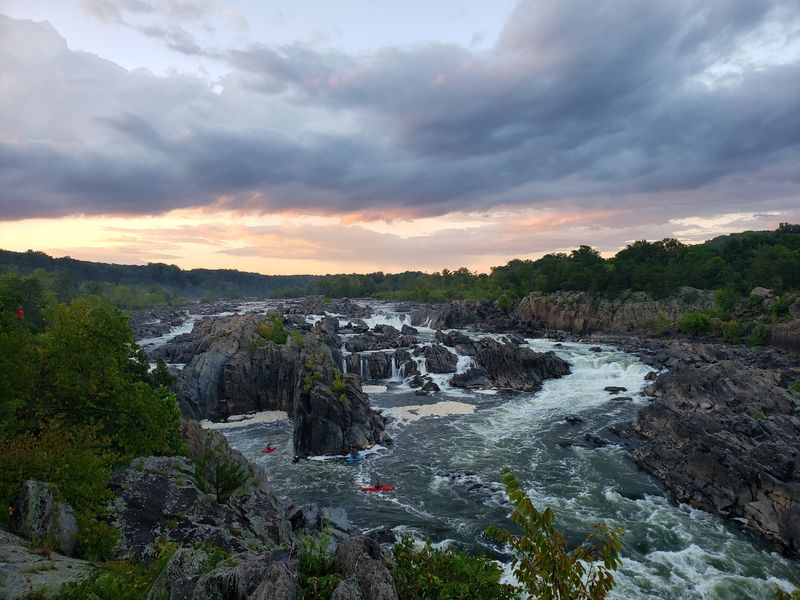
Seventy-six feet. That’s roughly how far the Potomac River drops over the course of a mile at the Great Falls.
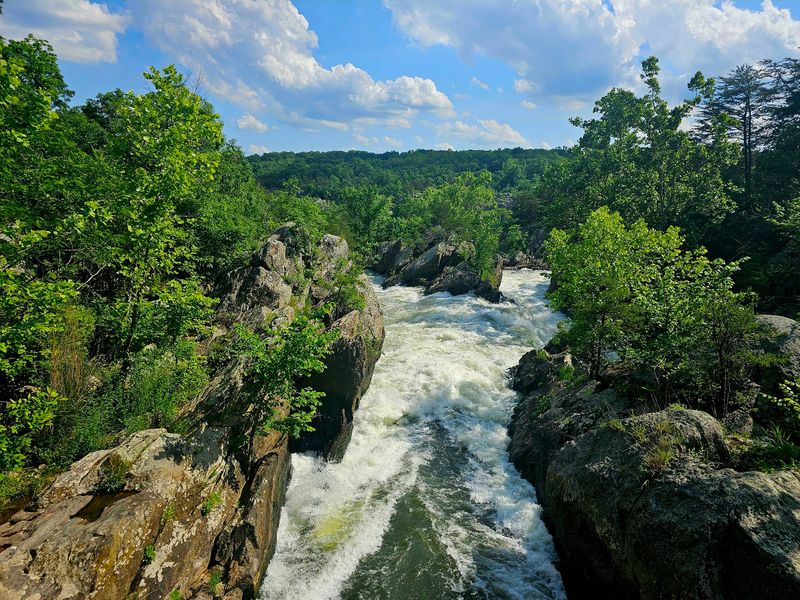
From the overlook, you see the river break into foaming chutes and crash through jagged rock. It then rushes into Mather Gorge, a narrow, steep-walled canyon just downstream.
The sound is a big part of the experience. Conversations get a little louder, and phone videos never quite capture the full roar.
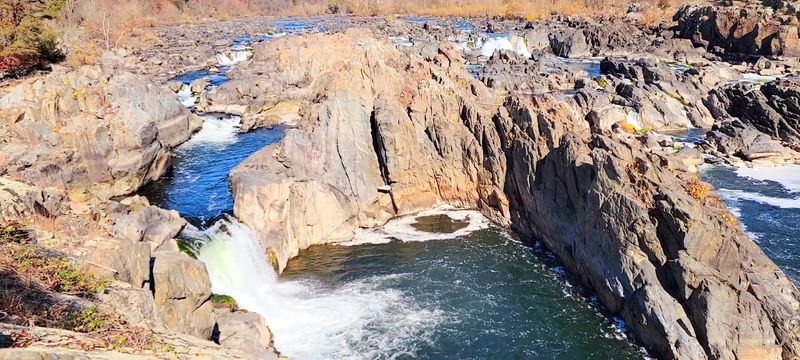
The water changes with the seasons and weather. After heavy rain, the river can swell and look wild, while drier stretches reveal more of the dark rock below.
Many people consider the Maryland view of the falls one of the best angles around. You face the cascades head-on from the middle of the river, which feels pretty special.
Smaller falls also appear around the main event. Keep your eyes moving, because the side cascades add extra texture to the scene.
Give yourself a few quiet minutes at the railing. Watching the current twist and tumble is surprisingly calming, even with all that noise.
It’s nature’s version of a fireworks show, minus the crowd counting down.
Your Wheels Are Welcome on This Waterfall Trail
Big waterfall views often hide behind steep climbs and rocky scrambles. Not here, and that’s a huge win.
The Olmsted Island trail, including its boardwalks and bridges, is designed to be wheelchair accessible. That opens up one of the region’s biggest natural shows to far more people.
Families pushing strollers can roll right out to the platform. Grandparents who skip rough trails can still stand face-to-face with the falls.
I can’t imagine a better example of a park sharing its best view fairly. Everyone gets the same front-row seat.
The flat surface also makes the walk relaxing for anyone who simply wants an easy stroll. You can focus on the scenery instead of watching every step.
Railings and fencing line the route. They keep you safe and keep the island’s plants protected at the same time.
Getting to the trailhead takes a short trip along the towpath from the visitor center. The distance is less than half a mile, so the full outing stays manageable.
Check the National Park Service conditions page before you go. Floods or repairs can close sections, and it’s better to know ahead than be surprised at the gate.
Rare Plants Thrive on an Island the River Keeps Rearranging
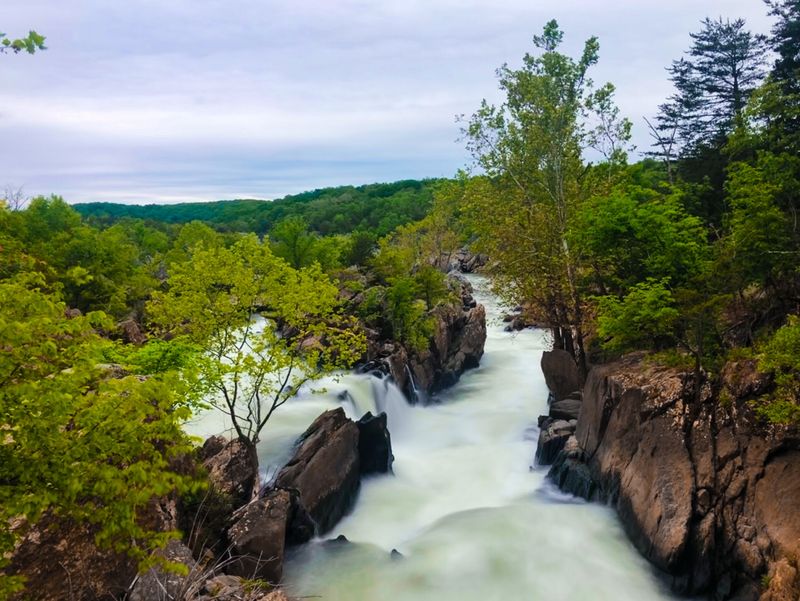
Floods aren’t a problem on Olmsted Island. They’re basically the gardener.
The island holds one of the most biologically diverse habitats in the entire National Park system. That’s a bold title for a patch of rock in the middle of a river.
Every flood brings fresh seeds from upstream. The rushing water also moves debris downstream, which constantly reshapes the landscape.
In 1972, Hurricane Agnes washed away many woody shrubs and trees. The island recovered, but it showed just how much power the Potomac holds.
As you walk, look at the rocky terraces and pockets of greenery around you. Each little patch tells a story about water, soil, and time.
The plants here live in a tough neighborhood. They handle floods, thin soil, and bare rock, yet they keep coming back.
That’s why the boardwalk rule matters so much. Staying on the wooden walkway protects fragile life that can’t handle trampling feet.
Think of yourself as a guest in a very busy greenhouse. Admire everything, touch nothing, and let the river handle the landscaping.
The Name Honors a Man Who Fought to Save This View
Every great view needs a champion. This one had Frederick Law Olmsted, Jr.
Olmsted Jr. lived from 1870 to 1957 and worked as a respected landscape architect. He strongly believed natural scenery deserved protection for everyone.
From 1926 to 1932, he served on the National Capital Park and Planning Commission. During that time, he helped safeguard the Great Falls and the gorge for public enjoyment.
Without people like him, this spot could look very different today. Instead, the falls remain open for anyone willing to walk a quarter mile.
The island bearing his name feels fitting. You literally stand on ground named for the person who helped keep it wild.
His last name might sound familiar. His father designed famous parks, but the son earned this honor through his own preservation work.
Next time you reach the railing, give a small nod to the planners. Their meetings and maps were probably less exciting than whitewater, but they mattered.
History can feel dusty sometimes. Here, it roars at you from about a hundred feet away.
Ancient Rock Explains Why the Falls Exist at All
Ice ages sound like ancient history, yet one shaped this exact view. After the last one ended, falling ocean levels pushed the Potomac to carve deeper into its path.
That carving exposed hard, resistant Piedmont rock. Olmsted Island is made from that tough stone.
Hard rock doesn’t wear away easily. So the river tumbles over it, creating the cascades you see today.
Here’s a fun twist. Over thousands of years, erosion has caused the falls to slowly move upstream to their current spot.
In other words, the waterfall has been walking backward for ages. Very slowly, of course, so don’t expect it to shift during your visit.
Mather Gorge downstream is part of that same story. The river cut the narrow canyon as it chewed through the land.
When you look at the gray, jagged rocks, you’re seeing the result of incredible patience. Water and time teamed up to build this scenery.
Kids especially might enjoy this detail. Ask them where they think the falls will be in another ten thousand years.
Park at the Old Tavern and Follow the Canal
Getting here starts at a historic landmark. Parking for the overlook sits at the Great Falls Tavern Visitor Center, 11710 MacArthur Blvd, Potomac, MD 20854.
An entrance fee is required for the Great Falls area of the park. Plan for that before you arrive so the gate doesn’t catch you off guard.
From the visitor center, follow the Chesapeake and Ohio Canal Towpath. The trailhead to the island is less than half a mile away.
The towpath itself adds plenty of charm. The old canal runs alongside you, a reminder of the boats that once traveled this route.
Walking or biking the towpath makes the overlook a natural side trip. Many people combine the canal and the falls into one easy day.
Cell service can be spotty on the island and at the overlook. Download directions or set meeting spots before you head out.
Arriving early can make parking simpler and the platform calmer. Weekend mornings tend to be popular, so timing helps.
Once you’re set, the hardest decision is whether to visit the canal first or the falls. Either way, you win.
Leave the Dog Home and Pack Out Every Wrapper
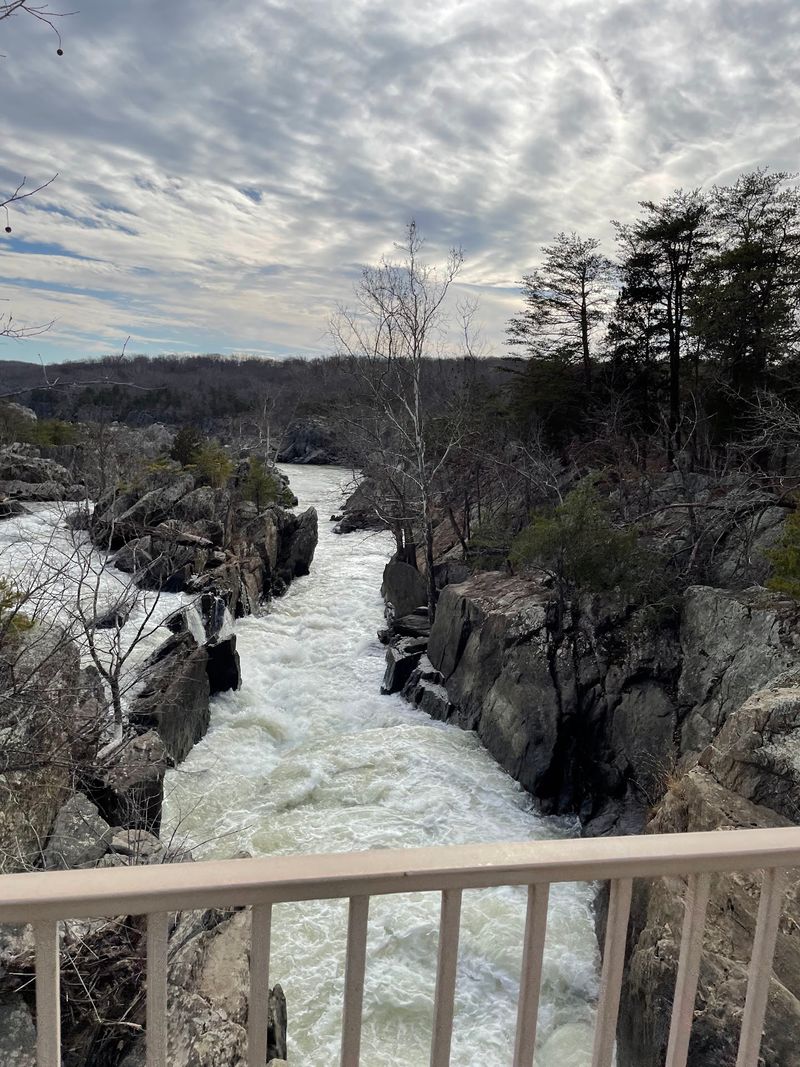
Rules can feel boring, but these ones protect something remarkable. A few quick reminders will keep your visit smooth.
Dogs are not permitted on the Olmsted Island trail. Your pup can enjoy the canal towpath with a friend while you visit the falls.
The park operates as a trash-free park. You won’t find garbage cans on the boardwalk or at the overlook.
That means anything you bring in leaves with you. A small bag for wrappers and bottles solves the problem fast.
Visitors must stay on the boardwalk at all times. Climbing onto the rocks or toward the river is off-limits for good reason.
The Potomac here is unpredictable and dangerous. Currents look beautiful from above but can turn powerful without warning.
Staying on the walkway also protects the island’s sensitive plants. One wandering shoe can damage growth that took years to settle.
Follow these simple habits, and you help keep the island healthy for the next visitors. It’s an easy trade for such a big view.
Honestly, carrying out a snack wrapper is a small price for front-row waterfall seating.
Bridges Over Side Channels Steal a Little of the Spotlight
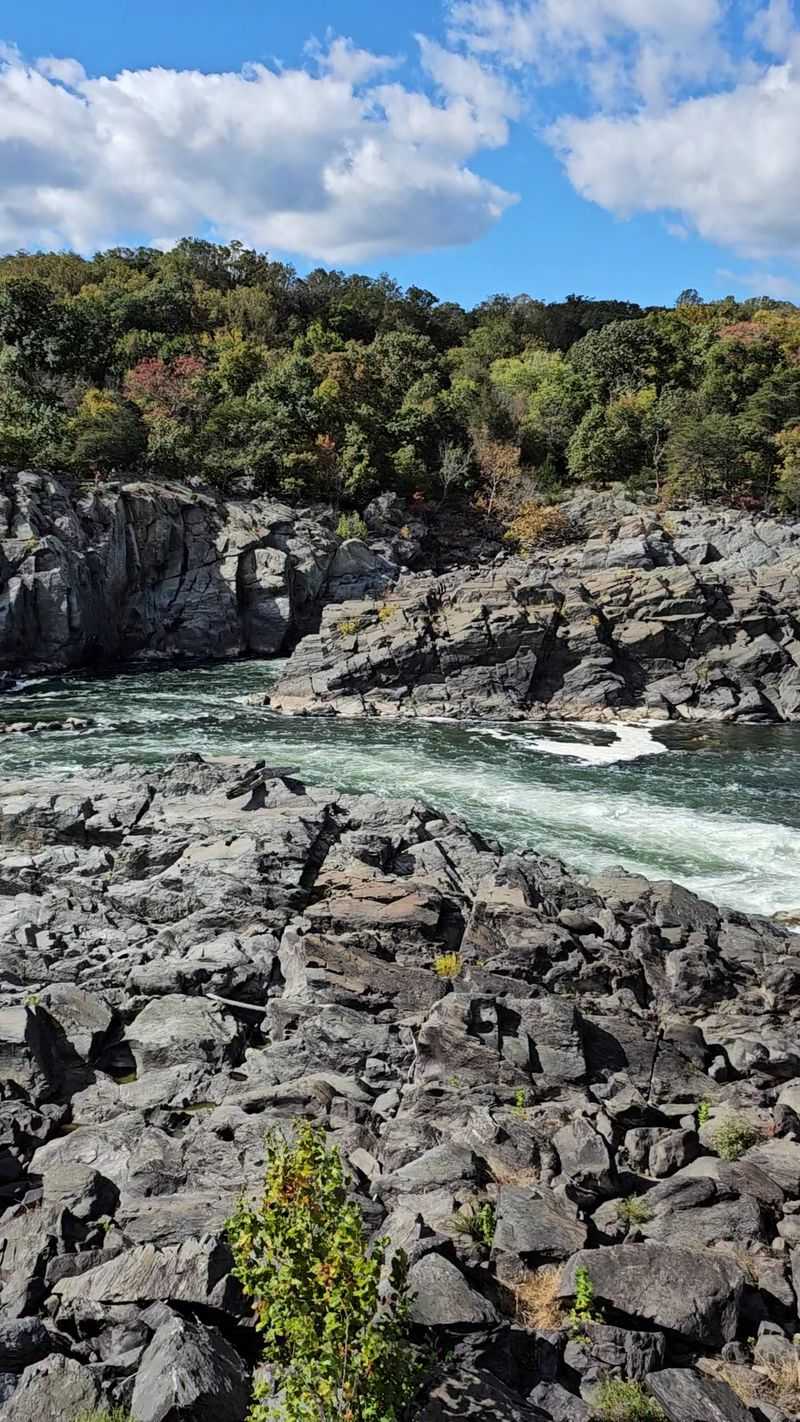
The main falls get top billing, yet the journey has its own surprises. Several bridges cross smaller river channels on the way to the platform.
Water rushes through these narrow passages and spills over rocks below your feet. Each crossing feels like a preview of the big show ahead.
These channels split off from the main river around the island. They give the landscape a busy, braided look.
Pause on each bridge and listen. The sound grows a little louder as you get closer to the Great Falls.
Photographers will find plenty to frame here. Rocks, rapids, and tree-lined banks create scenes that feel very different from the overlook.
Olmsted Island Overlook might be the destination, but the bridges make the walk memorable. Rushing through them would be like skipping the opening act of a concert.
Visiting in different seasons changes these views too. Green summer leaves and bare winter branches give the channels a whole new mood.
Maryland has plenty of scenic spots, yet few pack this much into a quarter mile. By the time you reach the falls, you’ll already feel rewarded.
