Seven hundred dozen pairs of stockings once came off the second floor of this building every week. Downstairs, workers packed canned goods for shipment by water and rail.
Now that same Maryland industrial landmark is filled with antiques. Talk about a dramatic change of inventory.
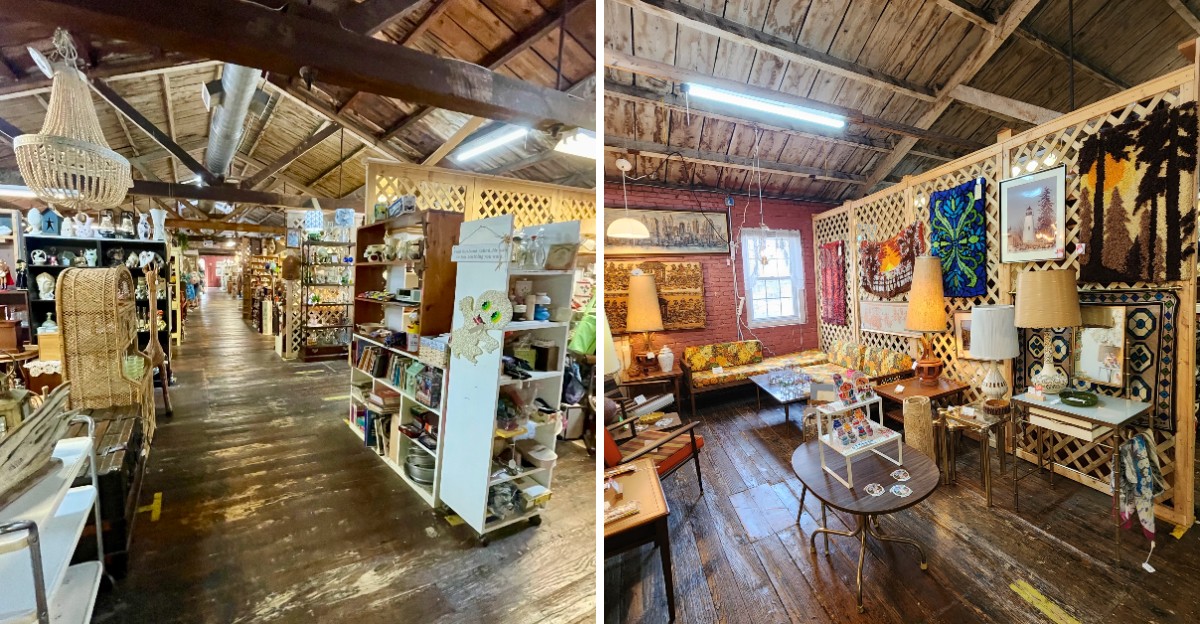
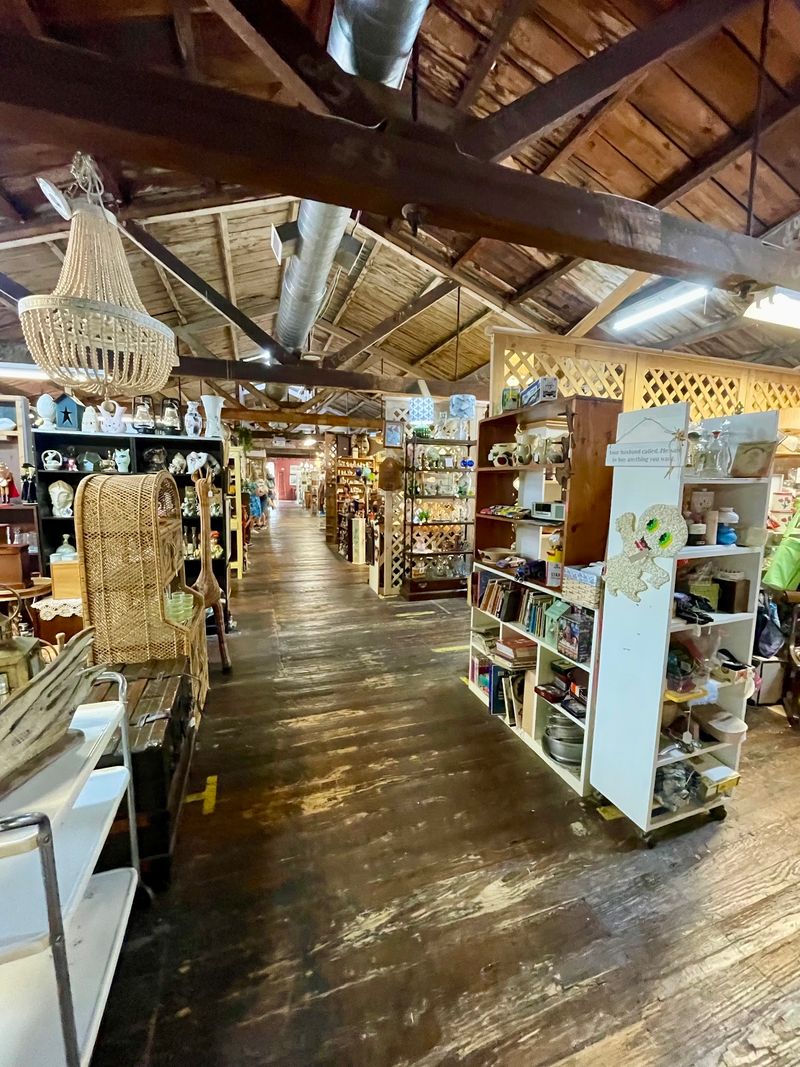
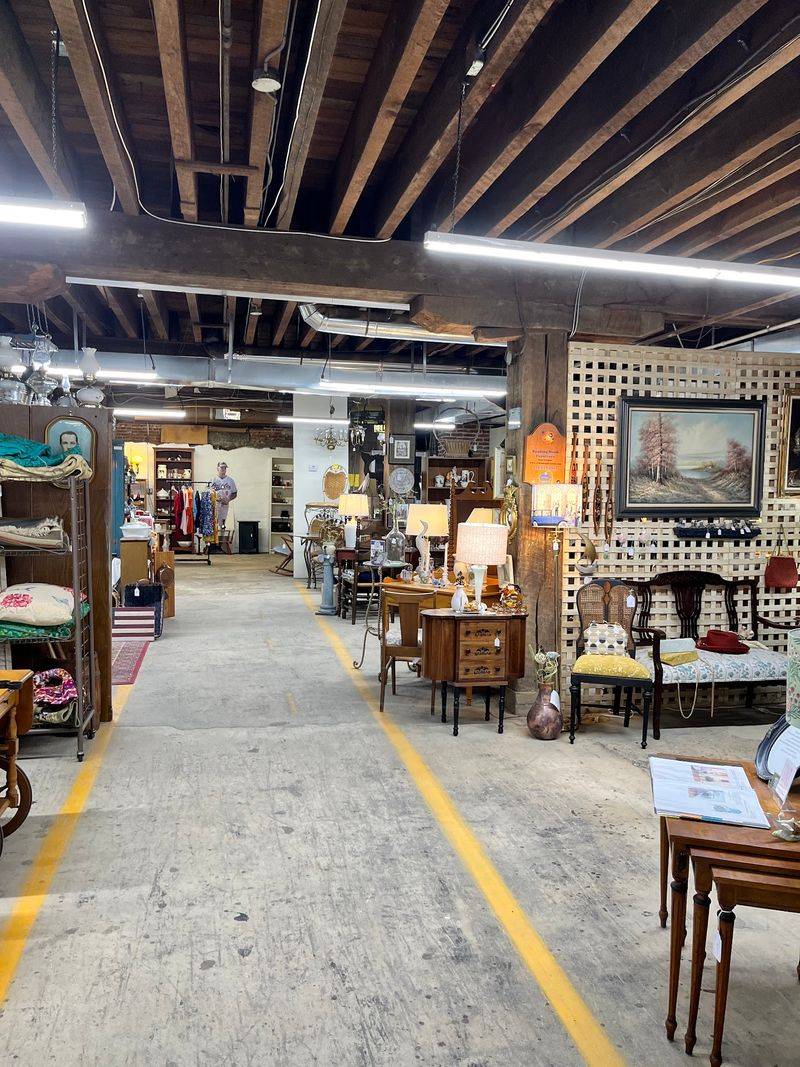
The former cannery holds roughly 20,000 square feet of vintage furniture, jewelry, old books, glassware, and odd little collectibles spread across three floors. More than 50 dealers stock the spaces, while original brick walls and heavy timber supports still reveal the building’s working past.
You can spend ages inspecting merchandise without noticing the history directly overhead.
What gets me is the thought of a factory floor turning into a place where people hunt for forgotten treasures. Somewhere among those shelves could be a piece that has survived almost as long as the building itself.
Those Old Cannery Walls Have Been Packing Treasures for Over a Century
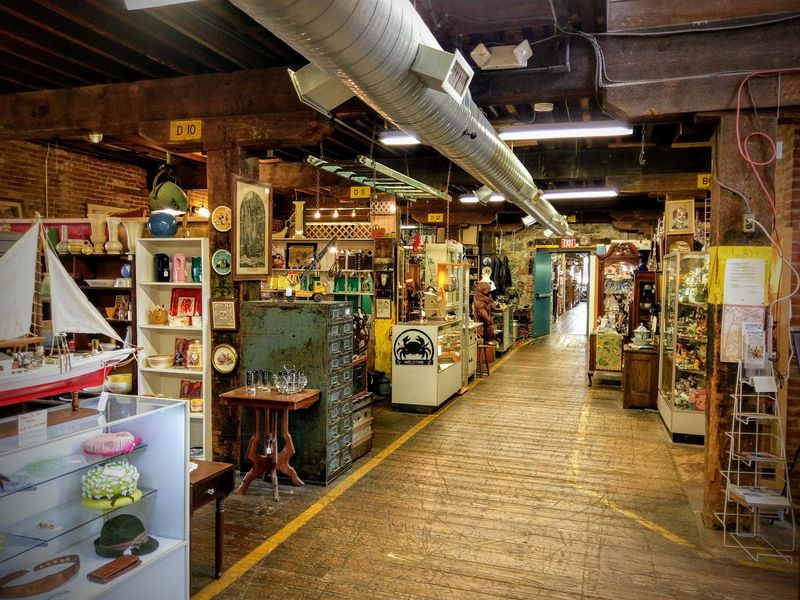
Brick foundations from around 1875 still hold up Seneca Cannery Antiques today. Some of the rear stone walls may even date back to the 1830s.
That makes the building older than nearly everything sold inside it. Pretty impressive for a place that now sells antiques for a living.
The main walls date to the 1890s, when the canning business was booming. Brothers Stephen and Robert Seneca built the operation into a fruit packing and can-making empire.
Their timing was excellent. The Chesapeake Bay region was a canning powerhouse, and the Seneca brothers wanted a big slice of it.
By 1883, their cannery could produce over one million cans a year. That ranked it among the largest canning operations on the whole Chesapeake Bay.
Products went out under the Red Cross label. Shoppers back then likely had no clue their peaches came from this exact spot.
Today, the building is listed on the National Register of Historic Places. That honor protects its story for future generations to enjoy.
Keep that in mind as you browse the aisles. You’re shopping inside a real piece of Maryland industrial history, not a modern copy dressed up to look old.
An Inventor Once Worked Out Can-Making Magic Right Here
Stephen Seneca didn’t just run a cannery. He also patented can-soldering machines in 1889 and again in 1891.
Soldering sealed the cans so food stayed fresh for a long time. Faster machines meant more cans, and more cans meant bigger business.
His inventions helped push the whole canning industry forward. That’s a lot of brainpower for one waterfront building in Maryland.
Here’s a fun twist in the story. In 1891, the second story became a hosiery mill instead of a canning floor.
Workers there made about 700 dozen pairs of hose every single week. That’s a mountain of socks and stockings coming out of a food factory.
The building clearly liked to multitask. Cans on one floor, hosiery on another, and somehow everything kept moving.
So when you ride up to the second floor today, give it a little nod. Long before vintage collectibles arrived, busy hands made clothing right there.
Knowing this backstory makes browsing feel richer. Every creaky corner once buzzed with machines, workers, and big ideas that changed how America stored its food.
Pocket Change Looked Very Different for Cannery Workers
Forget paper paychecks. Workers at this cannery were paid with brass and aluminum tokens, and that system lasted until the 1950s.
Tokens like these were a common way some companies handled wages back then. They’re also the kind of small, curious object collectors love hunting down today.
The cannery kept going long after the Seneca brothers sold it in 1901. It operated as Stockhams Cannery until after World War II.
That’s decades of seasonal work, packing, and shipping along the water. Generations of local families likely have some tie to this building.
I believe that’s what gives the place its quiet charm. It wasn’t a showpiece built for tourists, but a working building with real stories.
Then came a whole new chapter. In 2000, the space reopened as an antique mall, and it celebrated its 25th anniversary in 2025.
Twenty-five years of selling old things inside an even older building feels fitting. It’s history wrapped inside more history, like a set of nesting dolls.
Keep an eye out for local memorabilia as you shop. You never know what small pieces of Havre de Grace might surface on a shelf.
Three Floors Means You Should Pace Yourself
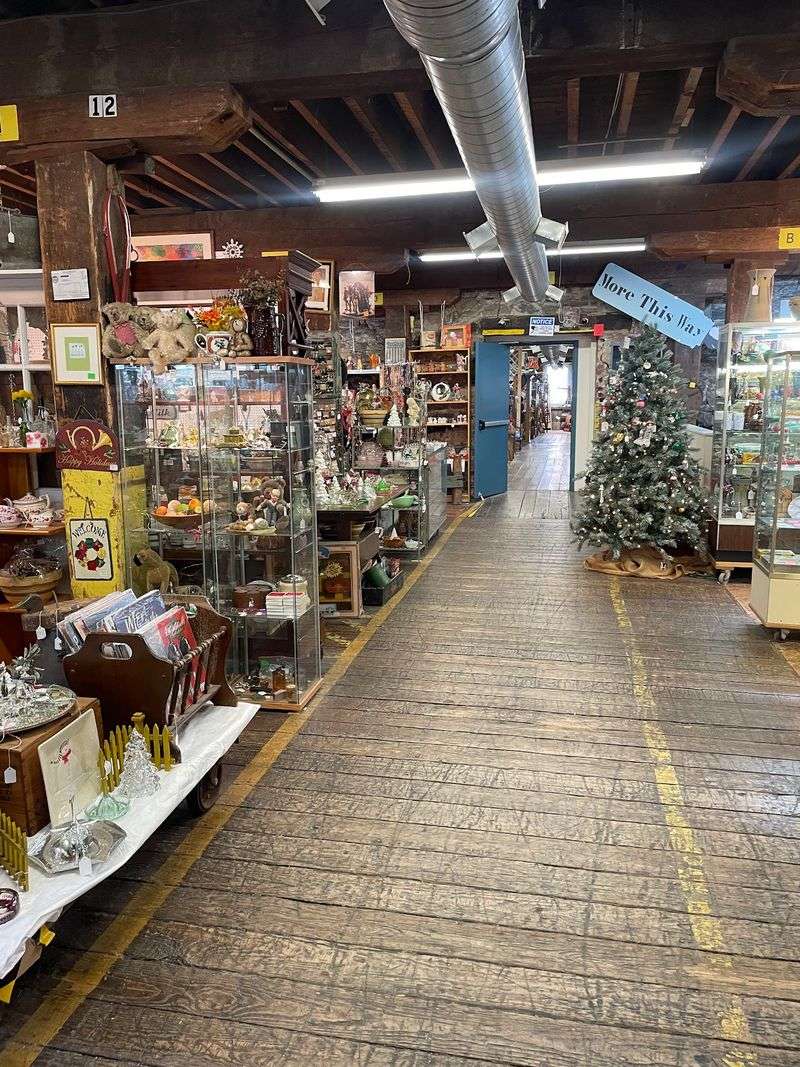
Twenty thousand square feet. That’s how much room Seneca Cannery Antiques spreads across its three stories.
For comparison, that’s bigger than many grocery stores. Except this one swaps cereal boxes for cast iron, lamps, and vintage jewelry.
More than 50 dealers rent over 90 vendor spaces inside. Each booth has its own flavor, so the mood shifts every few steps.
It’s widely considered the largest antique mall in Harford and Cecil Counties, Maryland. That’s a big title, and the building backs it up.
So how should you tackle it? Start on one floor and work through it slowly before moving on.
Rushing is the fastest way to miss the best piece in the room. Small items often hide on lower shelves or hidden behind bigger furniture.
Wear comfy shoes and plan for a few hours. This isn’t a quick ten-minute stop between errands.
Here’s a handy tip for serious shoppers. Snap a photo of booth numbers when something catches your eye, so you can find it again later.
With this many vendors, retracing your steps without notes can feel like a scavenger hunt.
Old Doors and Salvaged Pieces Bring Serious Character Home
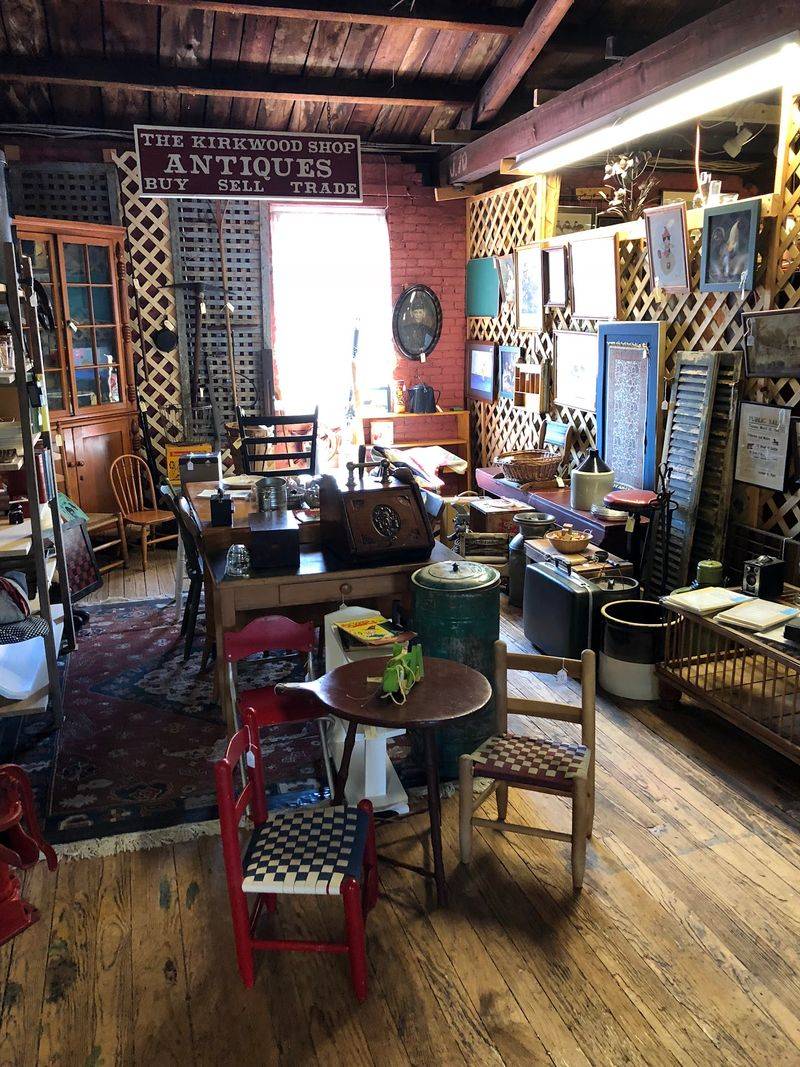
Some shoppers come for teacups. Others leave with a piece of an old house under their arm.
Reclaimed architectural elements are one of the specialties here. Think of salvaged pieces that once belonged to older buildings and now want a second life.
Furniture and decor with historic character fill plenty of space too. These are the pieces that make a room feel lived-in instead of store-bought.
Why does this matter for your home? A single old item can give a new room instant personality.
A worn table or vintage accent piece adds a story no flat-pack furniture can match. Plus, reusing old pieces keeps good materials out of the trash.
Planning a project? Measure your space before you visit, and bring those numbers along.
Nothing hurts quite like finding the perfect piece and guessing wrong on the size. Tape measures are a treasure hunter’s best friend.
Also think about how you’ll get things home. Bigger finds may need a roomier vehicle than your little hatchback.
It feels right that salvaged items live inside a building that’s been reused itself. This old cannery knows a thing or two about second chances.
Comic Fans and Pyrex Hunters Can Shop Side by Side
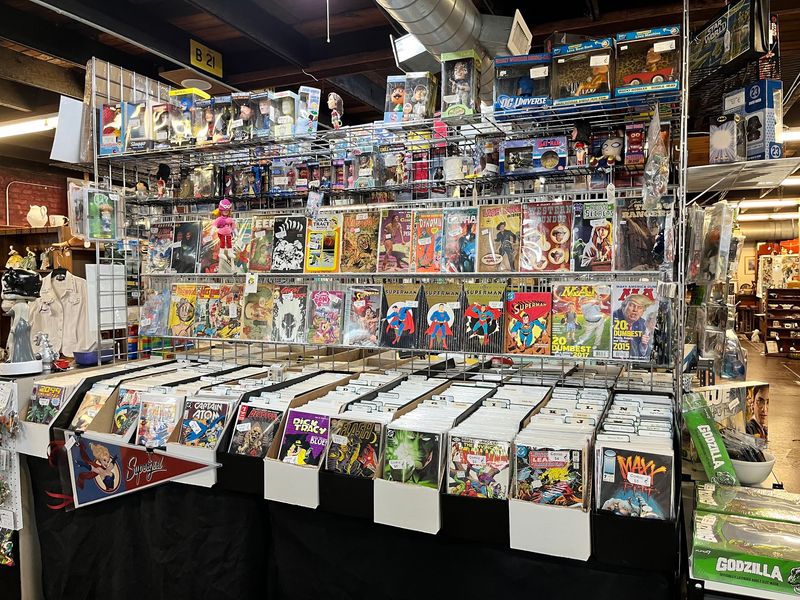
Grandma’s mixing bowls and a superhero comic might share the same aisle here. That mix is half the fun.
Vintage Pyrex has a loyal fan base, and you can find it at Seneca Cannery Antiques. Those bright patterned bowls bring back kitchen memories for lots of families.
Comic books and trading cards show up as well. Younger shoppers suddenly get very interested once they spot those.
Film memorabilia adds another layer for movie lovers. It’s a great way to bring a little Hollywood nostalgia into your living room.
Got a family with different tastes? This is a smart pick for group outings.
One person can study glassware while another flips through cards. Everyone wins, and nobody gets dragged along looking bored.
Collecting tip: know what you already own before you go. It’s easy to get excited and buy a duplicate of something sitting on your shelf at home.
A quick list on your phone solves that problem fast. Write down the patterns, issues, or sets you’re trying to complete.
Then let yourself wander a bit too. Sometimes the best find is one you never planned to look for.
Getting Around Is Easier Than You’d Expect in a Building This Old
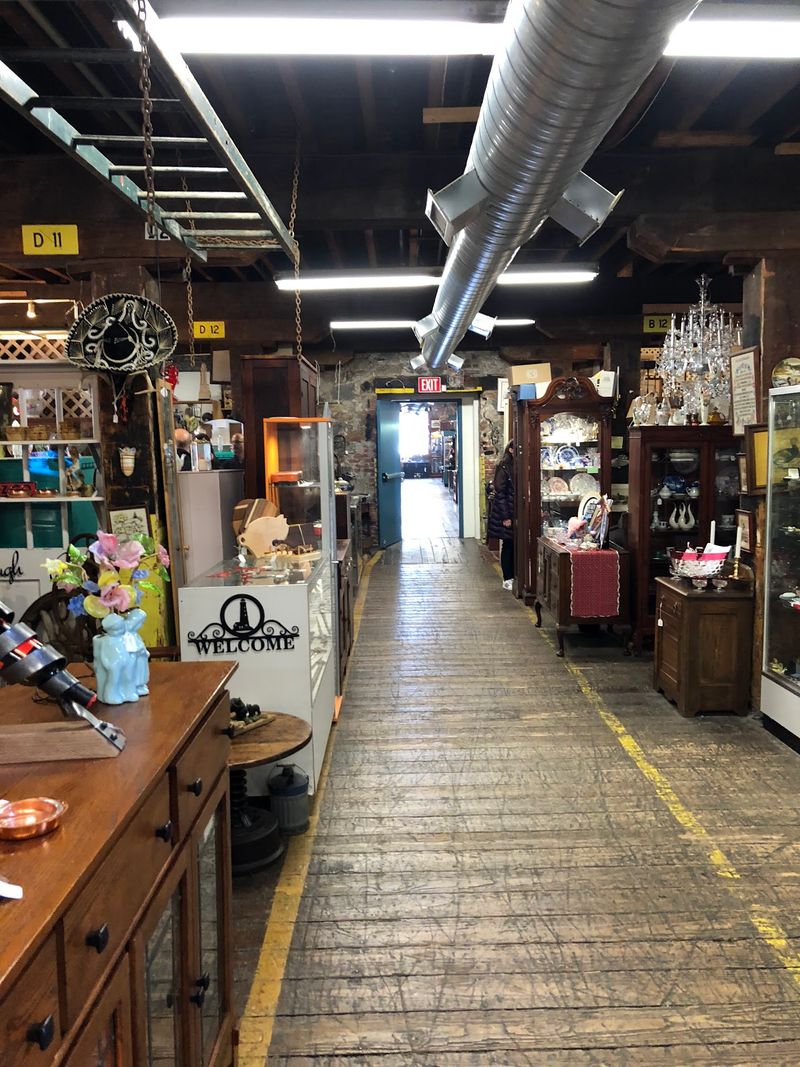
Old buildings and stairs usually go hand in hand. Thankfully, this one comes with an elevator that reaches all three floors.
The building is handicap accessible, which opens the fun up to more people. Grandparents, strollers, and anyone with tired knees can explore every level.
That’s a big deal in a structure with walls dating back well over a century. Modern access in a historic shell is a nice balance.
Parking is free, too. No circling the block feeding meters while worrying about your time running out.
Hours are simple to remember. The shop opens daily from 10 AM to 5 PM, every day of the week.
That steady schedule makes planning painless. Weekday escape or Saturday adventure, the doors will be open.
A smart move is arriving early in the day. You’ll have more time to browse without feeling squeezed toward closing.
Bring some cash along, as well. Small purchases are easier that way, and it keeps checkout simple.
Finally, remember this is a Maryland building from another era. Watch your step, take your time, and enjoy the old-school charm as you go.
The Waterfront Address Makes a Full Day Easy to Plan
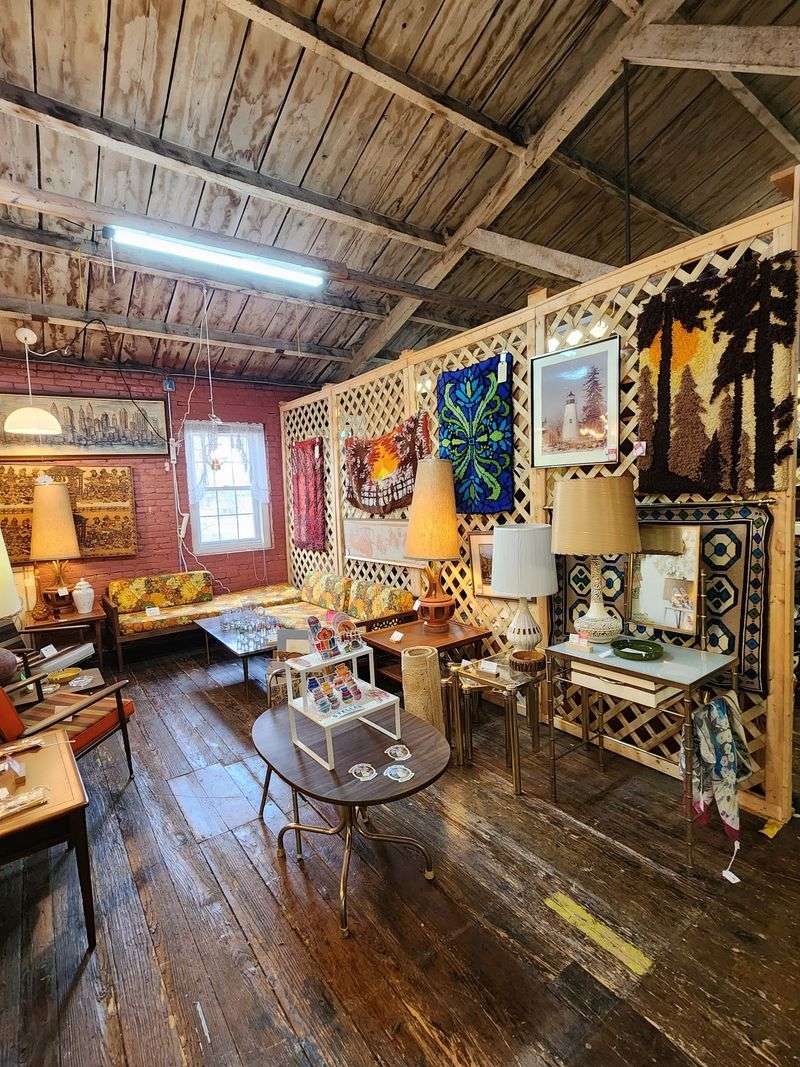
Location matters, and this one is a winner. You’ll find the shop at 201 St John St, Havre de Grace, MD 21078.
That puts it in historic Havre de Grace, right at the head of the Chesapeake Bay. The Susquehanna River flows nearby, giving the area its watery charm.
It makes perfect sense that a cannery started here. Easy water access helped businesses move goods in and out back in the day.
Today, that same setting makes a great day trip. You can shop for a few hours, then stretch your legs around town.
Havre de Grace has a historic feel that pairs nicely with antique hunting. Old streets and an old building just belong together.
Driving through on a road trip? The town sits close to Interstate 95, so it’s an easy detour.
That makes it a handy break from long highway stretches. Shopping beats staring at rest-stop vending machines any day.
Plan a little extra time for the area itself. A walk near the water after browsing feels like the perfect way to round out the visit.
Smart Shopping Moves Will Make Your Trip Even Better
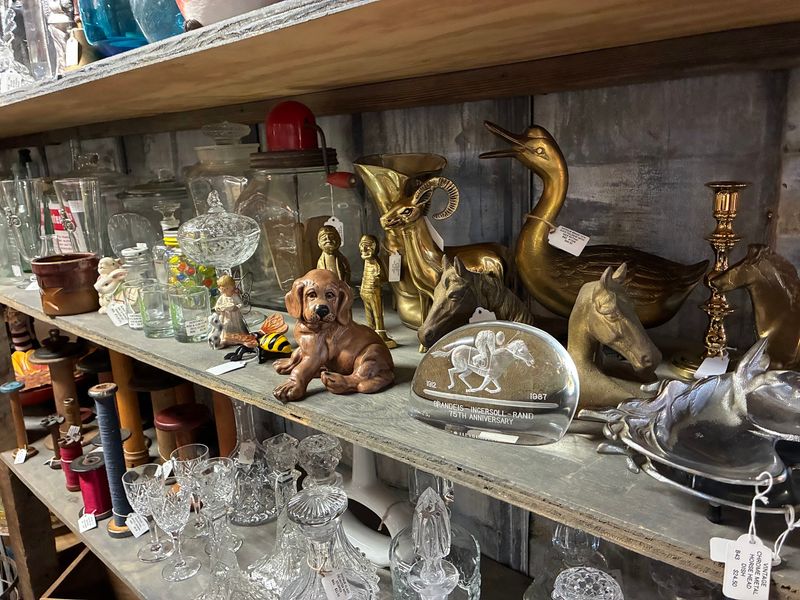
Every price tag here tells a tiny story. Each item is individually tagged so the right dealer gets paid at checkout.
That system keeps dozens of independent sellers organized under one roof. It also explains why checkout can take a little time on busy days.
Here’s something worth knowing before you pay. Seneca Cannery Antiques has a minimum purchase amount for card payments.
Small finds are easiest with cash in your pocket. Bring a few bills and you’ll skip any surprise at the register.
Prices vary from booth to booth, since each dealer sets their own. Some pieces feel like bargains, while others lean higher.
Do a quick search on your phone if you’re unsure about value. It takes a minute and helps you shop with confidence.
Patience pays off here. Inventory changes as dealers bring in new pieces, so repeat visits can reveal fresh surprises.
I like that no two trips are quite the same. A shelf that felt quiet last month might hold your dream find next time.
Head to this Maryland landmark with time, cash, and curiosity. The old cannery is still packing goods, just much more interesting ones.
