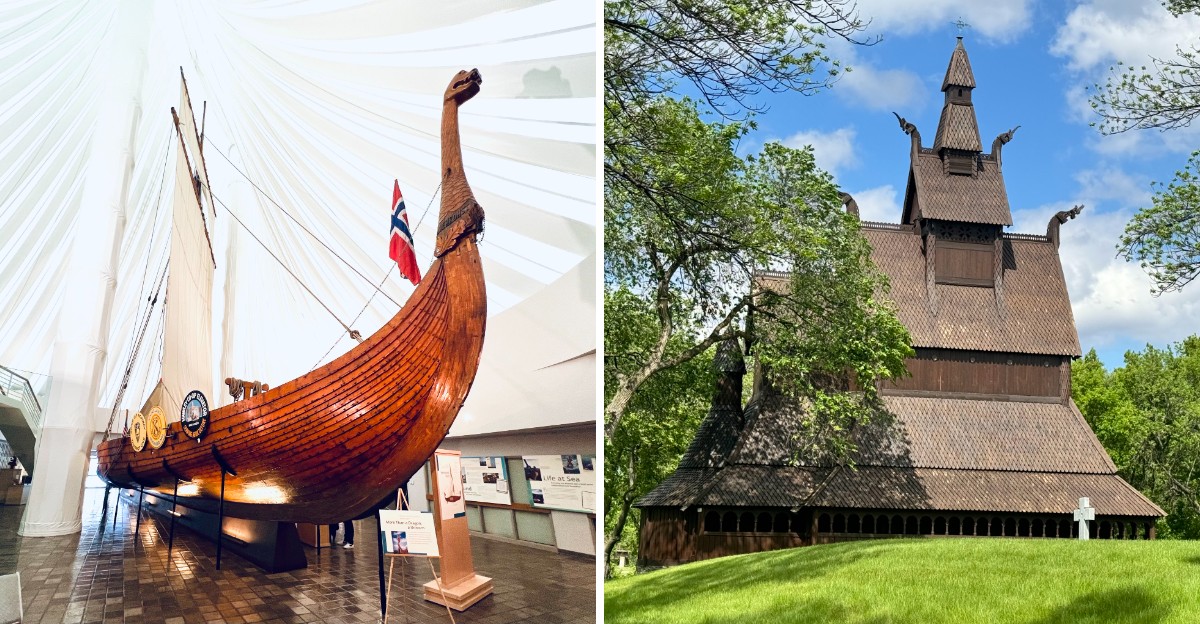
A school guidance counselor picked out more than 100 white oak trees by hand and turned them into a real Viking ship.
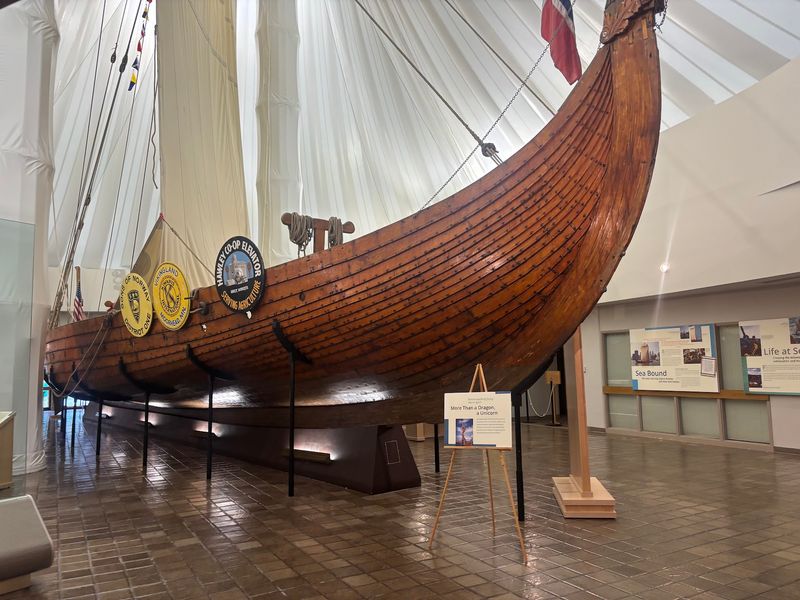
The ship is a full-scale copy of a 9th-century Viking vessel found in Norway. It has a 63-foot mast and a carved dragon head named Igor. I can’t imagine the splinters, the sawdust, or the patience that took.
The builder never got to sail it across the ocean. His kids and a small crew finished the job in 1982, crossing the Atlantic all the way to Norway.
Today, that same ship sits indoors in Minnesota, waiting for visitors. So how does a wooden boat from the prairie end up in Norway and back again?
A Dragon Named Igor Leads The Way
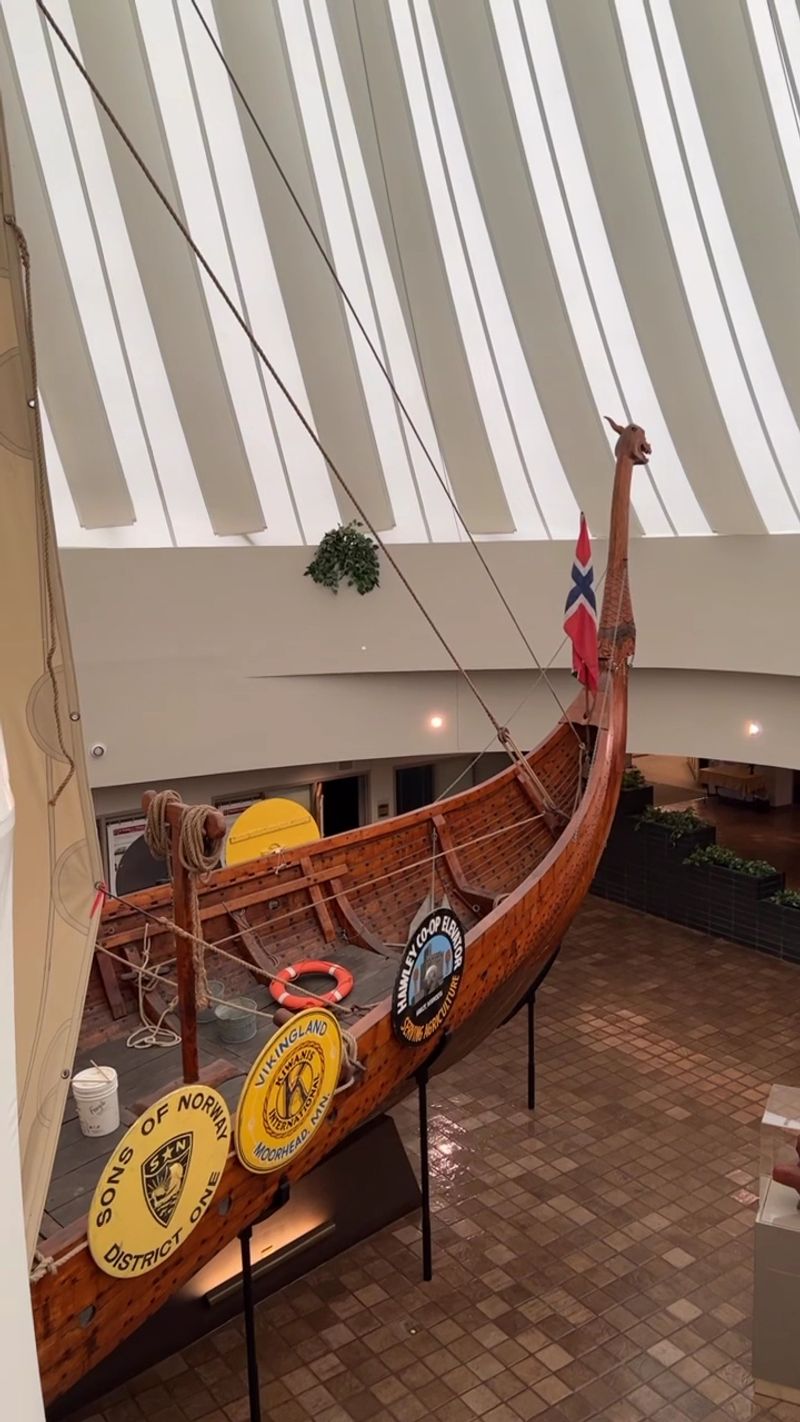
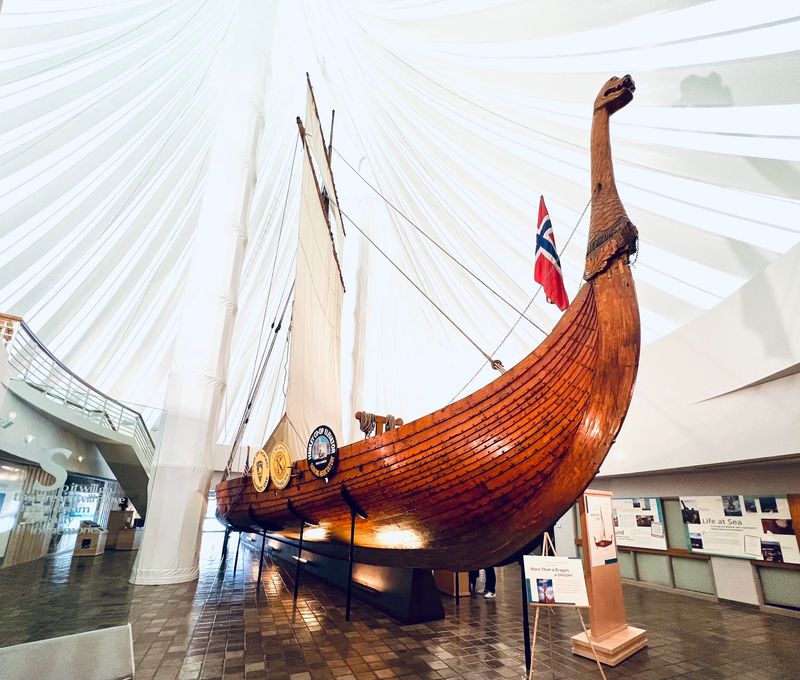
Every great ship needs a mascot, and this one has Igor. He’s the carved dragon head perched at the bow, staring forward like he owns the place.
The Hjemkomst is a full-scale replica of the Gokstad ship, a 9th-century Viking vessel discovered in Norway. That means you’re seeing the real size, not a cute model. The ship was finished in July 1980 with a 45-foot mast, which was later replaced by a 63-foot mast for its Atlantic voyage.
Standing near it, scale becomes the whole story. A 63-foot mast is taller than many houses. Now picture a crew trusting wood and rope on the open ocean.
The museum houses the vessel indoors, so you can study its curves and joints up close. Look at how the oak planks overlap along the hull. That style echoes how Vikings built ships over a thousand years ago.
Kids usually latch onto Igor first, and that’s fair. A dragon beats a plain bow any day. Adults may find themselves staring at the rigging and wondering how it all held together.
Take a slow lap around the ship. Different angles show off different details, and Igor looks especially fierce from the front.
His Kids Sailed It To Norway, And The Trip Was Wild
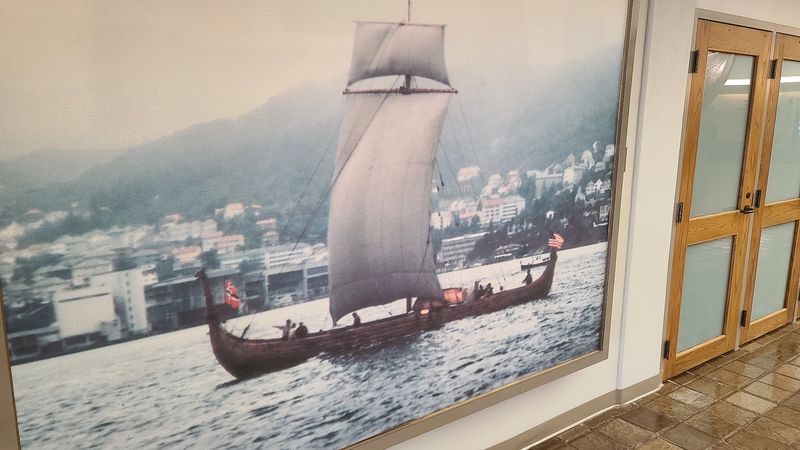
Here’s a family road trip that beats anything with a minivan. In May 1982, the Asp family and a crew of 13 set out to finish what Robert started.
His three sons and daughter were part of that crew. Robert had taken his last trip aboard in September 1980 and passed in December that year. His family carried the dream forward.
First, they traveled through the Great Lakes to New York City. In June 1982, they sailed around the Statue of Liberty. Then came the big one, the Atlantic crossing.
The whole journey stretched roughly 6,000 miles. The ocean crossing took about 32 to 34 days. Along the way, a tropical storm caused a 14-foot crack in the ship, and the crew patched it.
They reached Bergen, Norway, on July 19, 1982. On August 9, they arrived in Oslo to celebrations and a visit from the King of Norway. Not bad for a boat born in a potato warehouse.
Inside the Hjemkomst Center, you can trace that route and soak in the details. Knowing about the storm makes the hull look tougher. It earned every scratch.
Look Up, Because The Roof Is In On The Theme
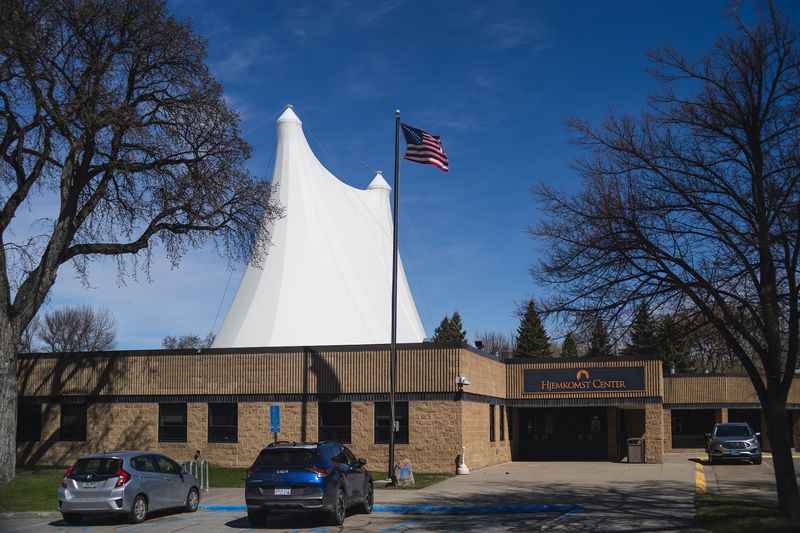
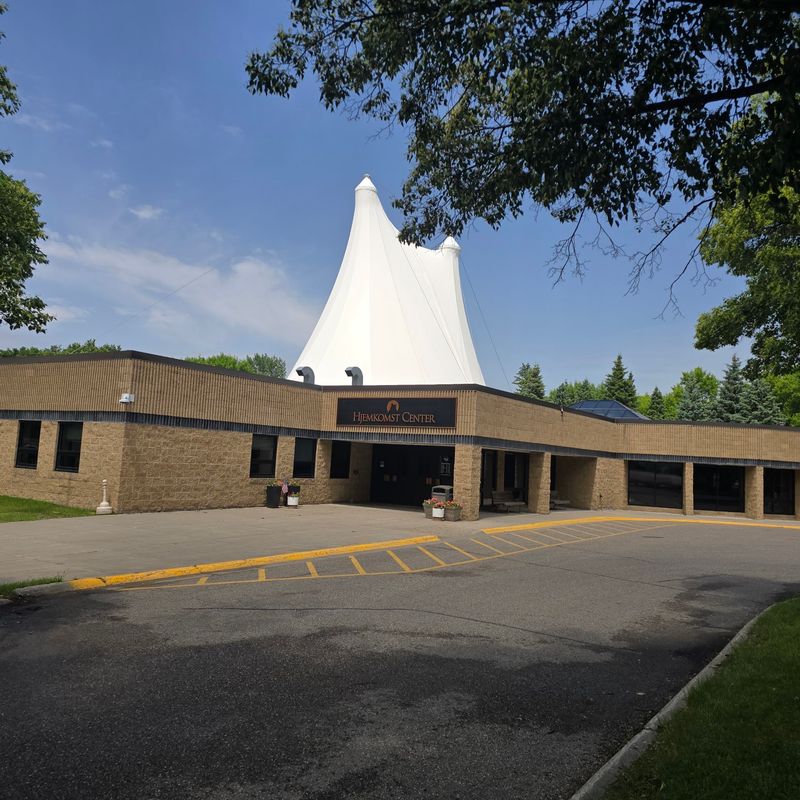
Most museums settle for a flat roof. The Hjemkomst Center went with a tent-like roof designed to look like a Viking ship’s sail.
It’s a clever match for what’s inside. The building basically wears the ship’s personality on the outside. Even from the parking lot, you can tell this place has a sailing story to share.
The Asp family donated the ship in 1986. Since then, it has been permanently housed and displayed here. So the building isn’t just a shell, it’s the ship’s long-term harbor.
Inside, the vessel sits in a space big enough to give it breathing room. That matters with something this large. You get clear views instead of squeezing around corners.
The center is owned by the City of Moorhead Parks and Recreation Department. It’s a multi-use facility, so the building serves more than one purpose. Still, the ship clearly gets the spotlight.
Snap a photo of the roofline before heading in. It makes a fun pairing with your shots of the ship itself. One shows the sail as architecture, the other shows the real thing.
Grab A Seat For The 12-Minute Movie First
Twelve minutes. That’s all the time the ship’s documentary asks of you, and it’s a smart way to spend them.
The film sits within the ship exhibit at the Hjemkomst Center. It walks through the story of the vessel, from Robert Asp’s dream to the voyage across the ocean. Watching it early gives the rest of your visit real context.
Without the backstory, the ship is impressive. With it, the ship becomes personal. You start noticing the hull and thinking about the family who sailed it.
The exhibit also includes displays that help explain how the project came together. Read a few panels after the film. They fill in names, dates, and moments the movie moves past quickly.
Families with younger kids will appreciate the short runtime. It’s long enough to tell a great story and short enough to hold wiggly attention. That’s a rare balance.
Plan to arrive with some cushion in your schedule. You may want to linger near the ship after the credits roll. Stories like this tend to stick around in your head for a while.
A Norwegian Stave Church Waits Right Outside
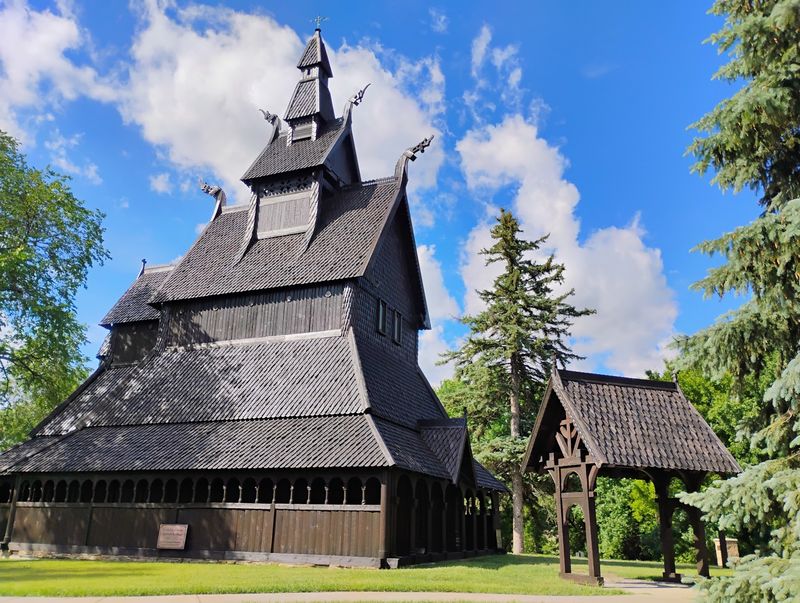
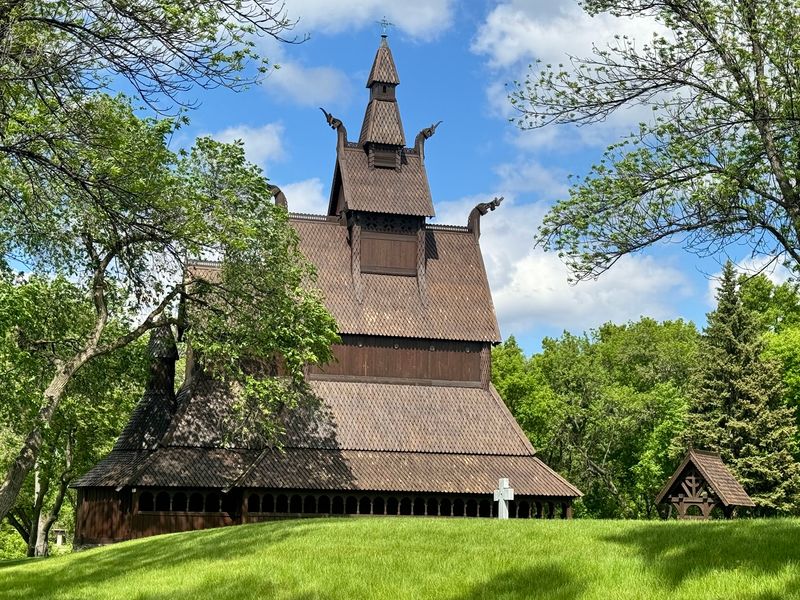
Walk outside and Norway shows up again, this time as a church. The Hopperstad Stave Church replica stands in Viking Ship Park beside the museum.
It’s a full-scale, exact replica of the 12th-century Hopperstad Stave Church in Vik, Norway. Guy Paulson dedicated the replica in 1998 and completed its decorative carvings in 2001. That makes two big Scandinavian builds by determined Minnesotans on one property.
The church was made from cedar, redwood, and pine. Inside, you’ll find intricate carvings and painted ceilings. It stands as a meaningful symbol of Scandinavian heritage in the Red River Valley.
Guided tours run hourly, which makes planning easy. Time your museum visit so you can catch the next one. A guide can point out details you’d likely miss on your own.
One scheduling note matters a lot. The stave church closes every year from January 1 through March 31. If seeing the inside is high on your list, aim for spring, summer, or fall.
Even from outside, the layered rooflines are worth a long look. The craftsmanship feels centuries old. Bring a camera with plenty of storage.
Meet The Counselor Who Dreamed Way Bigger Than Recess
Robert Asp spent his workdays as a guidance counselor at Moorhead Junior High School. After hours, he chased a dream rooted in his Norwegian heritage.
That dream became the Hjemkomst Viking Ship, now the star of the Historical and Cultural Society of Clay County at Hjemkomst Center. The museum tells his story with care, and it’s easy to see why. Few people turn a family background into something you can actually stand beside.
Construction began in 1974 inside a former potato warehouse in Hawley, Minnesota. Folks started calling it the Hawley Shipyard, which is a pretty grand title for a spud storage building. Asp personally chose over 100 white oak trees for the project.
That same year, he was diagnosed with leukemia. He kept working anyway, with volunteers pitching in to help shape the ship. Honestly, most of us struggle to finish a puzzle.
The word Hjemkomst means homecoming in Norwegian. Once you know Asp’s story, the name feels heavy in the best way. It describes a ship built to sail back toward the land his ancestors left behind.
Start your visit with his story in mind. Every plank you see afterward means a little more.
Clay County Stories Fill The Other Galleries
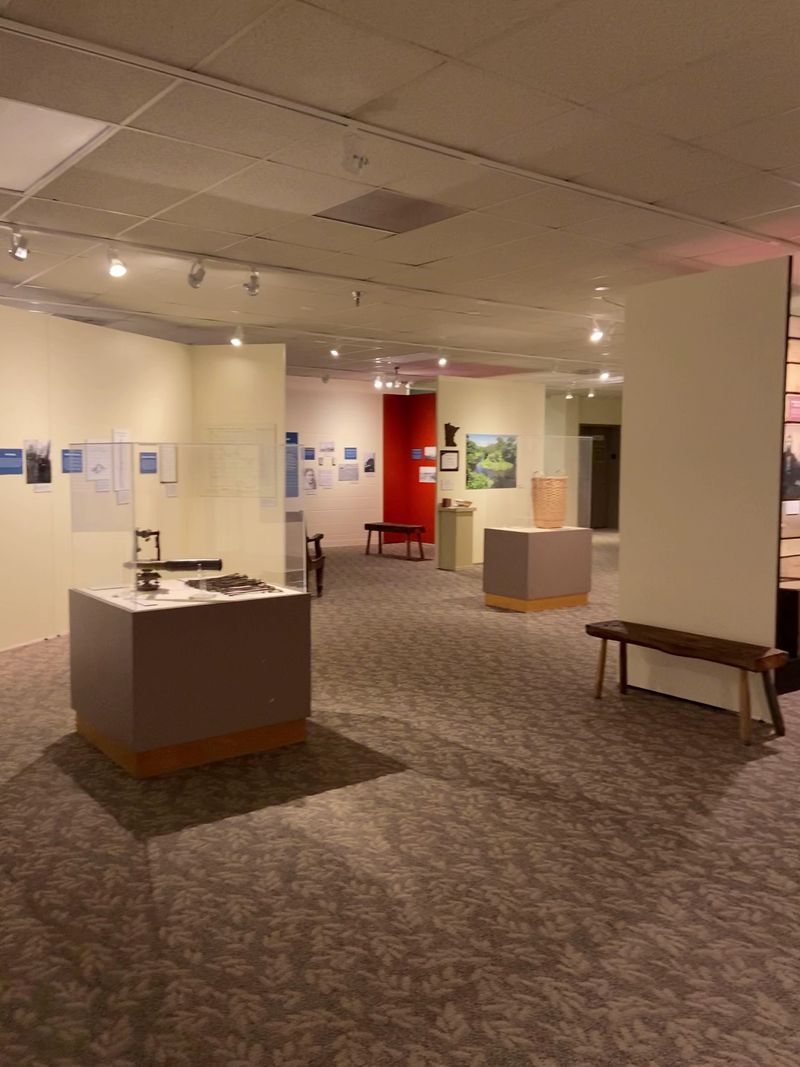
Ships get the headlines, but the galleries hold plenty of surprises too. The Historical and Cultural Society of Clay County runs rotating exhibits on local history.
Those exhibits explore the stories of Indigenous peoples and European settlers in the area. Because they rotate, a return trip may show you something new. That’s a nice bonus for anyone living nearby.
The collection connects the region’s past to the ship upstairs in a natural way. Norwegian roots run deep in this part of Minnesota. Seeing everyday history helps explain why a Viking ship feels at home here.
Give these spaces real time instead of rushing toward the exit. Local history often packs the most relatable details. Old objects and personal stories make the past feel close.
Check what’s currently showing before you go. Rotating exhibits mean the lineup changes. Some topics might match your family’s interests perfectly.
History buffs could easily spend extra time here. Curious kids can find their own favorite piece too. Either way, these galleries round out the visit beyond the big wooden showstopper.
June Brings A Full-On Scandinavian Party
Every June, the Hjemkomst Center turns up the Nordic volume. The Scandinavian Hjemkomst Festival celebrates the heritage that inspired the ship in the first place.
It’s a lively time to visit if you enjoy culture with a side of energy. The museum’s story about Norway gets a real-world soundtrack. Suddenly the whole place feels like a celebration instead of a quiet display.
June also lines up nicely with stave church season. Since the church closes January through March, summer gives you full access. You can tour the church and catch festival fun on the same trip.
The center also hosts other cultural events throughout the year. That keeps the calendar interesting beyond one big weekend. Checking the schedule ahead of time is a smart move.
Festival weekends can get busy, so plan your parking and timing early. Comfortable shoes are a good idea too. You’ll likely bounce between indoors and outdoors more than once.
If you have Scandinavian roots, this event could feel like a family reunion with strangers. If not, it’s still a cheerful way to learn. Either way, Igor will be watching.
Plan Smart And Sneak In On A Tuesday Evening
Tuesday evenings deserve a gold star. Admission is free from 5 to 8 p.m., which makes a midweek outing pretty tempting.
You’ll find the Hjemkomst Center at 202 1st Ave N, Moorhead, MN 56560. Hours run 9 a.m. to 5 p.m. Monday through Saturday, with Tuesdays open until 8. Sunday hours are noon to 5 p.m.
The building is fully wheelchair accessible. ASL interpreted tours and sensory kits are available with advance notice. That thoughtful setup helps more people enjoy the ship and its story.
Before leaving, swing through the gift shop. It carries Scandinavian treasures like artwork, handcrafted items, and toys. A small Viking souvenir might keep the adventure going at home.
The city also keeps caring for its famous resident. In March 2026, Moorhead budgeted funds for essential rigging repairs on the ship. That’s good news for anyone hoping to see it for years to come.
So build a Minnesota day around this stop. Watch the film, circle the ship, tour the church, and browse the shop. A dream that started in a potato warehouse still sails on here.
