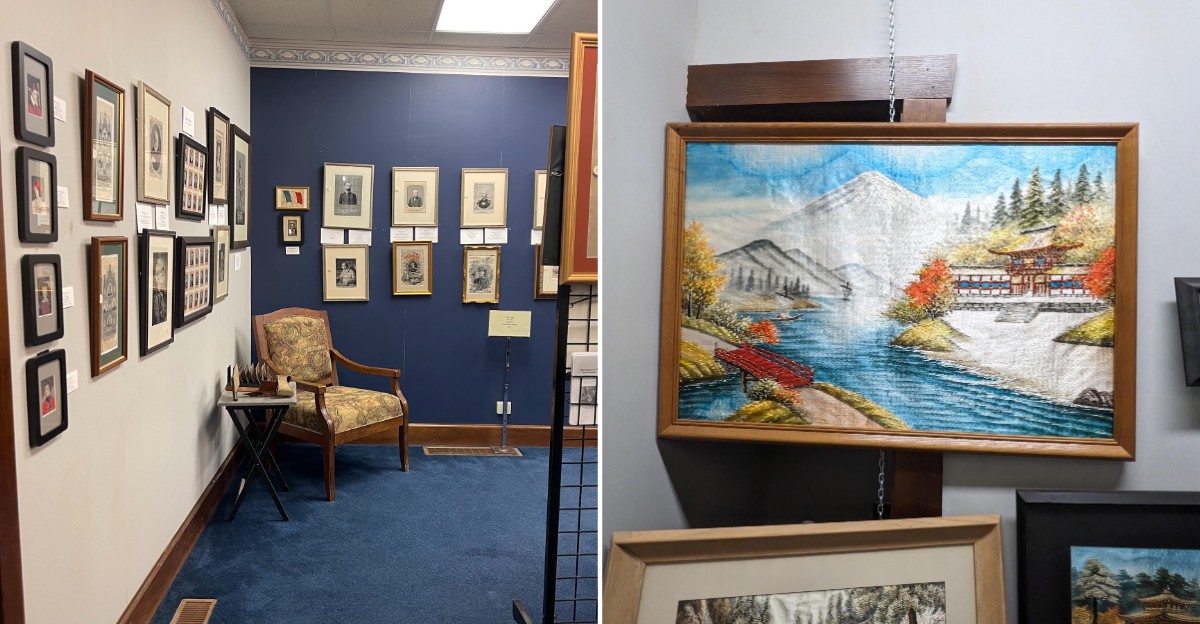
A man once took apart an old billiards picture to reframe it and found out it wasn’t printed at all. Every bit of the image was woven from silk thread.
That happened around 1980, and he never really stopped looking. His collection now tops 500 pieces, and it fills an old bank building in a small Missouri river town.
I have to admit, the bank part gets me. Banks were built to guard cash, not woven copies of Rembrandt and Goya.
What gets me most is the tech twist. The looms that made these pictures ran on punch cards, an idea that later helped shape early computers.
So is it an art museum or a computer history lesson? Honestly, it’s both.
One Surprise Reframing Job Started A Forty-Year Treasure Hunt
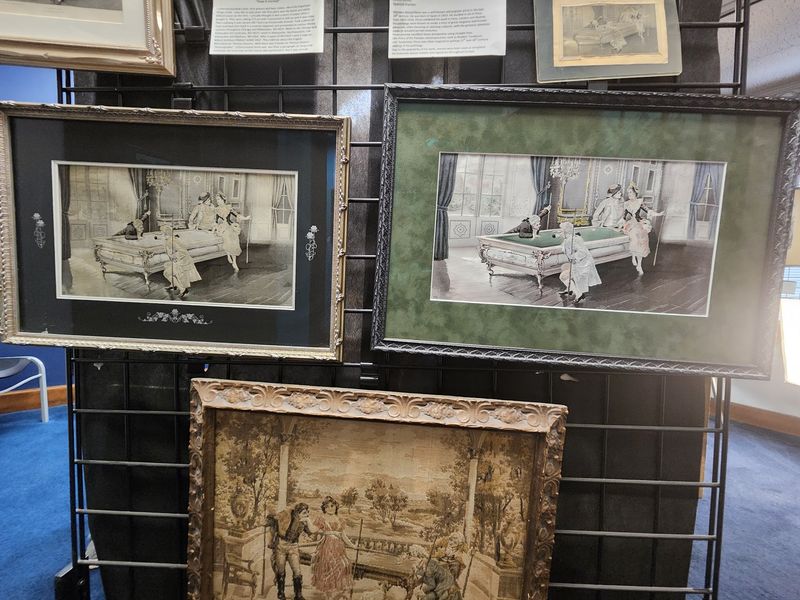
Collector John Pottie thought he owned an ordinary old print of people playing billiards. Then he opened the frame around 1980 and discovered the whole image was woven from silk.
Most of us would shrug and hang it back up. He went searching for answers instead, and that search became the National Silk Art Museum.
The hunt took him through libraries, auctions, galleries, and antique shops. Few people knew much about these woven pictures, which made every clue feel like a small victory.
Piece by piece, the collection grew. Eventually it outgrew a few homes, which is a polite way of saying it took over.
In 2003, Pottie showed part of the collection at his downtown restaurant in Weston. Diners got curious about the shimmering pictures on the walls, and the idea of a real museum started to take shape.
I love that the whole thing began with a reframing project. It’s proof that one weird find can turn into a life’s work.
Pottie is still closely tied to the museum as its founder and curator. That personal connection gives the place a story you can’t fake, and it’s the backbone of everything on display here.
Yes, The Art Moved Into An Old Bank, And It Fits Surprisingly Well
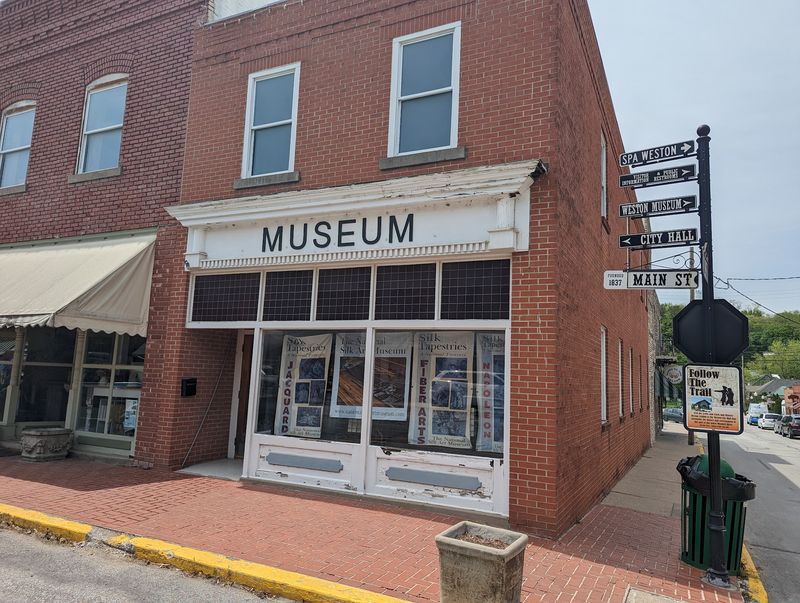
Plenty of museums live in grand halls built for art. This one chose a former bank, which feels oddly fitting for a collection this valuable.
The building once housed the Bank of Weston in the town’s historic downtown. It’s listed on the National Register of Historic Places, so the walls carry their own story too.
You’ll find it at 423 Main Street, Weston, MO 64098. Main Street is lined with small shops, so the museum blends right into an easy afternoon stroll.
The silk art fills the ground floor of the old bank. That keeps the visit compact and simple, without endless staircases or confusing wings.
The National Silk Art Museum opened here in 2013 after outgrowing earlier spots. Moving into a historic building made the whole project feel more permanent and more serious.
The outside looks like a plain small-town storefront. Don’t judge it too fast, because the real show starts once the door closes behind you.
I like that one old building now protects two kinds of history. There’s Weston’s banking past on the outside and centuries of woven art on the inside, which feels like a pretty smart deposit.
Over 500 Silk Pictures Make This The Biggest Collection On The Planet
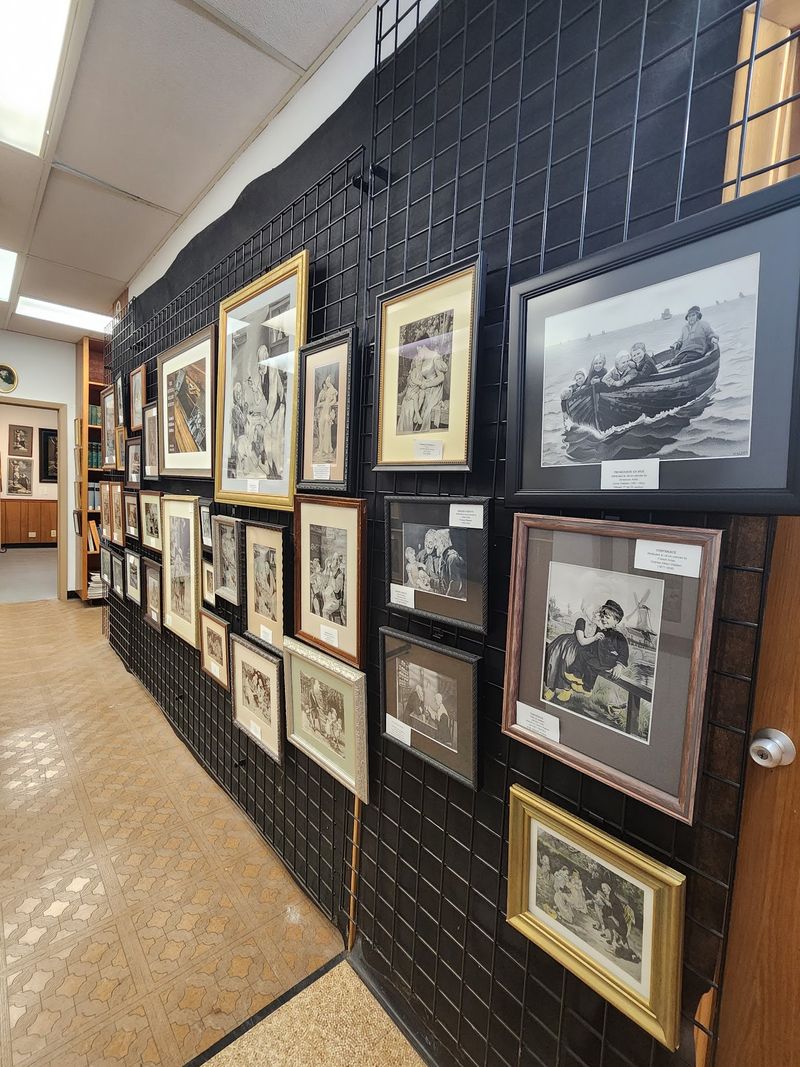
Five hundred woven pictures. That number sounds big until you remember each one was made thread by thread on a loom.
The National Silk Art Museum holds the world’s largest collection of woven silk tapestries. Not the biggest in Missouri, not the biggest in the Midwest, but the biggest anywhere.
Not every piece hangs at once. More than 325 works are usually on display, which is still plenty to keep your eyes busy.
These pictures are sometimes called silk pictures or Stevengraphs. Many were made in the 1800s, so you’re looking at art that’s been around for generations.
Seeing so many together changes how they feel. One silk picture looks like a pretty curiosity, but hundreds side by side reveal a whole lost art form.
The collection includes many French and English works. Some come from famous weaving firms that were once well known, even if most people today have never heard of them.
My advice is to slow down and pick a few favorites. Rushing past 325 framed pieces is like speed-reading a library, and you’d miss the tiny details that make each one special.
Your Laptop Has A Great-Great-Grandparent Hiding In These Frames
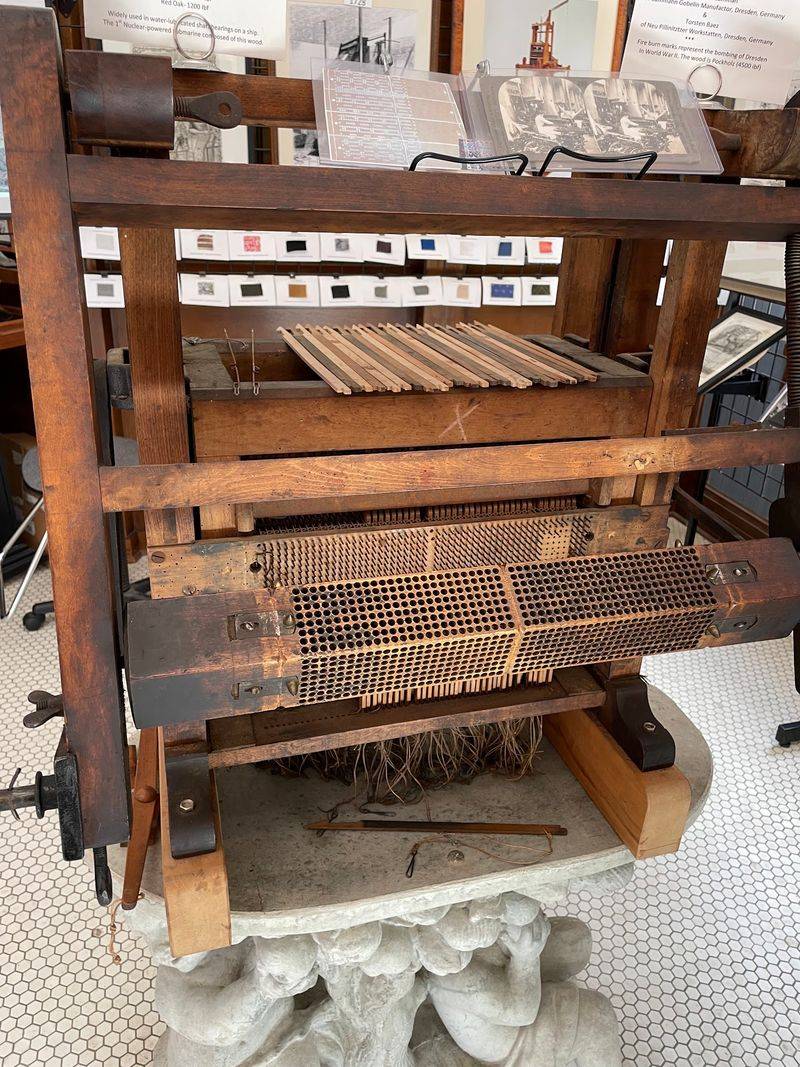
Long before anyone typed on a keyboard, weavers were feeding instructions into machines with holes in cards. That’s the secret behind every picture in this museum.
The looms used here were based on a system pioneered by Joseph-Marie Jacquard. Each punched card told the loom which threads to lift, row after row.
Here’s the fun part. That idea of storing instructions as holes in cards later became a key step toward early computers.
So the National Silk Art Museum is quietly a tech museum too. Gamers, coders, and gadget fans might enjoy it as much as art lovers do.
It also explains why the pictures look so precise. A machine following exact instructions could repeat tiny details that would be nearly impossible to stitch by hand.
Kids especially might like this angle. Telling them the loom was basically a giant programmed machine makes old silk pictures suddenly feel way cooler.
I think this is the detail that sneaks up on people. You come in expecting pretty textiles, and you leave knowing a little more about where computers got one of their earliest ideas.
Patience Level: One Square Inch Per Hour
Got an hour? A skilled weaver could finish roughly one square inch of silk tapestry in that time.
That’s just the weaving. Before a single thread moved, artists had to turn a painting into a detailed pattern called a point-paper, or patron.
That pattern alone could take around 1,000 hours. Then came the punch cards themselves, which could take up to two and a half years to create.
Do the math, and your weekend craft project starts looking pretty relaxed. These pictures were serious commitments from start to finish.
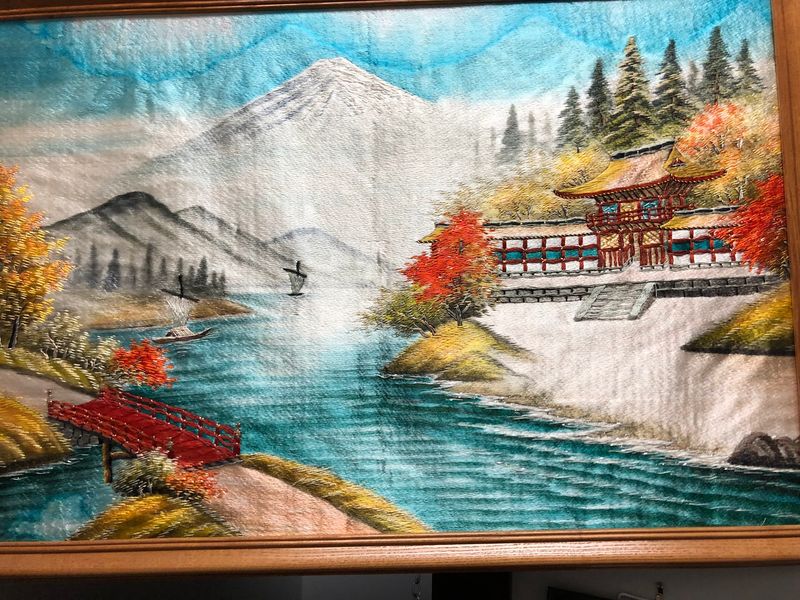
Up close, the images are built from thousands of tiny rice-shaped dots of color. They form where the warp and weft threads cross, a lot like pixels on a screen.
That pixel comparison helps the pictures make sense. Step back and you see a smooth painting, then lean in and you see a careful grid of silk.
I’d suggest doing both with at least one favorite piece. Look from across the room first, then move closer and watch the picture break into its tiny parts, because that switch is honestly half the fun.
The Pictures Seem To Breathe, And Silk Gets All The Credit
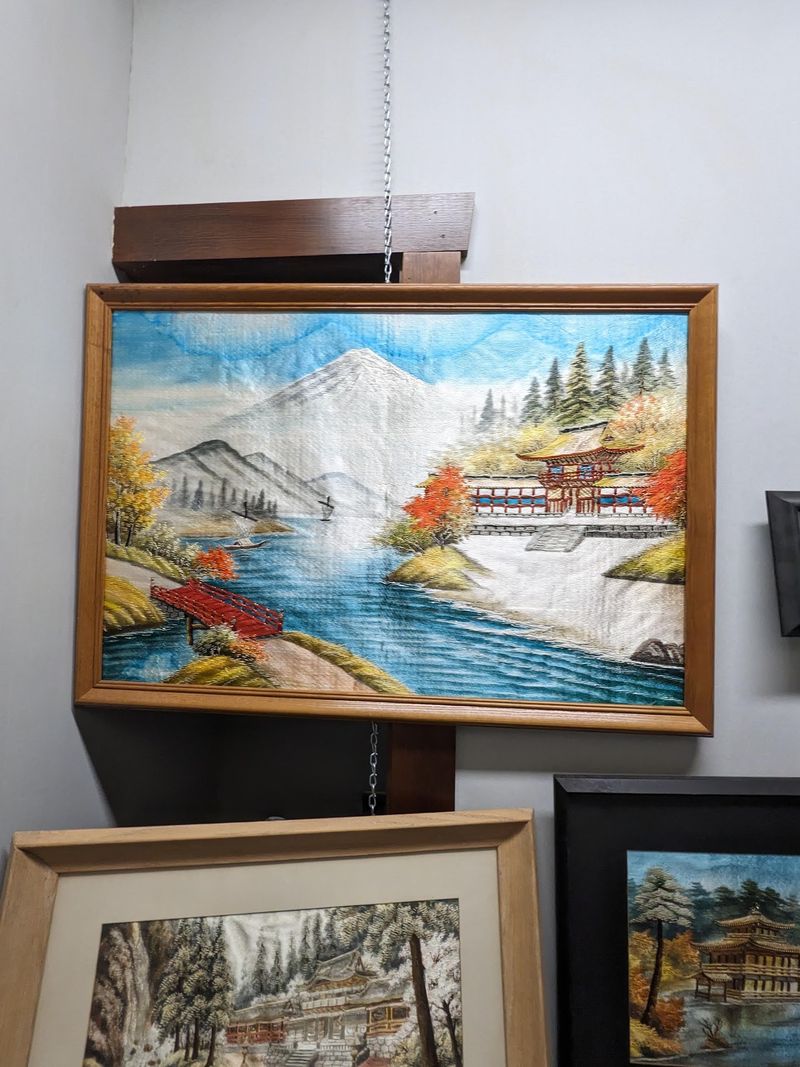
Silk has a sneaky habit of shifting. The threads in these tapestries respond slightly to temperature and humidity, so the pictures can seem to breathe.
That’s not a spooky ghost story. It’s just a natural fiber doing what natural fibers do, but it sure makes the art feel alive.
Silk tapestries are also known for their glow. The threads catch light in a way paint on canvas usually can’t, giving the images a soft shine.
Then there’s the depth. Many pieces have a three-dimensional quality, as if faces and scenes are sitting slightly forward from the frame.
Photos online don’t really capture this. A phone camera flattens the shimmer, so the pieces look far more ordinary on a screen than they do in person.
Try shifting your position as you look. A small step left or right can change how the light hits the silk and how the image appears.
That’s what makes a visit to the National Silk Art Museum different from flipping through an art book. These pictures react to the room around them, and you’ll notice something new each time you move.
Rembrandt, Goya, And Raphael Show Up In Thread Form
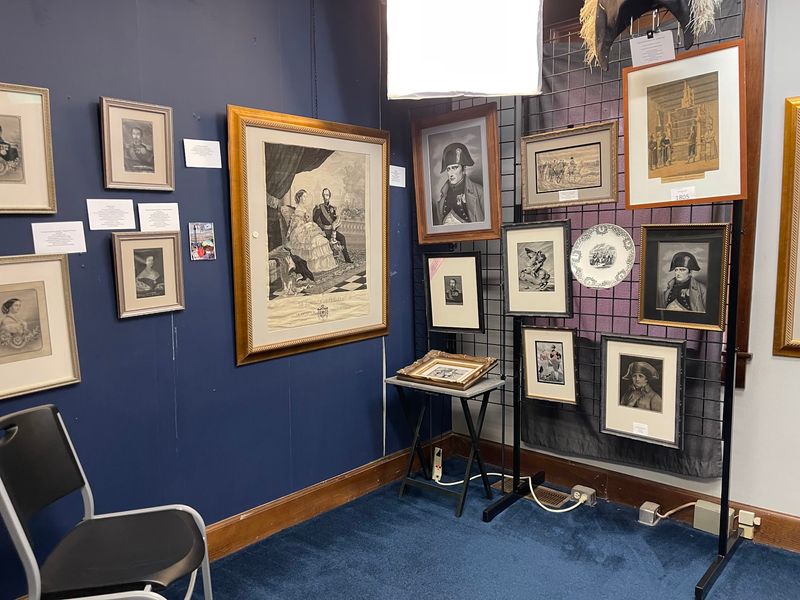
Big names hang on these walls, just not in paint. Each tapestry is a woven copy of an original painting by one of more than 85 master artists.
The list includes Francisco Goya, Rembrandt, and Raphael. Seeing their work recreated in silk gives famous images a whole new texture.
Some pieces carry a bonus mystery. A few silk pictures are the only surviving record of paintings that were later lost or were never widely known.
That turns certain frames into tiny time capsules. The original canvas might be gone, but the woven copy kept the image going.
The collection also features work from respected makers like Stevengraphs, Carquillat, Neyret Freres, Staron and Meyers, and Cammann Gobelin Manufacturing. Each firm brought its own style to the craft.
Themes add even more variety. You’ll find religious works, World’s Fair souvenirs, military scenes, and billiards pieces, which feels right given how the collection began.
Pick a theme and follow it around the room. It’s a simple way to make a big collection feel personal, and you might find a favorite artist you never expected to meet in silk.
Bookworms Get A Rare Library, And Shoppers Get A Gift Shop
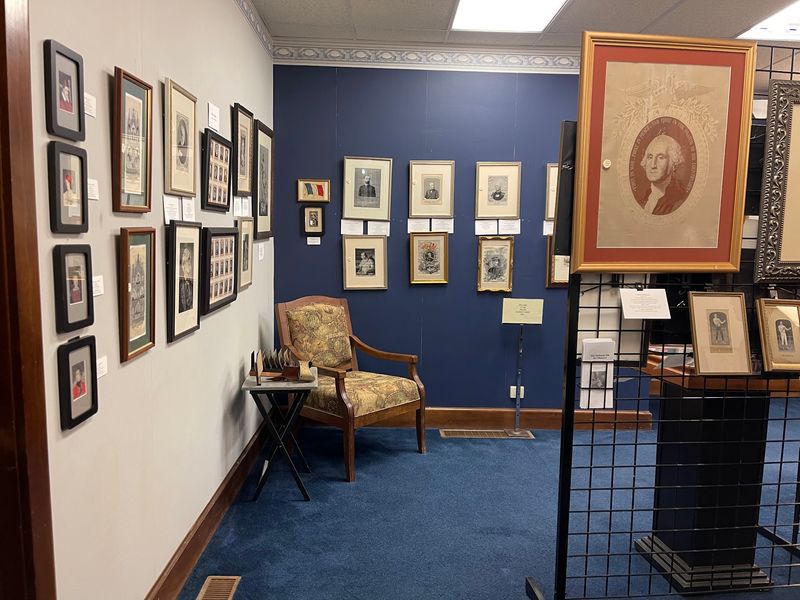
Not every small-town museum keeps a research library. This one has an extensive collection of art books, some more than a century old.
The Grove Art Dictionary is among the titles on the shelves. That’s a serious reference work, the kind art scholars lean on for facts and background.
For anyone curious about how silk pictures were made, the library adds real depth. It’s a sign the museum takes learning just as seriously as displaying.
There’s also a gift shop on site. It’s a handy stop if you want a small reminder of the visit or a gift for the craft lover in your life.
Behind the scenes, the museum operates as a 501(c)(3) organization called Museum of Fiber Arts LLC. It’s also working toward becoming a Smithsonian Institution Affiliate.
That goal says a lot about the ambition here. A collection that started with one antique picture now aims for a spot alongside some of the country’s most respected institutions.
I find that genuinely exciting for Missouri. A tiny Main Street museum dreaming that big is the kind of underdog story worth cheering for.
Plan A Relaxed Main Street Afternoon Around Your Visit
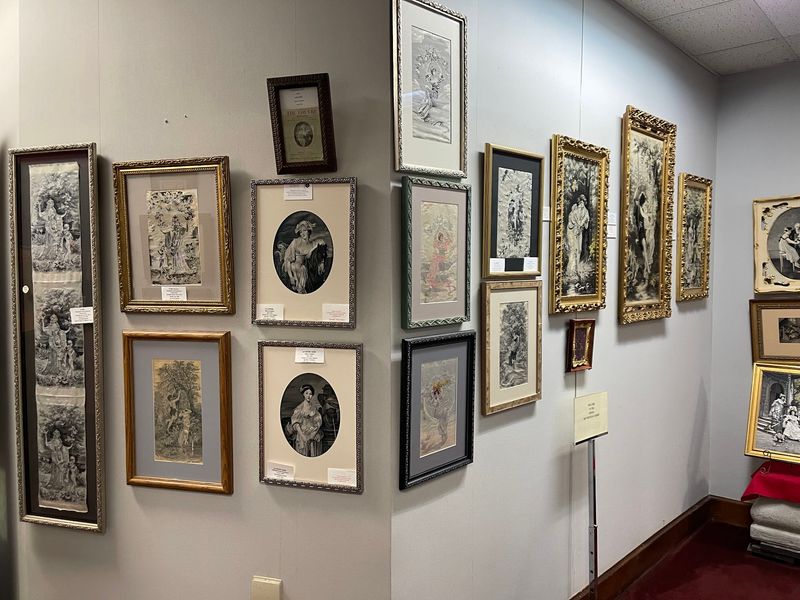
Timing matters a little here. The museum is open year-round, with listed hours of Wednesday through Sunday, 10 a.m. to 3:30 p.m., but hours can vary.
Calling ahead is the smart move. Private tours can also be arranged by contacting the museum directly, which works well for groups or curious families.
Admission is kept modest. Residents and business owners from the Weston area get in free, and bus tour groups receive a small discount.
The building is fully ADA compliant. That makes the ground-floor gallery easy to enjoy for visitors using wheelchairs or walkers.
A couple of house rules apply. Smoking isn’t allowed, and pets stay home, though service animals are welcome.
Since the museum sits right on Main Street in Weston, Missouri, it pairs nicely with browsing the nearby shops. You can make an easy afternoon of it without moving the car.
Bring questions, too. The National Silk Art Museum is the kind of place where the story behind each piece adds as much as the art itself, and asking is the quickest way to hear it.
