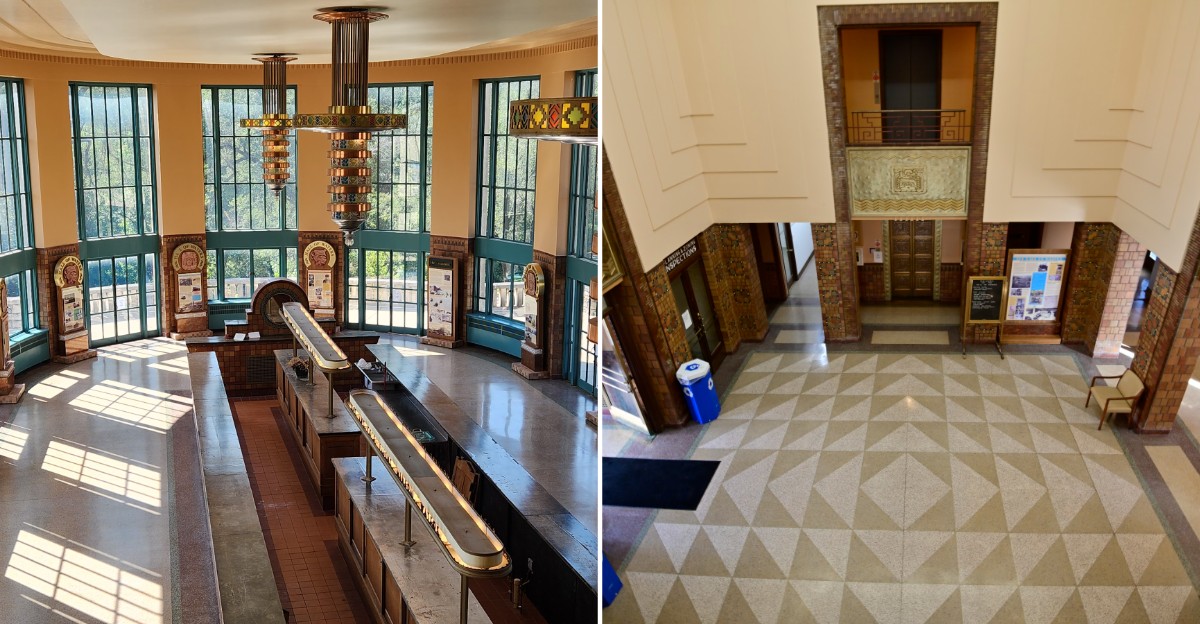
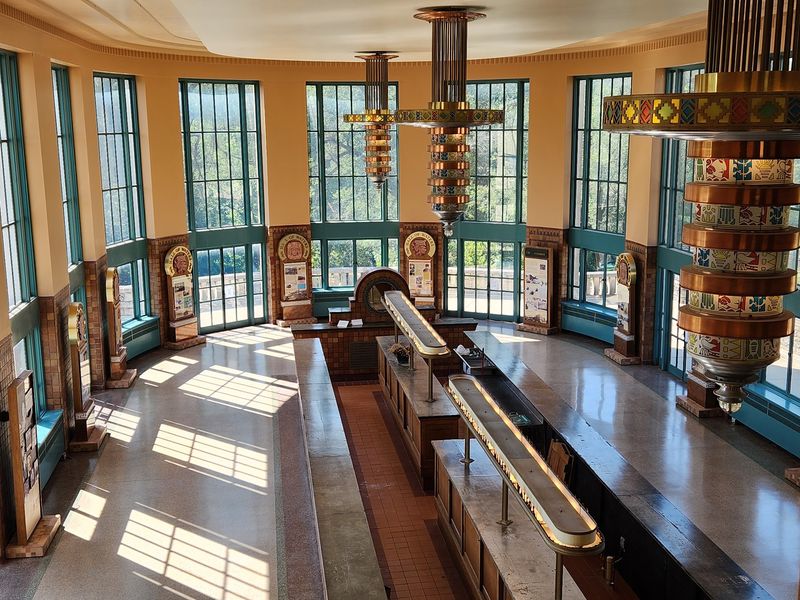
Ten different mineral springs once flowed into a single bar that was billed as the longest water bar in the world. No soda, no snacks, just water from ten springs, including a rare iron-manganese variety.
I have to admit, that’s the detail I can’t get over. The building around it cost about $1 million during the Great Depression.
It also held mineral baths, a saltwater pool, and a bottling plant.
And it’s still standing in a small Missouri town. Today it works as City Hall, a visitor center, and a museum all at once.
The Art Deco details alone deserve a slow look.
The famous bar is resting right now while crews repair the structure. So why would anyone still make the trip?
Plenty of reasons, actually.
The Water Bar That Made A Small Town Famous
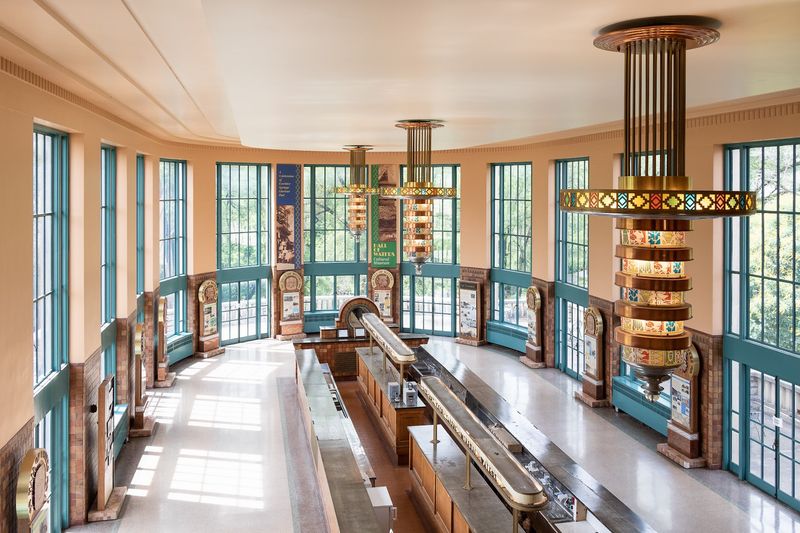
Most bars brag about their drink lists. The Hall of Waters bragged about its springs, and it had ten of them flowing to one counter.
The famous water bar sat inside a bright two-story solarium. Historically, it was promoted as the longest water bar in the world, which is a very specific thing to win.
Each tap delivered water from a different mineral spring. One of the stars was ferro-manganese water, a rare type that helped put this town on the map.
Why gather everything in one place? Excelsior Springs was founded on more than 40 wells and springs.
The town claims more mineral water varieties than anywhere else on the planet.
Before this building, visitors had to wander from spring to spring. The bar turned that scavenger hunt into one convenient stop, like a buffet line for minerals.
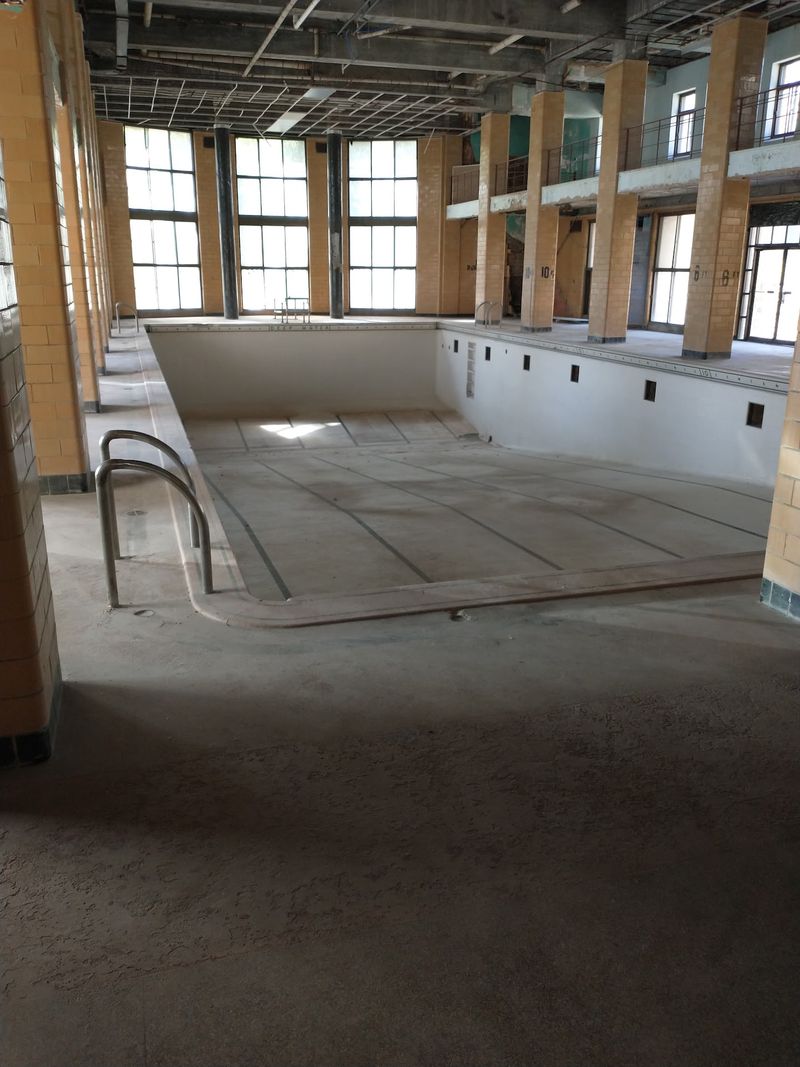
Fair warning, the bar area is currently closed to the public. The city is repairing structural problems, including damage to the bar floor and the pool ceiling below it.
Still, the space hasn’t vanished. It’s even available for event rentals, so someone out there may host a party where a world record once poured.
Now that is a memorable venue.
A Depression-Era Price Tag That Still Turns Heads
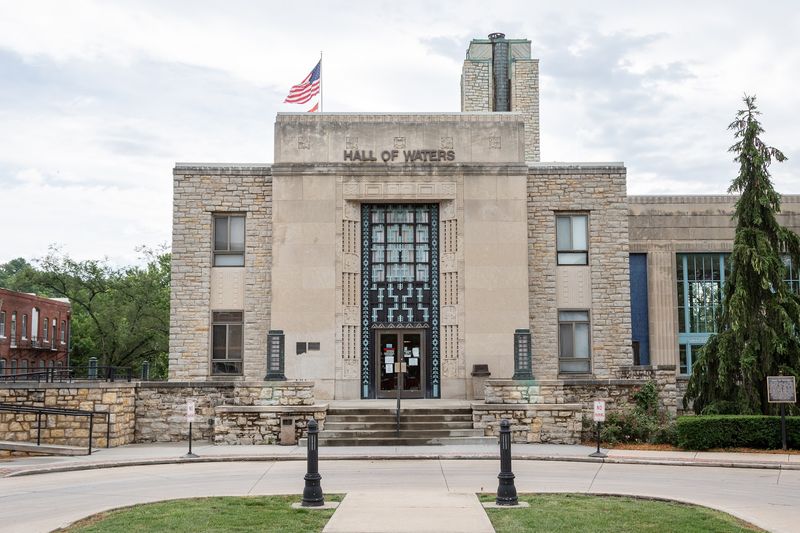
One million dollars in the 1930s was a jaw-dropping sum. Excelsior Springs spent roughly that much on the Hall of Waters, right in the middle of the Great Depression.
The building was a Public Works Administration project, number 5252 to be exact. The WPA put people to work on public projects during those hard years.
Construction kicked off in 1936. The building was finished around 1937 or 1938, depending on which record you read.
I can see why the town went big. Mineral water was the local economy, and visitors arrived hoping the springs would help them feel better.
A grand central building showed the world that this town took its water seriously. It also gave workers paychecks when jobs were scarce, which counts for a lot.
The result was a five-level reinforced concrete structure. That’s sturdy stuff, built to handle steam, baths, pools, and a whole bottling operation.
Today the building carries that history proudly. It was listed on the National Register of Historic Places in 1983, a solid honor for a building that started as a bold Depression-era gamble.
Yeah, I’d say the investment held up.
You Will Want To Look Up, Down, And Everywhere At This Art Deco Design
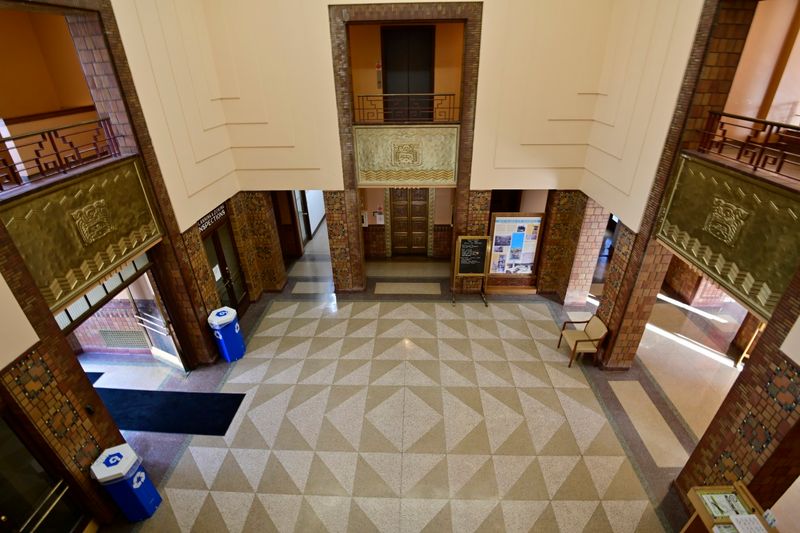
Architecture fans, this one is for you. The firm Keene and Simpson designed the building in Art Deco and Depression Modern styles.
Those styles love clean lines, bold shapes, and geometric patterns. Here, the designers added a twist with Mayan motifs tied to water gods.
That’s a clever choice for a building devoted to springs. The decorations quietly remind you what the whole place was built to celebrate.
Don’t forget to glance at your feet. The terrazzo floors are intricate, made by setting chips of stone into a smooth polished surface.
Terrazzo takes skill and patience, and it lasts for decades. Spotting the patterns becomes a fun little game as you move through the main floor.
Then there’s the decorative boiler stack tower, enclosing an exhaust stack that rises about 63 feet above the main roof. Most buildings hide their boiler stacks, but this one dressed it up as a design feature.
What gets me is how practical parts became art. A chimney turned into a tower, and floors turned into mosaics.
Bring a camera or just your phone. Every corner seems to have a line, shape, or symbol worth a second look.
Spa Days Here Once Served Hundreds At A Time
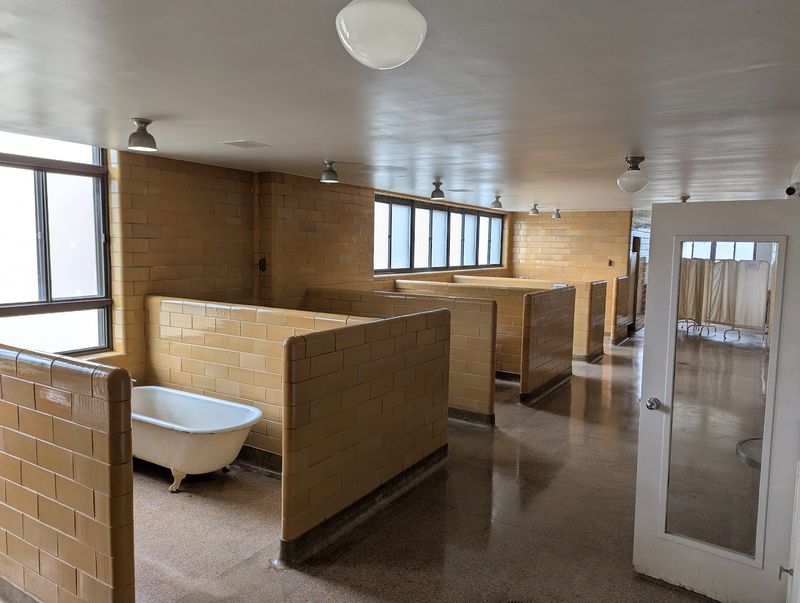
Three hundred people bathing at once sounds like a lot of towels. The men’s and women’s bath departments could each handle as many as 300 guests at once.
Back then, people traveled to Excelsior Springs hoping mineral baths would ease their aches. The Hall of Waters gave them a modern place to soak.
The complex also included a competition-sized saltwater swimming pool. There was even a dedicated polio pool, used during a time when that illness worried families everywhere.
Here’s a nice surprise for today. Free tours of a bath department with vintage equipment can be arranged.
That means you can see the old setup up close, from the rooms to the machines. It’s a peek into how spa treatments looked nearly a century ago.
Some areas may be closed during repairs, so plans can shift. Calling ahead before your trip is a smart move.
Weekdays may give you better access to certain spaces too. Hours run shorter on weekends.
I can’t imagine running a spa that size without computers or online booking. Somehow they kept hundreds of bathers moving smoothly, and the leftover equipment tells that story better than any sign could.
Bottled Right Here And Shipped Far Away
Not everyone could visit the springs in person. So the water went to them, straight from a bottling plant inside the Hall of Waters.
The plant sent mineral water to local customers and to buyers around the world. A Missouri town shipping water internationally is a fun bit of history.
Bottling also helped spread the town’s name. Each bottle worked like a tiny billboard for Excelsior Springs.
Popularity faded in the 1960s as health spas and bottled mineral water fell out of style. By the early 1990s, the water bar and bath department had stopped operating.
Good news, though. You can still buy Excelsior Springs Natural Calcium Mineral Water on-site.
Visitors can also sample the Iron Manganese mineral water. That’s the same rare type that once made the bar famous, so you get a taste of the real legacy.
Okay, that’s impressive for a building under repair. Few museums let you sip their main exhibit.
A bottle makes an easy souvenir for friends back home. It’s lighter on the wallet than a snow globe and far more on theme for a town built on springs.
Spring Water History Fills A Small But Mighty Museum
Siloam Spring started it all in 1880. Once people discovered it, a whole town grew up around the water.
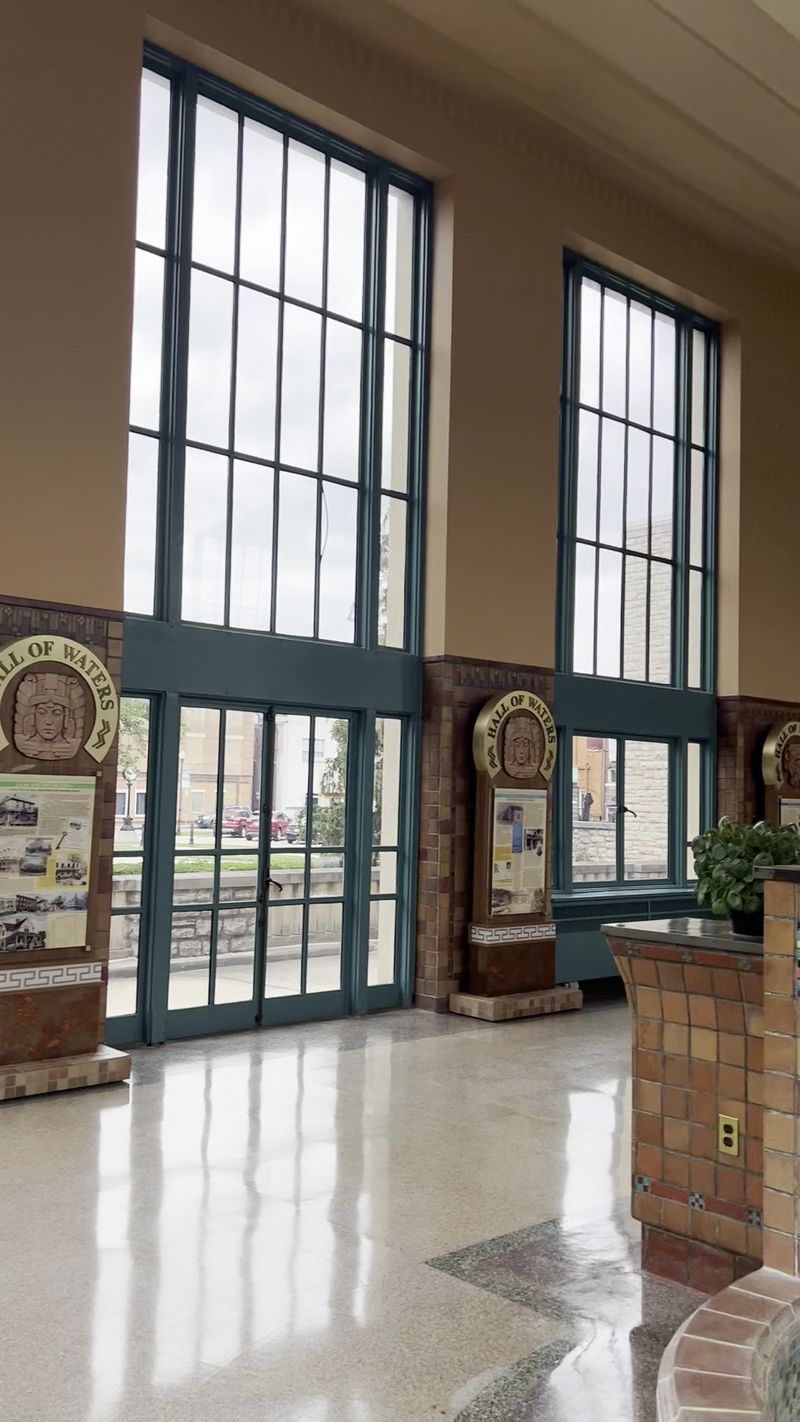
The museum inside the Hall of Waters tells that story. Historic kiosks and displays explain the springs, their minerals, and why they drew so many visitors.
You’ll learn how dozens of wells shaped the town’s growth. Each spring had its own mineral mix, which made the area unusually varied.
The museum sits on the main floor, so it’s easy to find. It also shares the building with the city’s Visitor Center.
That combo works nicely for travelers. You can soak up history, then grab tips about the rest of town in one stop.
Plan to take your time reading. The panels pack in plenty of detail about the health resort era.
I like how the museum connects the dots. The fancy floors and grand rooms make more sense once you understand the water story behind them.
Kids who enjoy odd facts will have fun here too. A town with more mineral water types than anywhere else is a great trivia answer for the car ride home.
City Hall Gets A Seriously Fancy Office Here
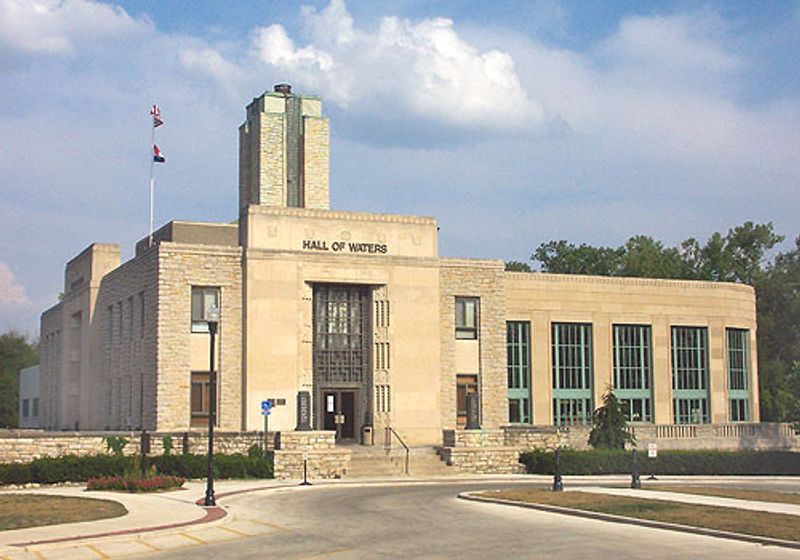
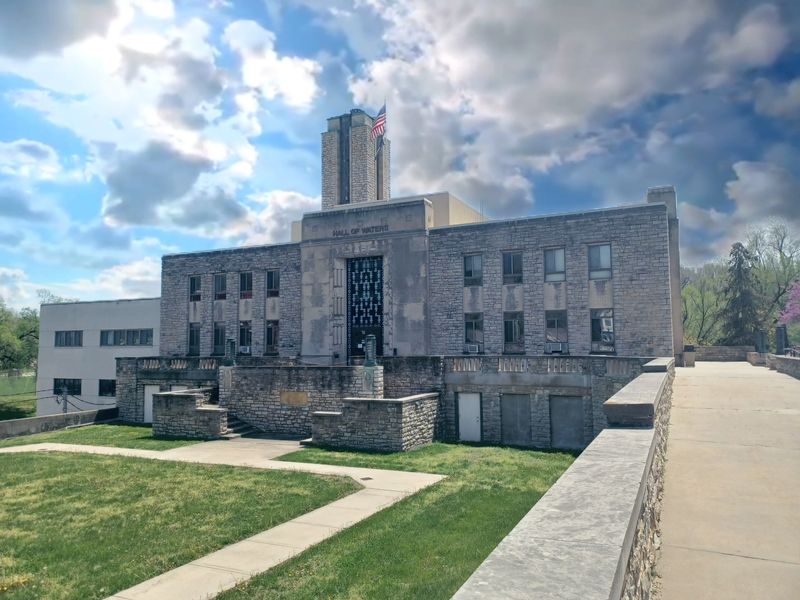
Paying a water bill inside a former mineral spa feels oddly fitting. The Hall of Waters currently serves as City Hall for Excelsior Springs.
So the building still has a daily job. City staff work here while visitors explore the museum and Visitor Center.
That mix keeps the place alive. Plenty of historic buildings sit empty, but this one stays busy with real community business.
You’ll find it at 201 East Broadway in Excelsior Springs, Missouri. It sits right in the heart of downtown, close to shops and other historic spots.
The front steps sometimes host community events too. A busy downtown location makes it a natural gathering place.
Visitor Center hours run 10 AM to 4:45 PM on weekdays. Weekend hours are 11 AM to 4 PM, so plan accordingly.
The funny part is how normal it all feels to the town. To them, it’s City Hall with very nice floors.
To the rest of us, it’s a 1930s spa palace that never stopped working. Stopping by the Visitor Center first is smart, since staff can help you plan the rest of your downtown visit.
A Comeback Story Worth Cheering For
In 2020, the National Trust for Historic Preservation named the Hall of Waters one of America’s most endangered historic places. That’s a list no building wants to make.
Decades of water, steam, and time took a toll. Structural problems now affect the water bar floor and the swimming pool ceiling beneath it.
Here’s where history repeats itself in a fun way. The city is spending about $1 million to fix those structural failures.
Yep, a million dollars to build it and roughly a million to rescue it. The numbers line up like the building planned it.
Rehabilitation is underway now. The goal is to preserve the building and possibly restore some spa and water bar functions down the road.
Imagine sipping from that famous bar again someday. Nothing is promised yet, but the plans point in a hopeful direction.
Visiting now has its own charm. You get to see a landmark in the middle of its second act.
I’d absolutely make a detour to witness that. Then I’d come back later, just to compare the before and after.
Plan A Smart Visit To This Missouri Landmark
A quick stop or a slow wander both work here. The Hall of Waters rewards curious people who like reading signs and noticing details.
Start at the Visitor Center on the main floor. From there, the museum and historic kiosks are easy to explore.
Some levels may be closed during repairs. Weekday trips may open more doors, since weekend hours are shorter.
Want the full experience? Ask about arranging a free bath department tour before you arrive.
Don’t skip the water. You can sample the Iron Manganese mineral water and buy bottled calcium mineral water to take home.
Architecture lovers should budget extra time. The Art Deco lines, Mayan touches, terrazzo floors, and tall boiler tower deserve unhurried attention.
Excelsior Springs is in Clay County, Missouri, not far from Kansas City. That makes it an easy day trip for anyone in the area.
And that might be my favorite detail. A world-famous water palace sits just a short drive from a big city, quietly waiting for its next chapter.
Come curious, leave hydrated, and maybe plan a return once the restoration wraps up.
