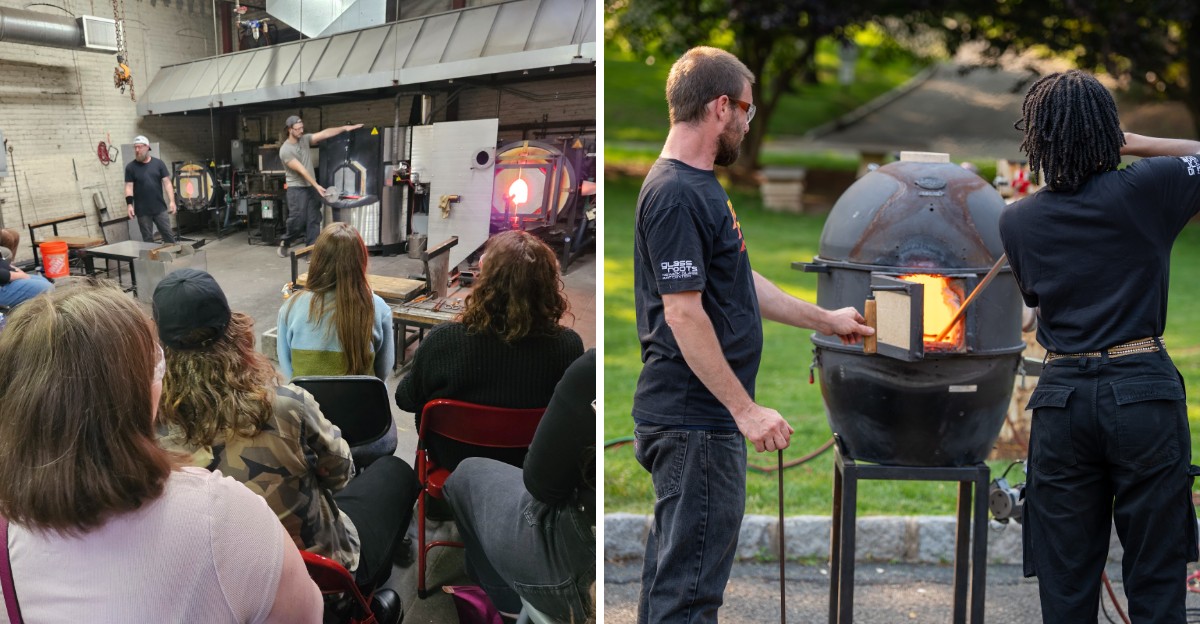
A glass studio that started with one table and two torches now fills 10,000 square feet. Yeah, I’m definitely looking twice at that.
The best part is that you don’t stand behind a rope here. You gather molten glass, twist it, and shape it into something you made yourself, which you can collect once it has safely cooled.
The funny part is how many choices there are. You can try glassblowing, bead making on a torch, kiln-fused tiles, or a colorful mosaic.
Short sessions work for curious kids, and longer courses suit adults who get hooked.
What gets me is where the money goes. Every adult class helps fund free programs for young people in this New Jersey city.
So your paperweight does a little good, too.
You Actually Get To Shape Molten Glass Here
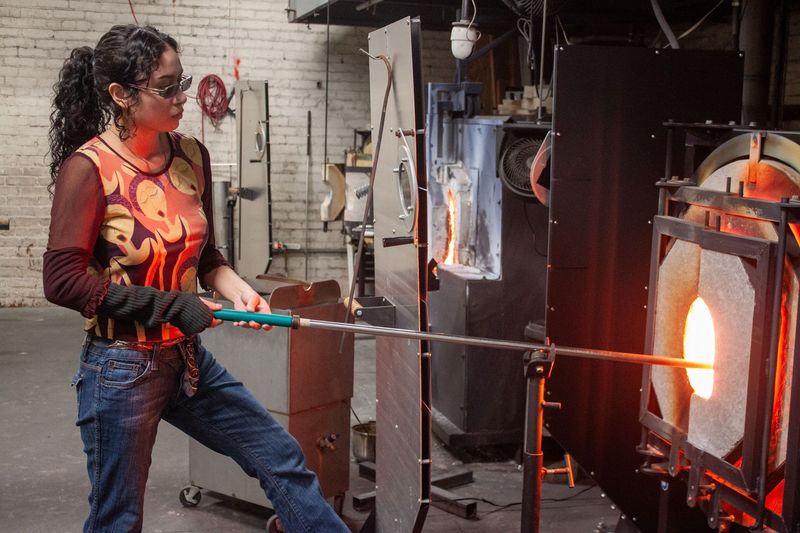
Most glass demos keep you a safe ten feet back, clapping politely. GlassRoots flips that idea around and puts the tools in your hands.
This nonprofit glass art center in Newark, New Jersey, is built around hands-on learning. Skilled teaching artists guide every class, and safety comes first in every session.
Then the fun part starts, because you do the real steps yourself.
In the Hot Shop, beginners gather glass from the furnace and roll it on a steel table called a marver. You can add color, twist the piece, and shape it while it glows.
Small projects like flowers, hearts, and paperweights make great first tries.
That approach matters more than it sounds. Watching someone blow glass is cool for about five minutes.
Feeling the weight of a hot gather on the end of a pipe is a different story.
Fair warning, though. Once you learn the basics, the next class lets you try a little more.
It adds up quickly, and your shelf space might start shrinking.
Classes need reservations, so plan ahead. Booking early is the easiest way to grab a spot in the Hot Shop.
The Studio Doubled In Size For Its Big Birthday
Twenty-five years old and moving into a bigger home? That’s a solid way to celebrate an anniversary.
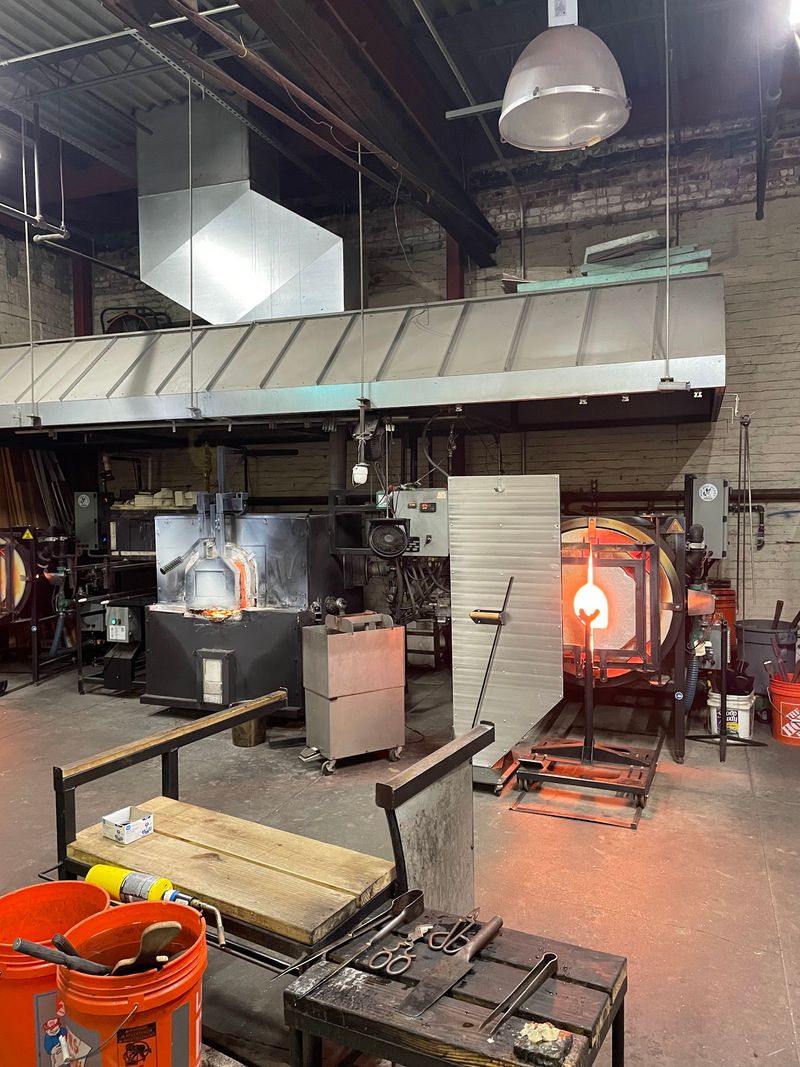
GlassRoots marked its 25th year in 2026 by opening an expanded facility. The new space covers 10,000 square feet, which is double its previous 5,000-square-foot studio.
More room means more torches, more workbenches, and more people learning at once.
The center now sits at 23 William Street, Newark, NJ 07102. Some older listings still show 10 Bleeker St, so double-check before you head out.
The William Street building is the current home for classes.
Location is part of the story, too. The studio sits in Newark’s Arts and Education District within Teachers Village.
GlassRoots is meant to serve as an anchor for that whole area.
I’d say that’s a big role for a place that makes paperweights. Then again, anchors are heavy, and glass is famously heavy.
A bigger building also opens the door for more events and workshops. If you visited the old studio, the new one is worth a fresh look.
A Tiny Torch Can Turn Into A Wearable Treasure
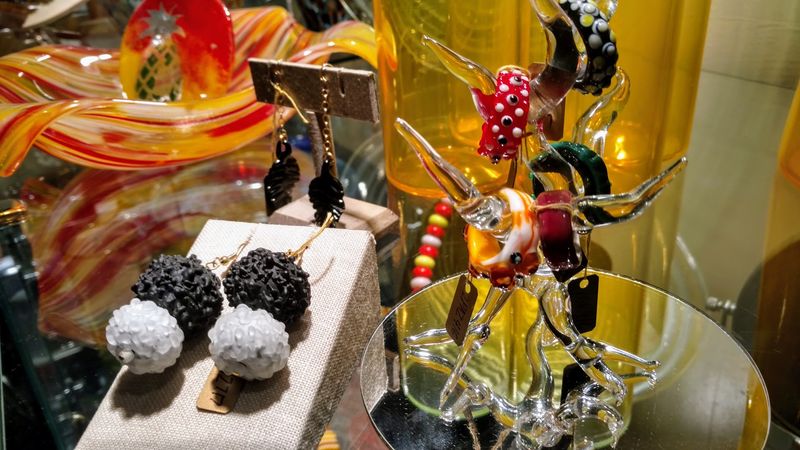
Glass rods in bright colors look a lot like fancy candy sticks. Over a hot flame, though, they soften into something you can actually wear.
Flameworking is one of the most popular ways to start at GlassRoots. You use a high-temperature torch to melt and shape glass rods.
With some patience, those rods become beads or pendants.
The process feels calm and focused. You sit at a bench, turn the glass slowly, and watch it melt into shape.
It’s a nice option for anyone who wants detail work instead of big furnace action.
Bead making also suits mixed groups. Kids at parties often make little beads while adults try other projects.
Everyone leaves with a small piece that fits in a pocket.
Here’s a tip worth remembering. Glass needs time to cool properly, so some pieces may need to be picked up later.
Plan for a second trip, and treat it like a reveal day.
A handmade bead makes a sweet gift, too. Nobody else will own the exact same swirl of color.
Kiln Projects Reward The Planners Among Us
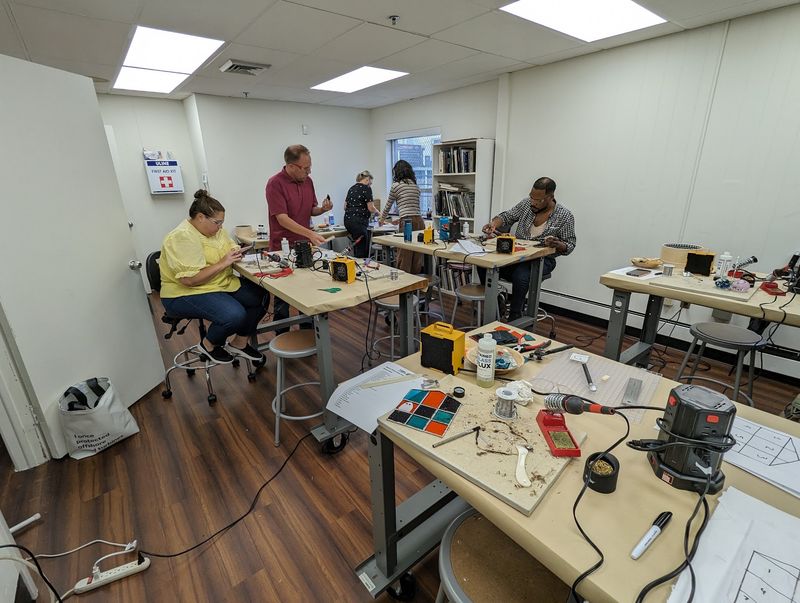
Some people love sparks and flames. Others would rather sketch a plan, arrange pieces carefully, and let the heat do the rest.
Kilnforming is made for that second crowd. At GlassRoots, students explore fusing, slumping, and kiln casting.
Each method uses a kiln to heat glass until it bonds or bends into shape.
Fusing joins separate glass pieces into one flat design. Slumping lets glass sag into a mold, creating gentle curves.
Kiln casting shapes glass inside a form for something more solid.
Tiles are a common project, and they’re more fun than they sound. You choose colors, build a pattern, and trust the kiln with the finale.
That moment of waiting adds real suspense.
Okay, that’s impressive for something that starts as a pile of glass bits. The finished pieces can hang on a wall or sit on a shelf.
Kiln classes also offer a slower pace than the Hot Shop. That makes them a smart choice for anyone nervous around a furnace.
You still get real results, just with fewer flames nearby.
Mosaics And Stained Glass Bring The Color Party
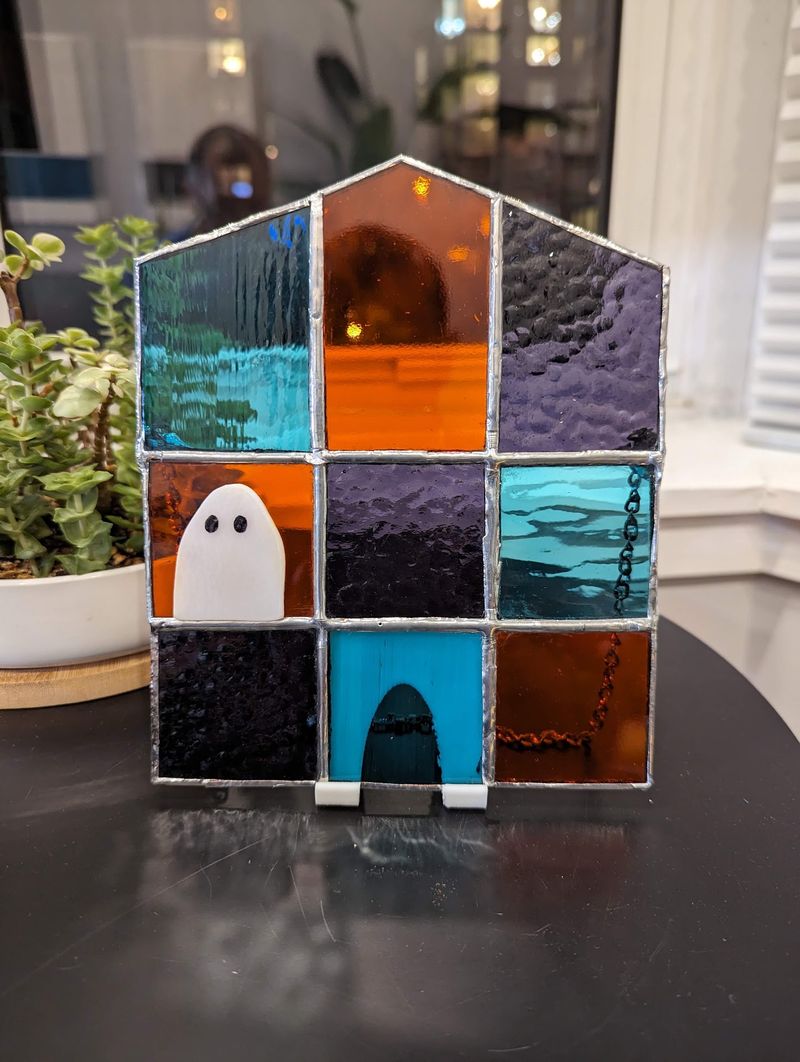
Bright glass pieces spread across a table look like a puzzle with no box. That’s half the charm of a mosaic class.
GlassRoots offers mosaics and stained glass for people who love color and design. You arrange glass pieces into a pattern that feels like yours.
No furnace required, which makes this a cozy entry point.
These classes work well for friends who want to chat while they create. Small group sizes often allow plenty of one-on-one help.
A teaching artist can guide you through cutting, placing, and finishing.
Stained glass adds a bit more technique. Pieces get shaped and joined to let light shine through.
Hang the finished work in a window, and sunlight takes care of the rest.
What gets me is how different each finished piece looks. Two people can use the same supplies and walk away with totally different results.
Mosaics are also a great pick for a first visit. You can test your creative side before signing up for hotter, faster projects.
Think of it as a colorful warm-up.
Your Class Fee Quietly Funds Something Bigger
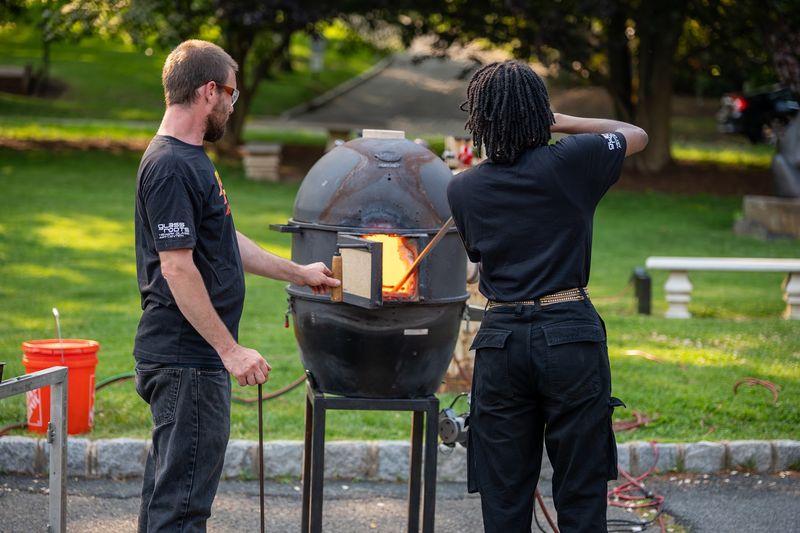
Every paperweight made by an adult here does double duty. Revenue from adult classes, team-building workshops, and custom glass awards supports free youth programs.
GlassRoots is a nonprofit with a clear mission. It works to transform lives, especially for underserved youth and young adults in the greater Newark area.
Glass art is the tool that makes that happen.
The programs mix creativity with STEAM learning. That means science, technology, engineering, arts, and math all show up in the studio.
Melting glass turns out to be a pretty great science lesson.
The Youth Entrepreneurial Spirit program, called YES, takes things further. Students learn glassmaking alongside business and workforce skills.
They explore how to run a business, not just how to make art.
Over 25 years, GlassRoots has served more than 40,000 people. Participants have ranged from age 9 all the way to 90.
I can see why so many New Jersey supporters care about this place. Your fun night out helps a young artist build real skills.
That’s a pretty good return on a glass heart.
It All Began With One Table And Two Torches
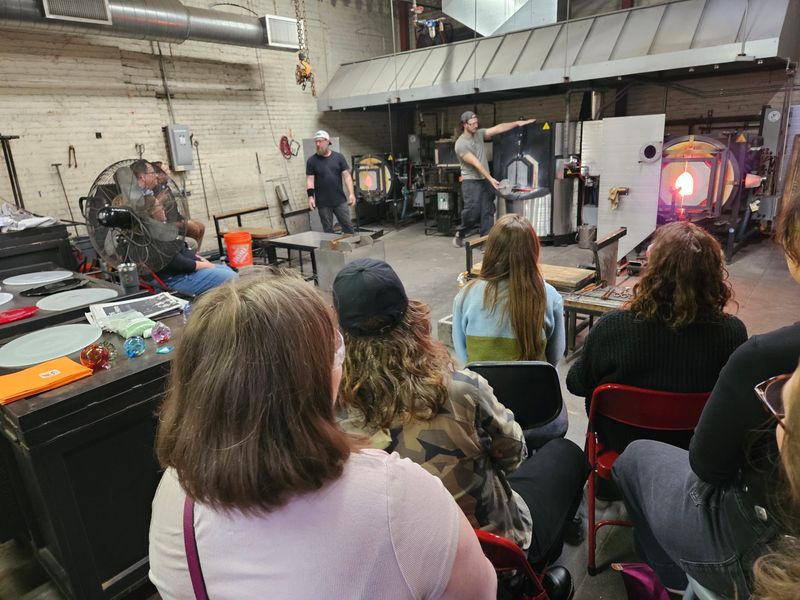
Big dreams don’t always need big budgets. GlassRoots got its start with a single table and two torches.
Patricia Kettenring founded the organization around 2001, though some sources say 2000. She was a Rutgers University business professor and a glass art fan.
That mix of business smarts and art love shaped the whole mission.
Her inspiration came from an arts education center in Washington state. She pictured a similar program that could change lives in Newark.
So she started small and kept going.
The first setup lived inside the Boys and Girls Club of Newark. Two torches doesn’t sound like much.
Still, it was enough to light the spark, literally.
From there, the program grew into a full-service glass art center. Its old studio offered 5,000 square feet.
Today’s home has twice that space.
I have to admit, that growth story is my favorite part. It proves a modest idea can turn into a community landmark.
Keep that in mind the next time someone says your hobby is too small to matter.
Bring The Crew For A Biggest Drip Showdown
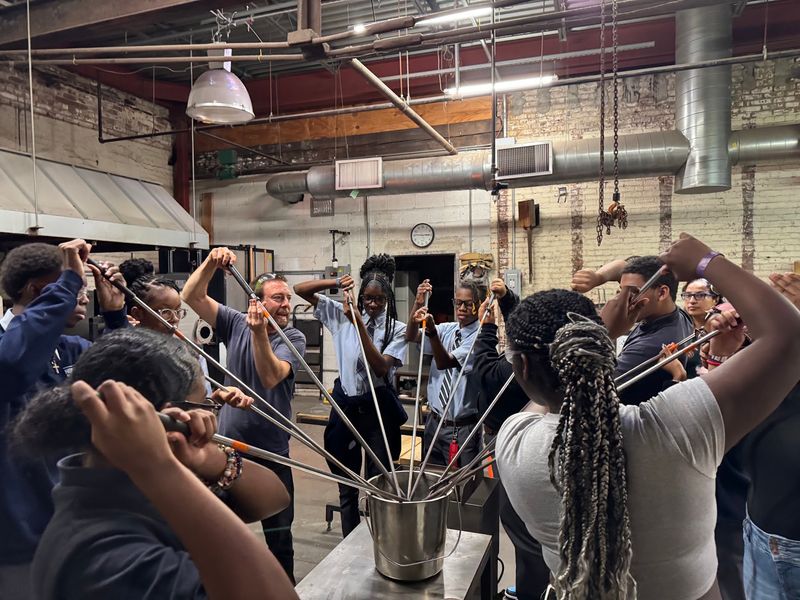
Office trivia night can only go so far. A glassmaking competition called Biggest Drip is a whole new level of team bonding.
GlassRoots hosts team-building workshops that use glass as a tool for teamwork. Coworkers learn to communicate, take turns, and cheer each other on.
Hot glass has a funny way of making everyone pay attention.
The Biggest Drip contest sometimes shows up during these sessions. The name says plenty, and it promises some friendly bragging rights.
Expect laughter, focus, and maybe a little trash talk.
Private lessons are another option for smaller groups. They work well for birthdays, special celebrations, or one-on-one learning.
Group lessons can also be booked for friends or families.
Families have their own fun, too. Short mini maker sessions last about 30 minutes, which fits younger attention spans nicely.
Longer workshops give everyone more time to explore.
Date nights are a popular idea here as well. Making something together beats staring at a dinner menu.
Just reserve early, since group experiences require planning ahead.
Plan Your Visit And Leave Room To Shop
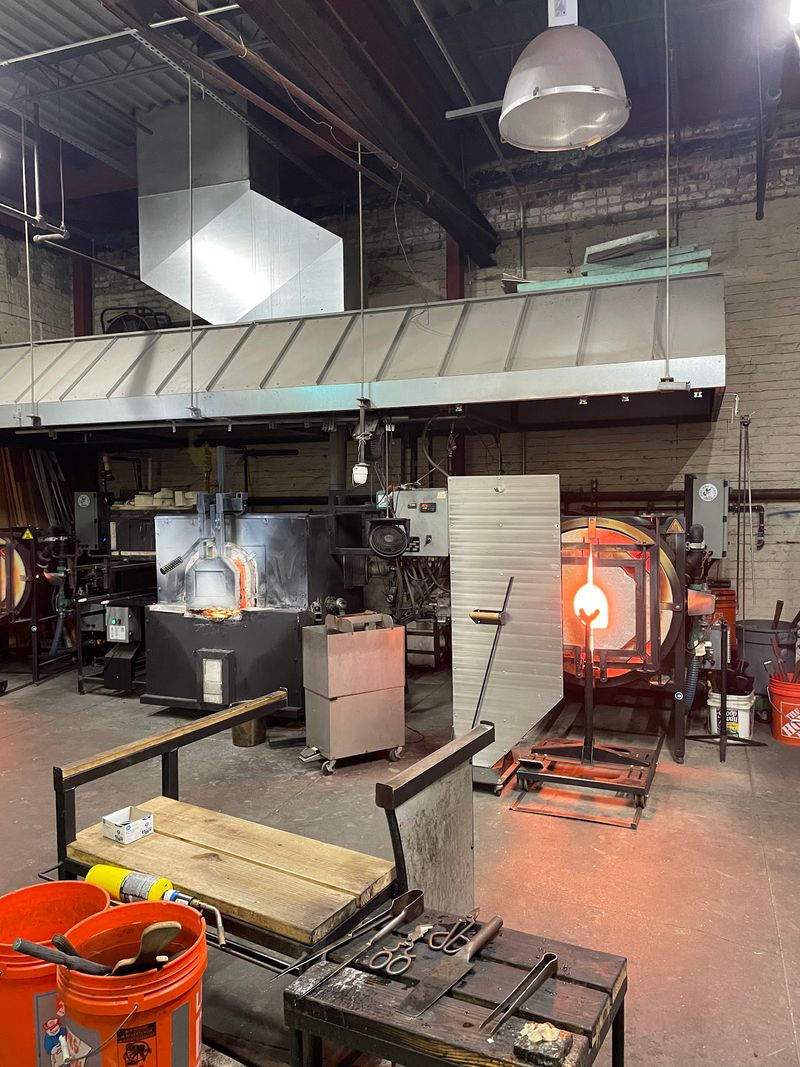
Not ready to touch molten glass yet? The Studio Gallery is a smart place to start.
GlassRoots displays work by staff, visiting artists, and students in its gallery. Many pieces are available for sale.
You might spot a vase or ornament made by someone who just learned the craft.
Buying from the gallery supports the center’s mission, too. That makes it a thoughtful stop for gifts.
Handmade glass from a New Jersey nonprofit beats another mug from the mall.
Office hours generally run Monday through Saturday, from 10 a.m. to 5 p.m. Studio times shift with class schedules and private bookings.
Sundays are closed, so plan around that.
For anyone hooked after one class, six-week courses for adults go deeper. You can build real skills week by week.
It’s a fun way to turn curiosity into a hobby.
Wear comfortable clothes and keep bags simple. Then book a class, pick a project, and get ready to show off something you made.
Your friends will definitely ask where you got it.
