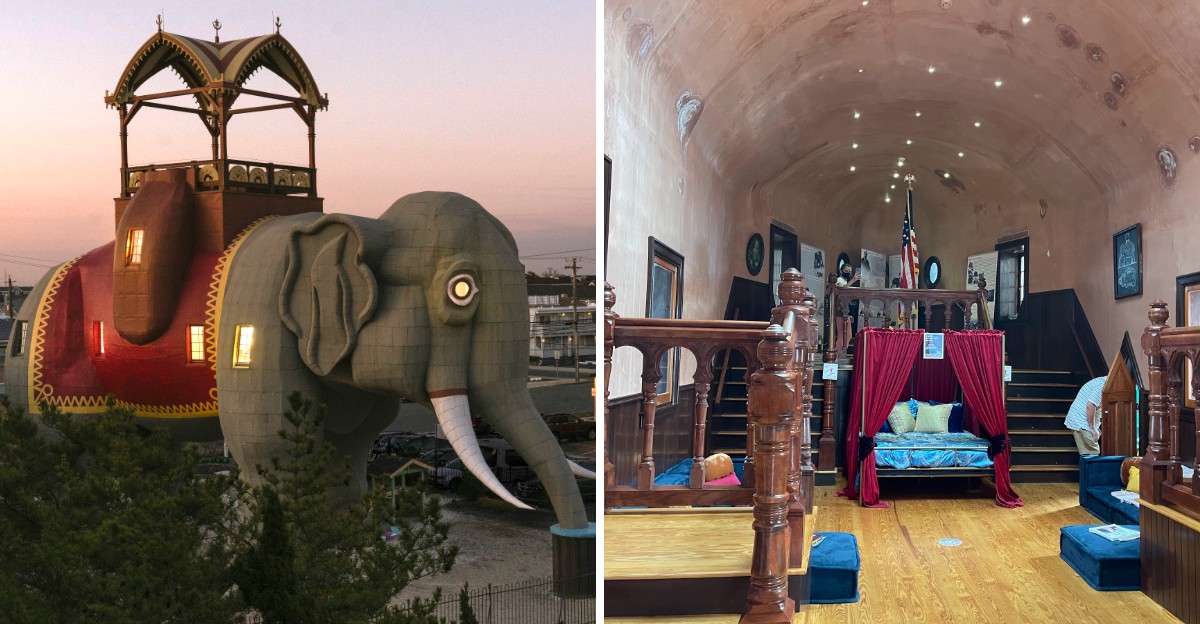
Selling beachfront property is one thing. Building a gigantic elephant to get everyone’s attention?
Now that’s marketing with a serious imagination.
Back in the 1880s, a real estate developer had an unusually ambitious idea. Instead of relying on ordinary signs and advertisements, he commissioned an elephant-shaped building that would be nearly impossible to ignore.
And boy, did he succeed.
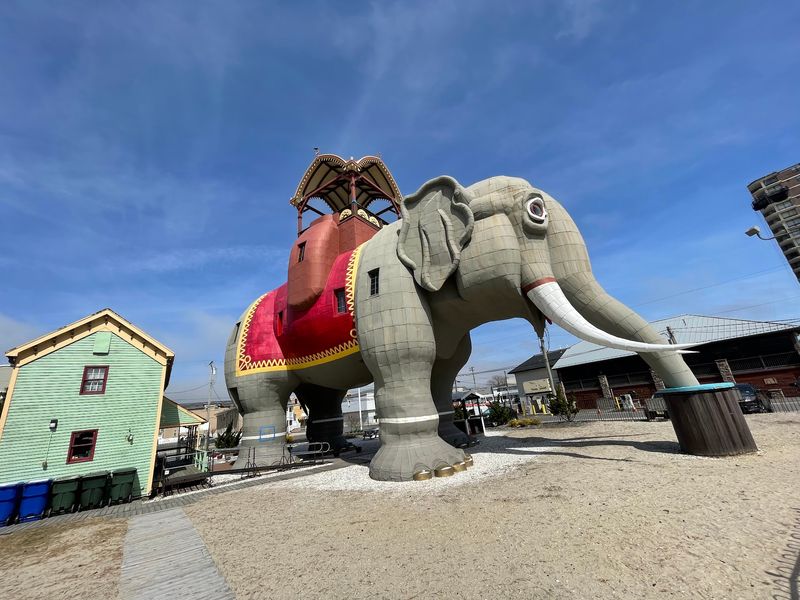
This New Jersey landmark stands about 65 feet tall, with an enormous body, a curling trunk, and an interior visitors can explore.
The original idea was to attract attention to land being marketed in the area. More than a century later, the elephant itself has become the main attraction.
Talk about an advertising campaign with staying power.
It’s wonderfully strange, surprisingly historic, and proof that sometimes the wildest ideas become the most beloved landmarks.
A Sales Pitch With a Trunk
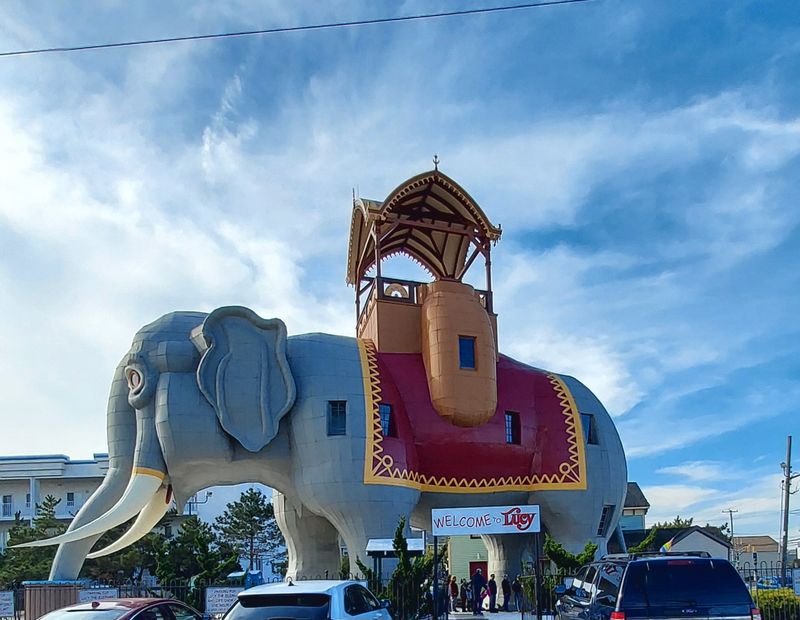
Honestly, I have seen plenty of billboards, but none as bold as this one. Back in 1881, a real estate developer from Philadelphia wanted buyers to notice his land in what was then called South Atlantic City.
His answer was a towering elephant made of wood and tin.
Plain lots of sand are hard to sell. Nobody gets excited about empty dunes and scrubby grass, no matter how close the ocean is.
A giant animal, though, makes people pull over, stare, and ask questions, which is exactly what a land seller needs.
The plan was simple and pretty smart. Visitors could climb up to the top, look out across the land for sale, and picture their future homes near the waves.
Today that same area is known as Margate City, and it is full of homes, shops, and summer fun.
So the next time an ad catches your eye, remember Lucy the Elephant. She proves that a little creativity can turn a quiet stretch of coast into a place people truly want to be.
Measuring Up a Gentle Giant
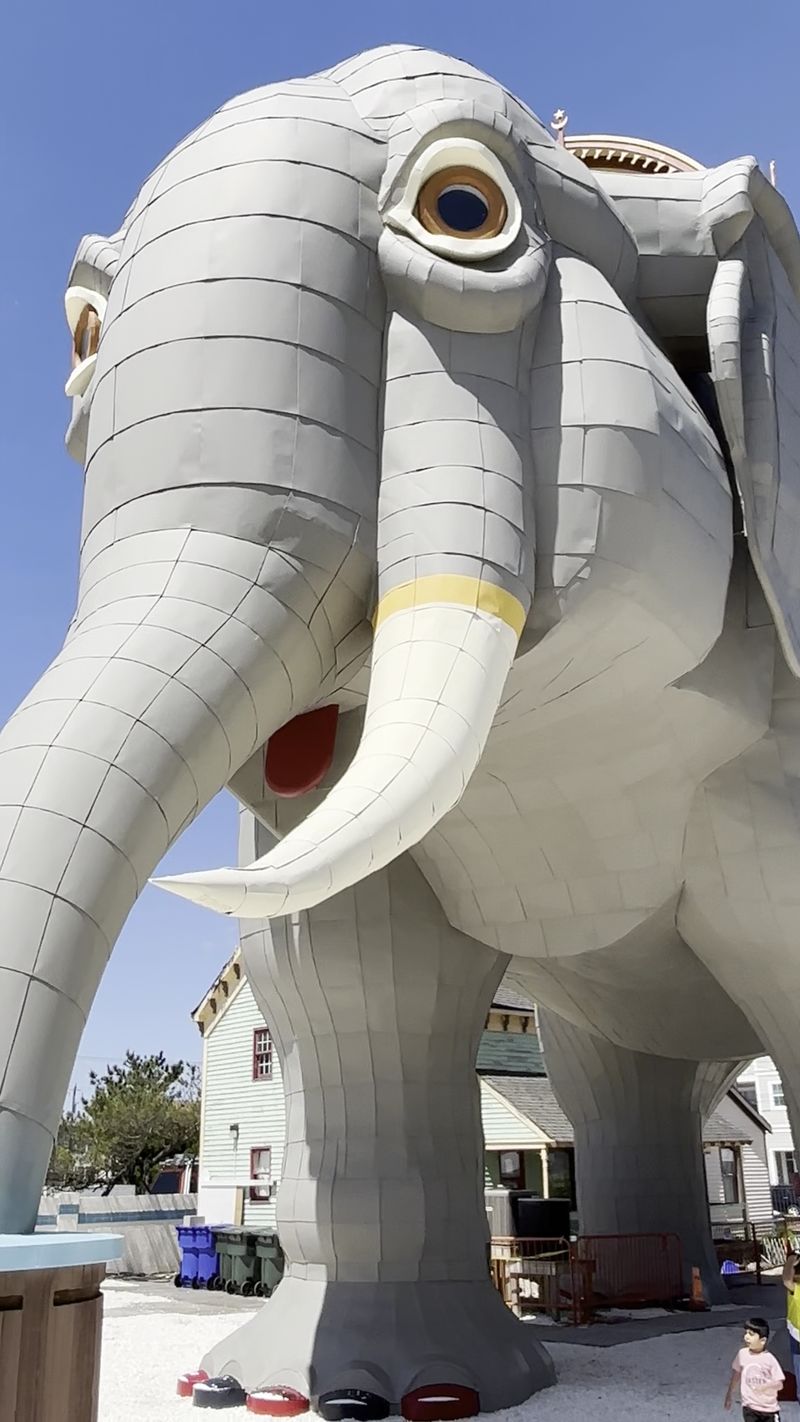
Tilt your head back and keep going. She stands about 65 feet tall, roughly as high as a six-story building, and she stretches around 60 feet long.
Her body is about 18 feet wide, and she weighs close to 90 tons.
Those numbers sound big on paper. In person, they feel enormous, especially when you notice how tiny people look standing beside her legs.
Kids tend to freeze and point, and grown-ups usually do too.
Size was part of the plan from day one. A small statue might get a glance, but a building this huge could be seen from far away across the flat shore.
That made her a landmark people could not miss, even from the road.
Here is a helpful tip for photos. Step back across the lawn or near the sidewalk so you can fit her whole body into one frame, trunk included.
Morning and late afternoon light make her tin skin glow softly, and the sky behind her often turns a pretty shade of blue that makes the shot pop.
Wood, Nails, and a Whole Lot of Tin
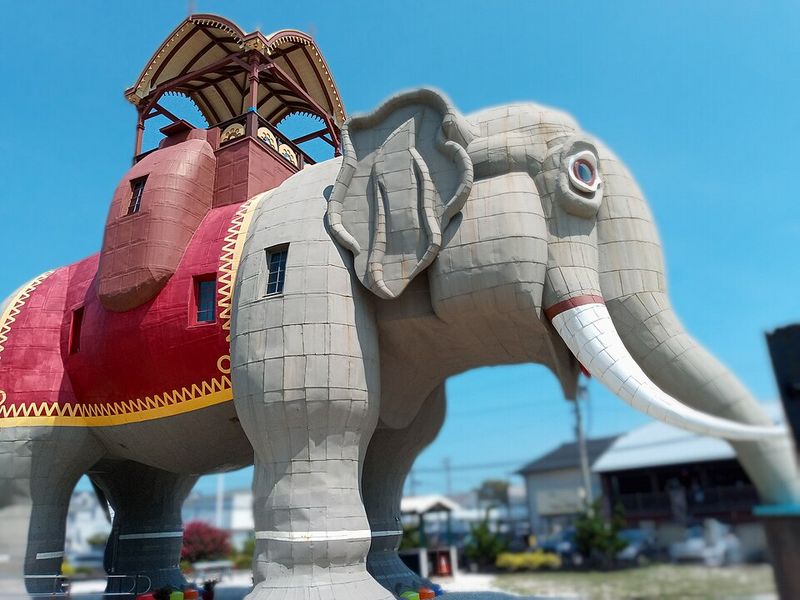
Building an elephant is not exactly a weekend project. Workers in the late 1800s pieced her together using nearly one million pieces of wood.
They also used around 200 kegs of nails and four tons of bolts and iron bars.
Her skeleton is a strong frame made from thick timber, braced with diagonal beams so she stays stiff and steady. That sturdy design has helped her stand up to ocean winds and wild coastal storms for well over a century, which is no small thing right next to the beach.
Over that frame sits her skin, about 12,000 square feet of metal. Little windows dot her body, 22 in all, letting daylight drift into the rooms inside.
Look closely when you visit. The curves of her ears, the shape of her trunk, and the details on her head show real skill, especially for builders working without modern machines.
It makes you appreciate how much care went into a project that started as a sales trick but ended up a true work of craft.
From Elephant Bazaar to Lucy
Names matter more than we think. When she was first built, this giant was called the Elephant Bazaar, a name that matched her job of pulling in land buyers.
It sounded like a shop, not a friend.
A few years later, in 1887, the original builder sold her to another Philadelphia family. They owned her for decades and looked after her through the early 1900s.
Around 1902, the family started calling her Lucy. That small change did something special.
Suddenly she was not just a structure on the sand but a character with a personality, someone people could feel attached to and talk about like an old pal.
I love that detail. A friendly name turned a marketing gimmick into a local sweetheart, and it is a big reason people still say they are going to visit her rather than just see a building.
Kids especially seem to connect with that, waving at her as if she might wave her trunk back. It is a sweet reminder that kindness and a good name can last a very long time.
Many Jobs for One Big Gal
Talk about a busy résumé. After her start as a real estate office, she later served as a restaurant, a business office, a cottage, and even a summer home.
Few buildings anywhere can claim a history that colorful.
One of the most charming chapters came in 1903. A doctor from Britain rented her for his family, and her interior was set up with bedrooms, a kitchen, a dining room, a bathroom, and a parlor.
Imagine telling friends you spent your summer living inside an elephant. That would win every show and tell.
Her rooms were also used for experiments with wireless telegraphy, an early way of sending messages without wires. It is a fun reminder that she has always been part of new ideas, not just old ones.
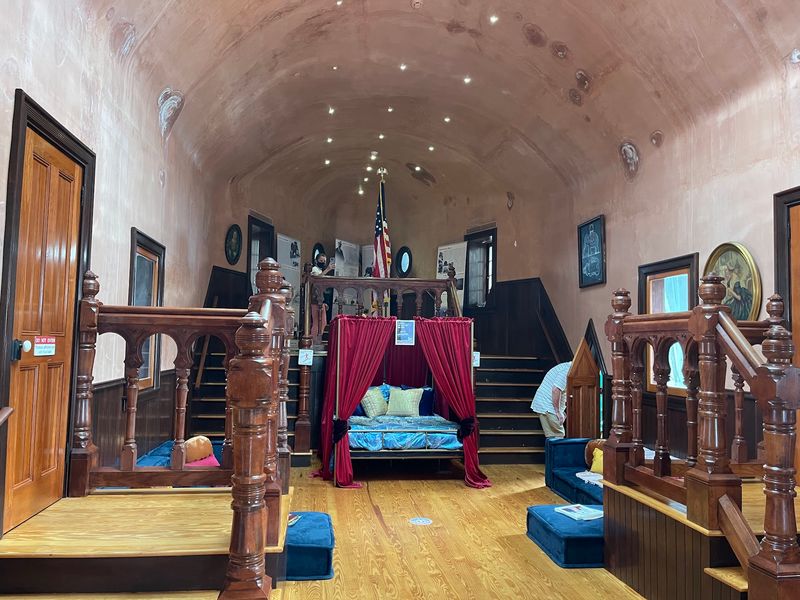
Inside today, the walls are painted a cheerful pink that suits her playful spirit. As you look around, try picturing all the people who ate, worked, and slept in the same space over the years.
It adds a cozy, almost homey layer to a place that could easily feel like just a big curiosity.
The Year She Almost Disappeared
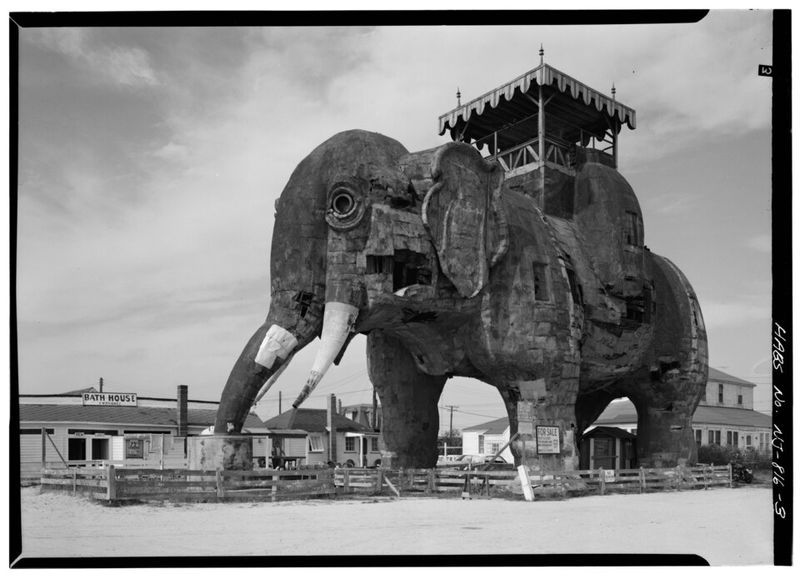
Here is a part of the story that still gives me chills. By the 1960s, years of salty air and missed repairs had left her in rough shape.
She was even set to be torn down.
Local folks were not having it. In 1969, community members formed a group called the Save Lucy Committee, and they worked hard to raise money to rescue her.
Bake-sale energy, but on an elephant-sized scale.
Then came a huge day. On July 20, 1970, she was carefully moved about 100 yards to a lot owned by the city, giving her a safe new home.
Moving a 90-ton elephant is not something you see every day, and it showed just how much people cared.
That move changed everything. Without it, this landmark would probably be just an old photo in a history book.
Instead, she still stands proudly by the shore, all thanks to neighbors who believed she was worth saving. It is a strong lesson that ordinary people can protect the places they love when they stick together and refuse to give up.
Climbing Up Through Her Legs
Yes, you really do enter through a leg. The way up starts with a narrow spiral staircase tucked inside one of her massive limbs, and it winds upward into her belly.
It feels a bit like climbing a lighthouse.
Comfortable shoes are a smart choice here. The steps are tight and twisty, so take your time and hold the rail, especially with little ones.
Tours are guided, which keeps things moving at a friendly pace.
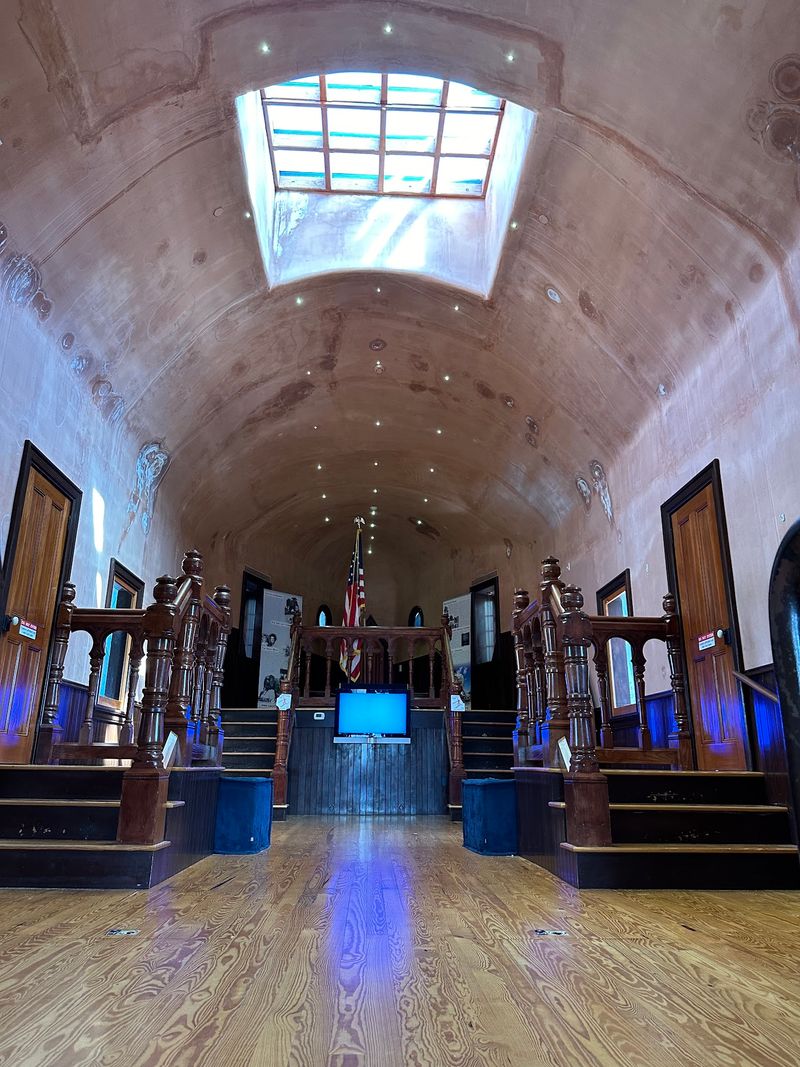
Inside the main room, you will find displays about her history and a short video that explains how she came to be and how she was saved. It is a nice chance to catch your breath and learn a few surprises before heading higher.
Most people are amazed by how roomy it feels inside. The curved walls, wooden beams, and soft pink color make it feel playful and a little magical, like being inside a giant toy.
Kids usually have a lot of questions at this point, and the guides are happy to answer them with fun facts and stories from her long history.
The View From the Howdah
Up top is where the magic really clicks. The howdah, the fancy seat on an elephant’s back, is an open lookout deck on top of her body.
From there, you get a sweeping view in every direction.
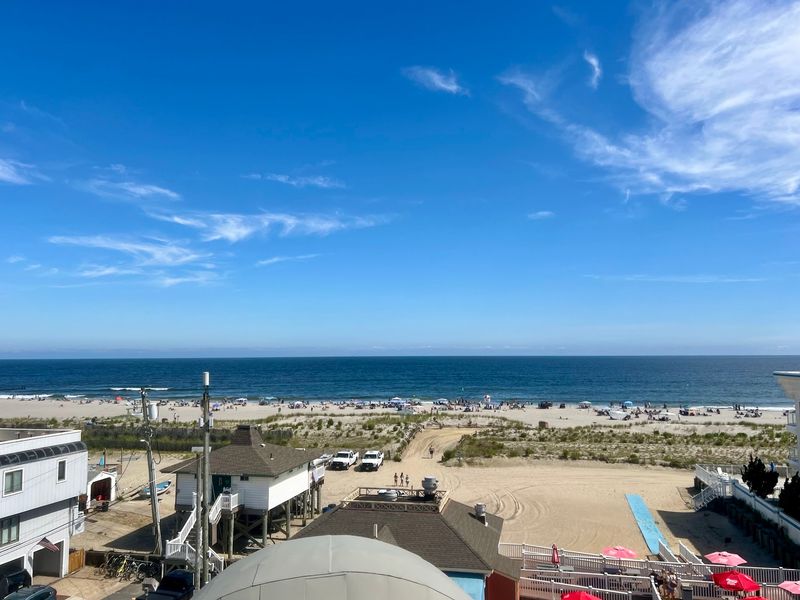
On one side, the Atlantic Ocean rolls in with blue water and white foam. On the other, the rooftops of Margate City spread out in neat rows.
On a clear day, you can even spot the skyline of Atlantic City in the distance.
It is fun to remember why this deck exists. Long ago, buyers stood right here to look at empty land and imagine what it could become.
Now you can see that the dream came true, with homes and streets filling the view.
Bring your camera, but also take a minute to just look. Feel the breeze and listen to the gulls.
Watching the waves from the back of an elephant is a moment most people never forget, and it is easily the highlight of any trip up the stairs.
Fresh Skin and a Bright Future
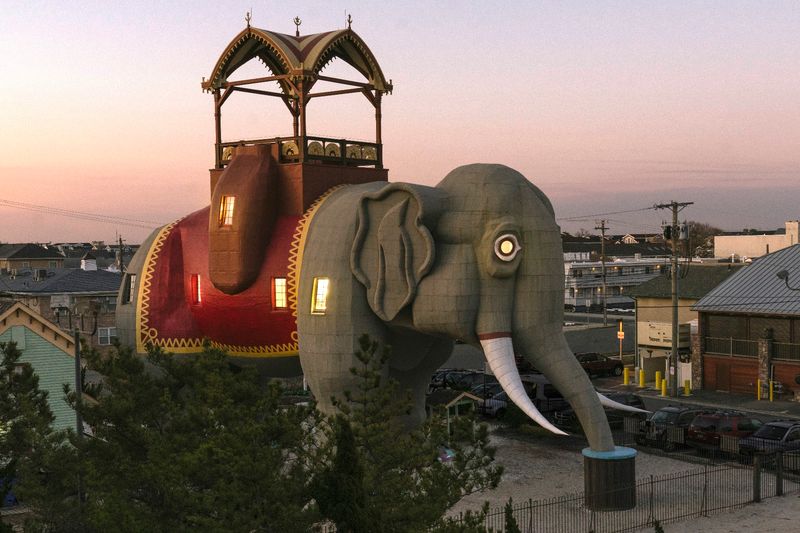
Even giants need a little care. In 2021, she closed for a big exterior makeover that replaced her entire metal skin, which had worn down from years of salty sea air.
Grants helped pay for the work.
She reopened in December 2022 looking bright and fresh. More inside restoration work has also been planned to keep improving the visit.
The Save Lucy Committee keeps raising support so she can stay healthy for future visitors.
A few handy tips can make your trip smoother. Hours usually run from late morning into the afternoon on weekdays, with slightly longer hours on weekends, and tours are timed, so arriving a bit early helps.
A small gift shop offers fun souvenirs, and the beach is right nearby for a stroll afterward.
Families, history fans, and anyone who loves quirky sights will find something to smile about here. She is a playful reminder of New Jersey’s creative past.
You can find Lucy the Elephant at 9200 Atlantic Ave, Margate City, NJ 08402.
