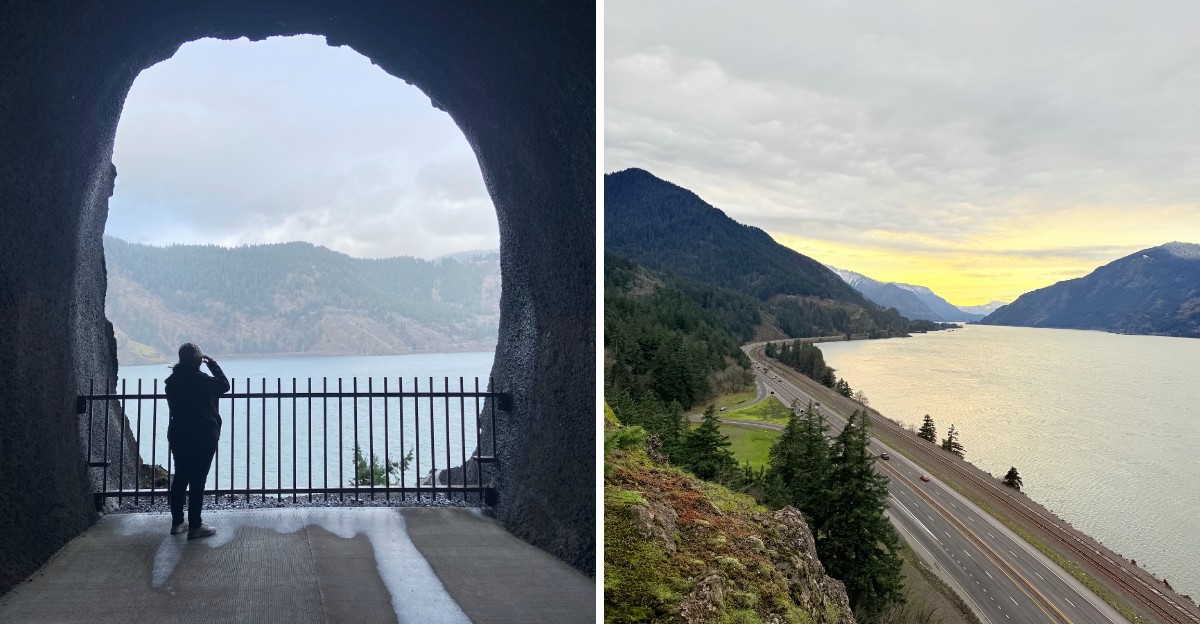
Engineers blew up a famous tunnel in 1966, and almost 60 years later, Oregon built it again. Same cliff, same idea, five stone windows looking straight out over the Columbia River.
The original was called a crown jewel of its highway. Its designer reportedly borrowed the idea from a tunnel above Lake Lucerne in Switzerland. That is a fancy family tree for a hole in a basalt cliff.
I love that this one is for feet and bikes only. No cars rumble through. You just stroll from darkness into bright window light, again and again.
I believe that rhythm is the real magic here. Each opening frames the river and Washington hills a little differently.
Five Stone Windows Turn A Short Walk Into A Slideshow
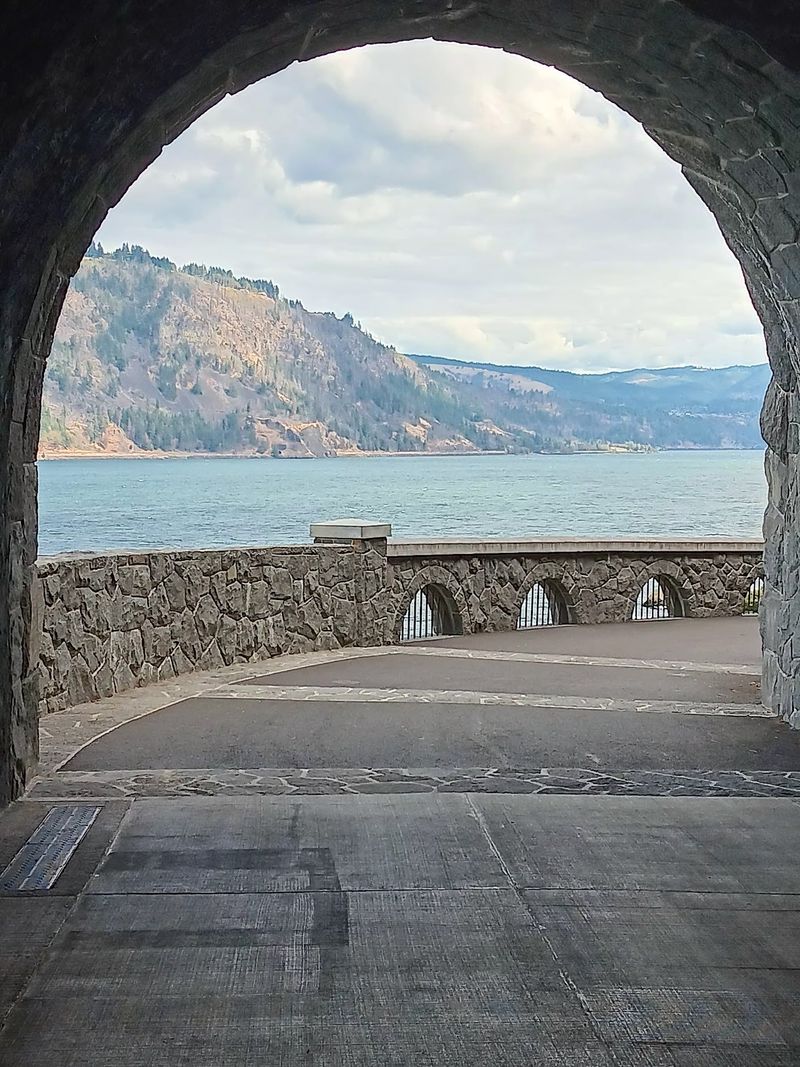
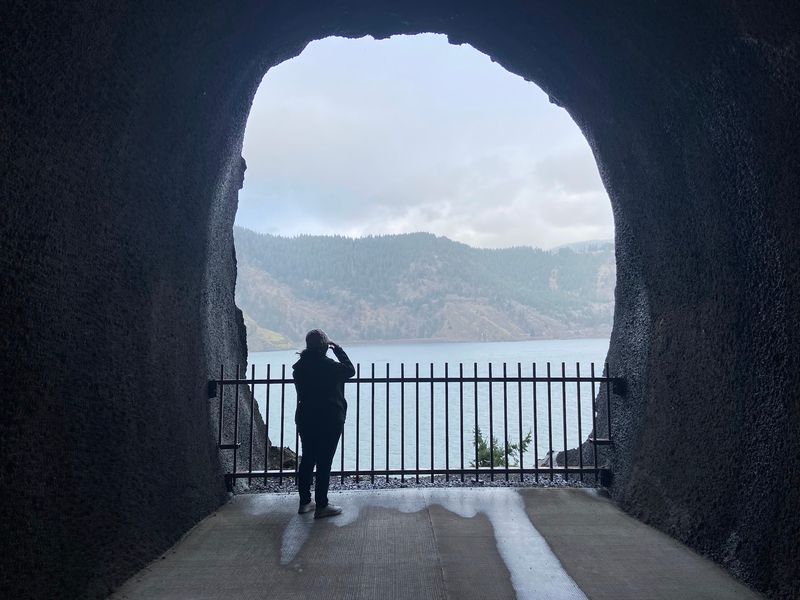
Most tunnels hurry you toward the exit. The Mitchell Point Tunnel slows you down with five arched windows cut into its cliff wall.
Each opening is called an adit, which is a handy word for trivia night. Light pours through them and lands on the paved floor in bright patches.
Inside, the tunnel stays unlit, so the windows do the real work. They give you enough daylight to walk safely without any lamps overhead.
What you see through them is the big payoff. The Columbia River stretches out below, with the hills of Washington rising on the other side.
Here’s a fun habit worth trying. Stop at all five windows, because each one frames the view at a slightly different angle.
The scene shifts as you move along the 655-foot passage. One window may catch more river, while another favors the far shoreline and its ridges.
Photographers will feel spoiled here. The stone arch acts like a ready-made picture frame, so even phone shots look planned.
Give yourself time and skip the rush. A slow walk lets your eyes adjust between the dark rock and the sunny openings, which makes every view hit harder.
The Original Was America’s Big Tunnel Showoff In 1915
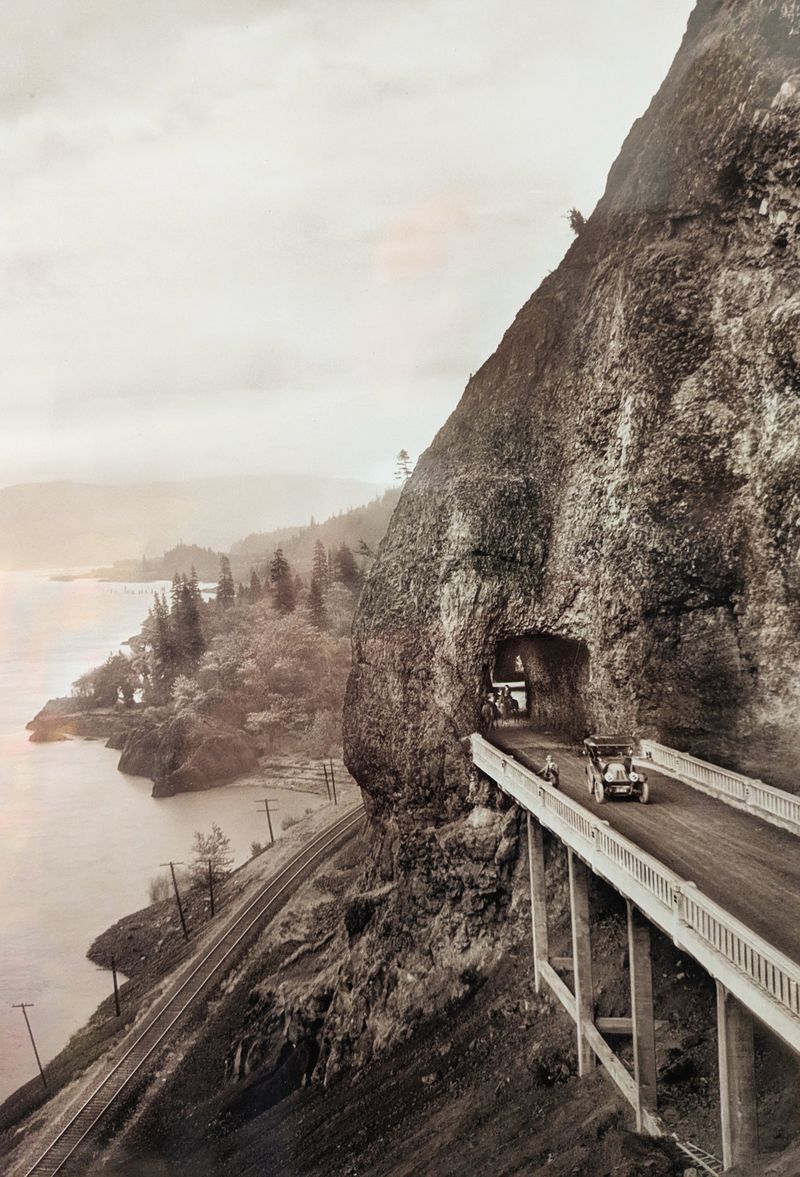
Back in 1915, drivers on the Historic Columbia River Highway reached Mitchell Point and found something new. A tunnel had been carved right through the cliff, complete with windows.
The tunnel became one of the earliest American highway tunnels designed with scenic viewing windows, along a pioneering paved highway celebrated for its engineering and scenery. That gave Oregon serious bragging rights in the early car era.
John Arthur Elliott designed it. He was reportedly inspired by a tunnel overlooking Lake Lucerne in Switzerland, which explains the dramatic style.
The tunnel quickly earned the nickname crown jewel of the highway. People traveled to see it as much as to drive through it.
Fame came with problems, though. Traffic kept growing, and safety concerns about the narrow passage piled up over the years.
The tunnel closed in 1953. Then, in 1966, it was destroyed to make room for a wider Interstate 84 along the river.
For decades, the famous windows existed only in old photos and postcards. That’s a sad ending for a structure people once admired so much.
Knowing this story changes how the new tunnel feels. You’re not just walking through rock. You’re walking through a comeback that took about six decades to happen.
Somebody Finally Rebuilt The Crown Jewel
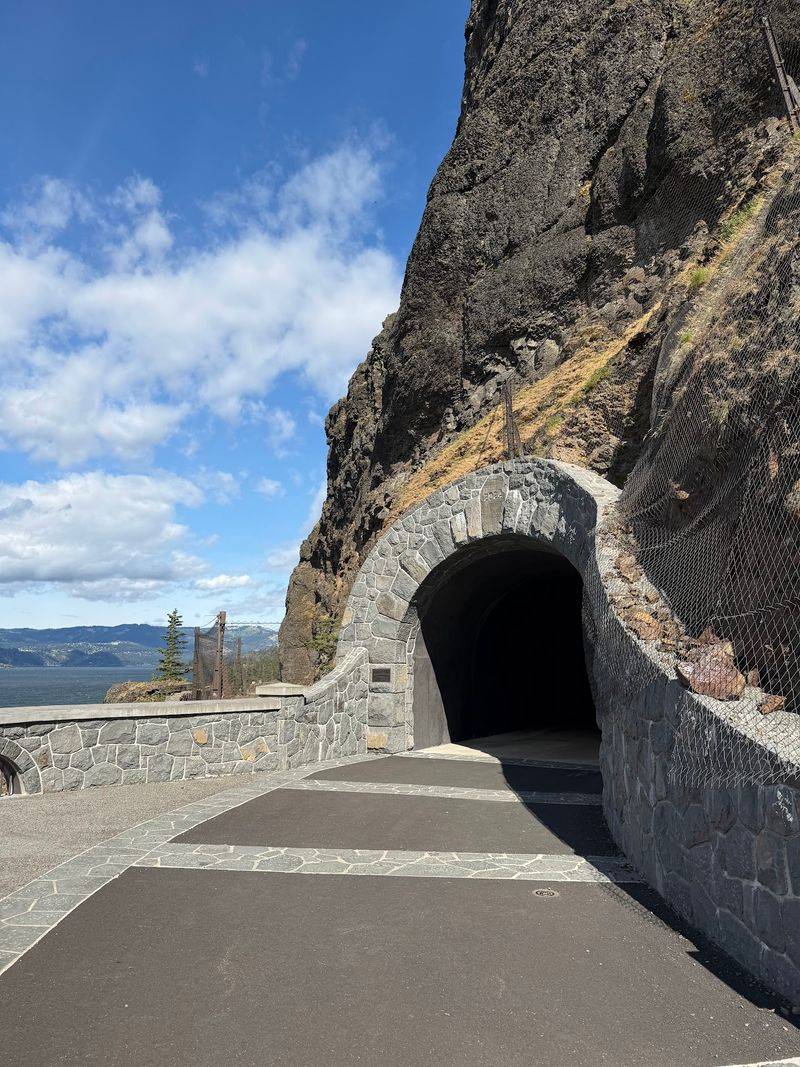
Rebuilding a lost landmark takes patience. Oregon held a dedication ceremony for the new tunnel on November 16, 2024.
It opened to the public on March 21, 2025. After a 1966 demolition, that’s a pretty long wait for a sequel.
The new version is a faithful recreation of the original Mitchell Point Tunnel. It isn’t an exact copy, but it clearly honors the 1915 design.
Hand-placed stone masonry walls are a big part of the charm. They echo the old rock work found along the Historic Columbia River Highway.
That detail matters more than you might expect. Stone walls built by hand give the route a crafted, old-fashioned look that concrete alone never could.
The tunnel also belongs to a much bigger plan. Oregon has spent decades working to restore and reconnect the historic 73-mile highway route.
Many old sections now serve walkers and cyclists instead of cars. The tunnel is one of the most eye-catching pieces of that effort so far.
I like that the project didn’t settle for something plain. Builders could have bored a simple tube, but they brought back the windows and the artistry instead.
Strollers, Wheelchairs, And Wobbly Legs Are All Welcome
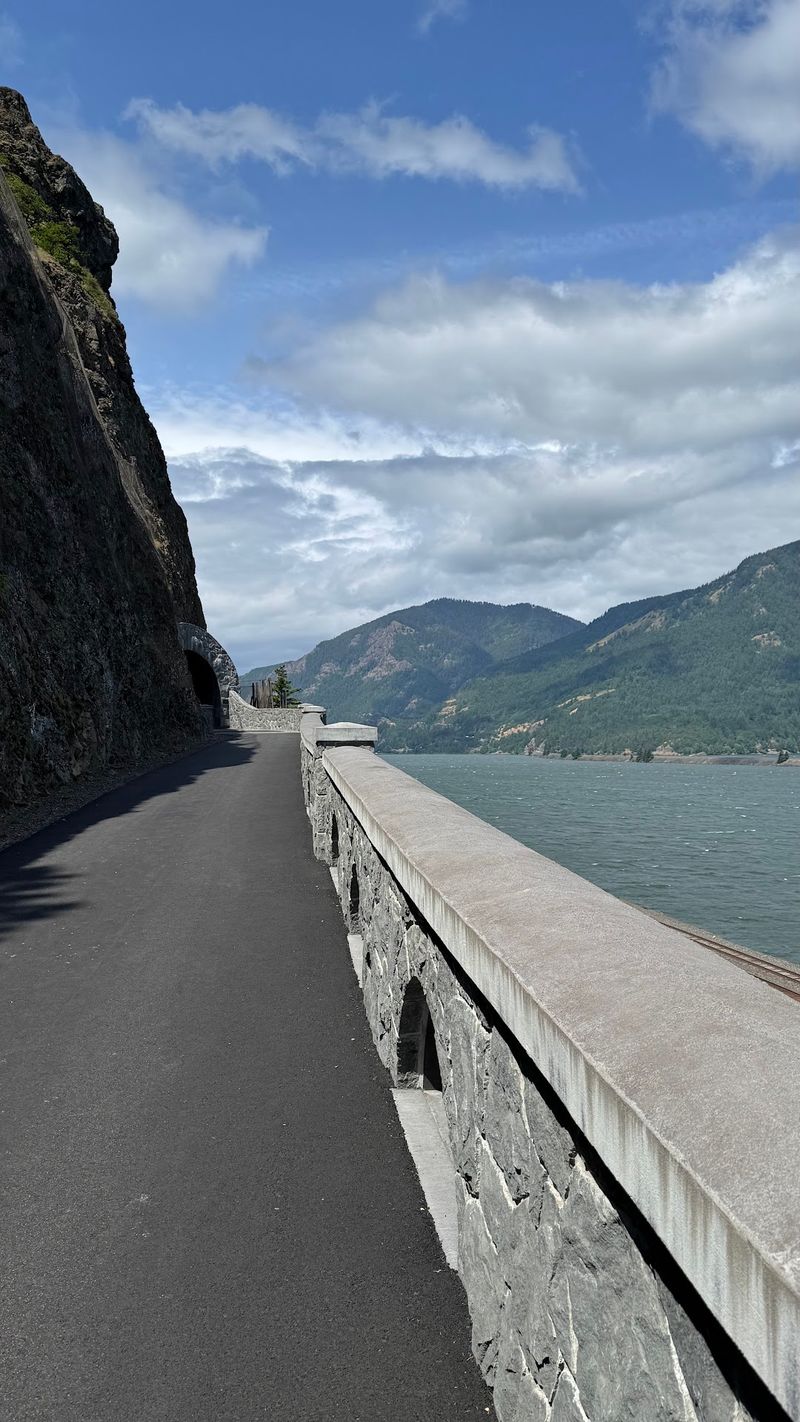
Good news for anyone who dislikes steep climbs. The path to the tunnel is paved, wide, and mostly flat.
That makes it friendly for strollers and wheelchairs. Grandparents, toddlers, and road-trip-stiff knees can all join in without a struggle.
The tunnel sits on a 1.5-mile segment of the Historic Columbia River Highway State Trail. It’s a short, easy outing rather than a sweaty expedition.
Only non-motorized users can travel this stretch. Hikers and cyclists share it, so no car traffic crowds the path.
Bike riders get a real treat here. Rolling through a historic tunnel with river views is far more interesting than circling a parking lot.
Leashed dogs are a common sight too. Just keep pups close, since the trail is shared by people on foot and on wheels.
The tunnel floor is smooth and even, which helps once your eyes adjust to the darker stretches. Still, walking at a calm pace is smart.
If you crave a tougher workout, the Mitchell Point hike starts from the same parking area. That trail climbs much harder, so wear proper shoes.
Hold Onto Your Hat At The Windows
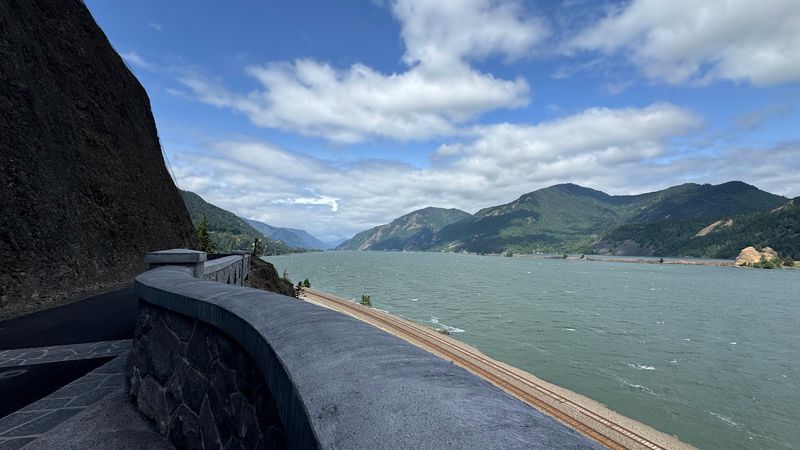
The Columbia River Gorge is famous for wind. Hood River, nearby, is known worldwide for windsurfing and kiteboarding.
So it makes sense that the tunnel gets breezy. The window openings and viewpoints can feel especially gusty.
Wind may push right through the passage too. One minute you’re calm, and the next your hood is trying to fly toward Washington.
A little planning keeps things fun. Bring a jacket that zips, even on mild days, and leave floppy hats in the car.
Hold phones and cameras with a firm grip at the windows. The views are tempting, but a strong gust can surprise you.
Little kids should stay close at the openings. That keeps everyone relaxed and focused on the scenery instead of chasing loose items.
On sunny days, the open trail outside offers little shade. Water and sunscreen are good ideas before you leave the parking area.
Honestly, the wind adds drama. Watching the river ripple below while air rushes past the stone arches feels wild in the best way. Just accept that your hair will lose this round.
Eagles, Ospreys, And Trains Put On A Free Show
Look up for a second. Turkey vultures, ospreys, crows, and even bald eagles may be soaring over the gorge.
The tunnel’s high perch gives you a great angle on the sky. Big birds often glide on the strong river winds without flapping much.
Ospreys are fish hunters, so watch near the water. They hover and then plunge feet-first for a meal.
Bald eagles are harder to miss once you spot one. That white head and huge wingspan make a quick sighting feel like a prize.
Now look down. Train tracks run below, and trains may roll past along the river while you stand at a window.
Kids especially love this combo. Birds above, trains below, and a giant river in between keeps everyone glancing in every direction.
Binoculars are worth tossing in your bag. They help you pick out birds on far ridges and details across the water in Washington.
Keep expectations relaxed, of course. Wildlife follows its own schedule, not yours. Even so, a patient minute at one of the windows can pay off nicely.
Getting There Requires One Sneaky Freeway Trick
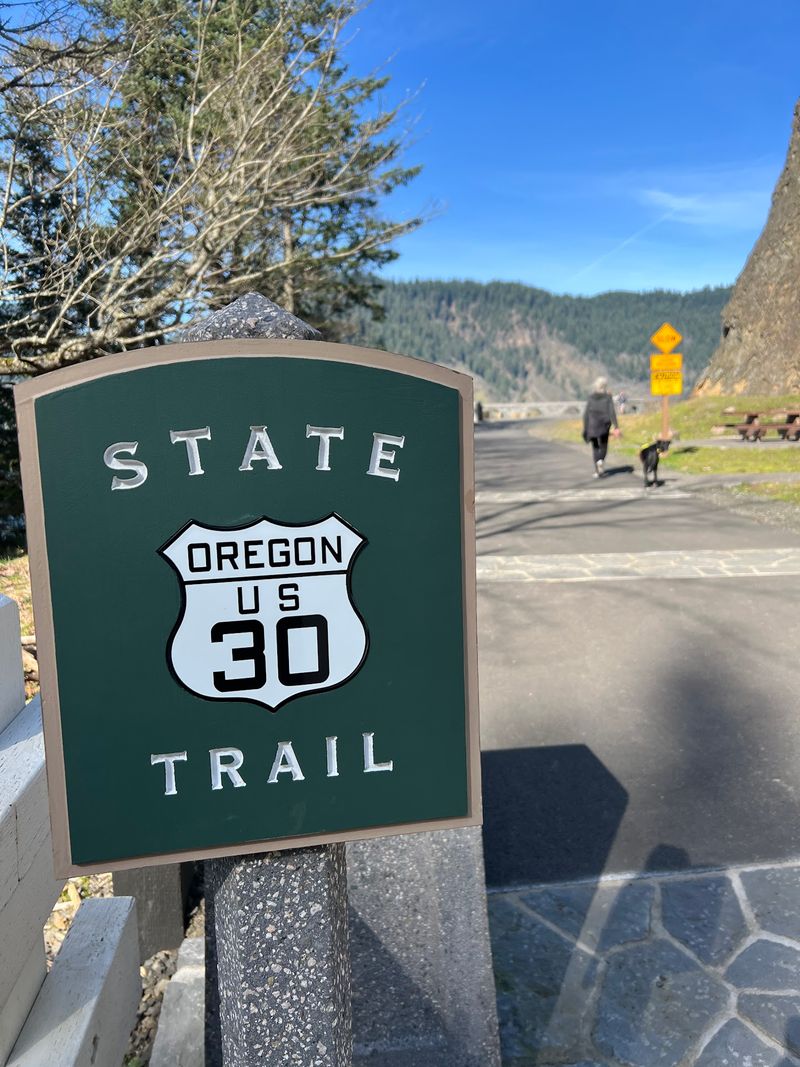
Directions matter here more than usual. Drivers can reach the trailhead only from I-84 eastbound at Exit 58.
There’s no access from westbound I-84. Coming from Hood River means heading west first, then turning around at Exit 56.
That little loop confuses plenty of first-timers. Knowing it ahead of time saves you from a surprise detour.
The official address is Historic Columbia River Highway State Trail, Hood River, OR 97031. Your map app should guide you, but remember the eastbound rule.
The tunnel sits roughly an hour from Portland, which makes it an easy day trip. It also works as a quick break during a longer Oregon road trip.
A short visit can take less than an hour. That makes it perfect for stretching your legs between other gorge stops.
Downtown Hood River is only a few miles away. Shops and places to eat make a natural next stop after your walk.
Please pay attention to no-parking signs along the road. Parking where you shouldn’t could turn a happy outing into an annoying ticket.
Eighteen Parking Spots Make Timing Your Secret Weapon
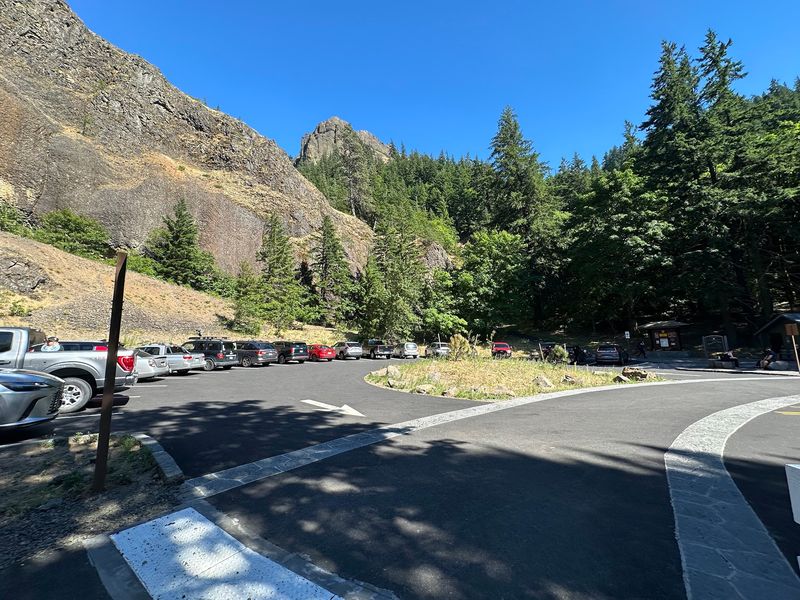
Eighteen cars. That’s the size of the parking lot at the west trailhead, so space goes fast on busy days.
Early mornings and late afternoons are smart choices. Weekdays and cooler months may also give you better odds.
The trailhead offers more than parking, which is nice. A plaza with picnic tables gives you a spot to snack before or after the walk.
Break areas and an overlook round out the setup. You can soak up gorge scenery without even reaching the tunnel yet.
An expanded restroom sits at the trailhead too. That’s a welcome detail for families and anyone on a long drive.
Pack a simple picnic for the full experience. Sandwiches taste better with a view of the Columbia River nearby.
The walk from the lot to the tunnel entrance is short. Even a quick stop gives you time for all five windows.
If the lot is full, patience helps more than circling. Spots open up as people finish their short visits. A little flexibility turns a crowded moment into a smooth arrival.
More Trail Is Coming, So This Is Only Chapter One
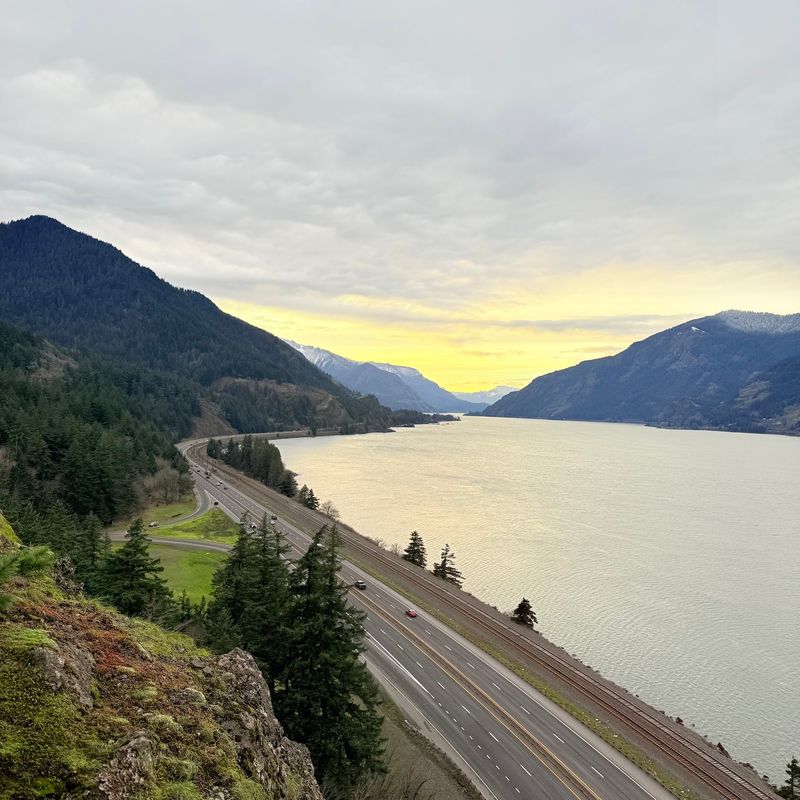
Right now, the tunnel section feels like a teaser trailer. Bigger plans are already lined up for this stretch of Oregon trail.
Construction of the western connection toward Viento State Park began in December 2025, with completion expected in late 2026. Construction of the next eastern connection beneath Interstate 84 is anticipated to begin in early 2027, while the remaining route toward Hood River is still in the planning stages.
Those projects would stitch more pieces of the Historic Columbia River Highway State Trail together. Longer car-free rides through the gorge are the goal.
Cyclists have extra reason to get excited. The Mitchell Point Tunnel could become a highlight on a much longer scenic ride.
For now, the tunnel remains accessible from its Exit 58 parking lot, but the connecting trail from Viento State Park is temporarily closed during construction. Expect a short walk, not a full-day journey, and you’ll leave happy.
Visiting early has its own perks. You can say you saw the tunnel before the full route was finished.
The larger mission ties back to the original 73-mile highway. Each new connection brings that historic route closer to whole again.
I can’t imagine a better centerpiece for it. A rebuilt tunnel with five river windows makes a fine reason to keep checking back as the trail grows.
