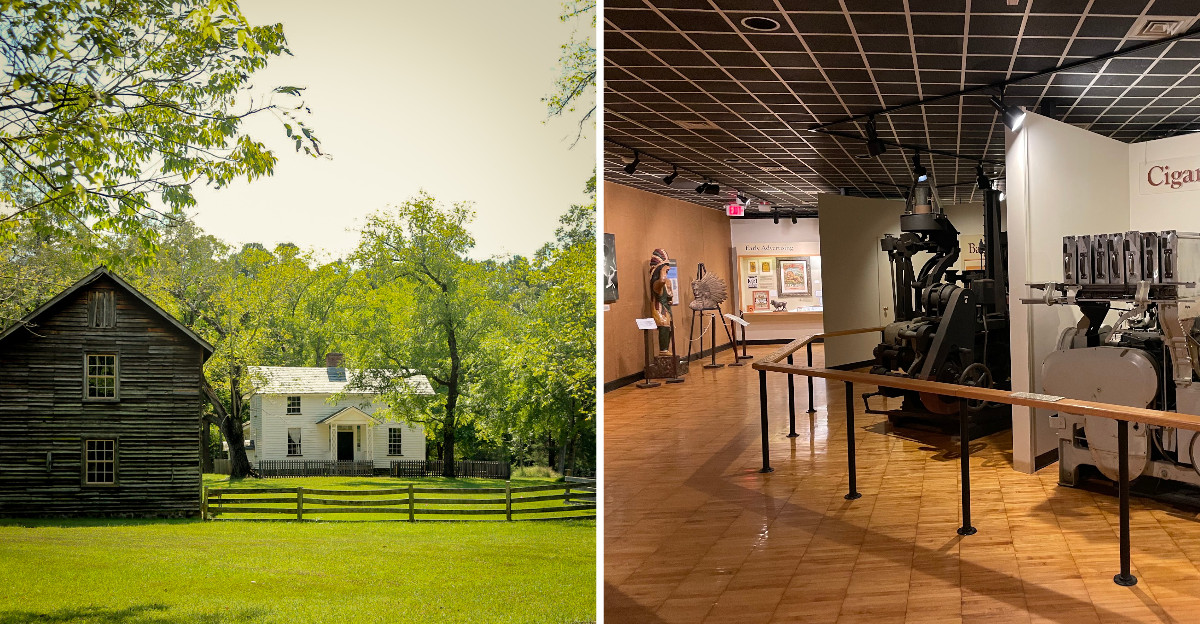
Weathered outbuildings and a white farmhouse sit on a patch of green that a dozen drives had passed without a second glance. Then one afternoon, a stop was finally made, and everything changed.
This quiet corner of North Carolina is where a man came home after the Civil War and turned a converted corn crib into his first factory. That one small building grew into a family business his sons carried across the state and eventually into a company that became the largest of its kind on the planet.
The farmhouse rooms still hold the shape of ordinary life, with wooden floors and simple furniture that make the story feel close. Paths crunch underfoot between the house and the outbuildings, and the skyline of a modern city sits just beyond the treeline.
What looks like a humble farm turns out to be the starting point for an empire, and that contrast makes the visit unforgettable.
The Corn Crib That Became a Factory
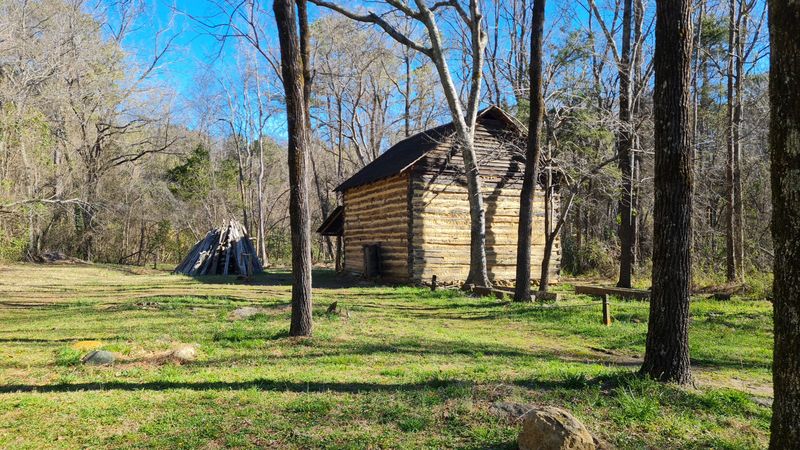
The idea that a whole industry began inside a building meant for storing corn still makes me smile. Washington Duke came back to his farm in 1865 with very little, and instead of waiting for better days, he put his children to work processing leaf inside a converted corn crib.
That little structure became the family’s first factory. Records say they turned out somewhere between 400 and 500 pounds a day, which sounds tiny until you picture a family doing it all by hand.
Standing near that spot on the grounds, I kept thinking about scale. A building you could almost touch both walls of at once launched a business that eventually reached across oceans.
The guides explain the setup clearly, and the details stick with you: no machines, no electricity, no shortcuts. Everything depended on hands, patience, and a willingness to try something the market had not settled on yet.
What I appreciated most is how the site refuses to dress it up. There is no fake drama here, just the plain arithmetic of a family working long hours in a small space.
If you want one takeaway from your visit, start here. Understanding how humble the beginning was makes every other building on the property land differently.
Inside the Restored Duke Family Home
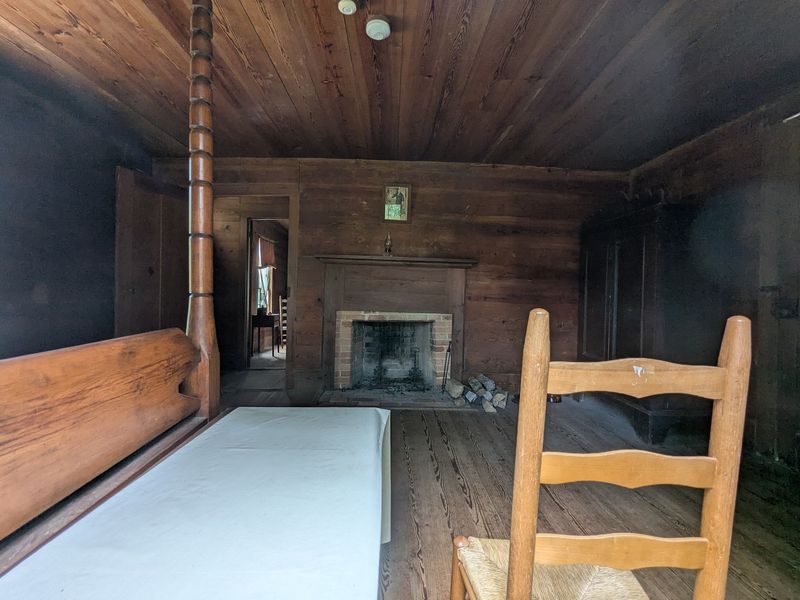
My favorite moment came at the farmhouse windows. The home Washington Duke built in 1852 sits at the center of the property, and it looks exactly like what it is: a working farmer’s house, not a mansion.
Low ceilings, simple furniture, plain wood floors. On the day I visited, the interior tour was part of the guided experience, and peeking through the glass beforehand only made me more curious.
What strikes you is the absence of things we never think about. No running water, no electric lights, no indoor bathroom, and a family raising children in the middle of all that work.
Guides point out how rooms served several purposes at once, which explains a lot about how rural families lived in the 1850s and 1860s. The house feels lived in rather than staged.
A practical tip: ask at the visitor center whether the house interior is open during your time slot, since access depends on the tour schedule. Calling ahead saves disappointment.
I left with an odd sense of respect for the ordinariness of it. The family that would later fund a university once slept in a farmhouse smaller than many modern living rooms.
The Curing Barn and the Packhouse Trail
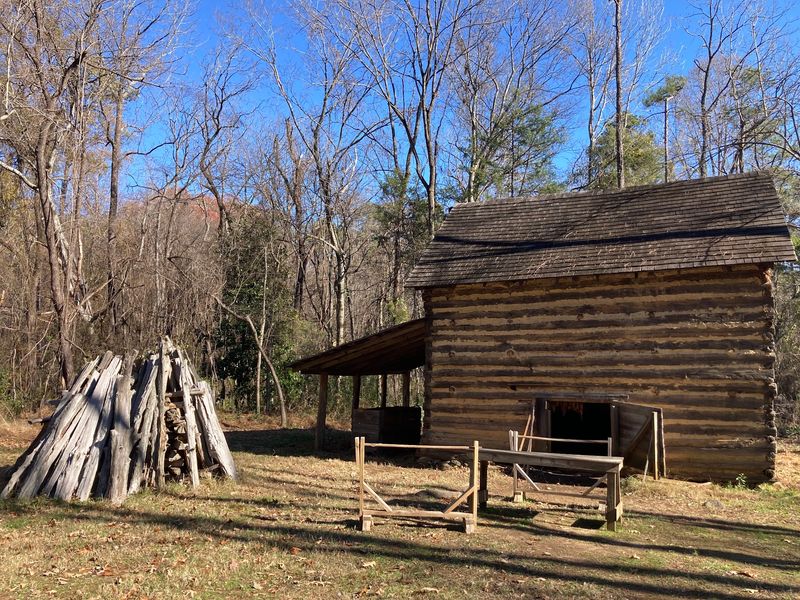
Out behind the house, a short and easy path links the working buildings, and this is where the farm really came alive for me. The curing barn, the packhouse, and the reconstructed log barn each played a specific role in getting the crop ready for market.
The original log barn burned, so what stands now is a careful reconstruction. Knowing that made me look at the notched corners a little longer.
Guides walk you through the steps in order, which turns a scattering of sheds into a process you can follow start to finish. Heat, time, sorting, packing, hauling.
The path is flat, shaded in stretches, and short enough for kids or anyone who does not want a hike. I did the loop slowly and still finished well under half an hour.
One detail from my tour stayed with me: children worked brutally long days in this process, with no room left for school. The site does not skip that part, and it should not.
Bring water in summer. North Carolina humidity settles into these open fields, and the shade only helps so much once the afternoon heats up.
Pro Bono Publico and the Name on the Label
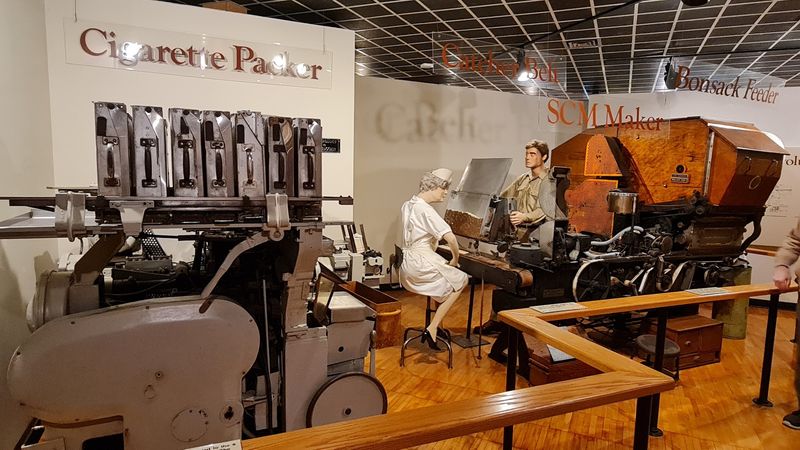
Branding in the 1860s was not exactly subtle, and I loved learning that the Dukes marketed their product under the name Pro Bono Publico, which translates to For the Public Good. The family business itself went by W.
Duke and Sons.
Reading that label in the museum felt like meeting the ancestor of every slogan we scroll past today.
The exhibits trace how the family moved from a one-building operation to something much larger. By 1869 they had built a two-story factory right on the homestead, and by 1873 they were producing roughly 125,000 pounds a year.
Those numbers climb fast when you compare them to the 400 pounds a day they started with.
Then came 1874, when Washington Duke sold the farm and moved the family and the business into Durham, a city that was growing quickly around them. The homestead chapter closed, and the industrial one opened.
What I found genuinely interesting is how much of this growth came down to marketing instincts rather than just production. The Dukes understood names, labels, and reputation early.
Give yourself time with these panels. The story is in the small print.
The Museum, the Film, and the Old Machines
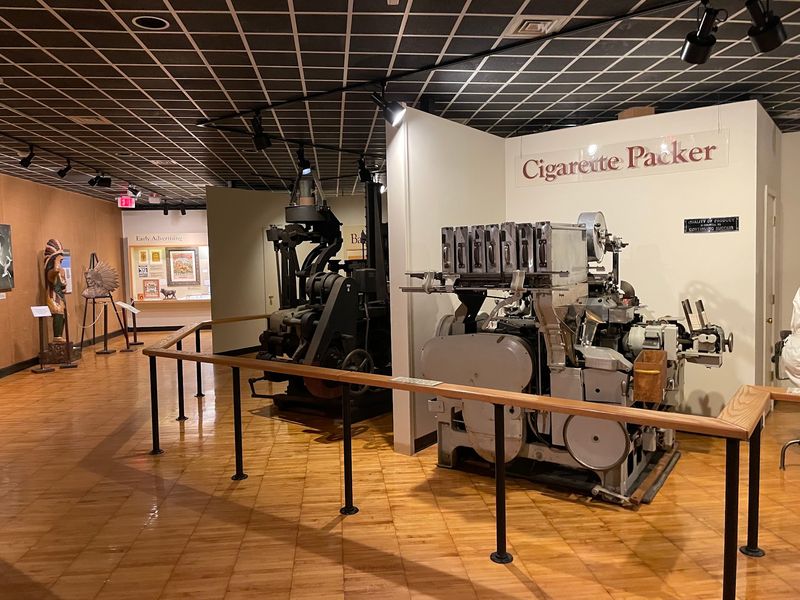
Air conditioning has rarely felt so welcome as it did when I stepped into the visitor center museum. Inside, a short film introduces the Duke family, the farm, and their role in shaping Durham, and it is a smart place to begin before you head outdoors.
The auditorium occasionally gets booked for events, so timing matters.
Beyond the theater, the museum holds rows of old machinery, advertising material, and exhibit panels that took me about half an hour to read properly. The machines are the showstoppers, all gears and belts and stamped metal.
Vintage advertisements line part of the space, and they are fascinating in a slightly eerie way.
The exhibits do not soften the difficult parts of the story either. Enslaved labor in the industry and the health consequences of the product both appear in the interpretation, presented plainly rather than buried.
Restrooms sit just outside the main building, and there is plenty of parking, including accessible spaces.
I would budget an hour here if you read carefully, less if you skim. Either way, the museum gives the outdoor buildings context that makes the whole visit click into place.
Guided Tours Worth Planning Around
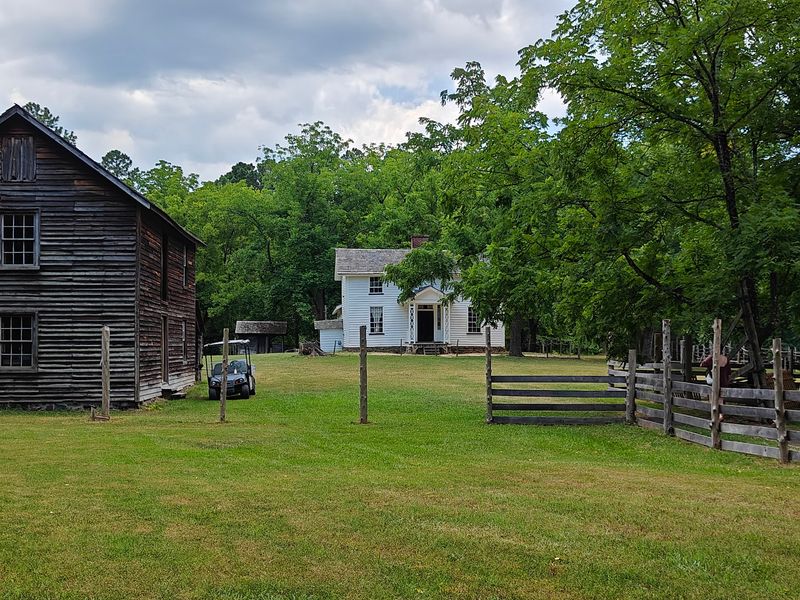
Here is the one piece of advice I would push hardest: sort out the guided tour before you arrive. Guides here know the property inside out, and the difference between wandering with a brochure and walking with an interpreter is substantial.
I overheard a guide explaining the sequence of work in the outbuildings and immediately understood things the signs had left fuzzy.
Tours run at set times through the day, and if you show up at the wrong moment you could face a long wait.
The site is open Tuesday through Saturday from 9 in the morning until 5 in the afternoon, and closed Sunday and Monday.
Families do especially well on the guided version. Kids get to see the actual buildings where the work happened, which lands far better than any textbook paragraph about nineteenth century farm labor.
The whole visit, museum and film and grounds included, fits comfortably into one to two hours.
Go early if you can. Mornings are cooler, the parking lot is quieter, and you get first pick of tour times without feeling rushed.
A Landmark, a Picnic Spot, and a Legacy You Can See Across Durham
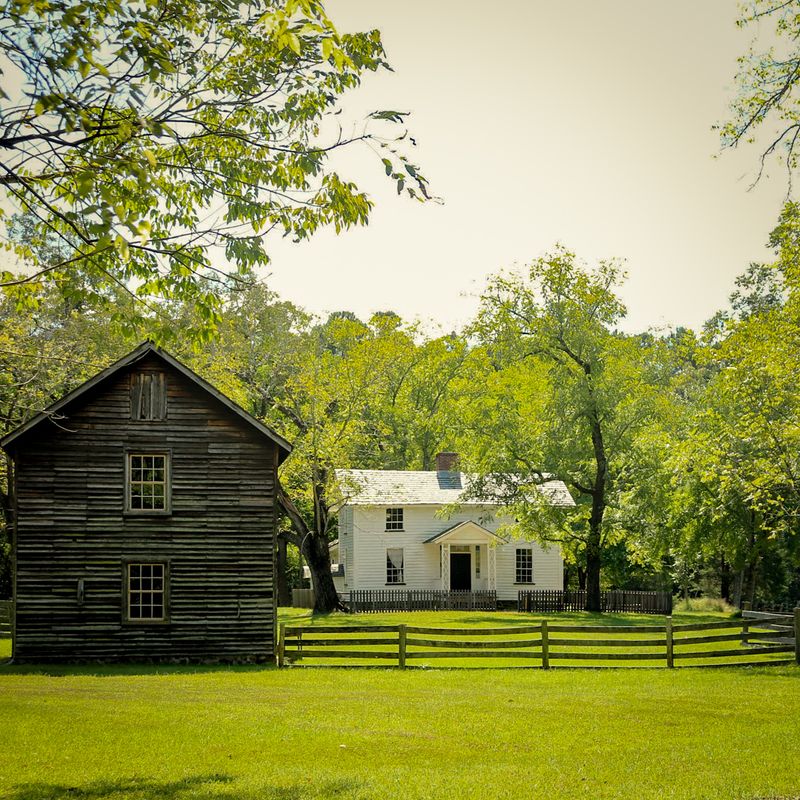
Few historic sites manage to be both meaningful and genuinely pleasant to linger in, but this one pulls it off. Duke Homestead earned National Historic Landmark status in 1966 and became a North Carolina State Historic Site in 1974, protecting the farm the family occupied from 1852 until 1874.
That designation explains why the grounds look so well kept.
The picnic area caught me off guard. Tables sit in a mix of sun and shade, the lawn is tidy, and I watched a couple of families settle in with sandwiches while their kids ran the loop path again.
Bringing lunch turns a one-hour stop into a relaxed afternoon.
Walking back toward the parking lot, I thought about where the money from this farm eventually went. Profits flowed into land, electric power, textiles, and into Trinity College, which later became Duke University just a few miles away.
Seasonal events and hands-on workshops appear on the calendar throughout the year, so checking the schedule before a visit can add something extra.
For a place this quiet, it carries an outsized piece of North Carolina history.
Address: 2828 Duke Homestead Road, Durham, North Carolina
