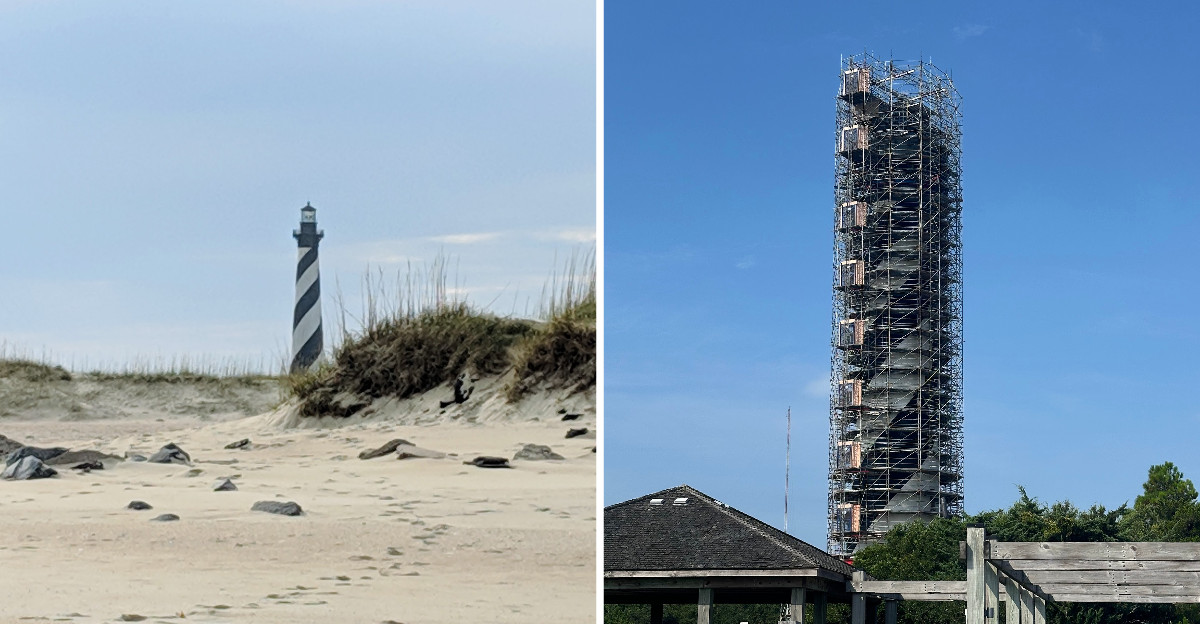
Lighthouses are supposed to stay put. This one did not.
In 1999, a towering brick beacon on the North Carolina coast was lifted off its foundation and rolled nearly 3,000 feet inland, inch by inch, to escape the encroaching Atlantic. The idea sounds impossible.
The execution took years of engineering, grit, and stubborn love for a landmark that had already survived storms, wars, and shifting sands. Standing at its new base, staring up at the candy-cane stripes, the brain struggles to accept what happened here.
The tower is the tallest brick lighthouse in the United States, and the move remains one of the boldest preservation efforts ever attempted. Walking the grounds and reading the exhibits, the story unfolds slowly, mixing science with raw determination.
The ocean is still hungry. The lighthouse is still standing.
Simple as that.
A Tower Built to Stand Tall Over the Waves
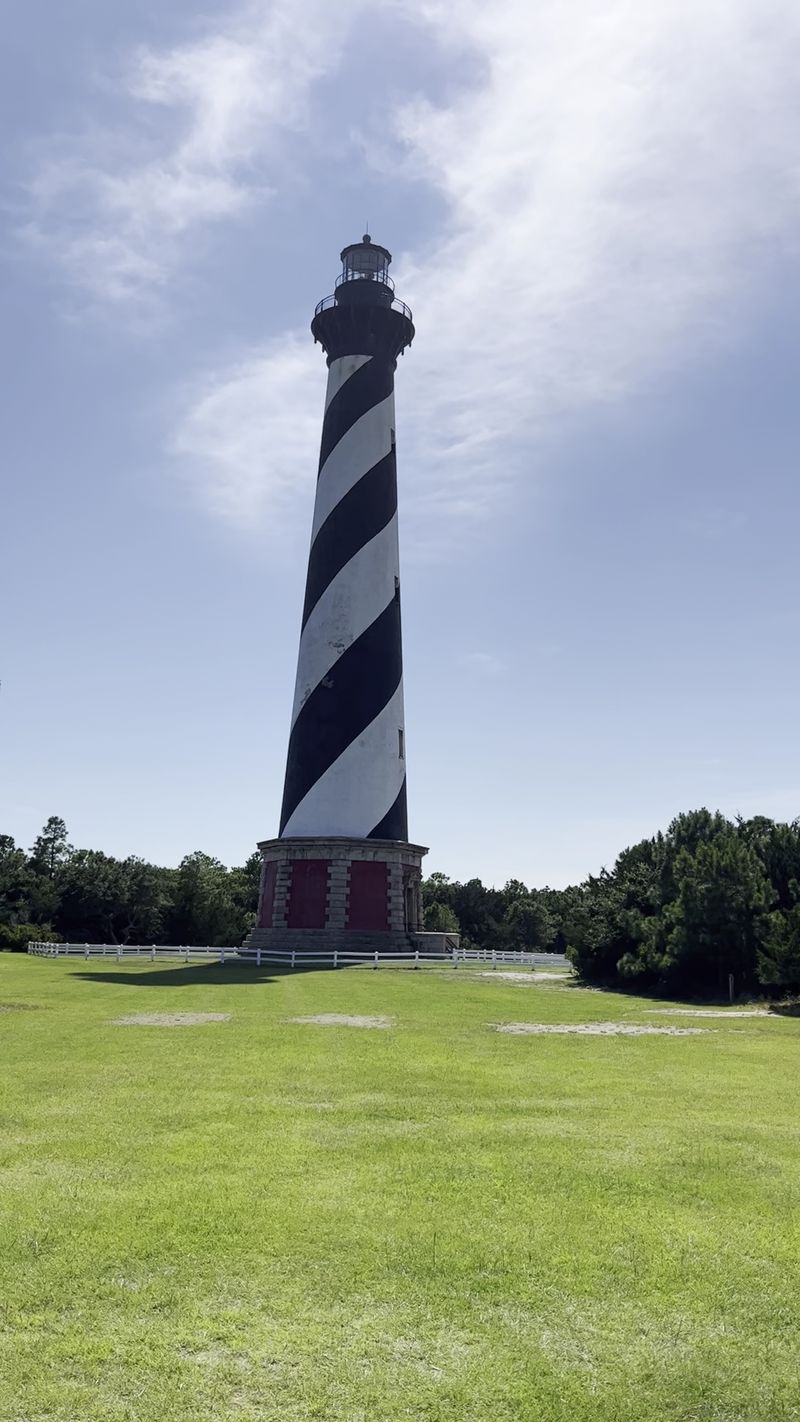
My neck got a real workout the first time I looked up at this tower. Finished in 1870, the Cape Hatteras Lighthouse reaches about 198 feet from its foundation to its very top, which makes it the tallest brick lighthouse in the whole country.
Those famous black and white spiral stripes are not just for looks. In the daytime, sailors needed a way to tell one lighthouse from another along the North Carolina coast, so each tower got its own pattern.
Hatteras ended up with a swirl that looks a bit like a barber pole stretched toward the clouds, and once you see it, you never forget it.
The brickwork itself is worth a slow look. Workers stacked over a million bricks to build it, layer after layer, without any of the giant cranes we use today.
When I thought about people hauling all that material onto a skinny barrier island, the tower suddenly felt even taller.
A quick tip from my visit: walk a few minutes away from the base before snapping photos. Stepping back lets the whole tower fit into your frame, and the dunes and sky give it the dramatic setting it deserves.
Morning light makes those stripes look especially sharp.
Why the Ocean Kept Creeping Closer
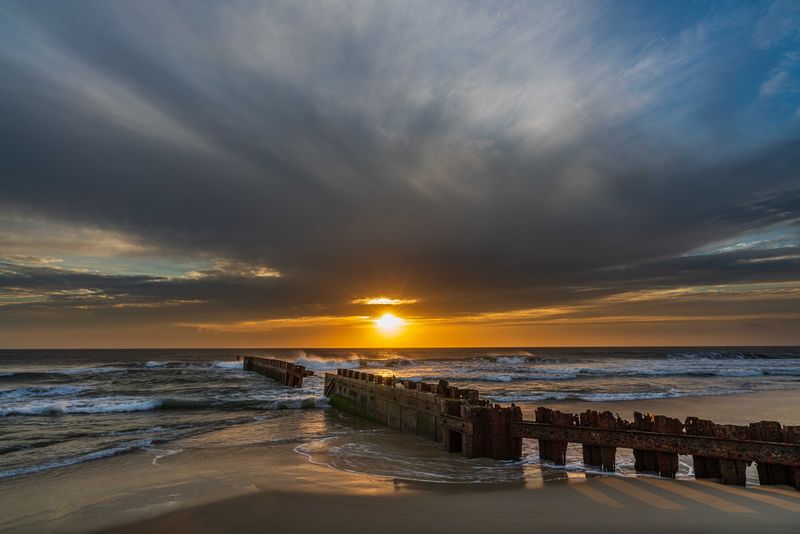
Sand on the Outer Banks never really sits still, and that surprised me more than anything else. These barrier islands slowly shift westward over time, pushed by storms, tides, and wind, so the beach keeps sliding out from under whatever is built on it.
When the lighthouse was first built, it stood a comfortable 1,500 feet from the ocean. That sounds like plenty of breathing room.
By 1935, though, waves were already washing up near its base, and by 1970 the water’s edge sat just 120 feet away.
Picture leaving your bike in the yard and coming back years later to find the yard has mostly vanished. That is basically what happened here, just with a 4,800 ton brick tower instead of a bike.
People tried many fixes over the decades, including sandbags, artificial seaweed, and groins built to slow the erosion. Some helped for a while.
None could stop the Atlantic for good, and a single huge storm could have toppled the whole thing.
Learning this changed how I looked at the beach nearby. Every wave rolling in suddenly felt like part of a very long, very patient tug of war that the ocean usually wins.
Twenty-Three Days on Steel Rails
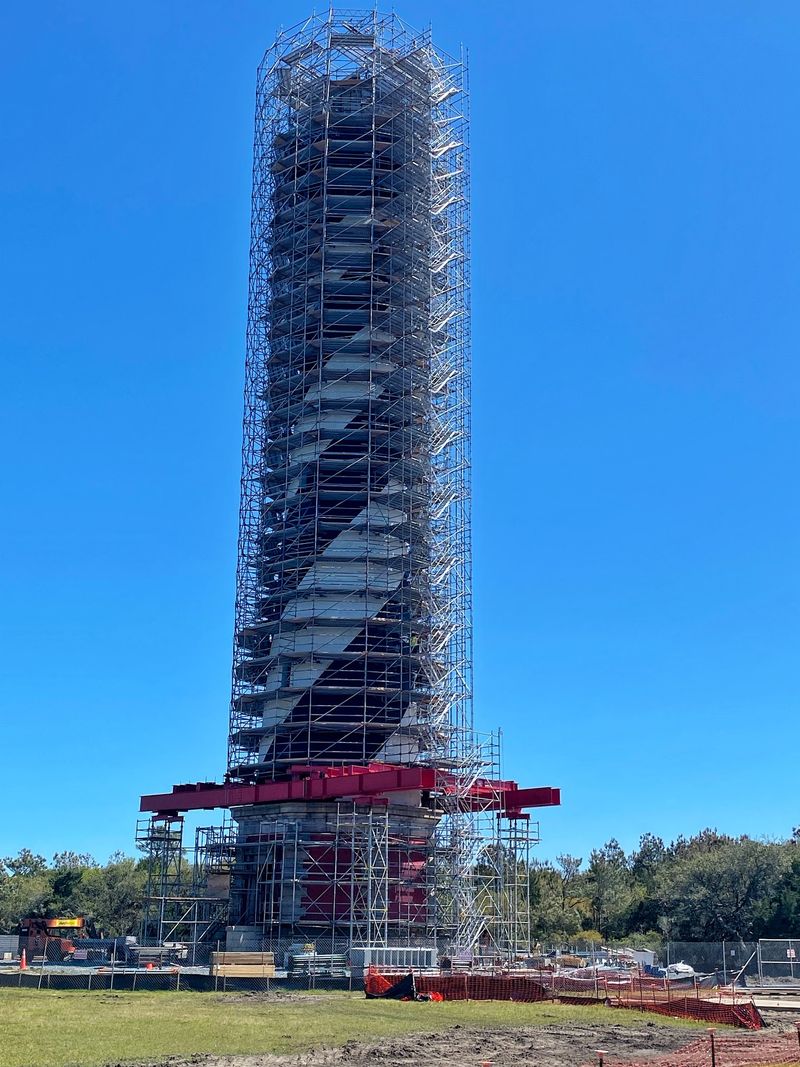
Engineers love a good puzzle, and the summer of 1999 handed them one of the biggest. Between June 17 and July 9 that year, crews moved the entire Cape Hatteras Lighthouse 2,900 feet to the southwest, finishing the trip in 23 days.
First, they had to lift it. Workers carefully cut the tower away from its old foundation and slid support beams underneath, then used a system of hydraulic jacks to raise more than 4,800 tons of brick and iron.
Just imagining that moment made my palms sweat.
Next came the road. Crews built a special track made of steel mats and rails, topped with roller dollies that carried the tower.
Hydraulic rams pushed it forward about five feet at a time, then the equipment reset and pushed again.
It was slow on purpose. Any sudden jolt could crack the old masonry, so patience was the real hero of this project.
Sensors kept watch on the tower the whole way, checking for tilting or stress.
When I read the exhibits about the move, I kept thinking of a snail carrying a skyscraper. Slow, steady, and somehow successful.
The lighthouse arrived about 1,500 feet from the shoreline, right back to its original safe distance.
The Little Buildings That Came Along for the Ride
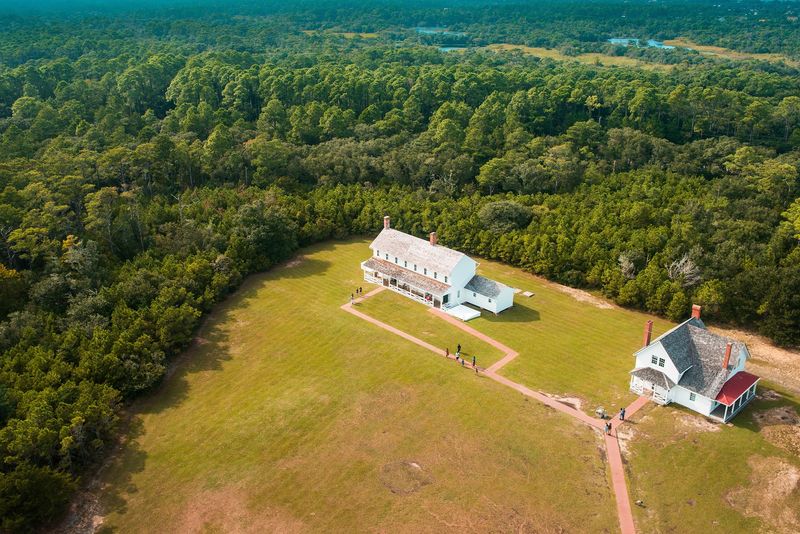
Nobody wanted the lighthouse to feel lonely in its new spot. Earlier in 1999, before the big tower even budged, crews also relocated several historic buildings that once supported daily life at the station.
The list included the Principal Keeper’s Quarters, the Double Keepers’ Quarters, the dwelling cisterns, and the oil house. Each one played a role back when keepers lived here full time, trimming wicks, hauling fuel, and climbing those stairs night after night to keep the light burning.
I found the keepers’ houses oddly charming. They have that tidy, practical look of homes built for people with serious jobs and very little free time.
Standing near them, I could almost hear boots on wooden floors and doors creaking against the sea breeze.
One of these buildings now holds a small museum, and it is genuinely worth your time. Exhibits explain the station’s history, the move, and life along this rough stretch of coast.
Rangers nearby are friendly and full of answers if you get curious.
My advice is to treat these buildings as part of the main event, not a side note. Together, they turn a single tower into a whole story about the families who once called this sandy corner home.
Guarding the Graveyard of the Atlantic
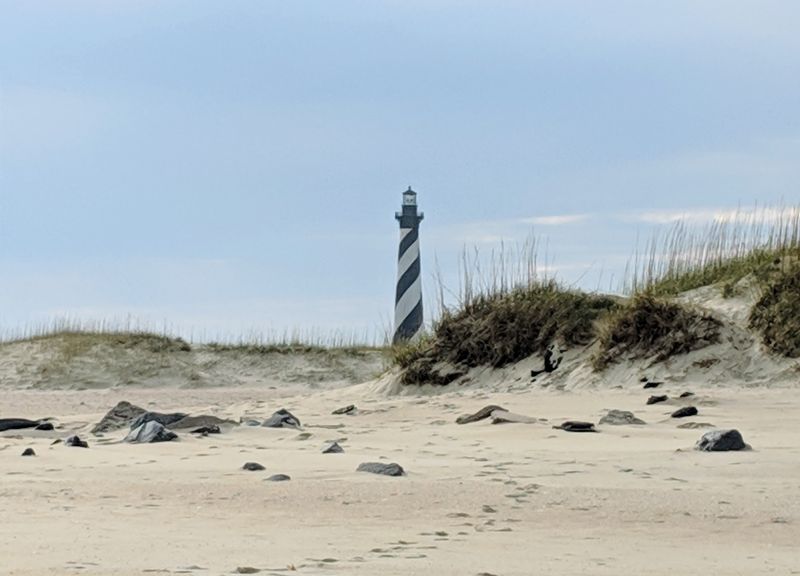
Sailors have given this patch of ocean a nickname that gives me chills: the Graveyard of the Atlantic. Thousands of ships have wrecked along the North Carolina coast over the centuries, and Cape Hatteras sits right in the middle of the danger.
The big troublemaker is Diamond Shoals. These shifting underwater sandbars stretch out from the cape, hiding just below the surface where ships can run aground before anyone notices.
Add in strong currents meeting near here, plus sudden storms, and you get water that has earned its scary reputation.
That is why the lighthouse matters so much. Its light warns captains to steer clear, and its striped tower acts like a giant daytime road sign.
For a ship’s crew, spotting it meant knowing exactly where they were and how close the danger sat.
Fun fact for history fans: the current tower actually replaced an earlier, shorter lighthouse that sailors complained was hard to see. Bigger and brighter turned out to be the better plan.
Looking out at the waves from the beach, I tried to imagine being on a wooden ship at night with nothing but that beam to guide me. Suddenly the tower felt less like a postcard and more like a lifesaver.
Following the Footsteps to the Old Spot
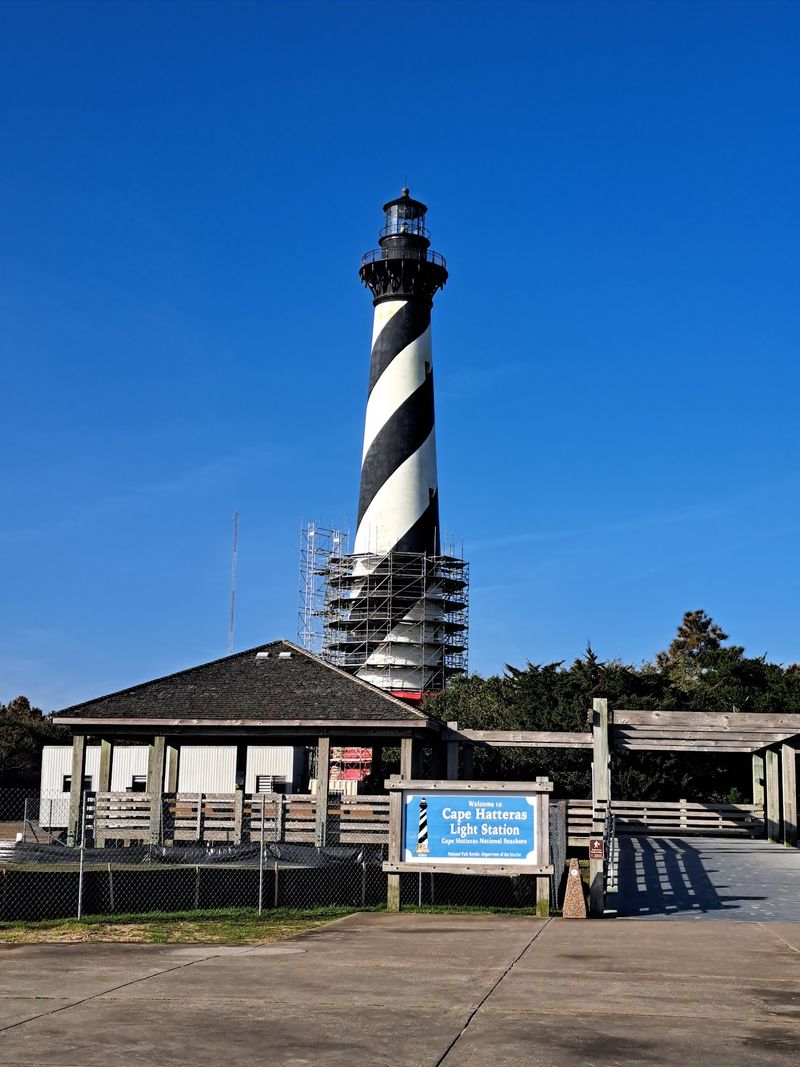
Here is a stroll I did not expect to love as much as I did. A walking path leads from the lighthouse’s current home back toward the place where it stood for over a century, and the trip helps you feel just how far the tower traveled.
Along the way, signs share bits of history about the move and the station. At the original site, granite stones mark the outline of where the old foundation sat.
Some of those stones carry the names of former keepers, which added a sweet, personal touch to the walk.
The best part for me was turning around. Looking back at the tower from its old location, I finally understood the distance in a way numbers alone could not show me.
Nearly 3,000 feet is a long haul for something made of brick.
The beach sits right nearby, so you can easily finish with sand between your toes. Off to the side of the grounds, another path leads to an overlook where herons and other birds hang out in the marsh.
Wear comfy shoes, bring water, and give yourself time to wander. This walk turns the whole relocation story into something you can actually feel with your feet.
A Rare Look During the Big Restoration
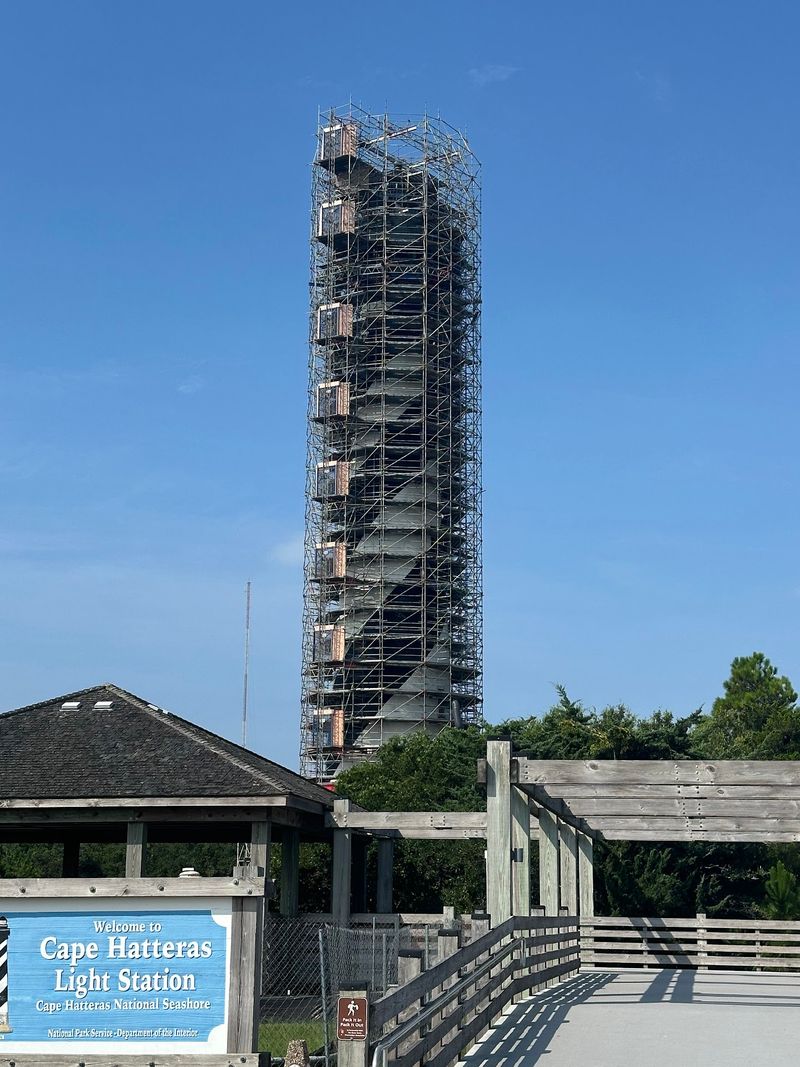
Plans matter here, so let me save you a surprise. The Cape Hatteras Lighthouse is currently going through a major restoration, and the tower is not open for climbing in 2026.
Scaffolding wraps much of the structure while crews repair and protect it.
I know that might sound disappointing at first, but there is a cool side to it. Visitors have been seeing the tower without its famous stripes, and even with the top lantern section removed, which is a view few people will ever get again.
It feels like peeking behind the curtain of a very old performer.
The grounds, museum, and shop have stayed open during the work, and the walkways offer seating with views of the tower. Rangers and staff can explain what the crews are doing and why, which turns the construction into its own mini history lesson.
A practical tip: check the National Park Service website before heading out, since access can change as the project moves along. Heavy rain can also flood parts of Highway 12, so drive carefully.
Watching people care this much for an old tower made me hopeful. Once the work wraps up, I fully plan to come back and climb those stairs.
Address: 46379 Lighthouse Road, Buxton, NC 27920
