Down a quiet North Carolina road, past a pond where an alligator suns itself like it owns the place, sits one of the strangest layered spots I have visited. I almost drove past the turnoff, and I am so glad I did not.
A busy colonial port thrived here in the 1700s, burned by British troops in 1776, and nobody ever rebuilt it. Confederate soldiers came along in 1862 and piled enormous earthen walls right on top of the old streets and cellars.
So you walk over brick foundations from the 1700s and then climb a sandy ridge from the 1860s, all within a few hundred feet of the river. Two very different wars, one patch of ground, and a breeze off the water that makes the whole thing feel weirdly peaceful.
The brick foundations are still visible under the grass, and the earthen walls still hold their shape after more than a century and a half. History stacked on history, and the river keeps moving past it all.
The Colonial Port That Ran on Tar and Turpentine
Brick outlines in the grass don’t look like much until you learn what came out of this place. Maurice Moore founded Brunswick Town in 1726, and it became the first lasting European settlement in the Cape Fear region.
Ships tied up here to load naval stores: tar, pitch and turpentine, all pulled from the surrounding pine forests. Those sticky products sealed the seams of British ships, which made this muddy little port genuinely important to the empire.
I hadn’t expected the political side of it either. For a stretch of years Brunswick acted as the colony’s working capital, hosting two royal governors and the occasional meeting of the colonial assembly.
Wandering the marked foundations, you start noticing how tight the town was. Homes, storehouses and cellars sat close together on a low bluff above the water, all within easy shouting distance of the docks.
Life here wasn’t calm. Spanish sailors ransacked the town in 1748, and residents rebuilt anyway, which says something about how valuable the location was.
Reading the signs in order helps the layout click into place, so I’d suggest following the numbered stops rather than wandering randomly. The story lands better when you understand that these grassy rectangles were once somebody’s kitchen, shop or front porch facing a river full of masts.
Stamp Act Resistance, Eight Years Before Boston
Most of us learned about the Boston Tea Party in school. Almost nobody hears about what happened here in 1765, and honestly that seems like a scheduling error in the history books.
Armed colonists in Brunswick Town confronted royal authority over the Stamp Act and forced officials to back down. It’s regarded as the first successful armed resistance to British rule in America, and it happened eight years before those crates went into Boston Harbor.
Learning that while standing on the actual ground reframed the whole visit for me. The town wasn’t just a shipping hub, it was a place where local anger boiled over first.
Staff at the visitor center explain the sequence clearly, and I’d recommend asking about it before you head outside. The details are easier to follow with a person walking you through the timeline than from a weathered sign in the sun.
There’s also a payoff to knowing this early. Britain remembered the tax revolt, and that grudge helps explain what soldiers did to the town later.
The site is included in the North Carolina America 250 passport program, and the desk keeps stamped copies on hand if you want one for your own records.
1776, When British Troops Land and the Town Burns
Here’s the moment that decided everything else about this place. British troops landed at Brunswick in March and again in May of 1776, and much of the town went up in flames.
The burning has long been described as payback for the earlier tax revolt. Whatever the exact motive, the result was total.
By that point the town was already fading. Wilmington upriver had grown into the busier port, and political appointments had drifted away, so Brunswick had fewer reasons to hang on.
Nobody rebuilt. Residents scattered, the streets grew over, and the whole settlement quietly slipped out of use.
I found that part oddly moving. Towns usually get patched up, expanded, paved over, and their old bones vanish under parking lots and shops.
Because Brunswick was simply abandoned, the foundations stayed where they fell, and that’s precisely why archaeologists can study it today. In 1842 the land became part of Orton Plantation, which kept it rural for generations.
Walking the trail with the fire in mind changes the mood. Every low brick wall reads less like a ruin and more like a house someone left in a hurry and never came back to.
St. Philips Church Refused to Fall
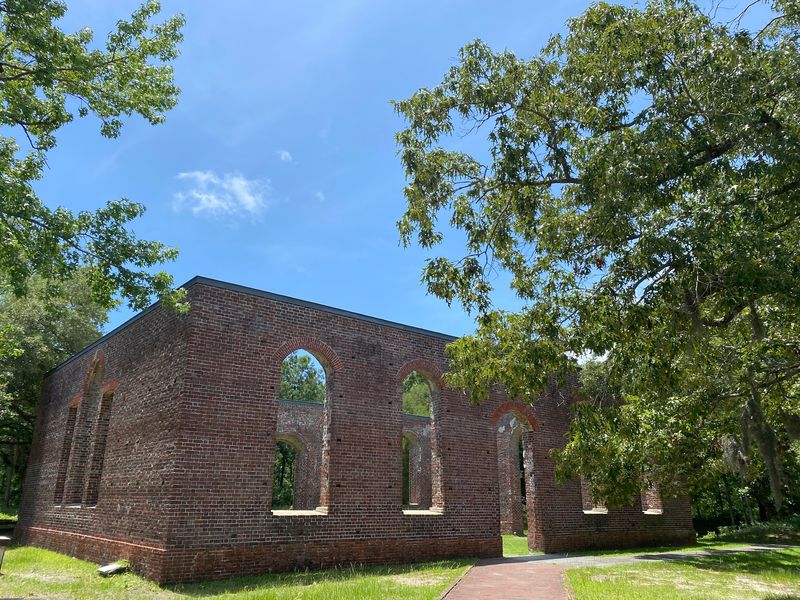
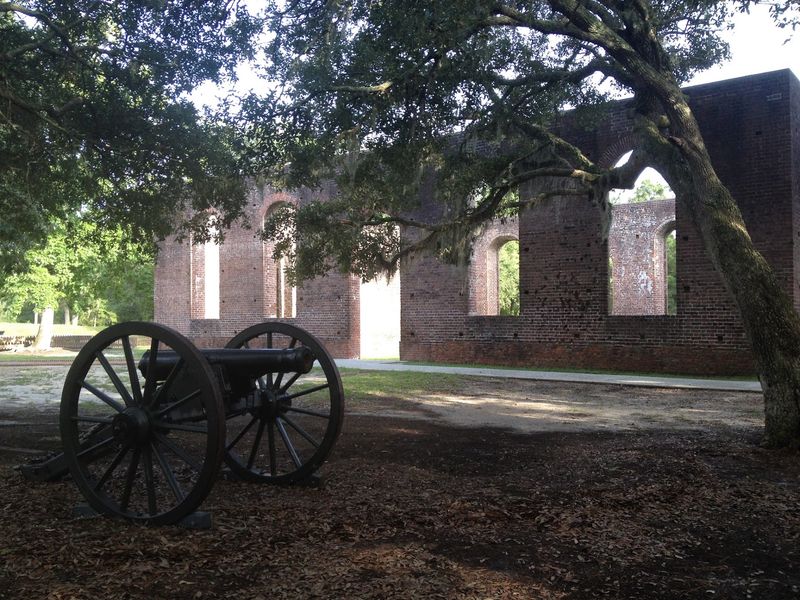
Roofless, floorless, and still standing tall enough to make you tilt your head back. The walls of St. Philips Church, finished in 1768, somehow survived the fire that flattened the rest of Brunswick Town.
Thick brick and a whole lot of luck did the job. What’s left is a rectangle of soaring walls with empty window openings, open sky overhead, and grass underfoot.
I lingered here longer than anywhere else on the trail. Sound behaves strangely inside those walls, and the light shifts as clouds move across the openings.
The church became a landmark long after its congregation was gone. Confederate soldiers building here in the 1860s originally named their fort after it, calling the position Fort St. Philip.
Photographers will have a good time. Morning light through the eastern windows and late afternoon glow on the brick both work beautifully, and the surrounding trees frame it nicely.
Bring bug spray if you visit in warmer months, since the shaded grounds near the river can get buggy. Also worth walking the full perimeter of the ruin instead of just peeking in from the path, because the exterior brickwork and the old grave markers nearby are part of the story too.
Russellborough, Where Royal Governors Lived
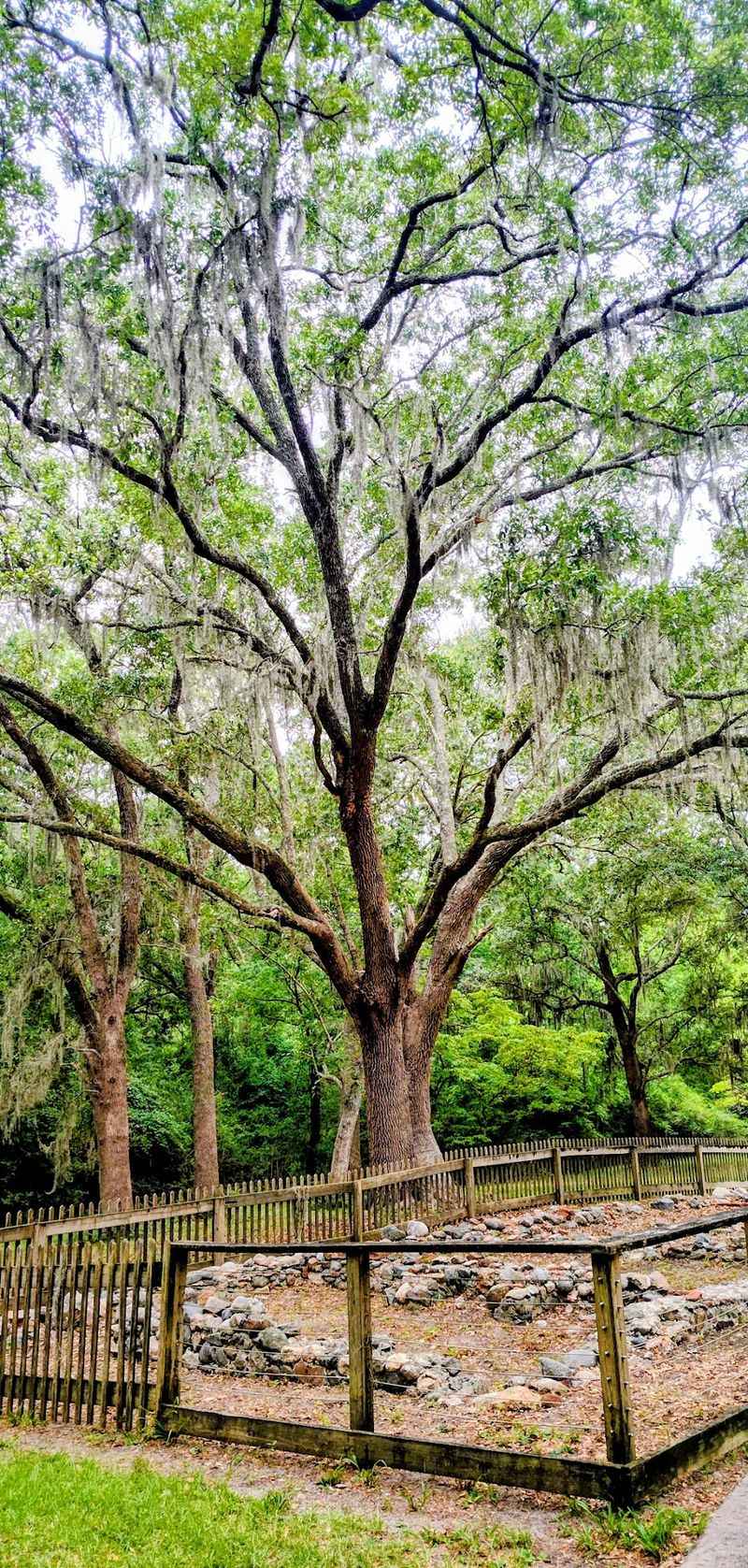
Two royal governors once ate dinner on this footprint. The house was called Russellborough, built around 1760, and both Arthur Dobbs and William Tryon lived in it during their time in North Carolina.
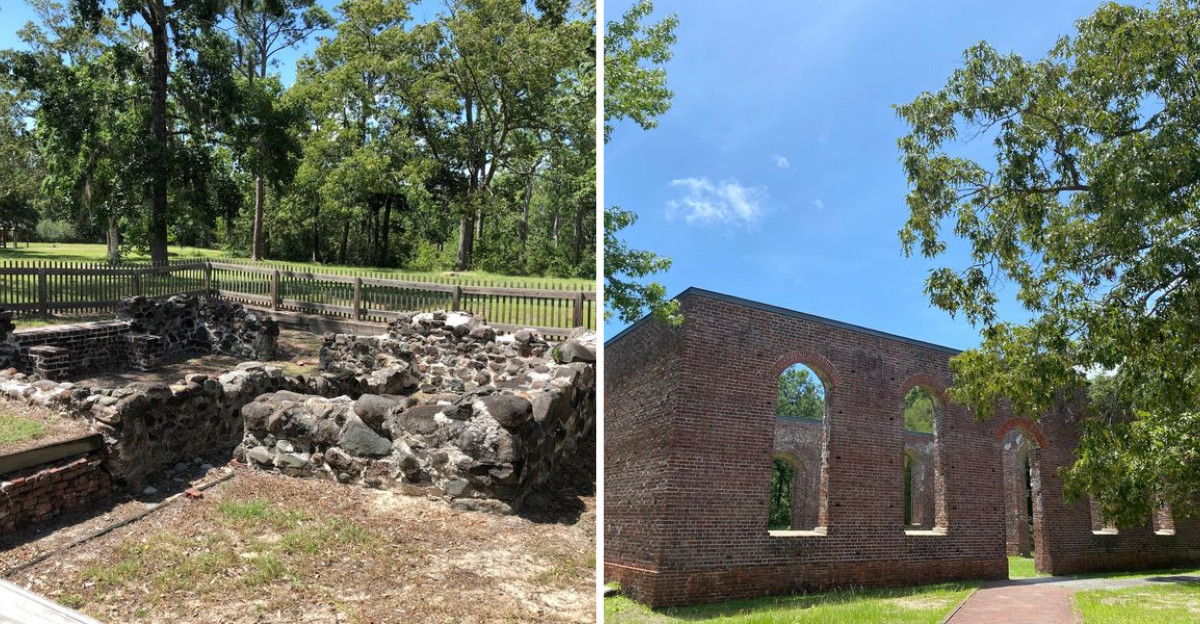
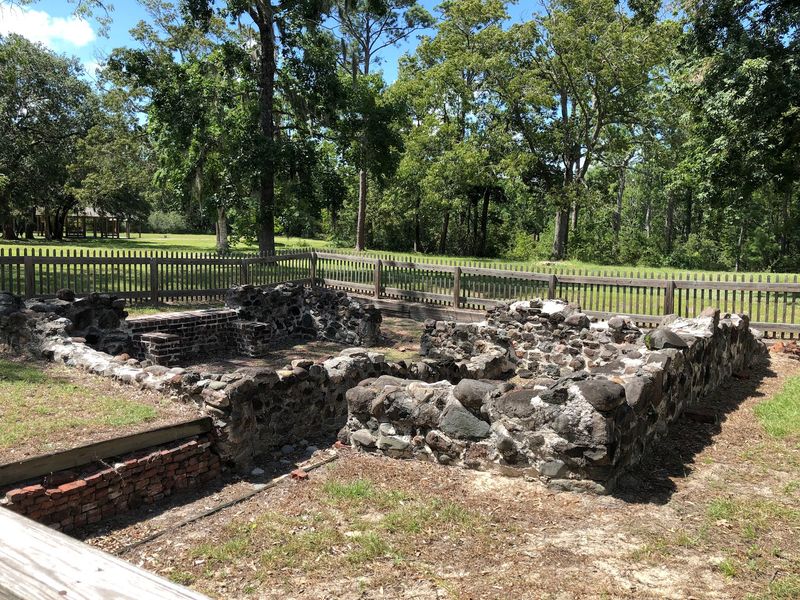
Today it’s a low foundation you can walk right up to. Rectangles of brick and mortar mark where rooms, walls and a cellar used to be.
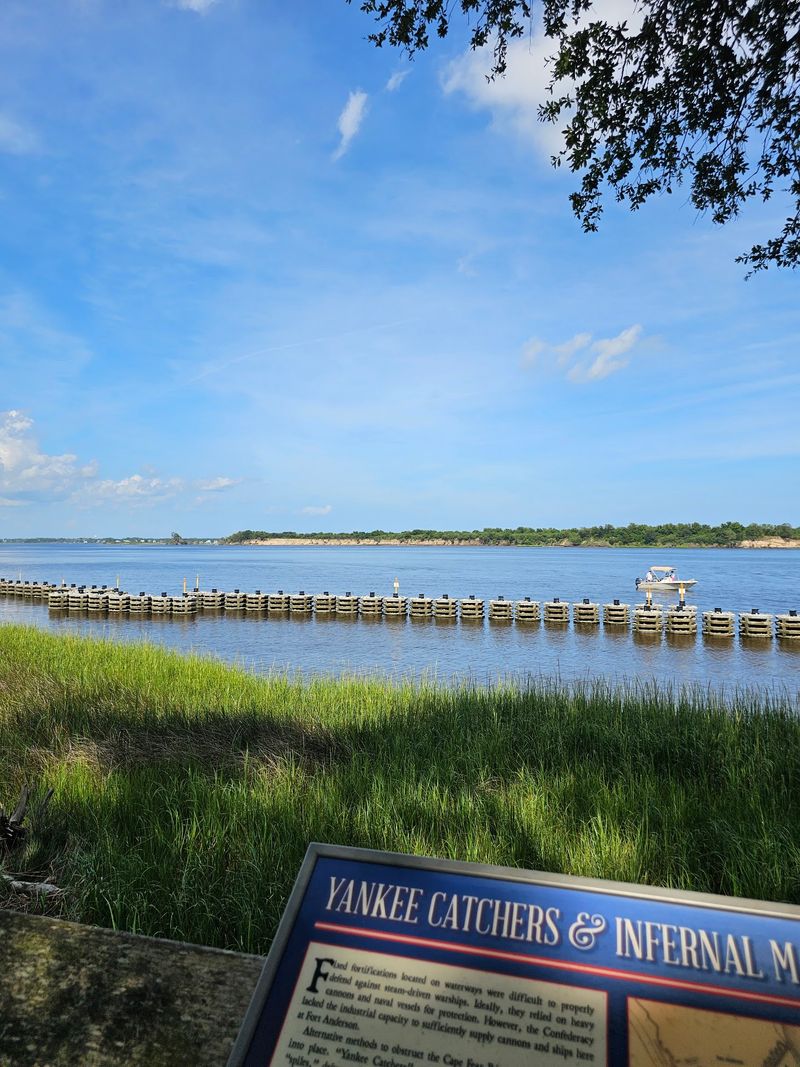
What struck me was the setting. The house sat on the bluff with a clear view down to the Cape Fear River, which was very much the point for a man who needed to watch ships come and go.
Tryon is the same governor whose grand palace later went up in New Bern, so seeing his earlier, humbler riverside address makes for a fun contrast. This spot came first, and it was plenty impressive by 1760 standards.
Take a moment to compare the size of this foundation with the smaller residential outlines nearby. The difference in scale tells you exactly who had money and who didn’t in a colonial port.
Interpretive panels give the room layout, though some signs have weathered over the years. Scanning the QR code for the self-guided tour fills in the gaps and adds detail you won’t get from the boards alone.
Confederate Earthworks Built Right Over the Old Streets
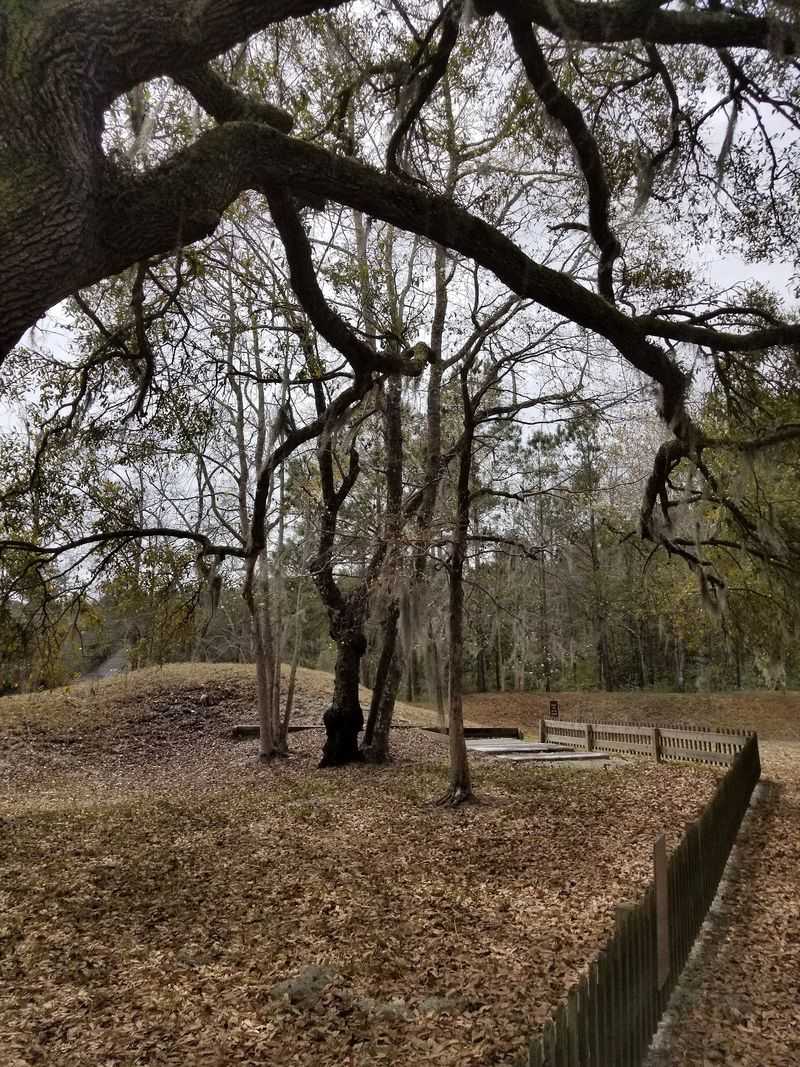
Climbing the earthworks is where the timeline gets genuinely strange. Confederate forces began construction in 1862, and instead of clearing a fresh site, they piled massive sand and earth walls straight over the abandoned colonial town.
Some batteries sit directly on top of 1700s cellars. Archaeologists have literally dug through one war to reach another.
The scale surprised me. These aren’t little bumps in the ground, they’re tall ridges you have to walk up, wide enough on top for cannon platforms and gun crews.
Earth turned out to be smarter than masonry. Instead of shattering, packed sand absorbed incoming shells, which is why so many coastal defenses of that era switched to dirt.
Beneath parts of the works sat bombproofs, covered shelters where soldiers waited out heavy shelling. The idea of hunkering in one of those during a naval bombardment is not a comfortable one.
The fort started life as Fort St. Philip, then was renamed to honor Col. George B.
Anderson. Both names appear in the interpretation, so don’t get confused when you see them.
Walk the top of the works where the trail allows and look toward the river. The firing angles suddenly make total sense from up there.
Inside the Visitor Center, Artifacts, a Storm Flag, and a Lincoln Connection
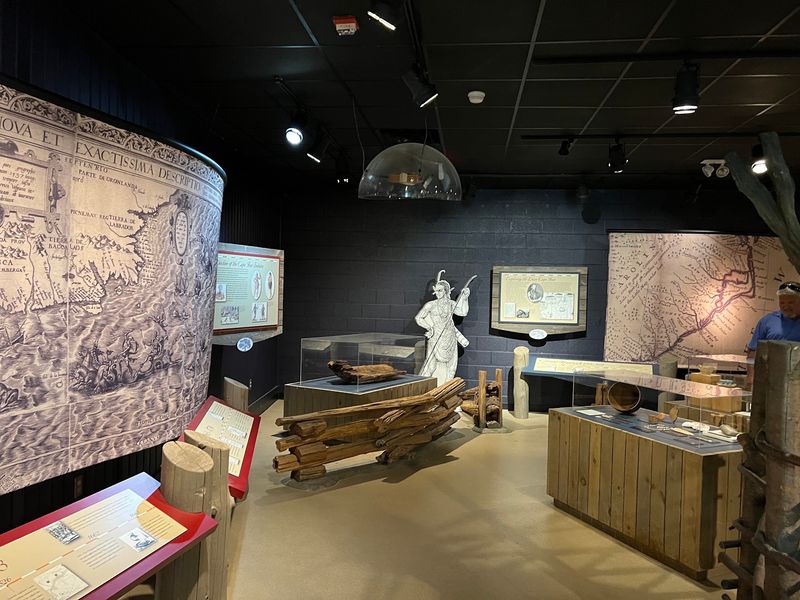
Air conditioning plus centuries of artifacts is a hard combination to beat. The visitor center holds objects from both the colonial town and the Civil War fort, laid out in an exhibit hall that’s small enough to finish and rich enough to slow you down.
Cases hold everyday things pulled from the ground: pottery, glass, tools, hardware. A large storm flag on display is the piece most visitors seem to remember, and I understand why once you see the size of it.
There’s also an artifact tied to Abraham Lincoln tucked in among the displays. I won’t spoil which one, but ask the staff or hunt for it yourself.
Hands-on activities keep younger visitors busy, and there’s a junior ranger program along with a small gift area. Families with restless kids will appreciate that mix.
The docents here genuinely know their material. Every question I had was answered with more detail than I expected, and their enthusiasm is contagious.
Admission is free, which still surprises me for a site this substantial. The museum building and the trail are both ADA accessible, so most visitors can experience the full loop without difficulty.
Planning Your Visit, Hours, Festivals, and Digging in Progress
Timing matters more here than at most historic sites. Doors open Tuesday through Saturday from 9 a.m. to 5 p.m., and the site is closed Sunday and Monday, so plan around that before driving out.
Grab the self-guided walking tour map at the desk, or scan the QR code for the online version. Some outdoor signs have weathered over the years, and the digital tour fills in details nicely.
In hot months, I’d flip the usual order and walk the grounds first, then cool off inside the museum. Late afternoon light on the church ruin is a nice reward either way.
Events add another layer. Port Brunswick Days, the Rice Festival and the Christmas celebration all bring demonstrations to the grounds, including hands-on crafts like candle making and rope making.
Archaeology continues on site, and students are sometimes out working excavations during your visit. Watching that in real time drives home that the story here isn’t finished.
Budget one to two hours minimum, longer if you read every panel. Comfortable shoes, water and a camera cover the essentials.
Address: 8884 St Phillips Rd SE, Winnabow, NC 28479
