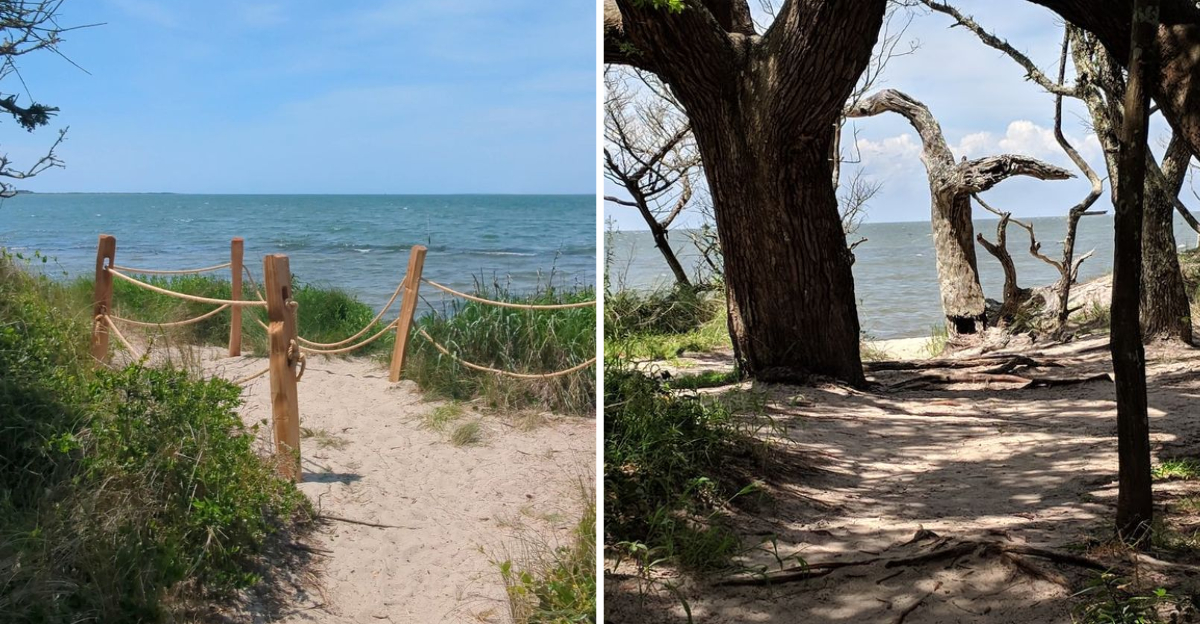
The trees twist over sandy ground, birds move through the marsh, and the sound opens wide at the end like a page from an old sea tale. I found that quiet trail on a small North Carolina island, where nature and history share the same path in a way that stays with you.
Just offshore lies a stretch of water tied to a pirate’s final battle in the early 1700s, a name that still carries weight in maritime lore. That mix of peaceful beauty and violent history makes the preserve feel special without needing anything flashy.
I walked through the twisted live oaks and listened to the wind in the marsh grass, and the whole place felt like a story that had been waiting for someone to notice it.
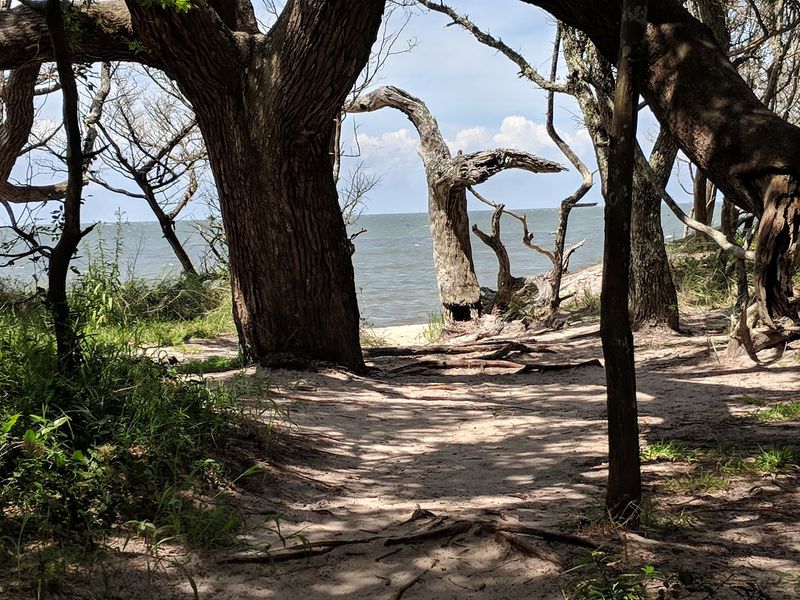
The trees lean at odd angles, shaped by centuries of coastal storms, and the ground is soft underfoot, scattered with shells and pine needles.
This is one of those walks that turns a simple afternoon into a story you will want to retell, a reminder that the quietest places often hold the loudest echoes of the past.
A Short Trail With a Big Story
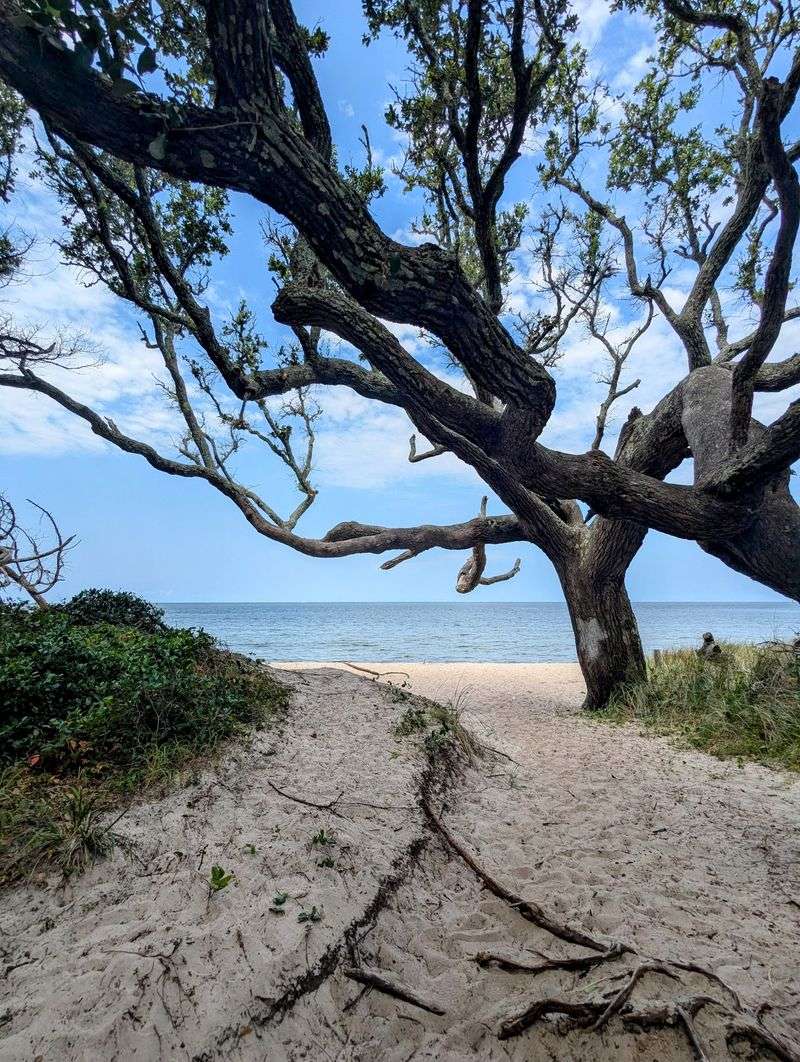
The first thing I noticed was how quickly the outside world seemed to drop away. Springer’s Point Preserve is not a long hike, but the 0.8-mile nature trail packs in more mood and meaning than many longer walks.
The path moves over natural sandy ground, so comfortable shoes are a smart choice, especially after rain. It is mostly flat and easy, but roots, soft sand, and damp spots can slow you down if you rush.
What makes the trail memorable is the way it connects forest, marsh, and sound in such a short space. Interpretive signs help explain the plants, wildlife, and history, so it never feels like you are just wandering without a clue.
The preserve covers more than 120 protected acres, saved from development through conservation work that began in 2002. That protection matters because Ocracoke has limited wild space near the village, and this area gives visitors a rare look at the island’s older coastal landscape.
Give yourself time to pause on benches, read signs, and listen. The reward is not speed, it is noticing the small changes from shaded woods to open water.
The Maritime Forest Has Its Own Personality
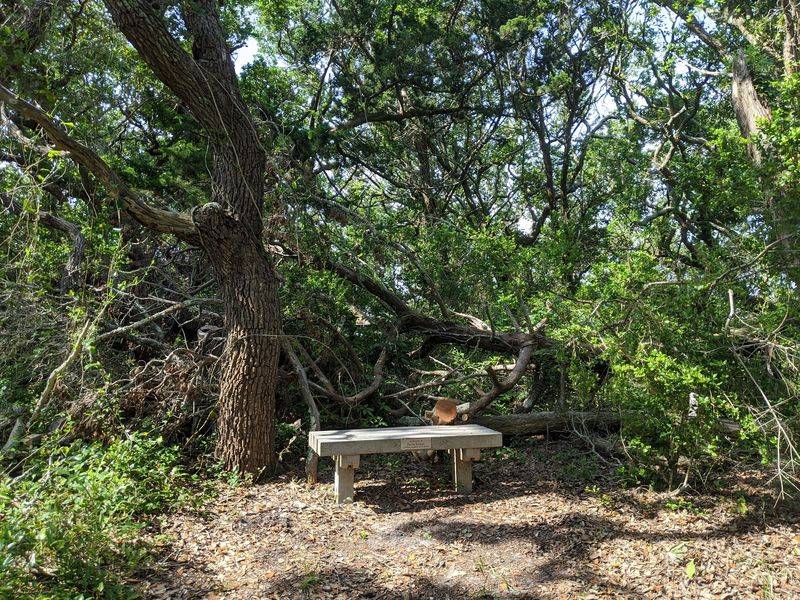
Some forests feel tall and grand, but this one feels low, twisty, and a little mischievous. The live oaks at Springer’s Point bend and curl as if they have been leaning into island weather for centuries.
Look closely and you will see more than pretty trees. Loblolly pines, red cedars, shrubs, vines, and sandy soil all work together to form a maritime forest built for salt air and strong wind.
This type of forest is tough, but it is also fragile when people leave the trail or damage roots. Staying on marked paths helps protect the plants that hold the island soil in place.
The shade can feel cool and calm, especially before the beach opens ahead. I found myself slowing down here, partly because the trees make odd shapes worth studying, and partly because the trail feels like it wants quiet feet.
Bring insect repellent in warm months, since mosquitoes and biting flies can appear fast in sheltered, damp areas. A small bottle of water also helps, because the beach at the end has more sun and less cover.
Teach’s Hole Waits Beyond the Beach
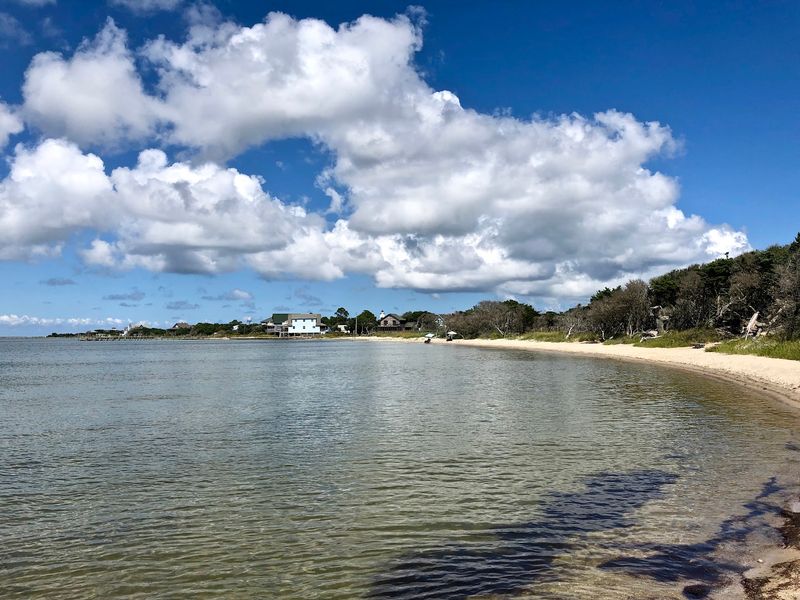
The beach arrives almost suddenly, and the quiet forest gives way to a wide view of Pamlico Sound. From here, the story of Blackbeard feels much less like a textbook and much more like a real place.
Look southwest across the water and you are facing toward Teach’s Hole, the natural channel tied to Blackbeard’s final battle. The channel connects Ocracoke Inlet and the Atlantic with deeper parts of Pamlico Sound, which made it important for ships.
In November 1718, Royal Navy Lieutenant Robert Maynard fought Blackbeard in these waters after Virginia Governor Alexander Spotswood sent him to stop pirate raids. The battle ended with Blackbeard’s passing and the defeat of his crew.
It is strange, in the best way, to stand on such a peaceful beach and imagine a violent naval fight nearby. The water may look calm, but it once held danger, strategy, and fear.
For the best experience, read about the battle before you go or bring a simple map of Ocracoke Inlet. Knowing where to look makes the view feel deeper.
Blackbeard’s Ocracoke Connection Feels Close Here
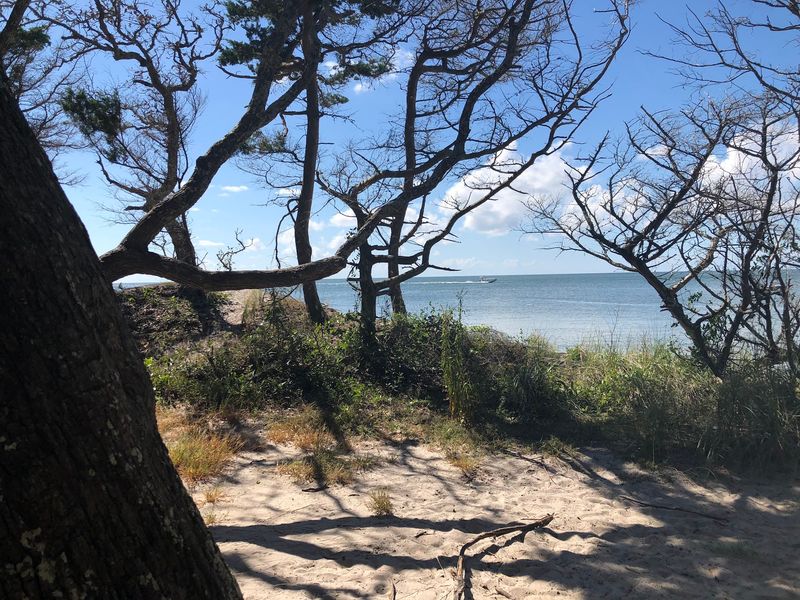
I did not expect a quiet preserve to make pirate history feel so nearby. Yet Springer’s Point sits in the area once linked to Edward Teach, better known as Blackbeard, and that changes the way the shoreline feels.
Ocracoke became one of Blackbeard’s important bases between 1717 and 1718. The island’s location near Ocracoke Inlet gave him access to ships moving in and out of northeastern North Carolina.
Shallow waters in Pamlico Sound also helped pirates hide, move carefully, and surprise vessels. For crews trying to avoid attention, the island offered cover, distance, and a useful view of passing traffic.
The area around Springer’s Point was historically associated with Teach’s Plantation, a name tied to stories of Blackbeard using this part of the island as a haunt or seasonal hideout. In October 1718, the vicinity reportedly saw one of the largest pirate gatherings recorded.
Visitors should treat the history with curiosity and care. Some details come through local tradition, while the final battle is firmly tied to the nearby waters, making the preserve a powerful place to connect landscape with legend.
Wildlife Adds Movement to the Quiet
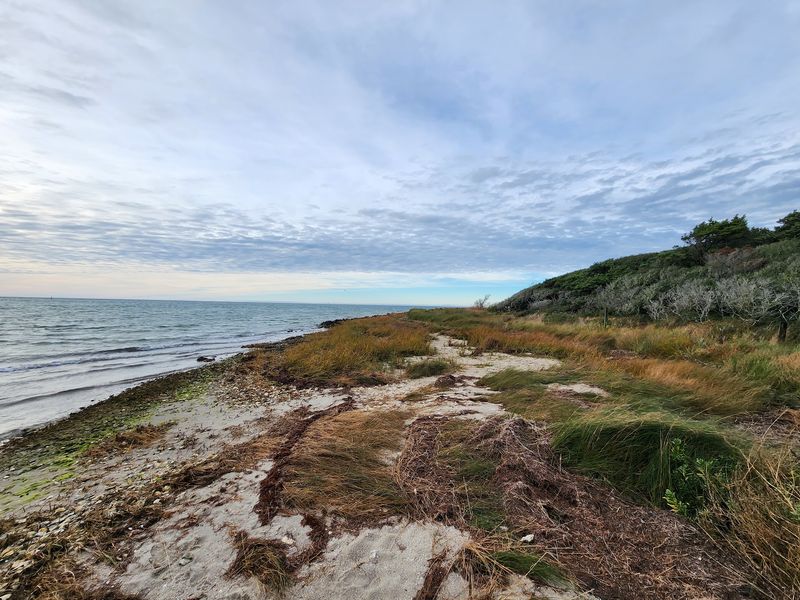
A soft rustle in the grass made me stop more than once, and that is part of the fun here. Springer’s Point Preserve may be famous for Blackbeard, but its living residents deserve just as much attention.
The preserve protects salt marshes, wet grasslands, tidal red cedar forest, and sound-front beach. Those habitats support herons, egrets, songbirds, butterflies, small mammals, and colonial water birds that depend on quiet coastal places.
Birdwatchers should move slowly and keep voices low, especially near marsh edges. A pair of binoculars can turn a quick walk into a patient little treasure hunt, even if you do not know every bird name.
Photography works best when you respect distance. Zoom in instead of stepping into marsh plants, since those areas help feed and shelter wildlife.
Bug spray is useful, but choose and apply it carefully before entering sensitive areas so you are not spraying near plants or water. Dogs are allowed on leash, which helps protect birds and other animals from being chased.
The preserve asks visitors to leave no trace. That means packing out every wrapper, staying on trails, and letting shells, plants, and wildlife remain where they belong.
The Soundside Beach Is the Payoff
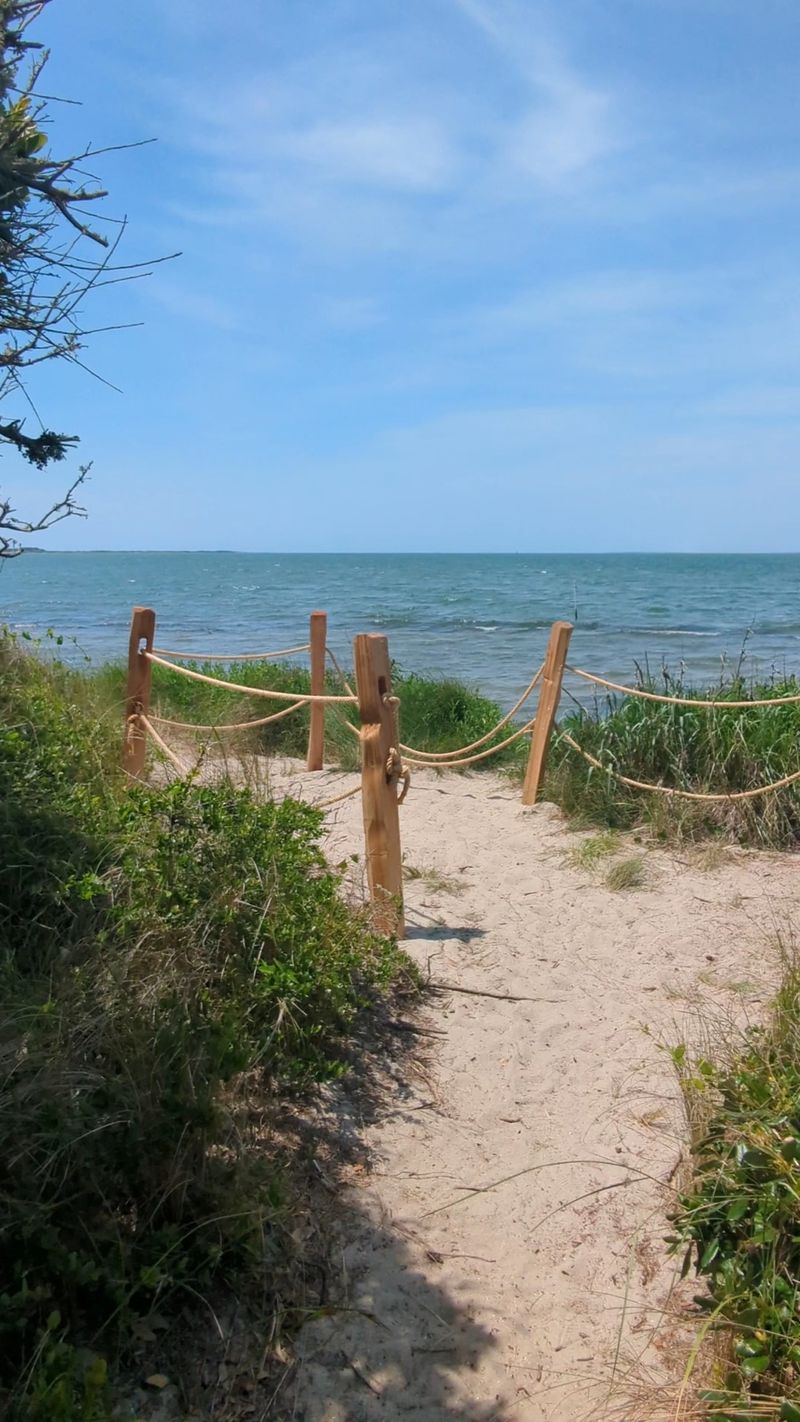
The beach at the end feels like a secret, even when you know other people have found it too. After the shade and curves of the forest, the open sand and bright water feel clean and simple.
This is a soundside beach, so the mood is different from the ocean side of Ocracoke. The water is usually more protected, the view stretches across Pamlico Sound, and the horizon invites you to sit longer than planned.
There are no facilities here, so pack with care. Bring water, sun protection, and anything you need to carry back out, because there are no restrooms, shops, or trash services inside the preserve.
Sunset can be beautiful from this side of the island, especially when soft color spreads over the sound. If you stay late, remember the preserve is open only during daytime hours and closes at sunset.
The beach is also where the history lands hardest. Knowing Teach’s Hole lies offshore gives the peaceful view an unexpected weight.
Do not rush back right away. Sit for a few minutes, watch the small waves, and let the place do its quiet work.
Getting There Takes a Little Planning
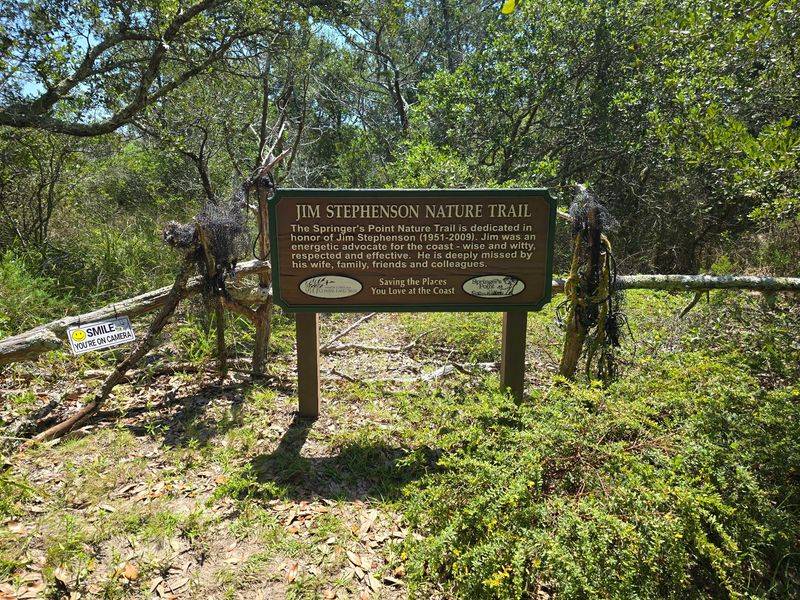
The only tricky part of visiting Springer’s Point is not the trail, it is reaching the trailhead the right way. There is no vehicle parking directly at the preserve entrance, so arriving by foot or bicycle makes the day smoother.
Limited parking is available nearby, including options around the Ocracoke Assembly of God Church area or the OTTDA parking lot on Lighthouse Road. From there, expect a short walk before you even begin the nature trail.
That extra walk is worth knowing about if you are traveling with young children, older relatives, or anyone with limited mobility. The trail itself is short and mostly flat, but the full outing can feel longer because of the approach.
The preserve is generally open Tuesday through Sunday from 8 AM to sunset and closed on Mondays. Hours can change, so checking the North Carolina Coastal Land Trust information before visiting is a smart move.
Bicycles are a great choice on Ocracoke because the village is compact and relaxed. Lock up carefully where allowed, bring water, and avoid blocking private roads or gates.
A little planning keeps the visit calm, which fits the preserve perfectly.
A Preserve That Changes How Ocracoke Feels
Ocracoke already has a strong sense of place, but Springer’s Point adds a quieter layer to it. The preserve shows how nature, local memory, and national history can meet in one small walk.
Many visitors come to the island for beaches, ferry rides, and village charm, yet this protected land gives the trip a slower rhythm. It reminds you that Ocracoke is not just a vacation spot, it is a living barrier island shaped by water, weather, wildlife, and human stories.
The ancient well near the beach is believed to have been used by Native people and possibly by Blackbeard. Details like that make the landscape feel layered, even if you only spend an hour there.
Pairing the preserve with nearby island history can make the visit richer, but Springer’s Point does not need a packed schedule around it. Its best moments happen when you leave room for silence.
Before you go, check the weather, wear shoes that can handle sand or mud, and bring insect repellent. Respect the rules, keep dogs leashed, and leave the beach cleaner than you found it.
Address: 104 Loop Rd, Ocracoke, NC 27960.
