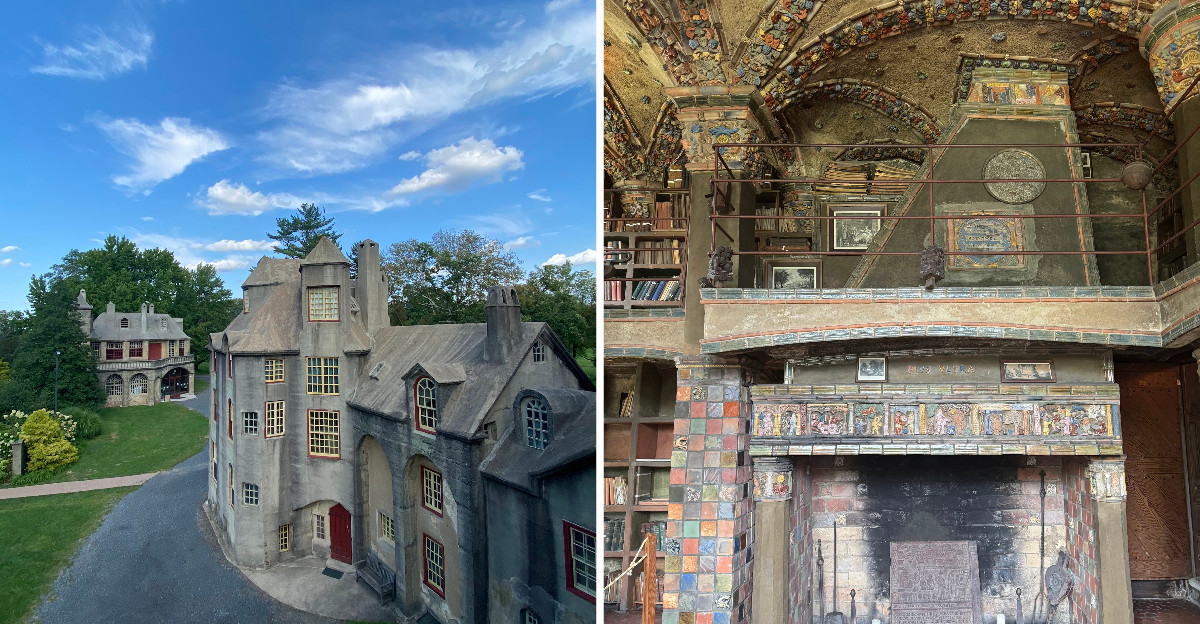
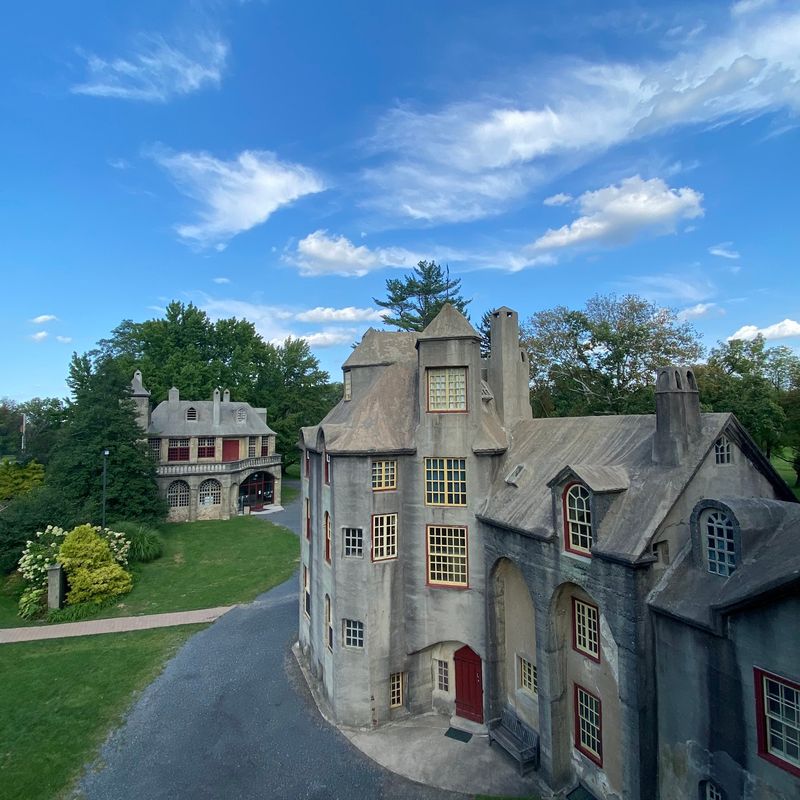
Gray concrete towers rising from the trees in Pennsylvania look like a sandcastle that grew up and moved inland. Rooflines argue with each other, and every corner seems to have its own opinion about where it should go.
Inside, tiles cover floors, ceilings, columns, and even the edges of bookshelves, creating a mosaic that never stops. The builder was an archaeologist who decided ordinary homes were far too boring.
He built this place between 1908 and 1912, mixing concrete by hand with a small crew and one very hardworking horse. Walking through the rooms, the neck aches from looking up so much, and the eyes keep finding new details.
The whole structure feels like a dream poured into stone. Visitors leave with sore necks and a desire to return tomorrow.
The castle sits in Pennsylvania, a monument to one man’s stubborn imagination. It is worth the trip.
The Man Who Designed From the Inside Out
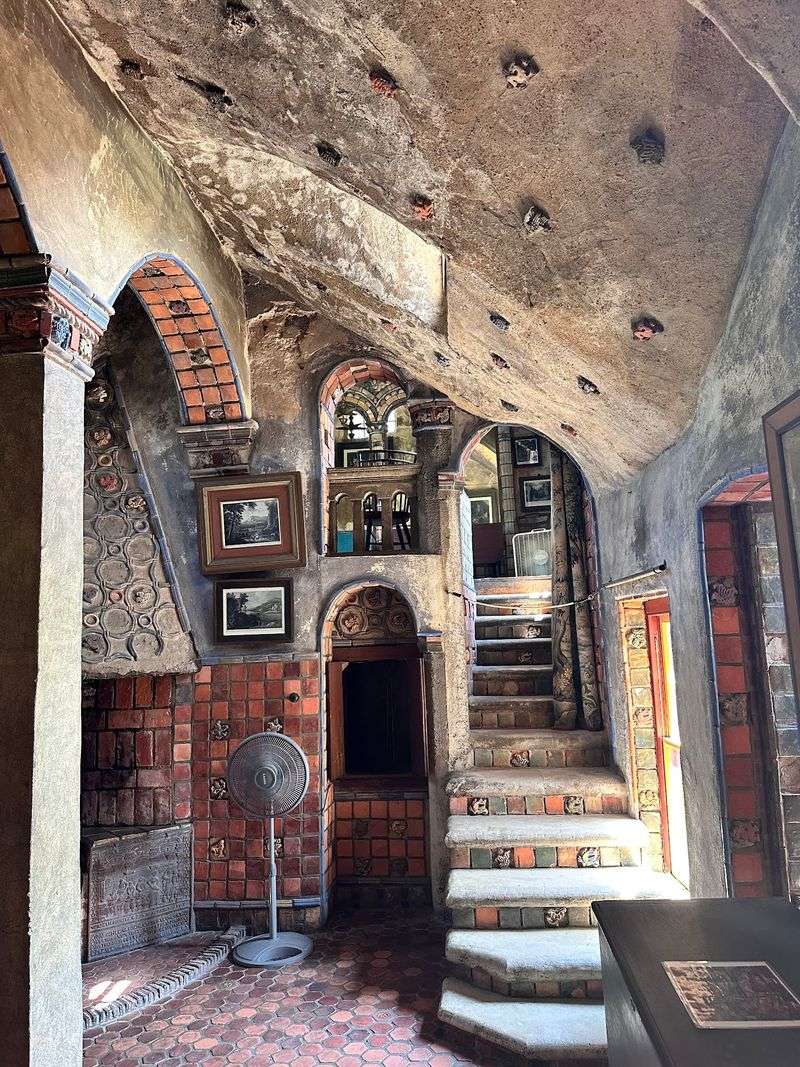
Most people sketch the outside of a house first, but Henry Chapman Mercer did the opposite. He planned each room before he ever worried about how the outside would look.
Honestly, you can tell, and that is part of the fun.
Mercer was born in Doylestown in 1856 and lived there his whole life until he passed away in 1930. He wore a lot of hats during those years, working as an archaeologist, an anthropologist, a collector, and a tilemaker.
When he started planning Fonthill in 1908, he was 51 years old and full of ideas that no architect had trained him to follow.
Because he was not a professional architect, his plans came from his own imagination instead of formal blueprints. That explains the stairways that seem to wander off, the narrow halls, and the rooms that twist in odd directions.
I found myself turning corners and grinning at what popped up next.
My tip is to learn a little about Mercer before you go. Knowing that a curious, stubborn scholar built this place makes every strange angle feel personal.
It stops looking like a mistake and starts looking like a mind at work, which is exactly what it was.
Concrete, Muscle, and a Horse Named Lucy
Picture a construction site with no cement trucks and no power tools rumbling around. Now add a horse.
That was Fonthill between 1908 and 1912, and I love that image more than I probably should.
Mercer built the castle using poured reinforced concrete, which was a pretty new method back then. All of it was mixed by hand.
He hired eight to ten local workers who had never done concrete work before, so he taught them his own techniques right there on the job.
A horse named Lucy helped too, hoisting loads of that heavy hand-mixed concrete up into place. When I ran my hand along one of the rough gray walls, I kept thinking about how many trips she must have made.
It gave the whole building a warm, farm-town feeling that I did not expect from a castle.
Fonthill is now a National Historic Landmark, and its early concrete work is a big reason why. If you enjoy building things, look closely at the ceilings and corners where the texture of the old wooden forms still shows.
Those little marks tell the story of real people, and one patient horse, shaping a dream by hand.
Tiles on Every Surface You Can Imagine
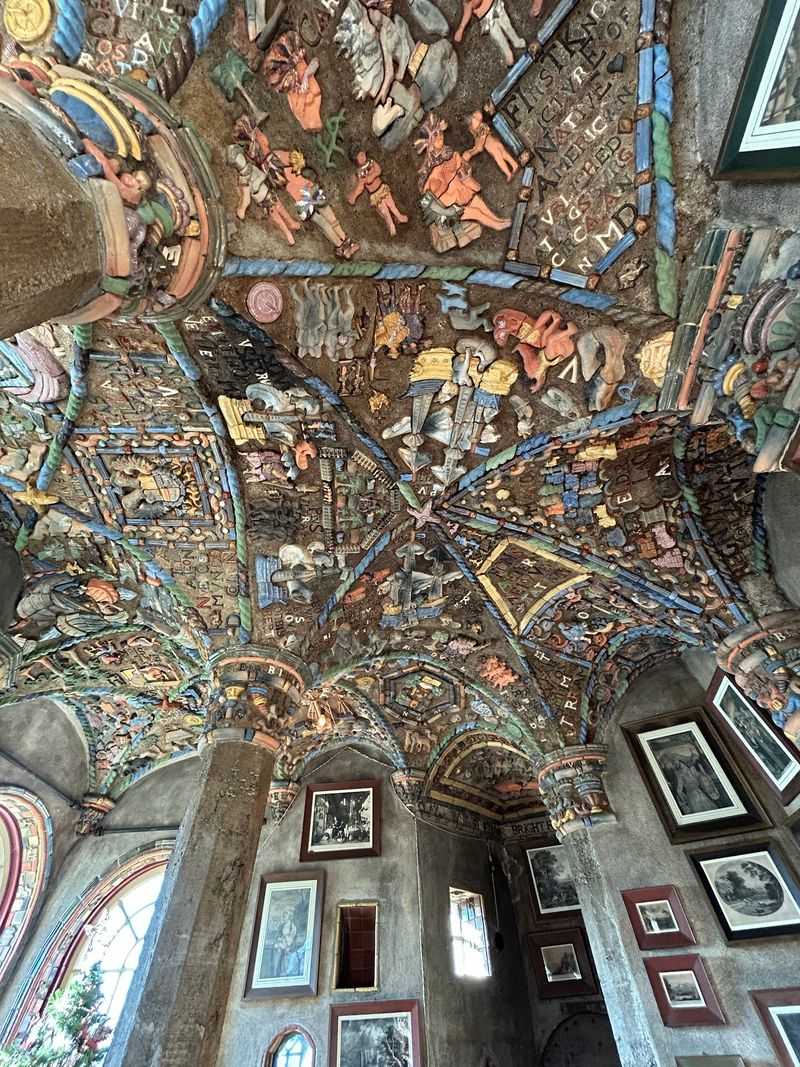
My neck hurt by the end of the tour, and I blame the ceilings. There are tiles up there, tiles under your feet, tiles wrapping around columns, and tiles framing fireplaces.
They even line the bookshelves.
Many of them are Mercer’s famous Moravian tiles, made during the American Arts and Crafts Movement. These handcrafted pieces show animals, knights, plants, and scenes from old stories, all pressed into clay with bold shapes and earthy colors.
Some rooms feel like picture books that you can stand inside.
Thousands of tiles fill the house, and they are not placed in neat rows like a kitchen backsplash. Instead, they seem to float in the concrete, set into ceilings and arches like jewels in a crown.
The effect is busy, bright, and a little wild in the best way.
Here is a helpful trick for your visit. Pick one room and try to find a single tile that tells a full story, like a hunter or a ship at sea.
Once you slow down and look at just one, the whole wall suddenly makes more sense, and you start noticing tiny details that most visitors walk right past.
Treasures From Around the World, Pressed Into the Walls
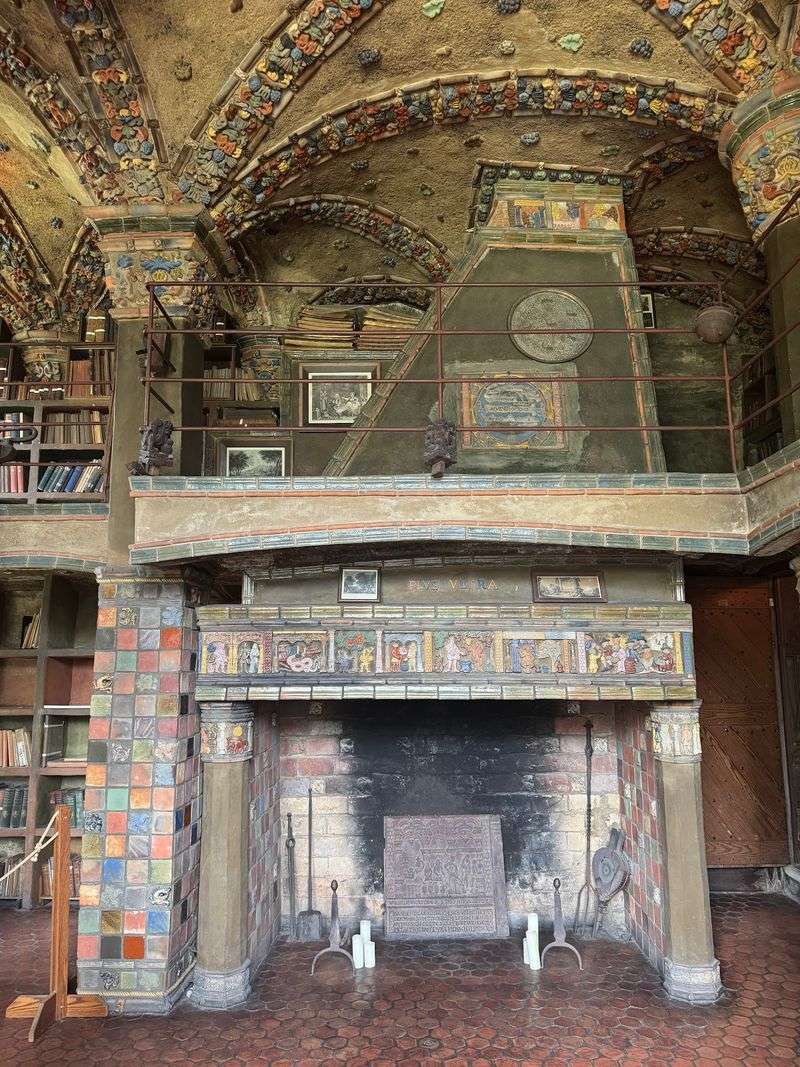
Somewhere in this house sits a tile that is over 4,000 years old. I stared at it for a while, trying to wrap my head around that number.
It came from ancient Sumer and dates back to around 2100 BC.
Mercer did not only use his own creations. He also collected antique tiles during his travels and set them right into Fonthill’s walls and ceilings.
You will spot Persian, Chinese, Spanish, and Dutch pieces mixed in among his Moravian designs.
What struck me most was how comfortable they all look together. A blue Dutch tile might sit near a Spanish pattern, with a Mercer design just a few inches away.
It feels like a friendly gathering of cultures, all sharing one home in Pennsylvania.
For anyone who loves history, this is a real treat. Ask your guide to point out some of the oldest pieces, since they are easy to miss among thousands of colorful squares.
Keep an eye out for other curious objects too, including a human skull tucked away in the house as a quiet reminder to enjoy life. Every corner seems to hold something from a different century, which makes the castle feel like a museum and a scrapbook rolled into one.
Counting Windows, Fireplaces, and Bathtubs
Over 200 windows, and no two seem quite alike. I tried counting them at first and gave up somewhere on the second floor.
Some are tall and grand, while others are small squares tucked into odd corners.
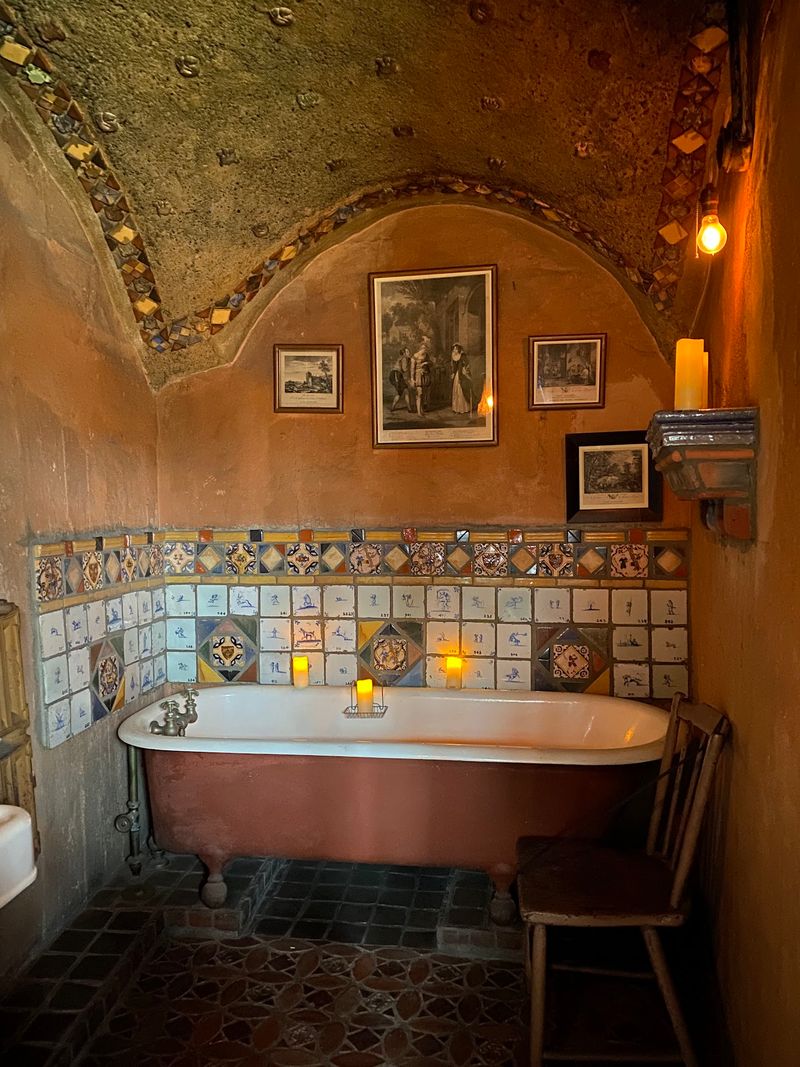
The numbers at Fonthill are fun to share with friends. The house holds 44 rooms, including 10 bathrooms, 5 bedrooms, and 18 fireplaces.
That means there are twice as many bathrooms as bedrooms, which still makes me smile.
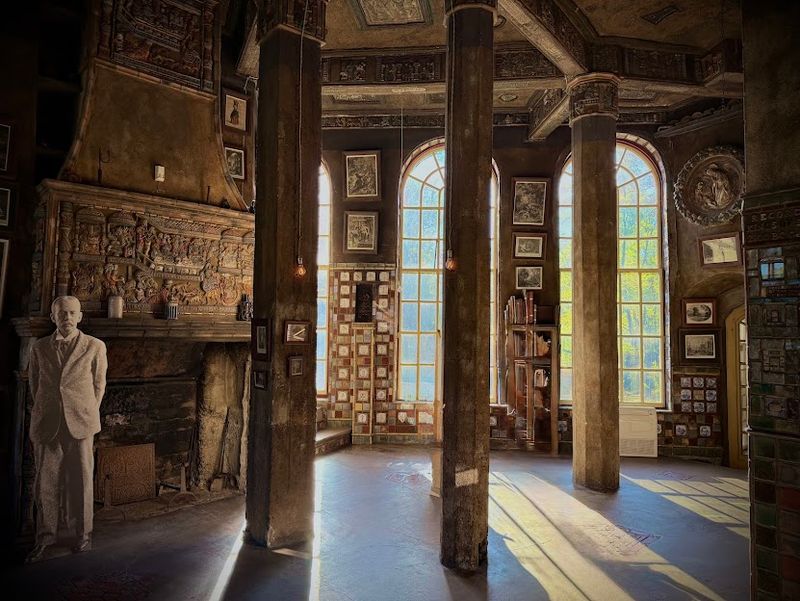
The library was my favorite space, with its huge windows pouring light across the tiled ceiling and packed shelves. Mercer owned a large collection of prints, and the house was built partly to show them off.
You can almost imagine him reading there on a quiet afternoon, surrounded by everything he loved.
One bathroom has a long tub sitting under a skylight, and I would not mind a soak there on a rainy day. As you move through the rooms, notice how the windows frame the trees outside in different ways.
Each one feels like a painting that changes with the seasons, so a spring visit and a winter visit can feel like two totally different houses.
Old Castle Looks With Surprisingly Modern Gadgets
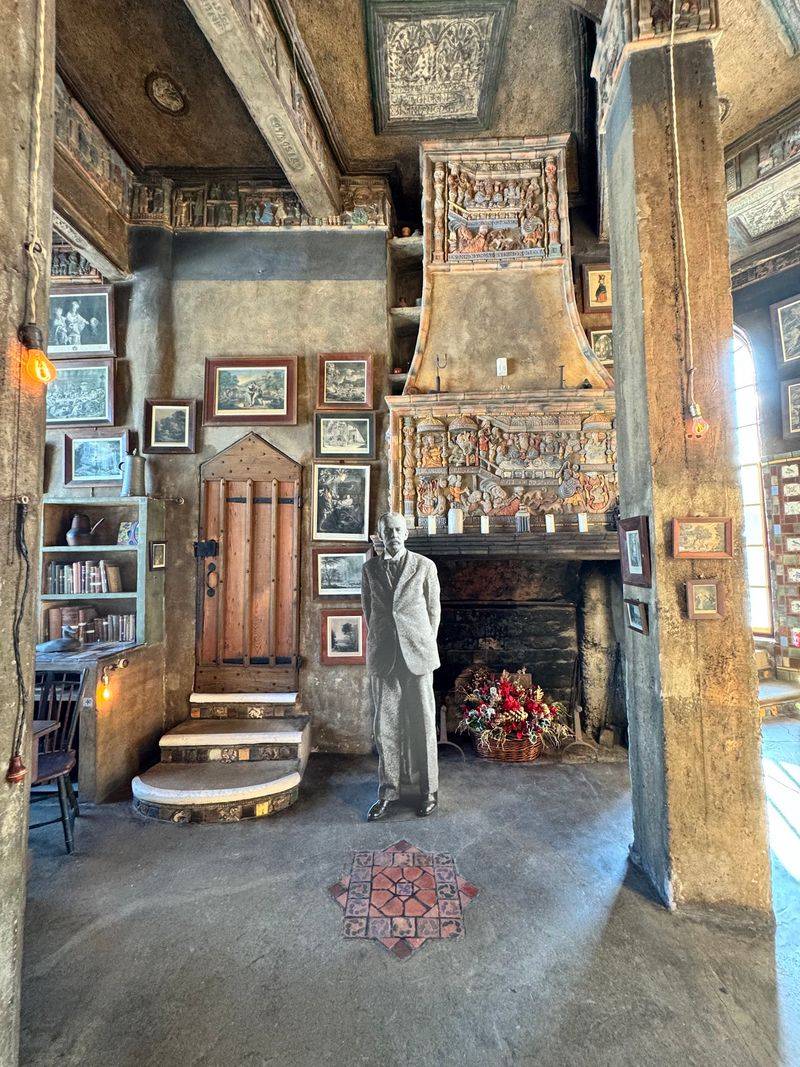
From the outside, Fonthill looks like it belongs in a medieval storybook. Inside, though, Mercer was thinking about comfort.
He packed the house with modern conveniences that were pretty fancy for the early 1900s.
There are two dumbwaiters, which are small elevators for moving food and items between floors. He also installed an Otis elevator, an intercom buzzer system, and internal phones.
So while the walls looked ancient, the house could buzz and ring like a busy office.
I loved this mix of old and new. It reminded me that Mercer was not trying to live in the past, even though he studied it for a living.
He simply wanted a home that looked amazing and worked well at the same time.
The architecture also blends several styles, including Medieval, Gothic, and Byzantine. You will see pointed arches, rounded vaults, and chunky towers all sharing space.
If you have kids with you, turn it into a game by having them spot something that looks old and something that looks high-tech. It keeps young visitors curious, and honestly, it kept me curious too, since the gadgets are easy to overlook among all those tiles.
Planning a Smooth Tour Day
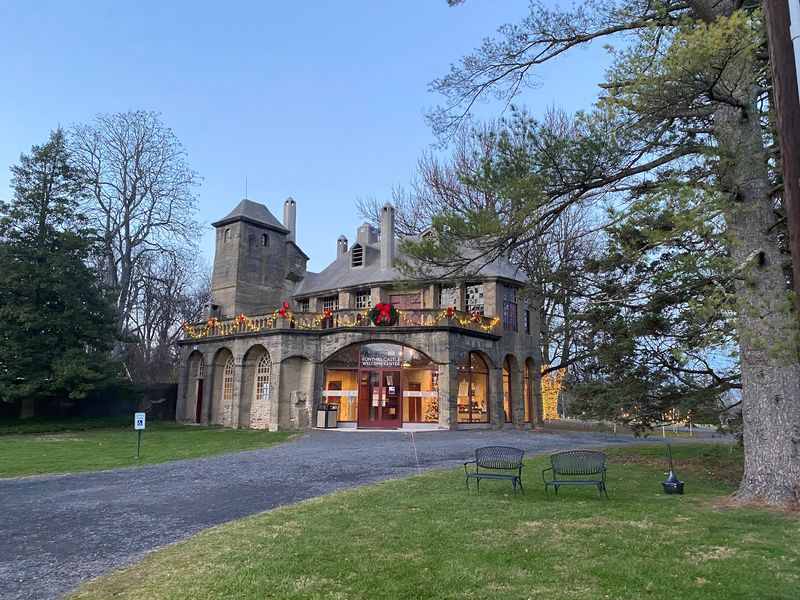
Book ahead. That is the single best piece of advice I can give you, since tours are kept small and can sell out quickly, especially on busy weekends.
Fonthill is run by the Bucks County Historical Society as a historic house museum. The standard guided tour lasts about one hour and covers most of the bedrooms and main spaces.
Guides here are known for being full of stories, and they really do bring Mercer’s world to life.
If one hour sounds too short, keep an eye out for Behind-the-Scenes tours offered on certain dates throughout the year. Those show even more of the house.
Special self-paced days and holiday events also pop up, and the castle looks especially cheerful when it is decorated for the winter season.
Wear comfortable shoes with good grip. The castle has many steep stairs, narrow passages, and uneven surfaces, so it has limited accessibility.
Watch your head in a few low spots too. The castle is open most days from 10 AM, closes on Mondays, and has shorter hours on Saturdays, so check before you head out.
After the tour, give yourself extra time to stroll the grounds, where the trees and paths offer a peaceful break from all that indoor color.
Rounding Out the Mercer Trail in Doylestown
Leaving Fonthill, I felt like I had only read the first chapter of Mercer’s story. Luckily, the rest is close by.
He built two other remarkable places in Doylestown that pair perfectly with a castle visit.
The Moravian Pottery and Tile Works sits right near Fonthill, and it is where Mercer’s famous tiles were made. Seeing where the clay turned into art makes the castle walls feel even more meaningful.
You may notice that its concrete style looks like a cousin of the castle.
The Mercer Museum is just a short drive away, only a few minutes by car. It houses a huge collection of tools and objects from everyday life before factories took over.
Mercer wanted to save these things for future generations, and walking through it shows how deeply he cared about ordinary people’s work.
My advice is to plan a full day and visit all three spots. Start with the castle in the morning, then enjoy the tile works and museum afterward.
Together, they paint a clear picture of one curious man who shaped an entire town’s personality with concrete, clay, and a lot of imagination.
Address: 525 E Court St, Doylestown, Pennsylvania 18901
