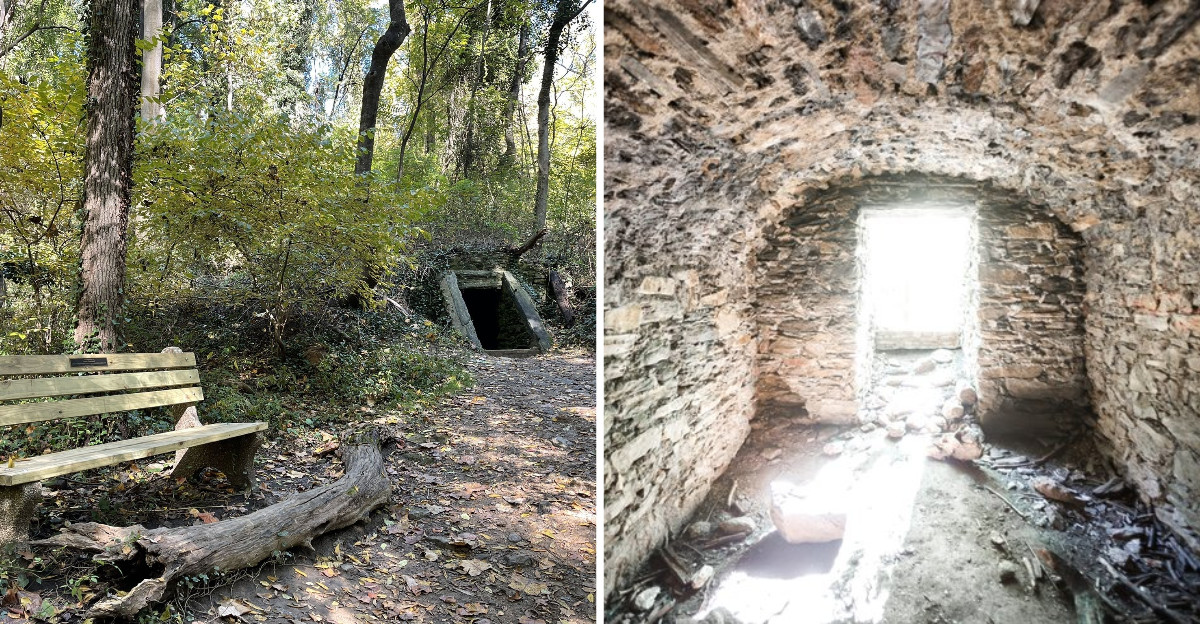
Stone doorways carved into hillsides are not what most people expect to find on a quiet walk, but one in Pennsylvania stopped me in my tracks. The story behind it goes back to 1694, when a group of German mystics sailed across the ocean because they believed the world was about to end.
They prayed, studied the stars, grew healing herbs, and waited in these very woods for a day that never came. Standing at the little opening with mud on my sneakers, a hundred questions filled my head.
The hollow in the hillside is small, easy to miss, and carries the weight of a faith that refused to fade quietly. Walking away from that spot, the mystery stayed with me longer than the trail itself.
History with a side of wonder lives here, and it rewards anyone curious enough to find it.
A Voyage Planned Around the End of Everything
My first reaction to this story was simple: who crosses an ocean to wait for the end of the world? Johannes Kelpius and his followers did exactly that.
They were German Pietists and mystics, and they studied the Book of Revelation so closely that they became convinced 1694 would bring the Second Coming of Christ.
Their landing date in Philadelphia was June 24, 1694. Pennsylvania appealed to them for two big reasons.
William Penn had promised religious freedom, and the colony had a reputation as a wild place at the edge of the known world.
For a group hoping to meet a heavenly kingdom, that kind of wilderness felt like the right waiting room. They wanted quiet, distance from busy towns, and plenty of time to pray and prepare.
People gave them several names over the years. Some called them the Hermits of the Wissahickon, while others used the Society of the Woman in the Wilderness or the Mystics of the Wissahickon.
Knowing this backstory before you hike makes a huge difference. The trail stops being just a pretty walk and turns into a path a group of hopeful scholars chose for one very dramatic reason, and that thought stayed with me the whole way up the hill.
Finding the Doorway in the Hillside
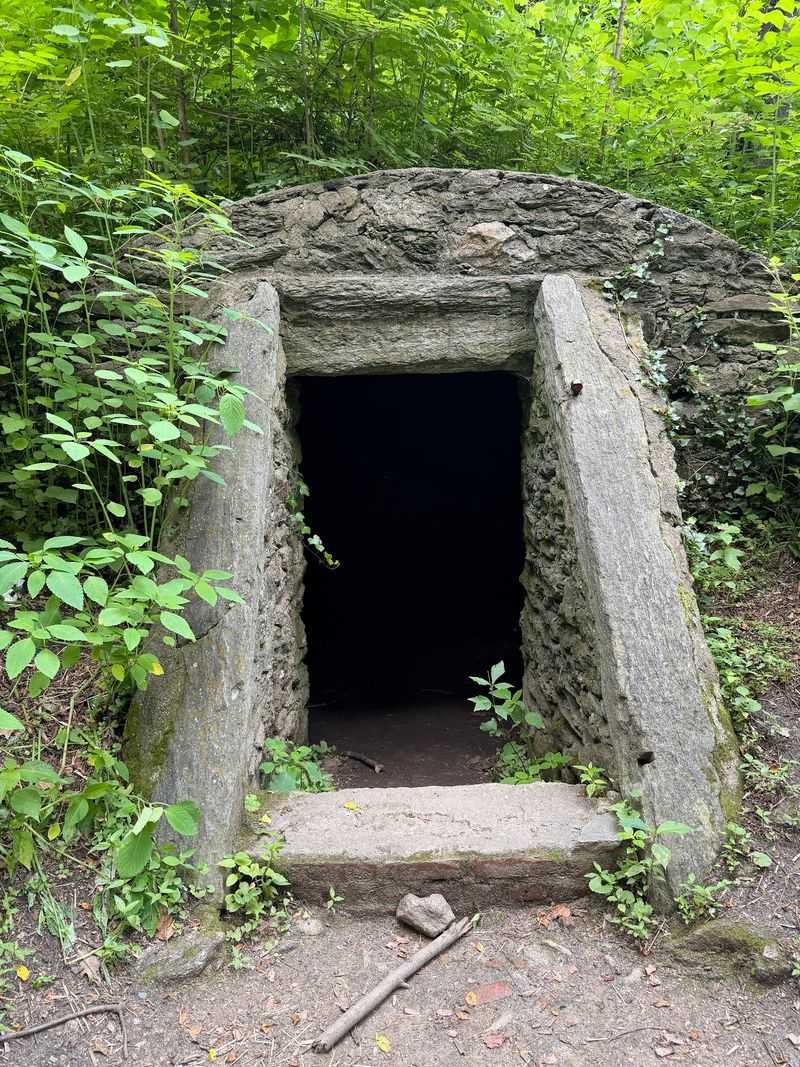
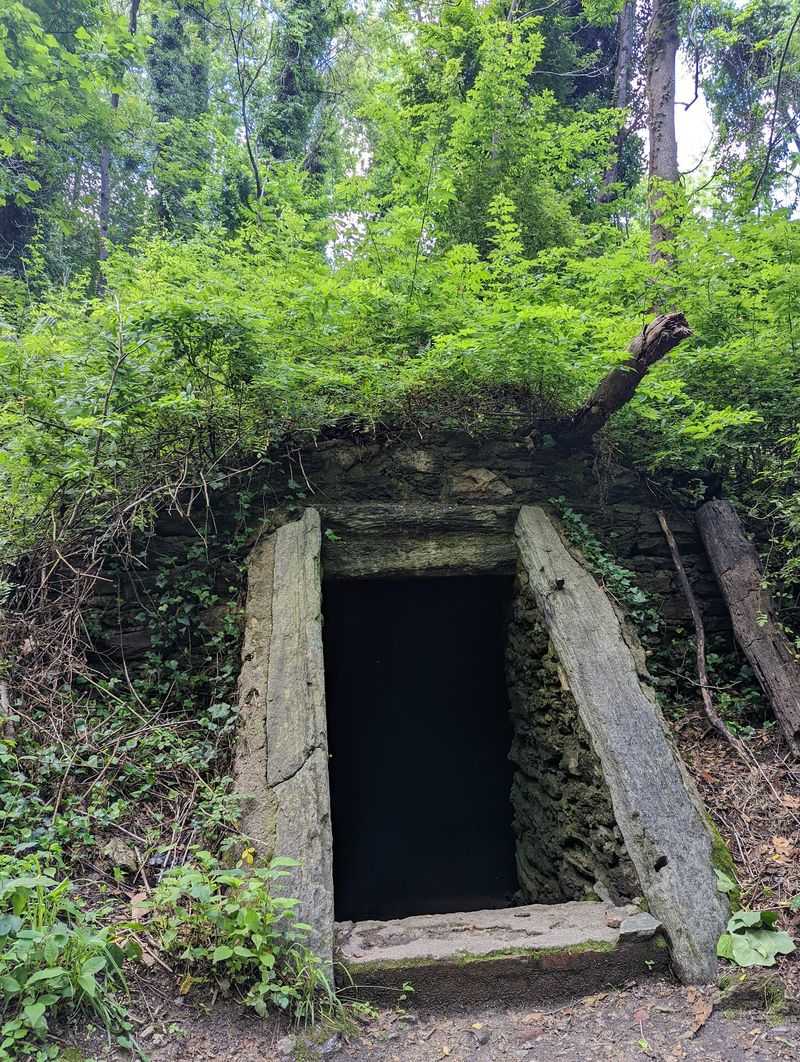
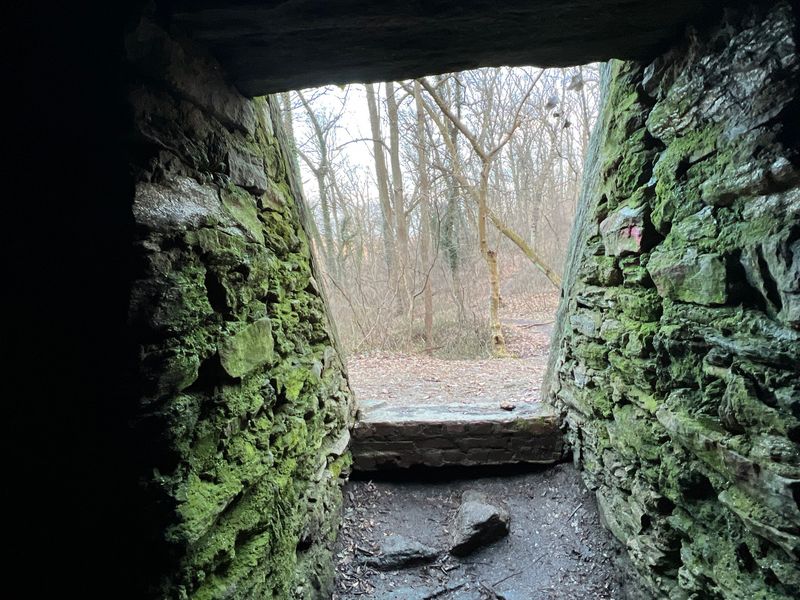
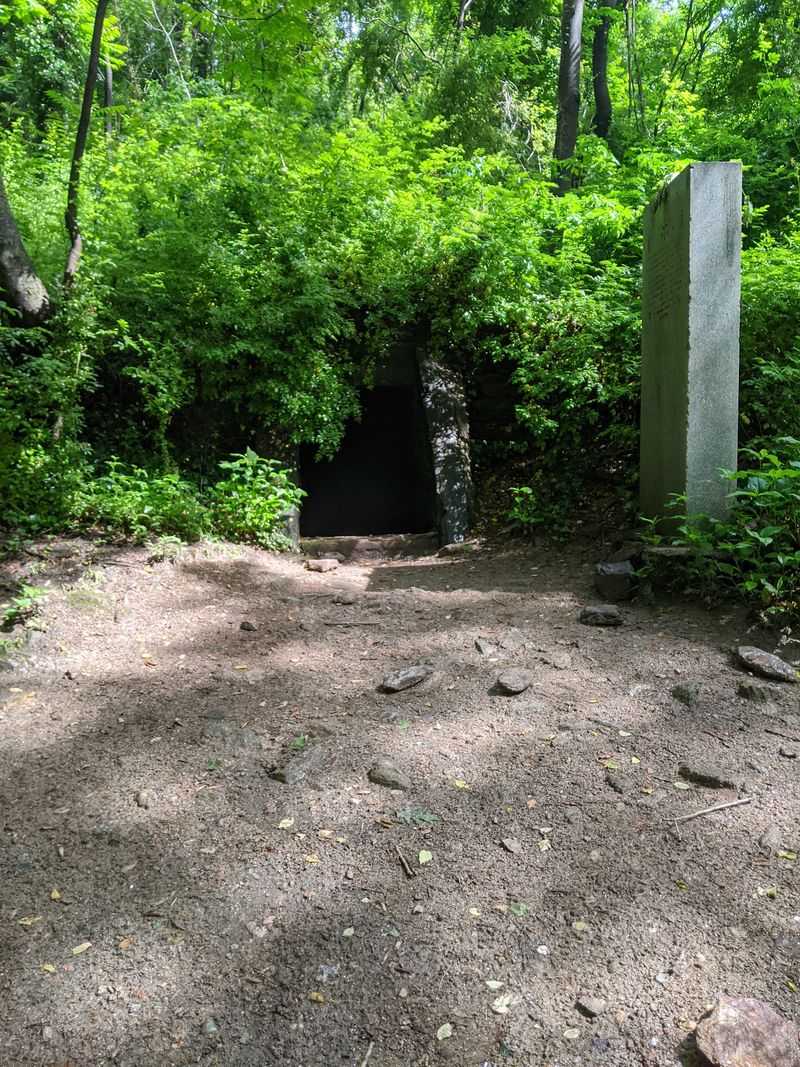
Honestly, I almost walked right past it. The Cave of Kelpius is small, and it hides on a slope above Wissahickon Creek, close to Hermit Lane in the Northwest Philadelphia part of Fairmount Park.
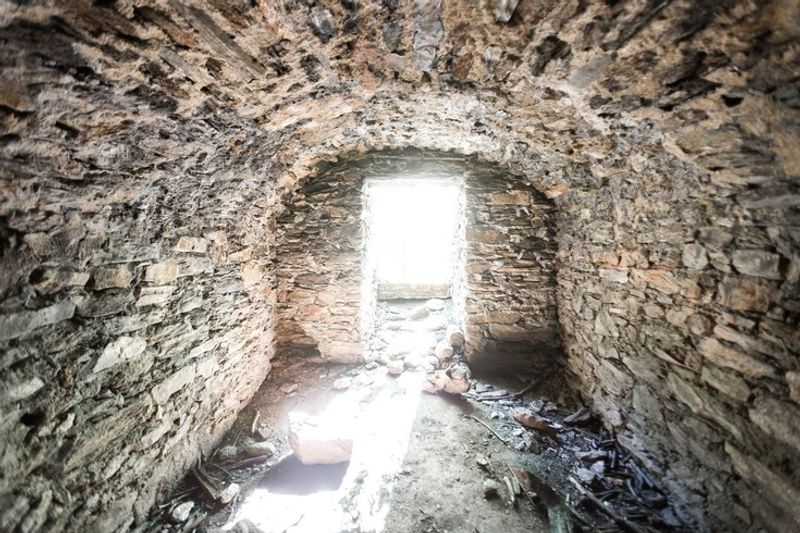
A stone front frames a low doorway, and behind it is a single dark room. It is not a grand cavern with echoing tunnels.
Think of it more like a cozy stone pocket pressed into the earth.
Some visitors are surprised by the size, so go in expecting something modest. The fun comes from knowing what may have happened here more than three hundred years ago.
Getting there takes a short hike, and the trails can twist in confusing ways. A trail marker near the site helps, but I recommend checking a map on your phone before you leave the road.
Wear shoes with good grip, because the ground can turn muddy after rain. Inside, the air is cool and damp, and the walls feel solid under your fingertips.
A small flashlight is handy if you want a peek at the corners.
Bring a friend if dark spaces make you jumpy. Even a quick look inside adds a little thrill to the afternoon.
Cave, Cellar, or Springhouse?
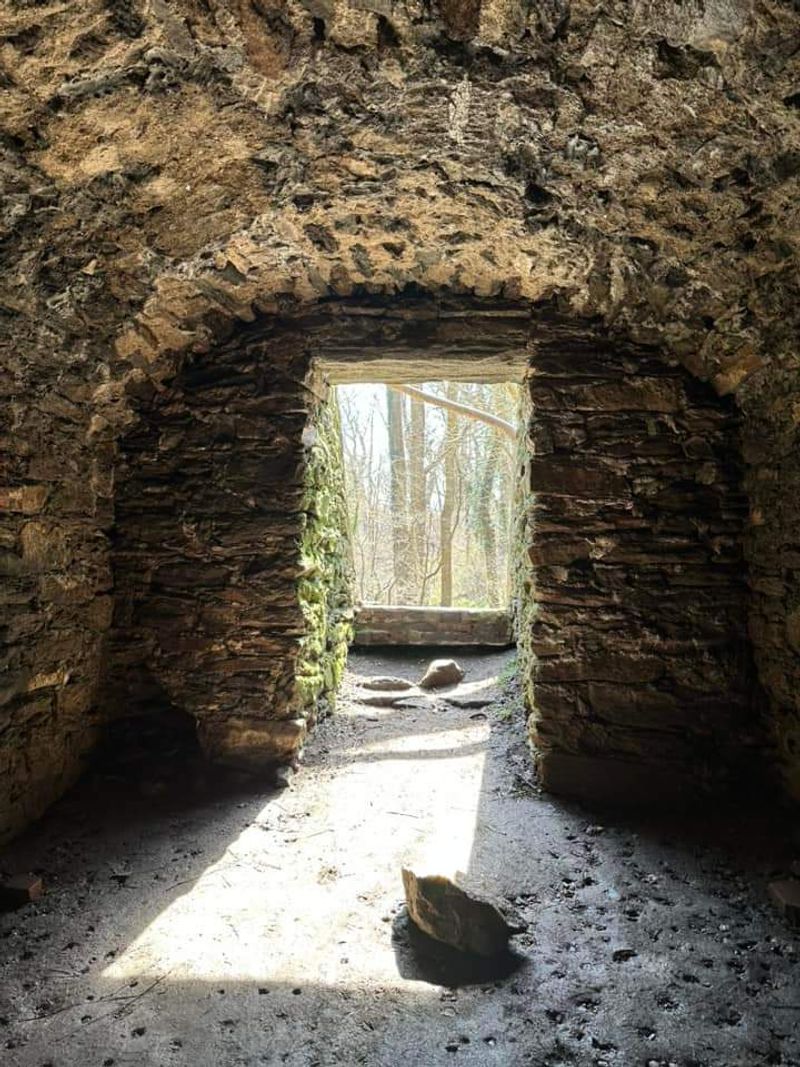
Here is the part I find delightfully puzzling. Historians do not fully agree on what this structure really is.
Some say it began as a natural cave. Others think it may have been an old springhouse, a building used to keep food cool with running water, while another idea is that it served as a root cellar for storing vegetables.
Tradition, though, holds that the hermits used this spot for meditation. A few accounts suggest Kelpius may have enlarged a natural opening or built a structure with a sod roof, which is a roof made of grass and soil.
There are also stories that the group kept books and scientific tools here. Picture shelves of old texts and instruments resting in the cool dark, safe from summer heat.
Standing inside, you can test each theory with your own eyes. Look at the stonework, the shape of the ceiling, and how the slope drains water around it.
One visitor noticed that a stream once seemed to run nearby, which fits the springhouse idea nicely.
No one will hand you a final answer here. That open question is part of the charm, and it turns a simple visit into a small detective game for curious minds.
Forty Hermits and a Rooftop Full of Stars
Forty men, one big log house, and a sky full of stars to study. That was daily life for the Kelpius community, and it was far busier than the word hermit suggests.
The group of around 40 celibate men built a 40-foot square tabernacle as their shared home. On top sat a simple astronomical observatory, which some people consider the first one in the New World.
Imagine watching the night sky from these hills without a single streetlight around. The stars must have looked bright enough to touch.
Their interests went way beyond prayer. These men studied mathematics, philosophy, botany, astrology, alchemy, music, and astronomy, and they also grew medicinal herbs.
That mix of science and faith is what grabbed me most. They were watching the heavens for signs while also measuring and recording what they saw.
While you hike, try to picture where a building that large could have stood among the trees. The site of a later cottage nearby, once called Lauriston Cottage, has been studied by archaeologists because its foundation may connect to the old community.
Bring that picture in your mind as you walk. The woods suddenly feel crowded with quiet, thoughtful neighbors from long ago.
Healers Who Helped Their Neighbors
You might expect people waiting for the end of the world to hide from everyone. The Kelpius group surprised me here, because they often reached out to local settlers instead.
Their skill with medicine made them valuable neighbors. With their knowledge of healing herbs, they could help families who lived far from any doctor.
Early Pennsylvania was a tough place to get sick. Having a group of trained herbalists up the creek was a real gift.
Johannes Kelpius himself was known as a scholar, writer, musician, and mystic. He composed hymns with heartfelt titles, including I Love My Jesus Quite Alone and A Loving Moan of the Disconsolate Soul in the Morning Dawn.
Those titles give a peek into his inner world. He sounds like someone who felt things deeply and searched for meaning in quiet moments.
As you wander the trail, keep an eye out for wild plants growing along the slopes. I am no plant expert, so I just enjoyed the green smells and imagined the hermits gathering leaves and roots for remedies.
Please leave every plant where it grows, though. The park protects these woods, and a good photo makes a much better souvenir than a pocketful of leaves.
When 1694 Came and Went
So what happens when the big day passes quietly? For this group, life simply kept going.
The world did not end in 1694. The members stayed together, kept their vow of celibacy, and continued to hope for the Second Coming.
Kelpius passed away in 1708, and after that the community broke apart. Many members joined other religious groups such as the Mennonites, the Dunkers, and the Seventh-Day Baptists, so their faith lived on in new homes.
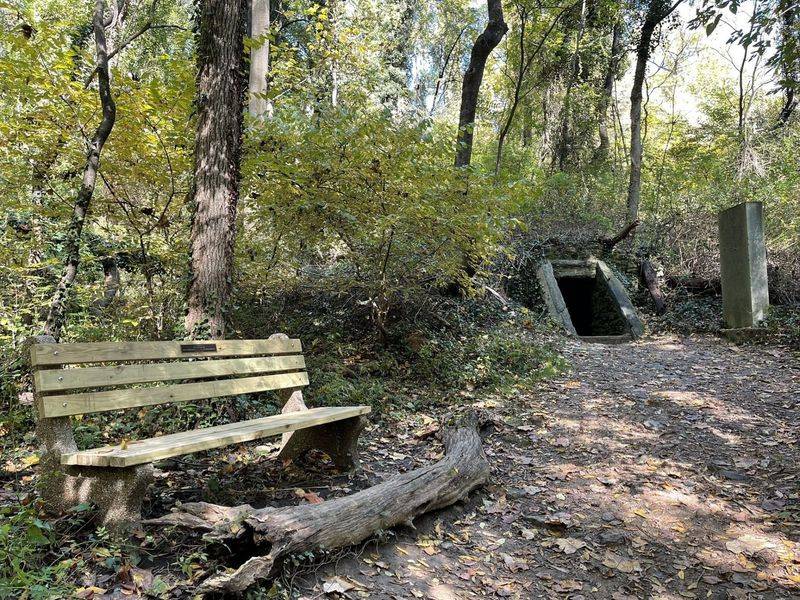
Right outside the cave, you will spot a tall granite monolith. The Rosicrucian brotherhood placed it there in 1961, claiming Kelpius as the first American Rosicrucian master.
Historians point out that his own writings do not confirm that claim. I liked reading the engraved words anyway, because the stone shows how this small spot keeps attracting new believers and dreamers.
Take a minute to read the inscription slowly. It adds another layer to the story, one written centuries after the hermits themselves.
The whole site feels like a conversation across time. A prophecy, a quiet community, and a modern monument all share the same patch of hillside, and you get to stand in the middle of it.
Making a Day of the Wissahickon
My best advice is to treat the cave as one stop on a bigger adventure. Wissahickon Valley Park is huge, leafy, and full of trails for hiking and biking.
The cave itself only takes a few minutes to explore. After that, the forest invites you to keep walking along the creek and up the rocky slopes.
Morning and late afternoon are lovely times to visit. The light slips through the branches, and the paths feel calm and fresh.
Pack water, a snack, and a charged phone with a map loaded. The trails connect from several entry points, so planning your route ahead saves a lot of wandering in circles.
Look for the historical marker for the Kelpius Community near Hermit Lane. Reading it before or after your visit helps the whole story click into place.
Remember that this is a historic landmark, so treat the stones gently and carry out any trash. Leaving it in good shape lets the next curious hiker feel the same small spark I did.
Head home with tired legs and a head full of stars, prophecies, and herbal healers. Few city parks hide a tale quite like this one.
Address: 777 Hermit Ln, Philadelphia, PA 19128
