Gravel crunched under my shoes on that quiet mile-long street in Pennsylvania, and I had pulled off a winding back road expecting a few crumbling foundations and maybe a plaque.
I found a whole row of 19th?century homes still standing instead, a village built in 1854 so workers could live within walking distance of the mine that owned almost everything about their days.
What surprised me most was the hush of the place, broken only by birds and the sound of my own footsteps on the gravel.
A few of the houses have mailboxes, which means real people still live there, descendants of the families who once worked the collieries, their porches holding the same view that their ancestors had over a century ago.
The windows reflect the sky, and the worn boards of the sidewalks hold the shape of generations of boots. I spent close to three hours wandering, peeking through doorway windows, and reading about lives that were far harder than mine will ever be.
By the time I drove back out, I understood the region in a way no textbook had ever managed.
The Mile-Long Main Street That Tells the Whole Story
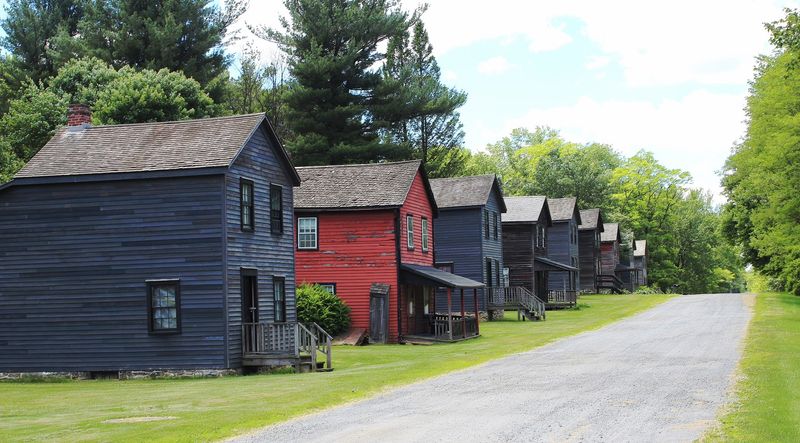
My first instinct was to hop back in the car, but I am glad I walked. Eckley has essentially one road running through it, and that single street holds nearly the entire village.
Simple wooden double homes line both sides, spaced with vegetable-garden yards and leaning outbuildings that photograph beautifully in soft light. Some structures gleam with fresh restoration work, while others sag politely into the weeds, and that mix is part of the honesty here.
Walking the full length and back takes roughly 45 minutes to an hour if you actually stop and read the interpretive signs.
You can also drive it slowly, park at intervals, and hop out where something catches your eye, which is what many visitors do on hot afternoons.
Comfortable shoes matter more than you would guess, since the shoulders are gravel and grass rather than sidewalk.
What struck me was how the street works like a timeline laid flat, with wealth, religion, and ethnicity all mapped onto physical distance. Once you know that, every doorway you pass starts to mean something more.
From Shingleton to a Company Town Named Eckley
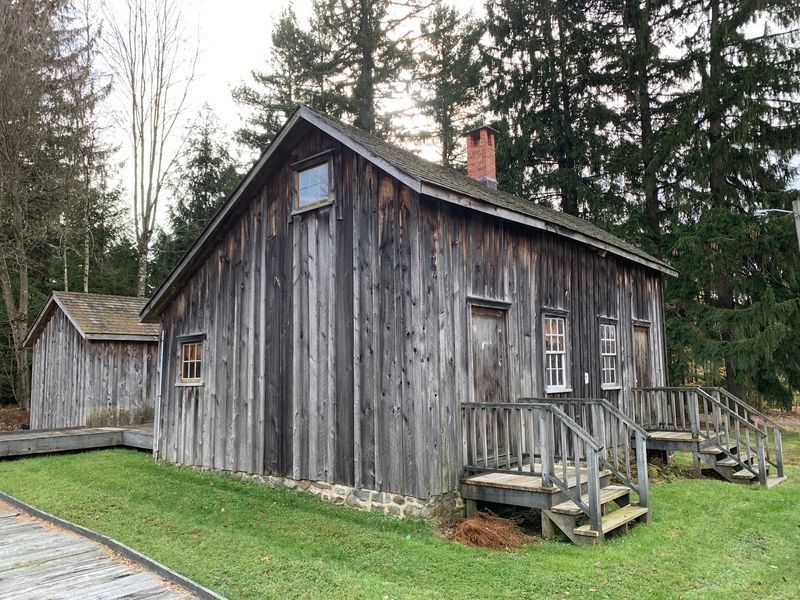
Before coal, this hillside had a far humbler name. Locals called it Shingleton, a small settlement where people farmed and split wooden shingles for a living.
Everything changed in 1853, when prospectors confirmed rich anthracite deposits sitting right beneath the ground. Sharpe, Leisenring and Company secured land rights from the Tench Coxe Estate and began building a planned village in 1854.
The town first went by Fillmore, after President Millard Fillmore, then was renamed Eckley in 1857 in honor of a Coxe grandson.
I love that detail, because it shows how quickly identity could be rewritten when money and mining arrived. The houses went up fast and cheap, originally painted in economical red and black tones that said everything about the company’s priorities.
Reading about that timeline while standing on the same soil gave me a strange sense of speed, an entire community conjured in a couple of years for one purpose.
Nothing about Eckley was accidental. Every house, church, and lane existed to keep labor close to the Council Ridge Colliery.
Inside the Laborers’ Double Houses
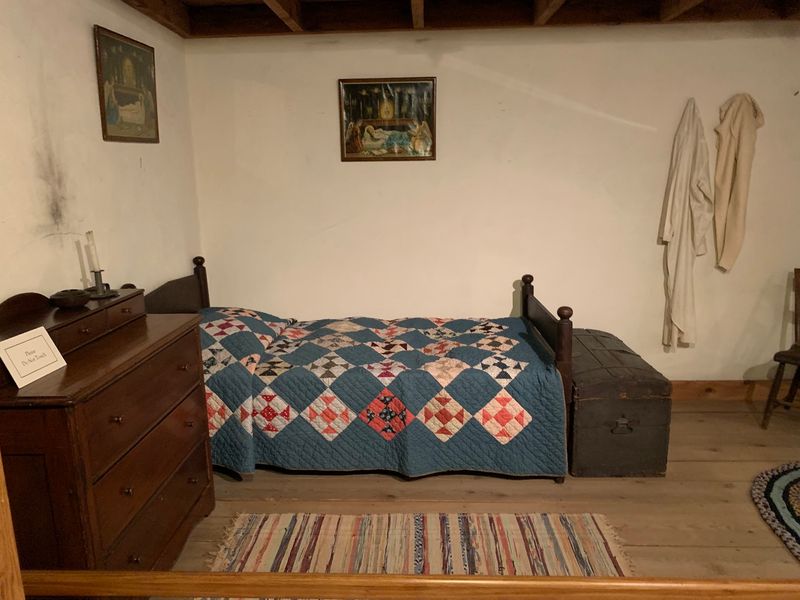
Peeking through a doorway viewing window, I kept thinking about arithmetic. Each half of these 1854 double homes could hold up to fifteen people, boarders included.
Fifteen. In a space smaller than many modern apartments, with no insulation, no electricity, no running water, and no indoor plumbing when they were first built.
Only a few of the buildings are opened for viewing, and most let you look in rather than walk through, which some visitors find limiting.
I actually came to appreciate the restraint, because the tight framed views made the rooms feel more like private homes than exhibits. Cooking, sleeping, washing, mending, and childcare all happened within these walls, and it shows in how the interiors are arranged.
Practical tip from my visit: bring a small flashlight if you like studying details through the windows, since interior lighting is dim by design.
Standing outside afterward, the gardens made more sense to me. Growing food was not a hobby here, it was how families stretched a paycheck through a long anthracite winter.
The Railroad Tracks That Split a Community in Two
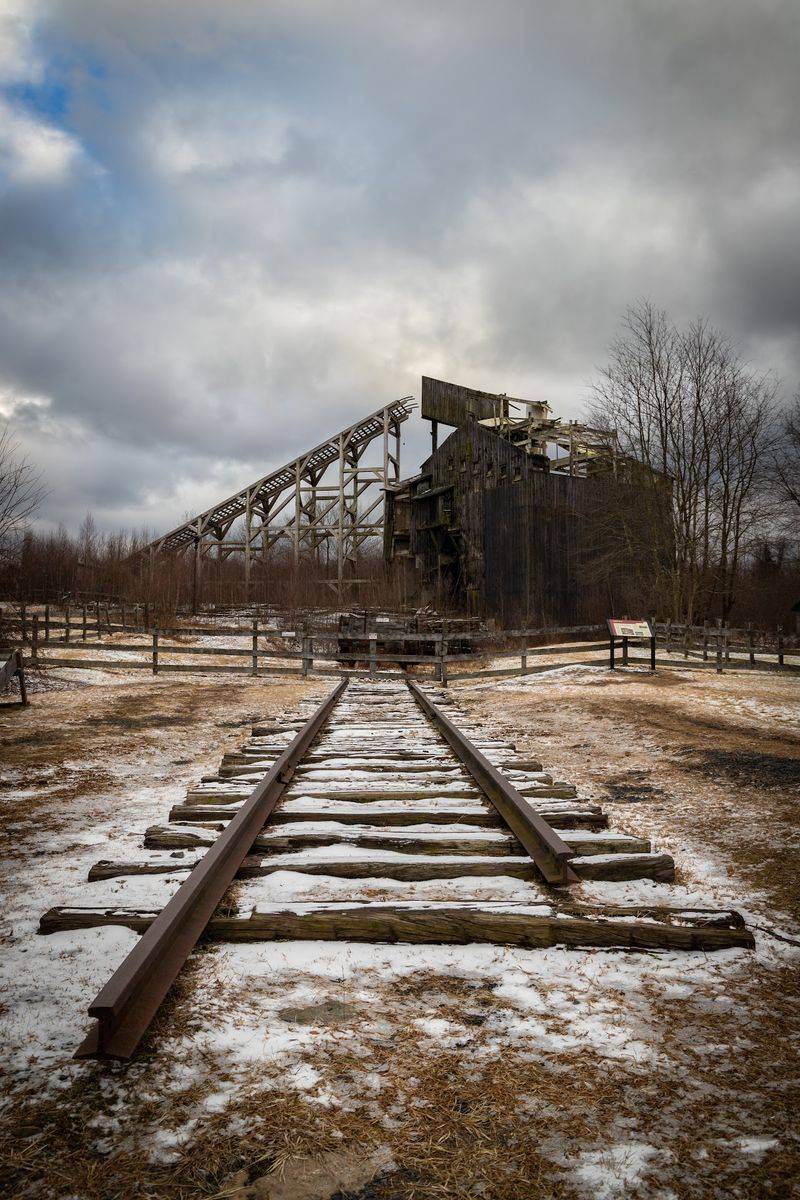
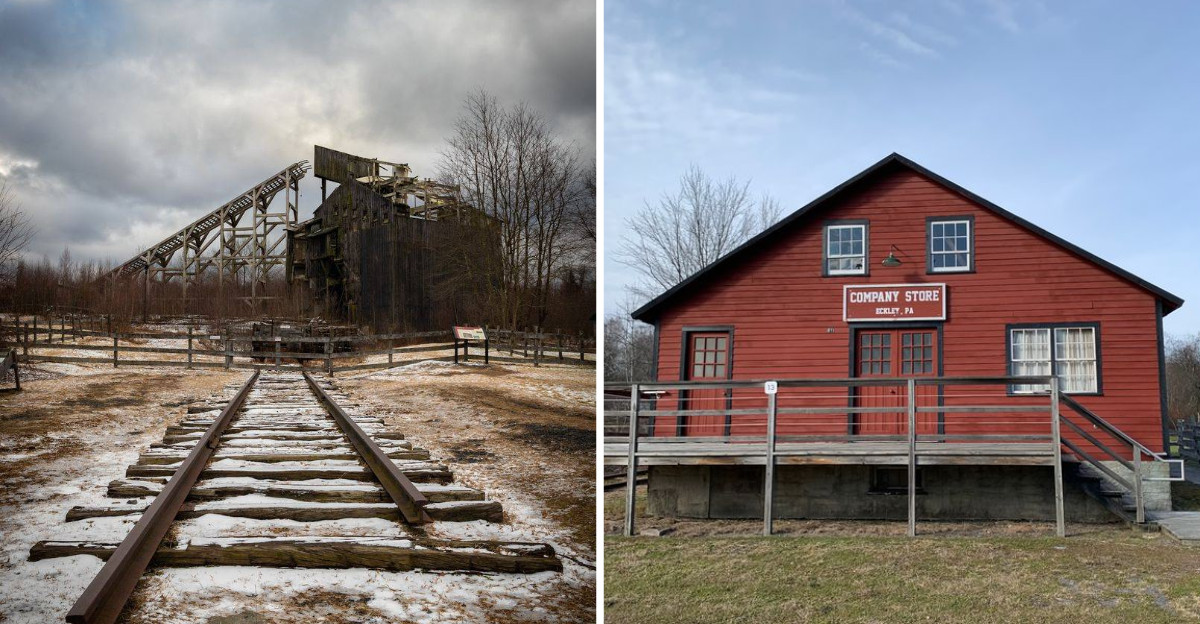
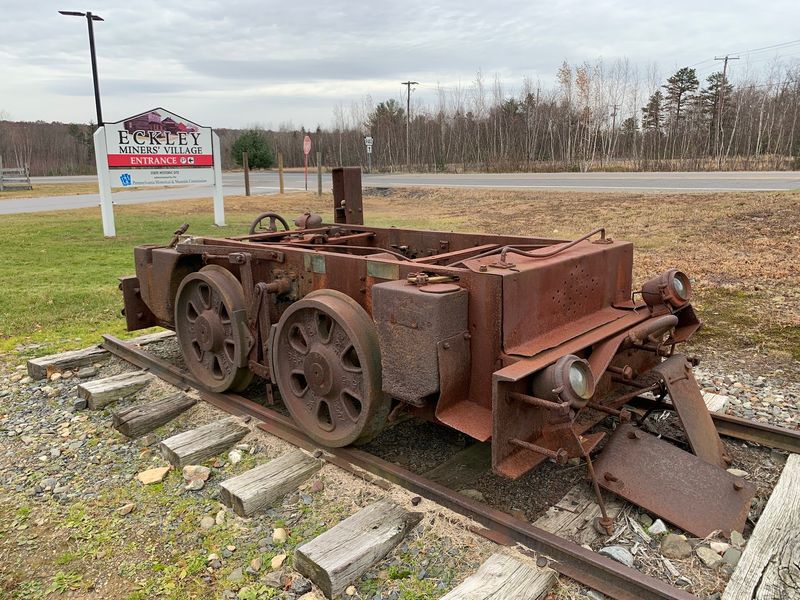
Old rails still cut across the village, half swallowed by gravel and grass. They look harmless now, but they once drew a hard social line through Eckley.
East of the tracks lived the poorer Irish Catholic immigrant families in the most crowded housing. West of the tracks stood roomier single-family dwellings occupied by Welsh, German, and English Protestant residents.
A small back street held even more modest homes for Eastern European arrivals, who were typically handed the lowest paying jobs underground.
Learning this before I walked made the stroll feel entirely different, because geography suddenly carried a hierarchy. At its peak around 1870, roughly a thousand people lived here in that layered arrangement.
Many came hoping to save money, buy farmland, and eventually return to the lives they had left in Europe.
Escaping a company-owned system rarely worked out that neatly, and that quiet disappointment lingers over the place. Trace the rails with your eyes and you can read the whole social map of a 19th century patch town without a single guidebook.
The Company Store and the Scrip Question
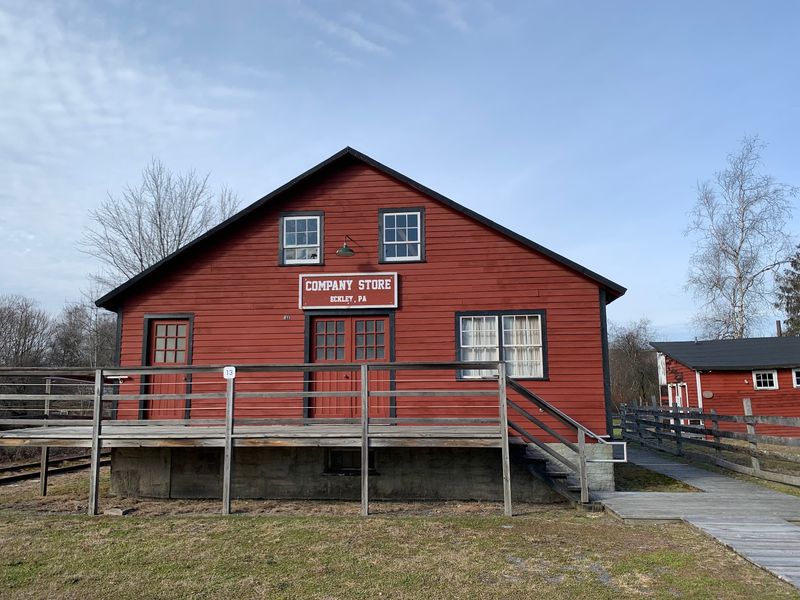
Company stores get a rough reputation in coal country, and usually they earned it. Prices ran high, and miners paid in company scrip could only spend it in one place, which chained families to their employer.
Eckley had a small but meaningful difference. Its workers were paid in actual United States dollars, giving them a sliver of financial freedom that many neighboring patch towns never enjoyed.
The store building visitors see today is not the original, since that one came down in 1940.
What stands there now is a film prop, and knowing that did not lessen the effect for me at all. Standing in front of it, I imagined the shopping lists it once absorbed, from blasting powder and lamp oil to flour, thread, and boots for growing kids.
Everything a household needed passed through a storefront controlled by the same company that controlled the mine.
It is a good reminder that a coal town’s economy did not stop at the mine entrance. Wages went out one door and came right back in another.
Two Churches, Four Bands, One Stubborn Community Spirit
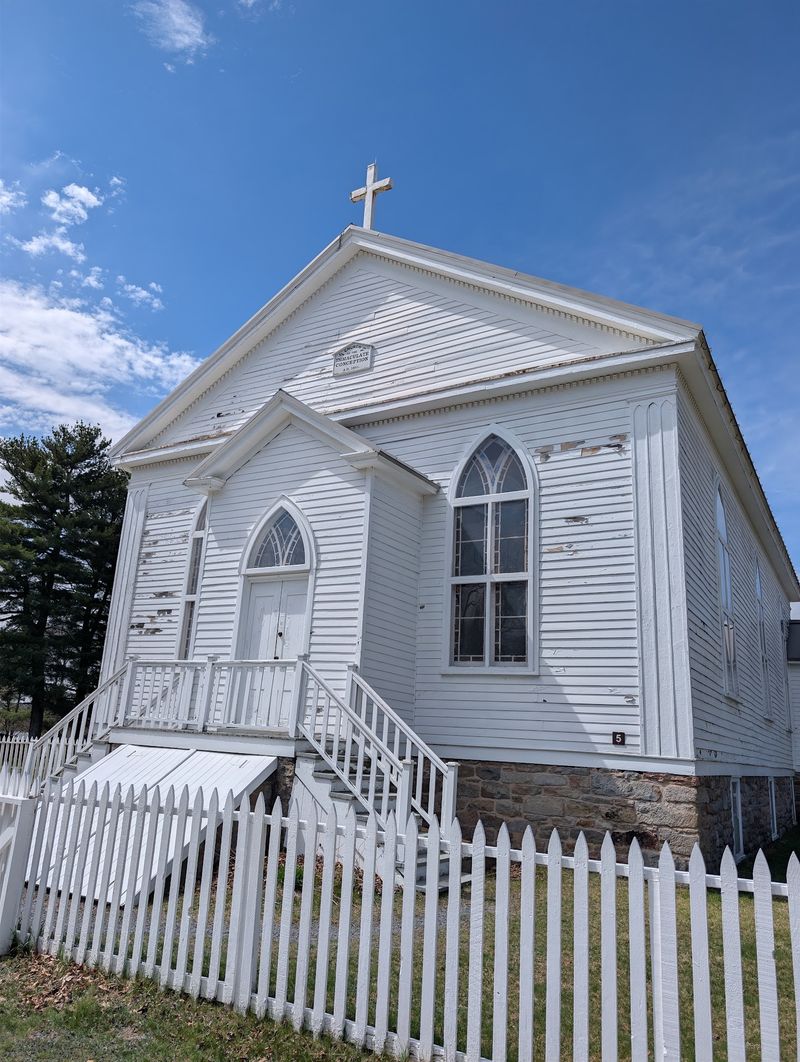
Faith and music did the heavy lifting here when work refused to get easier. Eckley supported two churches, and each served a different set of immigrant families.
Immaculate Conception Church went up for Irish Catholic parishioners in the 1850s and 1860s, while St. James Episcopal Church served English, Welsh, and German residents.
The Catholic church interior has been restored to its 1920s appearance, with furnishings and artifacts gathered from nearby congregations.
I sat quietly in there for a few minutes and understood why so many visitors mention it. Then there is my favorite fact about the village: at its peak, Eckley had four separate town bands.
Four. In a settlement of about a thousand people, which means parades, dances, and practice sessions were constant background noise.
A social club donated in the 1940s carried that gathering tradition forward into the twentieth century.
People here built joy deliberately, because nobody was going to hand it to them. That effort feels more impressive to me than any of the industrial machinery on site.
The Mine Owner’s Home Versus Everything Else
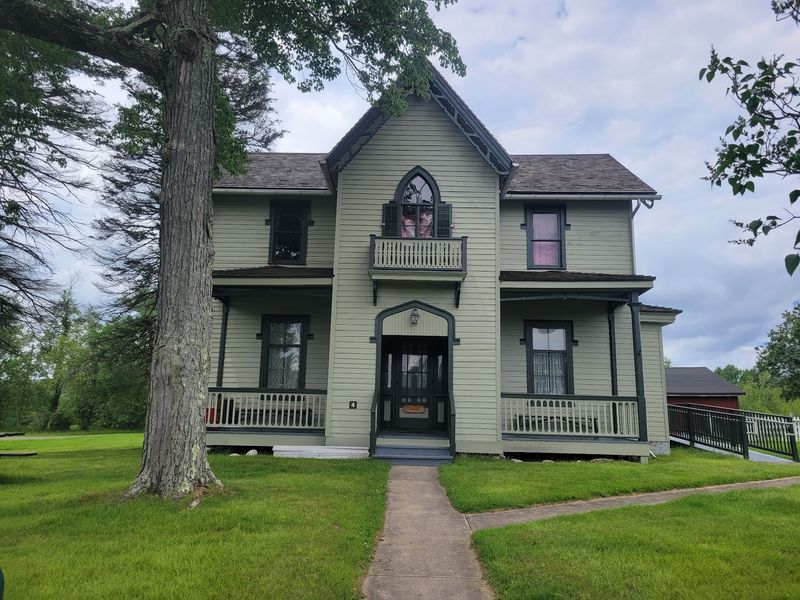
You do not need a tour guide to spot the difference. Richard Sharpe built his home around 1861, and it towers over the miners’ dwellings in both size and detail.
Decorative trim, generous windows, and actual architectural ambition sit just a short walk from houses that once packed fifteen people into a few rooms.
Seeing both within the same eyeline is the most efficient economics lesson in the village.
I found myself photographing the contrast rather than the house itself, because the gap is the real subject. Nearby stands the restored Company Doctor’s Office from 1874, which adds another layer to the story.
Medical care existed, but it came through the company, on the company’s terms, for the company’s workforce.
Wandering between these three types of buildings, owner, doctor, and laborer, gave me a clearer picture of how power was arranged than any exhibit panel could.
Bring a camera with a decent wide lens if you care about that comparison. The visual story of Eckley lives in the spaces between its buildings.
How a Sean Connery Movie Saved the Whole Town
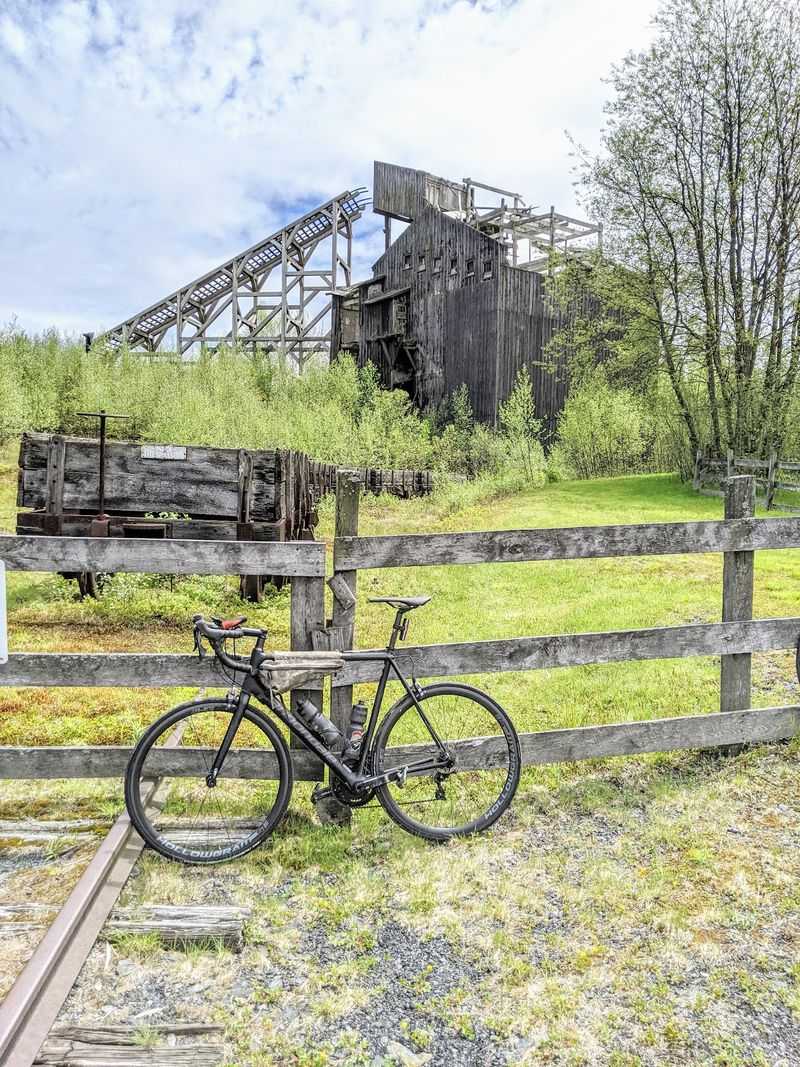
Here is the twist I did not see coming. The coal breaker looming over Eckley was never part of its working mining days.
Crews built it in 1970 as a film prop for The Molly Maguires, the movie starring Sean Connery that was shot right here. The company store you walk past came from that same production.
Rather than cheapening the site, the film connection is arguably why anything survived at all.
National attention arrived with the cameras, and preservation efforts followed close behind. Visitors who have seen the movie tend to walk around pointing at structures they recognize, which looked like genuine fun.
I had not watched it before my trip, and I regretted that, so consider streaming it beforehand.
Note that the breaker has been in flux in recent years, with demolition and replacement work reported by visitors, so check ahead if that structure is your main draw.
Hollywood accidentally became a preservationist. Strange, but the coal country landscape is better for it.
A Museum Village Where People Still Get Their Mail
Mailboxes changed how I behaved in Eckley. A mailbox out front means someone lives in that house today, and several of those residents descend from original mining families.
They rent from the Pennsylvania Historical and Museum Commission, which took stewardship of the site after the Huss Coal Company sold the town in 1969 and it was deeded to the Commonwealth in 1971.
So this is not a ghost town, and visitors who arrive expecting one sometimes leave a little confused.
I would argue the lived-in quality is exactly what makes Eckley extraordinary. Curtains in windows, a parked car, a garden hose coiled by a step, all of it keeps the village breathing instead of embalmed.
The unspoken rule is simple: admire from the road, and do not peer into windows where mail gets delivered.
Eckley is widely described as North America’s most complete 19th century company town, and the only historic site devoted to interpreting immigrant miners’ daily lives.
Continuity like that cannot be rebuilt. Treat it gently and it rewards you.
Planning Your Visit, From the Orientation Film to Patchtown Days
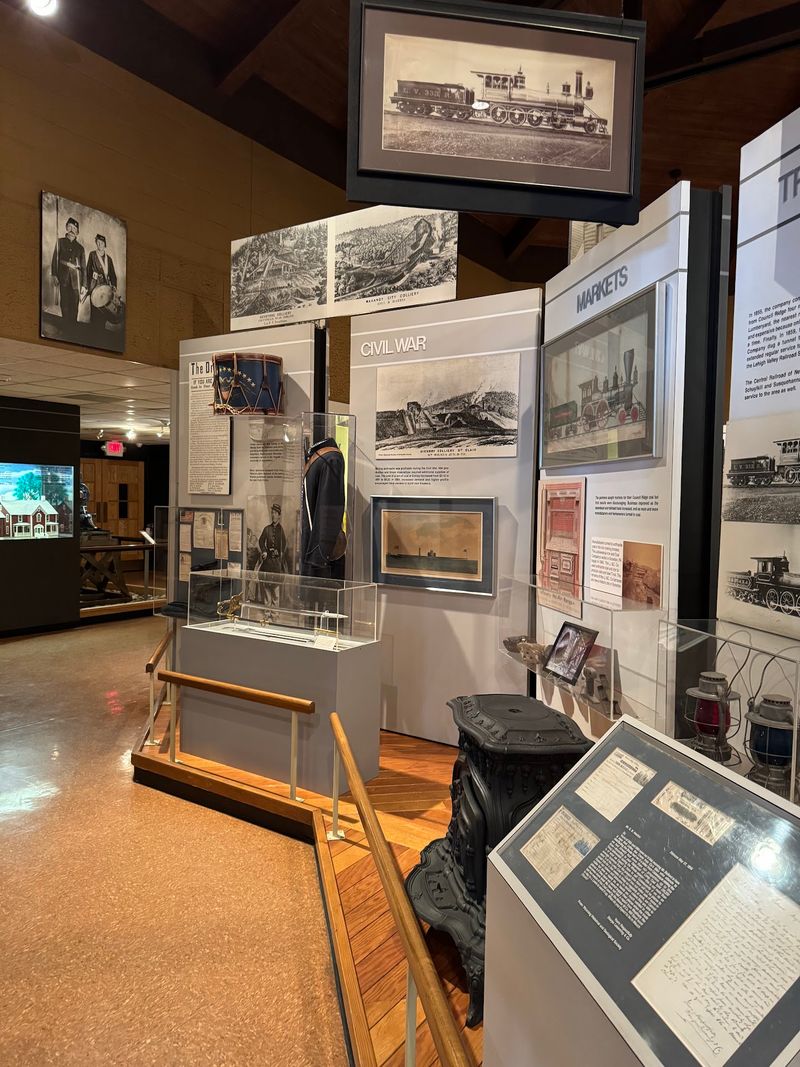
Start at the Visitor Center, even if you plan to mostly wander. Exhibits cover mining work, community life, and recreation, and a 17-minute orientation film sets the historical stage before you head outdoors.
The small indoor museum surprised me with the quality of its collection, and plenty of visitors call it the highlight of the trip.
Guided tours run roughly 90 minutes and dig into working conditions, immigration waves, and family routines.
Prefer independence? The village itself is free to walk or drive from dawn until dusk, so an off-hours visit still works beautifully for photography.
Hours run 10 AM to 4 PM Wednesday through Sunday, with Monday and Tuesday closed, so plan around that or you will miss the museum entirely.
Special events like Patchtown Days celebrate the food, music, and traditions of the anthracite communities and are worth timing a trip around.
Address: 2 Eckley Main Street, Weatherly, Pennsylvania 18255
