Six stories of poured concrete, towers, and odd little windows rise calmly above a Pennsylvania town full of coffee shops and brick storefronts. Turning off the main street on a cool autumn morning nearly stopped the walk, because the grey shape looked like it had wandered out of a storybook.
Photos had been seen before, but photos flatten it, and nothing prepares you for how solid and strange it feels up close. Inside, the surprise only grew, because the ceiling above held a whaleboat, a wagon, and a fire engine hanging in open air.
The plan was a quick hour, but most of an afternoon disappeared while climbing stairs and peering into alcoves. The place rearranges what a museum can be, stacking history overhead and inviting visitors to look up.
It is the kind of stop that lingers long after the door closes.
The Concrete Fortress That Everyone Doubted
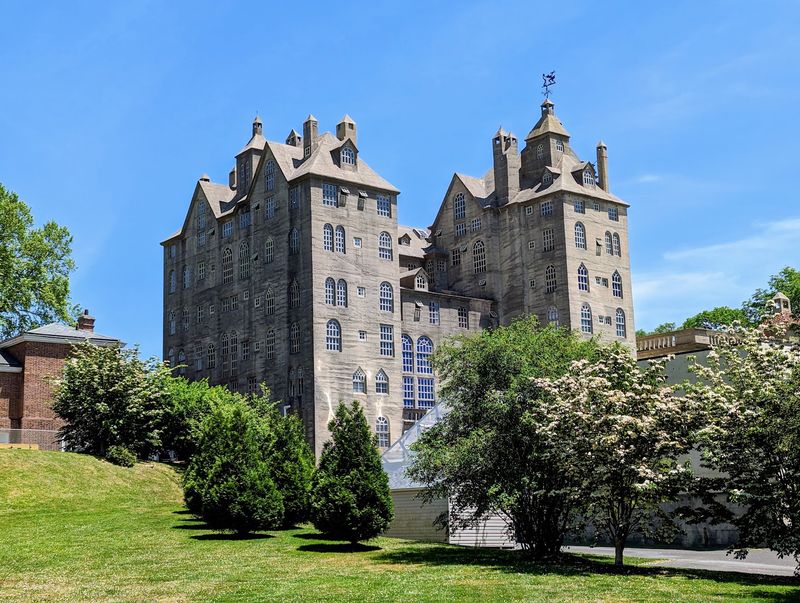
Henry Chapman Mercer had a very specific fear, and that fear shaped every inch of this building. Fire had once destroyed a collection of medieval armor belonging to his aunt, and he never forgot it.
So when he started construction in 1913, he chose reinforced concrete, a material most people in town thought was odd for a museum. Neighbors reportedly poked fun at the choice while the work went on.
By 1916 the last pour had cured, and the joke had quietly ended.
Running my hand along the outer wall, I noticed how rough the surface stays, almost like stone that never got polished. The coolness comes right through your fingers, even on a mild day.
What strikes me most is that Mercer had no formal architectural training. He sketched, directed workers on site, and let the shape grow around the objects he wanted to display rather than the other way around.
Windows sit at unexpected heights. Towers pop up where you would not predict them.
Nothing about the exterior follows a tidy rulebook.
More than a century later, the structure still stands without a single fire loss, which was exactly the point. Practical tip for visitors: give yourself a few minutes outside before entering, because the building itself is the first exhibit and deserves a proper look.
Looking Up Into the Great Central Court
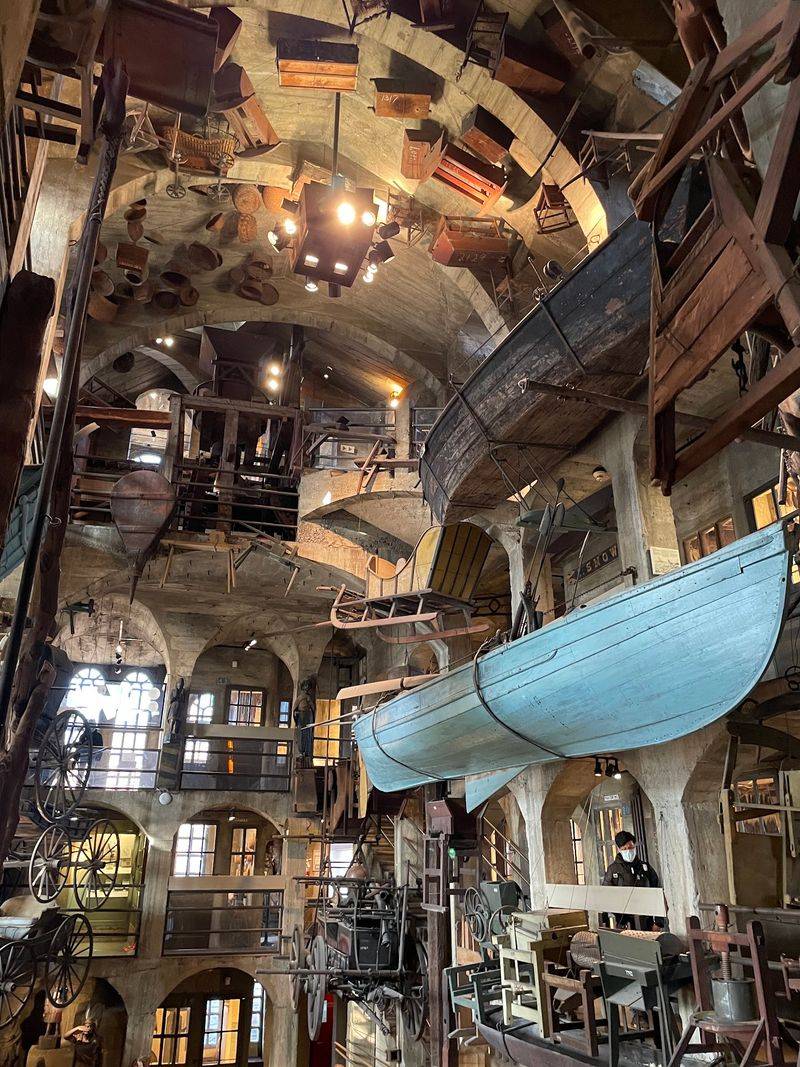
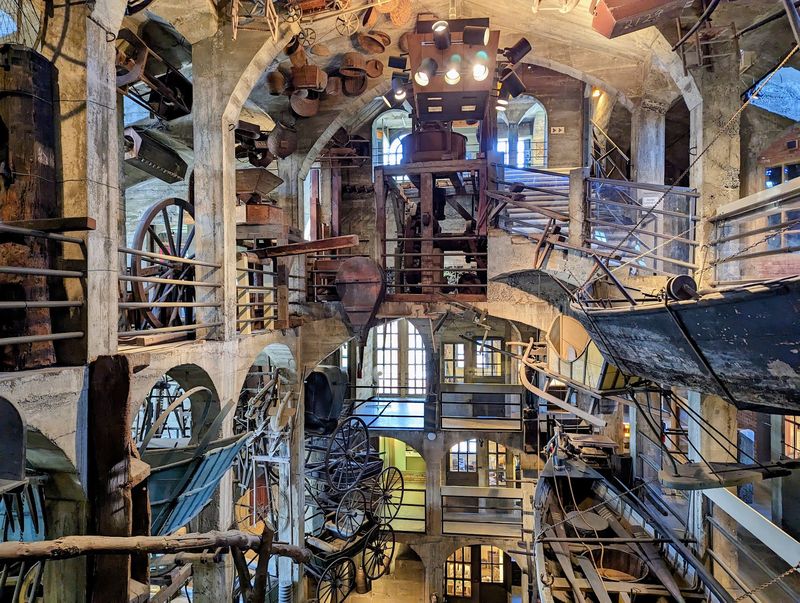
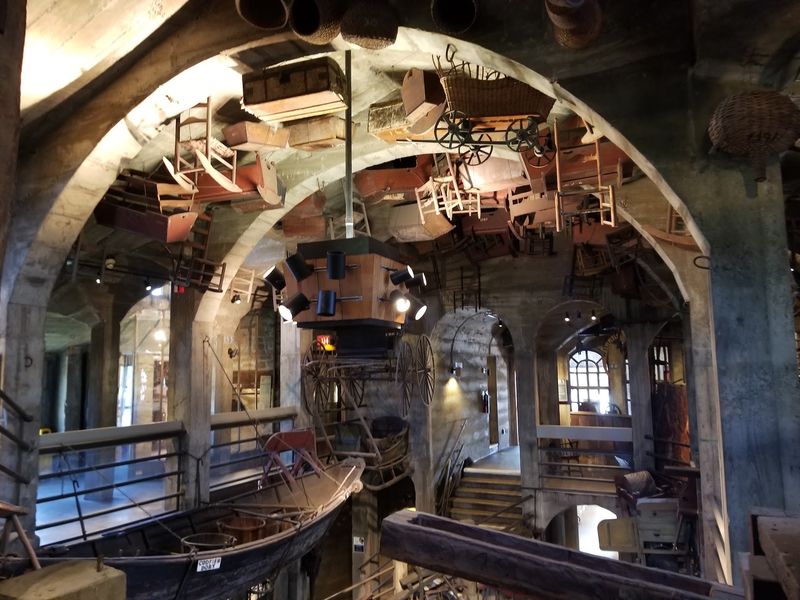
My neck hurt within about three minutes, and I did not care one bit. The central court opens straight up through six stories, and hanging from the walls and ceiling are objects nobody expects to see floating above their head.
A whaleboat drifts in the upper air. Nearby hangs a horse-drawn fire engine, and a Conestoga wagon sits mounted like it rolled up the wall and stopped.
There is no sweeping grand staircase the way castle logic might suggest. Instead you follow narrower flights tucked into corners, which keeps the middle of the building completely open.
Visitors around me kept doing the same thing I did, turning slowly in a circle with their heads tipped back. It is a genuinely funny sight, a whole room of people staring at the ceiling.
Mercer arranged the heaviest and largest pieces high up, trusting his concrete to hold them, and the effect feels almost theatrical. Each balcony level gives you a different angle on the same suspended objects.
One helpful thing I learned: walk the full perimeter of every floor before moving up. The view of the court changes dramatically from level to level, and skipping a lap means missing a whole new perspective on pieces you already thought you had seen.
Who Henry Chapman Mercer Actually Was
Born in Doylestown in 1856, Mercer came from a well-off family and had every reason to settle into a comfortable professional life. He studied at Harvard, then earned a law degree from the University of Pennsylvania.
He never practiced a day of law. Archaeology and anthropology pulled him in another direction entirely, and in the early 1890s he worked as a curator at the University of Pennsylvania’s Museum of Archaeology and Anthropology.
Around 1897 something shifted in how he saw the world around him. Industrial manufacturing was replacing handmade goods at speed, and the old tools were being tossed out as worthless clutter.
Mercer realized that the hand plane, the butter churn, and the shoemaker’s last told the story of how people actually lived. Nobody was saving them, so he decided he would.
He described searching through bake ovens, wagon houses, cellars, haylofts, smokehouses, garrets, and chimney corners, which reads like a treasure map of forgotten places. The gathered objects became what he called the Tools of the Nation Maker.
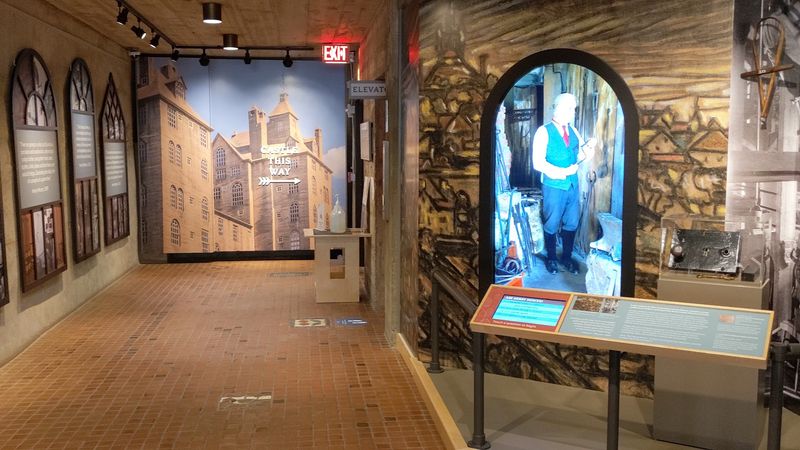
Reading his reasoning on the panels inside, I felt a small jolt of recognition. Everyday things become invisible while we use them, and only later do we wish someone had kept a few.
Mercer simply acted earlier than anyone else did.
Sixty Trades Tucked Into Alcoves and Odd Corners
Getting mildly lost here is part of the fun, and I mean that as praise. The upper floors branch into small alcoves and themed rooms, each one packed with the equipment of a single craft.
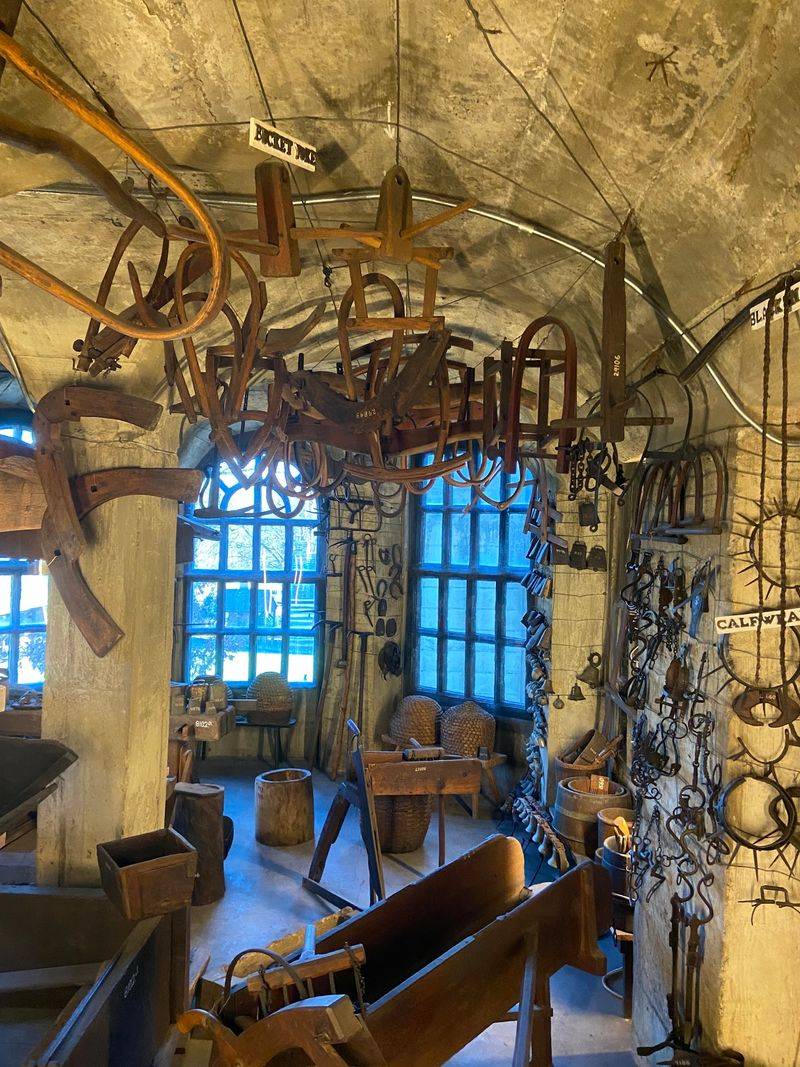
Over sixty trades appear across the building. A cobbler’s bench sits in one nook with rows of lasts and awls, and a few steps later you are surrounded by dairying gear.
Coopers, blacksmiths, printers, hatters, basket makers. Every room reveals a job that once required years of training and a shelf full of specialized objects.
What I liked is how the labeling stays clear without being dry. Small signs name each tool and explain its purpose, which matters when you are looking at something that could plausibly be either a kitchen gadget or a farm implement.
The density is unlike any collection I have wandered through. Walls hold tools from baseboard to ceiling, arranged with obvious care rather than crammed at random.
Staff members I passed were happy to point out details I would have missed on my own. My advice is to pick two or three trades that genuinely interest you and slow way down in those rooms.
Trying to absorb all sixty in one visit turns into a blur, and this place rewards attention far more than speed.
Tools From Far Beyond American Borders
Somewhere on an upper floor I stopped in front of a case of stone implements and read a date that genuinely surprised me: 6,000 to 8,000 BC. Mercer’s curiosity clearly did not stop at the Atlantic coastline or at the colonial era.
Alongside the American material sit comparative pieces from other parts of the world. Native American implements, objects from West Africa, items from China and Southeast Asia all appear as part of the broader story.
His anthropology background shows plainly here. He wanted visitors to see that people everywhere faced the same basic problems and invented their own clever answers.
Place a grinding stone from one continent beside a grinding tool from another, and the connection lands without any need for a lecture. Different materials, different hands, same stubborn human need to make life a little easier.
I found these sections quieter than the main court, which made them good spots to slow down and think. Fewer people linger here, and the cases reward patient looking.
For anyone traveling with older kids, the global cases make a nice conversation starter. Ask which tool they think came from where, then check the label together.
The guesses are almost always wrong in interesting ways, which is half the point.
Tiles, Craft, and the Mercer Mile
Mercer was not only a collector with a fondness for other people’s discarded tools. He made things himself, and he made them well.
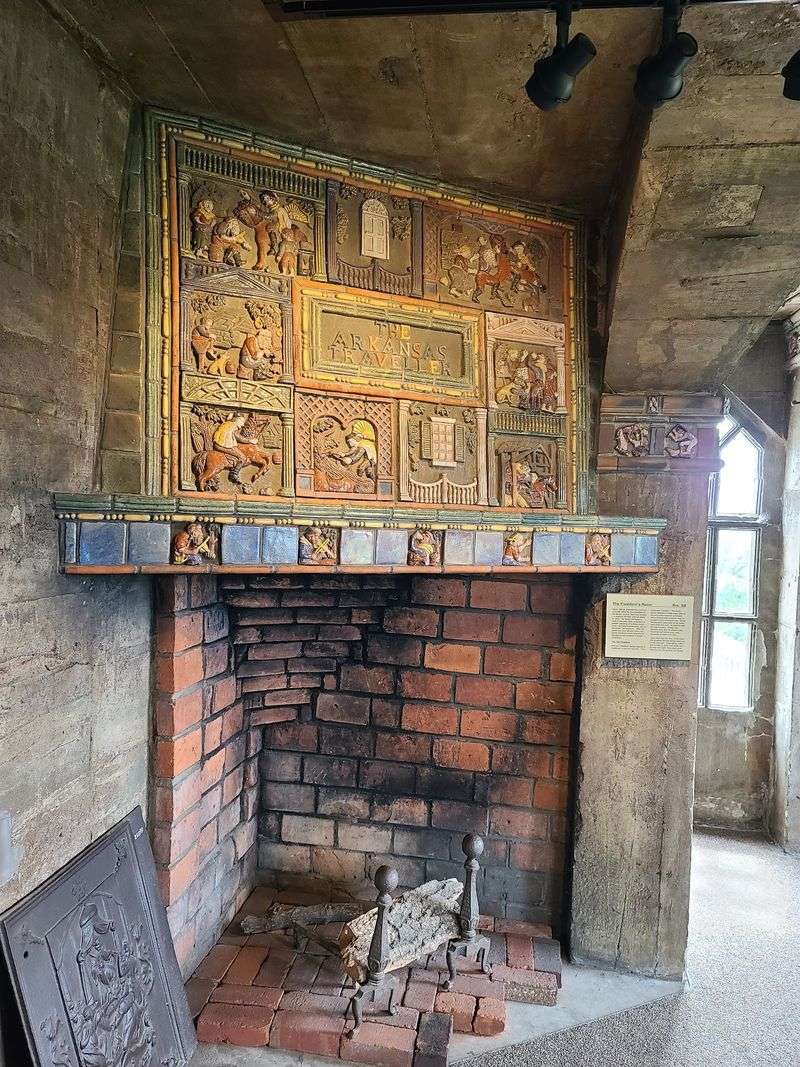
In 1898 he founded the Moravian Pottery and Tile Works, producing handcrafted ceramic tiles that earned attention across the country. His tiles were installed in notable buildings, including the Pennsylvania State Capitol.
That work placed him among the leading figures of the American Arts and Crafts Movement, which pushed back against mass production and celebrated skilled handwork. Understanding that helps explain the whole museum, honestly.
He was not just hoarding old objects. He was arguing, through concrete and tile and iron, that handmade work carries value machines cannot copy.
The museum sits as one stop on what locals call the Mercer Mile, a trio of his concrete buildings in Doylestown. Fonthill Castle, his former home, and the Moravian Pottery and Tile Works complete the set.
Several visitors I overheard were planning all three in a single day, and the museum staff clearly encourage it. Fonthill is roughly a mile away and runs on guided tours, so booking that portion in advance makes the day flow better.
Seeing the tiles after touring the collection connects the dots nicely. The same restless maker’s mind runs through every piece.
Small Surprises and Practical Notes for Your Visit
My favorite discovery cost nothing and took about four seconds to notice. Pressed into one of the concrete stairs are the paw prints of Rollo, Mercer’s Chesapeake Bay retriever, left there while the material was still wet.
A detail that small changes the mood of the whole building. Suddenly the fortress feels less like an institution and more like a place where a man and his dog spent years working.
Plan on at least two hours, and three if you are the type who reads every label. Seven levels of exploring adds up quickly in step count.
The historic section is not climate controlled, so hot summer days can feel warm inside. A modern ground-floor wing holds the shop, restrooms, and a changing exhibit gallery in cooler comfort.
Timed entry applies, and busy weekends can sell out, so grabbing tickets online ahead of time saves disappointment. Parking on site is free and rarely a struggle.
Families should look for the dedicated younger visitor space, which gives kids room to touch and play after all that careful looking. Special exhibitions rotate through the modern gallery as well.
Check the current schedule before you go, then let the building do the rest.
Address: 84 S Pine Street, Doylestown, Pennsylvania
