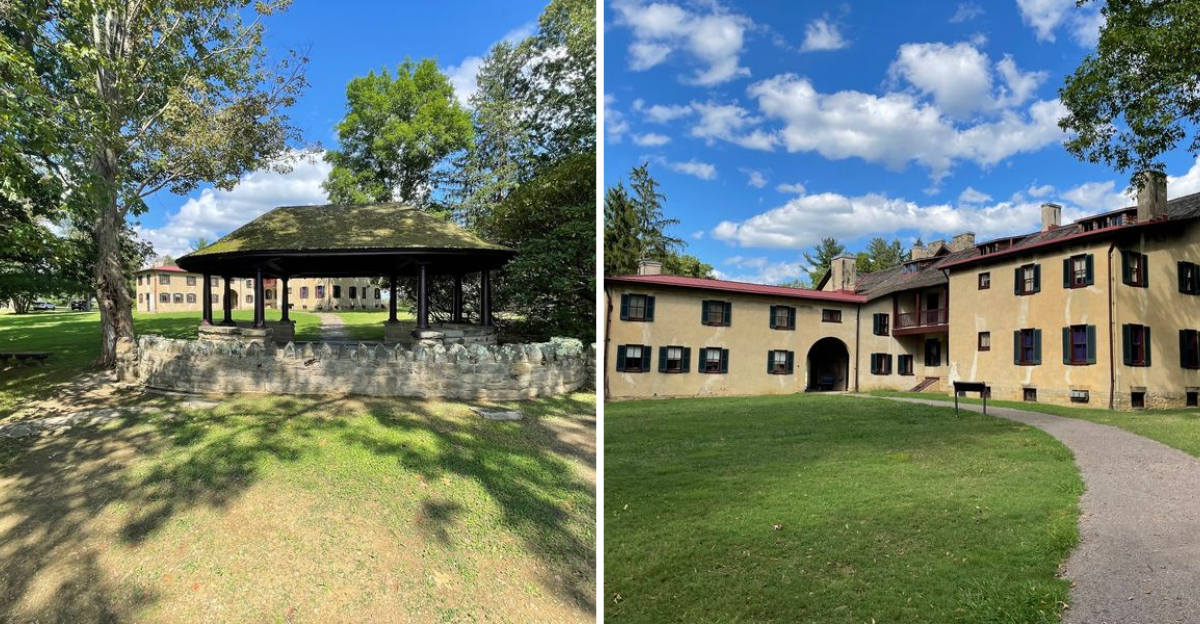
A winding two-lane road in Pennsylvania led me toward a house I knew almost nothing about, following signs into the hills simply because the name on the map caught my attention.
The hills rolled gently and the river hid behind the trees, so the whole drive felt like a slow reveal, each bend offering a little more of the landscape before the next turn.
When I finally reached the top of the bluff, I found a brick and stone home that once belonged to a man who ran the U.S. Treasury longer than anyone in history.
I had honestly never heard of him before that afternoon, which made learning his story feel even better.
The house sits high above the valley, and the view from the porch stretches across farmland and forest in a way that makes you understand why someone would choose this spot to build a life.
By the time I walked back down the hill, I understood why people call him an overlooked figure from the country’s early years, a man whose work shaped the nation’s finances but whose name never made it into the textbooks the way others did.
Meeting Albert Gallatin, the Immigrant Who Ran the Treasury
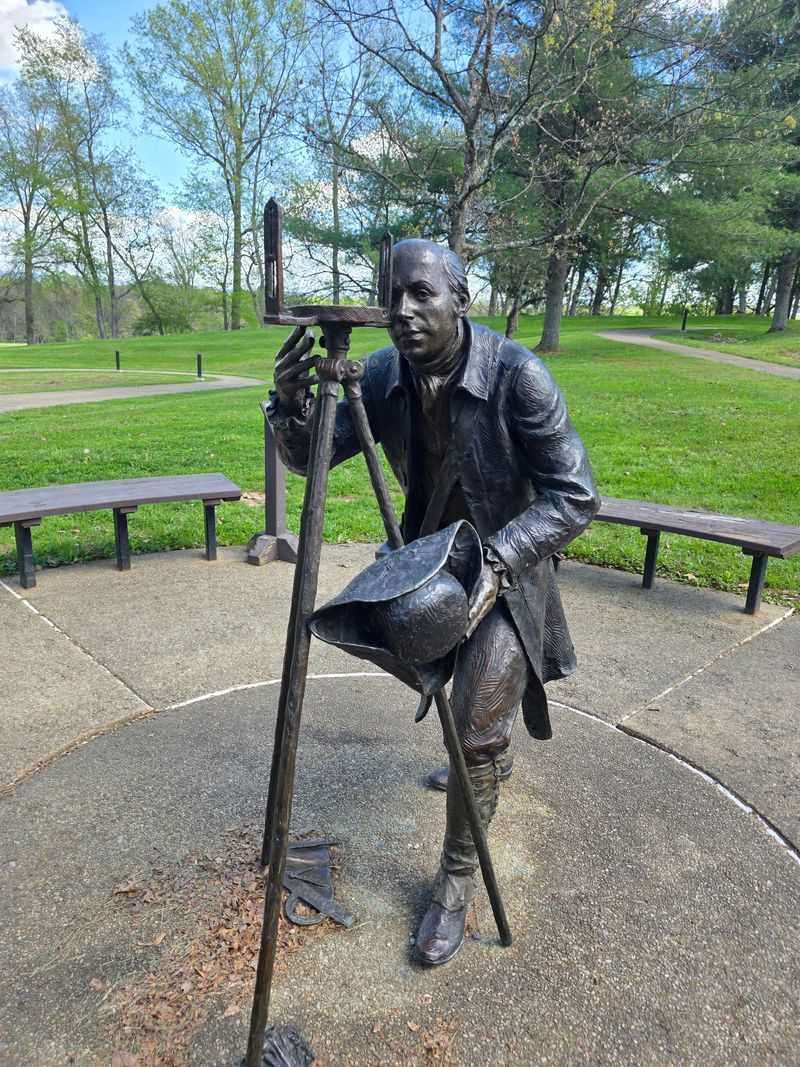
Honestly, I felt a little embarrassed standing in front of his statue on the path up the hill, because I had no idea who he was. Gallatin arrived from Geneva, Switzerland to Pennsylvania in 1780 at just 19 years old, drawn by what he called the freest country in the universe.
He bought this land in Fayette County in 1786, roughly 370 to 400 acres of frontier hillside.
What he did next still amazes me. Gallatin served as Secretary of the Treasury for 13 years under Thomas Jefferson and James Madison, the longest run anyone has ever had in that job.
He worked hard to shrink the national debt, found the money for the Louisiana Purchase, and funded the Lewis and Clark expedition.
The explorers thanked him by naming the Gallatin River after him.
His resume keeps going: U.S. Congressman, U.S.
Senator, ambassador to both France and Great Britain, and a negotiator of the Treaty of Ghent that ended the War of 1812. Reading all of that on one wall of exhibits made the quiet house outside feel a lot bigger than it looks.
Seven Sections, One House That Grew With a Family
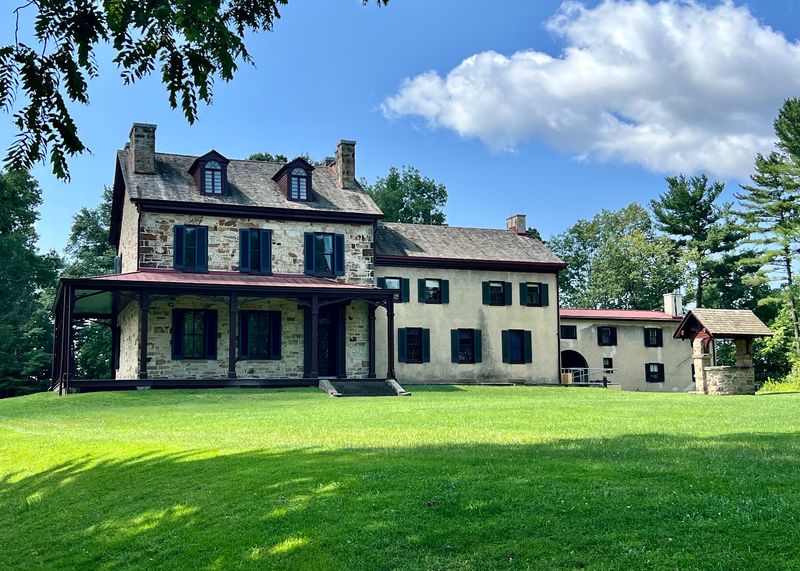
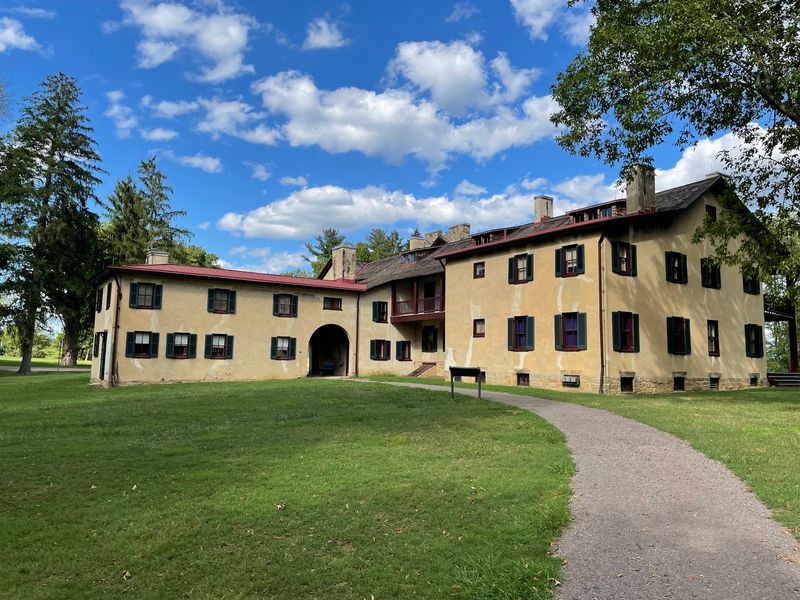
The first thing I noticed from the lawn is that this house doesn’t match itself, and that’s the best part. Instead of one tidy design, Friendship Hill is made of seven distinct sections built across decades, so the brick, stone, and frame walls all sit shoulder to shoulder.
The oldest piece is the 1789 brick house, built in the Federal style.
Gallatin put it up for his first wife, Sophia Allegre, whom he married that same year. In 1798 a plain frame dwelling was added along the north side as his family with Hannah Nicholson grew.
The largest chunk, the Stone House, arrived in 1823 and was the one part he did not personally supervise, leaving it to his son, Albert Rolaz Gallatin. A stone kitchen followed in 1824, the last big change before he sold the property in 1832.
Walking room to room, I liked guessing where one era ended and the next began. In the stone kitchen, sections of wall have been cut open so you can see the original construction underneath, which felt like peeking behind the curtain of the whole building.
Touring the Rooms at Your Own Pace
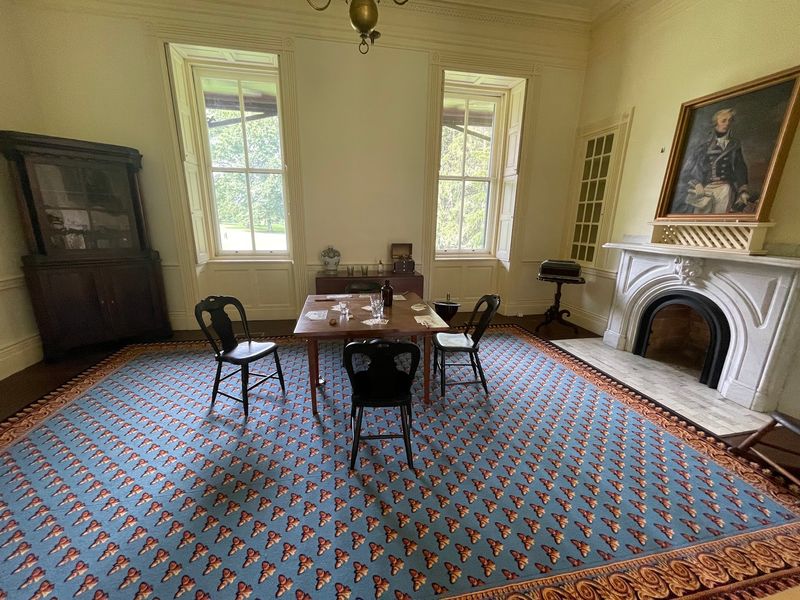
What sold me on the visit was how relaxed it all is inside. There’s no set tour time and no guide hurrying you along, just a friendly ranger at the desk near the entrance and QR codes posted around the rooms that pull up an audio or written tour on your phone.
I wandered the first and second floors in whatever order I felt like.
Some rooms hold period furnishings and river-facing views, while others are noticeably bare with panels explaining what once happened there. If you like fully furnished house museums, that emptiness may surprise you, so I’d suggest starting with the short films in the last room on the first floor.
Buttons on the stand let you pick between a biography of Gallatin and an overview of the house, and they fill in the gaps nicely.
Look for the glassware on display from the first glass factory west of the Allegheny Mountains, a business Gallatin helped launch. There’s also a 3D model of the estate, two cancellation stamps for passport collectors, and Junior Ranger booklets that kept the kids in the room busy and genuinely engaged.
Trails, Ponds, and Long Looks at the Monongahela
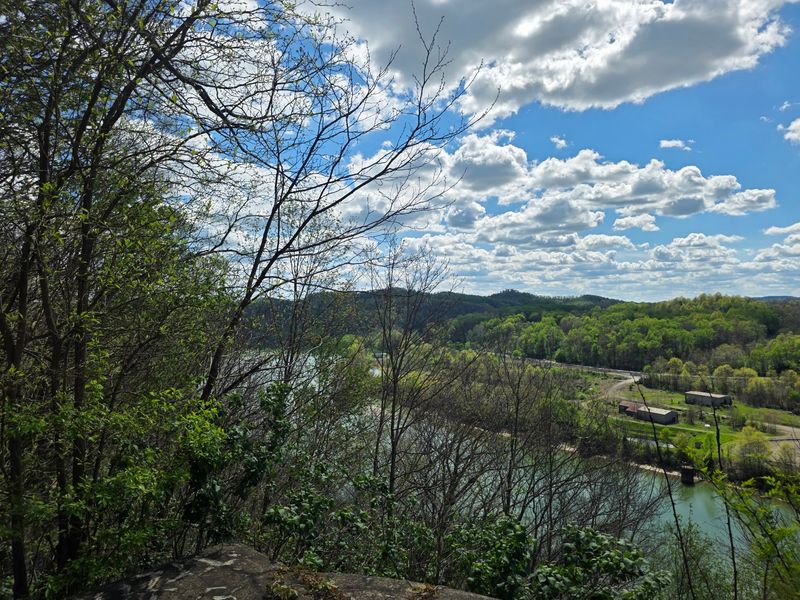
I came for a house and stayed for the walking, which I did not plan for at all. The property covers about 675 acres with more than 10 miles of trails threading through hardwood forest, meadows, and quieter corners near the water.
The longest loop runs roughly five miles and includes river views, a stretch along the railroad, and a set of steep stairs climbing back up from the river that will absolutely get your heart going.
Shorter routes are easier on the legs and pass a pond where turtles stack up on logs. Early evening is the time to go if you want wildlife, since deer come out into the meadows in surprising numbers.
The bluff-top setting gives you glimpses of the Monongahela through the trees, and there are benches placed exactly where you’d want to sit down.
Practical note from my own tired legs: the parking area sits at the bottom, and the paved path up to the house is a real climb with a switchback. It’s stroller and wheelchair friendly, and a handicap placard lets you drive up.
Sophia’s Quiet Corner of the Grounds
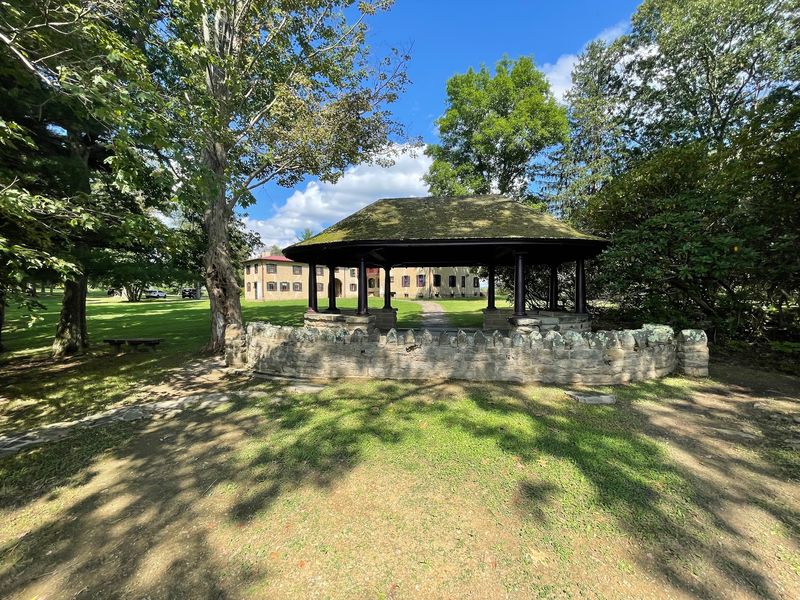
Not every part of this place is about ledgers and treaties. Tucked away on the grounds is the unmarked grave of Sophia Allegre Gallatin, who married Albert in 1789 and passed only five months later.
He had built the original brick house for her, and she barely got to live in it.
That detail stopped me cold. It reframes the whole estate, because the man who later balanced a young nation’s books first lost the person he built this hilltop home for.
Gallatin remarried years later to Hannah Nicholson and the house kept expanding around a growing family, but Sophia’s story stays woven into the property.
Visitors often mention her when they talk about what stuck with them here.
The spot itself is simple and shaded, with none of the grandeur you might expect for a figure connected to the founding era. I’d recommend walking out to it after you finish the house rather than before, since the exhibits give you the context that makes it land.
Bring a few minutes of patience and let the hillside be quiet around you.
A Forgotten Founding Father Who Shaped a Nation
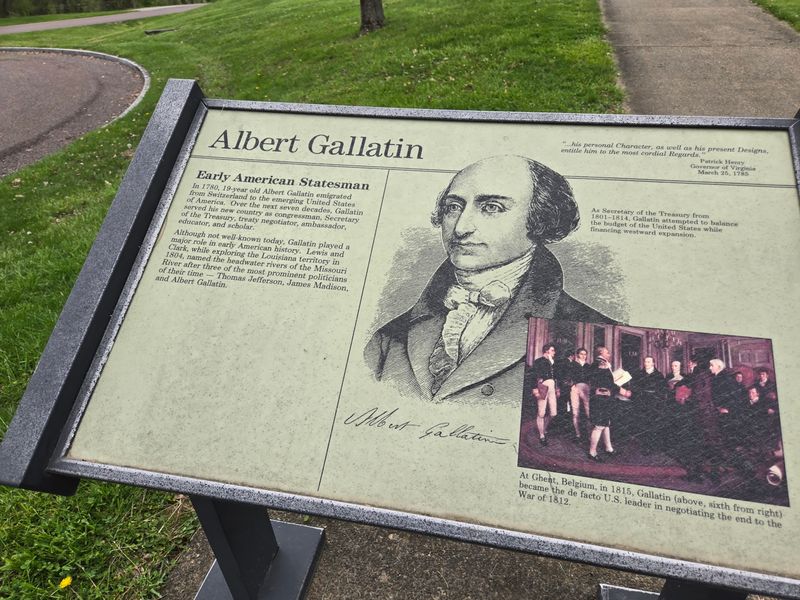
Standing in the quiet rooms of Friendship Hill, I kept asking myself the same question: why had I never heard of this man before? Albert Gallatin served his adopted country for nearly seven decades as a Congressman, cabinet member, and diplomat, yet his name rarely appears alongside the other founding fathers.
He helped finance the Louisiana Purchase, funded the Lewis and Clark expedition, and negotiated the Treaty of Ghent that ended the War of 1812, all as an immigrant who arrived with nothing but ambition.
The exhibits inside the house do a fine job of laying out his resume, but what struck me most was how little I had absorbed.
I walked through reading about his efforts to shrink the national debt, his diplomacy in Europe, and his work calming the Whiskey Rebellion. The ranger called him “America’s forgotten founding father,” and that phrase stuck with me for the rest of the visit.
By the time I reached the gift shop, I had bought a small book about his life, not as a souvenir, but because I wanted to keep learning. That is the mark of a good historic site.
It makes you want to know more.
Planning a Visit That Actually Fits Your Day
Timing matters more than you’d think at a site like this. The grounds stay open sunrise to sunset every day, while the house and visitor desk run 9 AM to 5 PM, so an evening arrival means trails only.
Admission is free, which still feels like a small miracle for a National Park Service site of this size.
Most people spend about an hour inside the house, longer if you watch several films or your kids are working through Junior Ranger books. Add another hour or two if you want a real hike, and pack a lunch since there are picnic areas on the property.
Restrooms are in the basement, reachable by elevator, and the whole house is accessible thanks to a side entrance ramp.
The park also hosts special programs during the year, including events touching on the Whiskey Rebellion, a conflict Gallatin helped calm. Morgantown, West Virginia sits less than 30 minutes away, and other national park sites in the Laurel Highlands pair well with a stop here.
Address: 223 New Geneva Road, Point Marion, Pennsylvania 15474
