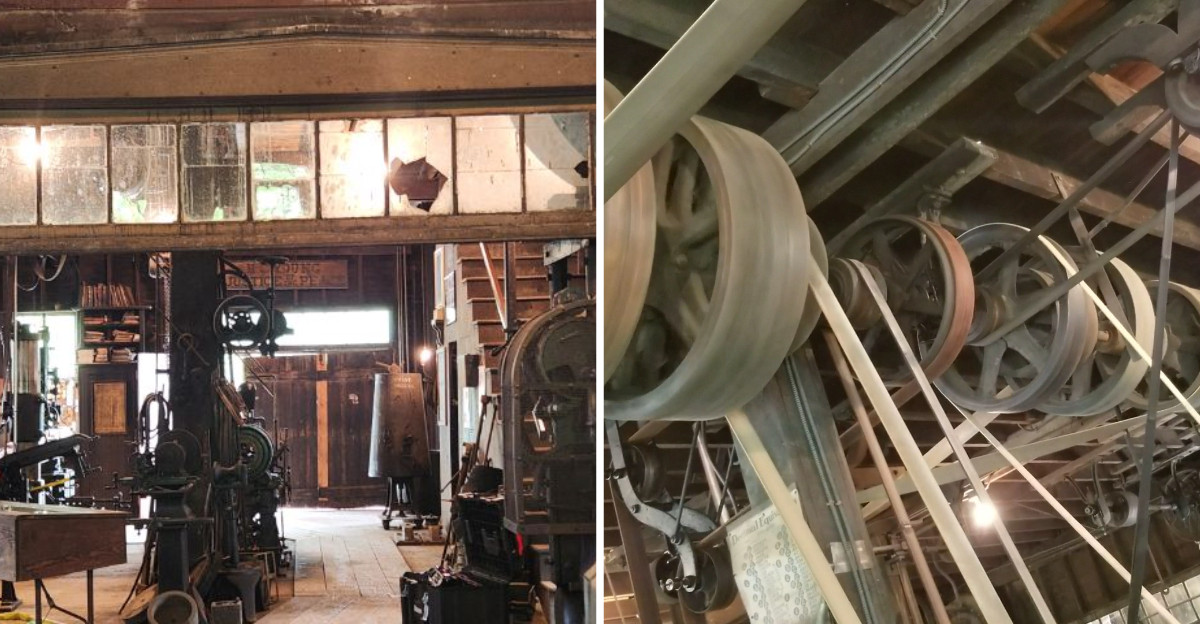
Machine grease, thick and oddly comforting, drifts out of a weathered wooden building beside a Pennsylvania river. Belts slap against pulleys overhead while lathes and drills spin just as they did over a century ago.
Some of these machines were built in the 1870s, and they still run. Standing there, grinning like a kid at a train show, trying to follow every moving part at once, is unavoidable.
The building itself is modest, easy to drive past without a second glance. Then the noise starts, and the whole place comes alive.
Wooden floors vibrate underfoot, and the smell of oil and hot metal fills the air. Nothing here is a replica.
Every gear and pulley is original, still doing the job it was made for. Places where the past still makes noise are rare, and this little shop in the hills of Pennsylvania delivers that gift without any fanfare.
Hours slip away without notice, and the sound stays with you long after the drive home.
A Riverside Drive Into Rices Landing
My phone lost signal somewhere in the rolling hills of Greene County, Pennsylvania and honestly, I did not mind one bit. The roads got narrower, the farms got closer, and the whole drive started to feel slower in the best way.
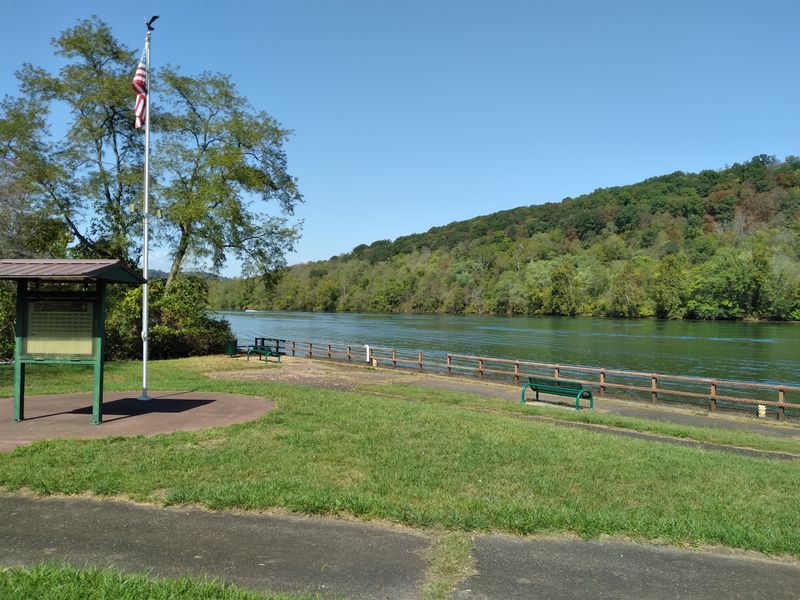
Rices Landing is a tiny river town in southwestern Pennsylvania. The foundry sits on Water Street, right along the Monongahela River, where boats once carried coal and goods up and down the valley.
The building is plain and wooden, with nothing flashy about it at all. You could almost drive past it if you were not paying attention.
That modest look is part of the charm. Back in its working days, the shop served the people and businesses that lived along the river.
It did not need to impress anyone, because it was busy getting real jobs done.
A quick tip from my trip: give yourself extra time on the road, since the route winds through the countryside. There is no restroom right at the shop, but a small public restroom building sits near the turn off the main road.
The quiet river view outside is also lovely for a short stretch before or after your tour, so bring a camera.
How One Family Built a Shop That Time Forgot
Here is the twist that made my jaw drop. When the shop closed in 1965, the Young family simply locked the doors and left everything inside, just as it was.
William A. Young opened his machine shop in 1900.
Eight years later, in 1908, he added a foundry, which let the business melt metal and cast its own parts. For about 65 years, the shop fixed and built things for steamboats, coal mines, and railroads across the region.
Like many shops of that era, it was filled with used machines, so plenty of the equipment was already old when it arrived.
Think about what usually happens when a business closes. Tools get sold, machines get scrapped, and the building gets emptied out.
That did not happen here, and that is why the place feels so complete today.
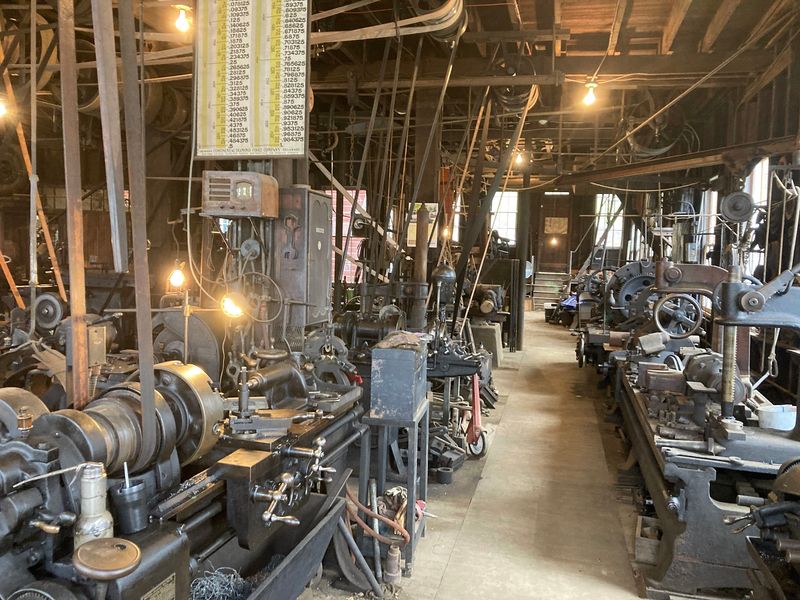
Tools still sit near the spots where workers last set them down. Paperwork, parts, and supplies stay in their places.
It is less like a museum display and more like the workers just stepped out for lunch decades ago. For anyone curious about how small family businesses powered American industry, this is a rare chance to see the real thing up close.
The Spinning Ceiling of Belts and Pulleys
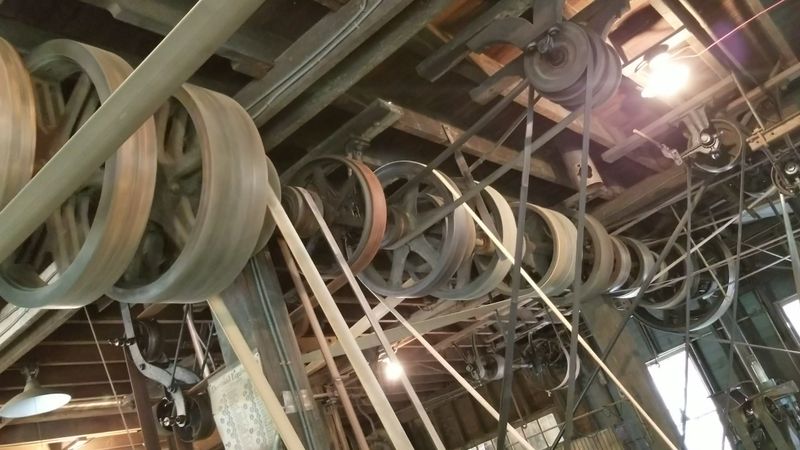
Look up. That was the best advice I could give myself once I got inside, because the real magic hangs from the ceiling.
The shop runs on something called a line shaft system. A long metal shaft stretches across the ceiling, and leather belts drop down from it to power about 25 different machines.
All of them get their power from a single engine. It started out as a 12-horsepower steam engine, later changed to an electric motor, and today a gasoline engine does the job.
Back before every tool had its own motor, many factories worked this way. One engine turned the shaft, and the shaft turned everything else.
It was clever, simple, and very efficient for its time.
Many of the machines here date from around 1870 to 1920. This setup is often described as the last operating system of its kind in America, which makes seeing it even more special.
Spend a few minutes just following one belt with your eyes, from the ceiling down to its machine. You will start to understand how the whole room works together like a giant puzzle.
It is a fantastic lesson in basic physics that no textbook can match.
The Moment Everything Roars to Life
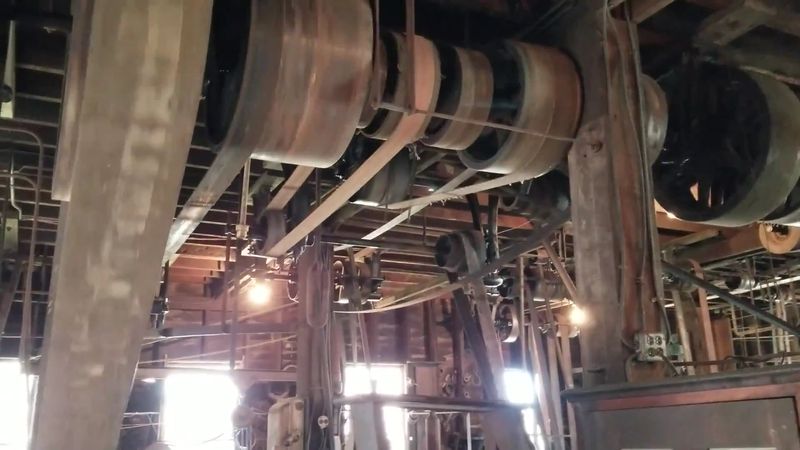
Clunk, whir, slap, hum. That is roughly the soundtrack once the engine starts up, and I felt it in my chest before I fully heard it.
The live demonstration is the heart of any visit. Belts begin to spin overhead, and one by one, the old machines wake up.
Lathes turn, drill presses spin, and heavy tools move with a steady, confident rhythm. Some visitors have even watched volunteers use a power hammer to shape steel, which is quite a sight if you have never seen one.
What surprised me most was how smooth it all looked. These machines are well over a hundred years old, yet they work with real precision, thanks to the volunteers who keep them in shape.
There are no ropes here, so you can get close and really see the details. That also means you need to stay alert.
This is a working shop, with spinning parts, heavy objects, and sharp edges all around.
Wear closed shoes and skip loose clothing or dangling scarves. If you bring kids, keep them close and hold hands near the machines.
A little caution lets everyone enjoy the show safely.
Wooden Patterns, Sand Molds, and a Coal Pile
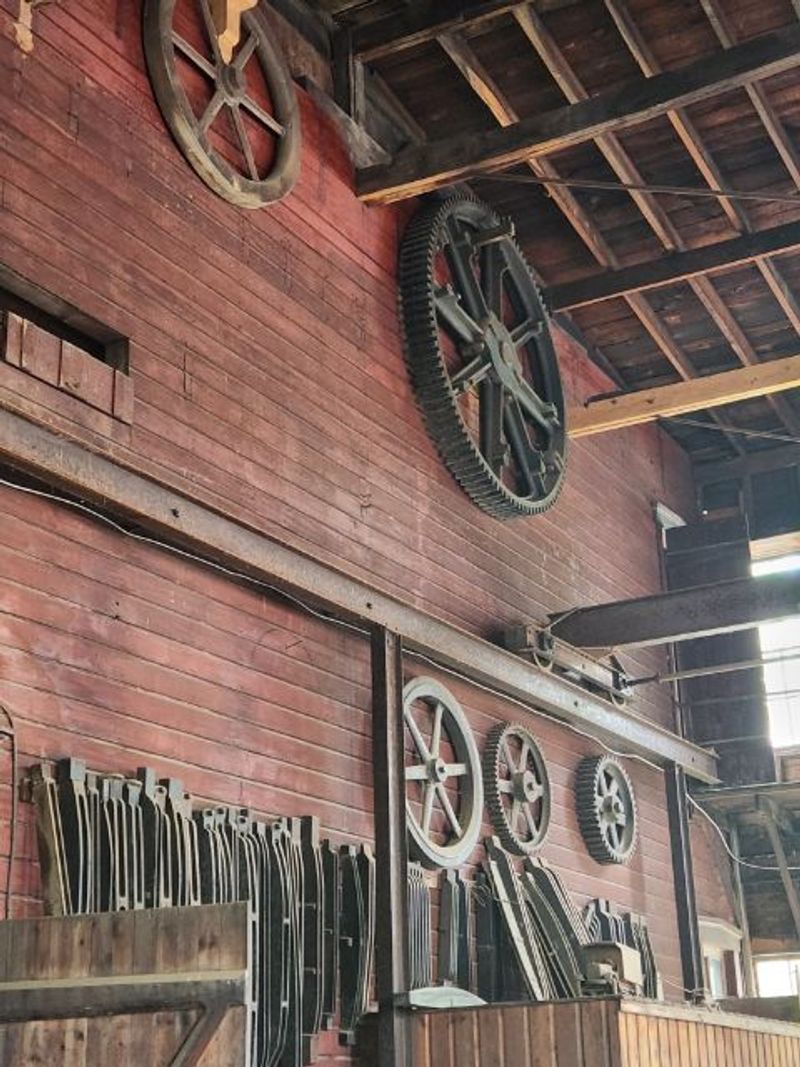
I never expected a room full of wood to steal the show in a metal shop. The pattern shop did exactly that.
Before workers could cast a metal part, they needed a pattern. That is a carefully carved wooden model of the part they wanted to make.
They pressed the pattern into special sand to create a mold, then poured melted metal into the hollow space. Once it cooled, they had a brand new part.
The shelves here hold all kinds of these wooden shapes, from gears to pieces used for river barges and heavy machines. Some look almost like sculptures.
You can see the skill it took to carve each curve and tooth by hand.
Next door, the foundry tells the rest of the story. It has dirt floors, old equipment, and even its original coal pile still in place.
That coal once fed the heat needed to melt iron.
Fun fact: patternmakers had to make their models slightly bigger than the final part. Metal shrinks a little as it cools, so they planned ahead with special measuring rules.
Ask your guide about it, because it is one of those small details that makes old craftsmanship so impressive.
Sparks at the Forge and a Hardware Store Upstairs
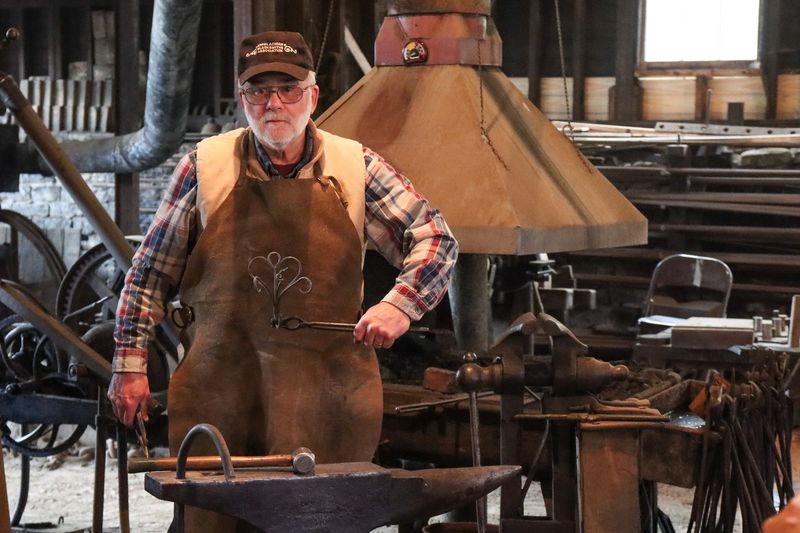
Sparks fly fast at a forge, and I took a polite step back the first time I saw them. The blacksmith shop here still has its forge and tools, and it is easy to picture workers bending hot iron into shape.
Blacksmithing was a key part of the business. Some jobs needed metal that was hammered and shaped rather than cast or cut.
Visitors on some days have even caught blacksmithing demos, and the shop has offered classes for people who want to try it themselves.
Then there is the hardware store, tucked on the second floor. It is still stocked with old items that local customers once bought.
Small drawers, faded boxes, and neat rows of supplies make it feel like a tiny general store frozen in time.
I spent longer up there than I planned. Reading old labels and guessing what each item was for turned into a fun little game.
It also showed me how much this business meant to its community. Families, miners, and boat crews could come here for repairs, custom parts, and everyday hardware all in one stop.
That kind of all-in-one local shop is hard to find today.
Saving a National Treasure and Planning Your Sunday Visit
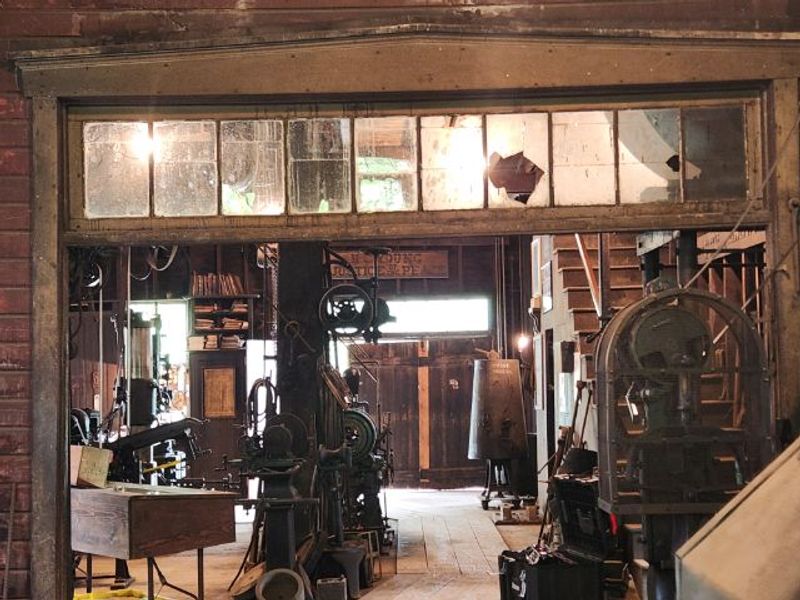
Two decades of sitting empty could have been the end of this place. Instead, it became a comeback story worth celebrating.
After the shop closed, the building faced some neglect. In 1985, the Greene County Historical Society bought the property and began restoring it.
Then in 2009, Rivers of Steel Heritage Corporation took ownership and has cared for it ever since. The site is now a National Historic Landmark, one of the best preserved small machine shops of its era in the country.
Much of the magic comes from dedicated volunteers. They keep the machines running and share what they know with a lot of enthusiasm.
Bring your questions, because they love answering them.
Planning is simple but important. The shop is typically open on Sundays from noon to 4 pm, usually during the warmer months from spring into fall.
Special events, like the yearly Hammer-In festival with visiting blacksmiths, make a great time to visit. I left with grease on my sneakers and a big smile.
Address: 114 Water Street, Rices Landing, PA 15357
