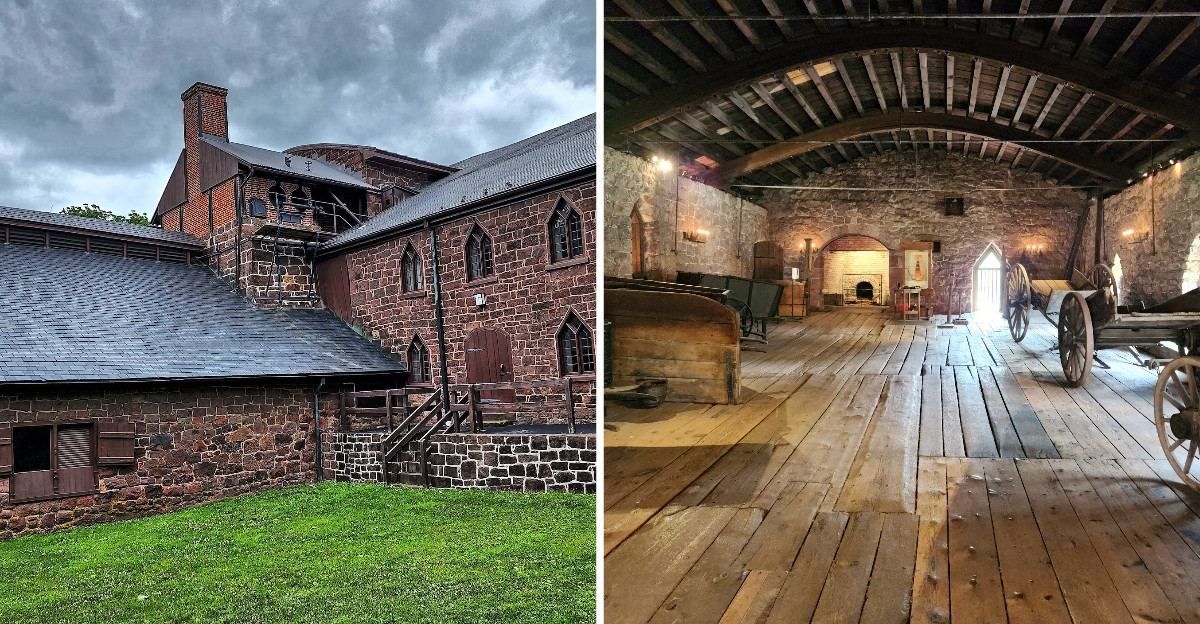
Reddish-brown stone glows in the afternoon light, and Gothic Revival buildings with slate roofs and pointed windows rise from the farmland. Driving through quiet Pennsylvania countryside, a pile of old bricks was the expectation, but a whole village appeared instead.
Inside one of the buildings sits a furnace that made iron for about 140 years, its machines still in place. The old blowing tubs seem to breathe just from looking at them.
This place helped supply cannons for the American Revolution, and somehow it never got torn down or stripped for scrap. The village around the furnace has been preserved, with workers’ homes and shops still standing.
Walking through, the scale of the operation becomes clear, and the weight of all those years settles in. History that survived against the odds fills this corner of the state, waiting for curious travelers to notice.
It is worth a spot on any road trip.
A Teenager’s Lucky Find in 1737
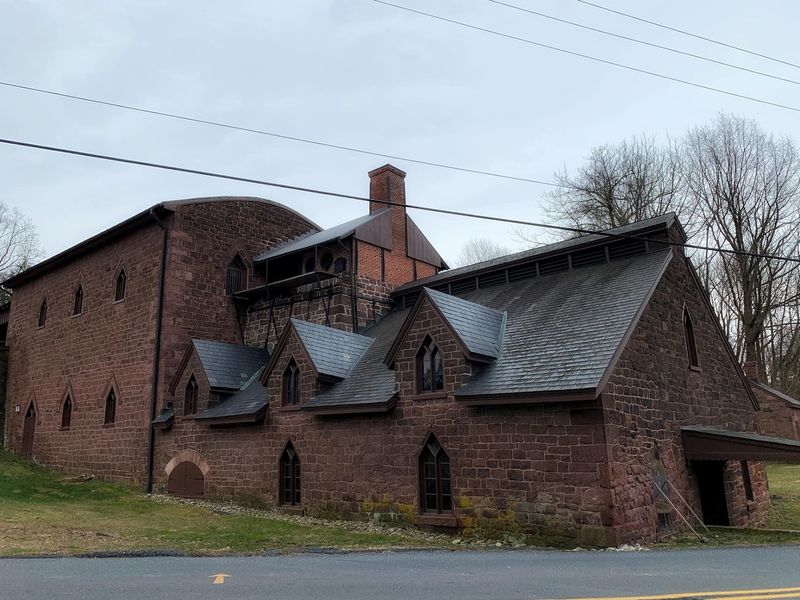
Nineteen years old. That was the age of Peter Grubb when he found huge deposits of magnetic iron ore in these hills back in 1737, and I keep thinking about what I was doing at nineteen.
He bought about 442 acres and started building a furnace, naming it Cornwall after the English region where his father was born. By 1742 the fires were lit.
From that point on, the furnace produced iron for roughly 140 years, which is longer than many towns around here have even existed.
What surprised me most was learning that this was not just one building. It was an iron plantation, a mostly self-sufficient community built around the furnace.
Workers lived nearby, food was grown close by, and everything revolved around keeping that fire burning.
As I looked out over the grounds, I tried to picture the place as thick forest with no roads at all. It takes some imagination, but the old stone buildings help.
They anchor the story in something you can actually touch.
If you visit, take a minute before your tour to stroll around outside. Seeing the layout first makes the history click much faster once a guide starts explaining how the whole operation fit together.
Iron for a Brand New Country
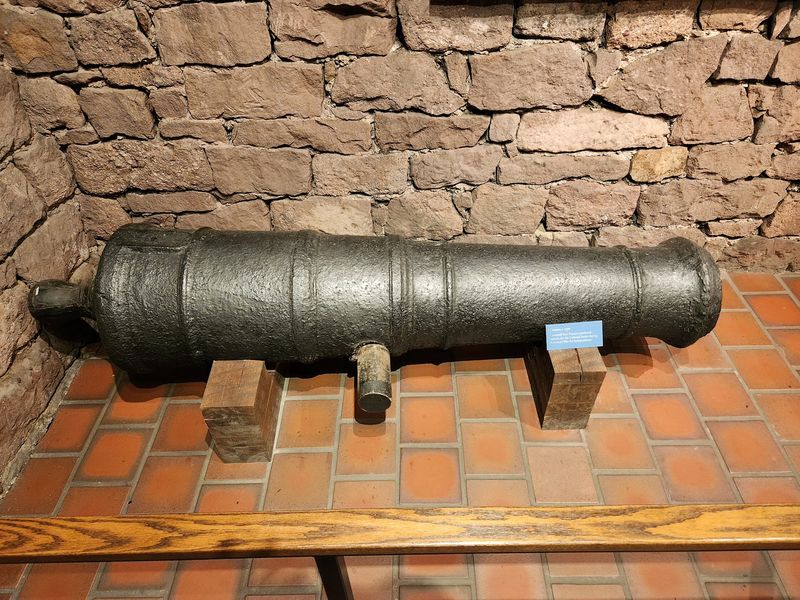
Cannons, shot, and shells for George Washington’s army came out of this very spot during the American Revolution. I had to read that sign twice, because it is wild to think that the fight for independence leaned partly on iron poured in this quiet corner of Pennsylvania.
After Peter Grubb died in 1754, his sons Curtis and Peter Jr. took over. They kept the furnace running through the war years, when demand for weapons was intense and supplies were hard to come by.
The exhibits in the visitor center lay out this part of the story clearly. Even kids who usually yawn at history tend to perk up when cannons enter the conversation, so it is a good stop for families.
Here is a fun bit that stuck with me. According to the site, iron from the Cornwall area went into products for every American war from the Revolution all the way to Vietnam, thanks to the nearby ore mines that kept working long after the furnace closed.
My tip is to spend a little time in the museum before your guided tour starts. You will walk into the furnace building already knowing why it mattered so much.
How One Family Turned Iron Into a Fortune
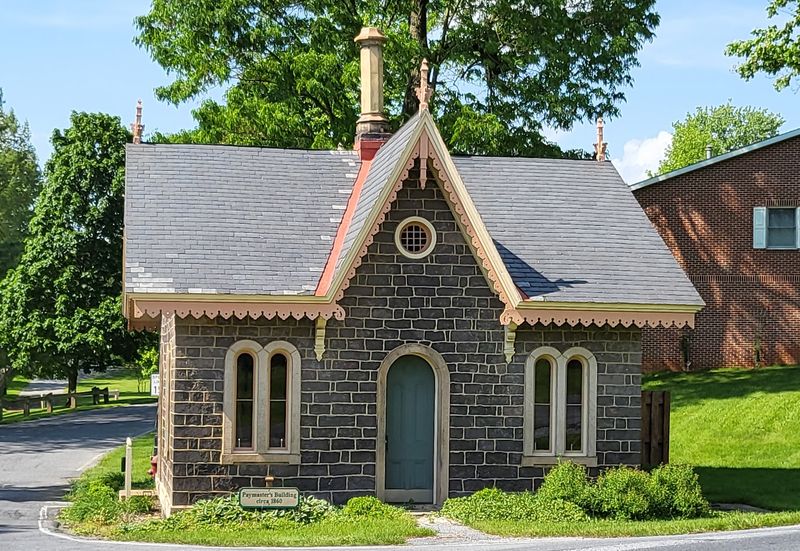
Robert Coleman is a name you will hear a lot on the tour, and for good reason. After the Revolution, this sharp businessman bought the furnace, and his success here helped make him one of the first millionaires in Pennsylvania.
His family kept the operation going for generations, and they were not shy about upgrading. Between 1856 and 1857, the furnace got a major makeover.
It was enlarged, and much of the look you see today comes from that period.
Those buildings are honestly a treat for anyone who loves architecture. The local red stone, the steep slate roofs, and the fancy doors and windows give the complex a storybook quality that I did not expect from an industrial site.
On special event days, some of the extra buildings open up, and visitors get a peek at the wealth that iron brought to the owners in the 18th and 19th centuries. It is a striking contrast to the hard labor happening a few steps away.
Bring a camera and look up while you wander. The rooflines and trim details are easy to miss when your attention is glued to the furnace, but they tell their own story about money, pride, and style.
The Machines That Never Left
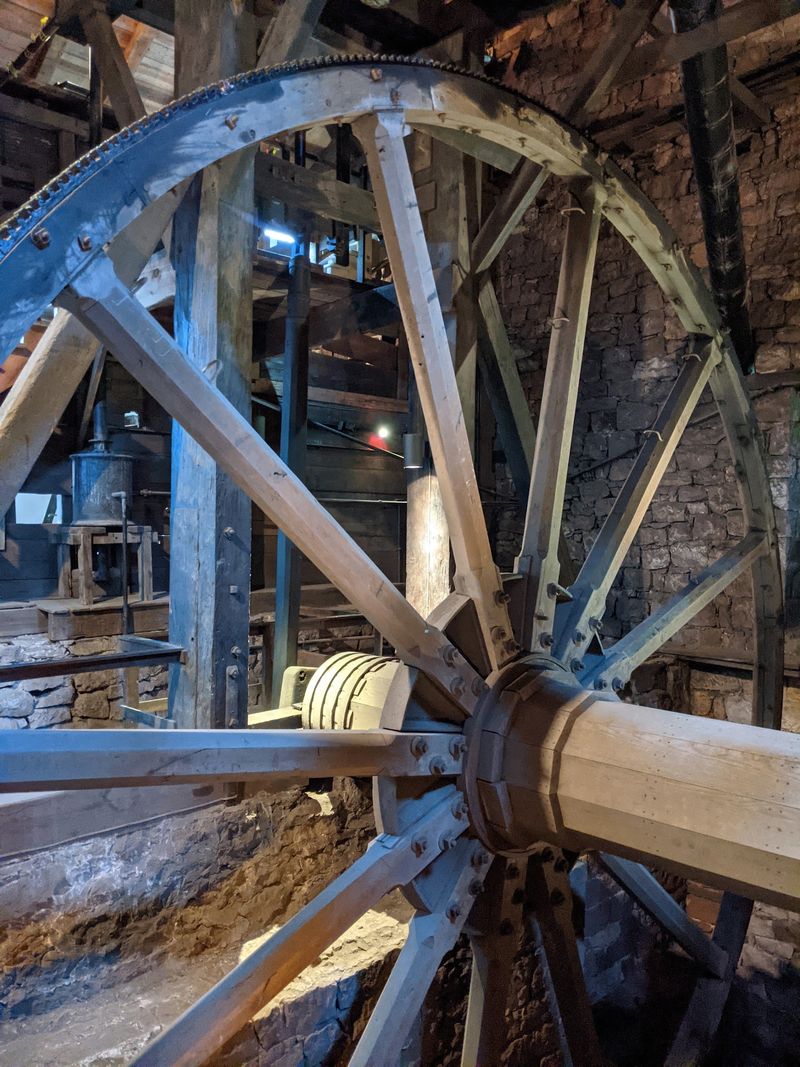
Most old furnaces in America are just empty stone shells now, so seeing the actual equipment still in place here gave me goosebumps. Cornwall is described as the only intact charcoal-burning iron blast furnace in its original plantation setting in the entire Western Hemisphere.
During the 1850s upgrade, the old bellows were swapped for wooden blowing tubs. A 20-horsepower steam engine powered them, pushing air into the furnace so it could burn hot enough to melt ore.
The huge wooden wheel is the star of the show for me. It is massive, and standing near it, I tried to imagine the steady rhythm of it turning while workers shouted over the noise.
Up in the charging room, you can spot charcoal buggies, mule dump carts, and even a big horse-drawn wagon used to haul iron pigs. Those pigs, by the way, are bars of iron, not barnyard animals, which made a kid on my tour giggle.
Wear comfy shoes, because the tour involves stairs. And keep your hands free, since food and drinks are not allowed inside, which honestly helps you focus on all that old wood and iron.
Charcoal, Limestone, and a Whole Lot of Sweat
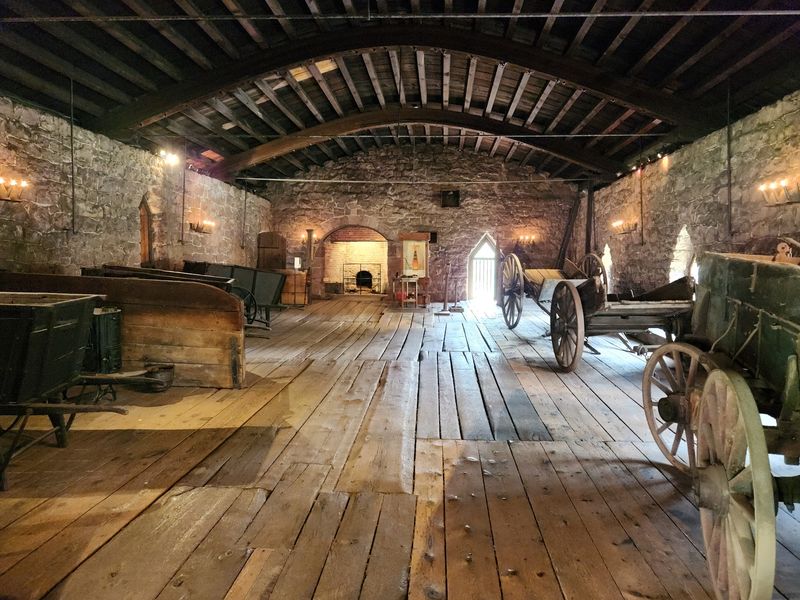
Feeding a furnace is a little like feeding a dragon that never sleeps. It needed three main ingredients, and nearby land supplied all of them.
Iron ore came from the Cornwall Ore Mines, which for a long time were the largest iron mines east of Lake Superior. Charcoal, made from Pennsylvania’s thick forests, served as the fuel.
Limestone acted as a flux, helping pull impurities out of the melted iron.
When I peered down into the top of the furnace, I got a real sense of how much material had to go in, day and night, to keep things running. It never really stopped.
The human side of this story hit me hardest. Thousands of men worked here over the years, often on 12-hour shifts, and in the early years enslaved people were also forced to labor at the furnace.
The guides talk about this history honestly, which I appreciated.
The workers cast all sorts of things, from stoves to railroad parts. If you want to connect with the place on a deeper level, ask your guide about daily life for the workers.
Those stories stay with you longer than any date or number.
February 11, 1883, the Day the Fire Went Out
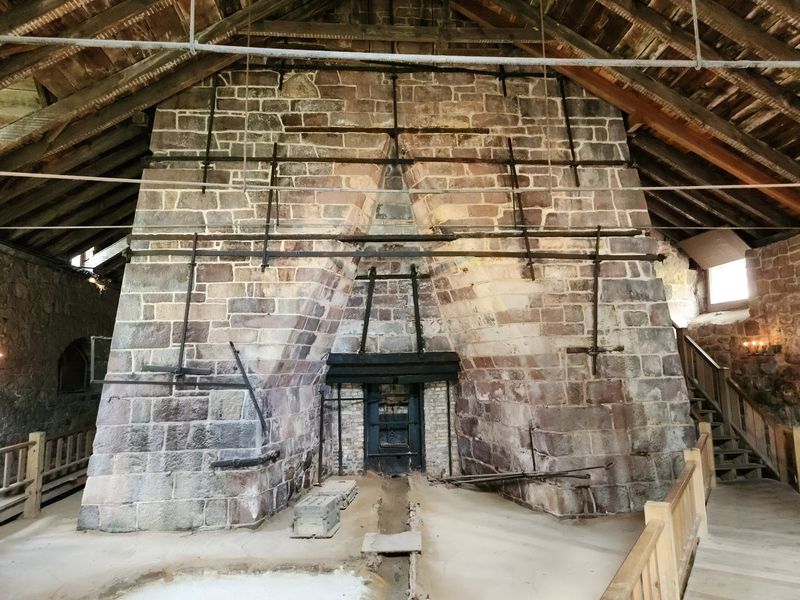
After roughly 140 years, the furnace went cold on February 11, 1883. I found it oddly emotional to read that exact date, almost like reading the last page of a long book.
The ore had not run out, and there were still skilled workers around. The real problem was progress.
Bigger mills in places like Pittsburgh and Bethlehem were using anthracite coal and coke, and they could make iron and steel much faster and cheaper than a charcoal-fired cold blast furnace ever could.
For its final years, the furnace was not making money anymore. Still, the family kept the buildings standing instead of tearing them down.
That choice changed everything. In 1932, Margaret Coleman Freeman Buckingham, a descendant of Robert Coleman, donated the furnace and its buildings to the Commonwealth of Pennsylvania.
Her gift is the reason we can walk through it today with the machinery still sitting where it was left.
Honestly, I think this is the most important part of the story. So many industrial sites simply vanished.
Here, an act of generosity froze a whole chapter of American history in place, and you can stand right in the middle of it.
Planning Your Own Afternoon at the Furnace
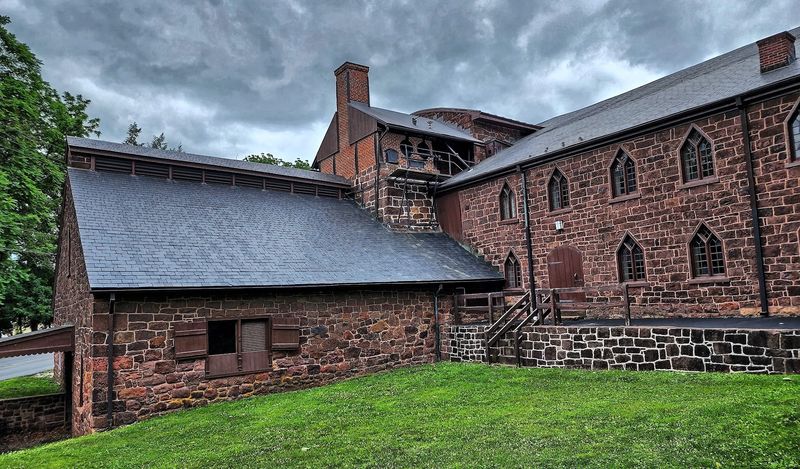
A good visit here takes about an hour and a half, which makes it an easy stop on a day trip from Harrisburg or Lancaster. The countryside drive alone is pretty enough to justify the trip.
The site is run by the Pennsylvania Historical and Museum Commission and is a National Historic Landmark. It is open Friday and Saturday from 9 AM to 4 PM, and Sunday from noon to 4 PM.
The visitor center, with its small museum, gift shop, and restrooms, is fully accessible. The furnace building has many steps, though, and no modern heating or cooling.
On a hot day, it actually stays surprisingly cool inside those thick walls.
Parking is available across the street, a little down the hill, so watch for traffic as you cross. The gift shop is worth a browse too, with history books and cast iron goods that make fun souvenirs.
If you can, aim for Charter Day, when extra buildings open and volunteers fill the grounds. Either way, you will leave knowing far more about iron than you ever planned to.
Address: 94 Rexmont Rd, Cornwall, PA 17016
