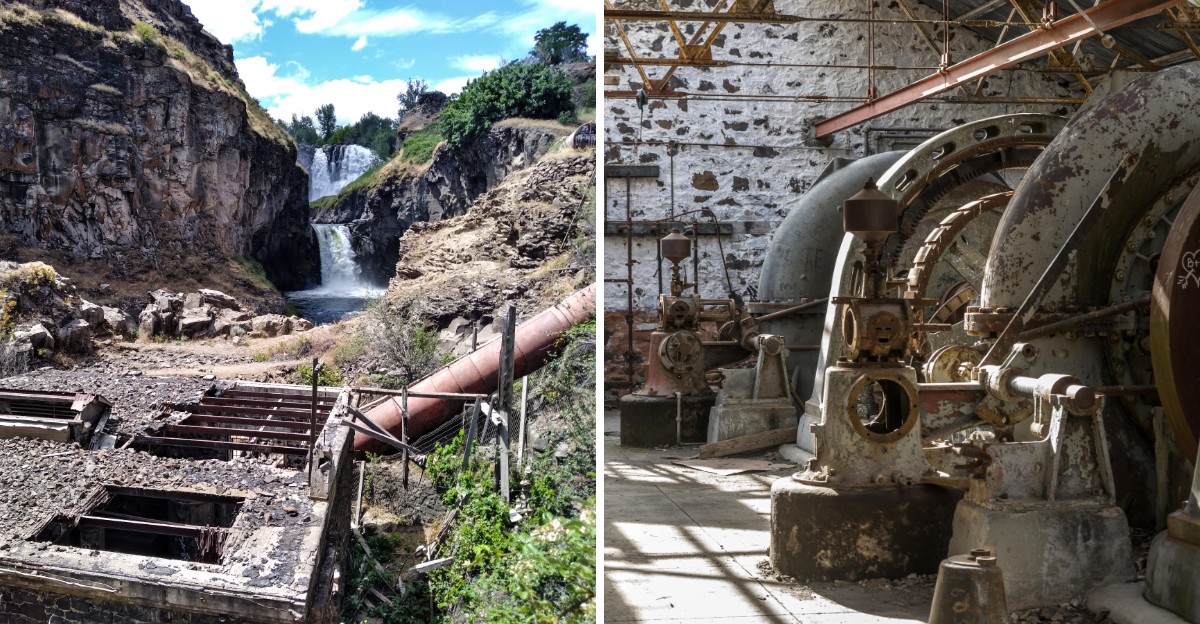
A 90-foot waterfall roars through a dry desert canyon, and an old power plant still sits at the bottom. The generators are still inside. You can peek at them through the windows.
I love how strange that pairing feels. Rushing white water. Sagebrush hills. A quiet brick building that once helped light up a whole region of north-central Oregon.
The falls get so loud in spring that some folks call them a mini-Niagara. A steep, rocky trail drops you right down beside the ruins. Then it keeps going to a second waterfall that many people never reach.
I can’t imagine a better mix of nature and history in one short walk.
The Desert Canyon Where A River Decided To Show Off
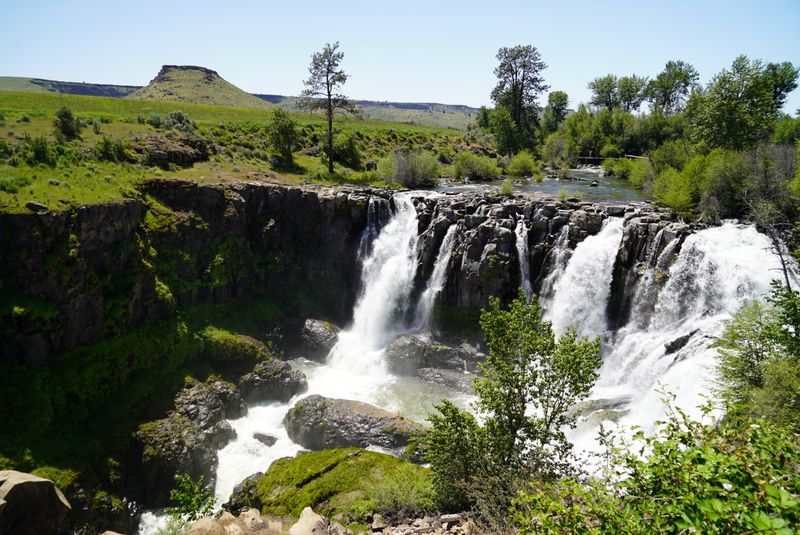
Most waterfalls in the Pacific Northwest hide inside mossy forests. White River Falls State Park flips that script with a big, foamy cascade in high desert country.
The White River drops 90 feet over a shelf of dark basalt. That rock came from ancient lava flows that covered this part of Oregon long ago.
Spring is the showstopper season. Snowmelt from Mount Hood swells the river, and the falls turn wide, thundering, and white.
That flow earned the falls a playful nickname, Oregon’s mini-Niagara. It’s a big claim, but the roar backs it up pretty well.
The falls also split into more than one level as they tumble down. Each tier adds its own spray, sound, and pattern to the scene.
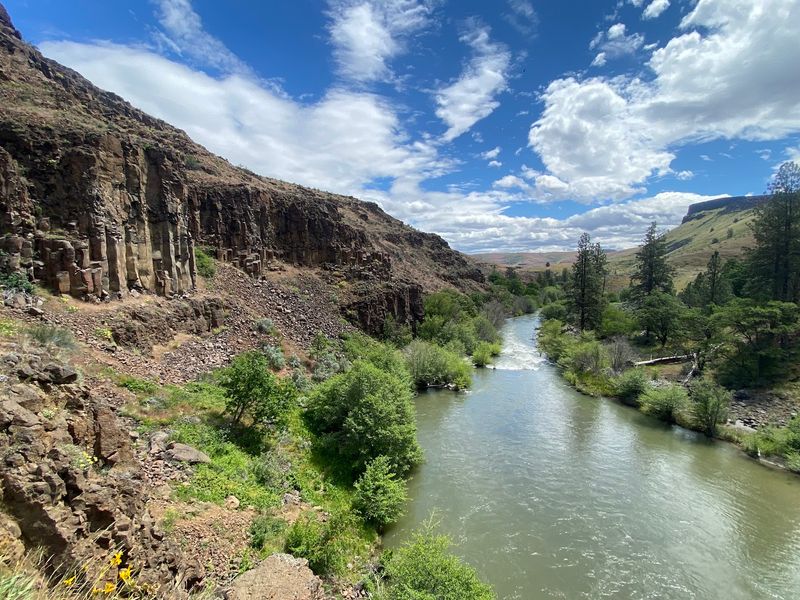
The canyon walls around them stay dry, rocky, and tan for much of the year. That contrast makes the bright water look even more dramatic.
Spring also brings wildflowers to the surrounding hillsides. Color pops up against the rock and grass in a way that feels almost unexpected.
Summer still delivers plenty of drama, just with a calmer mood. Either way, the first look from the top tends to stop people mid-step.
A Few Steps From Your Car And The Show Begins
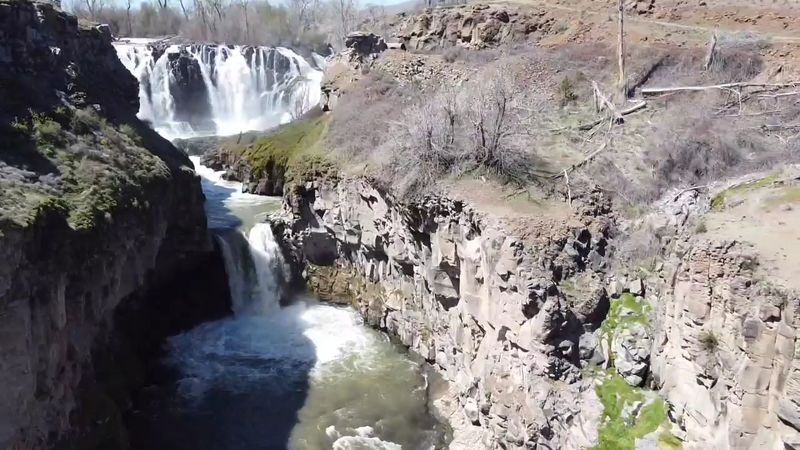
Lazy sightseers, rejoice. The main overlook sits just a short walk from the parking area.
A flat, graveled path leads straight to the view. You don’t need hiking boots or a trail map to enjoy the falls from above.
That makes White River Falls State Park friendly for quick road trip stops. You can stretch your legs, snap photos, and hear the water within minutes.
Fencing lines parts of the upper area for safety. It keeps visitors back from the slippery edges above the falls.
The overlook also gives you a great sense of the whole canyon. You can follow the river as it bends away below the rocky walls.
From up here, you can spot the old powerhouse far below. It looks tiny next to the moving water, like a toy someone left behind.
That little glimpse usually sparks a big question. How did anyone build a power plant way down there?
The upper path even leads past part of the old water system. Those leftover pieces hint at the engineering that once fed the plant.
Bring a camera, but also bring a little patience. The view keeps changing as clouds and light move across the canyon.
Grab Good Shoes Before Tackling The Steep Way Down
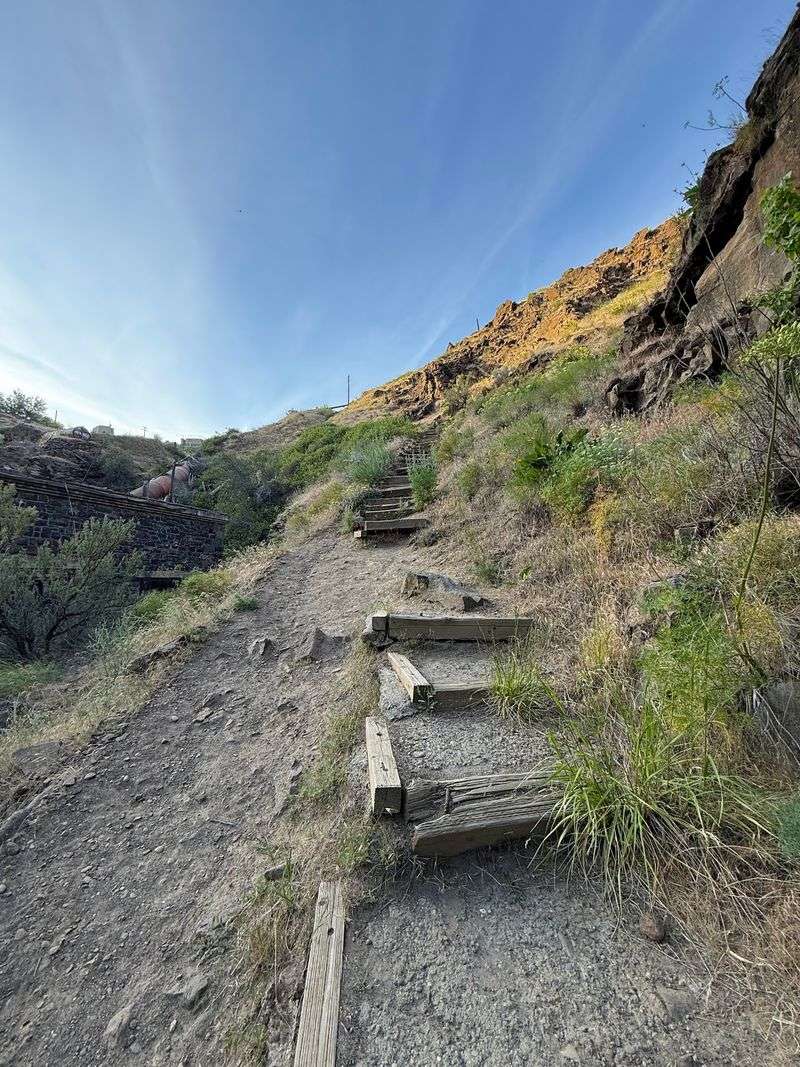
Here comes the sweaty part. The trail into the canyon is steep, rough, and rocky.
It covers roughly a quarter mile to the powerhouse, depending on how far you go. The elevation change runs about 140 to 150 feet.
That doesn’t sound huge on paper. On loose rock in the heat, it can feel much bigger.
Shoes with solid grip are your best friend here. Flip-flops on this slope are basically a dare.
Take your time on the descent. Watch each step, especially where rocks poke out of the path.
Remember that you’ll need to climb back up afterward. Going down is the easy half, and your legs will figure that out quickly.
Plenty of families make the trip together. Still, young kids may need a helping hand, and strollers won’t work at all.
The park posts signs about trail risks near the start. Read them before heading down, so you know what you’re getting into.
Rest when you need to on the way up. The view behind you makes a great excuse for frequent breathers.
Keep Walking To Find A Second, Sneakier Waterfall
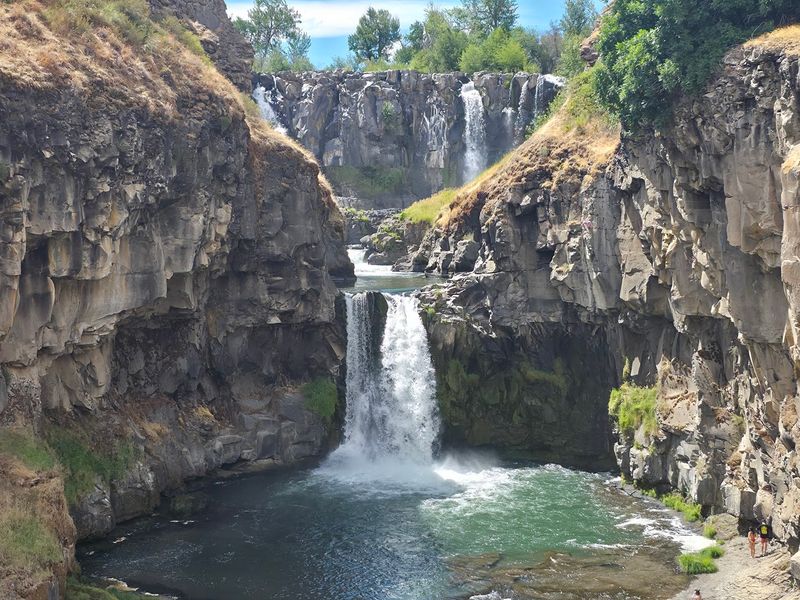
Plenty of hikers stop at the powerhouse and call it a day. That’s a mistake worth avoiding.
Celestial Falls is the lower tier of White River Falls, located just downstream from the main cascade, with a viewpoint near the abandoned powerhouse. It drops 44 feet, smaller than its big sibling but full of charm.
The name alone makes it sound magical. Honestly, it lives up to that billing pretty nicely.
The trail past the powerhouse follows the river through the canyon. Rocky walls rise on both sides as the water rushes along.
This stretch often feels quieter than the main area. Fewer people keep going, so you may get more space to yourself.
Spring makes this walk extra pretty. Wildflowers can brighten the dry canyon slopes along the way.
Bring a little extra energy for this add-on. Every step farther is another step you’ll retrace on the return.
The payoff feels like a secret bonus round. You get two waterfalls and a historic ruin in one outing.
Not many Oregon parks can offer that combination in such a short distance. It’s a solid reason to push just a bit past the obvious stopping point.
Electricity Once Flowed From This Canyon Floor
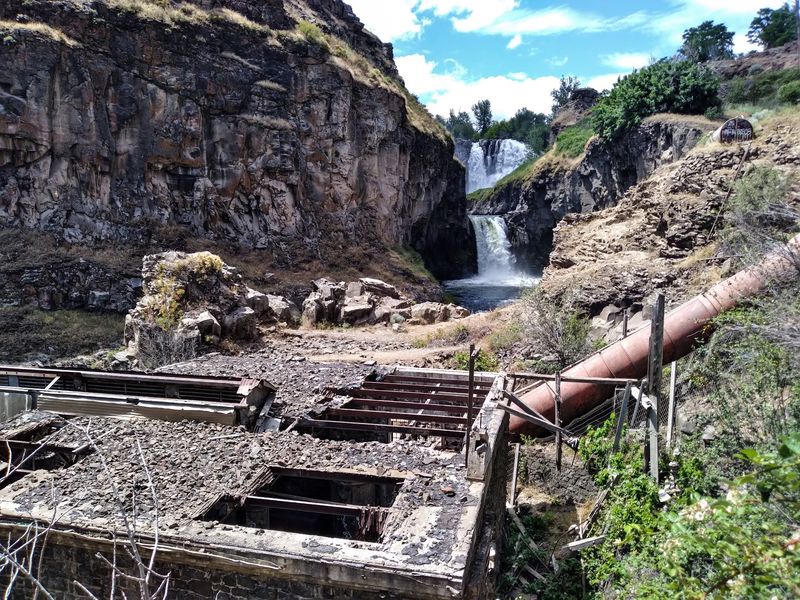
Long before phone chargers and streaming shows, this canyon was busy making power. The hydroelectric plant here ranks among the early ones in Oregon.
The hydroelectric power plant was built in 1910 and became one of Oregon’s early hydroelectric facilities. The plant then ran for about five decades.
It sent electricity to homes and businesses in Wasco and Sherman counties. For rural families, that power could change daily life in big ways.
Lights replaced lanterns. Machines made farm and town work a lot easier.
The plant finally shut down around 1960, with some sources saying 1963. Silt building up in the river caused trouble for the operation.
Bigger projects also took over the job. The Dalles Dam on the Columbia River could produce far more power than this small canyon plant.
So the building simply went quiet. Nobody tore it down, and that’s why visitors can still see it today.
I like how the ruins tell a story without a single word. They show how people once used the river, then moved on.
Standing near it turns history class into something you can actually feel. The falls keep roaring, but the machines inside stay still.
Lunch With A Waterfall Soundtrack
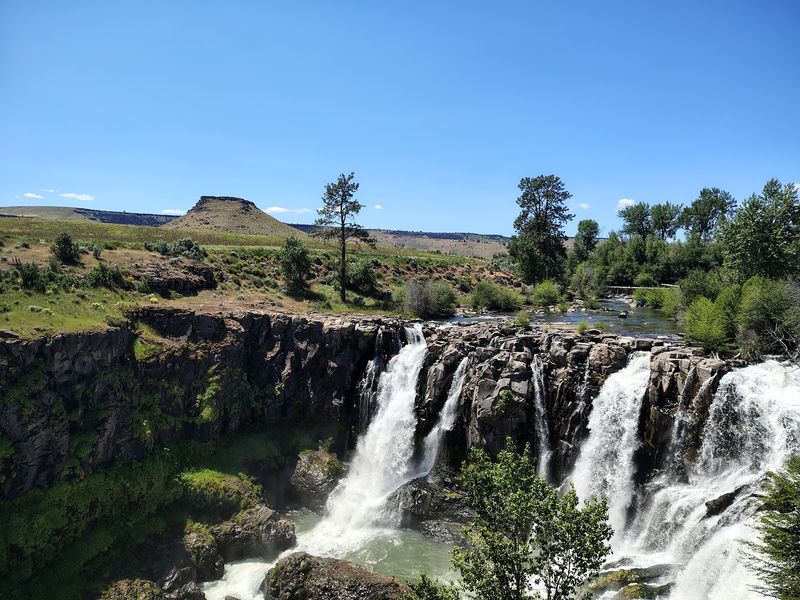
Sandwiches simply taste better near crashing water. The park’s picnic areas make that theory easy to test.
Picnic tables sit around a grassy area near the parking lot. You can eat, rest, and still hear the falls rumbling nearby.
Food options around here are scarce. The park feels far from town, so pack your snacks before you arrive.
There’s no garbage service at the park. Plan to carry out every wrapper, bottle, and crumb you bring.
Restrooms with flush toilets are available during the main season. Portable toilets take over during the winter months.
In summer, a spigot in front of the restroom building offers drinking water. That’s handy, but don’t count on it as your only supply.
Leashed dogs are welcome to join the fun too. Just keep them close, especially near cliffs and the river.
A picnic here works great before or after the canyon hike. Fuel up first, or reward yourself afterward.
Either way, a lunch break with this view beats any drive-through stop. The setting does all the heavy lifting.
Respect The River And The Desert Heat
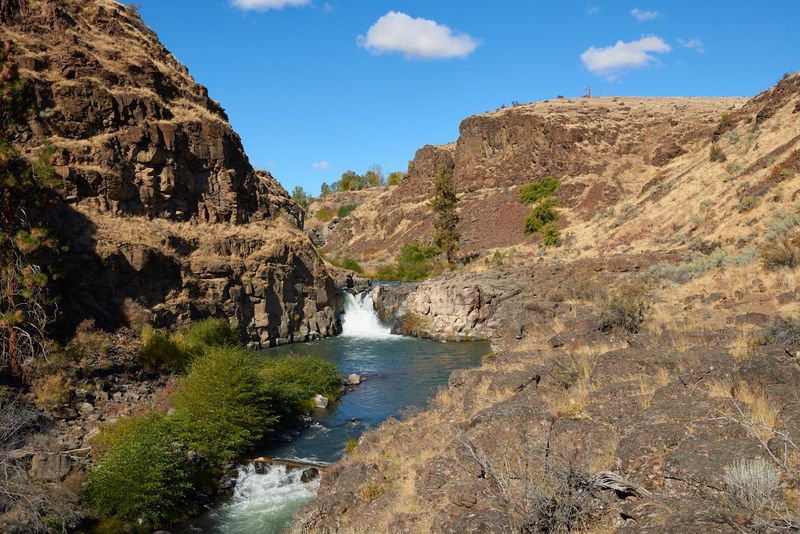
Desert canyons can get seriously hot. Rock walls soak up sunshine and then radiate that heat right back at you.
Shade is very limited down by the river. So carry plenty of water, wear sunscreen, and consider a hat.
The water might look inviting on a warm day. Even so, swimming is strongly discouraged here.
River currents near the falls can be dangerous and hard to predict. Calm-looking spots don’t always stay calm.
Wildlife adds another reason to stay alert. Rattlesnakes live in this kind of dry, rocky country.
Watch where you place your hands and feet. Stay on the trail rather than poking into brush.
Poison ivy and ticks also show up along the trails. Long pants help, and a quick tick check afterward is smart.
None of this should scare you away. It just means showing up prepared, like any good desert explorer.
A little planning keeps the day fun from start to finish. Then you can focus on the falls, the ruins, and the scenery.
Peek Through The Windows At Machines Frozen In Time
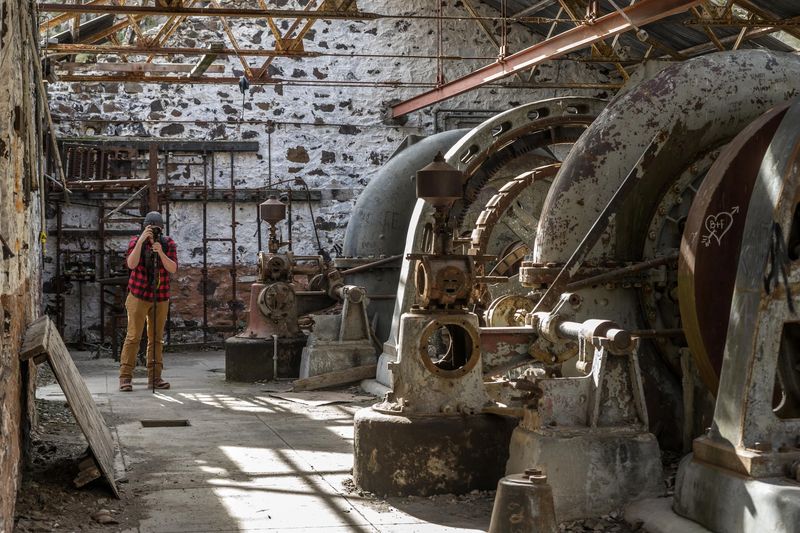
Old generators still sit inside the powerhouse. That’s right, the original equipment never left the building.
You can’t go inside, though. The structure is closed off for safety, and that rule makes good sense for an aging building.
Windows give curious visitors a look at the interior. Peering through feels a bit like spying on a museum after closing time.
The heavy machines show their age in the best way. They remind you how solid and serious early power equipment had to be.
Outside, the weathered walls make great photo backdrops. The worn building against the white water creates a scene that feels almost cinematic.
Photographers love the mix of textures here. Rough walls, rusty metal, rock, and rushing river all share one frame.
Kids usually find the place fascinating too. An abandoned building beside a waterfall sounds like something from an adventure book.
Be respectful while exploring around it. Stay out of closed areas and leave everything exactly as you found it.
That way, the next visitor gets the same jaw-drop moment. Preserved ruins like these are getting harder to find.
Free Parking, Open Skies, And A Road Worth Taking
Good news for your wallet. White River Falls State Park charges no entrance or parking fees.
You’ll find it at White River Rd, Maupin, OR 97037. The park sits east of Tygh Valley and south of The Dalles in north-central Oregon.
The drive crosses wide open farm and desert country. On clear days, mountain views can add extra drama to the trip.
The park is open year-round for day use. White River Falls State Park is open year-round for day use, although the main parking lot and flush restrooms close from November 1 through mid-March.
Winter changes things a bit. The main parking lot and flush restrooms close from about November 1 to mid-March.
During that stretch, parking near the entrance is limited. You’ll need to walk a little farther to reach the falls.
Spring is a fantastic time to visit for big water and wildflowers. Weekdays can feel especially peaceful.
The remote location helps keep crowds lighter than at many famous waterfalls. That calm feeling is part of the appeal.
Pair the trip with other stops around Wasco County. Then let a roaring waterfall and a forgotten powerhouse steal the show.
