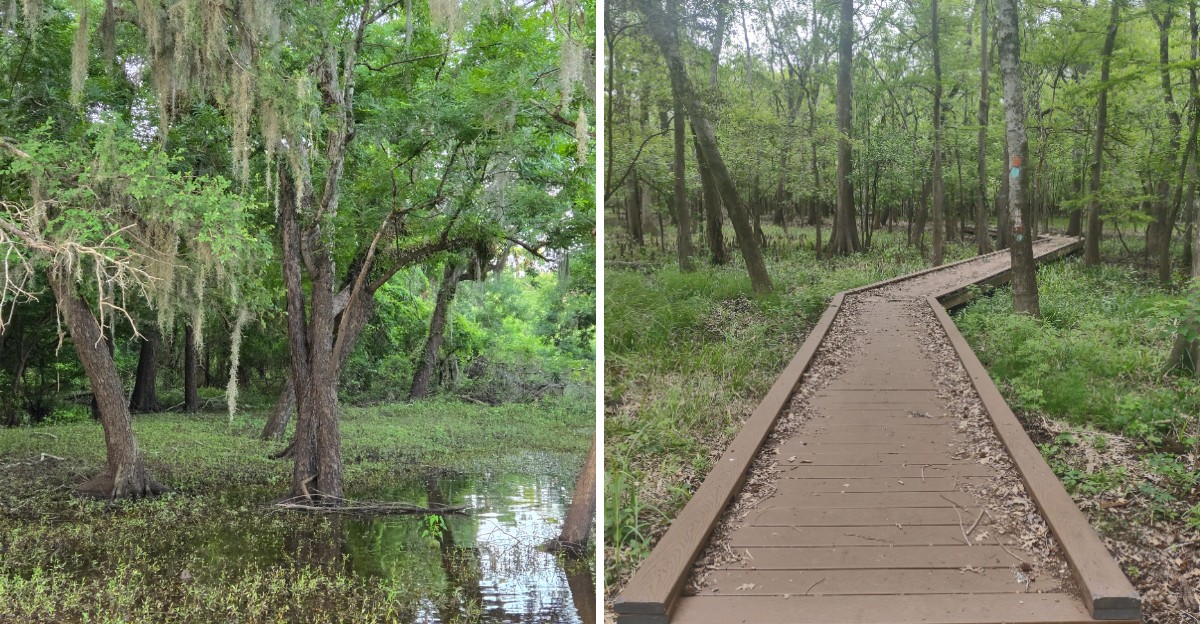
Bottomland hardwood forests used to cover vast stretches of the South. Now, only fragments remain.
This Texas preserve protects one of the largest pieces left, and it is a quiet, beautiful place to explore. The trees are tall and thick, the canopy blocks out the noise of the modern world, and the trails wind through a landscape that feels ancient.
You can spot birds, deer, and the occasional turtle sunning itself on a log. It is not a flashy park.
There are no giant signs or crowded parking lots. Just a peaceful forest that has been allowed to stay wild.
The preserve is a reminder of what the land used to look like before development took over. It is worth a visit, not just for the scenery, but for the chance to step into a piece of living history.
The Bottomland Forest That Almost Disappeared
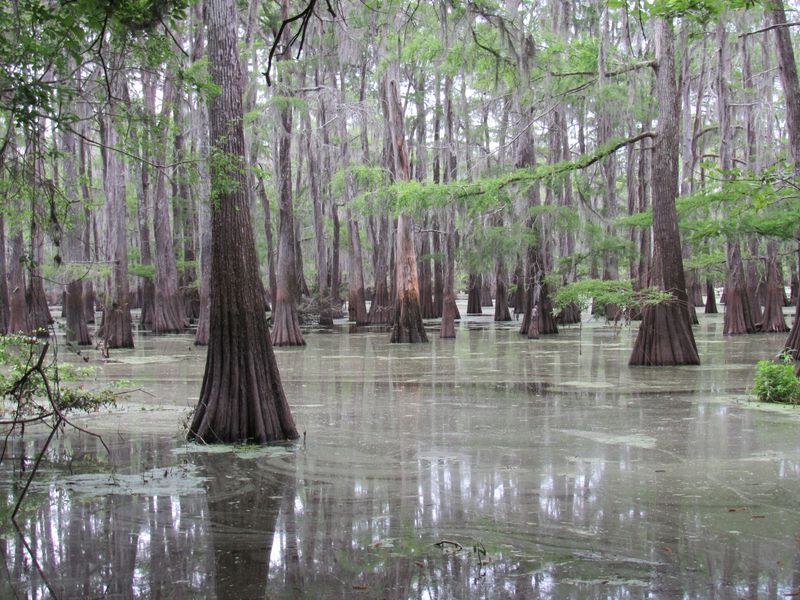
Bottomland hardwood forest is a mouthful of a name for something simple, a forest that floods. Rivers spill over, water sits among the trunks, and only certain trees can handle it.
What grew here over centuries is a thick, layered mix that reads almost like a botany textbook come to life. Overcup oak, water oak, green ash, cedar elm, American sycamore, black willow, sweetgum, pecan, and willow oak all share space, with bald cypress and tupelo standing in the wettest pockets.
River cane fills in the gaps in dense thickets. Botanists have counted somewhere north of 650 plant species across the refuge, which explains why wildlife stacks up here so heavily.
The sad part is how little of it is left. Most of the Trinity floodplain forest was cleared, drained, or flooded by reservoirs over the last century.
That is why this refuge carries real weight. It is one of only 14 priority-one bottomland sites flagged for protection under the Texas Bottomland Protection Plan, a short list for a very big state.
Staff also spend a lot of effort pulling out plants that do not belong, including Chinese tallow, trifoliate orange, and giant salvinia, which can choke waterways fast. Without that ongoing work, the native mix would slowly get crowded out.
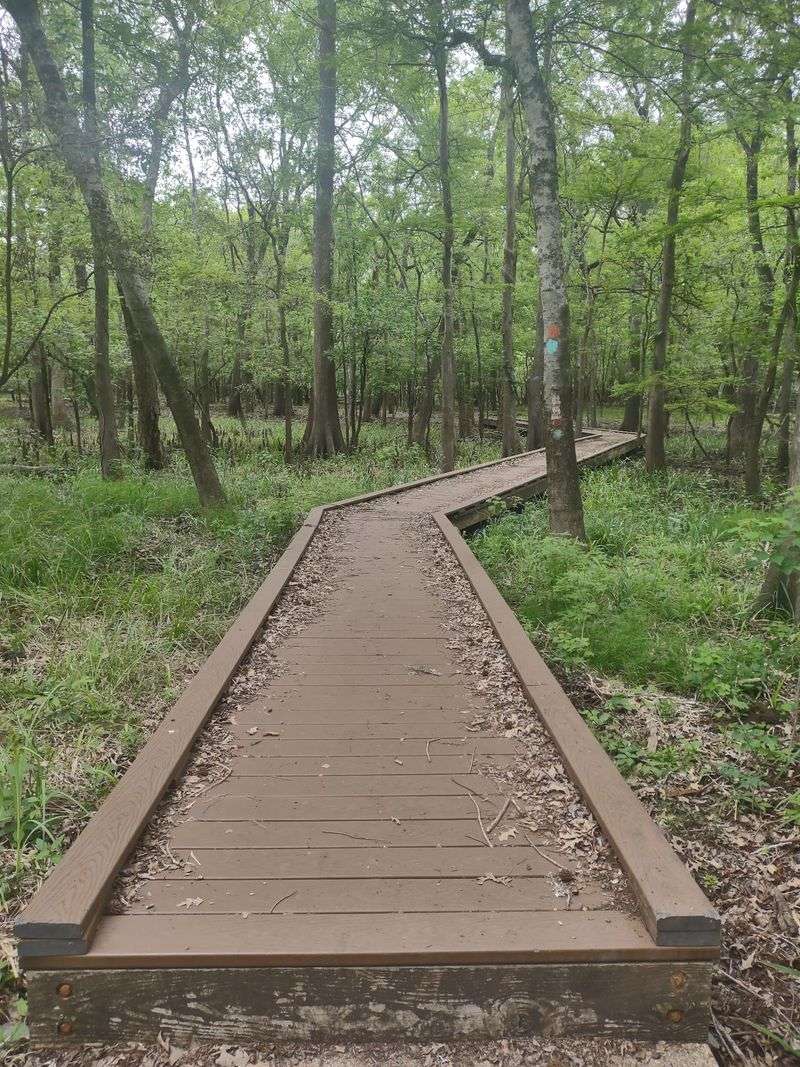
Walk a trail slowly and the layers become obvious. Canopy overhead, tangled shrubs at shoulder height, wet leaf litter underfoot, and everything soaked in that heavy green smell.
Birdsong Everywhere You Turn
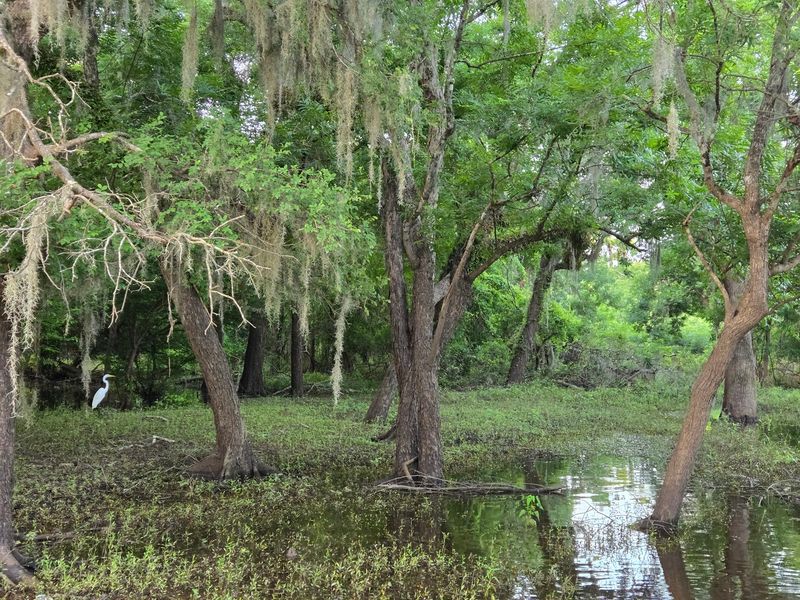
Birders talk about this refuge with a certain gleam, and the numbers back them up. Over 275 species have been recorded in the bottomland forests and wetlands of eastern Texas, and more than 100 species actually nest inside refuge boundaries.
Roughly half of all neotropical migratory bird species use habitat like this during migration or breeding season. That is not a small footnote, that is a continental-scale job being done by one quiet stretch of Texas floodplain.
Spring brings the warblers, including Swainson’s warbler skulking low in the cane and prothonotary warbler flashing yellow near standing water. Pileated woodpeckers hammer away somewhere out of sight, loud enough to make first-timers jump.
Bald eagles turn up overhead. Swallow-tailed kites cut through the sky with that unmistakable forked silhouette.
For waterfowl, the refuge matters enormously. Wood ducks breed here, and the area ranks among the more important wintering grounds for mallards in the Central Flyway.
Around the ponds and open water, expect herons, egrets, roseate spoonbills, belted kingfishers, and in colder months osprey and cormorants working the surface. Carolina chickadees, eastern phoebes, and crows fill in the everyday soundtrack.
Practical advice, bring binoculars and come at sunrise. The dawn chorus in bottomland forest is genuinely loud, and birds go quiet and hidden once the heat climbs.
Painted buntings have been spotted along the birding trail too, which feels almost tropical for this part of the state.
Gators, Bats, and Other Neighbors
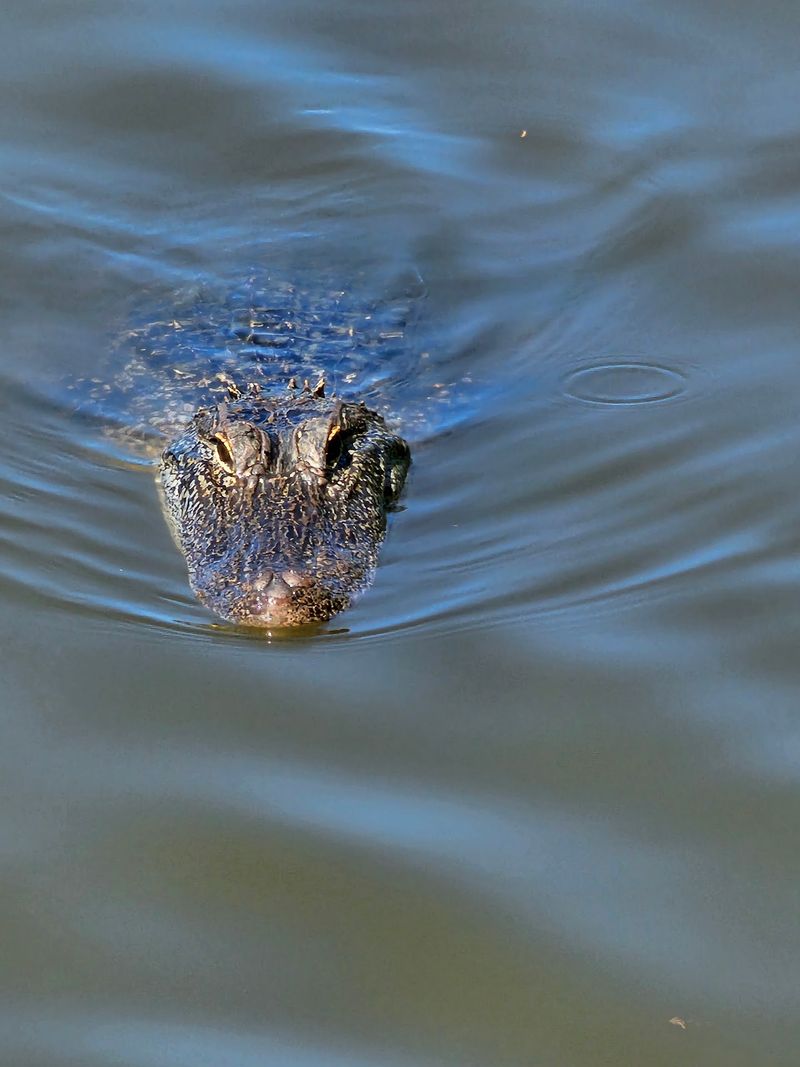
Plenty of visitors come hoping to see an alligator, and plenty of them succeed. Champion Lake gets regular gator sightings, sometimes a big one cruising past the fishing pier while kids point and parents grip the railing a little tighter.
Keep your distance, obviously. Watching from the pier or boardwalk is the smart move.
Mammals here range from the expected to the surprising. White-tailed deer slip through the timber, coyotes and bobcats pass through less visibly, and armadillos root around in the leaf litter like tiny armored bulldozers.
Feral hogs are the problem child. They tear up trails and native ground cover, so the refuge actively manages their numbers.
The oddest resident might be the Rafinesque’s big-eared bat, a species of special concern that favors exactly this kind of old bottomland forest. An estimated 140 of them form the largest known maternal colony in Texas right here.
Reptiles get their share of attention too. Alligator snapping turtles look like something dredged up from the Cretaceous, cottonmouths deserve careful respect, and roughly two dozen other reptile species round out the list.
In the water, bass, crappie, catfish, and alligator gar all swim the sloughs and oxbows. On land, insect life is wild, with an estimated 900 kinds of butterflies and moths, including nearly a thousand moth species logged from a single acre near the refuge office.
A pollinator garden at Champion Lake pulls in bees and butterflies constantly.
Knobby Knees and Great Egret’s Ridge
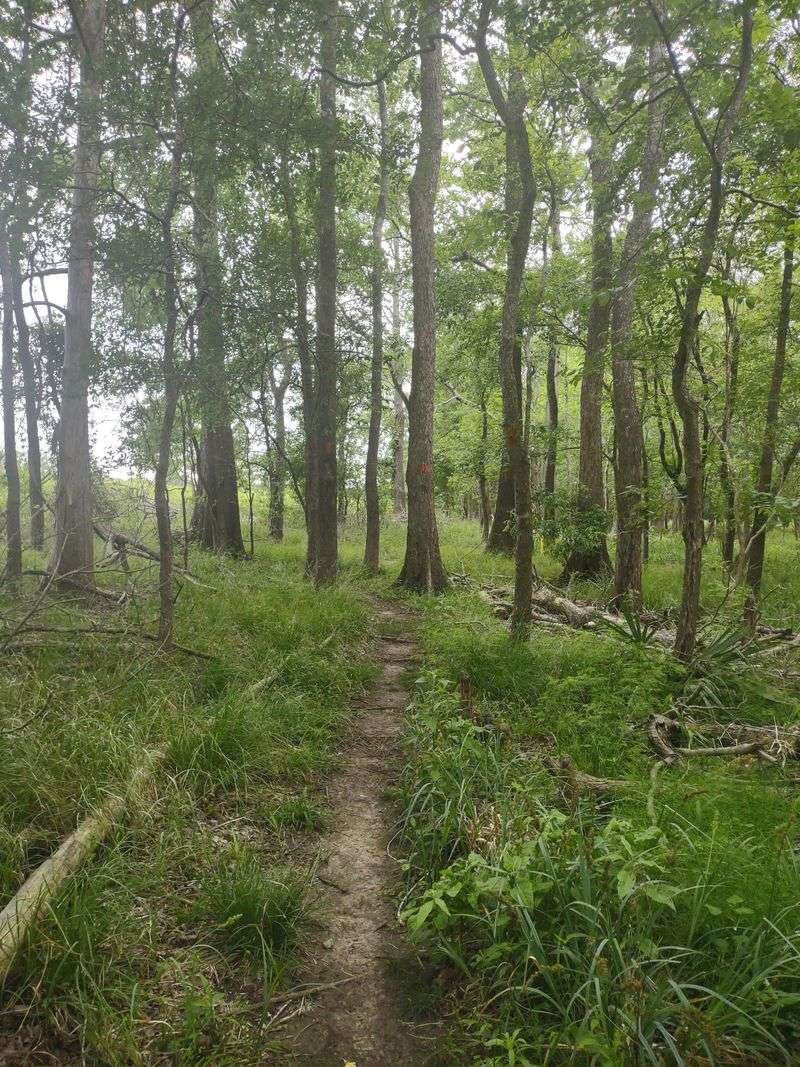
Trail names around here have personality. Knobby Knees earns its title from the strange, knobby cypress roots that jut up beside the path, and once you notice them you cannot stop noticing them.
That system runs roughly nine miles and loops past Palmer Bayou, two oxbow lakes, and views out toward the Trinity River itself.
Great Egret’s Ridge covers about seven miles and follows Big Bayou, passing another pair of oxbow lakes on the way. Both areas rank among the most walked stretches in the refuge.
Altogether there are around 37 miles of primitive trails spread across ten separate day-use areas. Primitive is the operative word, meaning packed dirt, roots, and occasional mud rather than gravel and signage every hundred feet.
Other trails carry names worth collecting, Boggy Boots Loop, Bobcat Tail, Cottonmouth, Golden Orb Weaver, Leaping Lizard Loop, Inchworm, Butterfly, Levee, Big Loop, Little Loop, McGuire Loop, Butler, and Boy Scout among them.
Wear waterproof boots. Seriously.
Much of the refuge sits inside a floodplain, so standing water shows up in random places even after dry spells. Trails at Knobby Knees and Great Egret’s Ridge close when the Liberty river gauge hits 18 feet or higher.
Cell signal gets thin in the thicker cover, so download a map offline before heading in. Bug spray belongs in the pack year-round, and a printed trailhead map from the office beats guessing at junctions.
Champion Lake and the Long Fishing Pier
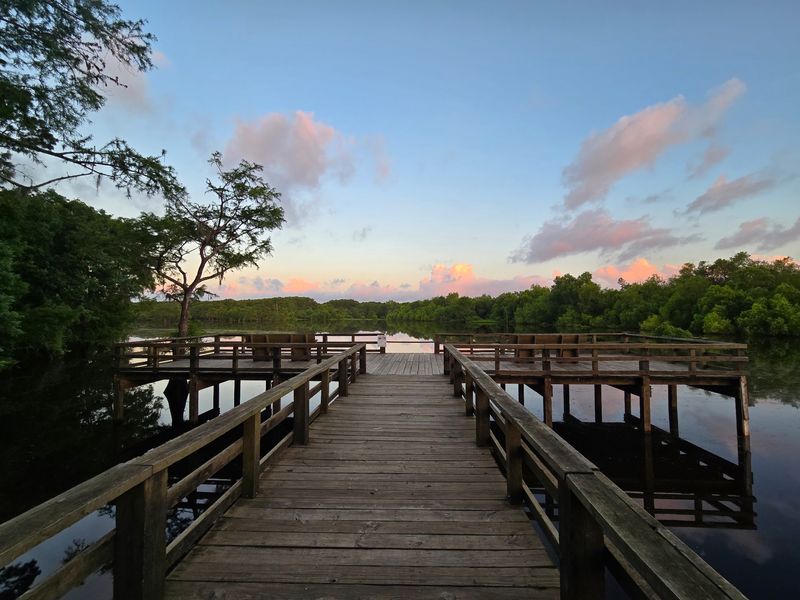
Champion Lake is where most first visits happen, and for good reason. A 150-foot fishing pier reaches out over the green water, and a boardwalk gives easy access to views that would otherwise require a boat.
Families gather here. Anglers cast for bass, crappie, and catfish while herons work the shallows nearby.
A trail system traces the water’s edge before turning inland into the surrounding forest, which makes it a flexible stop. Ten minutes or two hours, both work.
Kayaks and canoes launch here as well, and gliding across the surface among black willows and cypress is a different experience entirely from watching from shore. Reflections double the trees, and the water goes glassy on still mornings.
Pickett’s Bayou offers another paddling option for those wanting a bit more solitude.
The pollinator garden beside the lake is an easy win with kids, full of movement from bees, butterflies, and small birds. It also makes a nice cooldown spot after a hot walk.
Boaters should keep an eye on the Moss Bluff gauge, since the Champion Lake ramp closes when water levels demand it. Conditions here shift with the river, and that is part of the deal.
Restrooms and facilities are limited across the refuge, so bring water and plan accordingly. Shade along the boardwalk helps, but Texas humidity does not negotiate.
Early morning or late afternoon gives the best light and the calmest water.
The River That Shapes All Of It
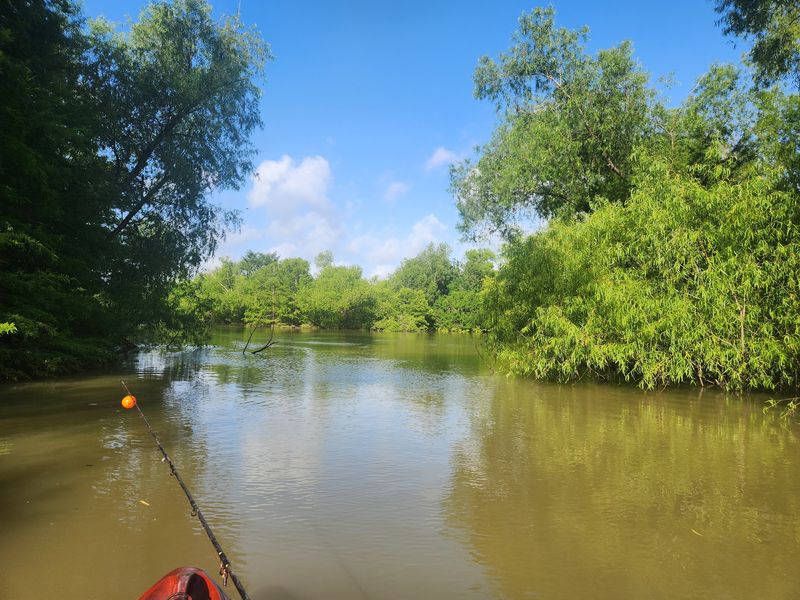
Everything here answers to the Trinity. It is the longest river with a watershed entirely inside Texas, running 710 miles from north of Dallas down to Trinity Bay.
Along the way it carves, floods, abandons channels, and leaves behind the strange geography that makes this refuge what it is.
Sloughs, swales, shallow depressions, oxbow lakes, and old cutoff river bends are scattered across the floodplain. Each one holds water differently, and each supports a slightly different mix of life.
Fish move into flooded timber. Waterfowl settle onto the oxbows.
Frogs go absolutely deafening after rain.
Paddling the bayous and oxbows is probably the most intimate way to understand the system. Water level changes the whole map, and a route that works in March might be dry ground by August.
Fishing pulls a steady crowd, with alligator gar being the oddest prize in the water, an armored fish that has barely changed in millions of years.
The river also decides what visitors can access on any given day. High water shuts trails and ramps without much warning, which is why checking the National Weather Service hydrologic forecast for the Trinity at Liberty before driving out saves a lot of frustration.
Hurricane Harvey showed just how dramatically this floodplain can fill. Recovery in a bottomland forest is part of the natural cycle, though it reshapes trails and deposits debris.
Standing near the bank, the water looks slow and unbothered. It is doing constant work.
Bring A Camera, Come Early
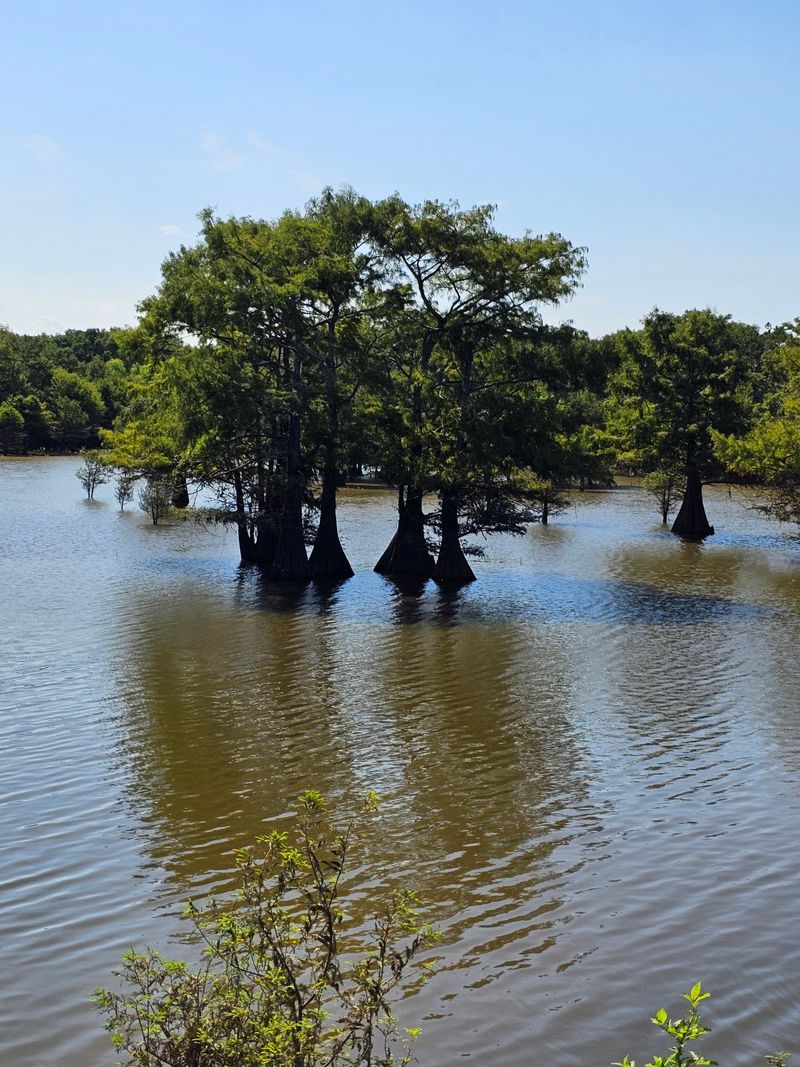
Photographers tend to love places with texture, and this refuge has texture in every direction. Cypress knees, hanging vines, mirrored water, shafts of light cutting through a dense canopy, all of it stacks up into frames that feel layered rather than flat.
Sunrise is the sweet spot. Wildlife moves, mist sometimes sits on the water, and the light stays soft instead of harsh.
Wide shots work well at Champion Lake, where black willows and bald cypress stand partly submerged and create clean symmetry on calm days. Inside the forest, the mood shifts moody and green, better suited to slower shutter speeds and a tripod.
Wildlife shots require patience more than gear. A white-tailed deer easing through timber, a gator’s eye barely breaking the surface, an egret mid-lift, these come to people willing to wait quietly.
Macro shooters have an unusual advantage here given the insect diversity. Orbweaver spiders build elaborate webs across trail gaps, stick insects hide in plain sight, and moths turn up in genuinely startling variety.
Roseate spoonbills add color when they appear. Pileated woodpeckers reward anyone quick with a long lens.
Binoculars help with scouting before committing to a shot, and they double as a way to enjoy the moment without the camera. Bug spray protects both patience and skin.
Seasons and river levels keep rearranging the scene, so the same trail looks different month to month. Repeat visits pay off.
What To Know Before Heading Out
A little prep goes a long way at a place this spread out. The refuge headquarters sits at 601 Farm to Market Rd 1011, Liberty, TX 77575, and staff there hand out maps and brochures for hiking and paddling areas when the office is staffed.
Office hours run Monday through Friday, 8:00 a.m. to 4:00 p.m., closed on federal holidays. Refuge lands, roads, and trails are generally open daily from sunrise to sunset.
Worth knowing, the office is not always the best first stop, since some visitors have arrived during posted hours to find the gate closed. Heading straight to a day-use area like Champion Lake often makes for a smoother trip.
Flooding is the big variable. Check the National Weather Service Advanced Hydrologic Prediction Service for the Trinity River at Liberty before driving out, and remember that 18 feet at the Liberty gauge closes Knobby Knees and Great Egret’s Ridge.
Several day-use areas, including Boar’s Den, Brierwood, Butler, Champion Lake, Hirsch, McGuire, Page, and Silver Lake, close seasonally for hunting sometime between September and January. Dates vary by unit.
Pack what you need, because facilities are scarce. Water, snacks, bug spray, waterproof boots, a hat, and a downloaded map cover most situations.
Watch your step for snakes, give alligators room, and pack out everything you bring in. Arrive early, walk slowly, and this quiet corner of Texas gives back plenty.
