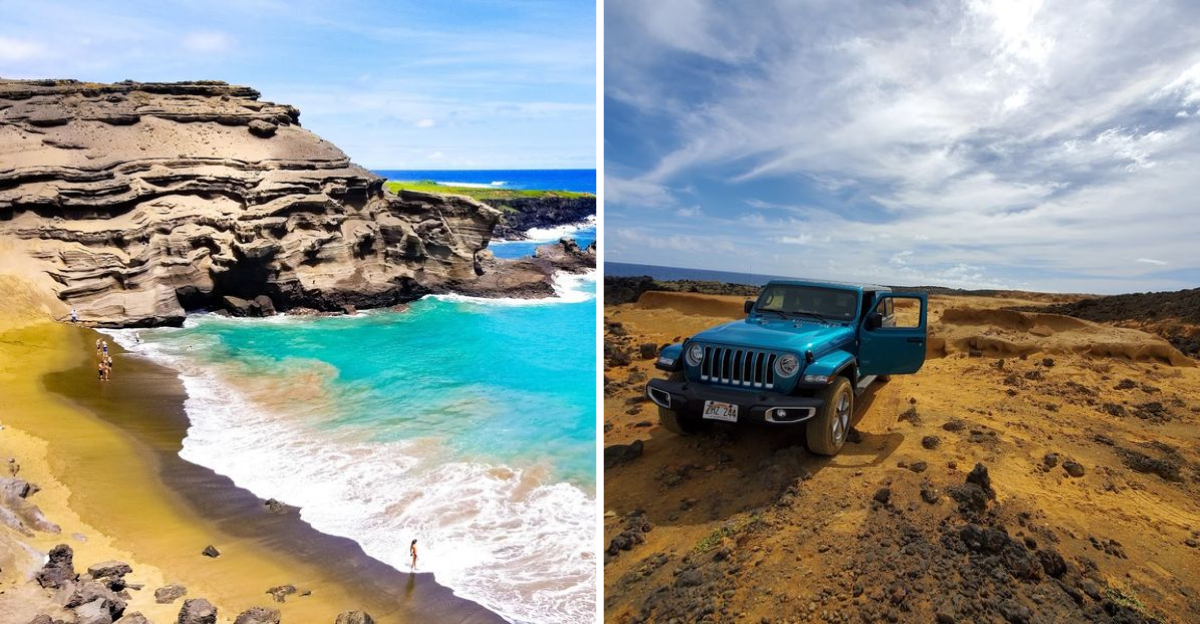
Hawaii has a beach that genuinely stops you in your tracks, tucked behind miles of windswept lava fields and rugged coastline.
One of only four green sand beaches in the entire world, the sand glimmers with an olive hue that seems almost unreal against the deep blue water.
I remember my first glimpse and thinking the color simply could not be natural. Yet it is, born from thousands of years of volcanic activity and ocean erosion working together in slow, patient collaboration.
The hike to reach it takes about an hour across open lava fields, the sun beating down, the wind constant, and every step feels like part of the reward.
This is not a beach you stumble upon, and that is exactly what makes it so unforgettable.
I sat on that green sand, watching the waves crash against the rocks, and felt like I had discovered something the rest of the world had forgotten.
The Geological Wonder Behind the Green Sand
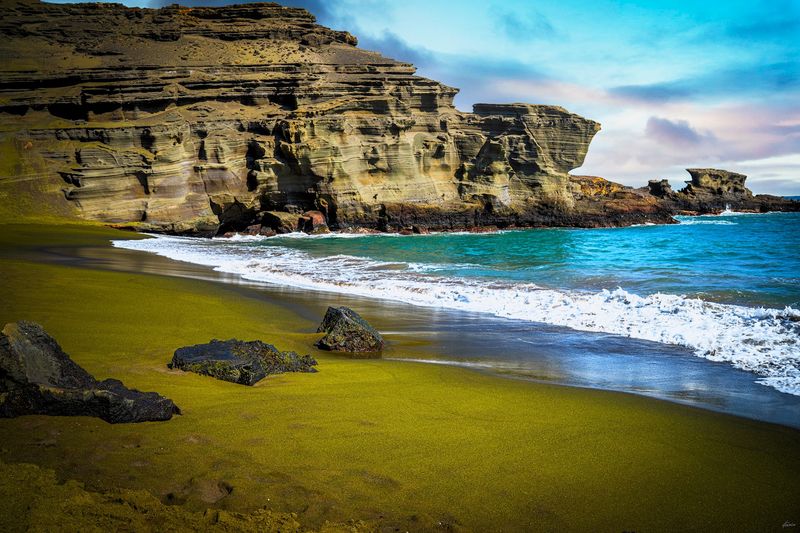
Not every beach gets its color from geology, but Papakolea is a different story entirely. The striking olive-green sand comes from a mineral called olivine, also known as peridot, which was deposited here roughly 49,000 to 50,000 years ago when a volcanic cinder cone called Pu’u Mahana erupted from Mauna Loa.
Over thousands of years, relentless ocean waves broke down the cinder cone, separating the heavier olivine crystals from lighter volcanic material.
Because olivine is denser than most other particles in volcanic rock, it settled onto the shoreline while the finer, lighter material was swept out to sea. The result is a beach coated in glittering green crystals, sometimes called Hawaiian Diamonds for their gem-like quality.
When you hold a handful of the sand, you can actually feel the difference in texture, a slightly coarser, almost grainy weight that feels nothing like a typical sandy beach.
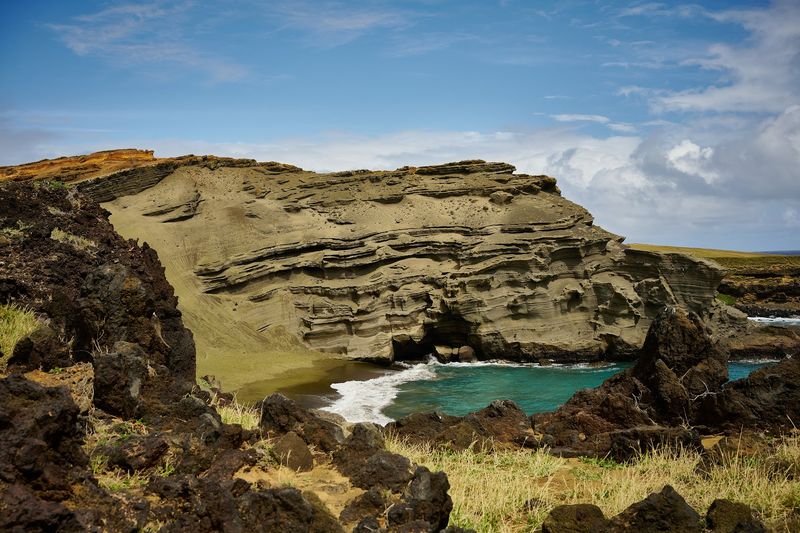
Papakolea sits inside a partially eroded cinder cone, which creates a natural bowl shape that shields the beach and gives it that dramatic, enclosed feeling. The surrounding cliffs reveal layers of volcanic history, and if you look closely at the rock faces, you can spot clusters of olivine still embedded in the stone.
It is a living geology lesson, one that took millennia to create. Knowing that backstory makes every grain of sand feel a little more precious, which is also exactly why removing even a small amount is illegal and genuinely harmful to this irreplaceable place.
How to Get There: The Coastal Hike Explained
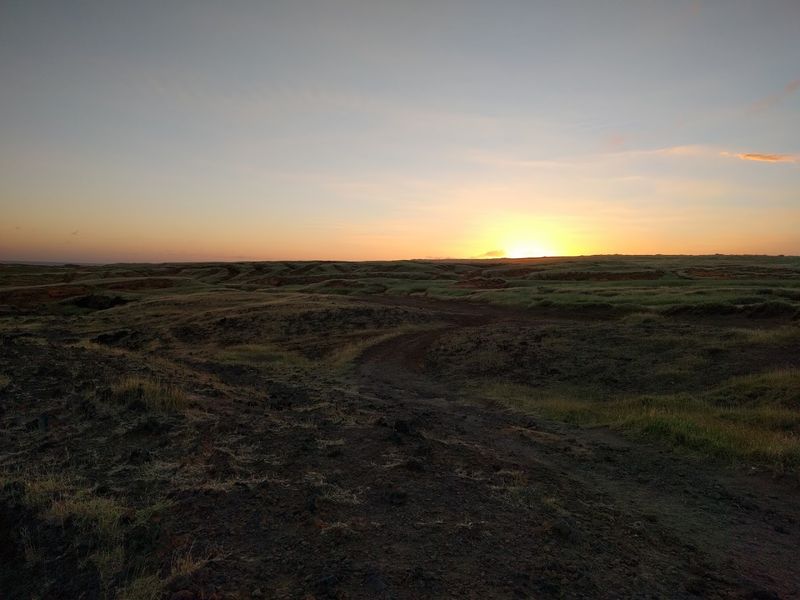
Getting to Papakolea is not complicated, but it does require commitment. The trailhead starts near the South Point parking area, reached by driving down South Point Road off Highway 11 between mile markers 69 and 70.
From the parking lot, the trail stretches approximately 2.5 to 2.8 miles one way, making the round trip somewhere between five and six miles total.
The path follows the coastline and is mostly flat, which sounds easy until you factor in the full sun exposure, the persistent wind, and the dry, dusty terrain underfoot. There is no shade anywhere along the route.
Carrying at least two liters of water per person is not a suggestion, it is a necessity, along with sunscreen, a wide-brimmed hat, and sturdy closed-toe shoes since the ground is uneven and rocky in sections.
Starting early in the morning makes a noticeable difference, both in temperature and in crowd levels. Most people who set out at sunrise reach the beach before the midday heat peaks, which transforms the whole experience.
The hike itself takes roughly one to one and a half hours each way, depending on pace and how often you stop to take in the dramatic coastal views along the way.
There are portable toilets at the parking area, but none exist along the trail or at the beach itself. Planning ahead matters here.
The hike is the only legal way to reach Papakolea, and honestly, arriving on foot makes the moment you first see the green sand feel genuinely earned.
What Awaits You at the Beach Itself
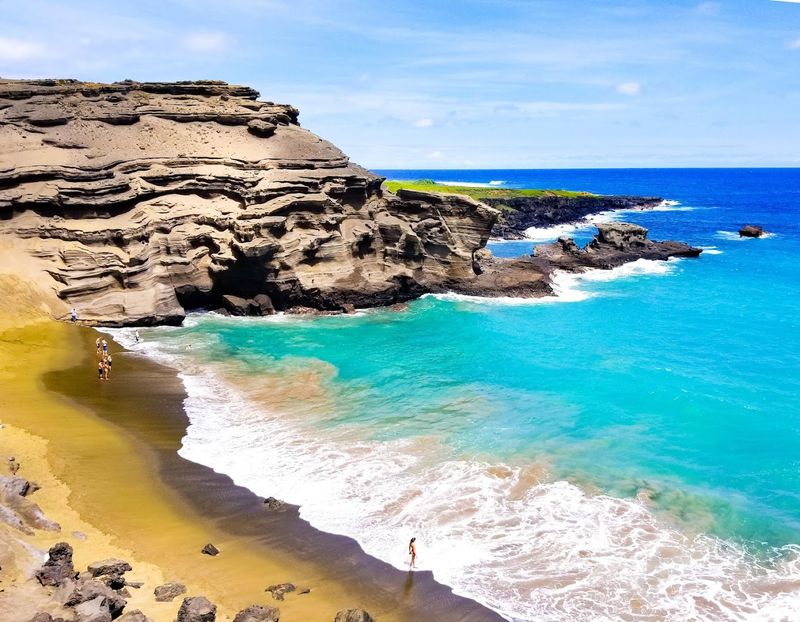
Reaching the overlook above Papakolea for the first time is a genuine jaw-drop moment. The beach sits inside a natural cove, framed by towering rust-colored and black lava cliffs that drop sharply into the sea.
The olive-green sand stretches across the base of the cove, and the contrast between that color, the deep turquoise water, and the dark volcanic rock is something photographs simply cannot fully capture.
Getting down to the sand requires a final descent that can feel a little intimidating at first. A metal staircase helps with the initial drop, but the rest involves carefully navigating steep, sandy ledges and rocky gullies.
Taking your time on this section is wise, especially on the way back up when tired legs make footing less reliable. For anyone who prefers not to make the descent, a picnic table at the clifftop offers a genuinely stunning view of the entire bay.
Once on the beach, the atmosphere shifts completely. The wind settles slightly inside the cove, the sound of waves becomes more immediate, and the scale of the cliffs surrounding you feels almost protective.
I spent a long time just sitting on the sand, running it through my fingers and watching the light shift across the water. Green sea turtles occasionally appear in the bay, which adds another layer of magic to an already extraordinary setting.
The beach is not large, but its remoteness and natural drama make it feel like a place entirely removed from the rest of the world.
Swimming and Ocean Safety at Papakolea
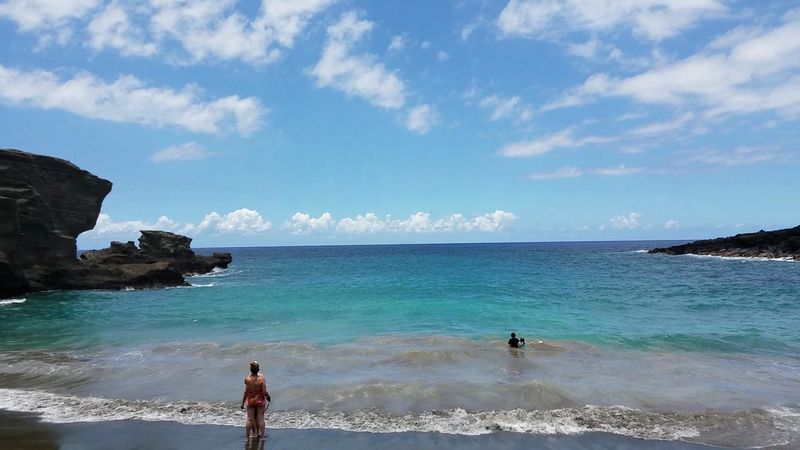
The water at Papakolea looks incredibly inviting, and on a hot day after a long hike, the temptation to jump straight in is very real. The color of Mahana Bay is a rich, clear turquoise that almost glows against the green sand, and yes, it is genuinely beautiful.
The reality of swimming here, though, deserves honest attention before you wade in.
The southern coast of the Big Island is exposed to powerful ocean swells, and Mahana Bay is no exception. Shore breaks can appear suddenly and with surprising force, and the currents near the beach can shift quickly.
There are no lifeguards at Papakolea, and given how remote the location is, any emergency situation would take a very long time to receive help. These are not reasons to panic, but they are reasons to be thoughtful.
Many visitors choose to wade in carefully at the shoreline, cool off, and leave the deeper water alone. Others watch the wave patterns for a while before deciding whether conditions feel manageable.
If the surf looks rough, it almost certainly is. The ocean here tends to look calmer from a distance than it actually behaves up close.
Body surfing can be thrilling in the right conditions, but only experienced ocean swimmers should attempt it. The beach has no rocks underfoot, which is a plus, but the wave energy is still significant.
Respecting the ocean at Papakolea is not about being timid. It is about making sure you actually get to enjoy the rest of your trip on the Big Island.
Protecting the Beach, Rules and Responsibilities
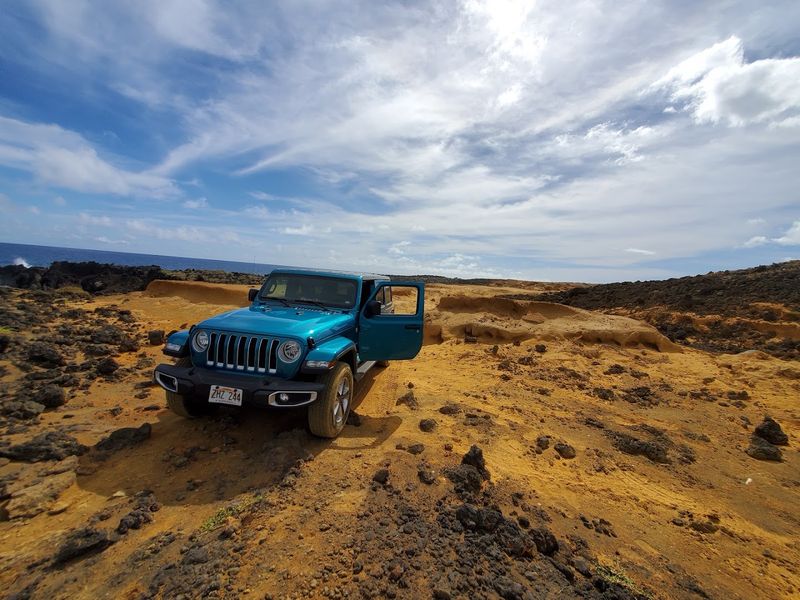
Papakolea sits on land managed by the Department of Hawaiian Home Lands, and the rules around visiting are clear and meaningful. Personal rental vehicles are strictly prohibited on the rutted dirt roads leading toward the beach.
Rental car agreements specifically exclude these roads, and driving on them causes real, documented damage to the landscape and to ancient Hawaiian cultural sites in the area.
You will likely encounter people at the parking area offering truck rides to the beach for a fee. These informal shuttle services are not officially sanctioned, and the vehicle traffic they generate contributes to the same erosion and cultural site damage that personal vehicle access does.
The legal and recommended way to experience Papakolea is by hiking. Beyond being the right thing to do, the hike genuinely adds to the experience in ways that a bumpy truck ride simply cannot replicate.
Leave No Trace principles apply fully here. Everything you carry in should come back out with you, including food wrappers, containers, and any other waste.
Creating new paths off the established trail causes unnecessary erosion on already fragile terrain. Reef-safe sunscreen matters here too, since the chemicals in conventional sunscreen can harm marine ecosystems over time.
Taking sand from any Hawaiian beach is illegal and carries real consequences, including significant fines. The olivine crystals at Papakolea are irreplaceable on any human timescale.
Pets are not permitted on the beach either. Visiting responsibly is not about following rules for the sake of it.
It is about ensuring this extraordinary place survives for every person who comes after you.
Finding Real Solitude at South Point, Big Island
There is something genuinely rare about a place that filters its own visitors by effort. Because Papakolea requires a real hike to reach, the people who show up are mostly those who actually want to be there, which changes the energy of the place entirely.
On the morning I visited, only a handful of other people were scattered across the beach, each quietly absorbed in their own version of the moment.
Starting the hike early is the single best strategy for experiencing that solitude. The trail is quietest in the first hour or two after sunrise, the light is softer, the temperature is cooler, and the beach feels more like a private discovery than a tourist stop.
May through October tends to offer drier trail conditions, which makes the walk more comfortable, though the wind at South Point is consistent year-round.
The surrounding landscape at Ka Lae, the southernmost point of the United States, carries its own weight of history. This area is recognized as a National Historic Landmark District and is believed to be one of the earliest Polynesian settlement sites in Hawaii.
Ancient Hawaiian heiau, or temples, still exist nearby, and the Pacific golden plover, a migratory shorebird that lends Papakolea its Hawaiian name meaning plover flats, winters in this region.
Sitting on that green sand, knowing the layers of geological and human history beneath you, adds a quiet depth to the experience. Papakolea is not just a beautiful beach.
It is a place that rewards patience, effort, and genuine curiosity with something that feels almost impossible to put into words.
Address: South Point Road, Naalehu, HI 96772
