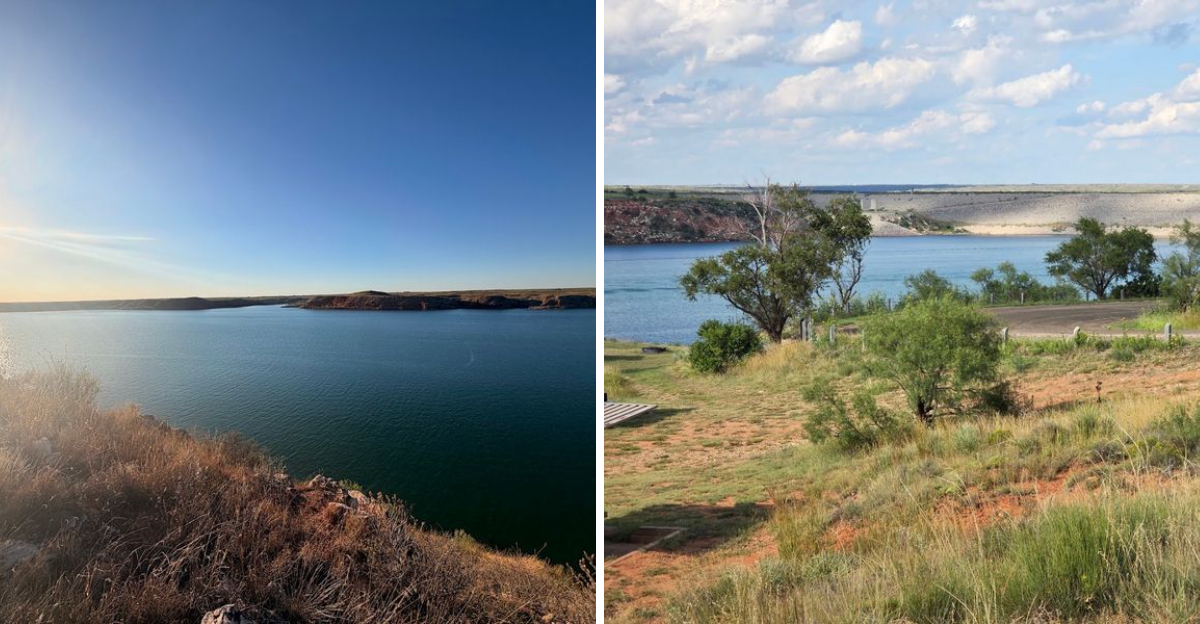
A lake in the middle of the Texas Panhandle should not feel this surreal. But Lake Meredith does exactly that.
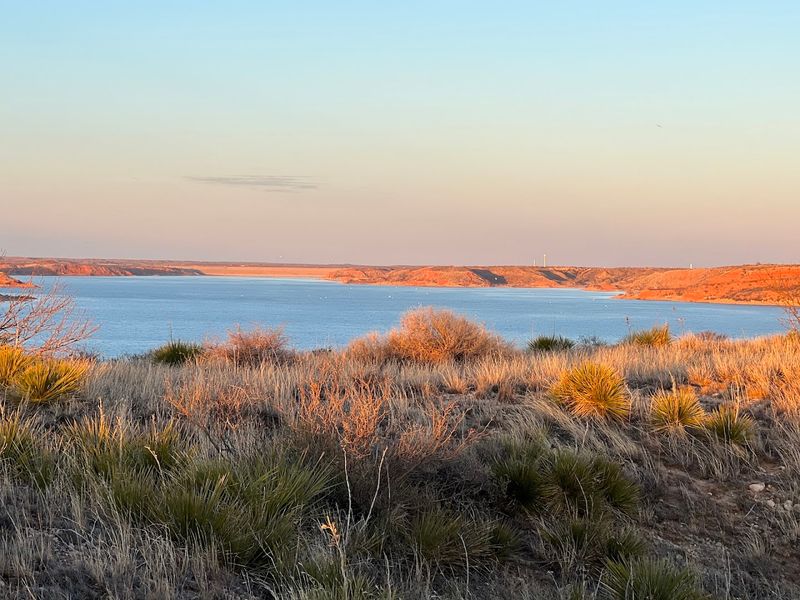
Surrounded by rugged canyons and open sky, it looks like it belongs in a different part of the world. The water is clear, the cliffs rise dramatically from the shore, and the whole place has a quiet, almost lonely beauty that is hard to describe.
It is the kind of spot where you can sit on a rock, watch the light change, and feel like you have stepped into a painting. No crowds, no noise, just water and sky and the kind of peace that is getting harder to find.
It is a bit off the beaten path, but that is part of its charm. Go for the views.
Stay for the stillness. It is worth the drive.
The Geology That Makes Your Jaw Drop
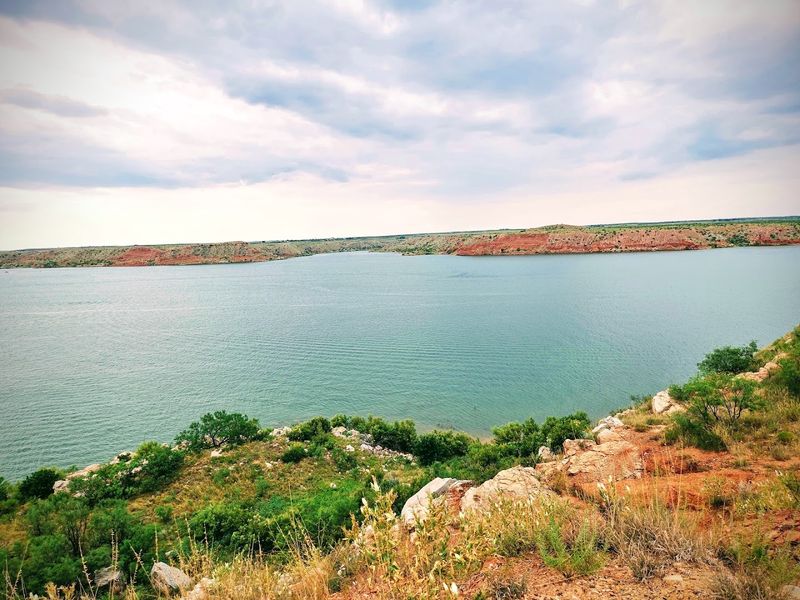
Red cliffs rising out of nowhere in the middle of the Texas Panhandle is not something you expect, but that is exactly what greets you at Lake Meredith.
The canyon walls here tell a story that goes back nearly 300 million years to the Permian Period, and the layers of color stacked on top of each other read almost like pages in a geology textbook.
Those bold red and white bands you see are called the Permian Red Beds, colored by iron oxides and clay minerals baked into the rock over unimaginable stretches of time.
What really catches the eye are the mesa tops, capped with resistant Alibates dolomite that has held firm while the softer rock beneath slowly eroded away. Buttes, pinnacles, and hoodoos jut out from the landscape in shapes that feel almost sculpted.
Big white boulders of dolomite have tumbled down the red slopes over centuries, and they sit scattered across the terrain like something out of a science fiction film set.
Wind and water did all of this work together, carving the High Plains into breaks and canyons that feel genuinely dramatic. There is something humbling about standing near these formations and realizing the lake below is actually the newcomer in this story.
The geology alone is worth the trip. You do not need to be a rock enthusiast to feel the weight of time pressing down on you here, it is written right there in the walls.
Birdwatching and Wildlife Around Every Corner
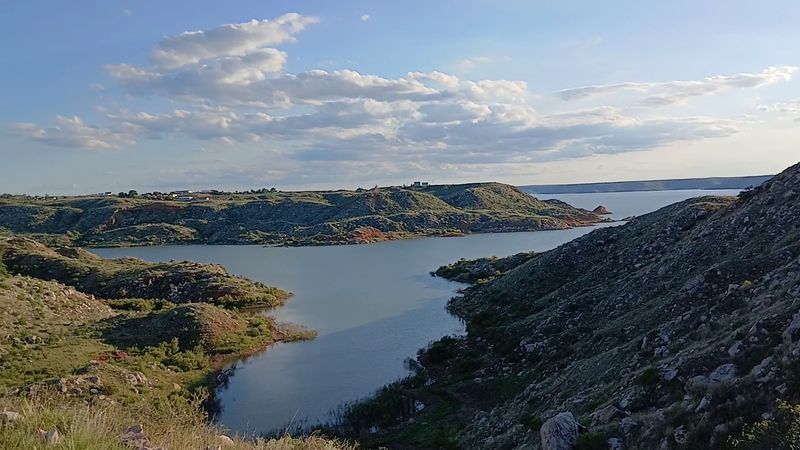
Lake Meredith has a reputation among birders that surprises most casual visitors. Over 230 bird species have been recorded within the recreation area, placing it among the top 25 National Park Service sites in the entire country for birdwatching.
That is a remarkable number for a place in the middle of the Texas Panhandle, and it says a lot about the variety of habitats packed into this landscape.
During migration, white pelicans glide low over the water in formations that look almost choreographed. Great blue herons and great egrets work the shallows with that slow, patient energy they are known for.
Bald eagles show up in winter, and spotting one perched on a canyon ledge above the lake is a genuinely thrilling moment. I was not expecting to see one on my visit, but there it was, completely unbothered.
Beyond birds, the park supports a healthy mix of mammals that roam freely across its grasslands and rocky terrain. Whitetail and mule deer are commonly spotted near dawn and dusk.
Pronghorn antelope move across the open flats, and black-tailed prairie dog colonies are easy to find if you know where to look. Spring Canyon is a good spot to catch dragonflies, with 21 documented species zipping around.
The whole ecosystem feels alive in a way that sneaks up on you. One moment you are focused on the view, and the next a coyote trots past without a care in the world.
Water Sports on the Largest Lake for Miles
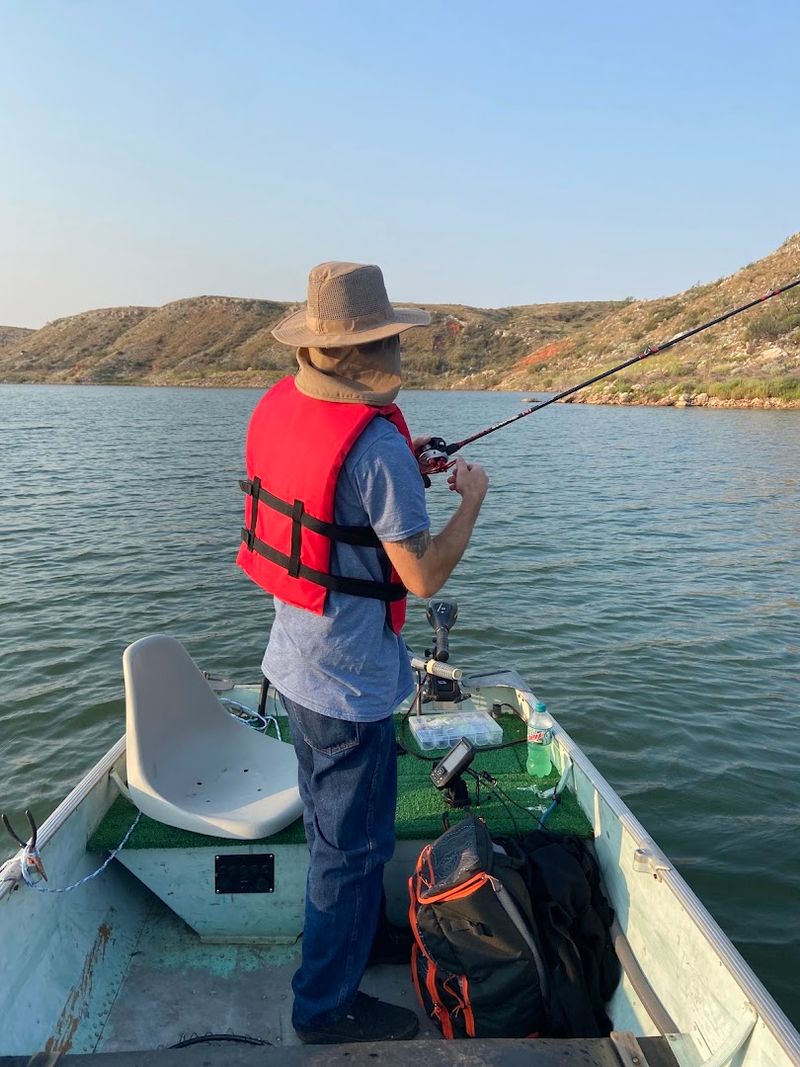
Lake Meredith holds a title that not many people know about: it is the largest body of water within a 200-mile radius. That fact alone changes how you think about the place.
Out here in the Panhandle, surrounded by flat plains and dry air, a 10,000-acre lake feels almost surreal. And people take full advantage of it.
Boating is a big deal here. Powerboats, water skiers, wakeboarders, and sailors all share the water on busy weekends, and the lake is wide enough that it rarely feels crowded.
Kayakers and paddleboarders tend to hug the canyon-edged coves, which offer a more intimate experience with the rock walls rising right out of the water.
If you did not bring your own gear, watercraft rentals including pontoon boats, kayaks, and paddleboards are available at the Sanford-Yake boat ramp, which makes it accessible even for first-timers.
Fishing is another strong draw, and Lake Meredith holds the title of the number-one walleye lake in the state of Texas. Largemouth and smallmouth bass, crappie, catfish, and white bass round out the options for anglers who want variety.
The Spring Canyon swimming area is popular on hot days, and the water is surprisingly clear in certain spots, clear enough that scuba diving is actually a legitimate activity on the lake. There is more going on beneath the surface than most visitors realize, both literally and figuratively.
Hiking Trails Through Ancient Canyon Country
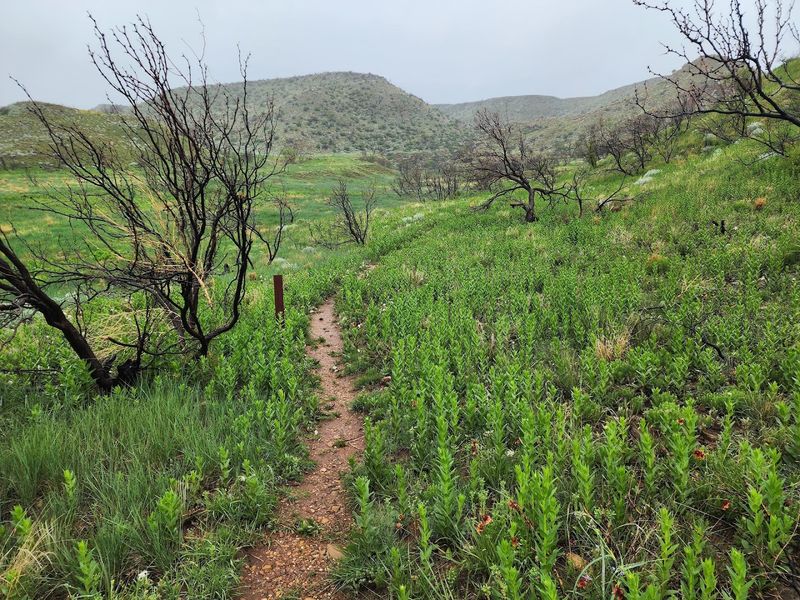
Not every great hiking destination announces itself with a famous name or a crowded trailhead, and Lake Meredith is proof of that. The trail network here winds through terrain that shifts constantly, from open grassland to juniper-studded canyon breaks to shoreline paths with unobstructed lake views.
Each trail has its own personality, and that variety keeps things interesting no matter how many times you visit.
The Harbor Bay Trail is probably the most well-known route in the park, covering about 8 miles out and back with rolling hills, stepped climbs, and winding switchbacks that reward you with wide views of the lake and, in spring, patches of wildflowers hidden between the rocks.
It is a satisfying trail without being punishing.
The South Turkey Creek Trail runs about 6 miles and hugs the shoreline in a way that gives you some of the best water views in the entire recreation area. That one is worth saving for a clear morning when the light hits the canyon walls just right.
For a more relaxed outing, the Mullinaw Trail covers 4.3 miles of mostly flat terrain, which makes it a good pick for families or anyone who just wants to move through the landscape without working too hard.
Horseback riding is also permitted on many of these trails, and seeing riders move through the canyon scenery adds something genuinely western to the whole experience.
Pack water, wear sun protection, and go early in summer. The Panhandle sun does not mess around.
Stargazing Under a Sky That Earns the Hype
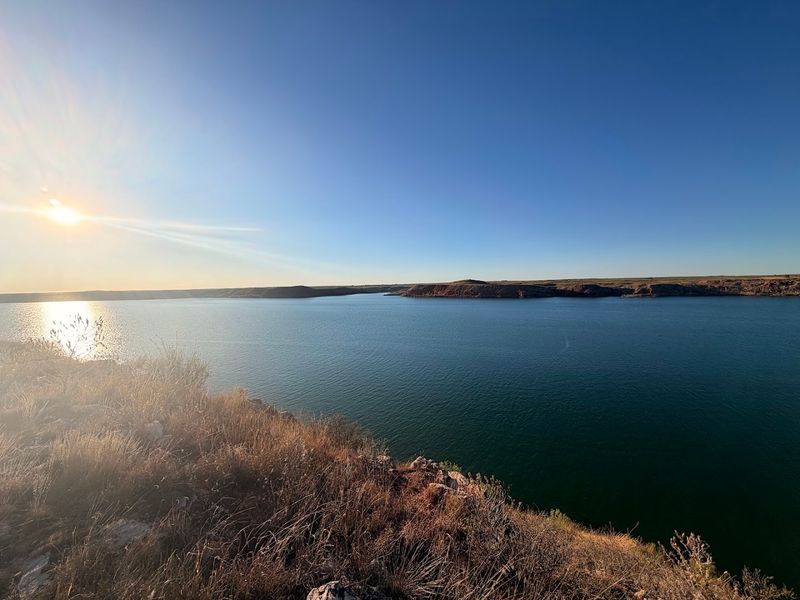
Remote places have a way of reminding you how much of the sky you usually miss, and Lake Meredith is one of the best places in the lower 48 states to experience that reminder firsthand. The Texas Panhandle sits far enough from major cities that light pollution is genuinely minimal here.
The night sky registers as a Bortle 2 to 3 zone, which means the Milky Way is visible to the naked eye on most clear nights from almost any campsite in the park.
Watching the Milky Way appear overhead as the last bit of daylight fades is one of those moments that is hard to put into words. It starts faint, then builds into this dense, glowing river of light that stretches from one canyon rim to the other.
You do not need a telescope to appreciate it, though one certainly adds to the experience. The silence out here at night is just as striking as the sky itself.
Camping under those stars is the obvious next step, and the park makes it easy with a range of options from fully primitive dispersed camping to developed sites with hookups at Sanford-Yake.
Campgrounds like Fritch Fortress, Harbor Bay, Plum Creek, and Cedar Canyon offer basic amenities without the noise and crowds you might find at more popular parks.
Campfires are allowed in elevated grills and existing fire rings. Falling asleep to total quiet and waking up to canyon light is the kind of reset that city life rarely offers.
The Alibates Flint Quarries and Ancient Human History
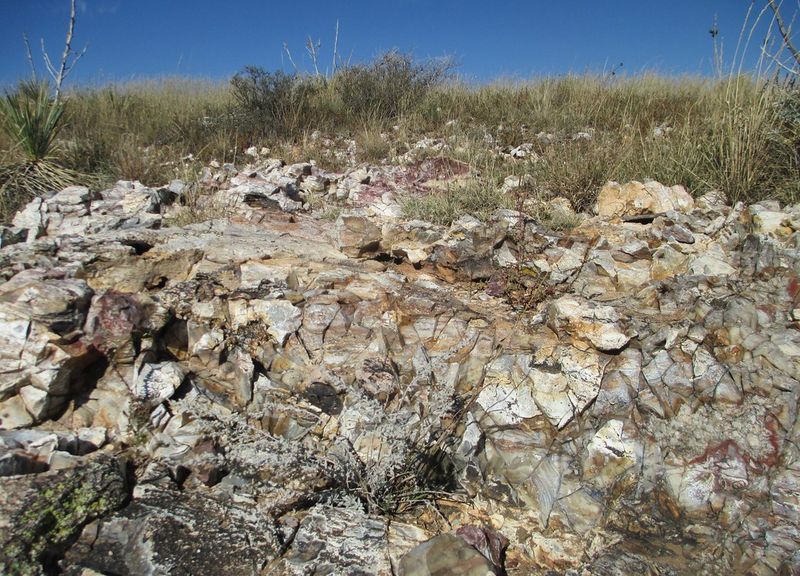
Just adjacent to the recreation area lies one of the most underrated historical sites in the American Southwest. Alibates Flint Quarries National Monument preserves the ancient quarrying sites where people have been chipping away at rainbow-colored agatized dolomite for at least 13,000 years.
That timeline is genuinely staggering to think about while you are standing on that same ground.
The flint found here is unlike most flint you will encounter anywhere else. It comes in swirling patterns of red, purple, yellow, and cream, almost too beautiful to be a tool material.
Ancient peoples recognized its quality early and distributed it widely across the Great Plains through trade networks that stretched for hundreds of miles.
Archaeologists have found Alibates flint in sites far outside of Texas, which speaks to how valued this material was across many cultures over thousands of years.
Guided tours are the primary way to access the quarry sites, and they are genuinely worth joining rather than skipping. The rangers who lead these tours bring the landscape to life with context that you simply cannot get from a roadside sign.
You stand at the actual pits where people knelt and worked, and it connects the geology of Lake Meredith directly to human story in a way that feels rare. The monument sits close enough to the recreation area that combining both in a single visit makes complete sense.
History and scenery side by side, no extra driving required.
Camping Options for Every Kind of Traveler
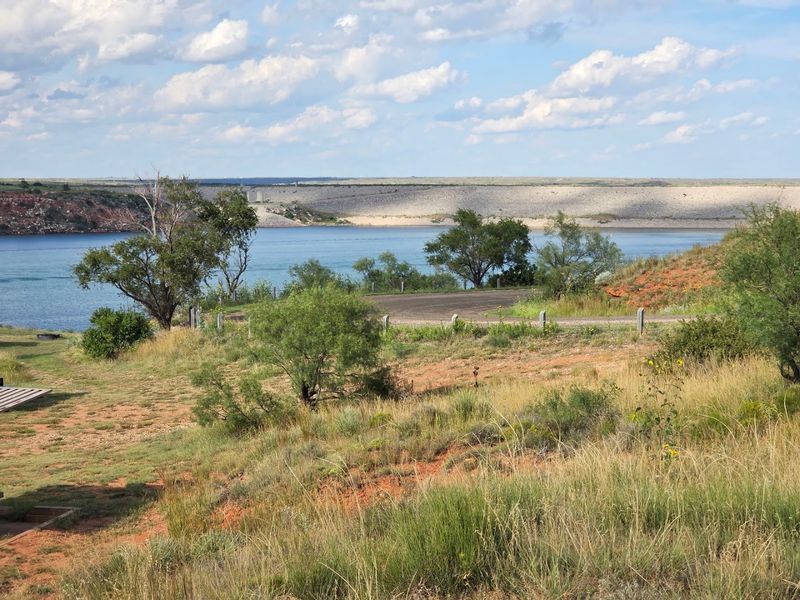
One of the genuinely refreshing things about Lake Meredith is how accessible camping here feels. There is no single crowded campground where everyone stacks up on top of each other.
Instead, the park spreads its camping options across multiple areas, each with a different vibe and level of development, so you can actually choose the kind of experience you want.
Sanford-Yake is the most developed option, with RV hookups and reservation-based sites for those who prefer a bit more comfort. It sits near the boat ramp, which makes it especially convenient for anyone who came to spend time on the water.
Fritch Fortress, Harbor Bay, Bugbee, Plum Creek, and Cedar Canyon all offer more basic setups with picnic tables, shade shelters, and toilet facilities, enough to keep things comfortable without feeling like a parking lot.
For those who want the full wilderness experience, dispersed camping is allowed throughout most of the recreation area. You pick your spot, set up your tent, and the canyon is yours.
Stays are limited to 14 consecutive days within a 30-day window, and campfires are only permitted in elevated above-ground grills or existing fire rings. That rule matters out here where wind can be unpredictable.
The combination of free dispersed camping, genuine dark skies, and dramatic scenery makes Lake Meredith one of the better-value camping destinations in the entire region. Bring enough water and food because the nearest town is not exactly around the corner.
The Quiet History Written Into the Landscape
Lake Meredith did not spring into existence without a story behind it. The Sanford Dam was completed in 1965 after years of engineering work, built across the Canadian River to create a reliable water supply for 11 to 14 cities across the Texas Panhandle.
The lake was later renamed in 1974 to honor A. A.
Meredith, a man who pushed hard for its creation. That kind of civic history is easy to overlook when the scenery is this distracting, but it adds real depth to the place.
Long before the dam, the Canadian River valley drew people for the same basic reasons it still does: water, shelter, and resources. Native American groups, Spanish explorers, soldiers, and ranchers all moved through this corridor over the centuries, leaving traces that the park still preserves.
McBride Canyon holds the ruins of a stone ranch house built by Amos McBride in the 1870s, part of the sprawling LX Ranch that once covered enormous stretches of the Panhandle. The walls are still standing.
That alone feels worth a detour.
The landscape itself carries history in its bones, from the ancient flint quarry sites nearby to the cattle trails that crossed this land before the lake ever existed. Visiting Lake Meredith with that context in mind turns a recreational trip into something richer.
The canyon walls are not just pretty. They are a record of time, human and geological alike, layered on top of each other in ways you keep noticing the longer you stay.
Address: 419 E. Broadway St., Fritch, TX 79036
