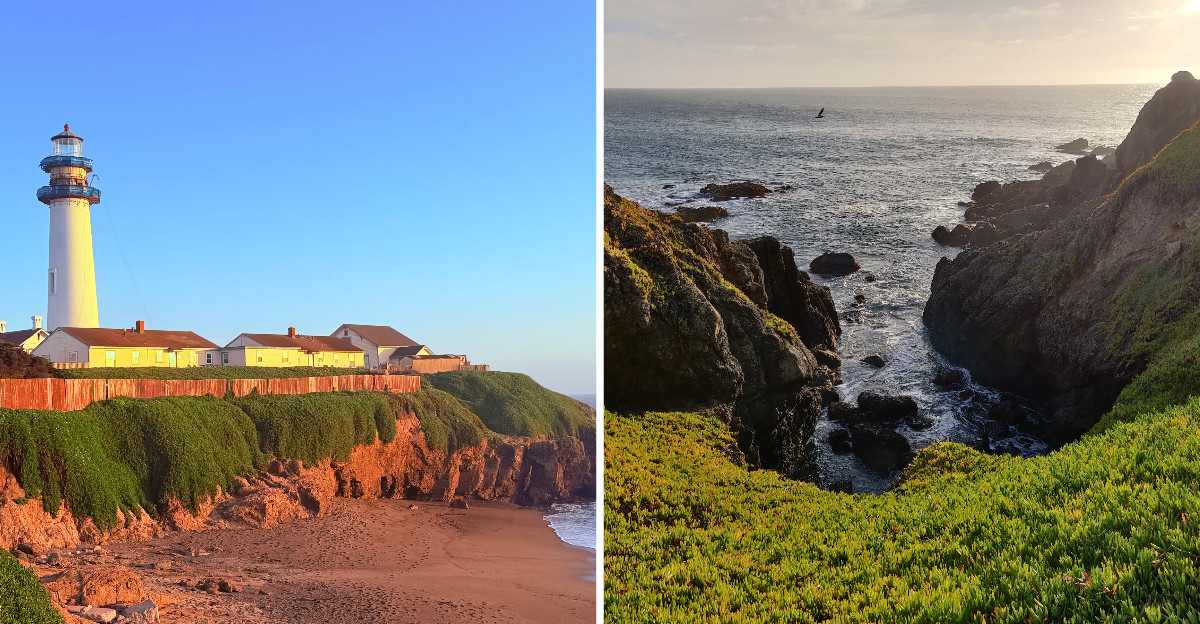
Waves slam into dark rocks far below a cliff, and the steady boom is the first thing that reaches you. Look up, and a bright white tower stretches 115 feet into a sky streaked with fog.
Driving down the coast expecting a pretty photo stop, this place grabs hold with its stories instead. A ship wrecked here during the wild years of the Gold Rush, and that crash is a big reason the lighthouse exists.
Today the grounds hold whale sightings, old buildings, and a famous glass lens that sparkles like a giant jewel. California keeps this kind of history alive along its coastline, and this tower is one of the best examples.
Hours disappear while reading about the rescues and the wrecks that shaped this stretch of shore. The light still turns, and the stories still linger.
A Fog-Bound Clipper Gave the Point Its Name
Picture a brand new ship, sails full, gliding toward California in 1853. The Carrier Pigeon was a sleek clipper built for speed, and she was on her very first trip from Boston to San Francisco.
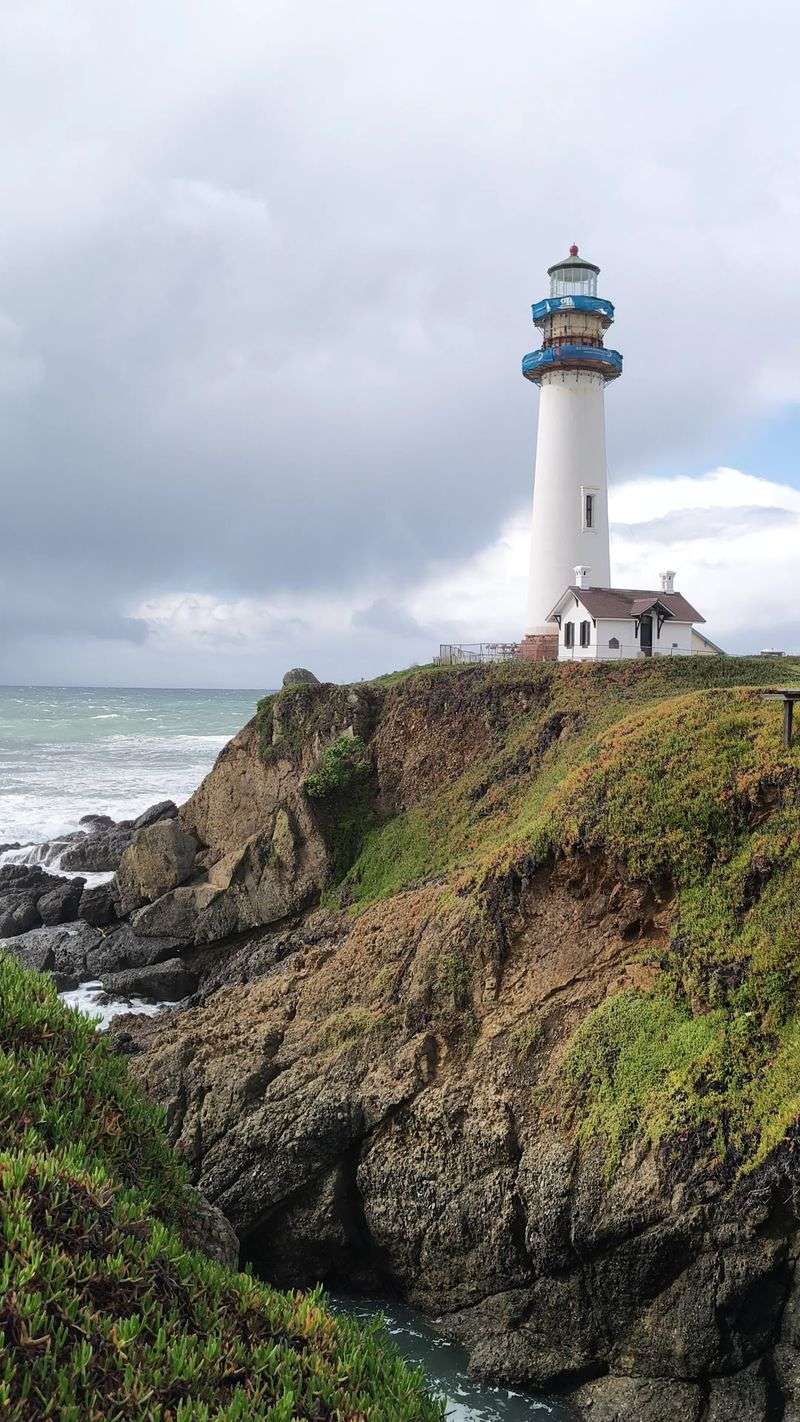
I kept thinking about that as I looked down at the rocks, because her journey ended right here.
On June 6, 1853, thick fog rolled over the coast. The crew could not see the shoreline, and the ship ran hard aground on the rocky point.
Luckily, everyone aboard made it safely to land.
The ship itself was not so lucky. She and most of her valuable cargo were lost to the rocky waters below.
Locals started calling the spot Pigeon Point, and the name has stuck for more than 170 years.
Clipper ships like this one were the race cars of their day. During the Gold Rush, merchants were eager to get goods to San Francisco fast, so these ships sailed all the way around the tip of South America.
When you visit, take a moment at the edge of the viewing area and imagine that fog. On a clear day it seems impossible that anyone could miss the land, but the mist here can swallow the whole coast in minutes.
That quick change is exactly why a light was needed.
Gold Rush Traffic Turned This Coast Into a Danger Zone
Here is a fact that surprised me: the Carrier Pigeon was not the last ship to meet trouble at this point. After gold was discovered in California in 1848 and the rush took off in 1849, the ocean along this coast became a busy highway.
Ships carried miners, food, lumber, and supplies to San Francisco, and many passed right by this rocky point.
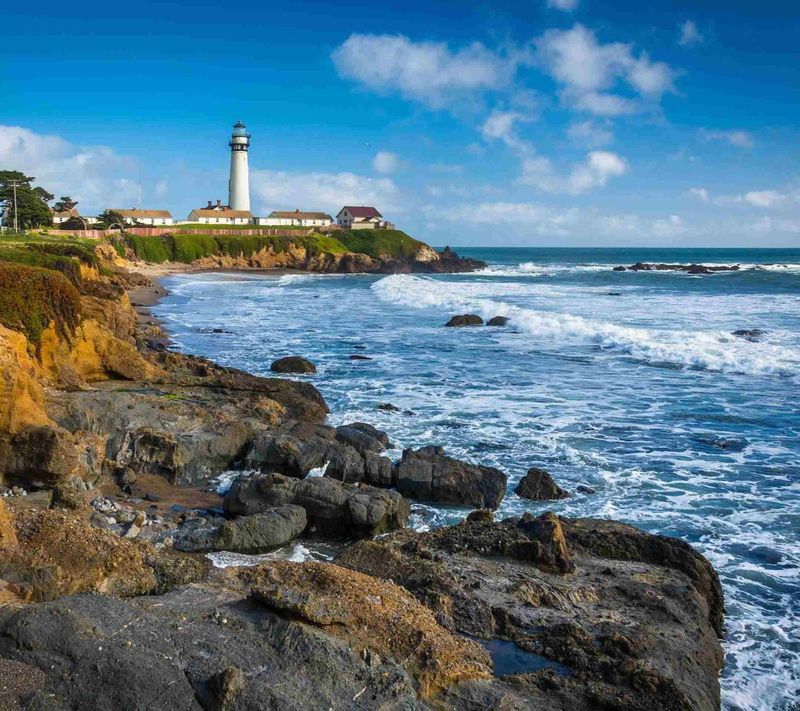
More ships meant more wrecks. The rocky reefs here stick out into the water like hidden teeth, and fog can roll in without warning.
Sailors had no bright beacon to warn them away.
In the 1860s, two more serious shipwrecks happened near Pigeon Point. Together they cost around 50 people their lives.
That heartbreaking loss made people demand action, and the push for a lighthouse grew louder.
It still took years of asking before the government set aside money. Construction finally started in 1871, and workers hauled materials to this remote cliff to build something tall enough to be seen far out at sea.
On November 15, 1872, the light glowed for the first time.
I found it moving to think about how a tragedy became a lifesaver. If you enjoy history, read the displays at the station, since they help connect these dates to the rocks in front of you.
A 115-Foot Tower That Looks Like It Belongs in New England
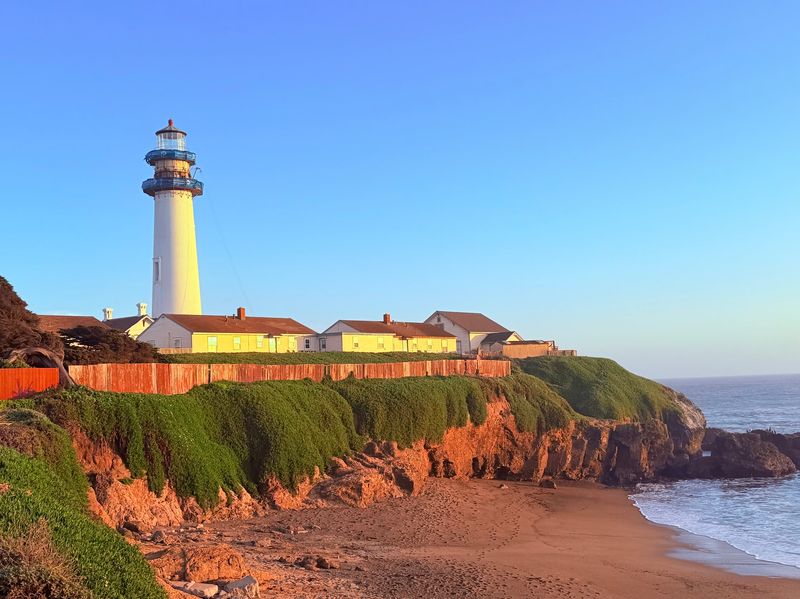
My neck actually got a little sore from staring up. At 115 feet, Pigeon Point Lighthouse ranks among the tallest lighthouses on the West Coast, and it rises over the cliff like a giant white chess piece.
The shape surprised me. Instead of the short, stubby towers you see at some California stations, this one is tall and slender, a style that reminds many visitors of the classic lighthouses along the East Coast.
Its thick masonry walls were built to handle wind, salt spray, and whatever the Pacific throws at them.
Height mattered for a simple reason. The higher a light sits, the farther away sailors can spot it, since the curve of the Earth hides low lights sooner.
From up here, the beam could reach ships roughly 25 miles offshore.
The tower has been closed to the public since 2001 because of structural concerns, so you cannot climb it right now. Even so, it looks amazing from every angle on the grounds.
I liked it best from the blufftop path, where the tower lines up with the crashing surf for a perfect photo.
Try coming in late afternoon. The white paint turns warm and golden as the sun drops, and the shadows make the tower look even taller.
Bring a jacket, though, because the wind up here has a mind of its own.
A Glittering Lens Built From 1,008 Prisms
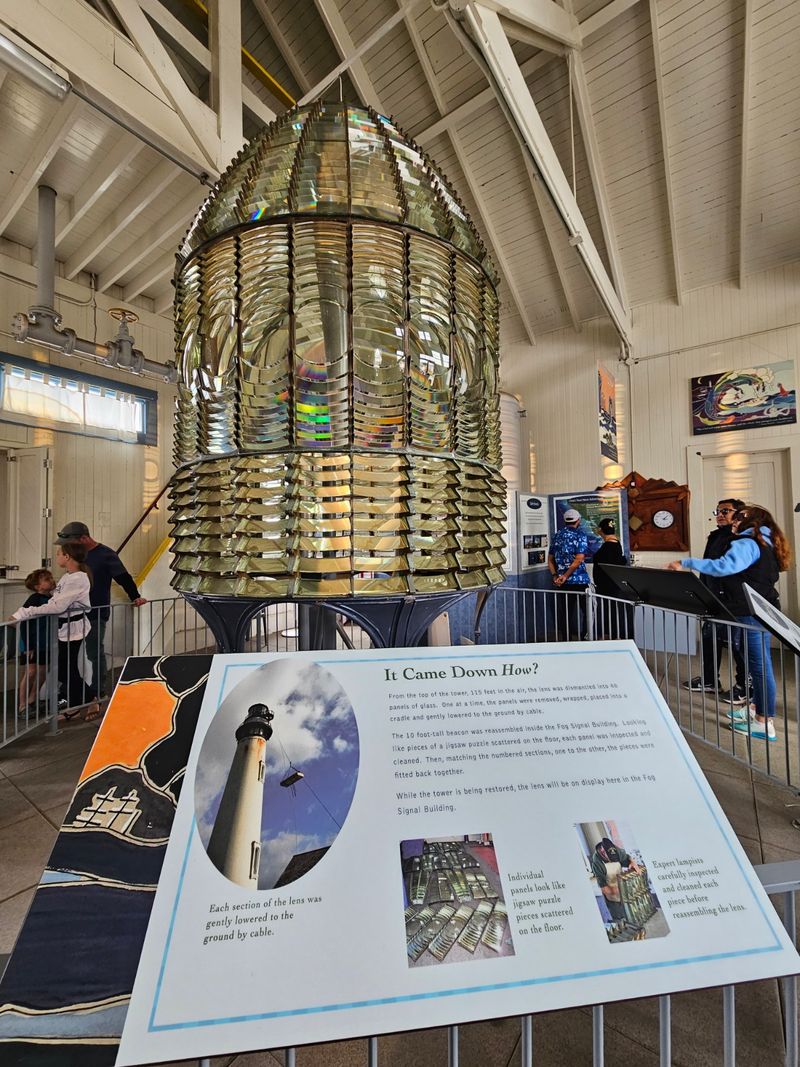
Did you know the original light at Pigeon Point was not just a lamp but a work of art? It was a first-order Fresnel lens, one of the largest types ever made, crafted by the Henry-LePaute company in Paris, France.
I honestly gasped when I first saw it.
The numbers are wild. The lens holds 1,008 glass prisms, stands about 16 feet tall, and weighs around 2,000 pounds.
All that glass works together to bend and focus light into a powerful beam.
According to the station’s history, the lens was first used at Cape Hatteras on the East Coast. It then traveled all the way around Cape Horn at the tip of South America to reach California.
That is one well-traveled piece of glass!
Once installed, it flashed white every ten seconds, and sailors could spot it up to 25 miles out. At first the lamp burned refined lard oil, which sounds a bit like cooking breakfast.
In 1888 keepers switched to kerosene, and later the light became electric before full automation arrived in 1974.
Today the lens sits safely inside the Fog Signal Building, where you can get close enough to see how each prism catches the daylight. Keep your camera ready, because it throws little rainbows when the sun hits it just right.
It is easily the star of the whole station.
Old Keeper Buildings Full of Quiet Stories
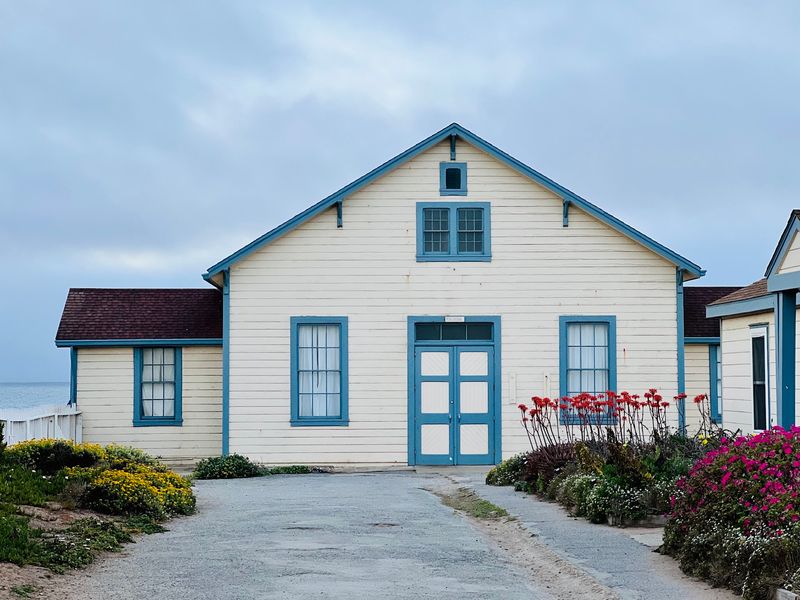
Keepers once lived and worked on this windy patch of land, and their old buildings still dot the grounds. I wandered from one to the next with no real plan, which turned out to be the best way to soak it all in.
The grounds open daily from 8 AM until sunset.
The Fog Signal Building is the main stop. Besides the famous lens, it holds exhibits about the lighthouse, the keepers who tended it, and the shipwrecks that made it necessary.
Reading those stories while the ocean roars outside gives them extra punch.
Nearby, the historic carpenter’s shop now works as a park store and visitor center. It is a good place to grab a book about the coast or a small souvenir.
Hours are usually Thursday through Tuesday from 10 AM to 4 PM, though they can change depending on staffing.
You will also spot the small oil house, where fuel for the lamp was once stored. It is easy to walk past, but it reminds you how much hard work went into keeping the light burning every single night.
If you visit on a Sunday, check whether a guided history walk is scheduled. A guide can point out details you might miss on your own.
Restrooms sit near the parking lot, and a few picnic tables make a great lunch spot with an ocean view.
Whales, Seals, and Tide Pools Right Off the Bluff
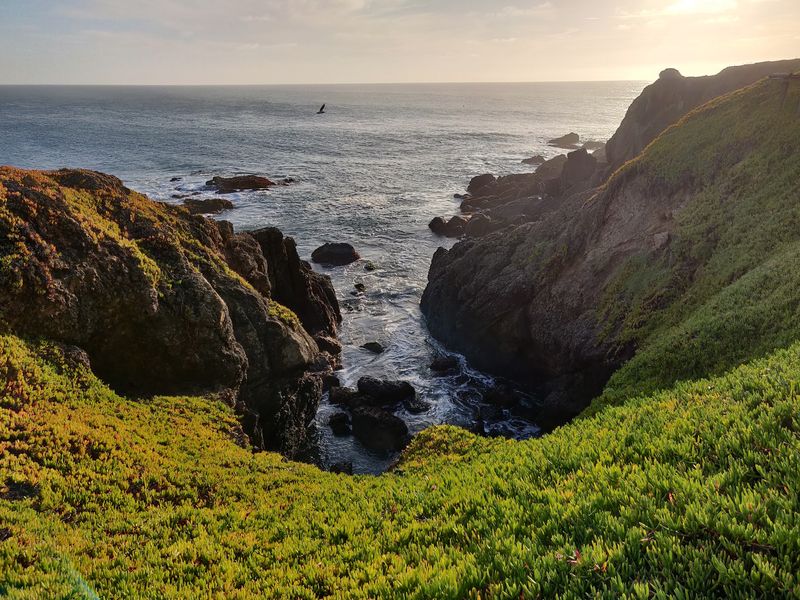
Keep your eyes on the horizon long enough and you might catch a puff of mist shooting out of the waves. That puff is a whale breathing, and Pigeon Point is one of the best places on this stretch of coast to see it from land.
I could not stop scanning the water once I knew that.
Gray whales travel past during their long migration, mostly between December and April. In spring, from mid-March through May, thousands of them head north with their calves.
Summer brings humpback whales that feed on schools of small fish, though they are harder to predict.
Seals and dolphins show up often too. Binoculars make a huge difference, so pack a pair if you have them.
A short blufftop trail, sometimes called Mel’s Lane, curves above Whaler’s Cove and leads to a viewing deck. I could have stayed there for hours watching the waves fold over the rocks.
The breeze smells like salt and seaweed, which somehow made me hungry again.
At low tide, the rocky reefs near the station reveal tide pools packed with colorful life. Look for sea stars, anemones, and tiny crabs, but step carefully and leave everything where you find it.
Part of the area called Rocky Point is closed at times to protect nesting birds and prevent erosion, so follow posted signs.
A Hostel Stay, a Big Restoration, and a Light That Keeps Shining
Falling asleep to the sound of waves beside a lighthouse sounds like something from a storybook, and here it is actually possible. The old Coast Guard cottages now serve as a hostel run by Hostelling International.
Guests share bathrooms, full kitchens, and cozy living rooms, which gives the whole place a friendly, camp-like feel.
Staying overnight lets you see the station at quiet times, like early morning when fog drifts past the tower. Just remember that dogs are not allowed on the grounds except for service animals, and drones are banned throughout the park.
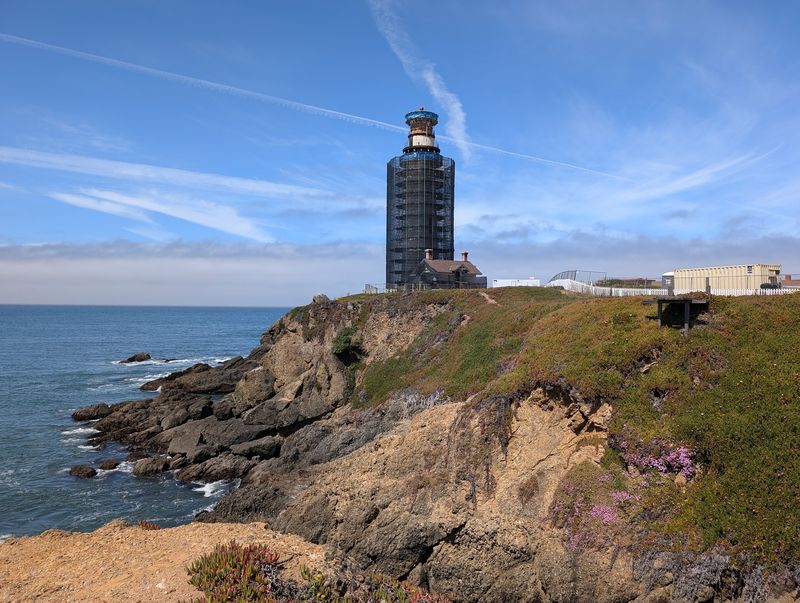
Big changes are happening to the tower itself. A major restoration project began in February 2024 to repair the aging structure, with hopes that the tower could reopen around spring 2027.
Meanwhile, an automated beacon still guides ships at night, so the light never really went out.
The station is a California Historical Landmark and is listed on the National Register of Historic Places. Long before any tower rose here, this land was home to the Quiroste, a Costanoan Ohlone tribe.
Knowing that added another layer to my visit.
I left feeling grateful that a sad shipwreck led to something that has protected sailors for over 150 years. Pack layers, check the weather, and give yourself time to linger.
Address: 210 Pigeon Point Road, Pescadero, CA 94060
