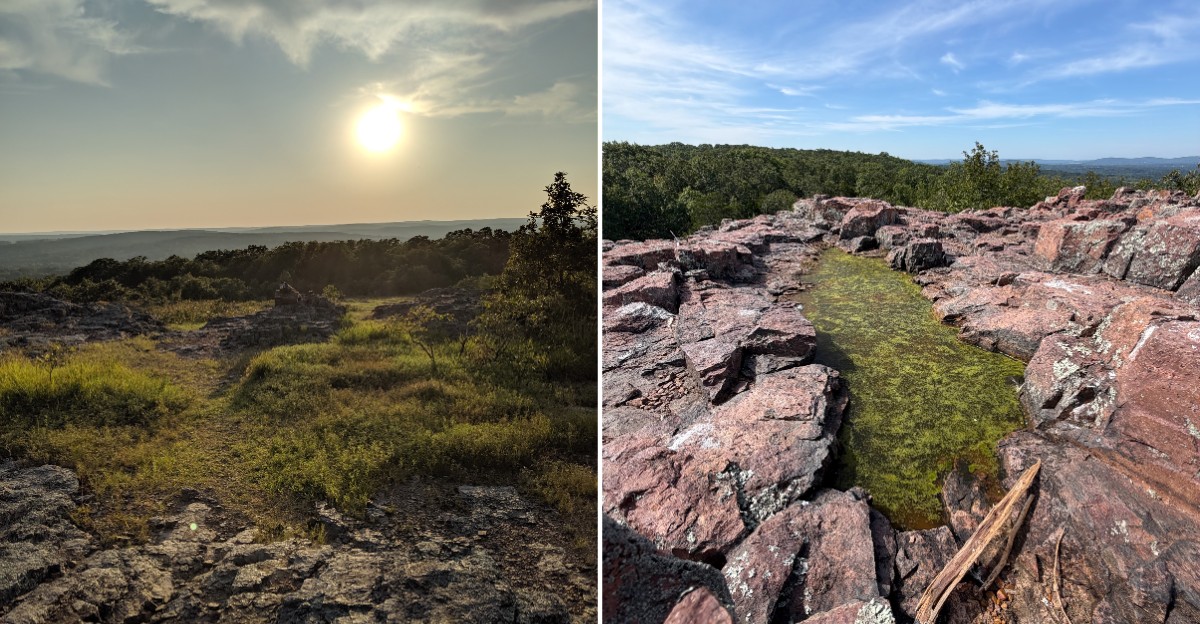
The top of this Missouri hike looks like someone pressed a giant honeycomb into the rock. Dark rhyolite columns break the summit into strange geometric shapes, giving the whole area a look you do not see on an ordinary trail.
The climb is short, but the rocky footing keeps it interesting on the way up. Once you reach the top, the views open across the surrounding countryside, and the honeycomb formations become the main event.
You can wander around the exposed rock, look for the sharp patterns, and take in the scenery without committing to an all-day trek. For such a short hike, it packs in a surprisingly unusual payoff.
Why This Little Mountain Is Worth Your Afternoon
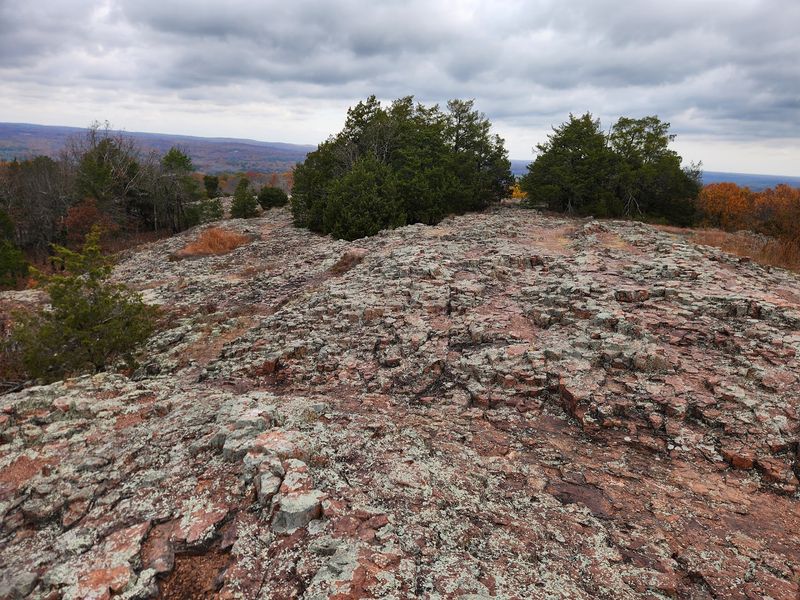
You know how some hikes make you work for hours before anything interesting happens, and this one just skips right to the good part? Hughes Mountain Natural Area is one of those rare places where a short walk hands you something truly unusual at the end.
The summit is covered in rock that cracked into neat, many-sided shapes, and it honestly looks like a beehive frozen in stone.
People call that rocky top the Devil’s Honeycomb, which is a fun name that sticks in your head after you hear it once. The whole area is protected by the Missouri Department of Conservation, so it stays wild and simple instead of turning into a crowded tourist stop.
That means you get a calm, natural setting where the rocks, trees, and open sky do all the talking.
I think what makes it so appealing is the mix of easy access and real wonder, because you do not need to be a serious hiker to enjoy it. Families, curious teens, and anybody who likes looking at cool rocks can all handle the trip without much fuss.
If you have ever wanted to feel like an explorer without packing a giant backpack, this is a really good place to start that kind of adventure.
Finding Your Way To The Trailhead
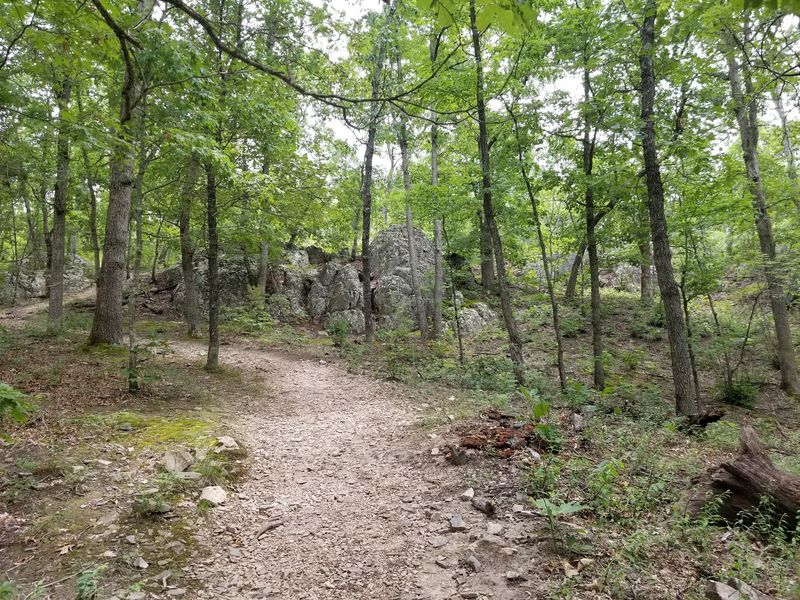
Getting there is actually pretty painless, which I always appreciate when I just want a relaxed day outside. The address you will want to plug into your map is Hughes Mountain Natural Area, Highway M, Irondale, MO 63648, out in Washington County.
The drive itself winds through rolling Ozark countryside, so the trip there feels like part of the fun instead of a chore.
Once you arrive, you will find a simple parking area right off the highway with the trail starting nearby. There is nothing fancy waiting for you, just a sign, some trees, and a path heading uphill into the woods.
Honestly, that plain little setup is kind of charming because it tells you right away that this place is about nature and not about shops or snack stands.
My best advice is to download your directions before you leave, since cell service can get spotty in these hills. It also helps to fill up your gas tank in a bigger town on the way, because small country roads do not always have a station around every bend.
Bring water, a few snacks, and comfortable shoes, and you will be set for a smooth, easy start to the day once you pull into that lot.
The Climb Is Easier Than It Looks
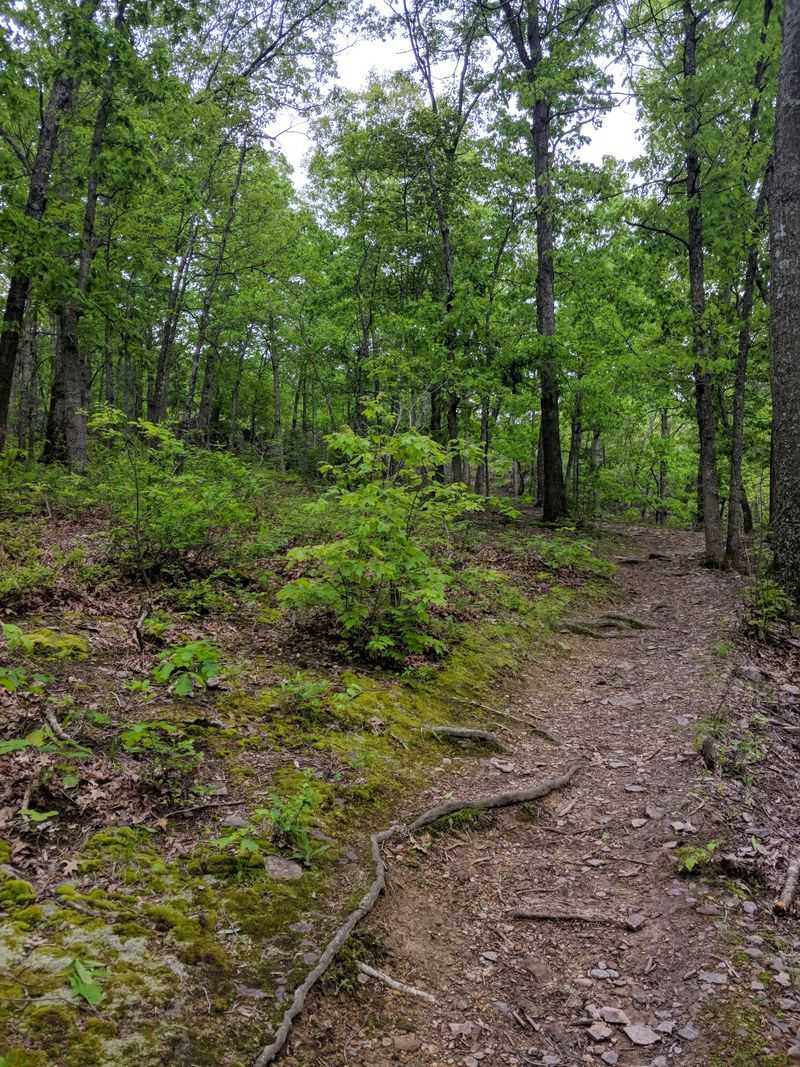
Here is the good news that most people are happy to hear, which is that the trail up Hughes Mountain is short and pretty friendly. Most hikers treat it as a quick out-and-back walk, and you can easily stretch it a bit longer by wandering around once you reach the top.
It does climb steadily, so you will feel it in your legs, but it never turns into anything scary or extreme.
The path moves through shady woods before opening up onto rocky, sunny ground as you get closer to the summit. Some parts are loose and uneven, so watching your step is a smart habit, especially if the rocks are wet after rain.
Sturdy shoes with good grip will make you a lot more comfortable than flimsy sneakers on those sloping stones.
Take your time and stop to catch your breath whenever you want, because there is no prize for rushing up a hill like this. Little breaks give you a chance to notice the changing plants and the way the forest slowly gives way to open sky.
By the time you step onto that wide stone summit, you will feel like you earned it without wearing yourself out completely, which is pretty much the ideal kind of hike.
Stepping Onto The Devil’s Honeycomb
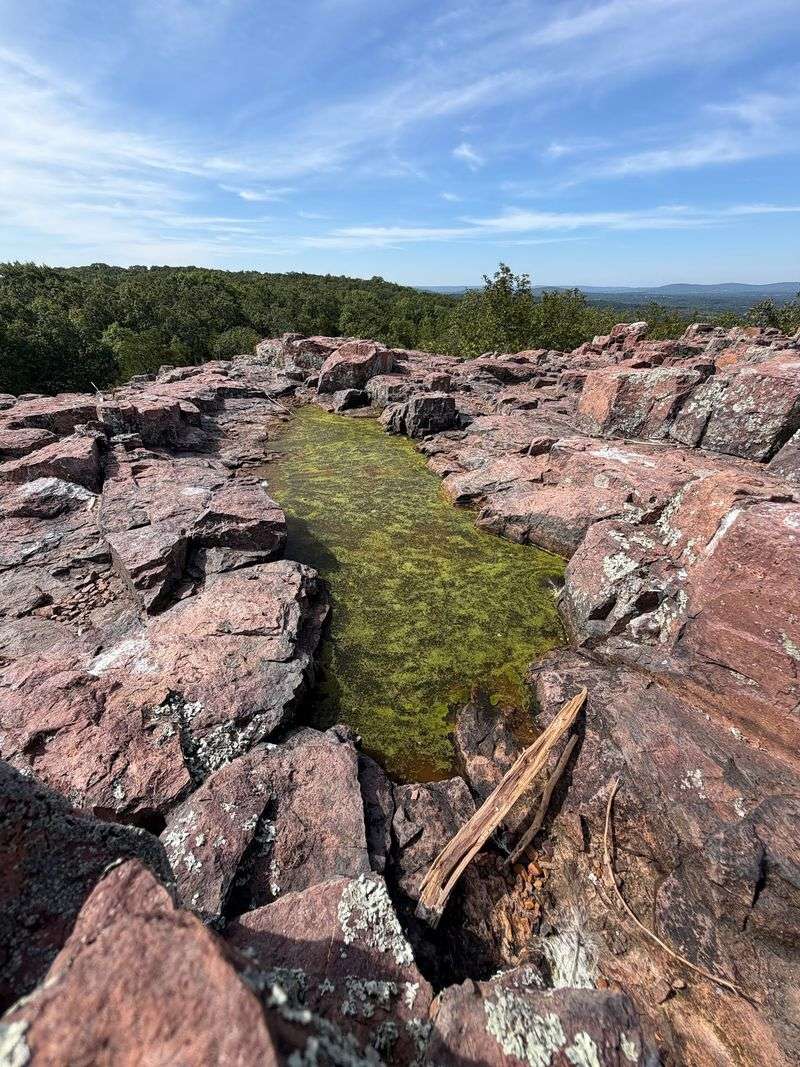
Picture walking out of the trees and suddenly standing on a floor of stone shapes that fit together like puzzle pieces. That is the moment everybody comes for, and it really does feel a little unreal when you first see it.
The rock tops are mostly five or six sided, packed tightly side by side across the summit.
What you are looking at are the ends of tall rock columns sticking up out of the ground, worn smooth on top over a very long time. From certain angles they look like stepping stones, and from others they look like the cells inside a honeycomb, which explains the famous nickname.
Kids especially love hopping from one shape to the next, though grown-ups secretly enjoy it just as much.
Try to slow down and really look at the patterns, because each column is a little different in size and shape. Lichen grows in soft gray and green patches across the stone, adding texture and color to the scene.
It is a wonderful spot for photos, so think about getting low to the ground to capture the pattern stretching out in front of you. Just remember to stay gentle with the rocks and plants, since everything up here is protected for everyone to enjoy.
Volcanoes Built This Place, Believe It Or Not
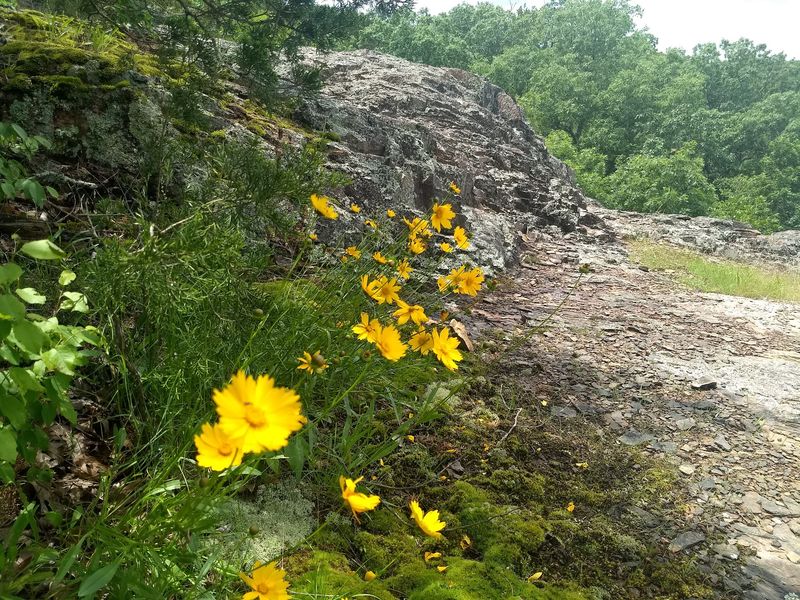
Okay, this is the part that blows my mind every time I think about it. Those honeycomb columns formed from rhyolite, a kind of volcanic rock, back when this area had active volcanoes an unbelievably long time ago.
The rocks here are counted among the oldest exposed rocks in the whole country, which is a wild thing to stand on.
So how did the shapes happen? When the hot volcanic material cooled slowly and evenly, it shrank and cracked in a regular pattern, kind of like mud that dries and splits in the sun.
Those cracks ran deep down into the rock, creating long columns with flat sides that we now see from the top.
The same kind of natural process created famous places like Devils Tower in Wyoming and the Giant’s Causeway in Ireland. Isn’t it fun to think that a small hill in the Missouri Ozarks belongs to that same family of rock formations?
If you have a young science fan in your life, this is a great place to explain how the earth changes over enormous stretches of time. You can point to the columns and actually show them the proof, which beats reading about it in a textbook any day.
Soaking Up That Wide Open View
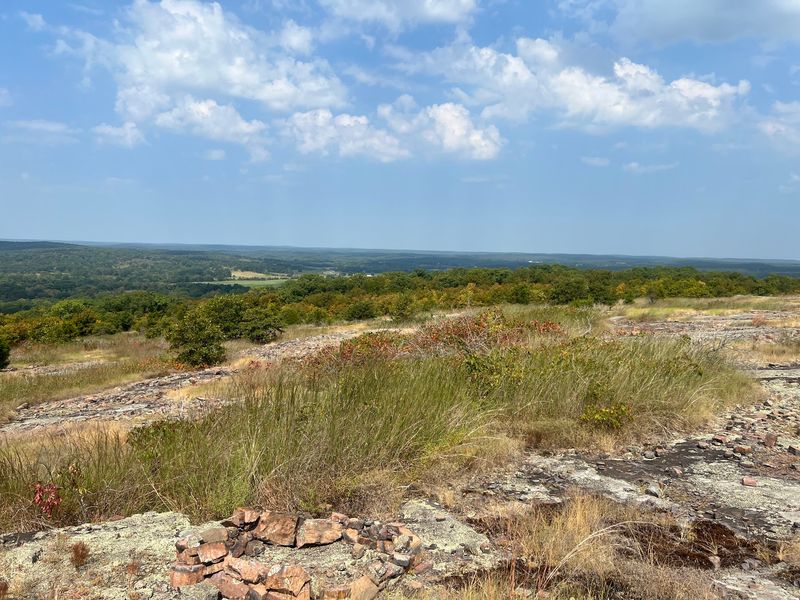
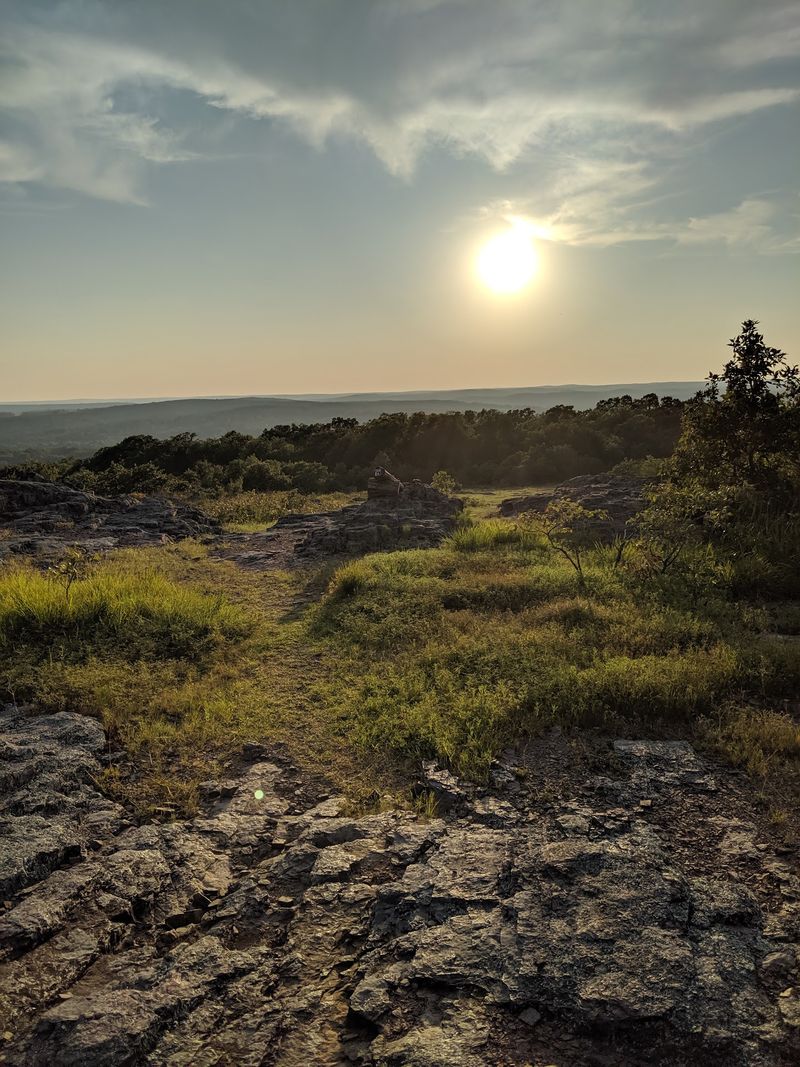
Once you finish poking around the rock shapes, turn around and just look out for a minute, because the view is a big part of the magic. From the summit, the land rolls away in every direction with forested hills, open fields, and quiet country stretching toward the horizon.
It is the kind of scene that makes you stop talking for a bit without even meaning to.
The St. Francois Mountains are rounded and gentle compared to sharp western peaks, and that softness gives the whole landscape a peaceful feel. In spring and summer everything glows green, while autumn turns the hillsides into a patchwork of orange, red, and gold.
Winter has its own charm too, since bare trees let you see farther across the valleys.
I would suggest finding a comfortable flat rock, sitting down, and giving yourself a real break up there. Bring a snack and a refillable water bottle so you can linger without feeling rushed to head back down.
A camera or phone is handy, but try to spend at least a few minutes just enjoying it with your own eyes. Moments like that are what make a simple hike feel special long after you get home and kick off your muddy shoes.
Glades, Wildflowers, And Quiet Woods
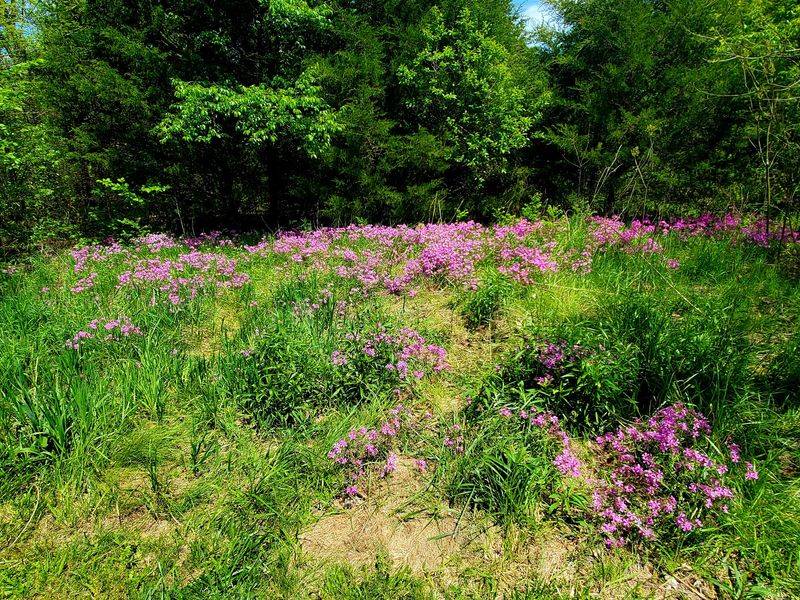
Most folks focus on the honeycomb rocks, but the land around them deserves some attention too. Hughes Mountain is full of glades, which are open, rocky clearings where thin soil keeps big trees from taking over.
Those sunny patches feel almost like little prairies tucked into the forest.
Because the ground is dry and rocky, the plants that grow here are tough and well suited to heat. In spring, you can expect wildflowers to brighten the glades with splashes of purple, yellow, and pink against the gray stone.
Mosses and lichens cover many rocks as well, creating soft colors that are easy to miss unless you slow down.
Around the edges, the woodland offers shade, rustling leaves, and a calmer mood when the sun gets strong. It is a nice contrast to walk from cool trees into bright open rock and back again on the same short trail.
Try bringing a simple plant guide or an identification app if you enjoy putting names to the flowers you see. Just stick to the path and admire everything without picking, because these delicate glade communities take a long time to grow and recover from damage.
Handy Tips And A Little Local History
Before you head out, let me pass along a few helpful things that can save you some hassle. The natural area keeps things simple, so there are no restrooms or drinking fountains at the trailhead.
Plan ahead by stopping in a nearby town first and bringing enough water for everyone in your group.
Dogs are welcome as long as they stay on a leash, which is great news if your pup loves a good hike. The area is open from early morning until late evening, giving you lots of flexibility to visit when it suits you best.
Packing out all of your trash keeps this beautiful place clean for the next visitors who come along.
Here is a fun bit of history to share while you walk. The mountain is named after John Hughes, one of the early settlers in the area, who ran a mill along the nearby Big River.
Later, the Missouri Conservation Commission bought the land and set it aside as a protected natural area so people could keep enjoying it. Knowing that story makes the climb feel a little richer, like you are stepping into a long tale about this special corner of the state.
